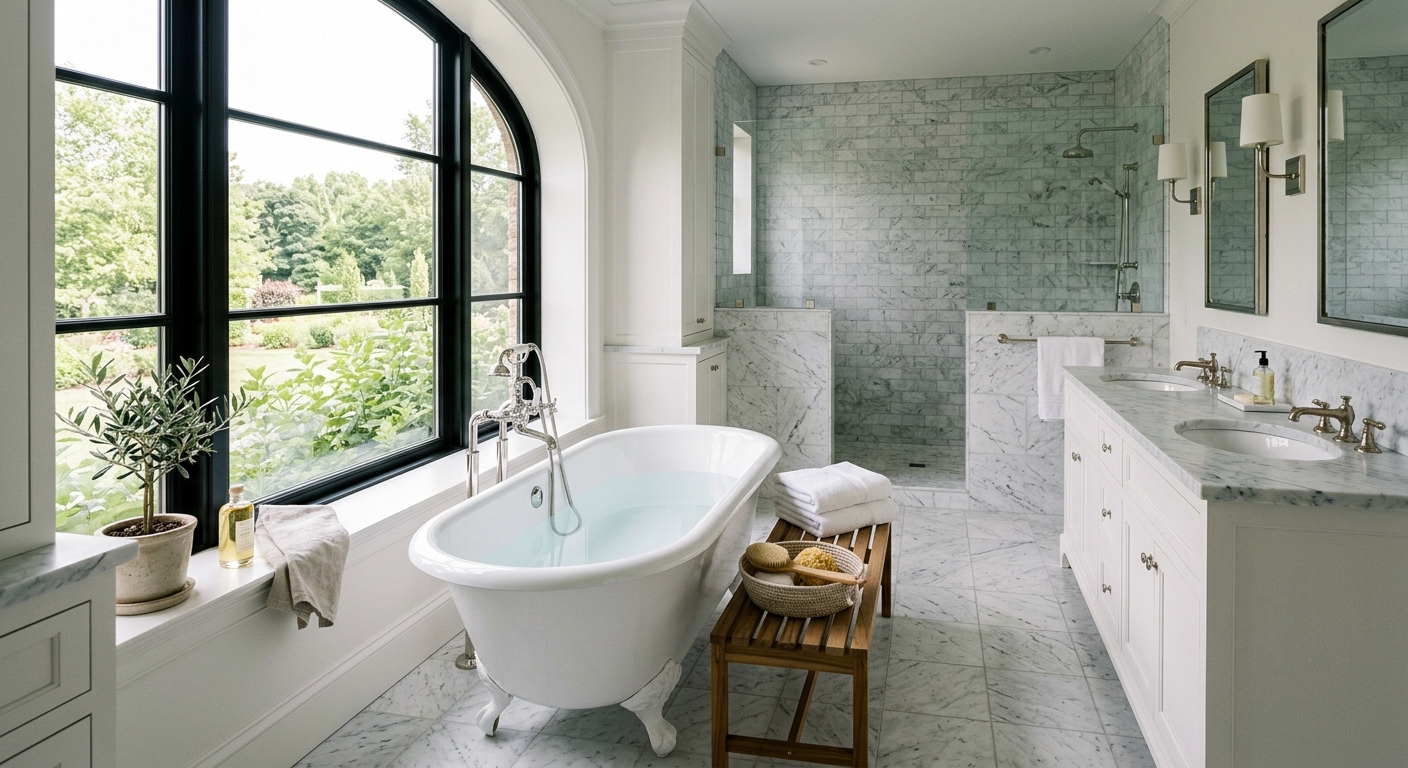
Bathroom renovation options and costs in Port Colborne
Bathroom renovation in Port Colborne often starts with a “small upgrade” idea, then quickly expands once demolition begins. In a city where 80.5% of homes were built before 1981 (Statistics Canada, 2021 Census), many bathrooms sit behind older finishes with dated plumbing layouts and hidden condition issues—think cast-iron or older trapwork, older supply lines, and sometimes floor coverings that may contain asbestos. That’s one reason pricing on the Hamilton–Niagara Peninsula can swing more than homeowners expect. The other driver is availability: when multiple trades are needed at once (plumbing, electrical, waterproofing/tile), scheduling constraints can add cost even if materials stay the same.
In Port Colborne, the practical reality is that older homes often hide scope behind walls. A “like-for-like” refresh is usually straightforward, while a mid-range or high-end full renovation typically includes waterproofing upgrades and may require vent/drain or electrical adjustments to meet current Ontario expectations. Humidity swings through the seasons don’t create the same kind of roof-melt problems you’d see in other climates, but moisture management is still critical—venting and a proper waterproofing system are what keep bathroom ceilings and tile assemblies from deteriorating over time.
Trade demand is especially noticeable around the waterfront and older residential pockets—areas with lots of pre-1981 housing stock—where homeowners tend to renovate to keep pace with daily wear and improve resale. The most accurate way to budget is to compare renovation scopes side-by-side, starting with the table below.
| Renovation Scope |
What's Included |
Typical Duration |
Price Range |
| Cosmetic refresh (paint, fixtures, accessories only) |
New vanity or faucet (if same rough-in), toilet refresh (replace), paint, recaulk, towel bars, drain cover upgrades; no wall opening |
3–7 days |
$4,500–$8,000 |
| Mid-range full renovation (new tile, vanity, tub/shower, electrical) |
Demolition, new waterproofing and tile (floor + surround), new tub/shower or surround, new vanity + mirror, upgraded exhaust fan (typical), GFCI as needed, basic plumbing/electrical updates |
2–4 weeks |
$12,000–$25,000 |
| High-end full renovation (custom tile, steam shower, heated floors) |
Expanded demo scope, premium tile system (often large format), custom shower elements, heated floors prep and circuiting, upgraded plumbing trim/valves, higher-spec vanity and lighting, detailed waterproofing build-up |
3–6 weeks |
$25,000–$45,000 |
| Shower-only installation (convert tub to walk-in shower) |
Remove tub, build new shower waterproofing system, tile shower walls + floor (or niche), new glass, plumbing rough-in adjustments for drain height/placement, exhaust fan check |
2–4 weeks |
$7,000–$18,000 |
| Bathtub replacement or tub-liner install |
Replace existing tub (or liner where applicable), new trim, recaulk, assess subfloor/tiling edge, drain/shutoff connections as required |
5–12 days |
$1,500–$6,000 |
| Tile-only installation (floor + surround, existing layout kept) |
Tile removal where needed, prep for tile, waterproofing (as required by system), install floor + wall surround, grout/seal; limited plumbing/electrical changes |
1–3 weeks |
$3,000–$10,000 |
Prices are estimates only and vary by project scope, site access and material selection.
What affects the price of bathroom renovation in Port Colborne
Even when two homeowners request the “same bathroom,” quotes in the Hamilton–Niagara Peninsula can differ by 30% to 50%. The main reasons aren’t climate—they’re regional labour demand and the realities of renovating older housing stock. Port Colborne’s older homes (most built before the early 1980s) commonly conceal plumbing and ventilation details that weren’t designed for today’s fixture standards, so once walls open, contractors may need to address drains, venting, shutoffs and traps. That discovery work adds labour time, permits/inspections when plumbing is altered, and additional material.
Older homes also increase the odds of an environmental or finishing surprise. If asbestos-containing vinyl floor tile or old drywall compound is discovered (particularly in pre-1985-era finishes), abatement protocols can add $1,500–$5,000+ depending on area and access. In a market like ours, that’s one of the fastest ways a “mid-range” renovation can drift toward a high-end budget if homeowners keep the scope moving.
Concrete examples from Port Colborne: (1) converting a tub to a shower often triggers drain rework and waterproofing detailing that can move the job from a typical $12,000–$25,000 band into the upper end; (2) upgrading an exhaust fan and adding proper electrical protection can add cost, but it’s often justified because it prevents condensation-related failure in tile assemblies. Meanwhile, a “tile-only” approach can stay closer to $3,000–$10,000 when waterproofing substrates are sound and plumbing locations remain unchanged.
| Price Factor |
Why It Matters |
Cost Impact |
| Layout change — moving drain or supply lines requires rough-in work |
More demolition, framing changes, and plumbing rough-in/finishing |
Often +$2,000–$7,000 |
| Tile selection — large-format porcelain vs. mosaic vs. ceramic |
Cut complexity, labour time, and waste rates change |
Often +$500–$3,000 |
| Fixture tier — builder-grade vs. mid-range vs. designer brands |
Purchase cost and installation accessories/trim differ |
Often +$1,000–$6,000 |
| Subfloor condition — rot or unlevel concrete adds scope |
May require repairs, leveling, and additional waterproofing steps |
Often +$1,500–$8,000 |
| Electrical — adding GFCI outlets, exhaust fan, heated floor circuit |
Licensed work and circuit changes affect time and materials |
Often +$800–$4,500 |
| Waterproofing method — membrane type and extent |
Proper system coverage reduces future mould and failures |
Often +$500–$3,500 |
| Older-home surprises — asbestos tile, cast-iron drains, galvanized pipes |
Abatement, upgrades, and replacement parts expand scope |
Often +$1,500–$10,000+ |
| Bathroom size — sq ft drives tile and labour time directly |
More surface area increases tile, prep, and setting time |
Often +$1,500–$9,000 |
Permits & regulations in Ontario
In Ontario, not every bathroom update needs a permit. Typically, cosmetic changes—like swapping fixtures that don’t change plumbing locations, replacing a vanity where the rough-in remains the same, retiling that doesn’t require moving walls or plumbing, and repainting—generally don’t trigger permit requirements. However, permits become much more likely when work changes systems: relocating plumbing (moving drains/supply lines), adding or modifying ventilation with a new exhaust fan that requires new electrical circuiting, and making structural wall changes usually require permits and inspections.
Electrical work must follow Ontario electrical code requirements and be completed by a licensed electrician (or signed off through one). Plumbing rough-in changes—like adjusting drain height, adding new venting strategy, or replacing sections of piping tied into the drain—typically require permit review and inspection.
How to verify a contractor in Port Colborne, step-by-step: first, ask for their Ontario trade licence number and check it through the relevant provincial online registry. Second, request a certificate of insurance (liability) naming you as an additional insured where possible, and ensure coverage limits match a renovation scale. Third, confirm WSIB/WCB coverage (or provide proof of clearance/coverage status). If they can’t provide documentation promptly, that’s a sign to pause—especially on projects with plumbing or electrical changes.
Choosing tile, waterproofing and fixtures for your Port Colborne bathroom
In Port Colborne, your three biggest budget shapers are tile choice, waterproofing method, and fixture tier. First, tile: ceramic is usually the entry point and can work well if your layout is straightforward, but installation needs proper substrate prep and joint layout to avoid cracking. Porcelain tends to offer better water resistance and durability for floors and wet walls, and it’s commonly selected in mid-range renovations where homeowners want fewer replacements over time. Natural stone (marble, travertine, slate) looks premium but often requires more careful sealing, selection for moisture tolerance, and more precise layout.
Second, waterproofing is what protects your tile system from Ontario bathroom humidity and seasonal use patterns. A paint-on membrane can be suitable on certain substrates in limited applications, while bonded sheet membranes or a properly detailed system (including corners/niches and correct overlaps) provide stronger long-term performance. If you want mould-resistant results, don’t try to “save” by skipping the right waterproofing coverage.
Third, fixture tier affects both budget and resale. Builder-grade fixtures can be perfectly functional, while mid-range or designer brands often bring better valves, finish durability, and smoother performance. A practical example: if you’re choosing between a mid-range shower package (often within the $12,000–$25,000 full renovation band) and upgrading to heated floors and premium glass, you may see the job move toward $25,000–$45,000. That upgrade is justified when you’ll stay in the home long enough to enjoy daily comfort—and when waterproofing and substrate prep are already being done properly.
| Material / Option |
Pros |
Cons |
Price Range |
| Ceramic tile (floor + walls) |
Lower material cost, good aesthetics, widely available, easy to match trims |
More susceptible to wear than porcelain; needs careful grout/joint detailing |
$3,000–$8,000 |
| Porcelain tile (floor + walls) |
Better durability, typically better water performance, cleaner look with modern formats |
Heavier tile can increase handling and prep care; premium slabs cost more |
$4,000–$10,000 |
| Natural stone (marble, travertine, slate) |
High-end look, unique veining, excellent design appeal |
Sealing/maintenance, selection and layout time, some stones are less forgiving in wet areas |
$7,000–$16,000 |
| Frameless glass shower enclosure |
Brightens the space, modern styling, simplifies cleaning |
Requires accurate opening measurements; glass and hardware cost adds up |
$2,000–$6,000 |
| Prefab tub surround (acrylic) |
Faster install, good water resistance, fewer tile labour hours |
Less “custom” look; transitions and integration details matter |
$1,500–$4,000 |
| Custom shower pan (tile or linear drain) |
Best drainage design, modern linear look, flexible layout for the space |
More detailed waterproofing and subfloor work; higher labour/time |
$5,000–$15,000 |
How to choose a bathroom renovation contractor in Port Colborne
Choosing the right contractor in Port Colborne starts with verification. Ask for their Ontario trade licence for the work they’ll perform (plumbing/electrical/tile-related scopes where applicable), then confirm they carry liability insurance with current coverage and reasonable limits. For worker protection, request proof of WSIB/WCB coverage (or the appropriate clearance documentation). If a contractor won’t share documentation up front, you’re taking on unnecessary risk—especially on jobs involving plumbing rough-ins or electrical changes.
Next, get 2–3 itemised written quotes that break out labour and materials (tile, membrane, fixtures, disposal, and any electrical/plumbing allowances). Avoid lump-sum bids that don’t specify waterproofing method, tile types, or what’s included for permit support. Read the scope line by line: ask whether a permit is included or billed separately, whether drywall/tile removal is included, and whether construction debris disposal and dump fees are covered.
Warranty matters. Confirm the workmanship warranty length, what product/manufacturer warranties apply to fixtures and shower systems, and whether warranties are transferable if you sell your home. For payment, a safe schedule is to avoid large deposits—generally no more than 10% to 15% upfront—and hold back a portion until key milestones and final completion. Finally, insist on a start date and completion estimate in writing so you can plan around trades and inspections.
- Confirm Ontario licence(s) for the trades involved; ask for licence numbers and proof.
- Request current certificate of insurance (liability) before signing.
- Verify WSIB/WCB coverage with clearance or proof documentation.
- Get itemised quotes: labour, materials, disposal, and allowances clearly listed.
- Ensure the quote specifies the waterproofing method and coverage area.
- Check whether plumbing rough-in changes require separate permit/inspection costs.
- Confirm what’s included in demolition, subfloor repair, and tile prep.
- Ask who supplies fixtures vs. what’s owner-purchased; match that to the quote.
- Ask for lead times for tile, glass, vanity, and custom shower components.
- Review the warranty: workmanship term, product warranties, and transferability.
- Set a realistic payment schedule (10–15% max upfront) and keep a holdback.
- Get schedule details in writing: inspection days, expected completion, and change-order process.
Red flags in Port Colborne: (1) refusing to provide licence/insurance/WSIB proof; (2) quotes that omit waterproofing details; (3) “cheap” bids that assume hidden issues won’t be found behind pre-1981 walls; (4) no clear timeline or change-order policy; and (5) asking for a large upfront deposit before work starts.
Frequently asked questions — bathroom renovation in Port Colborne
How do I plan a bathroom renovation on a tight budget in Port Colborne?
Start by choosing a scope that limits demolition. In Port Colborne, homeowners in older homes (many built before 1981) often discover plumbing or ventilation work once walls open, so budget flexibility matters. A good tight-budget approach is to do a cosmetic refresh where rough-ins stay put, which typically sits around the lower end of project costs (often near $4,500–$8,000). If you want bigger impact without full demolition, consider tile-only work (floor + surround) while keeping the layout, as long as the subfloor and waterproofing substrate are sound. Get an itemised quote that separates labour, tile, membrane, and any electrical/plumbing allowances. Finally, prioritize moisture protection—proper waterproofing and a correctly vented fan save money later by preventing mould and grout/tile failures.
What's the difference between a cosmetic and a full bathroom renovation?
A cosmetic refresh is typically non-destructive: paint, updated fixtures that don’t move plumbing, accessories, and sometimes vanity changes where the rough-in stays the same. A full renovation goes further—usually includes demolition, new waterproofing and tile (floor and/or walls), and often plumbing and electrical upgrades. In Hamilton–Niagara Peninsula markets, “full” work also tends to uncover hidden scope in older houses: cast-iron or copper drains, older shutoffs, and venting details may need updating. That’s why a mid-range full renovation commonly lands around $12,000–$25,000, while high-end projects with premium tile and features can move toward $25,000–$45,000. In Ontario, cosmetic changes usually don’t require permits, while relocating plumbing or adding electrical ventilation circuits often does.
How do I choose the right contractor for my bathroom in Port Colborne?
Choose a contractor who can prove licensing, insurance, and worker coverage before quoting. In Ontario, ask for their Ontario trade licence information, a current liability insurance certificate, and proof of WSIB/WCB coverage. Then compare apples to apples: request 2–3 itemised written quotes with a breakdown for labour, tile, waterproofing/membrane, disposal, and any electrical/plumbing allowances. Make sure the scope clearly states what’s excluded, including permit pull support and whether inspections are included. Confirm the workmanship warranty length and whether product warranties apply to the exact shower and fixture models being installed. Finally, be cautious with very low bids—older Port Colborne homes (Statistics Canada, 2021 Census data shows most dwellings are pre-1981) often hide issues that add cost once the walls open.
What's the most common mistake homeowners make in bathroom renovations?
The most common mistake is underestimating hidden scope once demolition starts. In Port Colborne and across the Hamilton–Niagara Peninsula, older homes can have outdated plumbing (including older drain and shutoff configurations), inadequate ventilation, or substrate problems behind tile and drywall. Homeowners sometimes budget for a tile-and-vanity upgrade, but discovery of drainage/venting needs or subfloor repairs changes the project. Another frequent issue is skipping detail on waterproofing—cutting corners here can lead to mould, loose tiles, and costly rework. If you want a predictable budget, insist the contractor specifies the waterproofing method and includes it in the quote. Tie your expectations to realistic bands: a “simple” full renovation often isn’t below $12,000–$25,000 once plumbing/electrical updates are accounted for.
How long does tile installation take in a Port Colborne bathroom?
Tile time depends on the bathroom size, tile format (mosaic vs. large-format porcelain), layout complexity, and how much prep work is needed. In typical Port Colborne renovations, tile-only installs (floor + surround with existing layout kept) often take about 1–3 weeks including prep, waterproofing setup where required, setting, grouting, and cure time. For a mid-range full renovation, the overall bathroom timeline is often 2–4 weeks because tile work follows demolition, framing/substrate repairs, and waterproofing. If the contractor is also coordinating glass enclosure installs or electrical upgrades (like new exhaust fans), the schedule extends slightly. Ask for a quoted schedule sequence, not just a number of days.
How much does a bathroom renovation cost in Port Colborne?
Costs vary by scope and hidden conditions, especially in older Port Colborne homes where many were built before 1981 (Statistics Canada, 2021 Census). For a tight, non-destructive refresh, you’re often looking around the lower band of cosmetic updates (commonly near $4,500–$8,000). For most homeowners doing a mid-range full renovation with new tile, vanity, tub/shower, and some electrical, the typical range is $12,000–$25,000. High-end upgrades with custom showers, premium tile, and heated floors can reach $25,000–$45,000. If you’re converting a tub to a walk-in shower, many projects fall between $7,000–$18,000 depending on drain rework and glass.