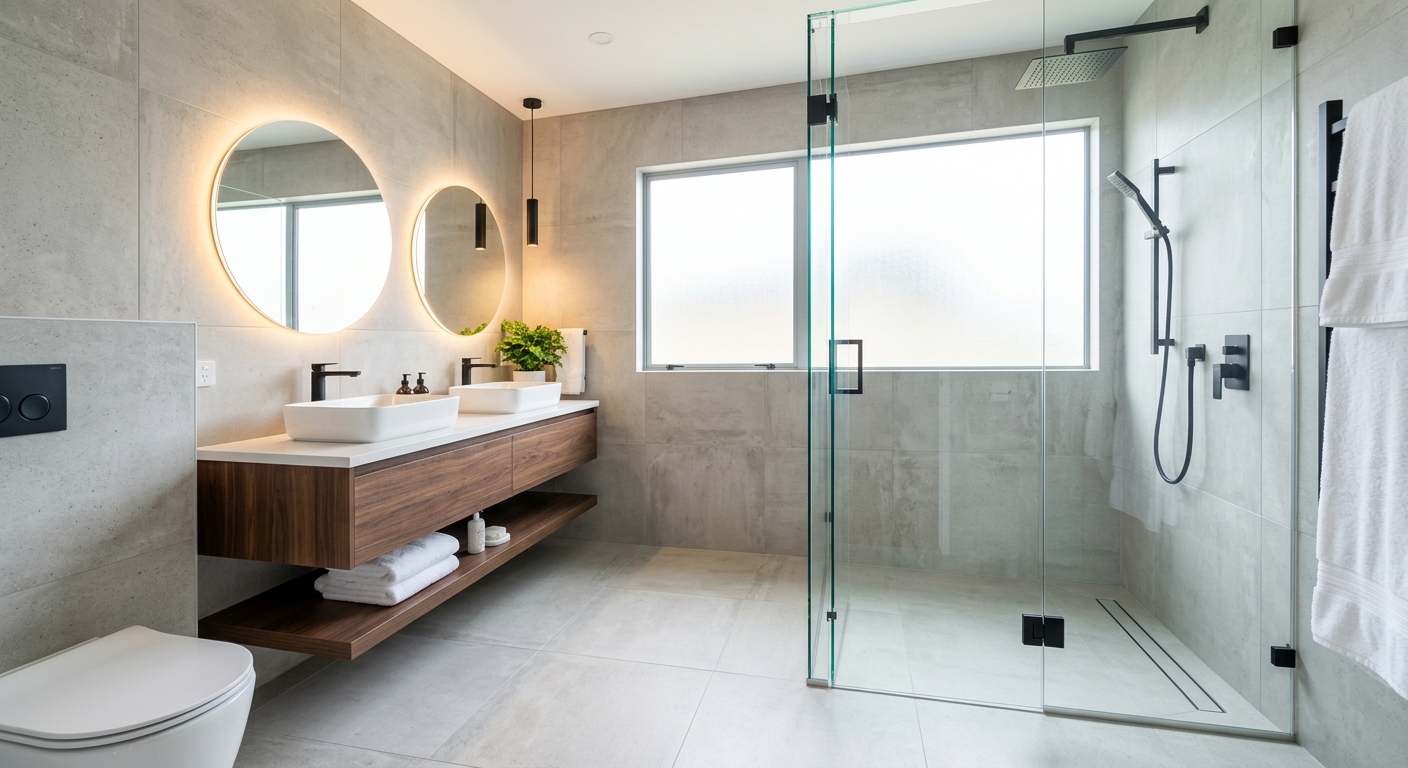
Bathroom renovation options and costs in King
Bathroom renovations in King, Ontario can look similar on paper, but the final cost varies a lot based on how much you change. With 37.9% of homes in the area built before 1981 (Statistics Canada, 2021 Census), many jobs start by uncovering older drain routes, dated venting, or flooring/tile assemblies that may include asbestos-containing materials. In the Toronto economic region, labour is the main driver—bathrooms are labour-intensive, especially for tiling, custom showers, and any plumbing reconfiguration. Even though King doesn’t have “bathroom-corrosive” climate issues in the same way as some coastal regions, humidity still demands correct waterproofing and ventilation to keep grout lines and subfloors from deteriorating.
Contractor availability also matters: experienced tile setters and plumbers are in high demand across Vaughan and the surrounding GTA growth corridor, and peak scheduling can nudge start dates and pricing. In King’s older neighbourhood pockets—where homeowners frequently renovate post-war and 1960s–1970s layouts—customers often choose full renovations to avoid repeat tear-outs once walls are opened. That’s also where drain reconfiguration and vent corrections commonly add several thousand dollars to budget, pushing realistic full-bath numbers well into the low-to-mid five figures.
Below is a practical comparison of common options and typical timelines, so you can translate your goals into a realistic budget before you request quotes.
| Renovation Scope |
What's Included |
Typical Duration |
Price Range |
| Cosmetic refresh (paint, fixtures, accessories only) |
Paint, light fixture swap, vanity/fixture refresh, faucet, toilet accessories, re-caulk, deep clean; no plumbing rough-in or tile tear-out |
3–7 days |
$2,500–$7,000 |
| Mid-range full renovation (new tile, vanity, tub/shower, electrical) |
Demo and haul-away, subfloor checks, tub-to-shower as specified, new tile floor + surround, vanity and mirror, exhaust fan (code-compliant), electrical upgrades (as needed), waterproofing, new shut-offs if required |
2–4 weeks |
$12,000–$20,500 |
| High-end full renovation (custom tile, steam shower, heated floors) |
Design consultation, premium tile (custom layouts), heated floors, custom shower (tile or linear drain), upgraded plumbing/venting corrections, enhanced ventilation, frameless glass, designer vanity and lighting |
3–6 weeks |
$20,500–$30,000 |
| Shower-only installation (convert tub to walk-in shower) |
Demolition, new shower base/pan system, waterproofing, tile walls + floor, linear drain or standard drain, new glass door, updated valve and shower trim, rework plumbing connections |
1–3 weeks |
$8,000–$14,500 |
| Bathtub replacement or tub-liner install |
Replace tub with new unit and surround updates (or tub-liner system), plumbing reconnection, new caulking/sealant, basic trim and finishing; limited tile removal if liner/like-for-like |
5–12 days |
$1,200–$4,200 |
| Tile-only installation (floor + surround, existing layout kept) |
Tile removal (as required), waterproofing system, new tile floor and wall surround, grout/seal, finish carpentry; existing plumbing mostly stays in place |
1–2.5 weeks |
$6,000–$14,000 |
Prices are estimates only and vary by project scope, site access and material selection.
What affects the price of bathroom renovation in King
If you get quotes for the same bathroom in King, it’s not uncommon to see swings of 30–50% across the Toronto economic region. The reason is usually not “climate”—it’s labour rates, trade scheduling, and the complexity uncovered once walls and floors are opened. In the GTA, bathrooms consistently cost above national averages because skilled trades charge a premium and because older homes frequently need plumbing and venting brought up to current Ontario code standards. When drain stacks are cast-iron or supply lines are galvanized or undersized, upgrades can add significant scope and materials, even if your finish choices remain modest.
Hidden conditions are the big budget variable in pre-1981 homes. If asbestos-containing material shows up in older vinyl floor tile or in surrounding finishes, abatement protocols are required and that can add $1,500–$5,000+ depending on extent and containment needs. Ventilation is another driver: adding or relocating an exhaust fan often requires electrical work and sometimes ducting changes, both of which add labour.
Two concrete King examples I see often: (1) A “tile-only” project can become a full subfloor and waterproofing redo if plywood is soft or the slab is out of level; that pushes tile pricing closer to the upper end of local ranges. (2) Converting a tub to a walk-in shower looks like a straightforward shower installation, but relocating rough-in for a more direct drain run can move a job from the mid-band toward a higher-end full renovation budget (for instance, a $12,000–$20,500 mid-range job can quickly climb if plumbing and electrical are opened and corrected).
In short: Toronto-area housing age and what’s behind the walls matter far more than weather, and that’s why a realistic budget should assume some “discovery” work.
| Price Factor |
Why It Matters |
Cost Impact |
| Layout change — moving drain or supply lines |
Requires rough-in work, patching and often new shut-offs/valves; may involve cutting joists or re-routing drains |
+$2,000–$8,000 |
| Tile selection — large-format porcelain vs. mosaic vs. ceramic |
Large-format increases precision cutting; mosaics have more lines and labour; harder materials can slow installs |
+$1,000–$6,000 |
| Fixture tier — builder-grade vs. mid-range vs. designer brands |
Better valves, softer-close hardware, advanced shower trims, and upgraded faucets cost more and may require different valves |
+$800–$5,000 |
| Subfloor condition — rot or unlevel concrete adds scope |
Fixing rot, re-laying subfloor layers, or leveling the slab impacts waterproofing readiness and tile flatness |
+$1,000–$4,500 |
| Electrical — adding GFCI outlets, exhaust fan, heated floor circuit |
Code-compliant work is labour-intensive; heated floors add wiring, sensors and testing time |
+$600–$3,500 |
| Waterproofing method — membrane type and extent |
Different systems require specific prep and overlap detailing; full coverage adds time and materials |
+$400–$2,500 |
| Older-home surprises — asbestos tile, cast-iron drains, galvanized pipes |
May require containment and licensed abatement; drain/copper/galvanized updates add labour and parts |
+$1,500–$7,500+ |
| Bathroom size — sq ft drives tile and labour time directly |
More surface area means more prep, thinset, grouting, cuts and drying time; larger bathrooms often need more fixtures |
+10%–35% across projects |
Permits & regulations in Ontario
In Ontario, many “cosmetic” bathroom updates don’t require permits—swapping a vanity, replacing a toilet, painting, updating mirrors, and re-caulking are typically considered non-structural and non-plumbing changes. However, permits (and inspections) are usually required when you relocate plumbing or make electrical changes that affect circuits or add new components. For King homeowners, that usually means planning ahead for permit timelines when you want to move the drain or supply rough-ins, convert a tub to a shower with different valve positioning, or add/relocate an exhaust fan.
Electrical work must meet Ontario code and be performed by a licensed electrician (or signed off where applicable). Adding a bathroom exhaust fan with new wiring, installing heated floor systems with a dedicated circuit, or adding GFCI-protected receptacles generally triggers code compliance requirements. Plumbing rough-in changes—such as moving drain lines, changing valve locations, upgrading supply lines, or correcting venting—commonly require a permit and inspection.
Step-by-step verification: (1) Ask for the contractor’s Ontario trade licence number (or registration details, depending on trade category) and confirm it in the relevant provincial registry. (2) Request a certificate of insurance (liability) showing active coverage. (3) For workers on site, confirm WSIB/WCB coverage documentation—ask for clearance or proof of account status. (4) Only proceed with work that matches the licence scope; if electrical or plumbing rough-in is involved, ensure licensed subs are included.
Doing this up front prevents delays when inspectors or utilities require documentation.
Choosing tile, waterproofing and fixtures for your King bathroom
In King, your bathroom budget is mostly shaped by three material decisions: tile choice, waterproofing method, and fixture tier. First, tile: entry-level ceramic is often the lowest material cost, but it can be more variable in hardness and may chip if subfloor prep isn’t perfect. Mid-range porcelain (floor and walls) is usually the best balance for GTA projects because it handles wear and moisture well, and it typically installs with tighter tolerances. Natural stone (marble, travertine, slate) can deliver luxury, but it adds cost through more expensive material, more careful layout, sealing requirements, and a higher chance of needing special cuts or correction if the surface isn’t extremely flat.
Second, waterproofing: Ontario humidity and real-world bathing cycles make correct waterproofing non-negotiable. Paint-on membranes can work for certain systems, but bonded sheet membranes and well-detailed systems (often installed with the right overlap and corner detailing) generally offer more robust protection when applied over a properly prepared substrate. The “right” method prevents mould and grout breakdown that can otherwise show up around wet-room transitions.
Third, fixtures: builder-grade valves and trims cost less up front, while mid-range and designer brands improve feel, finish consistency, and long-term serviceability—often a resale plus in a market where 88.2% of homeowner households own (Statistics Canada, 2021 Census). A concrete budget example: if you’re choosing between standard wall tile and a premium porcelain option, spending extra can be justified when it reduces the need for “redo” due to flatness tolerances and when you’re already investing in a $12,000–$20,500 mid-range full renovation. If you’re only doing a cosmetic refresh, upgrading tile alone usually isn’t the best value.
| Material / Option |
Pros |
Cons |
Price Range |
| Ceramic tile (floor + walls) |
Lower material cost, wide style selection, good for bathrooms when installed over proper underlayment and membrane |
Can be more prone to chipping if substrate isn’t flat; requires careful grout selection for stain resistance |
$6,000–$11,000 |
| Porcelain tile (floor + walls) |
More durable, better water resistance, often more consistent for large-format patterns |
Material can cost more; large formats increase layout precision needs |
$9,000–$16,000 |
| Natural stone (marble, travertine, slate) |
Premium look, unique veining/texture, strong resale appeal |
Higher material and labour; sealing/maintenance; uneven pieces can increase installation time |
$14,000–$24,000 |
| Frameless glass shower enclosure |
Modern appearance, easy cleaning, maximizes light in smaller baths |
Needs accurate tile plane and sturdy framing; glass is heavier and requires careful measurement |
$2,500–$6,500 |
| Prefab tub surround (acrylic) |
Fast install, smooth finish, generally less labour than full tile surrounds |
Fewer design options; edge detailing still needs correct waterproofing transitions |
$1,200–$3,000 |
| Custom shower pan (tile or linear drain) |
Best waterproofing detailing; clean lines with linear drains; supports fully customized layouts |
More labour and prep; requires very accurate slope and membrane integration |
$4,000–$12,000 |
How to choose a bathroom renovation contractor in King
Choosing the right contractor in King starts with proof, not promises. First, verify Ontario licensing for the trades involved—ask for licence numbers for plumbers and electricians where applicable, and confirm they match the work being quoted. Next, get liability insurance and check that the certificate is current and lists coverage appropriate for renovation work. For worker protection, confirm WSIB/WCB coverage: request clearance/verification documents and ensure it’s active before anyone starts demolition. If a contractor can’t provide these items, walk away—bathrooms involve plumbing, electrical and often cutting/opening walls.
Then demand 2–3 itemised, written quotes. You want a breakdown that separates labour and materials, and clearly lists allowances for tile, fixtures, disposal, and waterproofing. Avoid “lump sum” only proposals—bathrooms regularly have hidden-scope costs once the subfloor and walls are opened. Read the scope carefully: what’s excluded (e.g., removing asbestos-containing materials if discovered), whether permits are included, and whether waste disposal and recycling are part of the price. Warranty matters too: ask for workmanship warranty length, the product/manufacturer warranty for major items, and whether warranties are transferable if you sell your home.
Finally, align payment with progress. In my experience, you should never pay more than 10–15% upfront; the rest should follow stages and include a holdback until completion. Get a start date and realistic completion estimate in writing, including lead-time assumptions for glass and specialty tile.
- Confirm Ontario trade licence details and that the scope matches the licence category.
- Request liability insurance certificate and verify dates before work begins.
- Provide WSIB/WCB clearance or proof of coverage for workers on site.
- Get 2–3 written itemised quotes (labour + materials + allowances).
- Ask exactly what’s included for demolition, disposal and protection of nearby finishes.
- Confirm waterproofing method and whether corners/curbs/penetrations are included.
- Verify who pulls permits and whether permit fees are included in the quote.
- Check if the quote includes electrical work like GFCI outlets and exhaust fan upgrades.
- Ask for a detailed schedule: demo, rough-in, waterproofing, tiling, finishing.
- Require warranty terms in writing (workmanship + product warranties).
- Use a payment schedule with a holdback until punch list completion.
- Ask how change orders are handled if hidden conditions are found.
Red flags in King: a contractor who won’t provide insurance/licence/WSIB proof; quotes that omit waterproofing details or specify “tile-ready” without substrate inspection; “cheap” lump-sum pricing with no allowances and no timeline; pushing for large upfront deposits; and no written scope for permits, disposal, or how asbestos/old plumbing surprises are handled.
Frequently asked questions — bathroom renovation in King
What's the ROI on a bathroom renovation?
In King and the broader Toronto market, bathrooms are one of the best “visible” upgrades, but ROI depends heavily on whether you improve function (layout, ventilation, water flow) and finishes, not just appearance. In a neighbourhood with a lot of pre-1981 housing, many buyers also notice modern waterproofing and code-compliant electrical/ventilation as a quality signal. If you stay in a realistic mid-range full renovation budget—often around $12,000–$20,500—you’re typically funding improvements that can support buyer confidence. Going extremely high-end can still be beautiful, but ROI may flatten if the rest of the home doesn’t match. The best ROI comes from durable tile systems, solid waterproofing, and plumbing/electrical updates done right the first time. (Statistics Canada, 2021 Census)
Do I need waterproofing behind the tile?
Yes—proper waterproofing behind tile is the standard of good practice for King bathrooms, especially around wet areas like shower walls, tub surrounds, and floor transitions. Ontario humidity and frequent use mean water management can’t be “afterthought” work. If your contractor is installing tile over drywall or cement board without a compatible membrane system, you’re taking a risk. A correct approach uses the right waterproofing method for the substrate and detail points (corners, penetrations, niches, curb transitions), not just a coat “everywhere.” If hidden conditions are found—like soft subfloor or older assemblies—waterproofing scope often needs to expand. When budgets are tight, it’s better to protect the waterproofing quality than to cut it, because a failure can force a costly redo.
How do I compare bathroom renovation quotes?
Compare quotes line-by-line, not by the total number. Ask each contractor to itemise labour and materials and list allowances (tile, fixtures, glass, vanity) so you can see what you’re actually paying for. Confirm what waterproofing method is proposed, whether disposal is included, and whether permits are in the price. In King, pay attention to what’s included for plumbing and electrical scope: moving drains/supplies and adding exhaust fans can drive big differences. Also ask what happens if asbestos-containing materials, cast-iron drains, or knob-and-tube remnants are discovered—should there be a written contingency or a separate abatement line item. A quote that sounds close but is missing key items often ends up higher after change orders. If one quote lands near the mid-range band—around $12,000–$20,500—verify it’s achieving the same scope, not just cheaper finishes.
Can I live at home during a bathroom renovation in King?
Often, yes—but it depends on how many work zones are involved and whether you have another functioning bathroom. For a cosmetic refresh, you can typically remain in the home with minimal disruption. For full renovations, especially when plumbing rough-in and tiling are underway, expect limited access to showers and sometimes dust control around the work area. Many homeowners in King choose to live at home during mid-range projects (commonly $12,000–$20,500), using a temporary wash setup elsewhere. The key is planning: contain dust, protect floors, schedule work in blocks, and keep a clear path for toilet and handwashing. If your only bathroom is torn up, you may need short-term alternatives. A reputable contractor will give a written timeline and explain the exact days when the bathroom will be out of service.
What's the best bathtub material for a King home?
The “best” tub material depends on how you use the space and what feel you want, but in King renos the practical choices are typically acrylic and cast iron/steel. Acrylic tubs are popular because they’re lightweight for installation and available in modern shapes; they pair well with tub surrounds and liners. Cast-iron (when budget allows) offers a heavier, more durable feel and often retains heat longer, but it’s heavier and can add labour in replacement. If you’re keeping the layout and doing a tub replacement or tub-liner style update, budgets often fall around the lower end of local ranges (for example $1,200–$3,500). If you’re converting to a shower, the “best material” question shifts to the shower pan and waterproofing system—those details determine longevity much more than tub material.
Is it worth renovating a bathroom before selling in King?
Usually it can be worth it, especially if your current bathroom is dated, poorly ventilated, or shows early moisture issues. In King, many homes were built before 1981 (Statistics Canada, 2021 Census), and buyers often respond to visible upgrades like modern tile, updated exhaust ventilation, and refreshed fixtures because those changes can address concerns about waterproofing and maintenance. A renovation also helps if you can make the bathroom “move-in ready” rather than leaving it for buyers to budget. That said, avoid overspending relative to the rest of the home. A smart approach is to target a mid-range full renovation (often $12,000–$20,500) or a targeted shower conversion if your tub is limiting. If you’re seeing active leaks, mouldy caulking, or failing grout, renovating before selling can prevent negotiation pressure. The best ROI typically comes from durable systems done to code and workmanship you can stand behind with a written warranty.