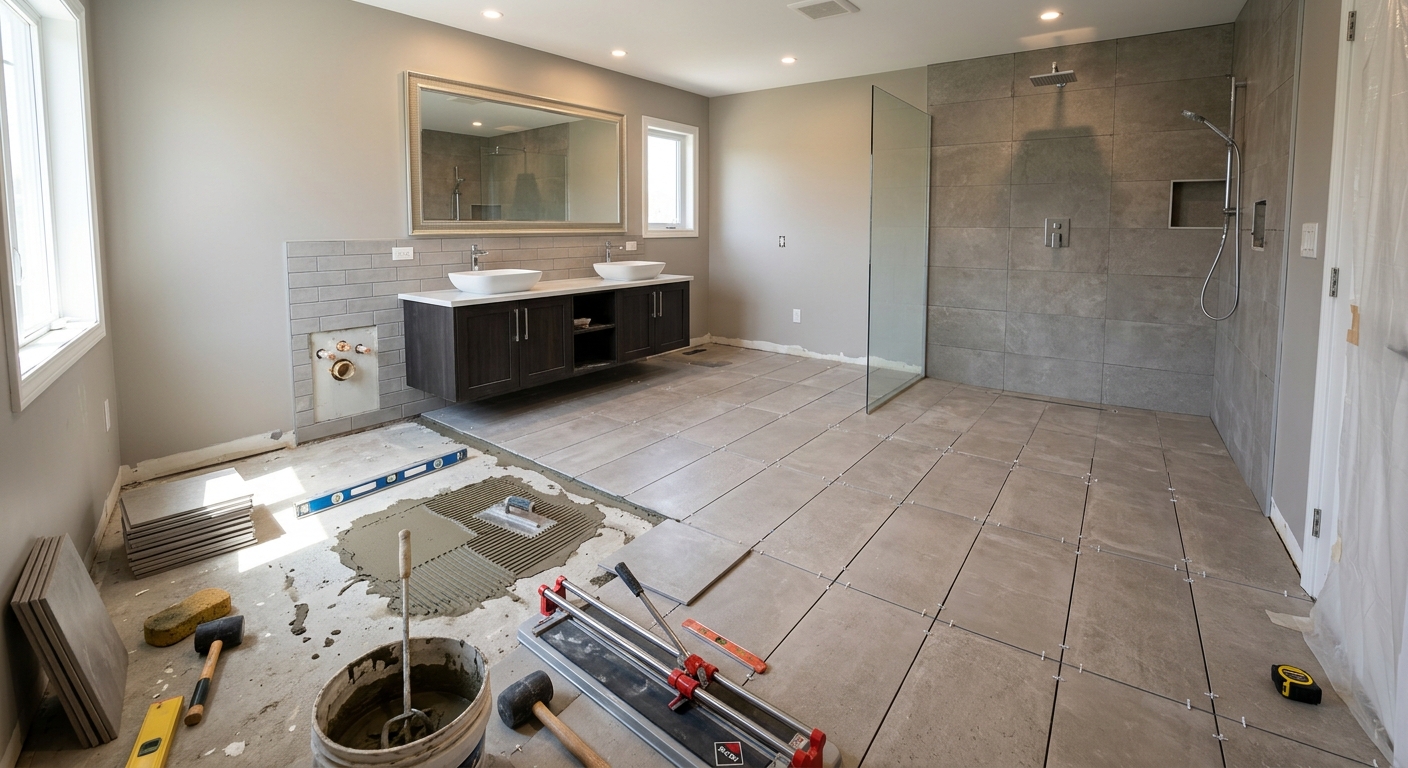
Bathroom renovation options and costs in Blind River
Bathroom renovation in Blind River typically comes down to choosing the right scope for your home and budget. With 3,422 residents (Statistics Canada, 2021 Census), many homeowners are working with older housing—67.2% of homes in the area were built before 1981 (Statistics Canada, 2021 Census). That matters because dated drain and supply layouts, plus older floor compounds, can surface surprises once walls are opened. In the Northeast, the cost conversation is less about coastal-style moisture and more about labour availability and the realities of trade scheduling across the region.
In Blind River, contractors often have to mobilize specialized crews—plumbers, electricians, and tile setters—into a smaller local market. Once you’re doing a full renovation, labour becomes a significant portion of the budget, which is why the same job can swing meaningfully between “mid-range” and “high-end” approaches. If your home’s plumbing is original, cast-iron or aged drain stacks and galvanized supply lines can require upgrades, and outdated venting may need correction before you can safely close up walls.
To get a practical plan, many homeowners in the downtown/riverfront area of Blind River start by deciding between a cosmetic refresh and a full tear-out. From there, you can size the schedule and budget for waterproofing, tile labour, and any electrical work—often guided by what inspectors will require when plumbing location changes.
Below are typical Blind River price bands to help you compare renovation options before you request itemised quotes.
| Renovation Scope |
What's Included |
Typical Duration |
Price Range |
| Cosmetic refresh (paint, fixtures, accessories only) |
Paint, toilet/vanity faucets or light fixture swaps, new mirror or towel bars, caulking refresh, existing surfaces kept |
2–4 days |
$2,000–$6,000 |
| Mid-range full renovation (new tile, vanity, tub/shower, electrical) |
Demo and disposal, updated vanity, new tub/shower unit or surround, tile floor and wall tile, ventilation improvements, basic electrical upgrades (GFCI, fan connection), waterproofing |
2–3 weeks |
$15,000–$25,000 |
| High-end full renovation (custom tile, steam shower, heated floors) |
Premium tile, custom shower and niche/bench, membrane and detailed waterproofing, heated floor prep and control, higher-tier fixtures, upgraded electrical scope, higher-end ventilation |
3–5 weeks |
$25,000–$35,000 |
| Shower-only installation (convert tub to walk-in shower) |
Demo tub, install walk-in shower base or custom pan, tile surround, waterproofing, new fixtures, adjust plumbing tie-in, ventilation/electrical as needed |
1–2 weeks |
$6,000–$16,000 |
| Bathtub replacement or tub-liner install |
Remove and replace tub (or install a liner where appropriate), basic plumbing connection work, new caulking and surround tie-ins, inspection/fit and finish |
3–7 days |
$2,000–$6,000 |
| Tile-only installation (floor + surround, existing layout kept) |
Tile floor and/or tub surround replacement, surface prep, underlayment as needed, grout/seal, assumes plumbing locations remain unchanged |
5–10 days |
$4,000–$12,000 |
Prices are estimates only and vary by project scope, site access and material selection.
What affects the price of bathroom renovation in Blind River
Homeowners in the Northeast and across Ontario can see quotes for the “same” bathroom that differ by 30–50%, even when the finished look is similar. The main reason is that bathroom work is trade-intensive: plumbers, electricians and tile installers are each pricing labour, mobilization time, and the risk of what’s hidden behind walls. In Blind River, the Northeast market reality also means fewer qualified crews are available on short notice, so scheduling pressure can push labour toward the higher end of typical averages.
Here, the age of the housing stock drives cost more than climate. With 67.2% of homes built before 1981 (Statistics Canada, 2021 Census), it’s common to discover older drain components, older supply piping, and ventilation that no longer performs well once you close in new walls. When plumbing must be updated, the scope expands: rough-in time increases, permits and inspections are more likely, and you may need replacement venting components. If asbestos is found in flooring or older drywall compound during demo (more common in pre-1985 materials), abatement can add roughly $1,500–$5,000+ to the budget depending on extent.
Two practical Blind River examples that raise cost: (1) opening a wall around the tub surround and finding an undersized vent fan duct route, and (2) trying to install a heated floor on an out-of-level subfloor—both mean extra prep and labour. On the other hand, cost can drop when you keep your layout and select mid-range finishes: a mid-range full renovation often lands in the $15,000–$25,000 band, while a shower-only conversion commonly sits within $6,000–$16,000 depending on waterproofing and electrical/vent changes.
| Price Factor |
Why It Matters |
Cost Impact |
| Layout change — moving drain or supply lines requires rough-in work |
Re-routing plumbing means more demo, piping changes, and potential permit/inspection requirements |
Often +10–25% versus keeping layout |
| Tile selection — large-format porcelain vs. mosaic vs. ceramic |
Harder materials can be slower to cut and set; mosaics require more grout lines and labour |
Can swing several thousand dollars on the same bathroom size |
| Fixture tier — builder-grade vs. mid-range vs. designer brands |
Higher-end valves, trim, and shower systems cost more and may require specialized installation |
Typically +$500–$4,000 depending on brand mix |
| Subfloor condition — rot or unlevel concrete adds scope |
Leveling, subfloor rebuild, and moisture-correction work add hours and materials |
Can add +$1,000–$5,000 if repairs are extensive |
| Electrical — adding GFCI outlets, exhaust fan, heated floor circuit |
Electrical upgrades require a licensed electrician and may increase circuit and ventilation scope |
Often +$500–$3,500 |
| Waterproofing method — membrane type and extent |
Better systems (and correct installation) prevent failures; poor prep increases rework risk |
Roughly +$300–$2,500 depending on system and coverage |
| Older-home surprises — asbestos tile, cast-iron drains, galvanized pipes |
Unexpected materials may trigger abatement and additional plumbing replacement |
Commonly +$1,500–$5,000+ if encountered |
| Bathroom size — sq ft drives tile and labour time directly |
More area means more waterproofing, more tile cuts, and longer installation time |
Cost scales quickly; small baths can be ~20–40% less |
Permits & regulations in Ontario
In Ontario, the permit picture depends on what changes you make. Cosmetic updates—like swapping a vanity top, changing taps or a toilet, repainting, or retiling while keeping plumbing in the same location—often do not require a permit. Where permits typically come into play is when you relocate plumbing (moving a drain or supply line), change structural walls, or add new ventilation that requires new wiring/circuits. Any electrical work must meet the Ontario Electrical Safety Code and be performed by a licensed electrician, or be signed off properly after installation.
Plumbing rough-in changes typically require a permit and inspection. That includes moving the toilet flange, relocating shower controls, changing pipe routes, or altering venting-related components. If you’re converting a tub to a walk-in shower, the work often involves drain tie-ins and slope corrections—so permits and inspections are commonly triggered by the rough-in changes.
Here’s a straightforward homeowner verification process in Blind River. First, ask for the contractor’s Ontario trade licence number and confirm it using the relevant provincial licence registry for the trade they claim (plumbing/electrical/general contracting as applicable). Second, request a certificate of insurance showing liability coverage and confirm the policy is active for the project dates. Third, check WSIB/WCB coverage: request proof of coverage (or a clearance/coverage letter where applicable). Finally, get those documents before signing, and ensure your quote references who pulls permits (and whether that cost is included).
Choosing tile, waterproofing and fixtures for your Blind River bathroom
In Blind River, your budget is usually won or lost in three material decisions: tile choice, waterproofing method, and fixture tier. Start with tile. Ceramic is often a solid entry option, especially for straightforward floor patterns, but it can be more forgiving if you’re working with minor surface irregularities. Porcelain tends to be the best mid-range balance because it’s denser and often handles heavy water contact better in wet zones—useful for the Northeast’s seasonal temperature swings and how quickly bathrooms need to recover after showers. Natural stone (marble, travertine, slate) looks premium but adds installation complexity, sealing/maintenance considerations, and often higher labour.
Next is waterproofing. In an Ontario bathroom, the goal is preventing mould by eliminating water pathways behind tile and preventing saturation at seams. Paint-on membranes can work when the system and prep are right, but bonded sheet membranes and engineered systems (including proper detailing around corners, niches, and drains) generally give more reliable performance. The right method matters more than the tile price tag because a failure usually means removal and replacement.
Finally, fixture tier affects both budget and resale. Builder-grade fixtures can be fine when you choose durable valves and a reputable shower trim, while mid-range or designer systems often justify the cost through smoother controls, better finishes, and better long-term function. For example, upgrading to a higher-end shower valve set may cost an extra few hundred to over a thousand dollars, but it’s not where you should overspend if your waterproofing and waterproofing detailing are still budget-limited.
Match the combination to your situation: if you’re doing a tub-to-shower conversion or a full tear-out, prioritize waterproofing and a proper shower pan strategy first, then set your tile budget based on how much complexity you want in cuts, niches, and layout.
| Material / Option |
Pros |
Cons |
Price Range |
| Ceramic tile (floor + walls) |
Good entry-level option, wide style selection, can be simpler to install depending on pattern |
Not as dense as porcelain; may be less durable in high-wet/impact areas if product quality is low |
$35–$60 per sq ft (installed planning estimate varies) |
| Porcelain tile (floor + walls) |
Dense and moisture-tolerant, strong for floors and wet zones; great for long-term durability |
Can cost more and may require more careful layout to reduce cutting and lippage |
$60–$90 per sq ft (installed planning estimate varies) |
| Natural stone (marble, travertine, slate) |
Luxurious look; distinct variation; excellent for feature walls and higher-end projects |
Higher maintenance (sealing), heavier and more expensive to handle; installation complexity is higher |
$90–$140 per sq ft (installed planning estimate varies) |
| Frameless glass shower enclosure |
Brightens the bathroom, modern look, reduces visual clutter |
Higher material cost; correct alignment and waterproofing detailing are critical |
$1,800–$4,500 |
| Prefab tub surround (acrylic) |
Quicker installation; consistent surfaces; can be cost-effective when you keep the tub |
Less customizable than tile; seams still need careful waterproofing |
$800–$2,500 |
| Custom shower pan (tile or linear drain) |
Best water control when built correctly; linear drain gives a clean modern finish |
More labour-intensive; requires excellent slope and waterproofing execution |
$1,500–$6,000 |
How to choose a bathroom renovation contractor in Blind River
Choosing the right contractor in Blind River is about verifying coverage and getting clear scopes—because bathroom projects often uncover hidden conditions. Start with Ontario licensing and proof of liability insurance. Ask for the contractor’s Ontario trade licence details for the work they’re doing (and ensure the electrician/plumber components are covered by licensed trades). For WSIB/WCB coverage, request proof of coverage or a clearance letter—this protects you if a worker is injured on your site.
Next, get 2–3 itemised written quotes. The quote should separate labour and materials (including tile, waterproofing system, fixtures, ventilation fan, and disposal). Avoid “lump sum with minimal detail.” Also read exclusions: confirm who pays for permits (if required), whether demolition disposal is included, and whether moving materials off-site is part of the price. Warranty matters too—ask for the workmanship warranty length and what it covers (waterproofing failures typically require stronger coverage than surface finishes). Product warranties from manufacturers should be listed, including whether they transfer to you after installation.
On payment schedule, never pay more than 10–15% upfront. Use milestones tied to inspections and visible progress, and hold back until the job is complete and you’ve reviewed caulking, grout, and waterproofing critical points. Finally, require a written start date and a realistic completion estimate. If a contractor can’t give you a timeline, expect delays when trades are booked in a smaller Northeast market.
- Confirm the contractor’s Ontario licensing and the licensing of subcontractors for plumbing/electrical.
- Request a certificate of liability insurance with active coverage dates for your project.
- Verify WSIB/WCB coverage with proof or a clearance letter before work starts.
- Ask for 2–3 itemised quotes (labour line items + material allowances + disposal).
- Ensure the scope lists waterproofing method, drain/pan approach, and who supplies membranes.
- Confirm whether permits and inspections are included, and which trade pulls them.
- Check what’s excluded: asbestos abatement (if discovered), subfloor repairs, vent upgrades.
- Make sure the quote includes ventilation fan wiring/duct changes if required for performance.
- Get warranty details in writing: workmanship duration, product warranty length, and transferability.
- Agree on a payment schedule with only 10–15% upfront and a holdback at completion.
- Request a written start date and completion target, not “as soon as possible.”
- Ask how they protect your home during demo (plastic containment, dust control, cleanup plan).
Concrete red flags I see in Blind River bathroom projects include: quotes that are only a single number without an itemised breakdown, no proof of WSIB/WCB or insurance provided up front, refusing to name the waterproofing system they’ll install, vague timelines that shift after demolition, and contracts that don’t clearly state who handles permits and disposal.
Frequently asked questions — bathroom renovation in Blind River
Should I do a tub-to-shower conversion?
If you want easier access, quicker cleaning, and better future-proofing, a tub-to-shower conversion is often a smart move for a Blind River home. Converting usually involves new shower waterproofing, a correct drain slope, and often electrical or ventilation adjustments. Budget-wise, shower-only installation commonly falls in the $6,000–$16,000 band depending on whether you keep the plumbing layout or need drain/supply changes. If your tub area has older rough-ins (common in homes built before 1981), expect that repairs or upgrades may add scope. A conversion is also a good fit when you’re already planning tile replacement, because you avoid paying twice for demolition and tile labour.
How do I prevent mold in a Blind River bathroom?
Mould prevention is mostly about water control and fast drying—both start during the renovation. Use a proper waterproofing system in wet zones (membrane choice and correct detailing matter more than tile price), and ensure corners, niches, and the drain are sealed correctly. Don’t overlook ventilation: an exhaust fan sized for the bathroom and ducted properly helps reduce humidity spikes. During the reno of an Ontario bathroom, make sure the fan’s wiring is done to code and that controls are installed where they won’t be hindered by trim. In older homes, verify that the subfloor and framing can dry properly and that any old moisture damage is corrected before tile goes back on. These steps reduce the conditions mould needs to grow.
What adds the most resale value in a bathroom reno?
For resale in Ontario, the biggest value add is usually a renovation that’s both durable and “easy to live with.” Upgrading waterproofing and fixtures (so the bathroom looks good and performs) typically provides stronger returns than cosmetic-only changes. Buyers notice functional improvements like a modern vanity, updated lighting, a clean tub/shower system, and reliable ventilation. If you’re doing a full renovation, the typical full bathroom renovation range is $15,000–$35,000, and projects near the mid-range often offer the best value-to-cost balance. High-end upgrades like heated floors and steam showers can be great, but not every buyer will pay back those additions dollar-for-dollar.
Can I keep my existing plumbing layout to save money?
Yes—keeping the plumbing layout is one of the most effective ways to manage cost in a Blind River bathroom renovation. When drains and supply lines stay where they are, you reduce rough-in work, wall opening, and the likelihood of needing extra permit/inspection steps tied to relocation. That matters in older homes built before 1981, where hidden conditions (like older drain components or supply piping) can add cost once you move things. If your goal is to stay in the $15,000–$25,000 mid-range full renovation band, layout retention helps keep labour and materials predictable while you still invest in waterproofing and a quality tile installation.
How much does a walk-in shower cost in Blind River?
A walk-in shower cost in Blind River depends on whether you’re keeping your layout and what shower system you choose (base vs. custom pan, and tile complexity). As a planning benchmark, shower-only installations are often in the $6,000–$16,000 range. If your bathroom also needs electrical upgrades (for a new exhaust fan, additional GFCI outlets, or fan wiring changes) or if your subfloor needs repairs, it can move toward the higher end. Custom linear drains and premium tile can push costs upward as part of a high-end conversion, but a well-planned conversion with solid waterproofing can still deliver a modern look without going all the way to a full “high-end” renovation budget.
What's the ROI on a bathroom renovation?
ROI depends on the local buyer market and how much you spend relative to what buyers expect to see in your area. In Blind River, a bathroom that performs reliably—good waterproofing, properly vented moisture control, and durable finishes—tends to help more than purely cosmetic changes. As a reality check, a cosmetic refresh can be much cheaper, while a full renovation typically lands in the $15,000–$35,000 range. The best ROI usually comes from aligning your spend with your home’s condition: if older plumbing or ventilation is failing, addressing those hidden performance issues protects your investment and improves buyer confidence. For exact ROI, your best approach is comparing local listing photos and finish levels, then budgeting for the “must-haves” first.