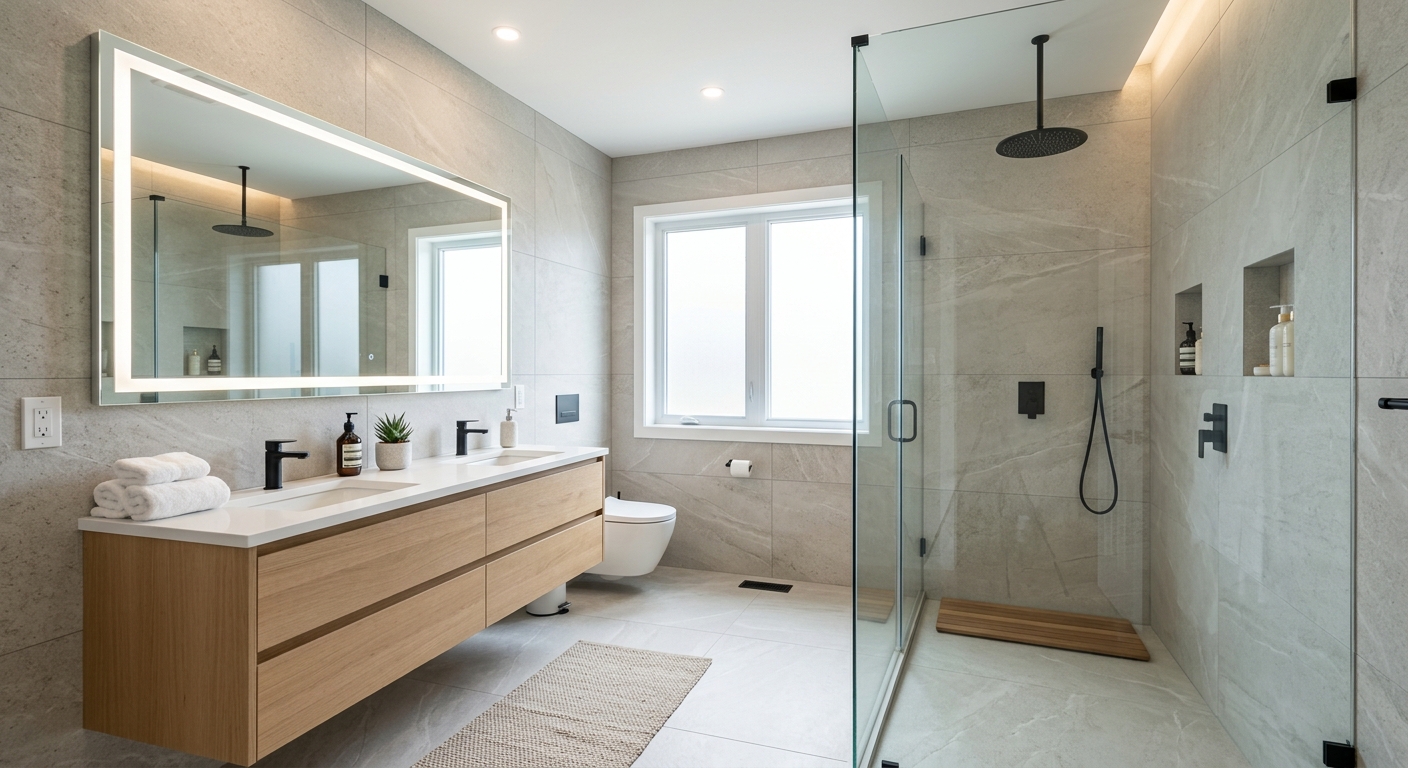
Bathroom renovation options and costs in Sidney
Bathroom renovation in Sidney can range from a simple refresh to a full gut-and-rebuild, depending on how much you want to change. With 12,318 people in the community and 4,595 homeowner households (Statistics Canada, 2021 Census), many projects here are driven by owner-occupier timelines: updating comfort, resale appeal, and aging systems rather than “staging-only” updates. Sidney also has a large base of older housing—43.7% of homes were built before 1981 (Statistics Canada, 2021 Census)—so it’s common to run into legacy plumbing layouts, dated vents, and potentially asbestos-containing materials in older flooring or drywall compounds. Those realities matter far more than our generally mild maritime climate.
On Vancouver Island and the Coast, bathroom costs are mainly shaped by labour availability and the age of the housing stock. General contractors often bill about 80–120 per hour, while plumbers and electricians are commonly in the 100–150 per hour band, so opening walls quickly becomes the largest line item. In older Sidney homes, you may discover galvanized supply lines, cast-iron or older drain stacks, and insufficient fan venting; that’s what can push a “mid-range” renovation toward a higher budget even before you pick tile.
In the North Saanich side of Sidney and around parts of the Sidney North-East area, trades demand can be especially strong because the housing mix includes a lot of pre-1980 builds and long-established neighbourhoods where access and staging are tight. Next, use the table below to compare common scopes and realistic price ranges for Sidney projects.
| Renovation Scope |
What's Included |
Typical Duration |
Price Range |
| Cosmetic refresh (paint, fixtures, accessories only) |
Paint, replace vanity top or vanity, new faucets, mirror/lighting, toilet accessory swaps, re-caulk, basic accessory upgrades |
2–5 days |
$3,000–$7,000 |
| Mid-range full renovation (new tile, vanity, tub/shower, electrical) |
Demo and rebuild of shower/tub surround and floor tile, new vanity, new toilet (if desired), exhaust fan upgrade, updated lighting, standard waterproofing system, disposal |
2–4 weeks |
$15,000–$25,000 |
| High-end full renovation (custom tile, steam shower, heated floors) |
Custom shower or tub surround, higher-end waterproofing and tile layout, heated floor circuit, upgraded fan/ducting, designer fixtures, niche/linear drain option |
3–6 weeks |
$25,000–$35,000 |
| Shower-only installation (convert tub to walk-in shower) |
Remove tub, new shower pan and waterproofing, wall tile, new valve trim/controls, glass door (if selected), fan/exhaust refresh as needed |
2–4 weeks |
$10,000–$18,000 |
| Bathtub replacement or tub-liner install |
Remove and replace tub OR install tub liner, re-seal and re-tile the immediate surround, new tub valve trim, test for leaks |
1–3 weeks |
$4,000–$7,000 |
| Tile-only installation (floor + surround, existing layout kept) |
Tile floor and shower/tub surround, pre-surface prep, waterproofing to the areas tiled, grout/seal, matching thresholds |
1–3 weeks |
$6,000–$12,000 |
Prices are estimates only and vary by project scope, site access and material selection.
What affects the price of bathroom renovation in Sidney
Two homeowners can receive quotes for the same-looking bathroom and still see a 30–50% difference across Vancouver Island and Coast markets—and across British Columbia—because “bathroom renovation” isn’t one standardized scope. The biggest drivers are regional labour rates and the age of the housing stock, not our mild maritime climate. Trades in southern BC commonly price high-skill hours accordingly: general contractors often at 80–120 per hour, and plumbers/electricians at 100–150 per hour. When walls come open, labour also expands because the work becomes troubleshooting and rough-in corrections, not just finishing.
Sidney’s older homes are a good example: with 43.7% built before 1981, it’s more likely you’ll find cast-iron or older drain stacks that need upgrading, galvanized supply lines, or ventilation that’s undersized for modern exhaust requirements. That’s how a project that could land near the mid-range full renovation band (often around $15,000–$25,000) can move toward the high-end full renovation band (commonly $25,000–$35,000) once extra rough-in and electrical upgrades are confirmed.
Asbestos-related scope is another cost swing factor. If asbestos-containing materials are suspected in vinyl floor tile, drywall compound, or insulation, abatement protocols can add $1,500–$5,000+ to the budget. Concrete examples I see in Sidney: (1) replacing an exhaust fan tied into an old duct route that can’t properly vent outdoors, (2) needing to correct a bathroom subfloor that’s unlevel by more than expected, and (3) addressing corrosion in older metal drain components when tying into new shower plumbing.
| Price Factor |
Why It Matters |
Cost Impact |
| Layout change — moving drain or supply lines requires rough-in work |
New plumbing routes mean demolition plus re-framing/patching and additional pressure testing |
Often adds $3,000–$8,000 |
| Tile selection — large-format porcelain vs. mosaic vs. ceramic |
Harder materials and complex patterns increase prep time, cutting time, and install labour |
Typically shifts tile labour/material by $1,500–$6,000 |
| Fixture tier — builder-grade vs. mid-range vs. designer brands |
Higher tiers cost more and may require upgrades in valves, trim styles, and compatibility with rough-in |
Usually adds $500–$4,000 |
| Subfloor condition — rot or unlevel concrete adds scope |
Water damage and uneven substrates require remediation and additional underlayment/thinset systems |
Often adds $1,000–$5,000 |
| Electrical — adding GFCI outlets, exhaust fan, heated floor circuit |
New circuits and fan wiring need licensed electrical work and compliant load planning |
Commonly adds $800–$3,500 |
| Waterproofing method — membrane type and extent |
More complete coverage (walls, corners, benches, linear drain areas) increases labour and material |
Often adds $600–$2,500 |
| Older-home surprises — asbestos tile, cast-iron drains, galvanized pipes |
Hidden conditions trigger abatement, pipe replacements, and extra inspections/documentation |
May add $1,500–$10,000+ |
| Bathroom size — sq ft drives tile and labour time directly |
Larger floors and wall areas mean more waterproofing, more thinset coverage, and longer install time |
Varies widely (often $2,000–$8,000) |
Permits & regulations in British Columbia
In British Columbia, many bathroom “cosmetic” updates typically don’t need a permit—especially work that doesn’t alter structure or service routes. Swapping fixtures such as taps, shower heads, toilets, vanity replacements, mirrors, and doing retiling limited to existing surfaces usually falls under normal renovation work without new plumbing rough-in. However, you should expect permits when the renovation changes how the plumbing/electrical systems connect.
Typical work that DOES require permits and inspection in BC includes: relocating plumbing (moving a drain or supply line), installing or re-routing exhaust fan ducting that changes venting, and any structural wall changes that affect framing or openings. Electrical changes also generally require proper code compliance and must be performed by a licensed electrician (or signed off by one). That includes adding or upgrading circuits for heated floors, adding new lighting, or installing new exhaust fan connections where wiring is modified.
For a Sidney homeowner, verify in a simple order: (1) ask your contractor for their BC trade licence details and confirm it through the appropriate online registry listing, (2) request a certificate of liability insurance showing they’re insured for renovation work at your address, and (3) confirm workplace coverage—commonly verified through WCB clearance documents or equivalent proof that matches their employer/contractor status. Where a project includes any plumbing rough-in changes, confirm the permit responsibility in writing so you know who pulls permits, pays fees, and schedules inspections.
Choosing tile, waterproofing and fixtures for your Sidney bathroom
In Sidney, your bathroom budget is usually determined by three material decisions: tile choice, waterproofing system, and fixture tier. Start with tile. Ceramic tile is a strong entry option for bathrooms where you want a classic look on a controlled budget, but it typically involves more visible grout lines and can require extra layout care on small floors. Porcelain offers a denser, more water-friendly surface and usually installs with better performance for higher-traffic bathrooms—especially for floors. Natural stone (marble, travertine, slate) looks premium, but it’s more sensitive to sealing and requires careful selection and installation to prevent staining and uneven finishes.
Next is waterproofing—this matters in Vancouver Island’s real-world humidity and condensation cycles, even if we don’t have extreme weather. A paint-on membrane can work in the right system, but bonded sheet membranes or a properly detailed schluter-style assembly generally provide more consistent coverage in wet areas and at transitions when installed correctly. The “best” waterproofing is the one matched to your shower design, substrate condition, and the total extent of wet zones (walls to a consistent height, corners, benches, and around linear drains if you go that route).
Finally, fixtures: builder-grade saves money upfront, but mid-range or designer brands can pay off in day-to-day reliability—especially shower valves, thermostatic controls, and drainage components that work smoothly for years. A practical example: if you’re choosing between standard wall tile and porcelain plus a higher-end valve trim, the extra cost is justified when the valve rough-in and trim compatibility reduces warranty issues later. If the rough-in is already in good shape and your layout is staying put, spending more on waterproofing continuity can be the better “bang for buck” than upgrading every visible finish.
| Material / Option |
Pros |
Cons |
Price Range |
| Ceramic tile (floor + walls) |
Entry-friendly cost, wide colour/style options, good appearance retention when installed on a stable substrate |
More porous than porcelain in some cases; grout lines more visible; requires careful sealing/maintenance |
$2,500–$6,500 |
| Porcelain tile (floor + walls) |
Low water absorption, strong for floors, cleaner look with fewer “soft spots,” more consistent finish |
Heavier tile can increase handling time; some large formats demand flatter substrates |
$5,500–$10,000 |
| Natural stone (marble, travertine, slate) |
Luxurious look and unique veining, premium “custom home” feel |
Sealing/maintenance required; some stones are softer and need careful selection for wet-area use |
$8,000–$15,000 |
| Frameless glass shower enclosure |
Brightens the room, modern appearance, easy cleaning compared with framed units |
Glass and hardware cost can add up; requires precise measurements and solid wall support |
$2,500–$7,500 |
| Prefab tub surround (acrylic) |
Faster installation, water-resistant by design, fewer tile labour hours |
Fewer design options than full tile; may not achieve the same “high-end” look |
$1,500–$4,000 |
| Custom shower pan (tile or linear drain) |
Best curb/zero-threshold integration, improved drainage design, sleek modern linear options |
More waterproofing and build-up work; substrate must be prepared very precisely |
$3,500–$10,000 |
How to choose a bathroom renovation contractor in Sidney
Choosing the right contractor in Sidney starts with verification. First, confirm they’re legitimately licensed for the work they’ll perform in British Columbia (and that their crew matches the scope). Second, ask for liability insurance and ensure the certificate is current and includes renovation work for residential properties. Third, confirm their workplace coverage—typically through WCB clearance documentation or equivalent proof that matches their legal employer status. If they can’t provide these items promptly, that’s a serious warning sign.
Next, request 2–3 itemised written quotes. A good quote should separate labour and materials (tile, waterproofing products, fixtures, glass, disposal) rather than one lump sum. It should also clearly list what’s included for site protection, prep, disposal, and whether permits are pulled by the contractor. Pay attention to inclusions and exclusions: for example, does the scope include subfloor repair if the substrate is out of level, or is that billed as an extra?
Warranty matters. Ask for: workmanship warranty length, product/manufacturer warranty details, and whether warranties remain valid if you sell the home (transferable coverage). Payment schedule is also key—never pay more than about 10–15% upfront. Hold back the balance until critical milestones are complete and the work passes final checks. Finally, lock in a written timeline with start date and an estimated completion date, including how long procurement typically takes for tile, glass, and specialty fixtures.
- Ask for BC licence/permit responsibility in writing before you sign.
- Confirm liability insurance certificate is current and matches the project address.
- Verify WCB/workplace coverage through clearance documentation.
- Require itemised quote: labour + materials + disposal, not just a total.
- Check scope for waterproofing method and extent (walls, corners, transitions).
- Ask who orders and pays for permits and inspections if plumbing/electrical changes occur.
- Confirm how old plumbing/electrical surprises are handled (cost-sharing or change orders).
- Request a detailed demolition and clean-up plan (dust control, bathroom access).
- Verify warranty terms for both workmanship and products (and whether transferable).
- Use a milestone-based payment schedule with a holdback until completion.
- Confirm lead times for tile, glass doors, and specialty valves/heated floors.
- Get completion sign-off criteria (water test, leak test, fan operation check).
Red flags in Sidney include: a quote that’s only a single lump sum with no breakdown; promises to “avoid permits” for plumbing relocation; reluctance to provide insurance/licence or proof of workplace coverage; no clear waterproofing details; and a payment request for more than 10–15% upfront without a defined deposit agreement and milestone plan.
Frequently asked questions — bathroom renovation in Sidney
How much does a bathroom renovation cost in Sidney?
In Sidney, most homeowners typically budget anywhere from about $10,000–$35,000 for a full bathroom renovation, depending on how much plumbing/electrical work and tile you’re changing. If you’re doing a cosmetic refresh (paint, fixtures, accessories only), it can be noticeably lower, but most real upgrades land in the mid-range or full-reno bands once walls are opened. Because Sidney’s housing stock is older—43.7% built before 1981—quotes can swing when contractors discover issues like dated drain layouts, inadequate venting, or the need for additional rough-in work. On Vancouver Island and the Coast, labour rates and these older-home surprises usually drive the variance more than the mild climate itself. Always compare quotes with the same scope, especially waterproofing and venting.
How long does a bathroom renovation take in Sidney?
Typical timelines in Sidney range from about 2–5 days for a cosmetic refresh to roughly 2–4 weeks for a mid-range full renovation, depending on demolition complexity and material lead times. A high-end renovation with custom tile layouts, steam shower components, or heated floors often lands closer to 3–6 weeks. The schedule commonly expands when older homes need extra time for rough-in corrections—like adjusting plumbing routes, upgrading exhaust fan ducting, or correcting an out-of-level subfloor. On Vancouver Island, ordering glass enclosures and specific tile formats can also add days to weeks. A good contractor should provide a written start date and a realistic completion estimate, including procurement lead times and inspection scheduling for any plumbing or electrical work that requires permitting.
Do I need a permit for a bathroom renovation in British Columbia?
In British Columbia, many cosmetic updates don’t require a permit—like replacing a vanity, swapping faucets, updating lighting, or retiling limited to existing surfaces. However, permits are commonly required when you relocate plumbing (moving a drain or supply line), change venting with new exhaust fan ducting routes, or make electrical changes that involve new circuits or significant upgrades. Electrical work must meet BC code and be done or signed off by a licensed electrician. If you’re in a Sidney home built before 1981, there’s also a higher chance hidden conditions extend the scope, which can affect whether permitting is needed. Before work starts, confirm with your contractor exactly what triggers permits and who pulls them, so the inspection process doesn’t surprise you later.
What's the best tile for a bathroom in Sidney?
The “best” tile for a Sidney bathroom usually depends on where it’s installed and how modern you want the look. For floors, porcelain is often the safer all-around choice because it has low water absorption and holds up well in wet-zone use—especially when paired with a correctly detailed waterproofing system. Ceramic can be a good entry option on the right layout, but grout lines and surface characteristics matter more over time. Natural stone looks high-end and can elevate resale appeal, but it requires careful selection for wet areas and proper sealing/maintenance. If you’re trying to keep budget controlled, porcelain plus a straightforward pattern often gives the best durability per dollar. If your goal is a premium finish, spending on stone or higher-end porcelain is most justified when your substrate is sound and the installer’s waterproofing and layout are top quality.
Should I do a tub-to-shower conversion?
A tub-to-shower conversion is commonly worth considering in Sidney if you want lower maintenance, better day-to-day accessibility, or you’re planning to modernize the bathroom’s flow. Conversions typically fall within the shower installation pricing band—often around $4,000–$15,000 depending on whether you’re just swapping the surround or changing plumbing and drainage details. In older homes (especially those built before 1981), conversion plans may cost more if the drain stack, venting, or supply routing needs upgrades after walls open up. The value is strongest when you keep the layout close to the existing plumbing and invest in a reliable shower pan and waterproofing. If you want a glass enclosure and a linear drain, budget for the higher scope too, since glass and specialized pan builds increase labour and material.
How do I prevent mold in a Sidney bathroom?
Mold prevention in Sidney comes down to moisture control and correct installation. Start with ventilation: ensure your exhaust fan moves air effectively and vents outdoors rather than recirculating to an attic or wall cavity. Second, waterproofing must be continuous in wet areas—especially around the shower/tub transitions, corners, niches, and any bench or curb details. The right membrane system matters, but it’s also about workmanship: proper prep, correct overlaps, sealed transitions, and correct curing before tiling. Third, manage day-to-day moisture: run the fan during and after showers and keep door and windows habits consistent if you have them. Because many Sidney homes are older (43.7% built before 1981), inspect for past water damage and replace any compromised subfloor materials. If abatement is needed due to older asbestos-containing materials, address it early so the waterproofing system is installed on a safe, stable base.