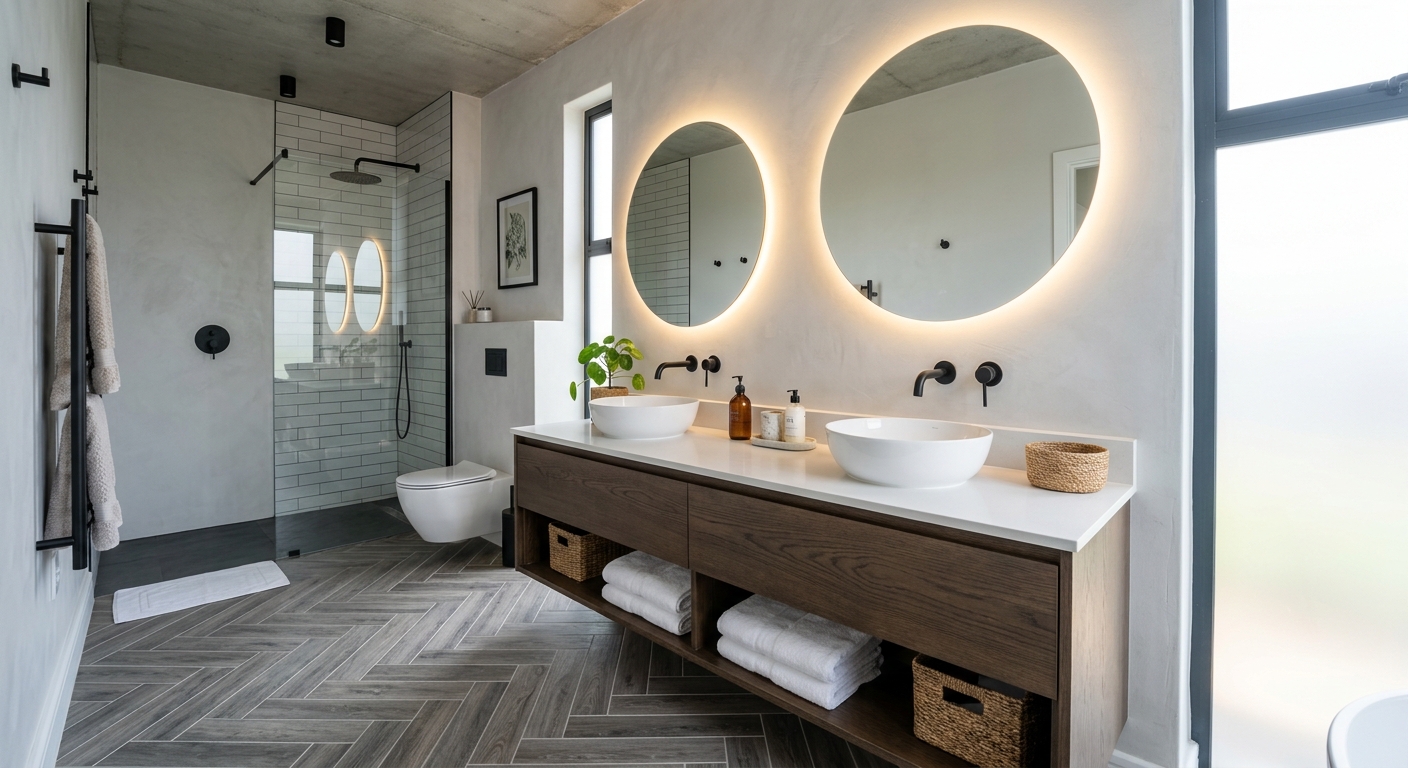
Bathroom renovation options and costs in Victoria-Downtown
In Victoria-Downtown, homeowners usually start by comparing bathroom renovation options that range from a quick refresh to a full system replacement. The biggest reason these projects vary is that Victoria-Downtown housing includes a mix of older stock—your home may be in the kinds of pre-1980 builds where older plumbing layouts, dated venting, and occasional asbestos-containing materials in legacy floor coverings become real risks once walls are opened. With a population of 46,309 in the area (Statistics Canada, 2021 Census), there’s consistent demand, but the same demand also means scheduling can be tight around peak contractor availability.
On Vancouver Island and Coast, the mild maritime climate helps, but it doesn’t eliminate the failure points that drive costs: moisture management, exhaust performance, and how well the substrate is prepared before waterproofing. In Victoria-Downtown, I see older homes in neighbourhoods like James Bay where the “simple job” turns into added scope—think cast-iron or copper drain stacks that need upgrading, galvanized supply lines, and electrical that requires modern BC-compliant safety upgrades.
Because trade labour on Vancouver Island commonly runs in the 80–120 per hour range for general work and 100–150 per hour for licensed plumbers and electricians, labour quickly becomes the largest line item. That’s why a mid-range full renovation and a high-end option can differ dramatically even if the bathroom footprint is similar. Use the table below to align your goals with realistic price bands before you ask for quotes.
| Renovation Scope |
What's Included |
Typical Duration |
Price Range |
| Cosmetic refresh (paint, fixtures, accessories only) |
Paint, new vanity accessories, swap toilet/vanity top (no relocation), lighting refresh, caulking & reseal |
3–7 days |
$3,500–$8,000 |
| Mid-range full renovation (new tile, vanity, tub/shower, electrical) |
Demo & prep, waterproofing, floor + wall tile, new vanity, new tub/shower surround, fan/exhaust upgrade, updated GFCI, standard rough-in checks |
2–4 weeks |
$15,000–$28,000 |
| High-end full renovation (custom tile, steam shower, heated floors) |
Premium tile/stone, custom shower/steam components, heated floors, higher-end fixtures, upgraded electrical circuits, improved ventilation, detailed waterproofing build-up |
4–7 weeks |
$28,000–$45,000 |
| Shower-only installation (convert tub to walk-in shower) |
Tear out tub, pan prep, waterproofing, walk-in shower glass-ready layout, tile surround, drain adjustments (where needed), exhaust/fan tie-in |
2–3 weeks |
$8,000–$20,000 |
| Bathtub replacement or tub-liner install |
Replace tub (or install liner), surface prep, new surround tie-ins, recaulk & rewaterproof as required, basic plumbing checks |
1–2 weeks |
$3,500–$9,000 |
| Tile-only installation (floor + surround, existing layout kept) |
Tile removal & set, substrate assessment, waterproofing upgrades where necessary, grout/finishes, matching trim |
1–3 weeks |
$6,500–$16,000 |
Prices are estimates only and vary by project scope, site access and material selection.
What affects the price of bathroom renovation in Victoria-Downtown
In Victoria-Downtown and across the Vancouver Island and Coast region, it’s common to see quote differences of 30–50% for the “same” bathroom. The usual driver isn’t the tile choice—it’s the reality of Vancouver Island labour rates and the age of local housing stock. Trades often bill in the 80–120 per hour range for general work and 100–150 per hour for plumbers and electricians, so once labour time expands, the total moves quickly.
Older homes—especially those built before 1980—can hide constraints that add cost even when your design is simple. You may discover cast-iron or copper drain stacks that need upgrading, galvanized supply lines that can’t safely connect to modern valves, and ventilation that’s undersized for today’s bathroom humidity loads. When pre-1985 materials contain asbestos (sometimes in legacy vinyl floor tile, drywall compound, or insulation), the budget can jump because the work may require professional abatement protocols. In practice, that can add roughly $1,500–$5,000+ depending on the extent and access.
Two examples from Victoria-Downtown projects I’ve managed: (1) keeping the tub-to-shower conversion “on the same footprint” is often much cheaper than relocating a drain—moving drain lines typically means more rough-in time and sometimes structural adjustments; (2) if your subfloor is uneven or has soft spots around older plumbing penetrations, the prep work can change from a “set tile” job to a “rebuild the base” job. That’s why a full renovation can land in the $10,000–$35,000 band, but similar bathrooms with different hidden conditions can push well toward the upper end.
| Price Factor |
Why It Matters |
Cost Impact |
| Layout change — moving drain or supply lines requires rough-in work |
Requires plumbing demolition, new runs, wall/floor patching, and testing |
Often adds $3,000–$10,000 to a mid-range renovation |
| Tile selection — large-format porcelain vs. mosaic vs. ceramic |
Higher-end products may be heavier, require more precise substrates, and increase labour time |
Can swing tile-and-install spend by $1,500–$7,000 |
| Fixture tier — builder-grade vs. mid-range vs. designer brands |
Material cost, trim complexity, and supply lead times |
Typically $500–$5,000+ difference |
| Subfloor condition — rot or unlevel concrete adds scope |
May require shimming, rebuilds, moisture corrections, and more waterproofing prep |
Often $1,000–$6,000 depending on severity |
| Electrical — adding GFCI outlets, exhaust fan, heated floor circuit |
Licensed work, permitted circuits, and additional labour for chase/patch |
Commonly $800–$4,000+ |
| Waterproofing method — membrane type and extent |
Correct system prevents mould and failure; better systems can take more labour/steps |
Varies by $500–$3,000 in typical projects |
| Older-home surprises — asbestos tile, cast-iron drains, galvanized pipes |
Abatement, replacement, permit requirements, and extra rough-in time |
Can add $1,500–$10,000+ depending on findings |
| Bathroom size — sq ft drives tile and labour time directly |
More area = more waterproofing, more setting time, more thinset/grout, more waste |
Small baths can be $2,000–$8,000 less than larger ones |
Permits & regulations in British Columbia
In British Columbia, many purely cosmetic upgrades in a Victoria-Downtown bathroom typically do not require a permit—things like swapping a vanity, changing lighting fixtures, replacing a toilet (without moving plumbing connections), repainting, or redoing accessories and caulking. However, once you relocate plumbing or change how moisture is handled electrically, permitting and inspections are much more likely.
Work that does usually require a permit and inspection includes: moving a toilet, relocating a drain or supply line, adding or changing plumbing beyond simple replacement-in-place, adding a new exhaust fan with new wiring/circuit work, and any structural wall changes. Electrical work must meet BC code and be performed or signed off by a licensed electrician—this commonly includes new GFCI receptacles, wiring for heated floors, or updates to bathroom lighting circuits.
Here’s how I recommend Victoria-Downtown homeowners verify a contractor step-by-step:
- Ask for the contractor’s British Columbia trade licence (and confirm the right class matches the work).
- Request a current certificate of liability insurance and check the policy covers renovation work for the project dates.
- Confirm appropriate coverage for workers; if they use subcontractors, insist each is properly insured/covered for their portion.
- If permits are required, ask: “Who pulls the permit and who attends inspections?”
- Look for proof of clearance/coverage as applicable and keep copies in your contract package.
If a contractor downplays permits for plumbing or exhaust upgrades, that’s a yellow flag—especially in older Victoria homes where hidden conditions can expand scope once walls are open.
Choosing tile, waterproofing and fixtures for your Victoria-Downtown bathroom
For a Victoria-Downtown bathroom renovation, your budget usually hinges on three material decisions: tile choice, waterproofing system, and fixture tier. First, tile: ceramic is the entry point and can be cost-effective when you’re working with smaller formats and simpler layouts. Porcelain costs more, but it’s denser, handles frequent wetting better, and often comes in large-format sizes—just note that large-format tile demands flatter substrates and careful installation to avoid lippage.
Second is waterproofing. In British Columbia, mould risk is real because bathrooms cycle through periods of high humidity. A paint-on membrane can work for some applications, but bonded sheet membranes and modern engineered systems typically provide a stronger, more predictable barrier when installed to the full spec. The right waterproofing isn’t just about the product—it’s about overlapping details, corners, and how the system is carried up walls and transitions.
Third is fixture tier. Builder-grade fixtures keep initial costs lower, while mid-range and designer options can improve performance, finish durability, and resale appeal. For example, if you’re choosing between a mid-range shower kit versus a more upscale valve/trim set, spending extra can be justified when it also reduces future service calls—especially in older homes where access to plumbing is more expensive once the walls are finished.
In Victoria-Downtown, a practical approach is to allocate budget to waterproofing and substrate prep first, then pick tile style and glass last. A common “good value” path is porcelain tile plus a robust waterproofing system: you’re often better off than going heavy on natural stone while cutting corners on membrane details.
| Material / Option |
Pros |
Cons |
Price Range |
| Ceramic tile (floor + walls) |
Lower material cost, good variety of colours/patterns, friendly for entry-level renovations |
Often less durable for wet zones than porcelain; may require more careful selection for slip resistance |
$2,500–$6,500 |
| Porcelain tile (floor + walls) |
Improved water resistance, wider style options (including larger formats), strong durability |
Requires flatter substrate; larger tiles can increase installation precision time |
$4,500–$10,000 |
| Natural stone (marble, travertine, slate) |
Luxury look, unique character, premium finish options |
More expensive material; needs careful sealing and selection; installation complexity increases |
$8,000–$16,000 |
| Frameless glass shower enclosure |
Bright, modern look; can make smaller bathrooms feel larger; premium hardware options |
Costly hardware; requires precise measurements and robust waterproofing detailing |
$2,800–$6,500 |
| Prefab tub surround (acrylic) |
Fast install, consistent fit, easier maintenance, good for quick turnarounds |
Less “custom” visual impact than tile; may not suit every layout/design goal |
$1,500–$4,000 |
| Custom shower pan (tile or linear drain) |
Modern drain lines, great design flexibility, cleaner slope control |
Higher labour due to pan build; strict waterproofing and thickness management required |
$4,000–$12,000 |
How to choose a bathroom renovation contractor in Victoria-Downtown
Choosing the right contractor in Victoria-Downtown starts with proof. First, verify British Columbia licensing for trades involved (or the contractor’s coverage for the scope they’re advertising). Next, request a current certificate of liability insurance—it should match the nature of renovation work and be valid for your project dates. Finally, confirm worker coverage: if subcontractors are used, ask who they are and whether their insurance/coverage is in place. If any part of the scope includes plumbing or electrical, those trades should be properly licensed and documented.
Then, get 2–3 itemised written quotes with labour and materials broken out rather than a vague lump sum. A good quote lists demolition, rough-in adjustments (if any), waterproofing type, tile quantities/allowances, fixture allowances, glass pricing, and whether permits and disposal are included. Read what’s explicitly excluded—like subfloor repairs, asbestos-related remediation, or upgrading an undersized exhaust fan.
Warranty matters too. Ask for the workmanship warranty length, whether it’s transferable to future owners, and how the manufacturer warranty applies to fixtures, membranes, and waterproofing components. For payment, never allow more than 10–15% upfront; keep a holdback until completion and final walkthrough. Make sure your contract includes a start date and a completion estimate in writing so you can plan around the trades’ schedules.
- Confirm BC licences match the scope (plumbing/electrical vs general carpentry/tiling).
- Request certificate of liability insurance and verify coverage dates.
- Ask for itemised quotes (labour + materials + allowances).
- Confirm who pulls permits and attends inspections.
- Check whether disposal/dump fees are included.
- Review the demolition plan (how they’ll contain dust, protect floors and doors).
- Ask which waterproofing method they use and insist it matches the spec.
- Confirm tile quantities include waste factor and edge-trim details.
- Verify electrical scope (GFCI, exhaust fan circuit, heated floor circuit) is costed.
- Clarify timeline and lead times for glass/fixtures.
- Ask about workmanship warranty and whether it’s in the contract.
- Keep holdback until waterproofing cure, caulking, and final alignment checks are done.
Red flags I see in Victoria-Downtown: contractors who (1) quote a full renovation without seeing your plumbing/electrical constraints, (2) avoid discussing waterproofing details, (3) offer only lump-sum pricing with no allowances or exclusions, (4) want high deposits (beyond 10–15%), or (5) can’t clearly explain permit responsibility for plumbing/exhaust electrical upgrades.
Frequently asked questions — bathroom renovation in Victoria-Downtown
How do I choose the right contractor for my bathroom in Victoria-Downtown?
Start by matching the scope to credentials. In Victoria-Downtown and across British Columbia, plumbing and electrical need proper licensing, and the contractor should provide proof like a valid licence record and current liability insurance before you sign. Next, request 2–3 itemised quotes—labour and materials separated—not one lump figure. Look for explicit waterproofing methods, who pulls permits, and whether disposal is included. For older homes, ask how they handle older piping/venting and whether they’ve priced contingencies for surprises. If one quote is wildly lower than the $10,000–$35,000 full-renovation band, it often means missing scope (like prep, waterproofing system details, or fan/exhaust work).
What's the most common mistake homeowners make in bathroom renovations?
The most common mistake I see in Victoria-Downtown is prioritising finishes while under-budgeting the “system” side: substrate prep, waterproofing, ventilation, and electrical safety. Homeowners may choose a stunning tile pattern, then find the floor is out of level, the fan venting is inadequate, or the wiring needs upgrading once walls open—especially in older Vancouver Island housing where legacy layouts are common. Another frequent error is assuming permits are optional when they’re actually triggered by plumbing relocation or new exhaust fan circuits. If you want a renovation that doesn’t come back for mould issues or leaks, allocate enough budget to waterproofing build-up and to keeping ventilation code-compliant.
How long does tile installation take in a Victoria-Downtown bathroom?
Tile time depends on how much prep and waterproofing is required and whether the layout is changing. For a straightforward tile-only installation where the existing layout is kept, many Victoria-Downtown projects take about 1–3 weeks from surface prep through grout and final detailing. If you’re doing a full renovation with tile plus waterproofing transitions, expect longer—often 2–4 weeks overall for a mid-range full reno, because tile must wait for rough-in completion and waterproofing cure times. Larger-format porcelain and custom shower pans can add time due to substrate accuracy requirements and more careful setting, especially when older subfloors need rebuilding.
How much does a bathroom renovation cost in Victoria-Downtown?
In Victoria-Downtown, a full bathroom renovation commonly lands in the $10,000–$35,000 range, with many real projects clustering toward the middle once labour, waterproofing, and electrical/plumbing upgrades are included. Cosmetic-only refreshes can be lower, while high-end work—like heated floors or custom shower features—often pushes upward within that band or beyond depending on selections. Labour is a major driver on Vancouver Island: general contractor rates are commonly 80–120 per hour, and licensed plumbers/electricians are often in the 100–150 per hour band. Older homes can also reveal surprises (cast-iron drains, galvanized lines, or asbestos-containing materials) that expand scope and budget.
How long does a bathroom renovation take in Victoria-Downtown?
Timelines vary, but you can plan with realistic ranges. Cosmetic refresh projects are often 3–7 days. A shower-only conversion typically takes about 2–3 weeks. A mid-range full renovation commonly runs 2–4 weeks, while high-end full renovations that involve custom showers, heated floors, and more complex detailing often take 4–7 weeks. In Victoria-Downtown, scheduling can also be affected by contractor availability and product lead times (especially glass and certain fixture lines). If your home is older and requires extra rough-in work—venting upgrades, plumbing adjustments, or electrical upgrades—expect the schedule to expand until inspections and waterproofing steps are complete.
Do I need a permit for a bathroom renovation in British Columbia?
Often, cosmetic updates in British Columbia don’t require a permit. Swapping fixtures, repainting, retiling without moving plumbing, or replacing a vanity typically falls into the “no permit” category. Permits are more likely when you relocate plumbing (moving drain or supply lines), change the exhaust approach (like adding/upgrading a fan with new wiring), or make structural changes to walls. Electrical work must meet BC code and be performed or signed off by a licensed electrician. For a Victoria-Downtown bathroom, the safest path is to ask your contractor what requires permitting in your specific scope and confirm who pulls the permits and attends inspections—especially if your home is older and hidden conditions are possible.