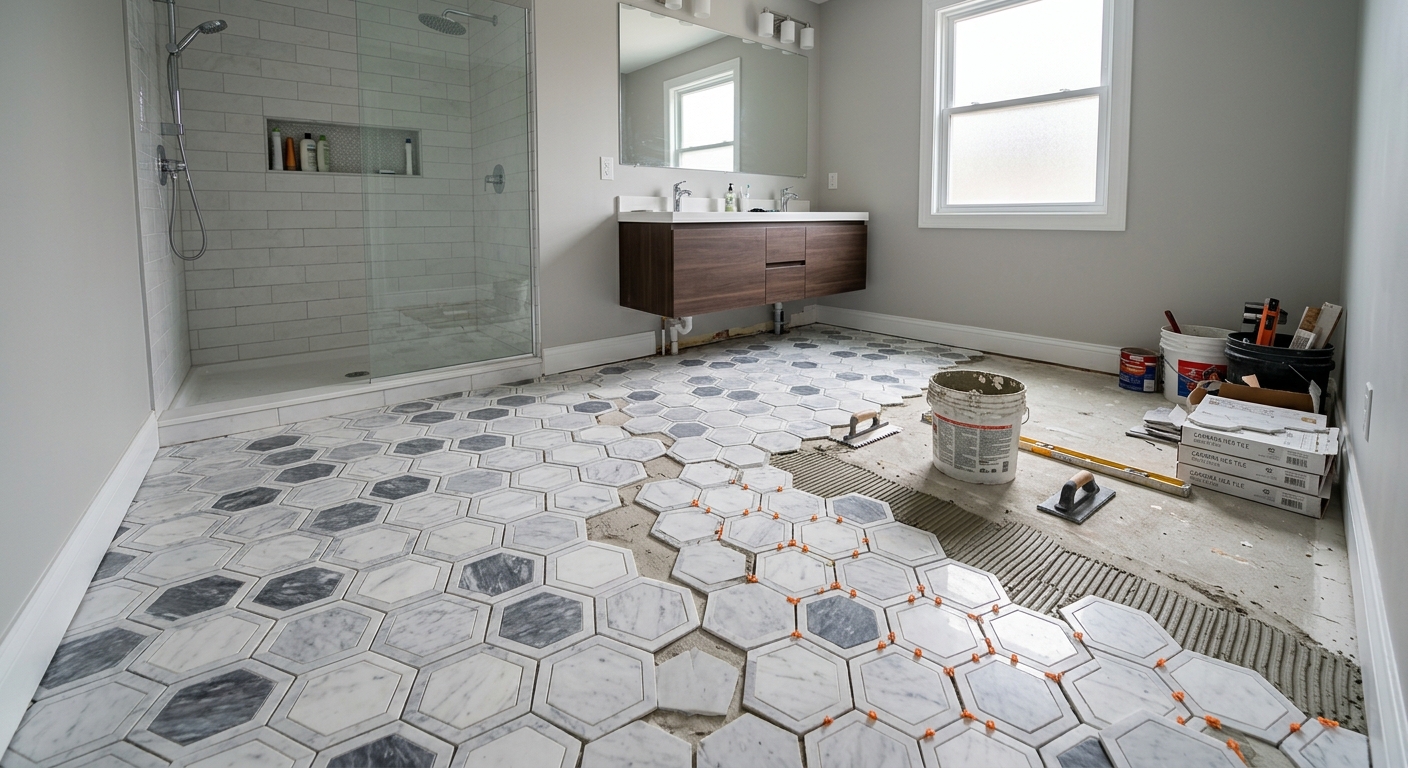
Bathroom renovation options and costs in Newtonbrook West
Bathroom renovation options in Newtonbrook West, Ontario usually start with a question homeowners ask: “What’s the smallest change that still makes it feel new?” With Newtonbrook West sitting in the broader Toronto area and a population of 23,831 (Statistics Canada, 2021 Census), demand is steady and competition among reputable trades is strongest for projects that can be scheduled quickly—especially in the Bayview Avenue and Yonge Street corridor where older homes are common. In practice, many of the homes built before 1980 have dated plumbing layouts, and you’ll often see cast-iron or undersized drain runs behind finishes. Those factors—not weather—are what push prices into the GTA’s low-to-mid five-figure range.
In the Toronto economic region, pricing is driven mainly by labour premiums and the age of the housing stock rather than climate. While Ontario doesn’t “break down” bathrooms the way harsh freeze-thaw climates can, the region’s indoor humidity still punishes poor waterproofing and weak ventilation. Contractor availability also affects timing and cost: during busy periods, tiled shower builds and plumbing bring-ups can take longer, which increases on-site labour and protection.
For example, a cosmetic refresh can be fast if your subfloor is solid. A mid-range full renovation—new tile, vanity, tub/shower, and electrical—typically lands in the low-to-mid $20,000s once plumbing/venting realities are confirmed. If you’re in an older post-war home near the Newtonbrook neighbourhood core, expect more “hidden scope” once walls open, such as galvanized supply lines or venting corrections. Use the table below as a practical way to compare renovation paths before you request quotes.
| Renovation Scope |
What's Included |
Typical Duration |
Price Range |
| Cosmetic refresh (paint, fixtures, accessories only) |
New paint, replace toilet/vanity top or vanity, swap faucets and accessories, re-caulk, lighting refresh (like-for-like), deep clean and caulk touch-ups |
3–7 days |
$3,500–$8,500 |
| Mid-range full renovation (new tile, vanity, tub/shower, electrical) |
Demo and rebuild of tub/shower surround and floors, mid-range vanity and fixtures, new exhaust fan and/or upgraded venting (as required), upgraded GFCI receptacle, basic plumbing refresh where accessible |
3–6 weeks |
$12,000–$24,000 |
| High-end full renovation (custom tile, steam shower, heated floors) |
Custom shower design with niche/bench, premium tile layout, heated floor circuit, frameless glass, enhanced ventilation, upgraded plumbing/valves where needed, designer fixtures |
5–10 weeks |
$24,000–$30,000 |
| Shower-only installation (convert tub to walk-in shower) |
Remove tub, build walk-in shower with new waterproofing, tile installation, new shower valve/trim (where feasible), install frameless or semi-frameless glass, patch ceiling and new exhaust fan if needed |
2–5 weeks |
$14,000–$22,000 |
| Bathtub replacement or tub-liner install |
Replace tub and fittings (or add liner where appropriate), re-tile/retile only where required, new sealant, minor plumbing hook-up adjustments, caulk and grout restoration |
1–3 weeks |
$3,500–$6,500 |
| Tile-only installation (floor + surround, existing layout kept) |
Remove existing tile, waterproof where required, install new floor tile and tub/shower surround to spec, grout/caulk, re-install fixtures (no major plumbing relocation) |
1–3 weeks |
$6,000–$16,000 |
Prices are estimates only and vary by project scope, site access and material selection.
What affects the price of bathroom renovation in Newtonbrook West
It’s common in Toronto to see the “same” bathroom renovation quoted 30–50% apart, even when homeowners pick similar-looking finishes. The biggest reasons are regional labour rates and the age of local housing stock, not Toronto’s outdoor weather. Bathroom work is labour-intensive—especially tiling, custom showers, and any re-routing of drains and venting. In older Newtonbrook West homes, once walls and floors open, contractors often find drain stacks that are corroded or poorly sized, galvanized supply lines, or insufficient venting. That’s when a job that should sit near the lower end of the $12,000–$30,000 full renovation range can climb.
Asbestos risk also plays a real role in cost variability. If a pre-1985 home has suspect vinyl floor tile, backing, or old drywall compounds, abatement may be required. In that scenario, many projects add roughly $1,500–$5,000+ for licensed abatement, packaging and disposal—timing and labour increase with it too.
Concrete examples from Newtonbrook West: (1) keeping your tub-to-drain position can save several thousand dollars because rough-in stays in place; (2) switching from small mosaic to large-format porcelain often increases labour and waste due to layout and substrate prep; (3) upgrading ventilation (better fan and duct run) can add cost, but it usually prevents callback issues like recurring moisture around the shower. Whether your budget is closer to a mid-range full renovation at $12,000–$24,000 or a higher-end build approaching $24,000–$30,000, the scope drivers below explain why.
| Price Factor |
Why It Matters |
Cost Impact |
| Layout change — moving drain or supply lines requires rough-in work |
Relocating plumbing involves cutting subfloor/walls, re-routing drains, and sometimes venting corrections |
$2,000–$8,000+ |
| Tile selection — large-format porcelain vs. mosaic vs. ceramic |
Harder materials and tighter tolerances increase labour, substrate prep, and cutting complexity |
$1,500–$6,000 |
| Fixture tier — builder-grade vs. mid-range vs. designer brands |
Higher-end valves, trims, and toilets can raise material cost and sometimes complicate trim compatibility |
$500–$4,500 |
| Subfloor condition — rot or unlevel concrete adds scope |
Deck repair, new subflooring, or self-levelling may be needed to prevent cracked tile and failed waterproofing |
$1,000–$5,000+ |
| Electrical — adding GFCI outlets, exhaust fan, heated floor circuit |
New circuits require licensed electrical work, correct fan sizing, and safe tie-ins |
$600–$3,500+ |
| Waterproofing method — membrane type and extent |
System quality and coverage area determine long-term mould resistance and warranty confidence |
$800–$3,500 |
| Older-home surprises — asbestos tile, cast-iron drains, galvanized pipes |
Discovery triggers abatement, drain replacement, shut-off upgrades, and additional inspections |
$1,500–$10,000+ |
| Bathroom size — sq ft drives tile and labour time directly |
More surface area increases materials, thinset/grout, and hours for prep and setting |
$1,000–$6,000+ |
Permits & regulations in Ontario
In Ontario, cosmetic changes in a bathroom typically do not require a permit—things like swapping fixtures (toilet, vanity, faucet), repainting, replacing accessories, and retiling using the same layout usually fall under “repair and replacement.” Where permits often are needed is when you change services or structural components. For example, relocating plumbing (moving a drain or supply lines), adding a new or relocating an exhaust fan when it involves new electrical work, and making structural wall changes generally require permits and inspections. Electrical must meet Ontario’s electrical safety requirements and should be done and/or signed off by a licensed electrician.
A practical step-by-step approach for homeowners in Newtonbrook West is to treat your contractor’s documentation as part of the quote. First, ask for their Ontario trade licence number and confirm it through the appropriate provincial online registry for the trade they’re claiming (plumbing and electrical each need proper licensing). Next, request a current Certificate of Insurance showing liability coverage, and ask for WSIB/WCB (or the applicable clearance/coverage proof) for workers involved on-site. Finally, confirm what inspections are included: if rough-in plumbing or electrical is altered, you should expect permit pulls and inspection stages (rough-in and final).
If a contractor won’t provide licence and insurance documents before scheduling demolition, that’s a sign you should slow down—especially in older homes where venting and rough-in adjustments are common.
Choosing tile, waterproofing and fixtures for your Newtonbrook West bathroom
In Newtonbrook West, your bathroom budget is decided less by “what looks nice” and more by three linked choices: tile type, waterproofing system, and fixture tier. First is tile. Ceramic is usually the entry-level choice and can be cost-effective, but it’s typically less forgiving for floors if the substrate is even slightly out of level. Porcelain (often chosen for both floors and walls) is denser and handles moisture better, and it can look more upscale without the luxury pricing of natural stone.
Second is waterproofing. Ontario’s indoor humidity and the way showers get used every day means waterproofing quality matters. A paint-on membrane may be fine for some small applications, but for many tub-to-shower conversions and full shower builds, homeowners get the best long-term results from a bonded sheet membrane or a proven system approach with correct overlap, corners, and tie-ins.
Third is fixtures. Builder-grade trims reduce upfront spend, while mid-range and designer brands often bring better valve cartridges, more durable finishes, and a cleaner visual—helpful if you plan to sell in the future. For instance, moving from a basic shower valve and standard tile to a mid-range setup can add several hundred to a few thousand dollars, but the money is justified when it prevents rework after grout failures.
On a typical mid-range full renovation budget of $12,000–$24,000, you can often afford quality porcelain plus a robust waterproofing system. If you push into a higher-end $24,000–$30,000 build, that’s where custom linear drains, premium stone accents, and heated floors are usually worth it.
| Material / Option |
Pros |
Cons |
Price Range |
| Ceramic tile (floor + walls) |
Good entry value, many styles/colours available, straightforward to source |
Can be more brittle; requires careful substrate prep for floors |
$3,000–$7,500 |
| Porcelain tile (floor + walls) |
Moisture-resistant, more consistent for large formats, typically a smoother “premium” look |
Higher material cost; large-format tiles demand excellent prep and layout |
$6,000–$12,000 |
| Natural stone (marble, travertine, slate) |
Luxury appearance, unique veining and texture, strong resale appeal when installed correctly |
More expensive; can require sealing/extra maintenance and careful selection to avoid unevenness |
$10,000–$18,000 |
| Frameless glass shower enclosure |
Brightens the room, modern look, improved visual space perception |
More complex installation; depends on wall straightness and hardware selection |
$3,000–$7,500 |
| Prefab tub surround (acrylic) |
Fast install, often less labour-intensive than tile, easier to waterproof in certain systems |
Less custom look; seams and edges may not suit every design |
$1,200–$3,500 |
| Custom shower pan (tile or linear drain) |
High-end finish, better water control, cleaner drain lines when done right |
More labour and waterproofing detail work; requires strong waterproofing discipline |
$4,500–$12,000 |
How to choose a bathroom renovation contractor in Newtonbrook West
Choosing a bathroom contractor in Newtonbrook West comes down to proof, not promises. Start by verifying Ontario licensing and coverage. For each trade involved, ask for their Ontario trade licence information and confirm it through the relevant provincial online registry. Request a Certificate of Insurance that lists liability coverage for the renovation period and ask for WSIB/WCB clearance (or the applicable coverage proof) for their workers. If they can’t produce documentation quickly, don’t rely on “we’ll send it later”—your job timeline and risk profile depend on it.
Next, get 2–3 itemised written quotes that separate labour and materials. Look for line items for demolition, rough-in/plumbing adjustments, waterproofing, tile installation (including backer/substrate prep), electrical (GFCI and exhaust fan work), disposal, and any permit-related work. A lump-sum quote with vague exclusions is where misunderstandings happen.
Read the scope like a contract: what’s excluded (does it mention subfloor repairs, venting corrections, or asbestos testing/abatement), is permit pulling included, and is waste disposal included? Confirm warranty terms in writing: the workmanship warranty length, product manufacturer warranty, and whether warranties are transferable to you as the homeowner.
For payments, avoid paying large deposits. A safe practice is keeping upfront payments to about 10–15%, with a holdback until the job is complete and the punch list is addressed. Finally, insist on a start date and a completion estimate in writing, so you’re not guessing when tile setting and cure times are involved.
- Provide Ontario trade licence number(s) for the work they’re performing
- Show current liability insurance certificate before demolition starts
- Confirm WSIB/WCB coverage (or equivalent clearance proof) for workers
- Give you itemised labour vs. materials pricing (not a single lump sum)
- List waterproofing method and coverage details (membrane type, tie-ins)
- Clarify tile scope: grout type, sealant needs, and layout allowances
- State what happens if asbestos suspect materials are discovered
- Confirm permits/inspections responsibility and whether permit fees are included
- Include disposal and dump fees (or specify them clearly)
- Provide a detailed schedule with tile lead times and cure/inspection checkpoints
- Offer workmanship warranty in writing and specify warranty duration
- Use a payment schedule that keeps upfront payment near 10–15% with holdback
Red flags to watch for in Newtonbrook West: (1) “No need for permit” when plumbing or electrical layout is changing; (2) quotes that don’t mention waterproofing system details; (3) payments requesting most funds upfront; (4) contractors refusing to show licence/insurance/coverage paperwork; (5) vague exclusions like “as discovered” without a process for hidden conditions.
Frequently asked questions — bathroom renovation in Newtonbrook West
Do I need a permit for a bathroom renovation in Ontario?
In Ontario, many bathroom cosmetic updates in Newtonbrook West don’t require a permit—like replacing fixtures, repainting, or retiling using the same layout. Permits are typically needed when you change the plumbing or electrical scope. For example, relocating drain or supply lines, adding or relocating an exhaust fan with new wiring/circuits, and structural wall changes commonly trigger permit requirements and inspections. If your contractor is moving plumbing or adding electrical components beyond simple like-for-like swaps, ask directly whether they’ll pull permits and schedule inspections for rough-in and final. As a budget reference, a cosmetic refresh that stays within $3,500–$8,500 usually stays permit-light; once you’re planning a full renovation in the $12,000–$30,000 band with rough-in changes, permits are much more likely.
What's the best tile for a bathroom in Newtonbrook West?
The “best” tile is the one that matches your waterproofing and your floor/subfloor condition. For most Newtonbrook West bathrooms, porcelain is often the sweet spot: it’s moisture-resistant and works well for both floors and walls, especially if you want a more modern look or large-format pieces. Ceramic can be a good entry option, but it’s less premium-feeling and can be more sensitive to substrate variations on floors. Natural stone can look spectacular, but it adds cost and often needs more maintenance planning (like sealing depending on stone). Whatever you choose, the waterproofing system and correct installation—especially at corners and transitions—matters as much as the tile material for mould prevention in Ontario’s indoor humidity.
Should I do a tub-to-shower conversion?
A tub-to-shower conversion can be a strong choice in Ontario homes because it tends to improve accessibility and can reduce the “messy edge” cleaning that many homeowners dislike. In Newtonbrook West, it’s also often practical when a tub surround is worn out and you’re already doing a full renovation. The cost depends on how much rough-in plumbing needs to move: if the drain location stays close to the existing tub, you can sometimes keep budgets nearer the lower end of shower-only work. Typical shower-only installation budgets are often in the $14,000–$22,000 range, and the price climbs when venting, drain corrections, or more extensive waterproofing details are uncovered. If you have young kids who need a tub, consider whether a smaller tub or a compromise layout is better for your household needs and resale expectations.
How do I prevent mold in a Newtonbrook West bathroom?
Mould prevention in Newtonbrook West is mostly about controlling moisture at the source and building a durable waterproof envelope. Start with an exhaust fan sized and vented correctly, and make sure it runs long enough after showers. Next, choose the waterproofing method your contractor will actually install correctly: bonded sheet membranes or a proven system approach usually provide stronger protection for shower walls and floors than shortcuts. Pay close attention to corners, niche cut-outs, and all transitions between surfaces. Grout sealing can help for maintenance, but it’s not a substitute for waterproofing. In older homes, hidden subfloor issues—like unlevel framing or water damage—can also drive recurring moisture, so confirm that the contractor assesses substrate condition before tile goes down.
What adds the most resale value in a bathroom reno?
In Newtonbrook West and the broader GTA market, resale value usually tracks with “visible quality” and “no-issues function.” Buyers notice modern, clean tile work, a properly ventilated shower area, and durable fixtures more than they notice paint colours. Heated floors can be a premium differentiator, and high-quality waterproofing with a well-finished shower (often with a glass enclosure) tends to reduce buyer concerns about future maintenance. If you want to balance value and budget, prioritize the bathroom’s wet zone: waterproofing details, exhaust fan performance, and leak-proof plumbing connections. From a cost perspective, projects that look like mid-range full renovations at $12,000–$24,000 often deliver strong returns when done cleanly, while higher-end builds nearing $24,000–$30,000 can pay off if finishes and shower engineering feel truly custom rather than only upgraded materials.
Can I keep my existing plumbing layout to save money?
Often yes—and keeping your existing plumbing layout is one of the most effective ways to manage cost in Newtonbrook West. When the drain and supply locations don’t move, you avoid a large portion of rough-in work, which reduces labour and the chance of uncovering extra issues behind walls. This matters because older GTA homes sometimes have cast-iron or galvanized components that require attention once demolition starts. If you keep the layout, you can usually shift money toward tile quality and waterproofing rather than paying for drain reconfiguration and venting corrections. In practice, you’ll still need a professional to confirm that valves, venting, and shut-offs are in good condition and meet Ontario requirements. A contractor who insists you “must relocate everything” should explain why, because layout changes are typically a major driver of the $2,000–$8,000+ swing seen between quotes.