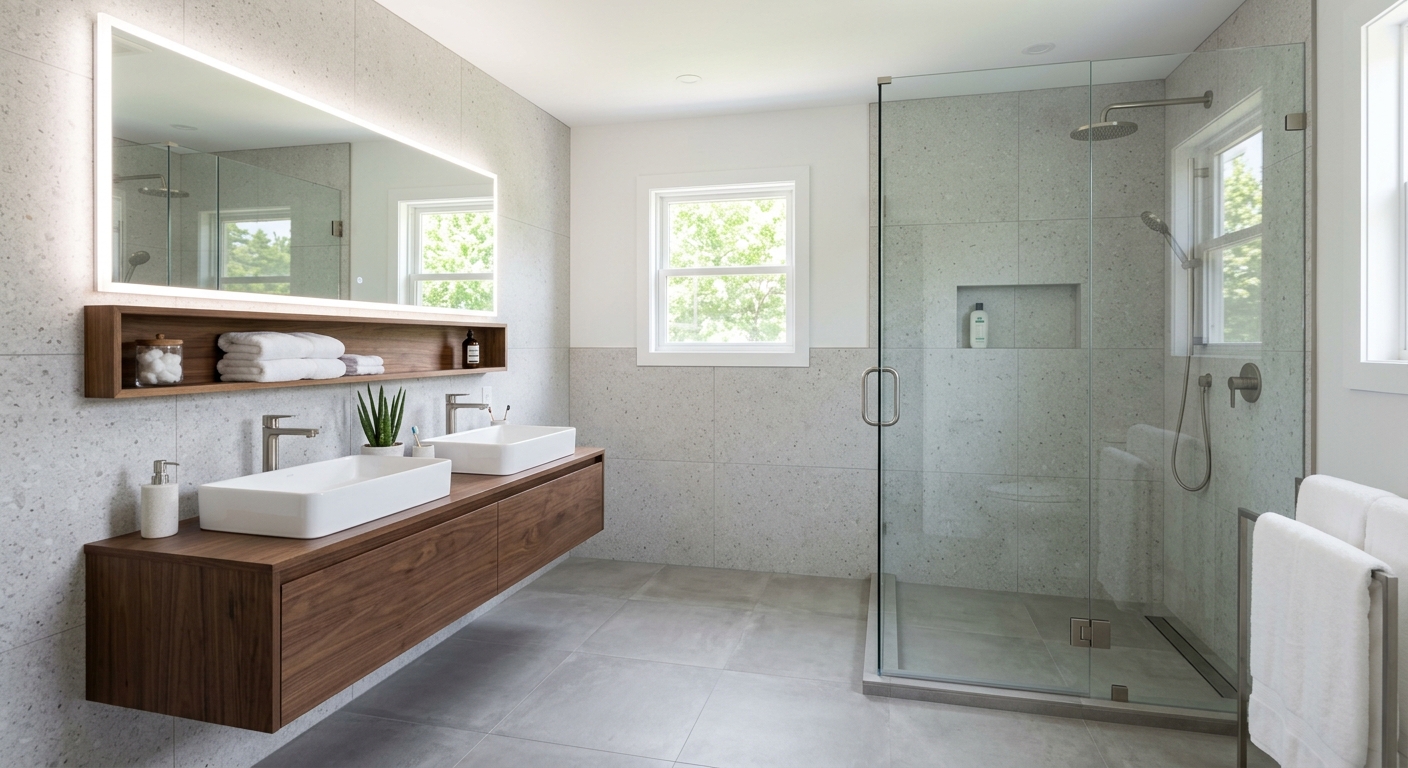
Bathroom renovation options and costs in Kensington-Chinatown
Kensington-Chinatown bathroom renovations tend to come in three “lanes”: cosmetic refreshes, mid-range full renos, and higher-end upgrades—and your choice usually tracks how much of the plumbing and tile system you’re willing to touch. With Kensington-Chinatown’s Toronto housing stock, many homes date back decades; in the broader Toronto area, that means you’ll often see dated drain and venting routes, plus the possibility of older floor coverings that may contain asbestos (Statistics Canada, 2021 Census). Even in a tight neighbourhood like this, labour time and trade availability are the biggest cost drivers, not weather.
Ontario’s winter freeze-thaw cycles also play a role indirectly: they can worsen subfloor movement, and older framing can be less forgiving when walls are opened. In practical terms, once you demo, Toronto-area crews frequently find stubborn drain connections, undersized shut-offs, or uneven subfloors that require correction before waterproofing. That’s why realistic GTA budgets often land in the low-to-mid five figures for a standard 3-piece full renovation, with higher-end custom showers and extensive rough-in pushing upward.
In Kensington’s older pockets near Baldwin Street and the west side of College Street, trade demand is especially strong because homeowners commonly renovate rental-to-owner and compact-condo layouts into modern showers and brighter vanities. From there, it’s usually a straight decision: keep it simple and refresh, or open everything and address hidden plumbing, waterproofing, and electrical needs—see the comparison below.
| Renovation Scope |
What's Included |
Typical Duration |
Price Range |
| Cosmetic refresh (paint, fixtures, accessories only) |
Paint, vanity refresh or swap, toilet swap (no rough-in), new lighting, mirror, faucets, accessories; no tile removal unless required for access |
3–7 days |
$2,000–$6,000 |
| Mid-range full renovation (new tile, vanity, tub/shower, electrical) |
Demo to drywall, new tub/shower or basic shower system, floor + surround tile, vanity, toilet, ventilation fan (electrical as needed), basic electrical upgrades (GFCI where required) |
2–4 weeks |
$12,000–$20,000 |
| High-end full renovation (custom tile, steam shower, heated floors) |
Custom shower with detailed tile work/linear drain, premium waterproofing, heated floor circuit, designer vanity, upgraded plumbing trim, higher-end lighting, additional ventilation/controls |
4–8 weeks |
$22,000–$30,000 |
| Shower-only installation (convert tub to walk-in shower) |
Remove tub, install walk-in shower base or custom pan prep, tile floor + shower walls, new valve trim (as needed), ventilation fan update, waterproofing and new drain tie-in |
2–5 weeks |
$10,000–$18,000 |
| Bathtub replacement or tub-liner install |
Replace tub and refit surround/tile banding, new faucet trim, caulking and waterproofing at transitions; liner options if your tub condition supports it |
1–3 weeks |
$3,500–$7,500 |
| Tile-only installation (floor + surround, existing layout kept) |
Remove existing tile where needed, install new floor + wall tile, transition profiles, grouting and sealing where applicable; fixtures may be re-used if not removed |
1–2.5 weeks |
$8,000–$15,000 |
Prices are estimates only and vary by project scope, site access and material selection.
What affects the price of bathroom renovation in Kensington-Chinatown
In Toronto and across Ontario, it’s common to see quotes for the same bathroom idea vary by 30–50%. The reason is that bathroom renos are labour-intensive, and the trades that do tile, waterproofing, custom showers, and plumbing rough-in price their time based on GTA demand and the complexity they uncover once walls open. In a city where many homes are older, contractors also plan for upgrades to drains, vents, and shut-offs to meet current Ontario requirements—work that doesn’t show up in a simple “swap fixtures” estimate.
In the Toronto economic region, climate is not the main driver of bathroom renovation cost. Instead, it’s the housing stock: older post-war and 1960s–1980s builds can have cast-iron or undersized drain stacks, galvanized or aging supply lines, and ventilation that’s inadequate for modern humidity loads. When discovery happens—like asbestos-containing materials in older floor tile or drywall compound in pre-1985 homes—the budget can jump quickly due to licensed abatement and controlled removal. A reasonable expectation is $1,500–$5,000+ added, depending on what’s found and how much area needs remediation.
In Kensington-Chinatown, two common examples that change pricing are: (1) converting a tub to a walk-in shower may require drain reconfiguration and a better slope for the new receptor; (2) adding a heated floor circuit typically requires more electrical labour and careful waterproofing sequencing. If you stick to a cosmetic refresh, many households keep budgets closer to the lower end of the range; if you move into full renovation territory, you’re generally looking at the low-to-mid five-figure bands, especially when tile work and electrical are both upgraded.
| Price Factor |
Why It Matters |
Cost Impact |
| Layout change — moving drain or supply lines requires rough-in work |
New rough-in means more demo, plumbing labour, and sometimes vent correction |
$2,000–$8,000+ |
| Tile selection — large-format porcelain vs. mosaic vs. ceramic |
Harder materials need better prep, more precision cutting, and longer setting time |
$1,000–$6,000+ |
| Fixture tier — builder-grade vs. mid-range vs. designer brands |
Trim complexity, finishes, valves, and warranty support affect both material and install time |
$500–$4,000+ |
| Subfloor condition — rot or unlevel concrete adds scope |
Needs rebuild/leveling, adds backer board or membrane compatibility work |
$1,000–$5,000+ |
| Electrical — adding GFCI outlets, exhaust fan, heated floor circuit |
May require new circuits, fan ducting changes, and licensed electrical sign-off |
$800–$5,500+ |
| Waterproofing method — membrane type and extent |
Proper system selection and cure time directly protect from moisture damage |
$600–$3,000+ |
| Older-home surprises — asbestos tile, cast-iron drains, galvanized pipes |
Abatement, disposal, and replacements increase scope and scheduling |
$1,500–$10,000+ |
| Bathroom size — sq ft drives tile and labour time directly |
More coverage equals more waterproofing, setting, and grouting time |
$1,000–$7,000+ |
Permits & regulations in Ontario
In Ontario, “cosmetic-only” updates usually don’t require a permit. If your plan is to swap fixtures that don’t change plumbing routes—think vanity replacement, toilet replacement without moving supply/drain, repainting, and replacing a mirror or light fixture—many projects can proceed without permit pulls. Likewise, replacing like-for-like finishes (when you’re not changing structural components or wet-area layouts) typically stays in the low-friction zone.
Permits are usually required when you relocate plumbing or make changes to wet-area infrastructure. That includes moving drain lines or supply lines, changing the shower valve location, adding or modifying rough-in plumbing, or reworking venting. Electrical-related permits are also commonly tied to adding circuits or making significant upgrades—especially when you’re adding GFCI protection for bathroom receptacles, installing a new exhaust fan, adding a heated floor circuit, or running new wiring.
Step-by-step for Kensington-Chinatown homeowners:
- Ask for the contractor’s Ontario trade licence number and trade class (reputable contractors will provide it on request).
- Request a Certificate of Insurance for liability coverage and confirm it’s current; don’t accept “we’re insured” verbally.
- Confirm WSIB/WCB status documentation (coverage letters or proof of registration).
- Verify electrical and plumbing work: ensure licensed trades are assigned where required.
- If a permit is needed, ask who pulls it and when inspections are scheduled; ensure it’s written into the contract.
Choosing tile, waterproofing and fixtures for your Kensington-Chinatown bathroom
Three decisions drive most of your budget in a Kensington-Chinatown bathroom: tile choice, waterproofing system, and fixture tier. First, tile selection: ceramic is the entry-level option and typically reduces material and labour risk because it’s more forgiving to install. Porcelain (especially dense, low-absorption tiles) is a better fit for wet areas and longevity, but it can be more demanding to cut and set straight, particularly on older, slightly uneven floors. Natural stone looks high-end, yet its installation complexity and maintenance needs increase, and materials can be substantially pricier.
Second is waterproofing. In Ontario bathrooms, moisture control is about protecting the build-up layers year-round, including during humid shoulder seasons and winter indoor drying. A paint-on membrane can work in limited applications, but full wet-area systems usually perform better with a bonded sheet membrane or a modern engineered system (including compatible preformed components and detailed corner treatments). Waterproofing quality matters as much as tile choice, because it’s what prevents mould and hidden substrate damage.
Third is fixture tier. Builder-grade faucets and trims are the lowest-cost path, but mid-range and designer fixtures often improve long-term performance, finish durability, and resale appeal. If you want a practical example: moving from basic ceramic to porcelain and upgrading waterproofing can add several thousand dollars—but on a shower project, that spend is usually justified because tile removal and failure repairs are far more expensive later. In Toronto, where labour is premium, getting the waterproofing and installation right the first time is the smart money.
| Material / Option |
Pros |
Cons |
Price Range |
| Ceramic tile (floor + walls) |
Lowest entry cost; easier handling; good for straightforward layouts |
More limited durability for some wet-area needs; may require more careful sealing at transitions |
$3,000–$7,500 |
| Porcelain tile (floor + walls) |
High durability; better moisture resistance; clean look with modern sizes |
Can be harder to cut; larger formats increase layout precision demands |
$5,500–$12,000 |
| Natural stone (marble, travertine, slate) |
Luxury appearance; unique veining; strong perceived value |
Higher material and labour; needs sealing/maintenance and careful substrate prep |
$9,000–$18,000 |
| Frameless glass shower enclosure |
Bright, modern look; visually expands space |
Higher hardware cost; requires accurate installation to prevent leaks and misalignment |
$3,500–$10,000 |
| Prefab tub surround (acrylic) |
Faster install; cleaner edges; less tile labour |
Less custom look; limits design changes; grout-free maintenance but joint detailing matters |
$1,200–$4,000 |
| Custom shower pan (tile or linear drain) |
Best drainage design; luxury feel; works well with modern tile layouts |
More labour and waterproofing detail; requires precise slope and drain alignment |
$4,000–$12,000 |
How to choose a bathroom renovation contractor in Kensington-Chinatown
Choosing the right contractor in Kensington-Chinatown is less about flashy photos and more about proof: Ontario licensing, liability insurance, and worker coverage. Start by asking for their Ontario trade licence details relevant to your scope—then request a Certificate of Insurance showing liability coverage and confirm it’s current. For worker protection, verify WSIB/WCB coverage by asking for the appropriate clearance letter or proof of registration; a solid contractor will provide it without hesitation.
Next, get 2–3 itemised written quotes. You want breakdowns for labour and materials, not a single lump sum. Ask whether the quote includes permit pulls (when required), disposal, and how hazardous materials are handled if asbestos is encountered. Watch for exclusions like “tile only” pricing, no allowance for subfloor repair, or waterproofing treated as an add-on.
Warranty matters in bathrooms. Confirm the workmanship warranty length, and whether product/manufacturer warranties apply to the installed system. Also ask if warranties are transferable if you sell the home. Payment schedules should be controlled: never pay more than about 10–15% upfront, and keep a holdback until the job is completed and protected areas are inspected. Finally, request a start date and a completion estimate in writing—bathroom renos often run longer when tile lead times or inspection scheduling changes.
- Ask for Ontario trade licence details and matching scope coverage.
- Request current liability insurance (Certificate of Insurance).
- Verify WSIB/WCB coverage with clearance/proof documents.
- Get 2–3 itemised quotes (labour vs materials) with line-by-line inclusions.
- Confirm who pulls permits and whether inspections are included.
- Ask what’s included in demolition, disposal, and site protection.
- Require a written scope of waterproofing system (membrane type, coverage areas).
- Confirm electrical scope (GFCI, fan, heated floors) and who will perform it.
- Ask how plumbing upgrades are handled if shut-offs or drains are failing.
- Review the payment schedule and insist on a holdback until completion.
- Ask about lead times for tile/glass and how delays affect schedule.
- Ensure warranty details are written (workmanship and product exclusions).
Common red flags in Kensington-Chinatown include: contractors who won’t provide licensing/insurance or try to keep it verbal, “too good to be true” pricing that lumps waterproofing and tile without details, refusing itemised quotes, asking for large upfront payments (well beyond 10–15%), and vague timelines like “a few weeks” with no start/completion estimate.
Frequently asked questions — bathroom renovation in Kensington-Chinatown
Should I do a tub-to-shower conversion?
In Kensington-Chinatown and across Ontario, tub-to-shower conversions are popular because they modernize the bathroom and reduce future maintenance from hard-to-reach surfaces. If you’re staying put, a walk-in shower can be a practical upgrade—especially if you’re replacing aging valves or planning new waterproofing. Cost-wise, the Toronto market typically puts shower-only conversions in the mid-range of bathroom work; plan around the “shower installation” band, often $4,000–$12,000 for straightforward installs, and higher if you need drain reconfiguration, a linear drain, or custom tile work. If your tub surround and subfloor are failing, it can be worth converting rather than repeatedly patching.
How do I prevent mold in a Kensington-Chinatown bathroom?
Mould prevention is mostly about controlling moisture at the source and sealing the build-up correctly. In Kensington-Chinatown, you’ll often see humidity spikes in winter and in shoulder seasons, so the bathroom fan matters: it should be properly vented and sized for the space, and it needs a reliable power supply protected by GFCI. Equally important is waterproofing: use a complete wet-area system (appropriate membrane coverage, correct corners/edges, and curing time) before tile goes on. Avoid “patchwork” caulking as a substitute for a proper waterproofing layer. If older homes are involved, check for historical issues—opening walls can reveal substrate problems. When done right, a full renovation budget is typically in the low-to-mid five figures (for example, $12,000–$20,000), and that’s often the money spent to prevent costly hidden moisture damage.
What adds the most resale value in a bathroom reno?
In the Toronto economic region, the highest resale impact usually comes from improvements buyers can instantly see and trust: a fresh, clean vanity and lighting, modern tile work, and a shower system that looks built to last. Buyers also notice functional upgrades—better ventilation, updated plumbing fixtures, and durable finishes in wet areas. If your layout is dated, converting a tub to a walk-in shower can help many buyers, but only if waterproofing and drainage are done properly. Heated floors and a sleek frameless glass enclosure are premium features that raise perceived value, especially with custom tile. For budgeting, think in bands: a mid-range full renovation often lands around $12,000–$20,000, while higher-end full renovations with custom showers and upgrades can move toward $22,000–$30,000. The “resale value” sweet spot is usually the version that feels modern without over-customizing beyond what your layout supports.
Can I keep my existing plumbing layout to save money?
Yes—keeping the plumbing layout generally saves money because it reduces rough-in labour, demolition, and the odds of uncovering hidden issues. If you’re doing a tile refresh with a vanity swap and fixture changes that don’t move drain or supply lines, you can often target the lower end of bathroom budgets. When you must move things (like converting a tub to a shower with a different drain location), expect additional costs for plumbing tie-ins and waterproofing detail. In Ontario, plumbing changes that relocate drains or supplies typically involve permits and inspection steps, so staying in the existing layout can also reduce administrative overhead. As a rule of thumb, cosmetic refresh projects can be closer to $2,000–$6,000, while mid-range full renovations with electrical and tile typically shift into $12,000–$20,000 once walls and floors are opened.
How much does a walk-in shower cost in Kensington-Chinatown?
A walk-in shower cost depends on whether it’s a straightforward swap (tub removal + shower conversion with minimal layout changes) or a true rebuild with a custom pan, linear drain, and higher-end tile and glass. In the Toronto market, shower installation work commonly falls within $4,000–$12,000 for basic scope, but conversions often land higher when tile, waterproofing complexity, and plumbing tie-ins are included. For example, a typical “shower-only installation” that includes tile floor and surround and necessary valve updates may be around $10,000–$18,000. If you add frameless glass and premium stone or large-format porcelain, budget higher. In older Kensington-Chinatown homes, hidden drain/vent issues can expand scope—so it’s wise to plan for contingency unless your contractor has already opened and verified conditions.
What's the ROI on a bathroom renovation?
ROI in bathrooms is real but not guaranteed, and it’s highly tied to how the work performs and how modern it looks. In Toronto-area buyer expectations, a well-executed bathroom—especially one with strong waterproofing, reliable ventilation, updated plumbing fixtures, and clean tile—tends to add value more consistently than cosmetic-only tweaks. Over-customizing can reduce ROI if it doesn’t match the rest of the home or if layout changes are excessive. A reasonable approach is to aim for a renovation that’s fully functional and durable first: if you’re budgeting for a mid-range full renovation around $12,000–$20,000, you’re usually in the zone that balances modern updates with controlled scope. Higher-end projects toward $22,000–$30,000 can pay off when features are integrated well (custom shower, heated floors), but the ROI depends on your home’s overall price point and buyer segment. In Kensington-Chinatown, where many homes are older, investing in waterproofing and plumbing upgrades is often the ROI driver because it prevents future deterioration.