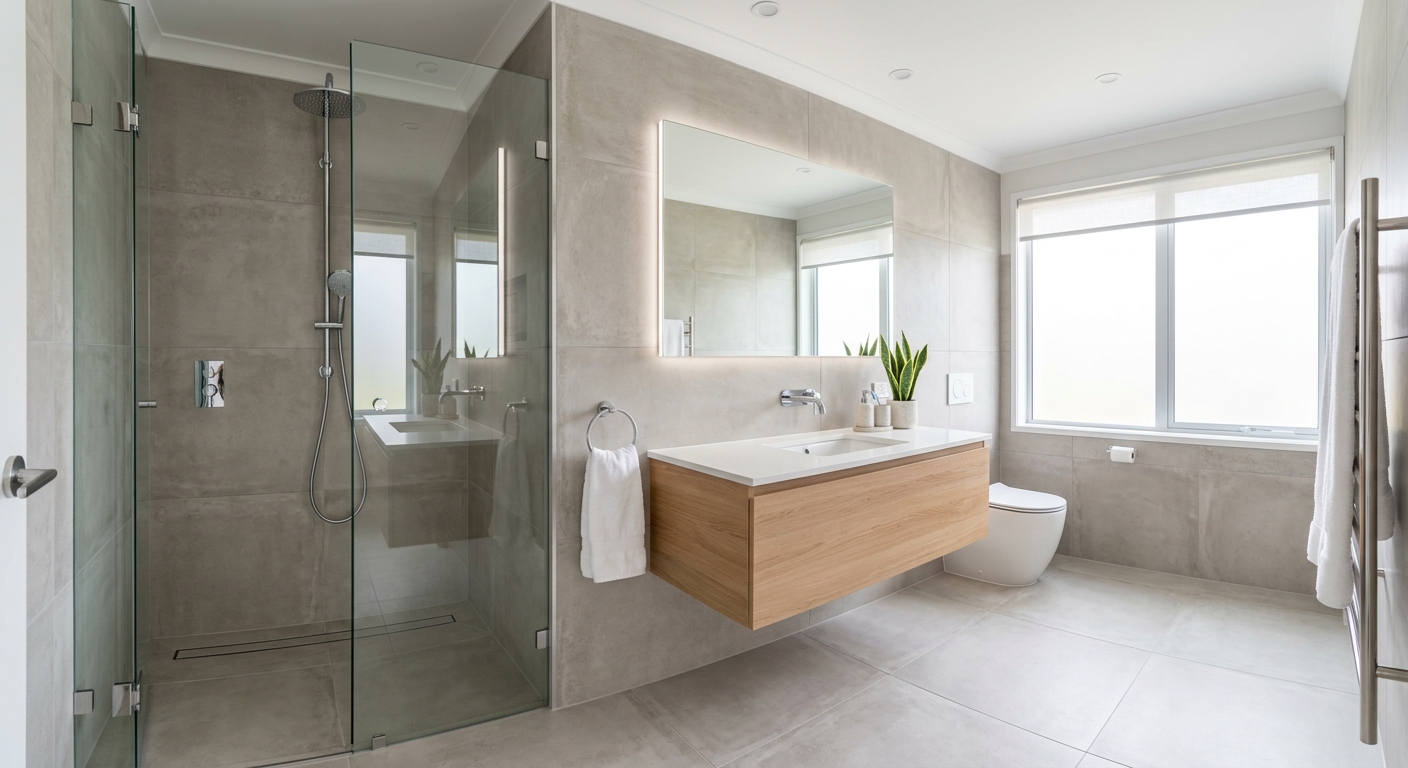
Bathroom renovation options and costs in Dryden
Bathroom renovations in Dryden are a practical, ROI-focused upgrade for homeowners, especially in a town where many houses were built before 1981 (67.2% of the local housing stock, Statistics Canada, 2021 Census). That age profile matters because older bathrooms often have dated plumbing layouts, older venting, and sometimes stubborn cast-iron or galvanized supply runs that aren’t “visible” until walls come open. On top of that, some pre-1985 homes contain asbestos-containing materials in floor tile, plaster, or pipe wrap, so even a refresh can expand into remediation once discoveries are confirmed.
In Northwest Ontario, renovation costs are shaped more by regional labour availability and the need to coordinate multiple trades than by climate alone. Winters can make scheduling tighter and drying times more sensitive once surfaces are opened, but the bigger budget swing is usually labour and scope: rough-in corrections to match Ontario Building Code expectations, electrical upgrades for modern bathroom safety, and waterproofing systems that perform reliably over the long term. If you live in an older, in-demand area like Victoria Avenue, contractors often see more “open-wall” work because of the number of mid-century homes and the frequency of plumbing reroutes and electrical rewiring.
To help you compare options, the table below outlines common scopes, typical durations, and realistic price bands for Dryden—so you can match the level of change you want to the level of budget you can support.
| Renovation Scope |
What's Included |
Typical Duration |
Price Range |
| Cosmetic refresh (paint, fixtures, accessories only) |
Paint, new vanity taps/trim, toilet seat or toilet swap, lighting refresh, mirror/accessories, re-caulk, minor hardware replacement |
3–5 days |
$3,000 – $7,000 |
| Mid-range full renovation (new tile, vanity, tub/shower, electrical) |
Demo, new tub/shower surround and floor tile, new vanity + faucet, new exhaust fan, updated GFCI outlet(s), waterproofing upgrades, basic plumbing/electrical repairs as required |
10–18 days |
$12,000 – $20,000 |
| High-end full renovation (custom tile, steam shower, heated floors) |
Custom tiled shower, premium fixtures, heated floor circuit, upgraded waterproofing/membrane system, upgraded venting/electrical, niche/linear drain options, higher-end finishes |
18–30 days |
$20,000 – $26,000 |
| Shower-only installation (convert tub to walk-in shower) |
Remove tub, install walk-in shower pan system, tile walls/floor, new valve trim and shower head, exhaust fan integration (as needed), plumbing rough-in adjustments |
10–20 days |
$14,000 – $22,000 |
| Bathtub replacement or tub-liner install |
Remove and replace tub (or install tub liner where conditions allow), rework surround/caulk, pressure/leak testing, vanity/trim tie-ins as needed |
5–12 days |
$4,000 – $10,000 |
| Tile-only installation (floor + surround, existing layout kept) |
Remove existing tile (as needed), prep and level, install waterproofing and tile, grout/caulk, reuse vanity/toilet unless trim changes are required |
7–14 days |
$5,000 – $13,000 |
Prices are estimates only and vary by project scope, site access and material selection.
What affects the price of bathroom renovation in Dryden
Two homeowners in Dryden can receive very different quotes for what sounds like the same bathroom job—often a 30–50% gap—because the cost drivers here aren’t “climate premiums” so much as regional labour rates, jobsite access, and what the age of the home hides behind walls. In Northwest Ontario, many bathrooms sit in mid-century construction, and that affects everything from rough-in plumbing conditions to ventilation and electrical routing. While the winters are real, most budget overruns are tied to discoveries: undersized or corroded drains, galvanized supply lines, and vent stack corrections when the existing venting can’t be improved without opening more wall than expected.
Older-home surprises can also trigger remediation. If vinyl floor tile or older drywall compound contains asbestos (more common in older build periods), abatement protocols must be followed, and that adds meaningful cost—commonly in the range of $1,500–$5,000+ depending on affected area and required containment. It’s why the “simple” full renovation band in Dryden can start near $12,000 for straightforward mid-range work, but climb toward $20,000–$26,000 when plumbing/electrical upgrades and premium waterproofing systems are required.
Concrete examples I see in Dryden: converting a tub to a walk-in shower can require moving the drain line to achieve proper slope and code-compliant venting—raising labour and material scope. Another common cost swing is tile weight and layout: large-format porcelain increases lippage risk and typically needs more careful substrate prep and premium thinset handling. Lastly, bathrooms with worn subfloors (from leaks or years of moisture cycling) often need additional underlayment or patching before tile goes down, which can raise both labour time and material totals.
| Price Factor |
Why It Matters |
Cost Impact |
| Layout change — moving drain or supply lines requires rough-in work |
More opening of walls and floors, new rough-in plumbing, potential vent adjustments |
Often +$2,000 to +$8,000 |
| Tile selection — large-format porcelain vs. mosaic vs. ceramic |
Heavier tiles demand flatter substrates and more precise installation to reduce cracking/lippage |
Often +$500 to +$4,000 |
| Fixture tier — builder-grade vs. mid-range vs. designer brands |
Materials and trim complexity; sometimes different rough-in requirements |
Often +$800 to +$5,000 |
| Subfloor condition — rot or unlevel concrete adds scope |
Prep work, patching/leveling compounds, possible framing repairs |
Often +$1,000 to +$6,000 |
| Electrical — adding GFCI outlets, exhaust fan, heated floor circuit |
New wiring runs, panel/breaker considerations, code-compliant connections |
Often +$600 to +$4,500 |
| Waterproofing method — membrane type and extent |
Correct system for the assembly prevents mould and tile failure |
Often +$400 to +$3,500 |
| Older-home surprises — asbestos tile, cast-iron drains, galvanized pipes |
Remediation, pipe replacement, and added testing/inspection steps |
Often +$1,500 to +$10,000+ |
| Bathroom size — sq ft drives tile and labour time directly |
More surface area means more tile, thinset, waterproofing and install time |
Often +$1,000 to +$6,000 |
Permits & regulations in Ontario
In Ontario, not every bathroom update needs a permit. As a rule of thumb in Dryden: cosmetic changes—like swapping fixtures (within the same locations), repainting, replacing a vanity, re-caulking, and retiling where plumbing/electrical aren’t relocated—typically do not require a permit. However, permits are commonly required when you’re doing work that changes the building’s systems or safety components.
Work that typically does require a permit and inspection includes relocating or adding plumbing rough-ins (moving a drain or supply line, changing valve locations, or altering the shower/tub plumbing pathways), adding or relocating mechanical exhaust where it ties into electrical and ventilation work, and structural changes (opening walls beyond finishing layers for framing corrections). Electrical work must meet the Ontario electrical code and be performed by (or signed off by) a licensed electrician—especially when installing new circuits or upgraded exhaust fan/heat systems.
Step-by-step, here’s how homeowners should verify a contractor in Dryden: (1) confirm the contractor’s Ontario trade licence (where applicable for the trades involved) via the appropriate online registry; (2) request a Certificate of Insurance for liability coverage—verify policy limits and effective dates; (3) ask for WSIB/WCB clearance or coverage documentation; and (4) keep copies of everything with your contract paperwork. If a contractor can’t provide these documents promptly, that’s a warning sign.
Choosing tile, waterproofing and fixtures for your Dryden bathroom
When planning a Dryden bathroom renovation, the three material decisions that usually make the biggest budget and performance difference are tile choice, waterproofing method, and fixture tier. Start with tile: ceramic tile is the entry-level option and can be cost-effective if your goal is a classic refresh. Porcelain tile usually costs more, but it’s denser and often holds up better in wet zones like shower floors. Natural stone (marble, travertine, slate) looks luxurious, yet it can be higher labour due to cutting, sealing/maintenance, and substrate prep expectations.
Next, waterproofing—this is where moisture control meets Ontario reality. Even though Dryden’s climate isn’t the primary pricing driver, bathrooms here still face chronic humidity and seasonal temperature swings that stress assemblies. In practice, a paint-on membrane can be suitable for some applications, but a bonded sheet membrane or a proven system built around proper corners/changes-of-plane is often the safer approach for long-term mould resistance. Finally, fixture tier affects both cost and resale confidence: builder-grade fixtures keep budgets lower, mid-range balances durability and looks, and designer brands can add real value if you’re also upgrading finishes and layout.
A practical dollar example: if you’re choosing between standard ceramic and mid-range porcelain, the tile upgrade might add a few hundred to a couple thousand dollars, but it’s often justified when you’re doing a full waterproofed shower and investing in proper substrate prep. Skipping waterproofing quality to save money is the one choice that usually costs more later—through grout issues, staining, and potential leak remediation.
| Material / Option |
Pros |
Cons |
Price Range |
| Ceramic tile (floor + walls) |
Great for straightforward looks, generally easier to source, budget-friendly |
Can be more porous; relies heavily on correct sealing/grout maintenance |
$1,500 – $4,500 |
| Porcelain tile (floor + walls) |
More durable in wet areas, lower absorption, cleaner long-term performance |
May cost more, requires precise substrate flatness and careful cutting |
$2,500 – $6,500 |
| Natural stone (marble, travertine, slate) |
High-end appearance, unique character |
Higher labour and maintenance; often needs sealing and specialized handling |
$4,000 – $10,000 |
| Frameless glass shower enclosure |
Modern look, easy to clean, complements custom tile |
Hardware cost, must be installed square/level to avoid fit issues |
$1,800 – $5,000 |
| Prefab tub surround (acrylic) |
Faster install, consistent sizing, often lower labour |
Fewer style options; seams and look may be less premium than full tile |
$900 – $2,800 |
| Custom shower pan (tile or linear drain) |
Better custom drainage design; clean linear drain aesthetics |
More complex build-up; depends on subfloor condition and slope |
$3,000 – $8,500 |
How to choose a bathroom renovation contractor in Dryden
Choosing the right contractor in Dryden is mostly about verification and clarity—because bathroom projects routinely involve plumbing, electrical, tile, waterproofing and sometimes remediation. Start by confirming Ontario requirements: ask for proof of liability insurance (Certificate of Insurance), and request WSIB/WCB clearance or coverage documentation. Also verify that any electrical scope is handled by a licensed electrician and that the contractor coordinates permits/inspections where required.
Next, demand 2–3 itemised written quotes. You want a breakdown that separates labour from materials (tile, waterproofing system, fixtures, shower valve/trim, disposal) rather than one lump sum. Read the exclusions: Are demo and hauling included? Is drywall repair or subfloor leveling included? Is the permit pull included (or who pays it)? A good contractor will also state waterproofing type and coverage approach, and they’ll list what they’re doing for ventilation and exhaust fan integration.
Warranty and payment schedule matter. Ask for a workmanship warranty length (often 1–5 years depending on scope and system), plus the manufacturer product warranty (transferable or not). Payment should be controlled: never pay more than 10–15% upfront, and use holdback until the job is complete and deficiencies are addressed. Finally, require a written timeline with a start date and a completion estimate so you can plan around the realities of winter scheduling.
- Provide licence/trade details for all involved trades and the permit responsibility
- Show Certificate of Insurance with adequate liability limits and effective dates
- Confirm WSIB/WCB clearance/coverage in writing
- Deliver 2–3 quotes that are fully itemised (labour vs materials)
- List exclusions clearly (demo, disposal, drywall patching, subfloor prep)
- Specify the exact waterproofing system and install method
- Confirm shower pan approach (traditional pan vs linear drain) and slope plan
- Include fixture model numbers or written spec sheets in the contract
- State warranty terms for labour and product, including transferability
- Use a payment schedule with a 10–15% max upfront and a completion holdback
- Provide a schedule with start date and estimated finish date
- Agree on dust control and ventilation for demo and tile work
Common red flags in Dryden: contractors who won’t provide insurance/WSIB documentation, quotes that avoid specifics about waterproofing, “lump sum only” pricing with vague scope, asking for large upfront payments beyond 10–15%, and promises of start dates without a written schedule that accounts for inspections and trade coordination.
Frequently asked questions — bathroom renovation in Dryden
What's the best bathtub material for a Dryden home?
For most Dryden homes, the “best” bathtub material depends on your priorities: value, heat retention, and long-term durability. Acrylic tubs are common because they’re lighter and install faster, and they usually cost less than heavy alternatives—often fitting well when your budget starts around the mid-range full renovation band of $12,000 – $20,000 (Statistics Canada, 2021 Census context: many homes are older, so easier installs matter). Cast iron is very durable and holds heat well, but it’s heavier and can raise labour if your subfloor needs reinforcing. Fiberglass can be budget-friendly, but it may not feel as sturdy over time. In an older Dryden house, the best choice is also the one that pairs with proper rough-in and a correct waterproofing plan around the tub deck and seams.
Is it worth renovating a bathroom before selling in Dryden?
Often, yes—because bathrooms are a high-impact room for buyers, and an outdated layout with tired finishes can reduce confidence. For Dryden’s homeowner market (73.1% of households own, Statistics Canada, 2021 Census), practical upgrades can help you present a clean, modern, inspection-ready bathroom. If your current bathroom has visible moisture issues or poor ventilation, that’s a stronger reason to renovate before selling than purely cosmetic changes. Budget accordingly: a cosmetic refresh can be a smaller investment, while a full renovation typically moves you into the $12,000 – $26,000 range depending on scope and discoveries once walls open. Just be sure to budget contingency for older-home surprises—Dryden’s housing stock includes a lot of pre-1981 builds, and plumbing/electrical corrections are common when you open up walls.
How do I plan a bathroom renovation on a tight budget in Dryden?
On a tight budget in Dryden, the goal is to spend where failure costs are highest: waterproofing continuity, ventilation, and safe electrical. Start by keeping the layout the same if you can—moving drains and supplies is one of the biggest cost multipliers. Choose mid-range but durable finishes (porcelain tile where it matters, reliable exhaust fan performance, and a vanity that fits your plumbing). If you’re aiming for a “refresh” but your bathroom is dated, consider a cosmetic refresh plus targeted upgrades instead of a full teardown; that often lands closer to the low end of the options. For a full bathroom, planning around $12,000 – $20,000 is realistic in Northwest Ontario when surprises are limited. Also ask your contractor to include itemised line items so you can see what changes your options allow without cutting waterproofing corners.
What's the difference between a cosmetic and a full bathroom renovation?
A cosmetic renovation typically changes finishes and visible fixtures without altering plumbing or electrical rough-ins. Think paint, mirror, accessories, lighting swap, caulking, and sometimes retiling in-place if no walls/floors need major structural prep. A full renovation usually includes demo down to necessary substrate preparation, replacement of major components (often tub/shower system, vanity, toilet), updated electrical for bathroom safety (like GFCI protection and exhaust fan integration), and a complete waterproofing approach for wet zones. In Dryden’s older housing stock, “full renovation” often also includes plumbing corrections once walls open—so the price range commonly sits in the $12,000 – $26,000 band depending on whether you stay straightforward or add custom shower work, heated floors, or other upgrades.
How do I choose the right contractor for my bathroom in Dryden?
Choose a contractor based on verification and clarity, not just the lowest price. Start by requiring proof of liability insurance and WSIB/WCB coverage (or clearance) and confirm the relevant Ontario licences for the trades involved. Request 2–3 itemised written quotes so you can compare labour and materials line-by-line. Pay attention to scope: verify whether disposal, permit pull (if required), drywall patching, and subfloor prep are included. Make sure waterproofing is specified (system type and coverage), not handled vaguely. For timeline confidence, insist on a written start date and completion estimate. Finally, protect your cash flow: keep upfront payments to 10–15% and hold back until completion. In a town like Dryden, where older homes are common (67.2% built before 1981), a contractor who’s transparent about contingency planning is usually the safer pick.
What's the most common mistake homeowners make in bathroom renovations?
The most common mistake I see in Ontario bathroom renos—especially in older Dryden houses—is cutting corners on the waterproofing and substrate preparation while trying to save money early. Tile and finishes look great at first, but if the waterproofing system isn’t matched to the shower assembly, or if the subfloor isn’t properly prepped/levelled, the problem often shows up months later as grout staining, failed caulking, or hidden leaks behind walls. Another frequent error is under-budgeting “behind the wall” scope—older plumbing and ventilation may require updates that weren’t obvious until demolition. If your plan starts with a tub/shower refresh, still budget for the possibility of rough-in corrections so you don’t end up choosing rushed fixes. A realistic target for many full renovations in this region is $12,000 – $26,000, depending on how much code work and remediation becomes necessary.