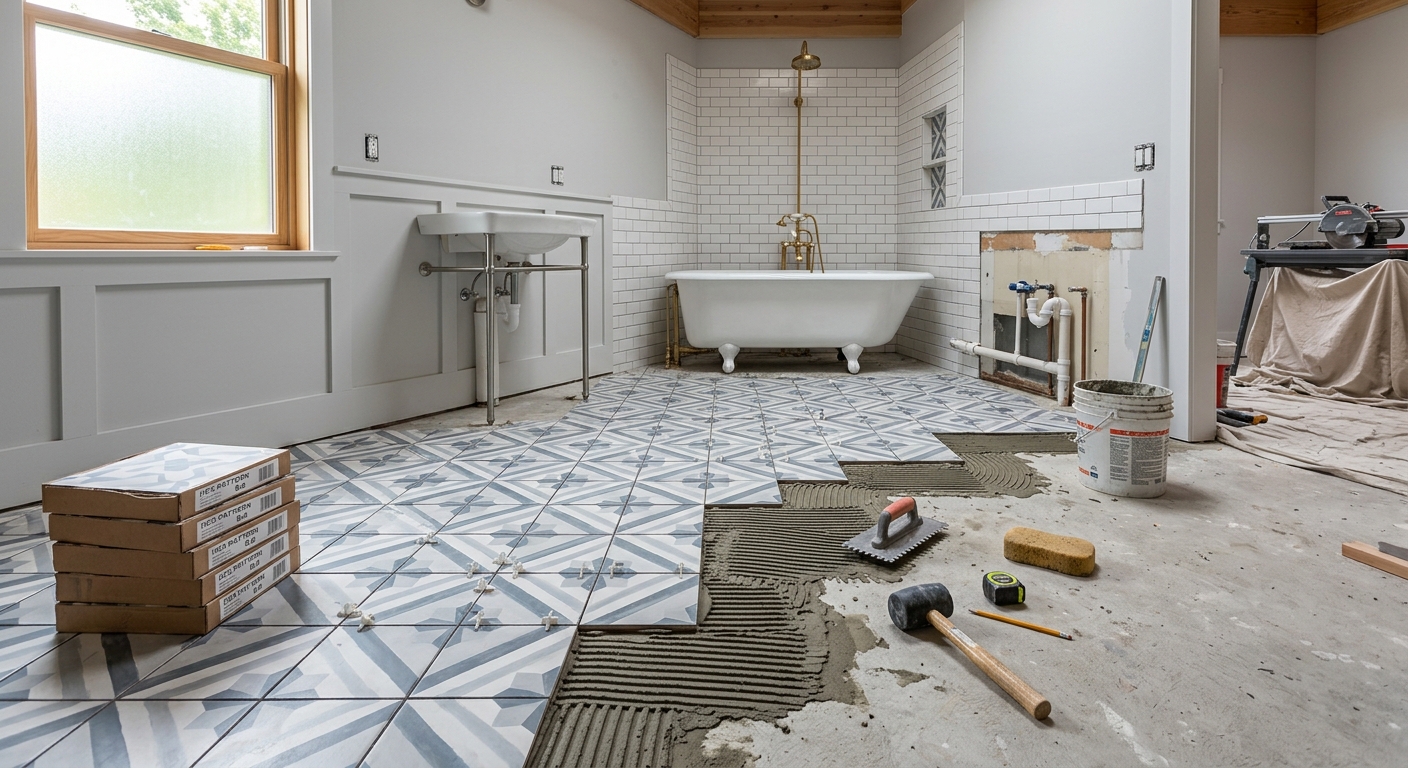
Bathroom renovation options and costs in UDistrict
Bathroom renovations in UDistrict, British Columbia tend to feel expensive quickly—especially once you open walls and floors. That’s largely because the neighbourhood’s housing mix includes a lot of older, mid-century stock, and with a smaller population base (3,775 residents in 2021 per Statistics Canada, 2021 Census), trades availability can feel tight in peak season. In many pre-1980 homes, dated plumbing layouts and drain materials (including older cast-iron or galvanized components) can surface during demolition, and some flooring or drywall materials from earlier eras may contain asbestos, which triggers additional testing and abatement steps.
In the Lower Mainland–Southwest region, the biggest cost drivers are labour rates and the age of local housing stock—not winter severity or other climate assumptions. Metro Vancouver’s demand supports higher hourly rates for plumbers, tilers, and electricians, and once you’re budgeting for a bathroom, it’s rarely just one trade. Projects frequently expand to include plumbing and venting upgrades to bring existing systems up to current BC requirements, and that adds both labour and permit/inspection coordination.
In UDistrict and nearby areas like the Campus/University corridor, demand for modern, durable shower builds and “student-rental ready” finishes often pushes scheduling for experienced tilers and licensed electricians. If you’re planning a cosmetic refresh versus a full rebuild, the scope difference is where the budget moves—see the comparison below to align your expectations.
| Renovation Scope |
What's Included |
Typical Duration |
Price Range |
| Cosmetic refresh (paint, fixtures, accessories only) |
New vanity or faucet, toilet refresh (if staying in same spot), tub/shower trim replacements, paint, caulking, accessories, basic deep clean |
3–7 days |
$3,500–$9,000 |
| Mid-range full renovation (new tile, vanity, tub/shower, electrical) |
Demo, waterproofing, floor + surround tile, new vanity, toilet, tub/shower valve/trim, exhaust fan (new), GFCI updates as needed, disposal and patching |
2–4 weeks |
$18,000–$30,000 |
| High-end full renovation (custom tile, steam shower, heated floors) |
Premium tile layout, heated floors, custom shower or steam shower system, upgraded ventilation, designer fixtures, niche/shelves, expanded waterproofing details |
4–7 weeks |
$30,000–$45,000 |
| Shower-only installation (convert tub to walk-in shower) |
Demolition of tub, new shower base/pan, waterproofing, tile or surround, new valve/trim, glass or enclosure allowances, exhaust fan verification |
1–3 weeks |
$8,000–$25,000 |
| Bathtub replacement or tub-liner install |
Replace tub (new drain/trim tie-in) OR install tub liner (surface prep), new valve/trim where needed, caulking, re-grout and reseal |
3–10 days |
$1,500–$6,000 |
| Tile-only installation (floor + surround, existing layout kept) |
Tile removal (where required), prep/leveling, membrane waterproofing as needed, floor and wall tile installation, grout/seal, re-caulk |
1–3 weeks |
$2,000–$8,000 |
Prices are estimates only and vary by project scope, site access and material selection.
What affects the price of bathroom renovation in UDistrict
Even when homeowners ask for the “same” bathroom renovation in UDistrict, British Columbia, quotes can still vary by 30–50% across the Lower Mainland–Southwest versus other parts of BC. In this region, labour rates and the age of the housing stock are the dominant drivers: older homes often hide plumbing and venting issues that aren’t visible until demolition, and bathroom work is inherently multi-trade. That means your budget can swing once a job shifts from straightforward finishes to rough-in upgrades, electrical corrections, and waterproofing remediation.
Lower Mainland–Southwest bathrooms also frequently require ventilation upgrades. In pre-1980 houses, it’s common to run into cast-iron or galvanized drain components and older copper supply lines that don’t match today’s expectations for flow and drainage. If discovery turns into a scope expansion—plus permit coordination—your project can move from a mid-range full renovation budget (for example, $18,000–$30,000) into the upper band when additional trades and rework are required.
Asbestos exposure is another budget variable. In homes built before the mid-1980s, finding asbestos-containing vinyl floor tile, or drywall compound/older insulation materials during demo can trigger abatement protocols. That discovery commonly adds something like $1,500–$5,000+ depending on extent and testing requirements. Concrete examples we see in UDistrict: a slightly off-level subfloor that requires rebuild/leveling before tile; a fan duct route that needs rerouting to meet performance expectations; and a tub-to-shower conversion where the drain slope or valve location forces changes to rough-in framing.
| Price Factor |
Why It Matters |
Cost Impact |
| Layout change — moving drain or supply lines requires rough-in work |
Moving fixtures means opening walls, redoing plumbing routes, and coordinating inspections |
Often adds significant labour and permit coordination; can move a project into a higher price band |
| Tile selection — large-format porcelain vs. mosaic vs. ceramic |
Different tile sizes impact cutting, waste, prep, and installation time |
Material + labour delta commonly increases the tile-only portion by thousands |
| Fixture tier — builder-grade vs. mid-range vs. designer brands |
Higher tiers cost more upfront and may require more precise installation/trim |
Can swing the full-reno total by several thousand even if layout stays the same |
| Subfloor condition — rot or unlevel concrete adds scope |
Bad base can cause tile failure, so it must be corrected before waterproofing |
Repairs/leveling can add days and materials, pushing labour costs upward |
| Electrical — adding GFCI outlets, exhaust fan, heated floor circuit |
Bathrooms have stricter electrical safety expectations and may require new circuits |
Often adds $500–$2,500+ depending on how much new work is required |
| Waterproofing method — membrane type and extent |
Proper waterproofing reduces mould risk in BC’s damp indoor environment |
Good systems cost more, but rework risk drops; underspec can cost more later |
| Older-home surprises — asbestos tile, cast-iron drains, galvanized pipes |
Discovery changes demo, testing, remediation, and plumbing replacement scope |
Can add $1,500–$5,000+ (or more) and additional scheduling time |
| Bathroom size — sq ft drives tile and labour time directly |
More surface area increases tile quantities, prep, and waterproofing labour |
Small changes in square footage can move costs noticeably across labour bands |
Permits & regulations in British Columbia
In British Columbia, the permit picture is usually straightforward: cosmetic updates rarely need permits, while changes that affect plumbing, ventilation, or building structure often do. In most cases, swapping fixtures—such as replacing a vanity, toilet, faucet, or retiling without moving plumbing—falls under “like-for-like” modernization and typically doesn’t require a permit. However, relocating plumbing (moving a drain or supply line), installing or upgrading an exhaust fan with new wiring/circuits, and any structural changes (like removing load-bearing wall sections or altering rough-in walls) generally require permits and inspections.
Electrical work also must meet provincial code and be completed or signed off by a licensed electrician. If your plan includes heated floors or significant ventilation upgrades, you should expect electrical scope to come with code-compliant wiring and inspection.
Here’s the homeowner-friendly step-by-step for UDistrict, BC: (1) Ask for the contractor’s current British Columbia trade licence number and confirm it through the appropriate online licensing registry for the trade; (2) request a certificate of insurance (liability coverage) and verify it’s active for the project period; (3) confirm workplace coverage as applicable (WCB/WSIB for the contractor and any subs) by asking for proof of coverage documentation; (4) request the permit plan (who pulls permits, when, and which inspections are expected) and ensure it’s included in the written scope. If a contractor can’t provide documentation promptly, that’s a risk sign for scheduling and compliance.
Choosing tile, waterproofing and fixtures for your UDistrict bathroom
In UDistrict, the budget usually “locks in” at three material decisions: tile choice, waterproofing method, and fixture tier. First, tile choice drives both materials and labour. Ceramic tile can be a good entry point, but porcelain typically performs better in wet areas because it’s denser and more resistant to water absorption. Natural stone (like slate, travertine, or marble) looks high-end, but installation complexity rises due to pattern matching, sealing/finishing needs, and more careful subfloor prep.
Second, waterproofing is non-negotiable in British Columbia’s consistently humid indoor environment. A paint-on membrane can work for certain systems, but many bathrooms perform best with a bonded sheet membrane or a proven system designed for shower floors and walls. The right approach prevents mould by keeping water out of the assembly; the wrong one can lead to trapped moisture, grout failure, and expensive hidden repairs.
Third, fixture tier affects both upfront spend and long-term satisfaction. Builder-grade fixtures often cost less but may feel “less solid” over time, while mid-range or designer brands usually offer better valves, finishes, and smoother operation—important in a high-use household or rental setting near the university corridor.
A practical dollar example: upgrading from basic tile to higher-grade porcelain plus a more robust waterproofing system commonly costs a few thousand more, but it’s often justified when you’re already doing a full renovation. Spending for quality waterproofing is usually the smarter place to allocate budget than trying to “save” by reducing tile installation time on a shower surround. If you’re targeting a mid-range full renovation (for example, $18,000–$30,000), the best value is often porcelain + a reliable membrane system, then allocating the premium to one visible feature like a linear drain.
| Material / Option |
Pros |
Cons |
Price Range |
| Ceramic tile (floor + walls) |
Affordable, wide variety of styles, good for walls and some floors when properly set |
More prone to chips in higher-traffic areas; generally less forgiving for heavy wet exposure than porcelain |
$2,000–$4,500 |
| Porcelain tile (floor + walls) |
Low water absorption, durable for floors, more consistent for shower areas and long-term performance |
Higher material cost; larger formats may increase layout time and cutting |
$3,500–$8,000 |
| Natural stone (marble, travertine, slate) |
Premium look, unique veining and texture, strong visual impact |
Needs careful sealing and maintenance; layout/prep complexity can raise labour |
$6,000–$15,000 |
| Frameless glass shower enclosure |
Brightens the bathroom, modern appearance, easier to clean than many curtain systems |
Costs more; requires precise measurements and solid framing/waterproofing |
$2,000–$6,500 |
| Prefab tub surround (acrylic) |
Quicker install, consistent surface finish, good value when layout stays simple |
Less design flexibility; transitions require careful sealing to prevent water intrusion |
$1,500–$3,500 |
| Custom shower pan (tile or linear drain) |
Custom slope, modern linear drainage option, premium feel when done correctly |
Higher complexity; depends heavily on waterproofing and drain positioning |
$3,500–$12,000 |
How to choose a bathroom renovation contractor in UDistrict
Choosing the right contractor in UDistrict, British Columbia is mostly about verification and clarity. First, confirm British Columbia licensing for the relevant trades involved (plumbing, electrical, and any specialized bathroom work). Ask for their liability insurance certificate and ensure coverage is active for the project term. Also request proof of workplace coverage documentation as applicable (WCB/WSIB) so you’re not left holding risk if a worker is injured on site.
Next, get 2–3 itemised written quotes. The quote should separate labour and materials so you can compare apples-to-apples: tile supply vs. tile install, waterproofing system type, exhaust fan and duct work, disposal, and any electrical components. Avoid lump-sum quotes that don’t explain exclusions. For example, ask whether permits are included and who pulls them, whether drywall repair and patching are part of the package, and how demolition debris is handled.
Warranty matters too. Look for a workmanship warranty length (often for tile/waterproofing systems) and confirm whether product/manufacturer warranties apply to the items installed. Ask if warranties are transferable if you sell your home. For payment scheduling, never pay more than 10–15% upfront; keep a holdback until the job is complete and deficiencies are resolved. Finally, demand a timeline with a start date and a completion estimate in writing, including lead times for tile, glass, and any specialty fixtures.
- Ask for BC trade licence info and verify it before signing.
- Request a current certificate of liability insurance (match dates to your schedule).
- Confirm WCB/WSIB coverage documentation for the contractor and subs.
- Get 2–3 itemised quotes (labour + materials) not lump sums.
- Check scope exclusions: permits, disposal, patching, and replacement of hidden damage.
- Ensure the quote names the waterproofing system (not just “waterproofing”).
- Verify exhaust fan upgrades and duct route assumptions are included where needed.
- Ask what happens if asbestos/unknown materials are discovered during demo.
- Confirm tile prep requirements (leveling, subfloor repairs) are included or priced.
- Review warranty: workmanship length, product warranty, and whether it’s transferable.
- Use a payment schedule with a holdback; limit upfront to 10–15%.
- Get a written schedule with start date, milestones, and completion estimate.
Red flags in UDistrict: a contractor who refuses to provide licence/insurance documentation; quotes that omit waterproofing system details; “cash discount only” requests with no written scope; overly short timelines that ignore tile and glass lead times; and change-order practices that don’t define what triggers extra charges.
Frequently asked questions — bathroom renovation in UDistrict
What adds the most resale value in a bathroom reno?
In UDistrict and the wider Lower Mainland–Southwest market, the biggest resale value usually comes from visible durability: a waterproof, well-finished shower; modern ventilation; and a clean, bright layout that feels updated without looking trendy. Homebuyers notice tile work and finishes, but they also care whether the bathroom “feels right” day-to-day—good fan performance is a quiet upgrade that protects surfaces from moisture. If you’re budgeting for a mid-range full renovation, aligning finishes to a realistic band like $18,000–$30,000 typically offers the best balance of impact and risk reduction, especially in older homes where hidden plumbing issues can otherwise derail the project.
Can I keep my existing plumbing layout to save money?
Often yes, and it’s one of the best ways to keep a budget predictable in British Columbia. If your vanity, toilet, and shower/tub stay in the same general locations and you aren’t moving drains or supply lines, you reduce rough-in work, permit complexity, and the chances of uncovering bigger plumbing problems. That said, “keeping the layout” still requires inspection: older galvanized supply lines, cast-iron drainage components, or insufficient venting may need upgrades once walls are open. For homeowners aiming to control costs, we usually start by confirming drainage slope and supply condition; when the plumbing is sound, savings are most noticeable compared to a full layout change.
How much does a walk-in shower cost in UDistrict?
A walk-in shower in UDistrict typically falls within the shower-install band of $8,000–$25,000, depending on whether it’s a simple conversion and how complex the waterproofing and drain adjustments are. Converting a tub to a shower can be straightforward, but in older UDistrict homes it sometimes reveals drain slope or valve-location issues that require rough-in changes. Glass enclosure choices also swing the total—frameless options add cost but strongly affect perceived quality. If you’re seeing quotes far below that range, ask what’s included for waterproofing, disposal, and any electrical/ventilation upgrades.
What's the ROI on a bathroom renovation?
ROI is not guaranteed, but you can improve your odds by spending where buyers pay attention and by avoiding failures. In British Columbia’s competitive Lower Mainland market, buyers commonly prioritize a functional shower, updated fixtures, and evidence of proper waterproofing and ventilation. That’s also why “cheap fixes” can backfire if they skip membranes or rush tile prep—mould and grout breakdown become expensive later. Practically, the most defensible ROI comes from renovations that land in a realistic full-reno range (for example, $18,000–$45,000) with a workmanship warranty and code-compliant electrical/venting. Keep design selections durable and timeless, especially if you might sell within 5–10 years.
Do I need waterproofing behind the tile?
Yes, for shower areas and wet zones you should plan for waterproofing behind the tile system. In UDistrict (and throughout BC), bathrooms experience chronic humidity—good ventilation helps, but it doesn’t replace the need for an engineered waterproofing assembly. A proper waterproofing approach may include a bonded sheet membrane or a compatible system that covers the correct surfaces with correct overlap details, seams, and transitions at the drain and corners. If someone is pitching “tile over drywall with caulking only,” that’s a risk. The cost of doing it right upfront is usually far less than the cost of opening walls later after moisture intrusion.
How do I compare bathroom renovation quotes?
Start by comparing like-for-like scope, not just the bottom line. In UDistrict, two quotes can look similar until you notice the waterproofing system type, whether permits are included, and whether disposal/patching is part of the allowance. Require itemised breakdowns: labour line items, tile supply, membrane materials, exhaust fan/electrical components, and glass enclosures (if included). Ask about exclusions for hidden damage and what happens if older materials are found during demo. Finally, verify they can document BC trade licensing and liability insurance, and confirm warranties and the payment schedule (keep upfront to 10–15%). If you compare quotes on those points, the “true” cost drivers become clear.