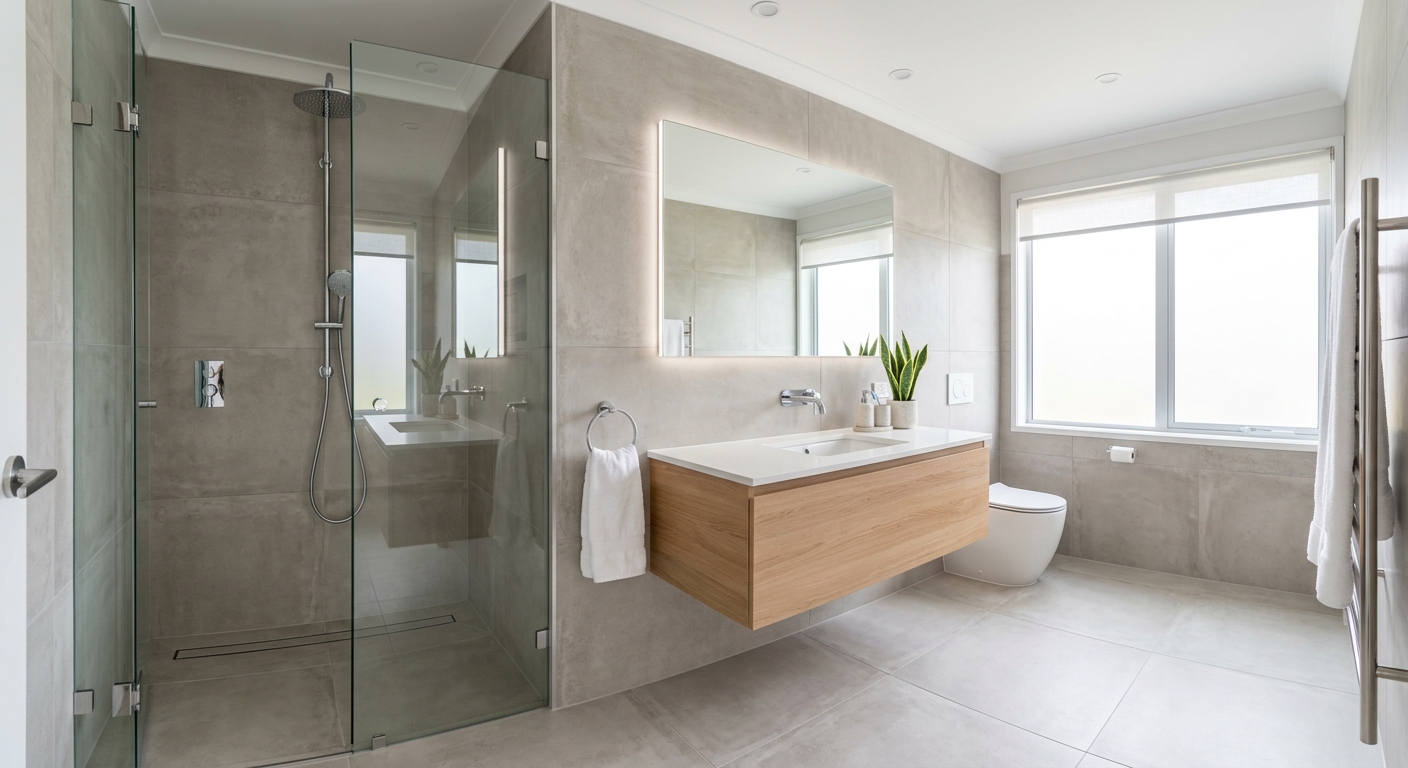
Bathroom renovation options and costs in Creston
Creston homeowners have several bathroom renovation paths, and the right one usually depends on how much you’re willing to open up walls and floors. In Creston, a big cost driver is the age of the housing stock: with 57.5% of homes built before 1981 (Statistics Canada, 2021 Census), you’re more likely to encounter outdated drain assemblies, undersized venting, and dated supply layouts that weren’t designed for today’s fixtures and code requirements. That’s why two neighbours can request “the same” bathroom change and end up with different budgets once trades are exposed to the real conditions.
The Kootenay market also shapes pricing through labour availability and scheduling. Compared to larger hubs, Creston-area projects often require extra mobilization and more careful sequencing, so labour rates and minimum project hours matter as much as tile or fixtures. Climate adds a layer of maintenance planning too: winter freeze-thaw around plumbing runs and persistent indoor humidity from showers make proper waterproofing and ventilation a priority, not an upgrade.
In Creston, trades demand is especially steady in the older-residential pockets closer to the downtown core, where accessibility can be tighter and bathrooms are frequently smaller—meaning more time goes into protecting floors, planning demolition, and fitting new units without changing the plumbing footprint. Use the options below as a starting point, then cross-check what your contractor proposes against the scope and the site conditions they uncover during demolition.
| Renovation Scope |
What's Included |
Typical Duration |
Price Range |
| Cosmetic refresh (paint, fixtures, accessories only) |
New vanity or faucet, toilet refresh, lighting swap, paint, caulking/grout touch-ups, re-sealing where needed; tile stays as-is |
3–6 days |
$3,500–$9,500 |
| Mid-range full renovation (new tile, vanity, tub/shower, electrical) |
Demo and rebuild, updated waterproofing, ceramic/porcelain tile floor + surround, new vanity, tub and/or shower controls, updated exhaust fan and GFCI where required, basic electrical refresh |
2–3 weeks |
$16,000–$28,500 |
| High-end full renovation (custom tile, steam shower, heated floors) |
Premium tile and custom pan details, heated floor circuit, frameless glass, upgraded plumbing trim/valves, higher-end lighting, more extensive electrical and ventilation upgrades |
3–5 weeks |
$28,500–$38,000 |
| Shower-only installation (convert tub to walk-in shower) |
Remove tub, modify rough-in as needed, build shower pan, waterproofing, tile surround, new glass/curtain option, exhaust fan/valve adjustments |
1.5–3 weeks |
$10,000–$22,000 |
| Bathtub replacement or tub-liner install |
Remove and set new tub (or liner where appropriate), re-grout/re-caulk, minor plumbing adjustments, surface prep and sealing |
4–10 days |
$1,800–$6,500 |
| Tile-only installation (floor + surround, existing layout kept) |
Tile floor and/or wall surround replacement, removal and reset, waterproofing upgrade tied to the existing system, re-sealing and touch-ups around fixtures |
1–2 weeks |
$2,500–$9,000 |
Prices are estimates only and vary by project scope, site access and material selection.
What affects the price of bathroom renovation in Creston
In Creston and across the Kootenays, quotes for the “same” bathroom often vary by 30–50% because labour availability, mobilization, and hidden condition discovery change the scope after demolition. While climate isn’t typically the biggest driver of cost (it’s more about moisture management than exterior weather exposure), the region’s housing age is a major budget factor. With many homes dating back before the early 1980s—57.5% built before 1981 (Statistics Canada, 2021 Census)—you may uncover cast-iron or older drain stacks, galvanized supply lines, and ventilation that doesn’t meet today’s performance expectations.
For example, a renovation that starts as a mid-range full refresh (commonly landing in the $16,000–$28,500 neighbourhood) can climb toward the upper Kootenay band ($28,500–$38,000) once we add drain upgrades, correct venting, or open walls for safer supply routing. Asbestos is another “budget hinge.” If pre-1985 materials contain asbestos in flooring or drywall compounds, abatement protocols can add $1,500–$5,000+ before tile or finishes are even installed.
Local examples I see in Creston: (1) smaller bathrooms near downtown often require more careful fitting and longer labour for trades to avoid damaging existing trim; (2) basements or crawl spaces with limited access can lengthen plumbing rough-in time; and (3) homes with older exhaust duct runs sometimes need rework through walls or ceilings to achieve proper airflow, which affects both labour hours and materials. Keeping plumbing where possible is often the simplest way to stay within your chosen price band.
| Price Factor |
Why It Matters |
Cost Impact |
| Layout change — moving drain or supply lines requires rough-in work |
Re-routing plumbing means demolition, new rough-in, pressure testing, and sometimes more venting |
Often adds $2,000–$8,000+ |
| Tile selection — large-format porcelain vs. mosaic vs. ceramic |
Harder materials and bigger panels increase cutting complexity, risk of waste, and setting time |
Typically adds $1,000–$6,000 |
| Fixture tier — builder-grade vs. mid-range vs. designer brands |
Higher tiers cost more for the faucet/trim, valves, and sometimes include better surfaces/controls |
Varies widely: $400–$5,000+ |
| Subfloor condition — rot or unlevel concrete adds scope |
Soft substrates require removal, sistering, or patching; unlevel floors affect tile warranties |
Often adds $800–$4,000+ |
| Electrical — adding GFCI outlets, exhaust fan, heated floor circuit |
Extra circuits, fan ducts, and safe wet-area installations drive labour and inspection |
Usually adds $600–$4,500 |
| Waterproofing method — membrane type and extent |
More complete assemblies reduce failure risk in humid BC bathrooms |
Typically adds $400–$3,000 |
| Older-home surprises — asbestos tile, cast-iron drains, galvanized pipes |
Abatement and plumbing upgrades add specialized labour, disposal, and inspection |
Can add $1,500–$10,000+ |
| Bathroom size — sq ft drives tile and labour time directly |
More floor and wall area equals more waterproofing, setting time, and materials |
Roughly scales $1,000–$8,000+ |
Permits & regulations in British Columbia
In British Columbia, the permit requirement is usually tied to whether you’re changing plumbing, electrical circuits, or structural elements. In general, cosmetic updates—like swapping a vanity, replacing a faucet, repainting, or doing retiling where you don’t move plumbing—often do not require a permit. However, if you relocate plumbing (moving a drain or supply line), add or change an exhaust fan with new wiring, install heated floors, or make structural wall changes, you should expect permits and inspections. Electrical work must be done or signed off by a licensed electrician and must meet provincial code.
For homeowner due diligence in Creston, verify three things step-by-step:
- Trade licence: ask the contractor for their BC trade licence details and check the relevant online registry entry for current status.
- Liability insurance: request a current certificate of insurance naming you or your property as applicable; confirm it’s active for the project dates.
- Worker coverage (WCB): confirm the contractor’s WCB coverage so you’re not left holding the bag if something happens on site.
- Clearance letter / proof: if your contractor provides it, keep a copy for your records (often requested for larger scopes or when submitting for internal documentation).
Also confirm how permits are handled: a good contractor includes pulling permits (where required), booking inspections, and aligning their rough-in stage with the inspection schedule.
Choosing tile, waterproofing and fixtures for your Creston bathroom
In Creston, three material choices drive both the look and the long-term performance of your bathroom: tile, waterproofing, and fixtures. First is tile selection. Ceramic is usually the entry-level route and works well for budgets that want a clean refresh, but it can be more forgiving only when installation quality is solid. Porcelain is typically the better mid-range play for floors and shower surrounds because it handles moisture and wear well, which matters in British Columbia where indoor humidity cycles remain high all year.
Second is waterproofing method. In wet areas, paint-on membranes can be a good choice for certain systems and small scope details, but the most reliable approach for full shower assemblies is using an engineered waterproofing setup—either a bonded sheet membrane or a well-documented tile system built around compatible membranes, membranes at corners/edges, and correct overlap/coverage. The right waterproofing prevents mould and grout failure, especially when ventilation isn’t perfect in older homes.
Third is fixture tier. Builder-grade fixtures can keep your renovation in the mid band (often near $16,000–$28,500) but may lack precision controls and long-life cartridges. Mid-range or designer options can justify their cost with smoother valves, better finishes, and improved parts availability at resale.
Here’s a practical example: upgrading from ceramic to porcelain tile for a typical floor-and-surround can add around $1,000–$3,500 in material and install time, but it’s often easier to live with—and easier to defend as a “lifetime bathroom” decision—than saving that money and replacing earlier after wear.
| Material / Option |
Pros |
Cons |
Price Range |
| Ceramic tile (floor + walls) |
Entry-level pricing, wide style selection, generally easier to source |
Can be less durable than porcelain for floors; relies heavily on correct prep and grout |
$2,500–$6,000 |
| Porcelain tile (floor + walls) |
Better moisture and wear resistance; good choice for shower surrounds and floors |
More cutting time and waste; larger formats may be harder in tight bathrooms |
$4,500–$9,000 |
| Natural stone (marble, travertine, slate) |
Premium look; unique variation can elevate the whole room |
More expensive materials; requires sealing/maintenance and precise installation |
$7,000–$16,000 |
| Frameless glass shower enclosure |
Modern appearance, easier visual cleaning, often increases perceived value |
Higher material cost; fit and waterproofing details must be precise |
$2,000–$6,500 |
| Prefab tub surround (acrylic) |
Faster install, fewer tile-mortar variables, good for budget-friendly refreshes |
Less “custom” look; seams and finish quality depend on install method |
$1,200–$4,500 |
| Custom shower pan (tile or linear drain) |
Seamless look, better drainage options with linear drains, strong long-term potential |
More labour and waterproofing detailing; requires careful substrate prep |
$4,000–$14,000 |
How to choose a bathroom renovation contractor in Creston
Start by verifying British Columbia trade licensing and insurance. Ask for proof of liability insurance (current certificate), then confirm worker coverage through WCB/WCB clearance where applicable. In practice, you want paperwork that matches your project timing, not something expired or for a different address. For licensed electrical or gas-adjacent work, request confirmation that appropriate licensed trades will be used and that they’ll handle permits and inspections if required.
Next, get 2–3 itemised written quotes. In bathroom work, a fair comparison means you see labour and materials separately—tile setting method, waterproofing system type, membrane details, disposal, and what’s included in electrical/mechanical rough-in. Avoid quotes that only list “labour” with no line items; you can’t compare scope properly. Read the scope carefully for exclusions: permit pull included or not, demolition and hauling included or not, and whether patching/painting is part of the finish.
Warranty matters too. Ask for (1) the workmanship warranty length and what it covers, (2) the manufacturer/product warranty for tile, membranes, and fixtures, and (3) whether warranties are transferable to subsequent owners—which is a real consideration if you sell. Finally, payment scheduling: never pay more than 10–15% upfront. Hold back the remaining balance until the job is complete and any deficiencies are corrected. Get a start date and completion estimate in writing so delays are documented rather than blamed on “availability.”
- Confirm BC trade licence status before signing (and request a copy for your file).
- Verify liability insurance certificate is current for your address and dates.
- Confirm WCB/WCB clearance or coverage proof for workers on site.
- Require itemised quotes: labour + materials + allowances clearly listed.
- Check whether permits and inspections are included where required.
- Confirm disposal/hauling is included (demo debris gets expensive fast).
- Ask what waterproofing system is specified (brand/system type), not just “waterproofing.”
- Require details on how tile edges, niches, and corners will be sealed.
- Request a written schedule: demolition date, rough-in date, tile date, final trim date.
- Agree on finish standards: grout type, caulking colour/method, silicone areas.
- Understand warranty: workmanship length, exclusions, and manufacturer warranty transfer.
- Use a payment schedule that limits upfront deposits to 10–15%.
In Creston, a few red flags I look for are: quotes that skip waterproofing specifics, no allowance ranges for tile/fixtures (so costs jump later), vague electrical/plumbing responsibilities, no written warranty terms, and contractors who won’t show insurance/licence proof or won’t explain permit responsibility.
Frequently asked questions — bathroom renovation in Creston
What's the ROI on a bathroom renovation?
In Creston, the ROI is usually strongest when the renovation improves both function and condition: fresh waterproofing, reliable ventilation, safer electrical, and fixtures that work well for daily use. Because many homes are older (57.5% built before 1981, Statistics Canada, 2021 Census), buyers often respond positively when plumbing/drain issues and moisture risks are corrected rather than just “covered up.” That said, ROI depends on how much you change. If you keep plumbing in place, you’re more likely to land closer to mid-range pricing (often around $16,000–$28,500) and avoid scope creep. A full premium upgrade (near $28,500–$38,000) can be worthwhile for long-term enjoyment, but you should match finishes to the home’s overall value and maintenance expectations.
Do I need waterproofing behind the tile?
Yes—if the area will be exposed to water regularly, waterproofing behind tile is the standard approach in BC bathrooms. In Creston’s indoor humidity conditions, moisture can migrate into wall cavities if the waterproofing layer is incomplete or incompatible with the tile system. For tub surrounds and shower walls, you should use an engineered waterproofing setup: membrane type, proper thickness/coverage, and correct detailing at corners, niches, and transitions. If your home is older (many were built before modern assemblies), we also check whether there’s evidence of prior water damage, failing caulking, or inadequate ventilation. Skipping waterproofing may save money short-term, but it commonly leads to mould and grout/tile failure, which raises total renovation cost later.
How do I compare bathroom renovation quotes?
Compare quotes like-for-like. Ask each contractor to provide an itemised breakdown: demolition, disposal, waterproofing system, tile supply allowances, labour rates, plumbing rough-in changes (if any), electrical scope, and finish tasks (trim/paint/caulking). Many big swings come from older-home discoveries, but a good quote should still describe the planned process and allowances. For example, one contractor might list a “mid-range full renovation” near $16,000–$28,500 but omit drain vent upgrades; another might include them and come closer to the upper range. Confirm what is excluded (permits, inspection fees, asbestos/abatement contingency, subfloor remediation). If a quote isn’t clear on these points, you’re not actually comparing scope—you’re comparing assumptions.
Can I live at home during a bathroom renovation in Creston?
Often, yes—especially if the project scope is a cosmetic refresh or tile-only scope. For a full renovation, living arrangements depend on how much of the bathroom is out of service and whether there’s access to the main plumbing in the interim. For cosmetic or tile-only jobs, you may be able to use another bathroom or plan short-term adjustments. For a mid-range full renovation, the demolition and rough-in stages can take weeks, and the toilet/shower may be unusable until waterproofing and tiling are complete. If your home has only one bathroom, plan around dust control, a temporary water strategy, and a clear timeline. In Creston, scheduling matters because smaller labour pools can extend the timeline if materials or inspection availability shifts.
What's the best bathtub material for a Creston home?
The “best” tub material depends on your subfloor condition, desired longevity, and budget. Acrylic tubs are common and usually cost-efficient for replacement projects and can fit well with typical BC bathroom layouts. Fibreglass/acrylic liners can also work in select cases, but they should only be used when the existing base is structurally sound and properly prepped. For a premium look and durability, cast-iron or higher-end surfaces may be ideal, but they cost more and can be heavier—impacting install complexity. If you’re renovating in an older Creston home (many built pre-1981), we also pay attention to the drain connection and how the surrounding waterproofing is reassembled so you don’t create new leak points. If your scope is mainly tub replacement, pricing commonly sits in the $1,800–$6,500 band depending on what must be adjusted.
Is it worth renovating a bathroom before selling in Creston?
Usually, it’s worth renovating when you address visible wear and underlying moisture risk—especially in older homes. Since 57.5% of Creston homes were built before 1981 (Statistics Canada, 2021 Census), many buyers expect outdated bathrooms to be functional and well-protected from leaks. A bathroom that’s clean, properly waterproofed, has a modern exhaust fan setup, and uses reliable fixtures often sells more easily than one that looks updated but has moisture failures. The key is staying rational about scope: if your market positioning is mid-range, aim for outcomes that fit the mid band (often around $16,000–$28,500) rather than automatically going premium. Full high-end renovations near $28,500–$38,000 can make sense if your home supports it and you choose improvements that buyers can feel immediately—like better shower design, strong waterproofing execution, and quality lighting.