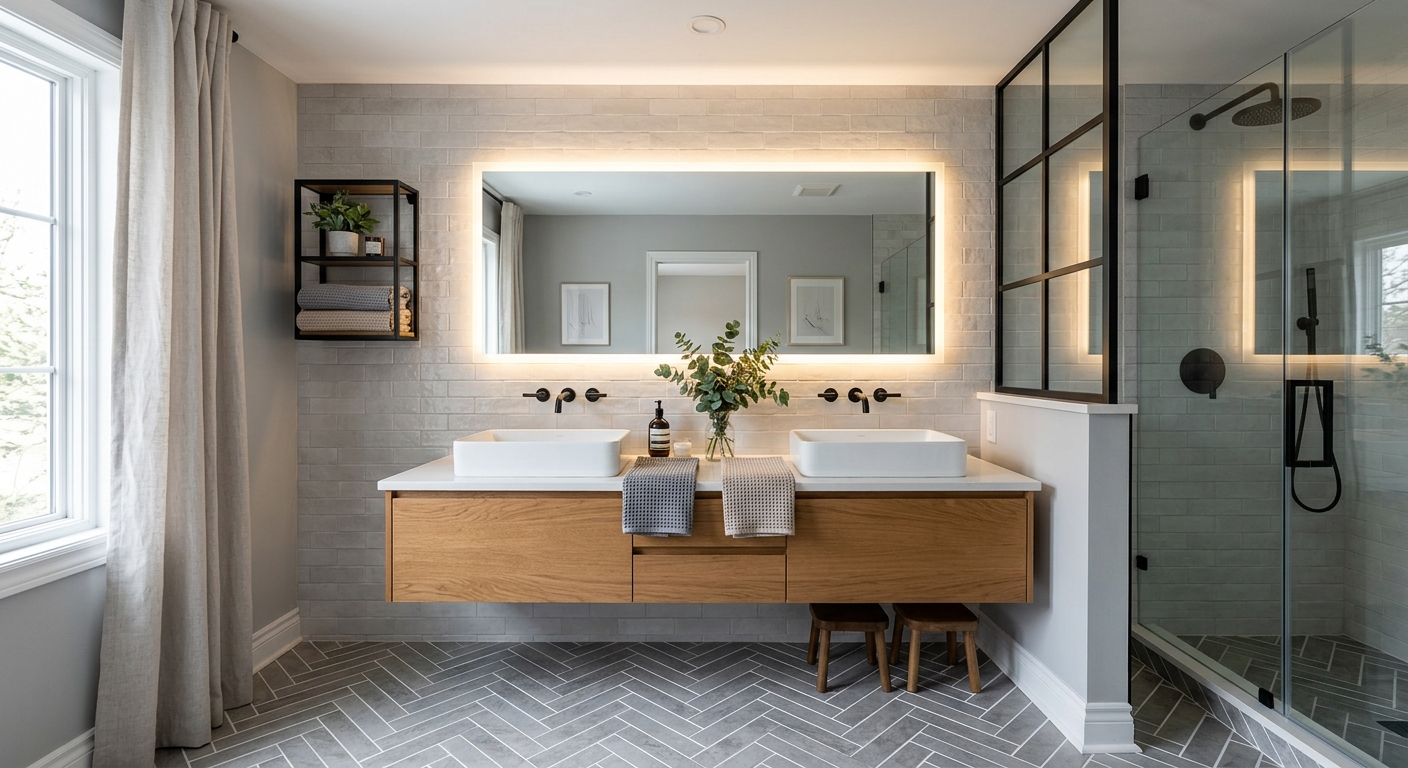
Bathroom renovation options and costs in Sooke
Sooke homeowners typically start with either a cosmetic refresh or a full renovation, and the right path depends on what’s happening behind the walls. In Sooke, 31.4% of homes were built before 1981, which matters because older layouts often come with dated plumbing runs and drains, plus the occasional risk of asbestos-containing materials in older floor finishes or drywall compounds. That’s why what looks like a “simple re-tile” can turn into additional rough-in work once walls and subfloors are opened. (Statistics Canada, 2021 Census).
On Vancouver Island and the Coast, the mild maritime climate doesn’t usually drive exterior weather delays, but it does create consistently damp bathroom conditions—so waterproofing quality and ventilation upgrades directly affect long-term performance. Cost is driven more by labour rates and contractor availability than by temperature swings. In practice, general contractors in southern BC commonly bill in the 80–120 per hour range, and trades like plumbers and electricians often fall into the 100–150 per hour band—so labour quickly becomes the largest line item, especially in older Sooke homes where galvanized supply lines, inadequate fan venting, or older electrical are discovered during demolition.
Trade demand is especially noticeable around central Sooke and areas like East Sooke Road, where many projects are in established neighbourhoods and repairs need coordination with ongoing household use. From there, it’s easier to compare your realistic budget across common renovation choices—see the table below.
| Renovation Scope |
What's Included |
Typical Duration |
Price Range |
| Cosmetic refresh (paint, fixtures, accessories only) |
New paint, light fixture swap, vanity/faucet swap if no plumbing move, toilet/vanity accessories, hardware, caulking and trim touch-ups |
3–7 days |
$3,000 – $8,000 |
| Mid-range full renovation (new tile, vanity, tub/shower, electrical) |
Demolition, subfloor checks, tub-to-surround or shower conversion, mid-range tile and waterproofing, vanity and mirror, exhaust fan upgrade, updated GFCI, new trim and finishes |
2–4 weeks |
$15,000 – $28,000 |
| High-end full renovation (custom tile, steam shower, heated floors) |
Premium tile layout (possibly custom patterns), bonded-sheet or advanced membrane system, heated floor circuit, designer vanity/fixtures, steam shower option, custom glass, enhanced lighting and ventilation strategy |
4–6 weeks |
$28,000 – $45,000 |
| Shower-only installation (convert tub to walk-in shower) |
Remove tub, new shower pan/floor, tile walls, curb/linear options, waterproofing, new glass door, plumbing adjustments to drain and controls |
1–3 weeks |
$8,000 – $18,000 |
| Bathtub replacement or tub-liner install |
Demo and disposal (as needed), replace tub and surround, reseal and re-caulk, leak testing, sometimes minor plumbing refresh at fittings |
1–2 weeks |
$3,000 – $7,500 |
| Tile-only installation (floor + surround, existing layout kept) |
Remove existing tile (and confirm waterproofing condition), install new tile and grout, patch/level subfloor as required, waterproofing upgrade depending on substrate |
1–3 weeks |
$4,500 – $12,000 |
Prices are estimates only and vary by project scope, site access and material selection.
What affects the price of bathroom renovation in Sooke
Across Vancouver Island and Coast—plus the broader BC market—you’ll often see quotes for the “same” bathroom reno swing by 30–50%. The usual drivers aren’t the mild coastal weather; they’re labour rates, trade scheduling, and what’s hidden inside the walls of older homes. On Vancouver Island, general contractors and specialist trades are commonly priced by time and complexity (with plumbers and electricians frequently in the 100–150 per hour band), so labour becomes the biggest cost lever once demolition starts.
Sooke’s housing age plays a big role. With 31.4% of homes built before 1981, more projects uncover legacy plumbing and ventilation issues—such as cast-iron or older drain stacks, galvanized supply lines, and exhaust fans that were never properly ducted for today’s moisture control expectations. Once those issues surface, the scope expands through additional rough-in work. If asbestos-containing materials are discovered in older vinyl floor tile, drywall compound, or insulation, abatement can add roughly $1,500–$5,000+ depending on what’s involved and where it sits. For homeowners, that’s often why a “mid-range” plan can trend toward a higher full-renovation budget of $10,000 – $35,000.
Two concrete Sooke examples I see often: (1) converting a tub to a walk-in shower can require drain re-routing to achieve proper slope, which adds labour and sometimes floor build-up; (2) replacing a vanity without moving plumbing can be straightforward, but if the subfloor is uneven or water-damaged, tile installation and waterproofing time increases. When you keep layout changes minimal and choose simpler tile formats, your budget is more likely to land closer to the $4,000 – $15,000 shower-install band rather than ballooning into full-reno territory.
| Price Factor |
Why It Matters |
Cost Impact |
| Layout change — moving drain or supply lines requires rough-in work |
New plumbing paths require cutting, patching, leak testing, and sometimes structural or joist adjustments |
Often adds several thousand dollars due to additional labour and materials |
| Tile selection — large-format porcelain vs. mosaic vs. ceramic |
Harder materials need better prep and more precise setting to avoid lippage and cracking |
Can shift tile-only budgets by thousands |
| Fixture tier — builder-grade vs. mid-range vs. designer brands |
Higher tiers cost more and may require specialty trims or upgraded valve compatibility |
Usually increases material line items and sometimes rough-in requirements |
| Subfloor condition — rot or unlevel concrete adds scope |
Tile systems depend on solid, flat substrates; repairs and rebuilds add labour |
Common in older Sooke homes; can push projects upward quickly |
| Electrical — adding GFCI outlets, exhaust fan, heated floor circuit |
Bathrooms require code-compliant protection and properly sized circuits; wiring takes time |
Frequently a major contributor to full-reno cost variance |
| Waterproofing method — membrane type and extent |
Moisture control relies on correct system selection and proper overlap/termination details |
Best systems cost more, but reduce call-backs and long-term damage risk |
| Older-home surprises — asbestos tile, cast-iron drains, galvanized pipes |
Discovery triggers professional handling, schedule delays, and additional replacement work |
Can add $1,500–$5,000+ and extend timelines |
| Bathroom size — sq ft drives tile and labour time directly |
Larger bathrooms mean more tile surface, more prep, more grouting, and longer waterproofing |
Costs scale with area; small bathrooms can be dramatically cheaper |
Permits & regulations in British Columbia
In British Columbia, cosmetic updates are typically “permit-light.” In most cases, swapping finishes like a vanity, faucet, toilet, lighting fixtures, or retiling using the existing wall and plumbing layout usually does not require a permit. However, permits commonly become necessary when you relocate plumbing—meaning you move drains or supply lines—or when you make electrical changes such as adding circuits for an exhaust fan or heated floors. Structural changes to framing, openings in load-bearing walls, or significant wall modifications also generally trigger permitting and inspection requirements.
Electrical work must meet provincial code and be completed or signed off by a licensed electrician. Plumbing rough-ins that change the route or connection points of supply/drain lines typically require permits and inspection. The practical takeaway for Sooke homeowners: if your scope includes “move plumbing,” “add a new fan with new wiring,” or “run a heated floor circuit,” assume permits and inspections are part of the job.
Step-by-step, verify your contractor before work starts. First, check the contractor’s British Columbia trade licence for the relevant category (and that the company is in good standing) using the provincial online registry. Second, request a current certificate of insurance (general liability) and confirm it covers renovation work at your address. Third, ensure the contractor can provide appropriate workers’ compensation coverage—commonly handled through WCB—so you’re not exposed if someone is injured on site. Finally, ask for a clearance letter or confirmation where applicable, and keep copies with your contract and receipt package.
Choosing tile, waterproofing and fixtures for your Sooke bathroom
In Sooke, three material decisions usually determine whether your renovation feels “worth it” or becomes an expensive lesson: (1) tile choice and installation complexity, (2) waterproofing system, and (3) fixture tier. Start with tile. Ceramic tile is the entry-level option and can work well if you want a traditional look and a predictable cost. Porcelain typically costs more but is denser, handles wet bathrooms better, and is easier to maintain—especially for floors and shower walls. Natural stone (marble, travertine, slate) adds luxury, but it can require sealing, careful selection for consistency, and extra installer time to keep edges straight and surfaces uniform.
Second, waterproofing is non-negotiable on Vancouver Island. Even though the climate is mild, bathrooms still trap moisture, and poor waterproofing leads to hidden mould and substrate failure. A paint-on membrane can be budget-friendly, while bonded-sheet membranes or a properly detailed schluter-style system (or equivalent method) create a more robust barrier when used correctly. In practice, the best system is the one matched to your substrate, shower type, and drainage plan—especially if you’re converting a tub to a walk-in shower.
Third, fixture tier affects not just the price, but the overall experience and resale value. Builder-grade fixtures can be good value, but mid-range or designer options often deliver better controls, finishes, and longevity. For a budget example: if upgrading from a basic wall tile to porcelain costs an extra few thousand but you’re already investing in new shower waterproofing and glass, that upgrade is usually justified because it changes how the bathroom looks every day. If the waterproofing isn’t upgraded, however, “saving” on tile can cost more later.
| Material / Option |
Pros |
Cons |
Price Range |
| Ceramic tile (floor + walls) |
Lower material cost, broad style selection, straightforward with a good installer |
May be more porous than porcelain; depends on glaze and sealer use |
$2,500 – $7,500 |
| Porcelain tile (floor + walls) |
Better water performance, strong for floors, cleaner look with larger formats |
Higher material cost and can require more precise layout and setting |
$5,000 – $12,500 |
| Natural stone (marble, travertine, slate) |
Premium look, unique character and depth |
More variable, often needs sealing, extra care for installation and maintenance |
$8,000 – $18,000 |
| Frameless glass shower enclosure |
Modern, bright look; typically easier to keep tidy; durable glass |
More expensive than standard kits; needs precise wall and framing |
$2,000 – $6,500 |
| Prefab tub surround (acrylic) |
Quick install, fewer tile labour hours, good for budget timelines |
Less custom appearance; future style changes may require full replacement of surfaces |
$1,500 – $4,000 |
| Custom shower pan (tile or linear drain) |
Improved drainage and a higher-end finish; linear drains can elevate the look |
More labour and tighter tolerances; may increase waterproofing detailing time |
$3,000 – $10,000 |
How to choose a bathroom renovation contractor in Sooke
Choosing the right bathroom contractor in Sooke is mostly about verification and clarity—especially on older homes where hidden conditions can change your budget quickly. Start with British Columbia licensing. Ask for the contractor’s BC trade licence details and confirm it matches the work scope. For liability, request a current certificate of insurance showing general liability coverage and confirm the policy is active for renovation work at your address. For safety and protection, also confirm workers’ compensation coverage (WCB/WCB clearance where applicable), so you’re not left responsible if something happens on site.
Next, get 2–3 itemised written quotes. “Itemised” matters: you want labour and materials broken out separately (tile, waterproofing system, membrane/mortar, vanity, fan, electrical components, glass). That way, if one contractor includes a higher-quality waterproofing method or disposal fee, you can actually compare apples-to-apples. Read the scope line by line for inclusions and exclusions: permit pull included or not, drywall patching included or not, and whether disposal and haul-away are part of the price. A good quote also documents how they’ll handle moisture testing, subfloor repair, and any contingency for older-home surprises.
Warranty and payment structure protect you. Ask for the workmanship warranty length and whether it covers the full installation, and confirm product warranties from manufacturers (and whether they transfer if you sell). Payment should be staged—never more than 10–15% upfront—with a meaningful holdback until the job is complete and you’ve reviewed punch-list items. Finally, require a written start date and a completion estimate that reflects cure times for waterproofing, tile, and any specialty coatings.
- Confirm BC trade licensing matches the work scope before signing.
- Request certificate of insurance and verify effective dates.
- Verify workers’ compensation coverage (WCB) and keep any clearance documentation.
- Get 2–3 itemised quotes (labour vs materials) instead of a single lump sum.
- Ask what waterproofing system is included and whether it’s installed to manufacturer steps.
- Clarify who handles permits and inspections if plumbing/electrical is relocated.
- Confirm disposal/haul-away is included (and what’s excluded).
- Ask how the contractor assesses and repairs subfloor issues before tile installation.
- Request examples of similar Sooke/Greater Victoria bathroom projects (photos of installs, not just finished marketing shots).
- Review the warranty in writing: workmanship length and transferability.
- Use a staged payment schedule with a holdback until punch-list completion.
- Get a written timeline including key milestones (demo, rough-in, waterproofing, tile, trim, final).
Red flags I see in Sooke: vague scopes (“we’ll figure it out later”), quotes that omit electrical/fan details, no discussion of waterproofing method, unwillingness to itemise labour and materials, and pressure for large upfront payments. If they can’t clearly explain who pulls permits or what happens if asbestos or water damage is discovered, treat that as a serious warning sign.
Frequently asked questions — bathroom renovation in Sooke
What's the difference between a cosmetic and a full bathroom renovation?
A cosmetic refresh is focused on surface-level updates—think paint, swapping fixtures like a faucet or vanity, changing hardware, and sometimes re-caulking or minor accessory installs without moving plumbing or reworking the waterproofing system. A full renovation goes further: demolition, subfloor checks, new waterproofing, new tile and finishes, and often electrical and ventilation upgrades. In Sooke, this distinction matters because many homes are older (31.4% built before 1981), and hidden issues like outdated drains, galvanized supply lines, or inadequate fan venting can surface once walls open. That’s why a “cosmetic” plan can stay in a tighter budget range, while a full reno commonly lands within the $10,000 – $35,000 band depending on scope.
How do I choose the right contractor for my bathroom in Sooke?
Start by verifying British Columbia licensing and insurance, then confirm workers’ compensation coverage (WCB). Ask for 2–3 itemised quotes so you can compare waterproofing methods, electrical scope (like GFCI and exhaust fan upgrades), and disposal/haul-away. In older Sooke homes, a contractor who explains how they’ll inspect subfloors and manage moisture control will save you from surprises later. Request a written timeline with key stages and cure times. For warranty, make sure workmanship coverage is in writing and understand whether product warranties are transferable if you ever sell. If a contractor won’t clearly break out labour vs materials or won’t discuss how permits are handled for plumbing/electrical changes, that’s usually a bad sign.
What's the most common mistake homeowners make in bathroom renovations?
The most common mistake is underestimating “behind-the-wall” scope and assuming the job will stay cosmetic when demolition starts. In Sooke and across Vancouver Island and the Coast, older housing stock can hide dated ventilation, older drain assemblies, or wiring that doesn’t match current needs. Another frequent error is choosing aesthetics first—tile and fixtures—while delaying decisions on waterproofing and ventilation. That can cause mould risk and costly rebuilds. If you’re converting a tub to a shower, the waterproofing and drain slope details are critical, and those decisions affect labour time and materials. Aim to lock in waterproofing and fan specs early so your budget doesn’t creep from a mid-range plan toward a full renovation budget like $15,000 – $28,000.
How long does tile installation take in a Sooke bathroom?
Tile installation time depends on bathroom size, tile type, layout complexity, and subfloor condition. For many Sooke bathrooms, tile work is typically completed within 1–3 weeks, but the calendar length can be longer because waterproofing must cure and tile needs time to set before grout and trim. If you’re doing floor + shower walls with porcelain and custom patterns, plan on more time than a basic straight layout. In older homes, additional time may be needed for substrate repairs (levelling, rot replacement, or remediation after opening up). A contractor who schedules waterproofing, tile setting, and final finishing around cure times generally prevents delays and reduces rework. The total project duration often extends beyond tile alone, especially during plumbing/electrical rough-in.
How much does a bathroom renovation cost in Sooke?
For Sooke, full bathroom renovations commonly fall into the $10,000 – $35,000 range, driven primarily by labour rates and what’s discovered in older homes. Shower-only conversions (like tub-to-walk-in) often land in the $4,000 – $15,000 band if the layout stays close to original. Tile-only work with existing fixtures remaining is frequently less—often around the mid-range tile-only estimates—while high-end upgrades like custom glass, heated floors, or steam shower systems push higher. Your exact cost will depend on whether plumbing is relocated, whether electrical circuits are added, and whether waterproofing and ventilation are upgraded beyond a basic refresh. Because Sooke has a meaningful share of pre-1981 housing, allowances for subfloor or hidden plumbing issues are especially important.
How long does a bathroom renovation take in Sooke?
A cosmetic refresh is often completed in about 3–7 days. A mid-range full renovation usually takes 2–4 weeks, assuming materials are available and there are no major surprises behind the walls. If you’re doing a high-end full renovation with more complex tile, custom glass, and heated floors, expect roughly 4–6 weeks. Shower-only conversions commonly fall around 1–3 weeks. In Sooke, timelines can extend when older-home surprises occur—like subfloor repairs, upgraded ventilation ducting, or additional electrical/plumbing rough-in after demolition. Cure times for waterproofing and setting materials also add calendar days. The best approach is to confirm a written start date and completion estimate, and to ask your contractor what would change the schedule if additional rough-in or remediation becomes necessary.