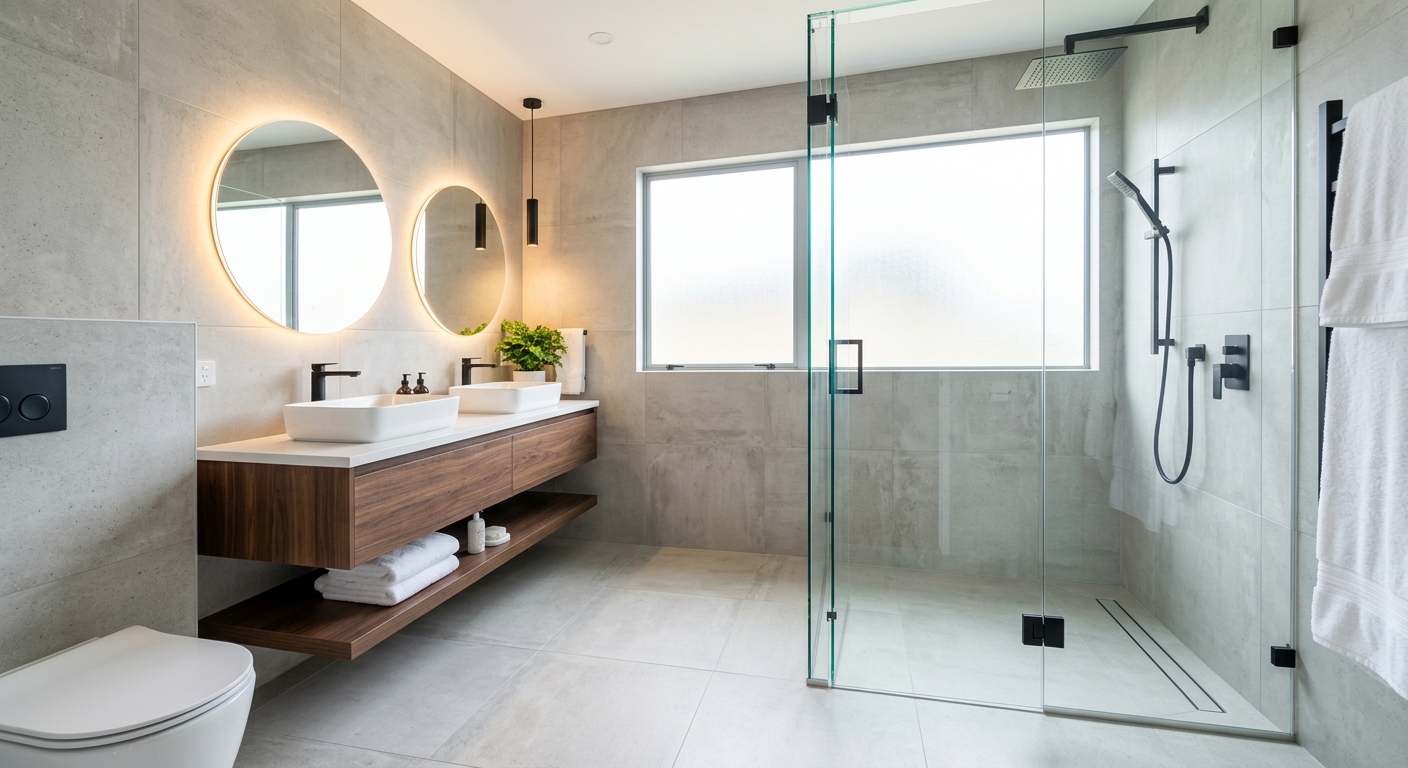
Bathroom renovation options and costs in Coldstream
Coldstream bathroom renovations range from simple refreshes to full-gut rebuilds, and the right option depends on how much plumbing, waterproofing, and electrical work your existing layout needs. In Coldstream, it’s common to see older homes—45.2% of housing stock was built before 1981 (Statistics Canada, 2021 Census)—which often means dated drain configurations, older ventilation setups, and potentially brittle finishes or concealed materials that come with surprises once walls come open.
In the Thompson–Okanagan region, costs are driven more by labour and housing age than by day-to-day climate. Trades availability and interior labour demand can make bids swing, and once contractors start opening wall cavities, they frequently find issues like cast-iron or copper drain sections that need updating, plus ventilation upgrades to meet current moisture control expectations. This is especially true in established pockets such as the Coldstream Road area and nearby rural-residential lanes, where many homes are older and upgrades have been deferred.
That’s why two homeowners can receive very different quotes for the “same” bathroom: one may be cosmetic only, while the other needs rough-in changes, upgraded electrical, and added waterproofing coverage. As a baseline for budgeting, realistic totals for Coldstream typically fall within the regional B.C. mid-range for modest projects and move toward Lower Mainland pricing for high-end finishes and custom shower builds. Use the table below to compare typical scopes and timelines, then we’ll break down what most often changes the final number.
| Renovation Scope |
What's Included |
Typical Duration |
Price Range |
| Cosmetic refresh (paint, fixtures, accessories only) |
Paint, new vanity or faucet, toilet/trim swap, lighting accessories, towel bars, mirror, caulking/touch-up; existing tile not replaced |
3–7 days |
$5,000–$10,000 |
| Mid-range full renovation (new tile, vanity, tub/shower, electrical) |
Demo and rebuild of shower/tub surround, new tile floor and walls, new vanity and toilet, exhaust fan upgrade, GFCI where needed, basic electrical and plumbing refinishing |
2–3 weeks |
$15,000–$28,000 |
| High-end full renovation (custom tile, steam shower, heated floors) |
Custom shower system, premium tile layout (including niches/feature bands), heated floor circuit, upgraded electrical, higher-end fixtures, improved waterproofing and detailing |
3–5 weeks |
$28,000–$35,000 |
| Shower-only installation (convert tub to walk-in shower) |
Remove tub, build walk-in shower base, new tile/liner system, glass door/partial enclosure, replace or relocate drain/supplies as needed, ventilation improvement |
1.5–3 weeks |
$9,000–$18,000 |
| Bathtub replacement or tub-liner install |
Swap tub and trim, re-establish waterproofing at tub surround, caulk and seal, test plumbing for leaks; liner includes prep and bonding to existing surfaces |
5–10 days |
$4,000–$11,000 |
| Tile-only installation (floor + surround, existing layout kept) |
Tile floor and tub/shower surround only, substrate prep, waterproofing and sealing as required by the system, grout/caulk, disposal of tile debris |
1.5–2.5 weeks |
$3,000–$12,000 |
Prices are estimates only and vary by project scope, site access and material selection.
What affects the price of bathroom renovation in Coldstream
In Coldstream and across the Thompson–Okanagan, you can easily see quote differences of 30–50% for the same bathroom because the “hidden” work drives the schedule and the trades. In B.C.’s interior, labour rates and availability still move with overall construction demand, but the bigger cost driver is usually housing age: dated rough-ins, older ventilation that no longer handles today’s shower usage, and drains/supply lines that don’t match modern bathroom builds. Climate plays a smaller role here than in coastal B.C.; the moisture risk is still real, but the budget usually rises because the wrong venting or waterproofing approach shows up only after walls are opened.
Older homes can hide cast-iron or older metal drain stacks, plus galvanized supply lines that need assessment and sometimes replacement. When ventilation is inadequate, contractors often broaden the scope to include an exhaust fan re-route or ducting upgrade. And because many Coldstream homes pre-date modern building practices—45.2% built before 1981 (Statistics Canada, 2021 Census)—we also plan for older adhesives, patching, or floor materials that may require investigation. Discovery of asbestos-containing materials in floor tile or drywall compound can trigger abatement protocols and typically adds $1,500–$5,000+ plus time.
Concrete examples from Coldstream: (1) if you keep the existing tub footprint, your plumber and tile set-up stays simpler, often keeping budgets nearer the $15,000–$28,000 mid-range band; (2) if you move the drain to create a walk-in shower, rough-in work expands and quotes trend toward the $28,000–$35,000 high-end band when paired with custom tile, heated floors, and upgraded electrical.
| Price Factor |
Why It Matters |
Cost Impact |
| Layout change — moving drain or supply lines requires rough-in work |
Moving plumbing means opening walls/floors, re-piping, and re-checking slope/venting |
Often +$2,000–$8,000 depending on distance and venting complexity |
| Tile selection — large-format porcelain vs. mosaic vs. ceramic |
Larger panels need flatter substrates, more careful layout, and waste for cuts |
Typically +$1,000–$6,000 for materials and labour |
| Fixture tier — builder-grade vs. mid-range vs. designer brands |
Higher-tier valves, trims, and smart features can cost significantly more |
Often +$500–$4,000+ across fixtures |
| Subfloor condition — rot or unlevel concrete adds scope |
Soft subfloor or out-of-level surfaces require repair/leveling before tile |
Commonly +$800–$5,000 depending on extent |
| Electrical — adding GFCI outlets, exhaust fan, heated floor circuit |
Bathrooms require code-compliant outlets and ventilation power, plus safe circuit planning |
Often +$800–$4,500 |
| Waterproofing method — membrane type and extent |
Premium systems (sheet membranes/robust detail work) improve long-term moisture performance |
Typically +$700–$3,000 versus basic approaches |
| Older-home surprises — asbestos tile, cast-iron drains, galvanized pipes |
Investigation and remediation add cost and can extend the schedule |
Often +$1,500–$10,000+ |
| Bathroom size — sq ft drives tile and labour time directly |
More coverage means more prep, setting time, and materials |
Can swing the project by +$2,000–$9,000 |
Permits & regulations in British Columbia
In British Columbia, cosmetic updates usually don’t need permits. If your plan is primarily swapping fixtures (new vanity, faucet, mirror), retiling without moving plumbing, or replacing a tub surround with a similar layout, contractors typically proceed without a permit. However, permits become very relevant when you start changing function and building systems.
Work that typically requires a permit includes: relocating plumbing (moving a drain or water supply), major bathroom ventilation changes (like adding a new exhaust fan or new duct routing with new electrical connections), and any structural wall changes (opening framing, altering load-bearing elements, or significant wall reconstruction). Electrical work must be done or signed off by a licensed electrician, and new circuits (or reworking existing ones for a fan, heated floor, or upgraded lighting) should be planned as code-compliant from the start.
To verify a contractor in Coldstream step-by-step: (1) ask for their BC trade licence details and check the relevant online registry; (2) request a certificate of insurance showing general liability and ensure the effective dates cover your project; (3) confirm coverage for worker protection (commonly WCB/WSIB-style coverage for eligible workers in the province) via their documentation; (4) request proof of liability clearance or a clearance letter if applicable. A reputable contractor will provide documents before starting and will pull permits when required.
Choosing tile, waterproofing and fixtures for your Coldstream bathroom
Choosing the right materials in Coldstream is where you control both the look and the long-term cost. First is tile choice. Entry-level ceramic tile is usually the most budget-friendly option, but it’s also more sensitive to substrate movement and can require careful detailing in wet areas. Porcelain tile is denser, often handles heavy traffic better, and is a strong mid-range pick for floors and tub/shower surrounds. Natural stone (marble, travertine, slate) can deliver a luxury finish, but it can be costlier and more demanding to install and maintain.
Second is waterproofing method—this is the real mould-prevention decision. In B.C.’s interior humidity conditions (cold evenings, warm showers, and regular steam cycling), a robust system matters. A paint-on membrane can work in some scopes, but many homeowners prefer a bonded sheet membrane or a proven system approach that includes correct layering and detailed transitions at niches, corners, and change-of-plane areas. When waterproofing is rushed or cut back, you pay later through grout breakdown or hidden leaks.
Third is fixture tier. Builder-grade faucets and valves can be fine short-term, while mid-range and designer brands typically improve smoothness, valve performance, and finish durability—often supporting resale value in a market where many homes are older and buyers watch for “new but done right” updates.
Budget-matching example: if you’re deciding between mid-range porcelain and premium stone, switching to porcelain can free up money for better waterproofing and an upgraded exhaust fan—often a better value than spending more on stone if your main goal is durable moisture control and clean grout lines. For larger renovations that land near the $15,000–$28,000 range, porcelain plus a high-quality waterproofing system usually gives the best balance; for projects near $28,000–$35,000, heated floors and luxury tile finishes are where the upgrade is most justified.
| Material / Option |
Pros |
Cons |
Price Range |
| Ceramic tile (floor + walls) |
Lower upfront cost, wide style selection, good for walls and budget floors |
More variation in absorption; can be less forgiving if substrate isn’t very flat |
$3,000–$7,000 |
| Porcelain tile (floor + walls) |
Denser and more durable, better for wet areas, typically more consistent for modern large-format installs |
Can cost more per sq ft; requires solid prep for best results |
$6,000–$12,000 |
| Natural stone (marble, travertine, slate) |
High-end look and texture, excellent for statement niches or feature walls |
Higher material cost, potential sealing/maintenance needs, can be more variable in fabrication |
$10,000–$18,000 |
| Frameless glass shower enclosure |
Light, modern look; easier to clean than many curtain setups |
More expensive; precise install required to avoid alignment issues |
$2,500–$6,000 |
| Prefab tub surround (acrylic) |
Fast installation, consistent waterproofing system, lower labour than full tile rebuild |
Less “designer” look than tile; repair options can be limited if damaged |
$1,500–$4,500 |
| Custom shower pan (tile or linear drain) |
Premium look, better layout freedom, improved accessibility with linear drain options |
Requires careful slope, detailing, and waterproofing; increases labour and build time |
$4,000–$10,000 |
How to choose a bathroom renovation contractor in Coldstream
When you’re hiring a bathroom contractor in Coldstream, you want proof—not promises. Start by verifying British Columbia licensing for the trades that will be working (and ask which subcontractors are used). Next, request liability insurance with a certificate showing the coverage amount and effective dates. For worker protection coverage, ask for their WCB/WSIB-style documentation where applicable. If they can’t produce documents or offer a vague “we’re covered,” that’s a warning sign.
Get 2–3 itemised written quotes that break down labour and materials rather than one lump sum. A good quote shows: demo scope, plumbing rough-in allowance (if any), electrical line items, waterproofing system details, tile setting and grout allowance, glass enclosure allowance, and disposal and cleaning. Also confirm what’s excluded: permit pull included or not, subcontractor coordination included or not, and whether freight/delivery delays are covered in the timeline.
Warranty matters. Ask for: (1) workmanship warranty length and what it covers, (2) product/manufacturer warranty details for tile systems, shower assemblies, and fixtures, and (3) whether warranties are transferable if you sell the home. On payments, never accept an upfront deposit that’s more than about 10–15%; keep a holdback until the job is complete and inspected. Finally, require a start date and a completion estimate in writing so you can plan around trades schedules.
- Provide BC licence numbers for the trades involved (not just a general company name)
- Show current liability insurance certificate with project coverage dates
- Confirm worker protection coverage documentation before starting
- Use itemised quotes with separate labour/materials line items
- Include waterproofing method and specify the membrane/system brand or type
- Clarify whether permits are pulled and who pays permit fees
- List exclusions (demo limits, subfloor repairs, plumbing changes, glass enclosure allowance)
- State disposal method and whether tile/tub haul-away is included
- Write warranty terms for labour and specify manufacturer warranty details
- Confirm payment schedule: keep 10–15% holdback until completion
- Provide a written timeline with start and estimated completion date
- Document communication plan for changes discovered after demo
Specific red flags I see in Coldstream: (1) quotes that don’t mention waterproofing type, (2) “we’ll handle permits” but no permit responsibility or documentation, (3) large upfront payments beyond 15% without a detailed contract timeline, (4) vague scope language like “plumbing included” without stating whether rough-in relocation is covered, and (5) no written warranty on workmanship or unwillingness to list manufacturers for key systems.
Frequently asked questions — bathroom renovation in Coldstream
How much does a bathroom renovation cost in Coldstream?
In Coldstream, a bathroom renovation typically lands in the mid-B.C. bands because labour and older-home complexities drive scope. For a full renovation, many homeowners budget around $15,000–$28,000 for a mid-range rebuild (new tile, vanity, tub/shower, and electrical basics). If you’re going to a high-end finish—custom tile details, premium fixtures, heated floors, or a steam-style shower—budget closer to $28,000–$35,000. Cosmetic work is often cheaper, but in older homes (45.2% built before 1981), hidden issues like dated wiring, ventilation upgrades, or plumbing condition can push the job toward full renovation costs. (Statistics Canada, 2021 Census)
How long does a bathroom renovation take in Coldstream?
Timelines depend mostly on whether you’re changing plumbing/electrical and the availability of tile and glass. A cosmetic refresh can take about 3–7 days. A mid-range full renovation commonly takes about 2–3 weeks once demo, rough-ins, tile setting, and final trim are complete. If you’re doing a shower-only conversion, plan roughly 1.5–3 weeks, depending on drain relocation and glass lead times. High-end projects with heated floors or detailed custom tile often run 3–5 weeks. In older Coldstream homes, discoveries after opening walls—like asbestos-containing materials or aging drain stacks—can extend timelines because remediation and inspections need to be coordinated.
Do I need a permit for a bathroom renovation in British Columbia?
Often, cosmetic updates in British Columbia don’t require a permit—like swapping a vanity, replacing a faucet, or retiling without moving plumbing. Where permits usually come into play is when you relocate plumbing (moving a drain or supply lines), add or rework ventilation with new circuits, or make structural wall changes. Electrical work must meet provincial code and be completed or signed off by a licensed electrician. Plumbing rough-in changes typically require a permit and inspection. For Coldstream homeowners, the practical step is to ask the contractor to list what triggers permits in your exact scope and to provide proof that they’re handling the permit process when required.
What's the best tile for a bathroom in Coldstream?
For most Coldstream bathrooms, porcelain is usually the “best balance” because it’s durable, consistent in wet areas, and works well for modern tile layouts (including larger panels). Ceramic can be a fine entry-level choice, especially for walls, but it can be more sensitive to substrate prep if the floor isn’t perfectly level. Natural stone can look stunning but costs more and may require more maintenance, including sealing. The best tile isn’t only about material—it’s also about installation quality and waterproofing system detailing. If you’re budgeting near $15,000–$28,000, investing in porcelain and high-quality waterproofing often outperforms trying to cut costs on the moisture barrier.
Should I do a tub-to-shower conversion?
For many Coldstream homeowners, a tub-to-shower conversion is a smart upgrade because it improves day-to-day access and can modernize the bathroom faster than a full layout change. The main cost variable is whether the drain/supply lines need relocation to achieve a proper shower slope and valve placement. If plumbing can stay in the same footprint, the project is often more straightforward and can land in the $9,000–$18,000 shower-install band. If your home is older (many are built before 1981), expect possible surprises such as ventilation or electrical circuit upgrades, and sometimes more extensive waterproofing detailing. A conversion is most cost-effective when you keep the layout close to the existing tub footprint.
How do I prevent mold in a Coldstream bathroom?
Mould prevention in Coldstream is mostly about controlling moisture and using the correct waterproofing and ventilation strategy. Start with a proper waterproofing system for your shower/tub surround (membrane type, correct overlaps, and detailed transitions). Next, ensure the bathroom has an exhaust fan sized and ducted correctly, with adequate runtime after showers. After installation, keep grout and caulking in good condition and avoid letting water pool at the edges of shower doors. Older homes in the area often had ventilation that doesn’t match today’s usage, so an upgraded exhaust fan and ventilation circuit can be as important as the tile you choose. Finally, set expectations: even in B.C. inland climates, moisture shows up where detailing is weak—so don’t skip waterproofing quality.