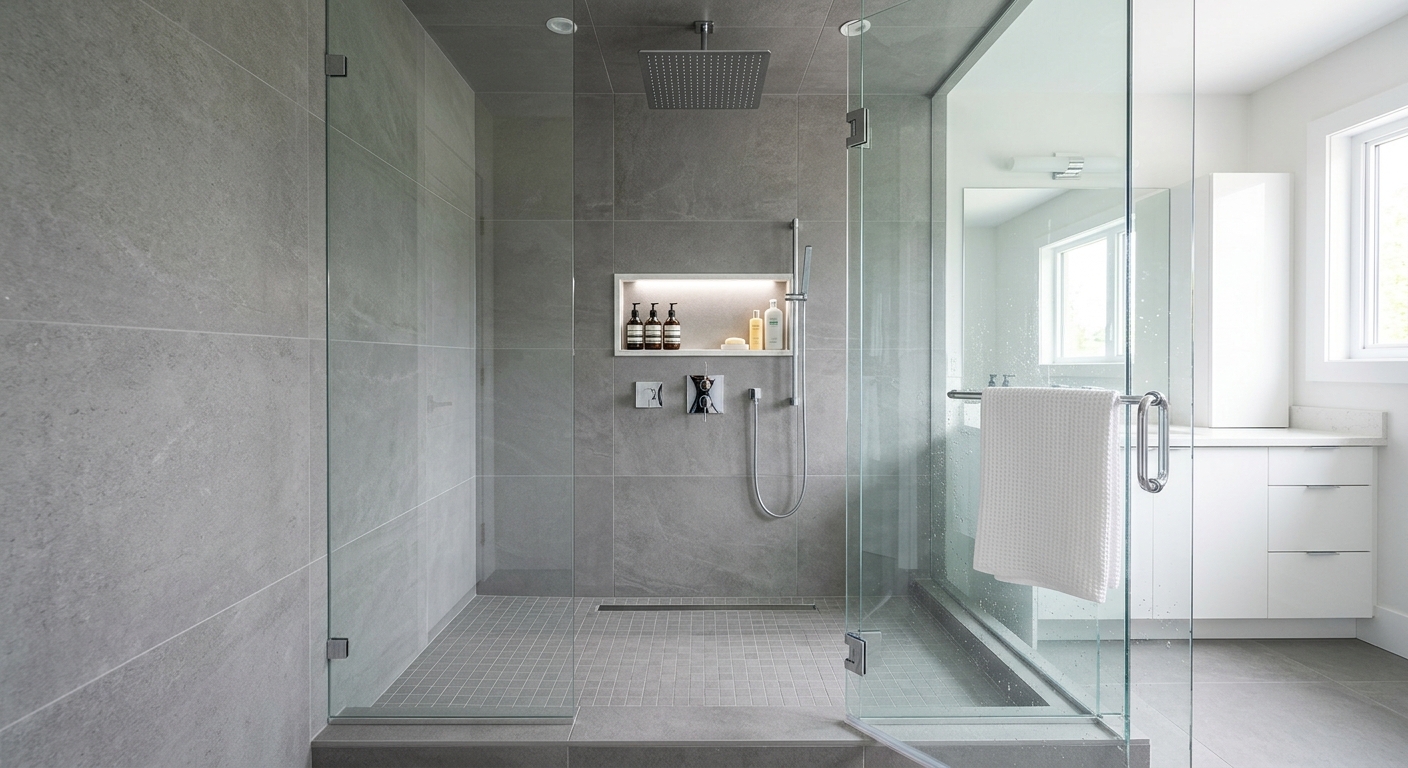
Bathroom renovation options and costs in Merritt
Merritt homeowners have a range of bathroom renovation options, from simple fixture swaps to full-gut upgrades. With 59.3% of homes built before 1981, many bathrooms start with older drain layouts, outdated venting, and materials that can complicate what seems like a straightforward refresh. Merritt also sits in the Thompson–Okanagan region, where labour availability and the age of housing stock matter more to renovation pricing than coastal-style moisture or salt air.
In practical terms, Thompson–Okanagan contractors tend to price around labour-intensive work like opening walls, correcting venting, and upgrading electrical to meet modern safety expectations. Coastal regions can have different risk factors, but here it’s the unknowns inside older assemblies—like cast-iron or galvanized plumbing components and occasionally asbestos-containing materials—that shift cosmetic projects into mid-range or full renovations once walls are opened. Once multiple trades are coordinated (plumber/electrician/tiler/waterproofing), timelines and contingency budgets increase.
In Merritt, trade demand is especially strong in the areas around Westwold and the downtown core, where older housing and cottage-style additions are common and schedules can book quickly. If you’re trying to plan costs before demolition, the table below sets realistic starting points for common scopes in Merritt, so you can compare contractors apples-to-apples.
| Renovation Scope |
What's Included |
Typical Duration |
Price Range |
| Cosmetic refresh (paint, fixtures, accessories only) |
Paint, new vanity or faucet, toilet (if existing rough-in remains), lighting swaps, mirrors/accessories; no wall opening |
3–7 days |
$3,000–$8,000 |
| Mid-range full renovation (new tile, vanity, tub/shower, electrical) |
Demo and disposal, new tub/shower or reglaze where allowed, tile floor and surround, vanity, updated exhaust ventilation, basic electrical upgrades (GFCI/lighting), waterproofing |
2–4 weeks |
$15,000–$28,000 |
| High-end full renovation (custom tile, steam shower, heated floors) |
Full gut, custom waterproofing and tile detailing, heated floors, higher-tier fixtures, steam-ready or steam shower components, expanded electrical, premium glass/trim |
4–6+ weeks |
$28,000–$45,000 |
| Shower-only installation (convert tub to walk-in shower) |
Convert tub area to shower, waterproofing, new shower valve (where needed), tile pan or shower base, new glass door/curtain option, exhaust fan upgrade as required |
1–3 weeks |
$10,000–$18,000 |
| Bathtub replacement or tub-liner install |
Remove and replace tub with new unit and surround prep; or liner prep/installation (where feasible); reseal plumbing; basic tile patching |
5–12 days |
$4,000–$11,000 |
| Tile-only installation (floor + surround, existing layout kept) |
Tile floor and/or tub surround, surface prep, grout/sealants, waterproofing upgrades where required by substrate condition |
1–3 weeks |
$7,000–$18,000 |
Prices are estimates only and vary by project scope, site access and material selection.
What affects the price of bathroom renovation in Merritt
It’s common to see the same bathroom job come in 30–50% apart when comparing quotes across Thompson–Okanagan and other B.C. markets. In this region, the biggest drivers are labour rates (and how quickly trades can start) and the age of the housing stock—more than climate. Merritt’s older homes often have drain and venting components that don’t align cleanly with today’s fixtures, and many have supply piping that needs verification once walls open. Those realities can push a “mid-range refresh” toward a full renovation budget within a week of demolition.
Older systems can also create hidden scope. For example, cast-iron or mixed metal drain stacks may require replacement sections, and galvanized supply lines sometimes need updates to reduce pressure and reliability issues. Ventilation is another cost lever: inadequate existing fan ducting often means rework before tile goes on. If you discover asbestos-containing materials in vinyl floor tile or older drywall compound (pre-1985 homes are where this most often shows up), abatement protocols and disposal logistics can add roughly $1,500–$5,000+ and extend timelines.
In Merritt, two common examples of cost variance are (1) whether you keep the existing toilet/valve locations or move them, and (2) whether you choose a smaller tile format versus large-format porcelain. As a rough guide, a tile-and-fixture job can land closer to the renovation band of $15,000–$35,000 when plumbing/electrical remain mostly unchanged, while full conversions (like tub-to-shower with venting/electrical attention) more often trend toward the upper side when contingencies appear. Even within the Thompson–Okanagan region, coordination of plumbers, electricians and tilers can add days—those days have a dollar value.
| Price Factor |
Why It Matters |
Cost Impact |
| Layout change — moving drain or supply lines requires rough-in work |
More demolition, patching, venting/pipe routing, and inspection coordination |
Often +$3,000–$8,000 |
| Tile selection — large-format porcelain vs. mosaic vs. ceramic |
Large-format needs more precise prep; mosaics are labour-heavy to set and grout |
Typically +$1,500–$6,000 |
| Fixture tier — builder-grade vs. mid-range vs. designer brands |
Higher-tier valves, shower systems, and trim add material cost and sometimes complexity |
Typically +$1,000–$5,000 |
| Subfloor condition — rot or unlevel concrete adds scope |
May require structural repair, backer prep, leveling systems and extended drying time |
Often +$1,000–$6,000 |
| Electrical — adding GFCI outlets, exhaust fan, heated floor circuit |
Licensed work, potential panel upgrades, and safe routing in wet areas |
Typically +$800–$4,500 |
| Waterproofing method — membrane type and extent |
Better systems cost more but reduce rework risk and long-term moisture problems |
Often +$600–$3,000 |
| Older-home surprises — asbestos tile, cast-iron drains, galvanized pipes |
Remediation, pipe replacement sections, disposal, and extended scheduling |
+ $1,500–$10,000+ |
| Bathroom size — sq ft drives tile and labour time directly |
More surface area increases tile, waterproofing, thinset, labour and cleanup time |
Can swing total by 15%–40% |
Permits & regulations in British Columbia
In British Columbia, most purely cosmetic updates in a bathroom—like swapping a vanity top, replacing faucets/lighting, painting, or retiling the same footprint—often do not require a permit. That said, the moment you change plumbing routes, electrical circuits, or structural elements, you move into work that typically requires permits and inspections.
Work that typically DOES require a permit includes: relocating plumbing (moving a drain or supply lines, replacing sections of rough-in), changing venting strategies where required, installing or modifying dedicated electrical circuits (for example adding an exhaust fan that needs new wiring, adding heated floor circuits), and any wall or structural changes that affect framing or load paths. Work that typically does NOT require a permit includes: like-for-like fixture swaps where rough-ins stay unchanged (same toilet location, same shut-offs, no new electrical circuit), accessory changes, and painting.
To verify your contractor in Merritt, start with three checks: (1) British Columbia licence—ask for the trade licence details and confirm using the appropriate online registry for the contractor’s trade category; (2) liability insurance—request a current certificate of insurance naming you as applicable on the policy and ensuring it’s active for the project dates; and (3) worker protection coverage—confirm WCB/WSIB coverage for workers (or provide evidence that the company is registered and in good standing). For plumbing/electrical scope, ask who is pulling permits and whether inspections are scheduled, and request a copy of permit numbers and inspection bookings before work starts.
Choosing tile, waterproofing and fixtures for your Merritt bathroom
In Merritt, three decisions most strongly determine your budget: tile choice, waterproofing method, and fixture tier. First, tile: ceramic is an entry-level option that often works well for budget-friendly floors and simpler wall layouts, but it can be more demanding to keep looking perfect if the bathroom sees heavy daily use. Porcelain typically costs more than ceramic but handles moisture and wear better, especially for floors. Natural stone (marble, travertine, slate) is the luxury route—stunning, but it usually adds cost through material premium and careful installation/sealing requirements.
Second, waterproofing: bathrooms in the Thompson–Okanagan region still experience significant humidity cycles, especially with older ventilation. A paint-on membrane can be acceptable for some systems in the right assembly, but it’s not a universal substitute. A bonded sheet membrane (or a compatible membrane system such as a tile underlayment approach) is often a better balance of performance and contractor familiarity. When done correctly at seams and corners, the right method helps prevent mould and grout failure—two issues that show up quickly when ventilation is marginal.
Third, fixtures: builder-grade taps and shower trim can save money upfront, but designer-style valves, nicer shower systems, and better trim finishes often justify the cost because they’re easier to operate, more consistent to maintain, and can improve resale appeal. For example, spending an extra $2,000–$4,000 on a mid-range shower valve and quality trim can be justified if it reduces future leaks and keeps the finish intact—whereas upgrading tile from basic ceramic to mid-range porcelain in a small bathroom might be less cost-effective if your main issue is venting and waterproofing.
| Material / Option |
Pros |
Cons |
Price Range |
| Ceramic tile (floor + walls) |
Lower material cost; wide style selection; good for budget renos |
Can be more variable in wear; requires careful subfloor leveling to avoid cracking |
$3,000–$8,000 |
| Porcelain tile (floor + walls) |
Denser and more moisture-resistant; better long-term durability; ideal for busy households |
Higher material cost; large-format porcelain needs very flat substrates |
$6,000–$12,000 |
| Natural stone (marble, travertine, slate) |
High-end look; excellent for statement niches and luxury finishes |
Sealing/maintenance; more labour and material handling; can be less forgiving if substrate is uneven |
$10,000–$20,000 |
| Frameless glass shower enclosure |
Modern appearance; easier to clean than many curtain setups |
Precise installation needed; costs rise with custom sizes and hardware tier |
$2,500–$7,000 |
| Prefab tub surround (acrylic) |
Faster install; smoother finish; often great for keeping timelines tight |
Less design flexibility; seams and edges must be detailed correctly |
$1,200–$4,500 |
| Custom shower pan (tile or linear drain) |
Best water management with correct slope; clean modern look with linear drain options |
More labour and waterproofing detailing; adds cost and schedule time |
$3,000–$12,000 |
How to choose a bathroom renovation contractor in Merritt
Choosing the right contractor in Merritt starts with proof—not promises. First, verify British Columbia licensing for the relevant trades (especially plumbing and electrical). Ask for the licence number and confirm it matches the trade scope being quoted. Next, request liability insurance and review the certificate of insurance for project dates and coverage level. For worker protection, ensure the contractor has WCB/WSIB coverage for their workers; you should be able to provide evidence of registration/coverage upon request. If a contractor can’t supply documentation promptly, treat that as a major red flag.
Then get 2–3 itemised written quotes, not a single lump sum. Your quote should show labour and materials clearly for demolition, rough-ins (if any), waterproofing, tile setting, fixtures, glass, and disposal/cleanup. Read the scope line-by-line: what is excluded (like subfloor repairs, venting upgrades, or electrical panel work), whether permits are included, who pays for inspections, and whether waste disposal is part of the labour. Make sure the quote specifies start date and completion estimate, and that any allowance items have realistic ranges.
Warranty matters too. Ask for: workmanship warranty length (for installation and waterproofing), manufacturer warranty terms for major products, and whether warranties are transferable to you as the homeowner. For payment scheduling, never agree to pay more than about 10–15% upfront. A sensible holdback is released after key milestones and upon completion. Finally, insist on a written timeline and confirm coordination between trades so the job doesn’t stall waiting on electrical/plumbing rough-ins.
- Confirm the right B.C. trade licensing for plumbing/electrical scope before work starts.
- Request a current liability insurance certificate and verify it covers renovation work.
- Check WCB/WSIB coverage for the contractor’s workers and confirm it’s active.
- Get itemised quotes with separate line items for labour, materials, and allowances.
- Verify whether permits and inspections are included and who submits paperwork.
- Confirm disposal is included (bins, hauling, and proper sorting).
- Ask what happens if asbestos-containing materials are discovered—abatement plan and cost approach.
- Review waterproofing details: membrane type, coverage areas, and seam treatment.
- Ask for tile installation method and substrate prep requirements (leveling/underlayment).
- Request proof of previous bathroom projects in the Merritt/Thompson–Okanagan area.
- Insist on a written start date, schedule targets, and conditions that could delay work.
- Use a payment schedule with a small deposit and a holdback until completion.
Red flags to watch for: (1) quotes that aren’t itemised and hide waterproofing details, (2) refusal to provide insurance/licence/WCB evidence, (3) “too-good-to-be-true” pricing near or below typical bands (for full renos, often $15,000–$35,000), (4) no written timeline or no permit plan, and (5) pressure to pay large deposits before demolition and rough-in verification.
Frequently asked questions — bathroom renovation in Merritt
How do I plan a bathroom renovation on a tight budget in Merritt?
Start by protecting the parts that are expensive to move. In Merritt, keeping the toilet, vanity, and shower/tub rough-in locations where possible usually limits rough-in plumbing and electrical rework, which is where budgets inflate. A tight plan often looks like a cosmetic refresh plus targeted improvements—think paint, lighting, vanity/faucet replacement, and accessories—then decide whether tile work is limited to the floor or a smaller surround. If you do move into a mid-range full renovation, focus your spend on waterproofing and ventilation, because those are the long-term value drivers in British Columbia bathrooms. For example, you can often position a smaller scope closer to a cosmetic refresh (around $3,000–$8,000) and reserve the larger spending only for areas that truly need it.
What's the difference between a cosmetic and a full bathroom renovation?
A cosmetic renovation is usually surface-level: it swaps fixtures and refreshes finishes without opening walls. Common work includes new faucet/vanity, toilet replacement if it stays in the same spot, mirror and lighting changes, painting, and re-caulking/sealing. In contrast, a full renovation is typically a gut-to-studs approach: it involves demolition, verifying waterproofing substrates, often upgrading electrical safety (like GFCI outlets) and exhaust ventilation, and revising plumbing/venting when required by code. In Merritt and across the Thompson–Okanagan region, the difference matters because older homes (59.3% built before 1981) may hide issues once walls open—cast-iron/copper drain sections or outdated wiring—turning “cosmetic” assumptions into full-reno scope. Full projects often land in the $15,000–$35,000 range depending on tile, shower/tub choice, and surprises.
How do I choose the right contractor for my bathroom in Merritt?
Choose a contractor who can demonstrate British Columbia licensing for the trades involved and provide proof of liability insurance and WCB/WSIB coverage. In Merritt, you’ll also want a contractor who can clearly explain permits and inspections for your exact scope (for example, electrical for new exhaust fan circuits and any plumbing rough-in changes). Get 2–3 itemised quotes with line-by-line labour and materials—don’t accept a lump-sum quote that omits waterproofing, disposal, or what’s excluded. Ask about workmanship warranty length and whether it covers waterproofing detailing. Finally, confirm payment terms: avoid large upfront payments and plan a holdback until completion. This combination helps prevent budget creep that’s common when older plumbing and venting layouts need correction.
What's the most common mistake homeowners make in bathroom renovations?
The most common mistake is under-scoping the “unknowns” in older homes, then acting surprised at the timeline and cost once walls are opened. Merritt’s housing stock is old enough that it’s not unusual to encounter issues like outdated venting, mixed-metal supply lines, or cast-iron drain sections that need upgrading for reliability and code compliance. Another frequent error is choosing tile and fixtures before confirming waterproofing and ventilation requirements. When those fundamentals are missed, grout and caulking failures can occur early—especially during humidity swings common in British Columbia. To avoid this, ask contractors how they handle older-home surprises, what waterproofing system they’ll use, and whether permit work is included. Even a project that starts as a “shower-only” job (often around $6,000–$18,000) can broaden if plumbing or electrical needs attention.
How long does tile installation take in a Merritt bathroom?
For a typical Merritt bathroom, tile installation depends on area size, tile type, and how much substrate prep is required. If the layout is staying the same and the substrate is in good shape, floor and wall tile often takes about 5–10 working days for labour, plus additional time for curing and waterproofing set-up. Large-format porcelain or intricate mosaics take longer due to layout precision, cutting, and grouting. If the job is part of a larger renovation, tile usually happens after waterproofing and any substrate leveling. Total bathroom timelines can be 2–4 weeks for mid-range full renos, but that includes demolition, rough-ins, waterproofing, tile, and finish work. This is also why getting an itemised schedule from your contractor matters.
How much does a bathroom renovation cost in Merritt?
In Merritt, realistic budgets typically fall within the mid-B.C.-range, but your exact number depends heavily on labour scope and whether plumbing/electrical needs updates. For a full bathroom renovation, budgets commonly land between $15,000–$35,000, with mid-range projects often sitting closer to the middle once tile, a new vanity, and tub/shower updates are included. Shower-only conversions (like converting a tub to a walk-in shower) commonly land around $6,000–$18,000 depending on glass, waterproofing approach, and whether drain/valve locations change. Tile-only work can also vary widely based on tile selection and prep. If older construction surprises require asbestos remediation, cast-iron/copper drain upgrades, or rewiring, your budget can increase and timelines can extend.