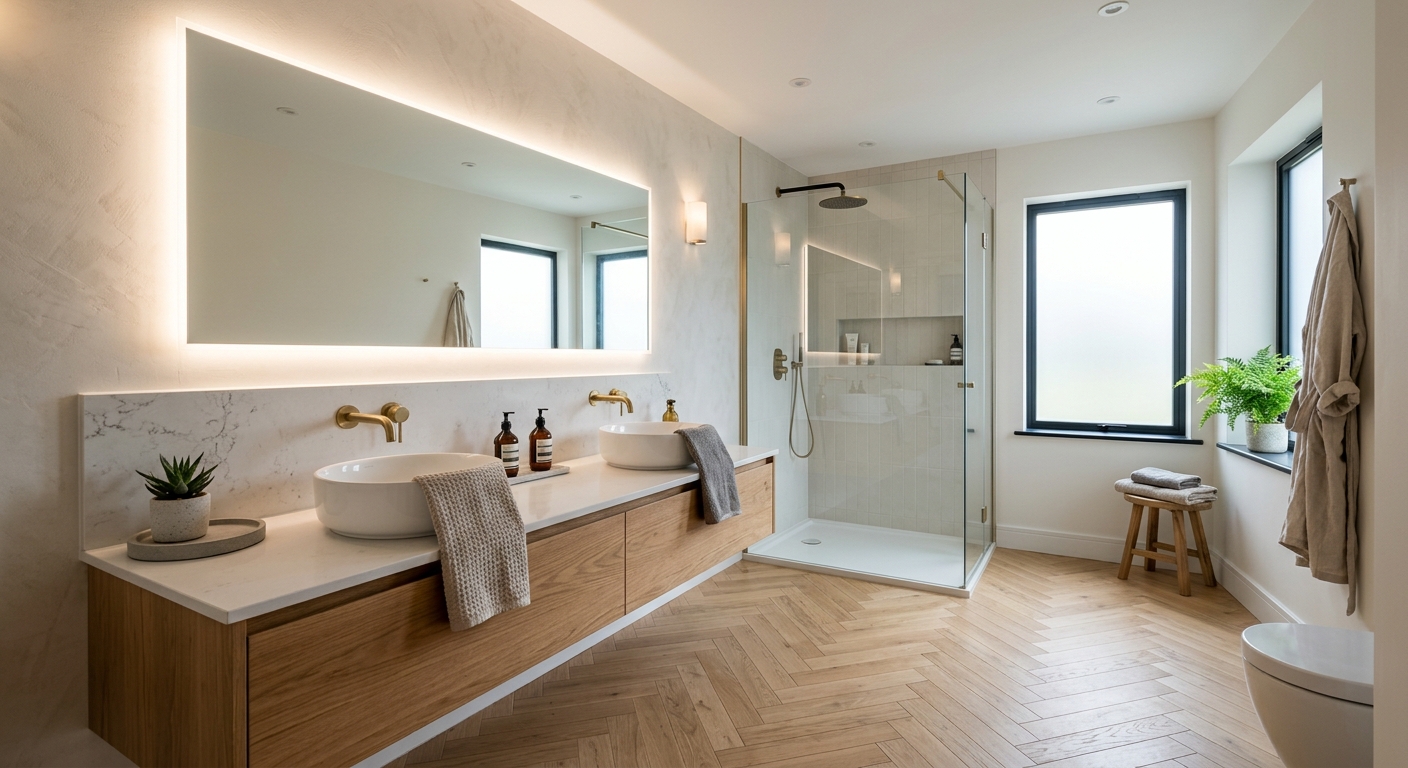
Bathroom renovation options and costs in Maple Ridge
Bathroom renovations in Maple Ridge are a common way to modernize older homes without changing the whole footprint of your property. In Maple Ridge specifically, housing age matters: about 28.6% of homes were built before 1981, and older layouts often come with dated plumbing routes, rough framing around the tub surround, and higher odds of hidden materials. Also, with a large share of owner-occupied housing (homeowner households are 79.1% of all households), many projects are planned with long-term stayability in mind rather than just quick surface upgrades.
In the Lower Mainland–Southwest region, the biggest cost drivers are labour rates and the age of the housing stock—not day-to-day weather. That’s because skilled plumbers, tilers, and electricians are booked tightly, and once walls open, projects frequently expand to include plumbing and venting upgrades to bring systems up to current British Columbia expectations. Typical bathroom work also benefits from strict sequencing (demo, rough-ins, waterproofing, tile, trim), which adds labour time even when the room size is modest.
Where you renovate can also influence demand. In neighbourhoods like Albion/Upper Albion and along the Maple Ridge corridor toward Lougheed, we see steady demand for tub-to-shower conversions and tile upgrades because many homes use the same mid-century bathroom formats. The good news is that you can control the total spend by choosing the right “level” of renovation first, then locking finishes and waterproofing details. Use the table below as a practical comparison of options and realistic Maple Ridge price ranges, then we can refine your scope once we confirm what’s behind the walls.
| Renovation Scope |
What's Included |
Typical Duration |
Price Range |
| Cosmetic refresh (paint, fixtures, accessories only) |
New vanity or tap/fixtures, fresh paint, toilet/lighting swap (where permitted), re-caulk, accessories; no plumbing re-route |
2–5 days |
$2,500–$7,500 |
| Mid-range full renovation (new tile, vanity, tub/shower, electrical) |
Demo and rebuild, floor + wall tile, vanity and toilet, tub or surround replacement, exhaust fan upgrade (with electrical work), basic plumbing clean-up |
2–3 weeks |
$18,000–$32,000 |
| High-end full renovation (custom tile, steam shower, heated floors) |
Premium tile work, custom shower/steam option, heated floor circuit, upgraded waterproofing, designer fixtures, enhanced lighting and ventilation |
3–5 weeks |
$32,000–$45,000 |
| Shower-only installation (convert tub to walk-in shower) |
Remove tub, install shower base/pan, glass enclosure prep, tile to a defined height, rework drain to suit, new controls and head |
1.5–3 weeks |
$8,000–$25,000 |
| Bathtub replacement or tub-liner install |
Remove and set new tub with surround tiling/trim; or liner installation where suitable; leak testing and sealing |
3–10 days |
$1,500–$6,000 |
| Tile-only installation (floor + surround, existing layout kept) |
Tile removal (as needed), floor and surround tile, grout/seal, waterproofing upgrades where required, minor trim adjustments only |
1–3 weeks |
$2,000–$8,000 |
Prices are estimates only and vary by project scope, site access and material selection.
What affects the price of bathroom renovation in Maple Ridge
Even when homeowners ask for the same bathroom renovation scope, quotes in the Lower Mainland–Southwest can land 30–50% apart from other parts of British Columbia. The main reasons aren’t the climate itself—they’re regional labour rates and how often renovations in older housing stock uncover issues behind walls and floors. In Maple Ridge, where about 28.6% of homes were built before 1981, it’s common to encounter aging galvanized or cast-iron drains, older copper supply lines, and ventilation that’s undersized for modern bathroom fan requirements. When you open a bathroom in these homes, rough-in upgrades often become part of the “real scope,” which is where budgets rise.
As for asbestos risk, it isn’t automatic—but if asbestos-containing materials show up in vinyl floor tile or old drywall compound (more common in pre-1985 buildings), abatement steps can be required. In practical terms, that can add $1,500–$5,000+ or more depending on what’s found and how far it needs to be contained and removed.
Two examples from Maple Ridge that frequently change the price: (1) converting a tub to a walk-in shower may require drain rework and a proper slope, shifting a job from a straightforward remodel to a plumbing-heavy renovation; (2) large-format porcelain tile can look cleaner, but it demands a flatter subfloor and precise setting, increasing prep time. If you’re staying within a tile-only band, costs may align with $2,000–$8,000, but once you’re doing a full mid-range rebuild, Maple Ridge pricing more often sits in the $18,000–$32,000 range or higher.
| Price Factor |
Why It Matters |
Cost Impact |
| Layout change — moving drain or supply lines requires rough-in work |
More demolition, new rough-in and testing; sometimes venting adjustments |
Can add $3,000–$10,000 depending on access |
| Tile selection — large-format porcelain vs. mosaic vs. ceramic |
Material cost and installation difficulty; mosaics may take more setting time |
Typically +10% to +30% on tile labour/material |
| Fixture tier — builder-grade vs. mid-range vs. designer brands |
Higher-tier trims, valves, and vanity hardware often cost more and may require specific components |
Can shift totals by $1,000–$6,000 |
| Subfloor condition — rot or unlevel concrete adds scope |
Extra framing/patching and longer leveling/grinding prep |
Often $1,500–$7,000 when discovered |
| Electrical — adding GFCI outlets, exhaust fan, heated floor circuit |
New circuits, fan ducting considerations, and code-compliant materials |
Commonly $800–$3,500+ |
| Waterproofing method — membrane type and extent |
Different systems require different labour and detailing at corners and transitions |
Typically $600–$2,500 more for better systems |
| Older-home surprises — asbestos tile, cast-iron drains, galvanized pipes |
Remediation, disposal, and potential plumbing replacement or upgrades |
Can add $1,500–$12,000+ depending on findings |
| Bathroom size — sq ft drives tile and labour time directly |
More surfaces and longer waterproofing/tile time |
Usually $2,000–$8,000 swing across common sizes |
Permits & regulations in British Columbia
In British Columbia, many bathroom updates are considered cosmetic and usually do not require permits—think swapping fixtures like a vanity top, faucet, toilet, light fixture (without moving wiring), or retiling in the same footprint. If you’re replacing like-for-like and not changing the plumbing routes, contractors can often complete the work without the homeowner needing a separate permit.
However, permits typically are required when work goes beyond cosmetic scope. In practice, that includes: relocating plumbing (moving a drain or changing supply line locations), adding or relocating a bathroom exhaust fan that requires new ducting and/or new electrical, and any structural changes to walls, framing, or load-bearing elements. Electrical work—especially adding circuits for heated floors, changing switch layouts, or adding GFCI-protected outlets—must be performed or signed off by a licensed electrician.
Here’s a simple step-by-step way a Maple Ridge homeowner can verify a contractor: (1) ask for their current British Columbia trade licence number and check it using the appropriate provincial online registry; (2) request a certificate of insurance for liability coverage showing it’s active for the project dates; (3) confirm coverage for workplace injury protection requirements (commonly via WSBC/WCB documentation, depending on the trade setup); (4) request that the permit process—if required—is included in the contractor’s scope (who pulls it, who schedules inspections, and what inspections are expected). If a contractor can’t clearly explain licence status and insurance, it’s a warning sign for budget surprises.
Choosing tile, waterproofing and fixtures for your Maple Ridge bathroom
In Maple Ridge, your biggest budget levers usually aren’t the paint—they’re tile, waterproofing and fixtures, because they determine labour intensity and how the bathroom performs long-term in Lower Mainland–Southwest humidity. Start with tile choice: ceramic tile is an entry-level option and can be a cost-effective fit if you keep installation straightforward and your subfloor is in good shape. Porcelain tile is denser and more durable for floors, but large-format porcelain typically requires better flatness and more careful layout. Natural stone (marble, travertine, slate) can look spectacular, yet it often costs more and may require sealing and more premium substrate prep, which can increase install time.
Next, waterproofing method. In a British Columbia bathroom, proper waterproofing is what prevents mould and premature grout failure. A paint-on membrane can be acceptable for some walls, but bonded sheet membranes or systems designed for wet areas (including niche and corner detailing) generally offer a more robust approach. The key is correct system selection and flawless installation at corners, changes of plane and around drains.
Finally, pick your fixture tier. Builder-grade fixtures may be budget-friendly now, but mid-range or designer brands often use better valve cartridges, improved finishes and easier long-term service. For example, spending an extra $1,000–$2,000 on a mid-range shower valve and trim can be justified because it reduces the odds of early leaks or cartridge issues and keeps the shower experience consistent.
The right combination depends on your situation: if your home is older (many Maple Ridge homes were built before 1981), plan for subfloor prep and waterproofing upgrades; those decisions protect your investment whether you choose ceramic or porcelain.
| Material / Option |
Pros |
Cons |
Price Range |
| Ceramic tile (floor + walls) |
Lower material cost, good variety of colours/patterns, manageable installation difficulty in many layouts |
Less durable than porcelain for some floor applications; may require careful selection for slip resistance |
$2,500–$7,000 |
| Porcelain tile (floor + walls) |
High durability, typically better for floors, more forgiving long-term for moisture exposure |
Higher material cost; large-format formats demand flatter subfloor and precise installation |
$4,000–$10,000 |
| Natural stone (marble, travertine, slate) |
Luxury appearance, unique veining and depth, strong curb appeal for resale |
Higher cost; often needs sealing/maintenance and premium labour detailing |
$7,000–$18,000 |
| Frameless glass shower enclosure |
Modern look, brighter bathroom feel, easier visual maintenance with good squeegee habits |
Glass and hardware cost; requires accurate shower pan/tile alignment for a clean fit |
$2,500–$8,000 |
| Prefab tub surround (acrylic) |
Quicker installation, fewer tile cuts in many layouts, good water resistance when installed correctly |
Less customizable than full tile; seams require consistent finishing and caulking |
$1,500–$4,500 |
| Custom shower pan (tile or linear drain) |
Great aesthetics, improved accessibility options, integrates linear drain slope cleanly |
More waterproofing and substrate work; higher labour and detailing requirements |
$3,500–$12,000 |
How to choose a bathroom renovation contractor in Maple Ridge
Choosing the right contractor in Maple Ridge starts with proof, not promises. In British Columbia, confirm trade licensing for the relevant work: electricians for electrical tasks, plumbers for plumbing rough-ins, and your general contractor should coordinate trades correctly. Ask for their active liability insurance certificate for your project dates, and verify workplace injury coverage documentation (commonly WSBC/WCB-related) so you’re not caught in the middle if there’s an incident on site.
Next, get 2–3 itemised written quotes. You want line items that separate labour and materials, and that clearly identify what’s included in demolition, disposal, waterproofing, tile setting, trim, and fixture supply. Avoid quotes that are purely lump sums without specifying products and methods—bathrooms can easily change once walls open.
Read the scope carefully for exclusions: is permit pulling included (if required), are inspections included, and is disposal and recycling included? Warranty matters too: request the workmanship warranty length and whether it’s provided by the contractor and/or the trade, plus the manufacturer warranties for tile, membrane, fixtures, and shower systems. Ask whether warranties are transferable if you sell the home.
Payment schedule should be controlled. A good rule in renovation practice is never paying more than 10–15% upfront for mobilization; hold back part of the balance until completion and punch-list items are resolved. Also request a written starting date and a realistic completion estimate, including lead times for tile, vanities, and glass.
- Provide British Columbia licence numbers for the trades involved (plumbing/electrical as applicable).
- Show current liability insurance certificate and confirm coverage limits match the project size.
- Ask for evidence of WSBC/WCB coverage relevant to the workers on site.
- Get itemised pricing (labour vs materials) and product names/models for fixtures and tile.
- Confirm waterproofing method and membrane type in writing, including corner/niche detailing.
- Clarify which permits are required and who pulls them; list inspection steps in the scope.
- Ask whether disposal and dumpster/recycling fees are included.
- Verify who handles subfloor flattening/repair if issues are found after demo.
- Request a start date, estimated duration, and a communication plan for change orders.
- Discuss warranty: workmanship length, product warranties, and whether transfer is allowed.
- Confirm payment schedule (≤10–15% upfront) and holdback for punch-list completion.
- Ensure the quote includes protection of floors/adjacent areas (especially tile dust control).
Red flags to watch for: contractors who won’t provide licensing/insurance proof; “too-good-to-be-true” pricing that omits waterproofing and permits; quotes that exclude disposal or permit pulls without clarifying change-order costs; vague warranty language (no workmanship term in writing); and crews that start demo before confirming plumbing/electrical scope and testing priorities for an older Maple Ridge home.
Frequently asked questions — bathroom renovation in Maple Ridge
How do I compare bathroom renovation quotes?
Start by comparing the scope, not just the total price. In Maple Ridge and across the Lower Mainland–Southwest, quotes can vary widely because labour rates and older-home conditions influence hidden work once walls open. Ask each contractor to itemise labour and materials (tile, membrane, fixtures, glass enclosure, electrical and plumbing rough-in). Confirm whether waterproofing method, disposal, and permit pulls (when required) are included. Also look for allowances: if a quote uses low allowances for tile or a vanity, it may rise after selections. A realistic baseline for a mid-range full renovation is often within the $18,000–$32,000 band, but a comparable “full” job can jump to the higher end when plumbing venting upgrades or older-home surprises appear (common in homes built before 1981). (Statistics Canada, 2021 Census)
Can I live at home during a bathroom renovation in Maple Ridge?
Often, yes—especially for cosmetic refreshes or tile-only upgrades—but it depends on what’s being demolished. In Maple Ridge, many homeowners can stay in the home if the renovation is staged and the contractor keeps one functional bathroom available, uses dust control, and coordinates plumbing shut-offs carefully. For tub-to-shower conversions or full renovations, most families choose to remain for part of the job but may rely on a temporary toilet setup for the rough-in and waterproofing period. The bigger the scope, the more likely access is limited and the more careful you must be with scheduling (especially around demolition and any electrical or plumbing work). If your contractor expects a plumbing re-route or venting change, plan for higher disruption because the bathroom may be out of service until leak testing and inspections pass.
What's the best bathtub material for a Maple Ridge home?
The “best” depends on how you use the tub and what your renovation scope includes. For many Maple Ridge homeowners, a cast-iron or quality acrylic tub can work well, but acrylic tends to be lighter and often easier to install without major framing changes. If you’re replacing an existing tub and want a quick update, prefab acrylic options can keep cost near the lower end—bathtub replacement or liner work is commonly within the $1,500–$6,000 range depending on removal complexity and surround details. For older homes (notably a sizeable share built before 1981), we also look at subfloor condition and drainage alignment—because if the drain or surrounding support is compromised, the “best material” won’t help unless the base is properly prepared and sealed. Your contractor should include leak testing and proper sealing at transitions for long-term reliability in British Columbia humidity.
Is it worth renovating a bathroom before selling in Maple Ridge?
It can be worth it, but focus on improvements that buyers notice and that reduce perceived risk. In Maple Ridge’s owner-occupied market (79.1% of households are homeowners, per the 2021 Census), many buyers expect modern finishes, clean tile work, and a bathroom that feels dry and well-ventilated. If your bathroom has dated fixtures, worn tile grout, or weak exhaust ventilation, a renovation often boosts buyer confidence. But if major plumbing upgrades are needed behind walls (more likely in older housing stock), the smartest approach is to plan a scope that addresses underlying issues rather than only cosmetic changes. Mid-range full renovations typically fall around $18,000–$32,000, and over-improving beyond the neighbourhood’s typical finish level can be harder to recoup. A well-designed shower, good waterproofing, and consistent tiling usually offer better resale value than chasing the most expensive stone.
How do I plan a bathroom renovation on a tight budget in Maple Ridge?
On a tight budget in Maple Ridge, the key is to protect waterproofing and functional upgrades while limiting “scope creep.” Start with a realistic decision tree: if your layout works, you can often keep costs under control by choosing tile-only or a cosmetic refresh. Tile-only installations are commonly in the $2,000–$8,000 band when the room layout stays the same. For a meaningful upgrade without fully redoing plumbing, consider refreshing fixtures and doing targeted tile replacement around wet areas. Keep waterproofing as a priority: even when you’re not changing the layout, ensure membrane and sealing details meet modern standards in a British Columbia bathroom environment. Request itemised quotes and insist on allowances for fixtures and tile so you don’t get surprised later. Finally, budget a contingency for older-home discoveries—because in areas with a meaningful pre-1981 housing share, hidden plumbing, ventilation, or subfloor issues can push costs upward if you don’t plan for them.
What's the difference between a cosmetic and a full bathroom renovation?
A cosmetic renovation focuses on surfaces and fixtures without changing the bathroom’s core systems or layout. In British Columbia, cosmetic updates—like swapping a vanity, changing taps/fixtures, repainting, replacing a light fixture, or retiling in the same footprint—often do not require permits. A full renovation typically involves demo to studs, replacing plumbing and electrical as needed, upgrading ventilation and waterproofing, and rebuilding the layout and finishes. That’s why full jobs follow higher price bands; for example, a mid-range full renovation in Maple Ridge often sits within the $18,000–$32,000 range, while shower-only conversions fall around $8,000–$25,000. In older Maple Ridge homes (many built before 1981), “cosmetic” work can unexpectedly uncover plumbing or drainage issues, so it’s wise to confirm what the contractor will inspect before locking in a scope.