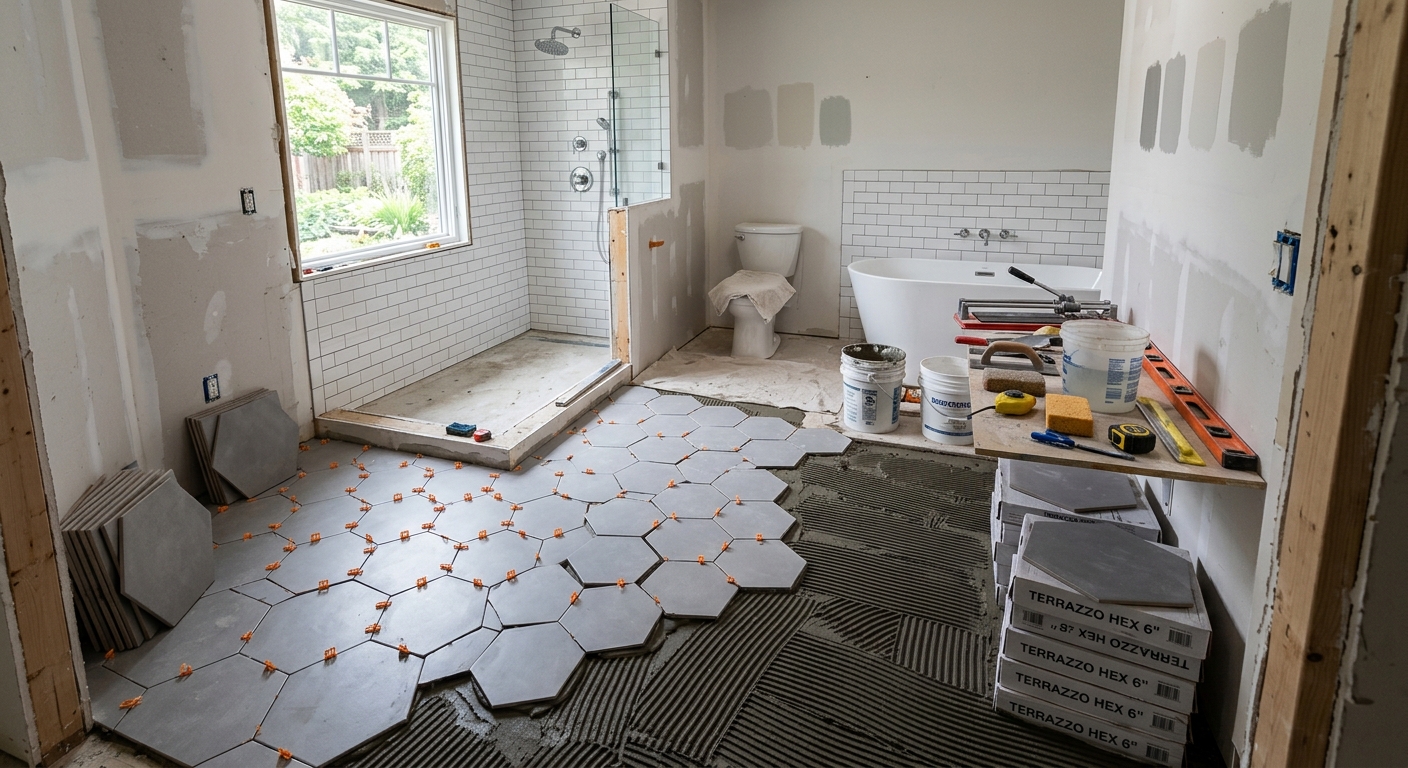
Bathroom renovation options and costs in Chilliwack
In Chilliwack, homeowners typically have a few clear pathways for a bathroom renovation: a fast cosmetic refresh, a mid-range full update, or a higher-end rebuild that tackles plumbing, ventilation and finishes. Your starting point matters because the housing stock is older—33.8% of homes were built before 1981—so when walls and floors come up, dated drain assemblies, supply routing and insulation details can surface. That’s also why many projects in the Lower Mainland–Southwest aren’t “just a tile job” once access panels open. In this region, labour rates and contractor availability are the main cost drivers, and the tight sequencing of plumbers, electricians and tilers in a small bathroom usually increases per-day labour pressure. Lower Mainland demand can mean fewer scheduling slots, so a project that needs extra rough-in work (or permits) often stretches duration and cost more than the same scope in slower markets.
Another reason budgets can move in Chilliwack is the way renovation scope expands for safety and code compliance. In pre-1980 homes, it’s common to encounter galvanized supply lines or cast-iron drains that don’t perform as well as newer systems. If asbestos-containing materials are discovered in older floor tile or drywall compound, crews may need abatement before demolition continues, which adds real cost and time. You’ll also see these trades in especially high demand around promontories of central Chilliwack and older neighbourhoods where mid-century homes are common, because those layouts often require updates to venting and fixture rough-ins.
Below is a practical comparison of typical scopes, durations and budget ranges so you can align quotes with what you actually want to change.
| Renovation Scope |
What's Included |
Typical Duration |
Price Range |
| Cosmetic refresh (paint, fixtures, accessories only) |
Paint, new vanity top or vanity, toilet replacement (if desired), faucets, mirrors, lighting refresh (no new circuits), accessories |
3–6 days |
$8,000–$15,000 |
| Mid-range full renovation (new tile, vanity, tub/shower, electrical) |
Demolition, bathtub or shower/tub replacement, wall + floor tile, waterproofing, vanity, exhaust fan upgrade, new GFCI receptacle, basic electrical updates, disposal |
2–3 weeks |
$18,000–$30,000 |
| High-end full renovation (custom tile, steam shower, heated floors) |
Custom shower system (tile/linear drain), heated floor wiring and controls, premium tile layout, designer fixtures, upgraded ventilation, upgraded plumbing rough-ins as needed, thorough waterproofing build-up |
3–5 weeks |
$32,000–$45,000 |
| Shower-only installation (convert tub to walk-in shower) |
Convert plumbing for shower, install shower pan/waterproofing, install tile surround and niche, glass door, new exhaust fan (typical), new drain hookup |
2–3 weeks |
$12,000–$25,000 |
| Bathtub replacement or tub-liner install |
Tub swap or approved liner, surface prep, reseal, new faucet (if desired), drain/overflow connection as required, re-grout and caulk, basic wall touch-ups |
5–10 days |
$1,500–$6,000 |
| Tile-only installation (floor + surround, existing layout kept) |
Remove old tile, waterproof prep and membrane (as required), set new tile floor and walls, re-grout, new caulk lines, keep vanity and plumbing in place |
7–14 days |
$2,000–$8,000 |
Prices are estimates only and vary by project scope, site access and material selection.
What affects the price of bathroom renovation in Chilliwack
It’s common to see the same “bathroom update” priced 30–50% differently across the Lower Mainland–Southwest compared with other parts of British Columbia. In Chilliwack, the main reasons are the regional labour rates and what older homes require once work starts. Even if your bathroom looks straightforward, bathrooms are dense with trades—plumbing, electrical, waterproofing and tile setting—so contractor time and scheduling constraints add up quickly.
Lower Mainland–Southwest projects also frequently require more system updates than homeowners expect. Older homes in the region (with 33.8% built before 1981) can hide cast-iron drain stacks, dated galvanized supply lines, or inadequate ventilation. When ventilation is upgraded and when drain runs are corrected to meet performance expectations, the scope expands from “finishes” into rough-in work. If asbestos-containing materials are discovered in pre-1985 vinyl floor tile, drywall compound or insulation, abatement protocols can trigger additional trades, containment, air monitoring, and disposal—often adding $1,500–$5,000+ before you even pick tile. That’s one of the biggest drivers behind budget surprises.
Concrete Chilliwack examples: (1) Moving a shower head location or switching tub-to-shower typically forces drain rework and a better slope/venting strategy, which is a labour spike beyond the tile line item; (2) changing from builder-grade fixtures to mid-range valve systems sometimes requires additional carpentry and wall build-up for proper valve alignment; (3) repairing an unlevel subfloor can add self-levelling or replacement framing—quiet work that nonetheless impacts labour and material costs. Because full renovations commonly land in the $18,000–$45,000 range for this city tier, the same bathroom can swing from “mid-range” to “high-end” mainly due to hidden plumbing/electrical/venting scope rather than tile alone.
| Price Factor |
Why It Matters |
Cost Impact |
| Layout change — moving drain or supply lines |
Rough-in work requires access, patching, and proper slope/venting |
$3,000–$12,000+ |
| Tile selection — large-format porcelain vs. mosaic vs. ceramic |
Harder tile needs more labour time for cuts, alignment and coverage |
$1,000–$6,000 |
| Fixture tier — builder-grade vs. mid-range vs. designer brands |
Higher tiers cost more and may require better valves and trim alignment |
$800–$4,500 |
| Subfloor condition — rot or unlevel concrete adds scope |
Levelling, replacement and additional waterproof transitions increase labour |
$1,000–$7,000 |
| Electrical — adding GFCI outlets, exhaust fan, heated floor circuit |
New circuits and fan upgrades must be safely wired and signed off as required |
$600–$5,000 |
| Waterproofing method — membrane type and extent |
Good waterproofing prevents long-term mould and callbacks |
$700–$3,500 |
| Older-home surprises — asbestos tile, cast-iron drains, galvanized pipes |
Remediation and replacement can add trades, permits and disposal |
$1,500–$10,000+ |
| Bathroom size — sq ft drives tile and labour time directly |
More surface area equals more waterproofing, thinset, labour and cure time |
$2,000–$15,000 |
Permits & regulations in British Columbia
In British Columbia, cosmetic updates—like swapping fixtures, retiling without changing plumbing locations, or replacing a vanity—often don’t require a permit. However, permits typically apply when you change a bathroom’s systems or structure. Examples of work that commonly does require a permit include relocating plumbing (moving drains or supply lines), adding or replacing exhaust fans with new circuits, and any electrical work that extends circuits or adds outlets (especially in proximity to water where GFCI protection is involved). If you’re altering framing or doing structural wall changes, that can also trigger permitting and inspection requirements.
For plumbing rough-ins, when you move pipe locations or modify drain/waste connections, you should expect a permit and inspection because it’s safety-critical and code-based. For electrical, the work must meet British Columbia electrical requirements and must be completed by, or signed off by, a licensed electrician. Before the first demo, verify that your contractor carries appropriate liability coverage and the correct British Columbia trade licence for the scope they’re performing.
In Chilliwack, a homeowner verification workflow is simple: (1) Ask for their BC trade licence information—check the licence details on the applicable online registry for your trade; (2) Request a certificate of insurance and confirm it lists the contractor’s name and current dates; (3) Obtain proof of workers’ compensation coverage (commonly handled through WCB/WSIB-equivalent coverage depending on structure)—and ask for a clearance letter if provided in your contract process; (4) Ensure permits, if required, are pulled by the contractor (or clearly assigned in writing). If they can’t show documents before starting, that’s a major scheduling and compliance risk.
Choosing tile, waterproofing and fixtures for your Chilliwack bathroom
In Chilliwack and the Lower Mainland–Southwest, the bathroom budget is often won or lost in three decisions: tile choice, waterproofing method, and fixture tier. First, tile: ceramic is usually the most economical option for floors and walls, but it can be less forgiving in appearance if your substrate isn’t perfectly flat. Porcelain is denser and typically performs better in wet areas, with stronger colour consistency for wall-to-floor transitions. Natural stone (marble, travertine, slate) looks premium, but installation is more complex—stone can require careful sealing and more labour for layout and finishing—so it often pushes a renovation toward the high-end full renovation tier in the $32,000–$45,000 range.
Second, waterproofing: paint-on membranes can work in some systems, but for most shower areas you’ll want an engineered approach—either a bonded sheet membrane or a robust tile-compatible system (including details around seams, corners and transitions). British Columbia’s damp season and indoor humidity make this step non-negotiable: the right waterproofing prevents water migration behind tile and reduces the risk of mould and grout failure that drives expensive callbacks.
Third, fixtures: builder-grade faucets and shower trim are fine for many budgets, while mid-range and designer brands often improve valve performance, finish durability and ease of maintenance. A practical example: spending more on a proper shower valve and trim alignment is usually justified, because if the valve is installed correctly, your tiler can maintain clean edges and you avoid rework. In contrast, upgrading only surface finishes without improving ventilation and waterproofing rarely pays off long term.
| Material / Option |
Pros |
Cons |
Price Range |
| Ceramic tile (floor + walls) |
Budget-friendly, wide style selection, easy to match with common grout colours |
Can be more prone to chipping; substrate must be flatter for best results |
$2,000–$5,000 |
| Porcelain tile (floor + walls) |
More durable and water-resistant; consistent looks; handles moisture better |
Often heavier/harder to cut; labour time can increase for large-format slabs |
$3,000–$8,000 |
| Natural stone (marble, travertine, slate) |
High-end appearance and unique veining; strong curb appeal |
Requires sealing/maintenance; can be costly in labour due to layout and finish |
$6,000–$14,000 |
| Frameless glass shower enclosure |
Modern look, makes small bathrooms feel larger, durable hardware options |
More expensive; installation requires precise framing and waterproof detailing |
$2,500–$6,500 |
| Prefab tub surround (acrylic) |
Fast install, good water resistance when fitted correctly, easier cleaning |
Less custom design flexibility; seams may be visible depending on layout |
$1,000–$3,500 |
| Custom shower pan (tile or linear drain) |
Premium finish, improved accessibility, clean aesthetics with linear options |
More waterproofing and framing detail; higher labour and coordination |
$4,000–$12,000 |
How to choose a bathroom renovation contractor in Chilliwack
Choosing the right contractor in Chilliwack comes down to verification, clarity of scope, and proof of accountability. Start by confirming British Columbia licensing and correct trade authorizations for the work they’ll do—ask for their licence details and supporting documentation. Then get their liability insurance certificate (with your address listed as certificate holder if your contract requests it). Finally, ensure workers’ compensation coverage is in place (WCB/WSIB-equivalent clearance as applicable through their business structure). If they can’t provide documentation promptly, pause and ask again before signing.
Next, request 2–3 itemised written quotes. You want a breakdown that separates labour and materials, not just a single “lump sum.” Make sure waterproofing scope, demolition/disposal, permit pulling responsibility (if required), and what’s included for electrical rough-in and exhaust fan installation are spelled out. Pay attention to exclusions: for example, some quotes include tile setting but not new backer board, subfloor repairs, or electrical wiring for a heated floor. Clear scope prevents change orders that can quietly inflate a mid-range project into high-end budgets.
Warranty matters. Ask how long workmanship is covered and whether the product warranties (faucets, shower valves, membranes) are manufacturer-backed and transferable to you as the homeowner. On payment schedule, use a conservative approach: never pay more than 10–15% upfront, and hold back a portion until key milestones are completed (especially after waterproofing passes and before final close-in).
- Confirm BC trade licence details for each trade category in the quote.
- Collect certificate of insurance and verify it’s current and adequate.
- Verify workers’ compensation coverage via clearance documentation.
- Require itemised labour vs. materials pricing.
- Ensure permits, if needed, are included or clearly assigned in writing.
- Ask what disposal costs are included (dump fees, haul-away, drywall/tile removal).
- Confirm waterproofing system type (membrane approach) and coverage area.
- Get the exact start date and estimated completion timeframe in writing.
- Ask whether they will protect floors/vanities during demolition and tiling.
- Clarify who handles substrate repairs (subfloor leveling, backer board, framing).
- Review warranty length for workmanship and whether it’s transferable.
- Use a payment schedule with a holdback until punch list items are finished.
Concrete red flags I see in Chilliwack bathroom jobs: vague “allowances” with no itemised selections; no mention of waterproofing system or shower waterproofing detailing; a contractor who won’t provide insurance/licence paperwork before starting; change orders that appear after demolition without documenting discoveries; and unrealistic timelines that ignore drying/cure time for membranes and thinset.
Frequently asked questions — bathroom renovation in Chilliwack
What's the ROI on a bathroom renovation?
Bathroom renovations can improve day-to-day comfort and often support resale value, but the exact ROI depends on how much you change versus what buyers in Chilliwack will pay for. In practice, projects that modernize waterproofing, ventilation, and functional layouts tend to recoup more reliably than purely cosmetic swaps. If your home has older systems—many Chilliwack homes are older, with 33.8% built before 1981—addressing exhaust performance and durable shower finishes can matter more than high-cost upgrades. Budgeting helps: a mid-range full renovation commonly falls around $18,000–$30,000, while higher-end builds can reach $32,000–$45,000. The ROI is strongest when you align finishes with the rest of the home and keep the scope tightly scoped to code-driven improvements.
Do I need waterproofing behind the tile?
Yes, in a properly executed bathroom—especially in shower areas—waterproofing behind tile is a requirement for good performance, not an optional extra. In British Columbia, moisture management is critical because indoor humidity and wet seasons can keep bathrooms damp longer without proper exhaust. Good waterproofing systems are designed to stop water migration into framing and subfloors, which is where mould risk and structural damage start. For most showers, the contractor should use a tile-compatible membrane approach (paint-on, sheet membrane, or a system based on the chosen assembly) and treat seams, corners, niches, and penetrations with specific detailing. If you’re converting from tub to walk-in shower, waterproofing scope becomes even more important because the shower enclosure creates continuous wet exposure.
How do I compare bathroom renovation quotes?
Compare quotes the way you’d compare apples to apples: scope first, then unit rates and allowances. Ask each contractor to provide itemised labour and materials, including demolition, disposal, waterproofing method, backer/subfloor preparation, exhaust fan and electrical changes, and whether permits are included or not. Also compare what’s excluded—many misunderstandings come from tile-only vs. full-setup assumptions. Look at the renovation category they’re effectively quoting: for example, if you want a mid-range full renovation, it should align with a typical range around $18,000–$30,000. If a quote is far below, it may omit rough-in updates or waterproofing details; if it’s far above, it may include premium selections you didn’t ask for. Use a checklist to confirm materials specs, not just pricing.
Can I live at home during a bathroom renovation in Chilliwack?
Often, yes—but it depends on how disruptive the project is and whether you have a second bathroom. Many Chilliwack homes do allow partial occupancy for mid-range scopes, but plan for “water and privacy interruptions.” During demolition and rough-in work, the primary bathroom may be out of service for days while plumbing connections and waterproofing cure. High-end projects with custom shower pans, heated floors, or steam features typically require longer shutdown periods due to sequencing and cure time. If you’re converting a tub to a walk-in shower, expect downtime while the drain, waterproofing, and glass enclosure are installed. A good contractor will provide a staging plan and protect the rest of your home, and you should confirm how they’ll handle dust control and access to other areas.
What's the best bathtub material for a Chilliwack home?
The “best” bathtub material is usually the one that matches your budget, your bathroom layout, and the surrounding installation conditions. Acrylic tubs are common because they’re lighter and easier to install, and they work well in renovation situations where floor framing access is limited. Fibreglass/steel options can be durable too, but installation and refinishing details matter for long-term performance. In older Chilliwack homes (with a large share built pre-1981), the decision can be influenced by what’s behind the wall—sometimes you’ll want to upgrade supply and drain connections while the tub is out. If you’re staying with a tub and replacing fixtures, bathtub replacement is often in the $1,500–$6,000 range, but if plumbing changes are required, your overall budget will move accordingly.
Is it worth renovating a bathroom before selling in Chilliwack?
Usually it can be worth it, but only when the renovation targets what buyers notice and what avoids inspection problems. If your bathroom has old finishes with weak ventilation, failing caulking, or dated plumbing that could raise concerns in a home inspection, updating those risk points often pays off. Buyers may not pay top dollar for luxury stone if the rest of the renovation is compromised by poor waterproofing or layout issues. A realistic approach is to choose a scope that fits your home’s condition and market expectations. For many sellers, a mid-range full renovation around $18,000–$30,000 provides a balance of modern look and system upgrades. If you’re considering a full high-end build closer to $32,000–$45,000, it’s worth evaluating whether your home supports that level of finish and whether your layout changes create more disruption than necessary.