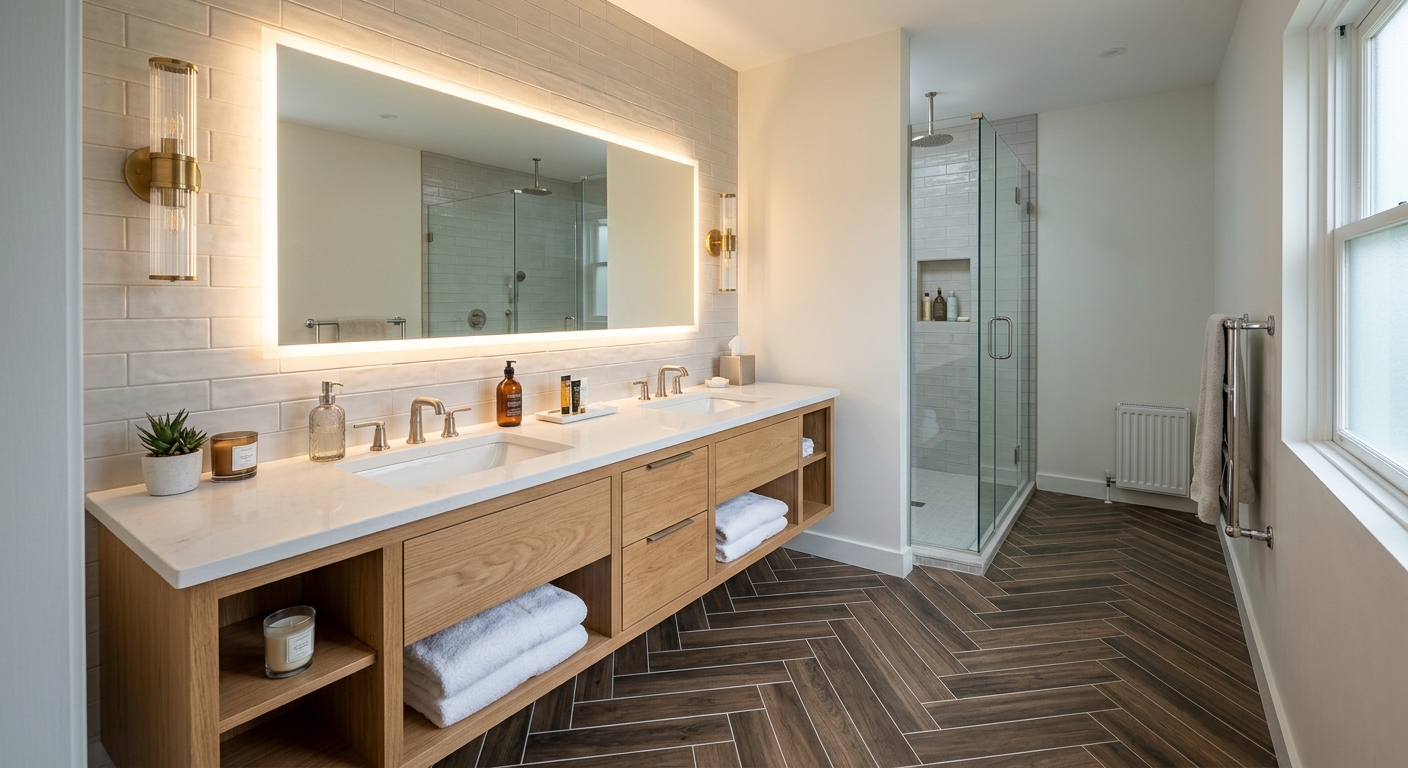
Bathroom renovation options and costs in Thorold
Thorold homeowners typically choose bathroom renovations based on how much they want to change—not just how “new” the finish looks. With 55.1% of homes in the area built before 1981, many bathrooms sit in older layouts with dated valves, aging drains, and sometimes brittle tile underlayment. That matters because once walls open, plumbers and tile setters often discover upgrades are needed to bring the plumbing system and substrate up to current best practice.
In the Hamilton–Niagara Peninsula market, pricing is driven more by labour availability and the hidden work that older housing stock reveals than by weather alone. While Ontario’s humid conditions can create moisture stress, the bigger cost swings come from what contractors find behind the wall: cast-iron or copper drain sections that need replacing, venting that’s short or failing, and ventilation that isn’t up to today’s performance expectations. In neighbourhoods like Port Robinson—where many homes are older and turn over regularly—contractors tend to see frequent demand for upgrades such as exhaust fans, GFCI protection, and improved waterproofing.
Below are the most common renovation paths, with realistic ranges for Thorold. Use these as a starting point, then expect your final number to depend on demolition discoveries, how much plumbing or electrical needs to move, and the waterproofing/tile system you choose.
| Renovation Scope |
What's Included |
Typical Duration |
Price Range |
| Cosmetic refresh (paint, fixtures, accessories only) |
New vanity or faucet, toilet refresh/replace (if selected), paint, caulking, towel bar/accessories; existing tile and shower surfaces retained |
3–7 days |
$2,000–$6,500 |
| Mid-range full renovation (new tile, vanity, tub/shower, electrical) |
Demo, waterproofing, floor and wall tile, vanity + mirror, tub surround refinished or replaced, exhaust fan upgrade, GFCI outlets, new trim/fixtures |
2–3 weeks |
$12,000–$25,000 |
| High-end full renovation (custom tile, steam shower, heated floors) |
Extended waterproofing system, custom layout, premium tile, heated floor system, designer shower/steam components, advanced electrical upgrades, enhanced ventilation |
3–5 weeks |
$25,000–$40,000 |
| Shower-only installation (convert tub to walk-in shower) |
Tub removal, new shower pan/liner system, waterproofing, new glass/doors, new valve trim, re-tile surround, exhaust fan check/upgrade |
2–3 weeks |
$6,000–$15,000 |
| Bathtub replacement or tub-liner install |
Remove and replace tub OR install an updated liner system (when suitable), new surround finishes, re-grout/re-caulk, basic plumbing hookup check |
3–10 days |
$1,500–$6,000 |
| Tile-only installation (floor + surround, existing layout kept) |
Tile removal (selective), substrate prep, waterproofing at wet areas, tile floor + tub/shower surround, fresh grout/seal, wall refinishing tie-ins |
1–2 weeks |
$3,000–$10,000 |
Prices are estimates only and vary by project scope, site access and material selection.
What affects the price of bathroom renovation in Thorold
In the Hamilton–Niagara Peninsula and across Ontario, two quotes for what looks like the “same” bathroom can differ by 30–50% once you account for hidden conditions and what needs to be brought up to today’s expectations. The biggest drivers here are regional labour rates and the age of Thorold’s housing stock—more than outside weather. In older homes, contractors often run into cast-iron or copper drain sections, older trap/vent arrangements, and galvanized supply lines that may need upgrading when fixtures are removed and shutoffs are tested.
That hidden-work effect is why budgets can swing even before finishes are selected. For example, if you keep the same layout but the subfloor is uneven, you may still need concrete patching, membrane adjustments, and extra tile labour—pushing a “tile-only” job toward the higher end of the $3,000–$10,000 band. Conversely, a cosmetic refresh might stay near $2,000–$6,500 if valves are functional and the waterproofing doesn’t require replacement.
As for moisture risk, Ontario’s humid stretches mean the waterproofing system has to be continuous and properly detailed at corners, transitions, and the shower curb. If pre-1985 materials are disturbed, asbestos may be present in older floor tile or in certain drywall compound—discovery triggers abatement steps that commonly add $1,500–$5,000 or more depending on the extent and containment requirements.
Concrete Thorold examples that change price quickly: (1) replacing a failing vent or trap during demo can add plumbing time and parts; (2) upgrading an exhaust fan duct path that’s blocked or undersized increases labour; (3) large-format tile can reduce grout lines but demands more precise substrate prep to avoid lippage and rework.
| Price Factor |
Why It Matters |
Cost Impact |
| Layout change — moving drain or supply lines requires rough-in work |
Wall opening, new rough-in, inspections, and drywall/tile patching are labour-heavy |
Often +$3,000–$8,000 vs. same-layout work |
| Tile selection — large-format porcelain vs. mosaic vs. ceramic |
Harder materials need better prep, more cutting, and higher labour sensitivity |
Typically +$1,000–$4,000 |
| Fixture tier — builder-grade vs. mid-range vs. designer brands |
Premium valves, trims, and vanities cost more and may require different installation details |
Often +$500–$6,000 |
| Subfloor condition — rot or unlevel concrete adds scope |
Repairs, leveling, and waterproofing substrate prep take time and materials |
Commonly +$800–$4,500 |
| Electrical — adding GFCI outlets, exhaust fan, heated floor circuit |
Licensed electrical work, new circuits, and code-compliant connections |
Typically +$500–$3,500 |
| Waterproofing method — membrane type and extent |
Correct membrane coverage and detail work prevents future failure and mould |
Often +$800–$4,000 depending on system |
| Older-home surprises — asbestos tile, cast-iron drains, galvanized pipes |
Abatement or replacement adds trades, containment, and disposal |
Can add +$1,500–$8,000+ |
| Bathroom size — sq ft drives tile and labour time directly |
More surface area means more thinset, cutting, waterproofing roll-outs, and set time |
Typically scales +$2,000–$7,000 across sizes |
Permits & regulations in Ontario
In Ontario, cosmetic bathroom updates usually don’t require permits—for example, swapping fixtures (tap trim, shower head), replacing a vanity, repainting, or retiling with the same plumbing and no structural changes. If you’re changing the location of plumbing—like moving a drain or supply line—or making structural wall changes (opening walls in a way that affects framing), a permit is commonly required. Similarly, adding or upgrading an exhaust fan often requires an electrical permit when new wiring or a new circuit is involved.
Electrical work must follow Ontario electrical code requirements and be completed by a licensed electrician (or signed off by one). That means tasks like adding GFCI protection, running a heated-floor circuit, relocating receptacles, or wiring new lighting typically require proper permits and inspection. Plumbing rough-in changes—like replacing or rerouting drain lines and traps—usually trigger permit/inspection steps as well.
To verify a contractor in Thorold, homeowners should do three checks in order: (1) Licence: confirm the correct Ontario trade licence/registration for the trades they perform (commonly plumbing and electrical subcontractors, if used). (2) Insurance: request a certificate of liability insurance and ensure it’s current for the renovation period; ask whether they carry WSIB/WCB coverage or provide proof of clearance when required for workers. (3) Paper trail: keep the written scope, permit responsibility notes, and disposal details in the contract. If the company can’t provide insurance documentation or is vague about permits, that’s a red flag before you sign.
Choosing tile, waterproofing and fixtures for your Thorold bathroom
In Thorold, the right renovation plan is usually a combination of smart material choices rather than the single biggest-ticket upgrade. The three decisions that most strongly shape your budget—and your long-term maintenance—are: (1) tile choice, (2) waterproofing method, and (3) fixture tier.
Tile choice changes both material cost and installation complexity. Ceramic is often the most budget-friendly for floors and walls, but it may be less forgiving if your subfloor is slightly uneven. Porcelain is denser, handles wet environments well, and typically looks cleaner longer, but large-format porcelain increases labour due to stricter flatness requirements. Natural stone (marble, travertine, slate) can deliver a high-end look, yet it may need sealing and more careful installation to keep edges consistent.
Waterproofing is the anti-mould system for Ontario bathrooms. A paint-on membrane can work in some scenarios, but the best results come from a complete, detailed approach: either bonded sheet membrane or a robust waterproofing assembly that’s treated at seams, corners, and transitions. In Ontario humidity, a failed detail can show up as grout discoloration, softness at the base, or persistent odours—so don’t under-spec waterproofing just to save on tile.
Fixture tier affects resale and daily use. Builder-grade fixtures often save money upfront, but mid-range or designer valves and trims can last longer and feel more consistent. For example, stepping from a basic tub-to-shower kit to a mid-range shower valve + glass package can be the difference between a budget walk-in and a renovation that feels “finished.” If the rest of the system is properly waterproofed, the extra cost is usually justified; if the waterproofing is cut back, that savings isn’t worth it.
| Material / Option |
Pros |
Cons |
Price Range |
| Ceramic tile (floor + walls) |
Lower material cost, wide colour selection, good for wet-rated wall use |
May be more prone to cracking if substrate isn’t well prepped; can show more wear in high-traffic areas |
$3,000–$6,500 |
| Porcelain tile (floor + walls) |
Highly water-resistant, better durability, cleaner appearance over time |
More expensive tile and stricter flatness needs, especially with larger formats |
$5,000–$10,000 |
| Natural stone (marble, travertine, slate) |
Luxury look, unique variation that elevates resale appeal |
Sealing/maintenance considerations; higher labour for trimming and installation consistency |
$8,000–$18,000 |
| Frameless glass shower enclosure |
Modern look, easier wipe-down, makes smaller bathrooms feel larger |
Higher material cost; installation requires precise tile/shower pan alignment |
$2,500–$6,500 |
| Prefab tub surround (acrylic) |
Faster install, often fewer tile joints, good value if keeping an existing tub layout |
Less custom look than tile; may not suit every existing tub framing condition |
$1,500–$4,500 |
| Custom shower pan (tile or linear drain) |
Premium drainage and design flexibility; supports a long-lasting shower if detailed correctly |
More trades time and waterproofing detailing; may require layout refinements |
$3,500–$10,000 |
How to choose a bathroom renovation contractor in Thorold
Choosing the right contractor in Thorold is mostly about verification and clarity. Start with licensing and insurance: for bathroom work, you’ll often have a mix of disciplines, so confirm who is responsible for what. Ask for (1) proof of Ontario trade licence/registration for the work they claim as scope, (2) a current certificate of liability insurance, and (3) WSIB/WCB coverage documentation or clearance letter showing they’re compliant to have workers on-site. If they can’t produce these documents promptly, that usually indicates scheduling shortcuts or hidden subcontracting.
Next, get 2–3 itemised written quotes—labour and materials separated rather than one lump sum. Good quotes show line items for demo, disposal, plumbing rough-in changes (if any), waterproofing system type, tile supply, tile labour, and electrical items like exhaust fan wiring and GFCI receptacles. Read exclusions: confirm whether permits are included, whether drywall patching beyond initial demo is included, and whether dumpster/disposal is part of the price or billed separately.
Warranty matters for both craftsmanship and products. Ask for the workmanship warranty length (and what it covers), and whether manufacturer warranties apply to fixtures and are tied to the invoice/serial numbers. Also confirm if the warranty is transferable for resale. On payment schedule, never pay more than about 10–15% up front; hold back a portion until the work is complete and verified. Finally, request a written start date and completion target—bathrooms aren’t just finishes; they’re sequencing (rough-in → waterproofing → tile → trim), and delays can compound costs.
- Provide insurance certificate and WSIB/WCB clearance documentation before work starts.
- Include licence/registration details for each trade they perform or lead.
- Use an itemised quote: demo, waterproofing system, tile labour, electrical/plumbing changes.
- State what’s excluded (permit fees, disposal, drywall replacement beyond demo, backer board).
- Clarify waterproofing method: membrane type, coverage, seam detailing, and transition treatment.
- Confirm whether exhaust fan ducting is inspected and upgraded if inadequate.
- Require a written timeline with key milestones (rough-in, waterproofing cure, tile install, trim).
- Ask who handles permits and inspections, and whether an inspection is scheduled before closing walls.
- Get warranty terms in writing for workmanship and products (including transferability).
- Agree on payment schedule (max 10–15% upfront) and define holdback conditions.
- Confirm lead times for glass enclosures, vanity tops, and custom tile patterns.
- Discuss dust control and protection for nearby rooms; ask about ventilation during demo.
Red flags to watch for in Thorold: contractors who won’t share itemised scopes, who guarantee “no surprises” without inspecting plumbing/drainage, who can’t provide insurance/WSIB documentation, who minimize waterproofing details, or who ask for large upfront deposits (well beyond 10–15%).
Frequently asked questions — bathroom renovation in Thorold
Should I do a tub-to-shower conversion?
In many Thorold homes—especially where the bathroom is used daily by multiple age groups—a tub-to-shower conversion makes practical sense and often feels more modern. If your plumbing layout stays the same, you may be able to keep costs closer to the “shower-only installation” band, typically $6,000–$15,000. However, older homes (many built before 1981) can hide drain/vent issues behind the tub deck, which can push scope upward if upgrades are needed. The decision should include a waterproofing-first plan: a proper shower pan, continuous membrane, and strong exhaust ventilation are what prevent Ontario humidity from turning into mould.
How do I prevent mold in a Thorold bathroom?
Mould prevention is mostly engineering, not just cleaning. In Ontario’s humid conditions, the biggest safeguards are a proper waterproofing system with correct seam and corner detailing, plus ventilation that actually exhausts moisture outside. In practice, that means upgrading an exhaust fan (and its ducting) during renovation when needed, and ensuring any penetrations around valves and fixtures are sealed correctly. If you’re keeping tile, don’t assume old grout and caulking are fine—water often migrates at transitions. In older Thorold houses, hidden substrate moisture can also come from plumbing weeping or failing traps, so a proper inspection during demo helps avoid recurring issues.
What adds the most resale value in a bathroom reno?
Buyers tend to value bathrooms that are both visually updated and structurally sound. In Thorold and the Hamilton–Niagara Peninsula, the most noticeable resale boosts usually come from a waterproof, well-finished wet area (tile + correct membrane), an updated vanity and lighting, and a safe electrical setup with GFCI protection where required. A modern shower enclosure—especially frameless glass—also signals a quality refresh. If you want to keep it budget-controlled, focus on the areas that buyers “touch”: shower/tub surfaces, floor finish, vanity hardware, and ventilation. For mid-range full renovations, many homeowners land in the $12,000–$25,000 range, which often hits the sweet spot between appearance and performance.
Can I keep my existing plumbing layout to save money?
Yes—keeping the layout is one of the most reliable ways to control cost in Ontario. When you don’t move drains or supply lines, you reduce rough-in labour and minimize the amount of wall opening and patching, which is where older-home surprises often add expense. In a “tile-only” approach, existing plumbing can stay in place while you update the floor and surround, typically around $3,000–$10,000, depending on tile complexity and waterproofing requirements. That said, if shutoffs, valves, traps, or venting are failing, contractors may recommend replacements for long-term performance. A renovation estimate should include allowance for discovery and a clear plan if hidden plumbing isn’t up to expectation.
How much does a walk-in shower cost in Thorold?
For a typical walk-in shower that replaces a tub, many Thorold projects fall into the shower conversion band of $6,000–$15,000, assuming the plumbing layout is mostly unchanged and waterproofing is done properly. If you’re also upgrading to higher-end tile, adding a premium linear drain, using a frameless glass enclosure, or running new electrical for heated floors, the job can move toward the higher full-reno ranges. In older houses, budget variability often comes from drain and vent condition once demolition starts—labour and parts to correct those issues can add meaningful cost. The best way to price accurately is an on-site review of valve positions, subfloor condition, and the shower’s intended design.
What's the ROI on a bathroom renovation?
ROI depends on what you improve and how badly the existing bathroom is showing its age. In general, a well-executed mid-range bathroom renovation helps resale more than a purely cosmetic refresh because it upgrades waterproofing, finishes, and buyer confidence. In Thorold, where many homes are older, correcting moisture risks and bringing fixtures into a safe, modern configuration can be a major selling point. While exact ROI varies by buyer pool and home condition, targeting the mid-range full renovation band—commonly $12,000–$25,000—is often where homeowners get a balance of visible updates and durable performance. If the scope is only cosmetic, ROI may be lower because underlying substrate or ventilation issues can still show up to buyers.