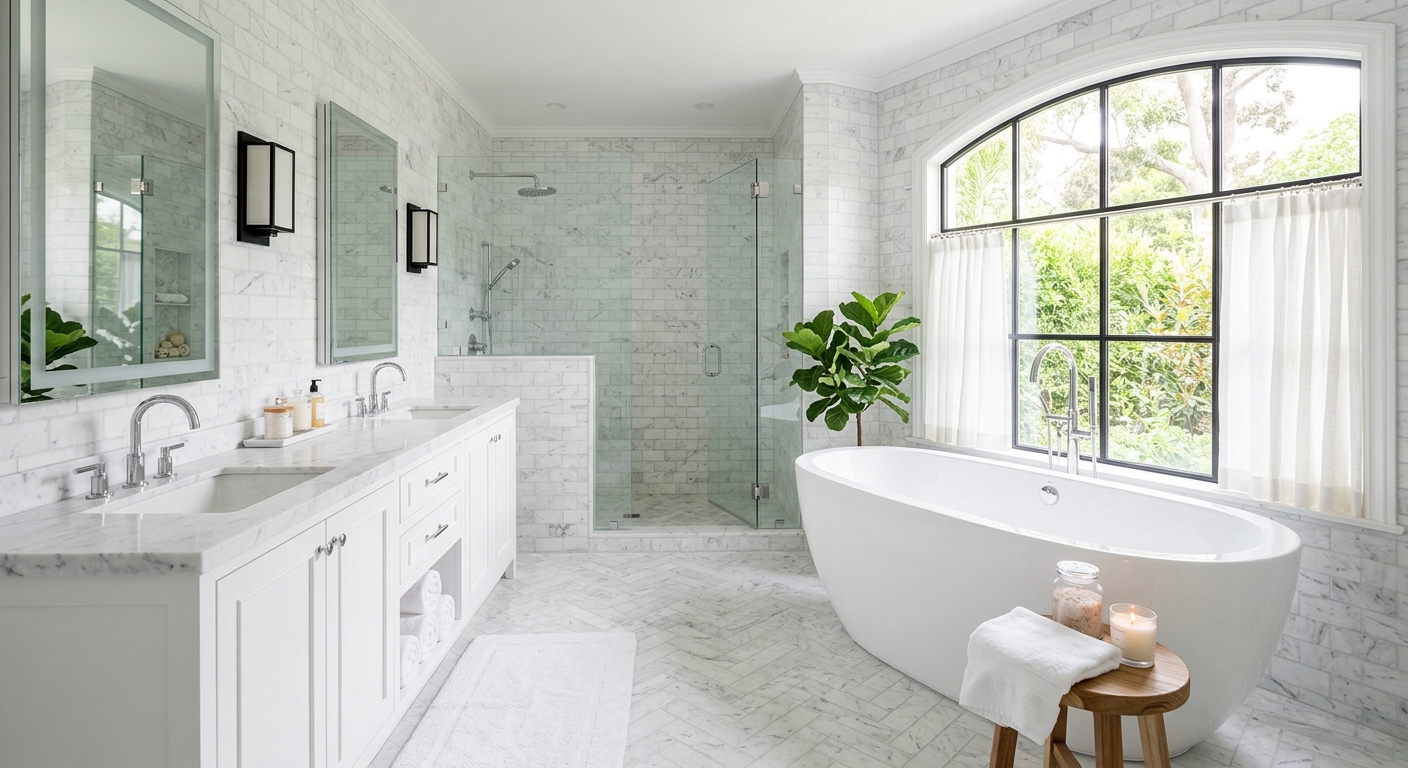
Bathroom renovation options and costs in Sarnia
Sarnia is where many homeowners run into the real-life challenge of bathroom renovations in an older housing market. With 71.0% of homes built before 1981 and 67.4% of dwellings being single-detached houses, it’s common for a “simple refresh” to uncover dated drain layouts, tired subfloors, and ventilation that never fully addressed moisture. In the Windsor–Sarnia economic region, bathroom pricing is driven more by labour rates and discovery during demolition than by temperature extremes. That matters because older plumbing and concealed water damage can expand the scope quickly, even when your planned finishes look straightforward.
Local contractor availability is also a factor: in and around high-demand areas like the Northend and downtown/Sarnia West corridors, trades often book faster because many projects cluster around similar building ages. Meanwhile, the region’s older construction means more bathrooms need upgrades to venting and water supply reliability before new tile goes in. That’s why Sarnia quotes are commonly case-by-case rather than purely square-foot pricing.
To help you budget, here are realistic renovation options—from cosmetic work to full renovations—so you can compare like-for-like. Use the table below as a starting point, then expect your contractor to refine the range after they confirm the condition of plumbing, subfloor, and waterproofing prep.
| Renovation Scope |
What's Included |
Typical Duration |
Price Range |
| Cosmetic refresh (paint, fixtures, accessories only) |
Paint, vanity faucet/fixtures swap, lighting refresh (like-for-like), mirror replacement, toilet/sink accessories (no plumbing moves), caulking |
1–3 days |
$2,000–$6,000 |
| Mid-range full renovation (new tile, vanity, tub/shower, electrical) |
Demo and disposal, re-set/upgrade waterproofing, tile floor and surround, new vanity, new tub/shower set (or tub-to-shower conversion without major reframe), basic electrical updates (GFCI/exhaust fan if needed), new trim and finishing |
10–16 business days |
$14,000–$22,500 |
| High-end full renovation (custom tile, steam shower, heated floors) |
Full gut, premium tile layouts (including niches), custom shower build (tile/linear drain option), heated floor circuit, upgraded exhaust/venting plan, designer vanity/mirror, upgraded trim, more complex plumbing/electrical coordination |
15–25 business days |
$22,500–$30,000 |
| Shower-only installation (convert tub to walk-in shower) |
Demo tub area, new walk-in shower pan and waterproofing, tile surround, glass door/enclosure, new valve/trim, assess venting, finish work |
7–14 business days |
$8,000–$16,000 |
| Bathtub replacement or tub-liner install |
Remove and set new tub (or install tub liner where appropriate), new trim/caulking, re-seal joints, basic surround touch-up (scope varies by wall condition) |
3–7 business days |
$1,500–$8,000 |
| Tile-only installation (floor + surround, existing layout kept) |
Tile removal (selective demo as needed), substrate prep, membrane/waterproofing upgrade where required, tile floor and shower surround, grout/seal, reinstallation of fixtures if staying in place |
7–12 business days |
$6,500–$14,000 |
Prices are estimates only and vary by project scope, site access and material selection.
What affects the price of bathroom renovation in Sarnia
In Sarnia, two homeowners can receive quotes for the “same” bathroom and still see a 30%–50% difference when you compare labour intensity, plumbing/electrical corrections, and what’s hidden behind old finishes. In Ontario generally, the reason is not just material costs—it’s how labour is priced to handle surprises once the walls open. In the Windsor–Sarnia region, many bathrooms sit in homes built decades ago (71.0% pre-1981), so contractors often need to upgrade cast-iron or copper drain components, replace older galvanized supply lines where they’re compromised, and address undersized venting. Those discoveries push a renovation toward the mid-market full range rather than a straightforward “tile change.”
As an example, moving a drain a few inches on an older rough-in can turn into a bigger rough-in job than expected, which is one reason full renovations commonly land in the $14,000–$30,000 bands depending on how much re-plumbing or electrical correction is required. Another driver is asbestos risk: if asbestos-containing materials are discovered in older floor tile/vinyl systems or surrounding compounds, abatement protocols can add $1,500–$5,000+ and extend scheduling. On the other hand, if you keep the existing layout and only replace fixtures and finishes, you may stay closer to a cosmetic refresh or a tile-focused scope.
Concrete local scenarios I see: (1) a bathroom with poor attic/ceiling venting shows moisture damage in drywall backing boards, making waterproofing prep heavier; (2) older floors that flex require subfloor leveling before tile, increasing underlayment labour; (3) some homes have limited space for duct routing, so fan ducting and vent termination planning adds time. These are the real “Sarnia” variables that move the number up or down.
| Price Factor |
Why It Matters |
Cost Impact |
| Layout change — moving drain or supply lines requires rough-in work |
New rough-in adds demo, framing or chases, re-plumbing labour, and inspection coordination |
Often +$2,500–$8,000 to a full renovation, depending on distance and walls |
| Tile selection — large-format porcelain vs. mosaic vs. ceramic |
Larger tiles demand flatter substrates and more precise setting; mosaics increase labour and grout lines |
Typically +$1,500–$5,000 material-and-labour difference |
| Fixture tier — builder-grade vs. mid-range vs. designer brands |
Premium valves, shower systems, and vanities cost more and may require different mounting/rough-in |
Can swing +$1,000–$6,000 |
| Subfloor condition — rot or unlevel concrete adds scope |
Tile systems need stable backing; repairs can mean more demo and rebuilding |
Often +$1,000–$4,000 |
| Electrical — adding GFCI outlets, exhaust fan, heated floor circuit |
Upgrading safety devices and venting is critical; heated floors add wiring and product costs |
Typically +$800–$4,500 |
| Waterproofing method — membrane type and extent |
The right system prevents moisture migration; more coverage increases labour/material time |
Usually +$600–$3,000 compared with minimal approaches |
| Older-home surprises — asbestos tile, cast-iron drains, galvanized pipes |
Discovery changes scope, may trigger abatement and requires targeted repairs |
Often +$1,500–$5,000+ for asbestos risk; drain/supply upgrades can add more |
| Bathroom size — sq ft drives tile and labour time directly |
More surface area means more tile, mortar, membranes, and longer install time |
Small bathrooms can keep you near the lower end of $6,500–$14,000; larger ones trend upward |
Permits & regulations in Ontario
In Ontario, many cosmetic bathroom updates typically do not need a permit—especially work that stays “like-for-like.” Swapping a vanity, replacing a mirror, installing new fixtures where plumbing points don’t move, retiling without structural wall changes, and painting usually fall into the low-risk category. However, permits are generally required when you relocate plumbing (for example, moving a toilet drain, shifting a shower valve, or moving supply lines), add or change electrical circuits (like adding a new exhaust fan circuit or heated floor circuit), or make structural changes to walls/joists.
Electrical work must meet the Ontario Electrical Safety Code and be completed and/or signed off by a licensed electrician. Plumbing rough-in changes also typically require a permit and inspection. Because bathroom projects often touch both trades, I strongly recommend you treat permits as part of the plan, not an afterthought.
For homeowners in Sarnia, verify a contractor’s Ontario licence and protection step-by-step: (1) Ask for the contractor’s proof of applicable Ontario trade licence (where required for the scope) and confirm the licence details; (2) Request a current certificate of insurance and review that liability coverage is active for the renovation period; (3) Confirm WSIB/WCB coverage is in place (or the contractor’s equivalent compliance for the province), and request documentation; (4) If asbestos may be a factor in older buildings, ask how they handle discovery and what licensed abatement/safety steps they follow. Keep copies of the licence and insurance documents before work starts—especially if you’re financing or using a warranty that requires coverage records.
Choosing tile, waterproofing and fixtures for your Sarnia bathroom
In Sarnia, the three decisions that most reliably affect both the budget and long-term performance are tile choice, waterproofing method, and fixture tier. First, tile: ceramic is usually the entry point and is fine for many standard installs, but porcelain typically offers better stain resistance and durability—especially for floors and high-traffic areas. Natural stone (marble, travertine, slate) looks premium, but it often requires additional sealing and careful sourcing; installation can become more labour-intensive because of variation and finishing requirements. Second, waterproofing: bathrooms here see frequent humidity from showers, and older ventilation is often part of why previous materials failed. A quality paint-on membrane can work in limited scenarios, but bonded sheet membrane systems or modern schluter-style approaches provide more robust protection when properly detailed at seams and corners. Third, fixtures: builder-grade sets can keep the upfront cost down, while mid-range and designer shower systems offer better valves, smoother controls, and more consistent resale appeal.
In Ontario’s real-world bathroom humidity conditions, the “cheapest” waterproofing strategy is often the most expensive if it leads to mould or grout breakdown. If you’re deciding where to spend, consider a $2,000–$4,000 difference: for many Sarnia bathrooms, upgrading to a better membrane and correct shower-pan details is more defensible than moving from basic to luxury tile patterns. For example, moving from entry ceramic to porcelain might cost more in materials, but the biggest resilience gains usually come from waterproofing and substrate prep—not just the tile aesthetic.
Match your selections to your situation: if you’re keeping the layout and walls are solid, you can often invest in nicer finishes without inflating labour too much. If you’re gutting a pre-1981 bath, you’ll likely value waterproofing and heated floor wiring planning more because the walls and subfloor will be open anyway.
| Material / Option |
Pros |
Cons |
Price Range |
| Ceramic tile (floor + walls) |
Cost-effective, wide style selection, good for non-slip floor options when chosen correctly |
More variation between batches; may wear faster than porcelain in some scenarios |
$2,000–$6,000 |
| Porcelain tile (floor + walls) |
Denser and more durable, better stain resistance, often easier to maintain |
More expensive materials; may require flatter substrate for large formats |
$4,000–$10,000 |
| Natural stone (marble, travertine, slate) |
Premium look and feel, unique character, high-end resale appeal |
More maintenance (sealing), can be inconsistent; installation and finishing labour is higher |
$7,000–$18,000 |
| Frameless glass shower enclosure |
Brightens the bathroom visually, modern look, durable when installed correctly |
Higher material and hardware costs; requires precise wall/plumb alignment |
$1,500–$5,000 |
| Prefab tub surround (acrylic) |
Fast install, waterproof surface when properly sealed, budget-friendly for some layouts |
Limited design flexibility; seams still need careful sealing |
$800–$2,500 |
| Custom shower pan (tile or linear drain) |
Best custom fit, clean drainage lines, premium look when detailed well |
More complex waterproofing and underlayment; demands correct slope and detailing |
$2,500–$9,000 |
How to choose a bathroom renovation contractor in Sarnia
Choosing a bathroom contractor in Sarnia comes down to proof: proof of licensing for the scope, proof of insurance, and proof the company manages trades and inspections properly. Start by asking for (and then reviewing) their Ontario trade licence details where applicable, their current liability insurance certificate, and their WSIB/WCB coverage. You can usually confirm trade licence details through online provincial licence registries, and you should be able to request clearance letters or documentation showing workers are covered for the work period.
Next, get 2–3 itemised written quotes. Look for a breakdown that separates labour, tile and waterproofing materials, plumbing fixtures, electrical components, demolition/disposal, and any permit-related items. A lump sum with no line items can hide scope gaps (for example, whether waterproofing is included at proper shower areas, whether subfloor repair is assumed, or whether disposal is included).
Read the scope carefully: what’s excluded? Is drywall removal included if water damage is discovered? Who pulls the permit (and is it included in the quoted price)? Is disposal, recycling, and dump fee accounted for? Also check warranty terms: workmanship warranty length, product/manufacturer warranties, and whether warranties transfer to a new owner if you sell. For payment schedule, don’t pay more than about 10%–15% upfront; hold a portion back until key milestones are complete and the job is substantially finished. Finally, get the timeline—start date and completion estimate—in writing so you can plan around the bathroom downtime.
- Request Ontario licence proof for the specific trades they’ll perform or manage
- Verify liability insurance is active and request the certificate before work starts
- Confirm WSIB/WCB coverage documentation (ask for proof, not promises)
- Get 2–3 itemised quotes (labour + materials breakdown, not a single number)
- Confirm whether permit pulls are included and who submits applications
- Check for an explicit disposal/dump fee allowance
- Ask what waterproofing system is being used and where it’s applied
- Confirm substrate prep expectations (subfloor leveling, board replacement, crack treatment)
- Review the scope for plumbing and electrical: are GFCI, exhaust fan, and lighting upgrades included?
- Ask who inspects rough-in and how inspection scheduling is handled
- Get warranty details in writing: workmanship duration and manufacturer coverage
- Use a payment schedule with milestone holdback (avoid large upfront payments)
Red flags in Sarnia: contractors who refuse to provide proof of Ontario licence/insurance/WSIB/WCB; quotes that don’t spell out waterproofing details; “allowance” pricing with no product specs (especially for tile and shower valves); missing timelines or vague completion statements; and payment requests that exceed 10%–15% upfront without a clear contract milestone plan.
Frequently asked questions — bathroom renovation in Sarnia
How do I prevent mold in a Sarnia bathroom?
Mold prevention in Sarnia mostly comes down to controlling moisture at the source and preventing water from migrating behind the tile. Start with a proper waterproofing system and correct shower-pan detailing: membrane continuity at corners, seams, and transitions is critical, especially in older homes where ventilation and wall backing may already have been compromised. Make sure the bath has effective exhaust ventilation and that the exhaust fan is correctly ducted and sized for a bathroom, not just “installed in the ceiling.” Also choose grout and caulking appropriate for wet areas and re-caulk changes at the tub/shower interface. If your current bathroom shows staining or soft drywall, address the substrate damage before retiling. With homes built before 1981 being common locally (Statistics Canada, 2021 Census), these hidden moisture issues aren’t unusual.
What adds the most resale value in a bathroom reno?
In Ontario and around Sarnia, resale value usually tracks with a renovation that looks modern, functions reliably, and feels “complete,” rather than only cosmetic updates. Strong return elements include a clean tile installation with durable waterproofing, updated lighting and ventilation, and a well-fitted vanity with current finishes. Walk-in showers and premium shower valves often help buyers picture daily use, particularly when the layout stays practical. If you’re comparing budgets, a mid-range full renovation commonly lands around $14,000–$22,500 and tends to feel like a “real upgrade” compared with a cosmetic refresh. That said, the highest perceived value usually comes from getting the basics right—level subfloor, waterproofing, proper venting, and quality installation—because buyers can spot maintenance problems quickly.
Can I keep my existing plumbing layout to save money?
Yes—keeping the existing plumbing layout is one of the best ways to control cost in Sarnia because it reduces the labour and material needed for rough-in work. When you keep the toilet, shower/tub valve location, and drain positions the same, contractors can focus on removal, substrate prep, waterproofing, and finish work rather than rebuilding chases and moving supply/drain lines. This is especially helpful in older homes (71.0% built before 1981 locally per Statistics Canada, 2021 Census), where hidden surprises like cast-iron drain components or older supply piping can expand the budget once walls open. If you do keep the layout, still expect some corrections—like verifying venting and upgrading to safe, current electrical practices for exhaust fans or GFCI outlets when needed.
How much does a walk-in shower cost in Sarnia?
A walk-in shower cost in Sarnia depends on whether you’re converting a tub, the shower size, and how complex the waterproofing and drainage become. For a shower-only installation (including conversion from tub to walk-in), budgets often fall around $8,000–$16,000 depending on tile coverage, enclosure choice, and whether valve/drain locations need adjustment. If your existing substrate is sound and the rough-in lines are staying in place, the project typically trends toward the lower end. If you uncover water damage, need subfloor rebuilding, or want a custom pan with a linear drain, it moves toward the higher end. In the $14,000–$30,000 full-renovation range, you usually get a complete rework of finishes, venting, and electrical—so compare the scope carefully.
What's the ROI on a bathroom renovation?
Bathroom ROI in Ontario varies by neighbourhood, buyer expectations, and the quality of installation. In Sarnia’s market, buyers typically value bathrooms that are leak-free, easy to maintain, and updated with current fixtures and ventilation. A well-executed mid-range full renovation—often in the $14,000–$22,500 band—frequently provides stronger buyer appeal than partial work when your existing bath is dated or shows moisture issues. ROI can be limited if the renovation is purely cosmetic while waterproofing or venting remains weak. Also consider that many Sarnia homes are older (71.0% pre-1981), so fixing ventilation and waterproofing details usually protects your investment by preventing repeat repairs and visible deterioration. For the best ROI, match finishes to your home style and keep the layout practical unless you’re prepared for the additional plumbing and electrical scope.
Do I need waterproofing behind the tile?
In most Sarnia bathroom renovations, yes—you need waterproofing behind the tile or at least an approved waterproofing system at wet-wall areas. Tile itself is not a waterproof barrier; water that gets through grout and at joints must be directed safely away from framing and subfloor. A proper waterproofing approach may include a membrane system with correct sealing at corners, seams, and penetrations like the shower valve trim. The exact method depends on your shower type, substrate, and drainage design (tub-to-shower conversions and custom shower pans demand careful detailing). In older homes built before 1981, we often discover moisture history behind existing finishes, so skipping waterproofing usually leads to recurring problems. A quality waterproofing line item is one of the best ways to protect against mould and costly demolition later.