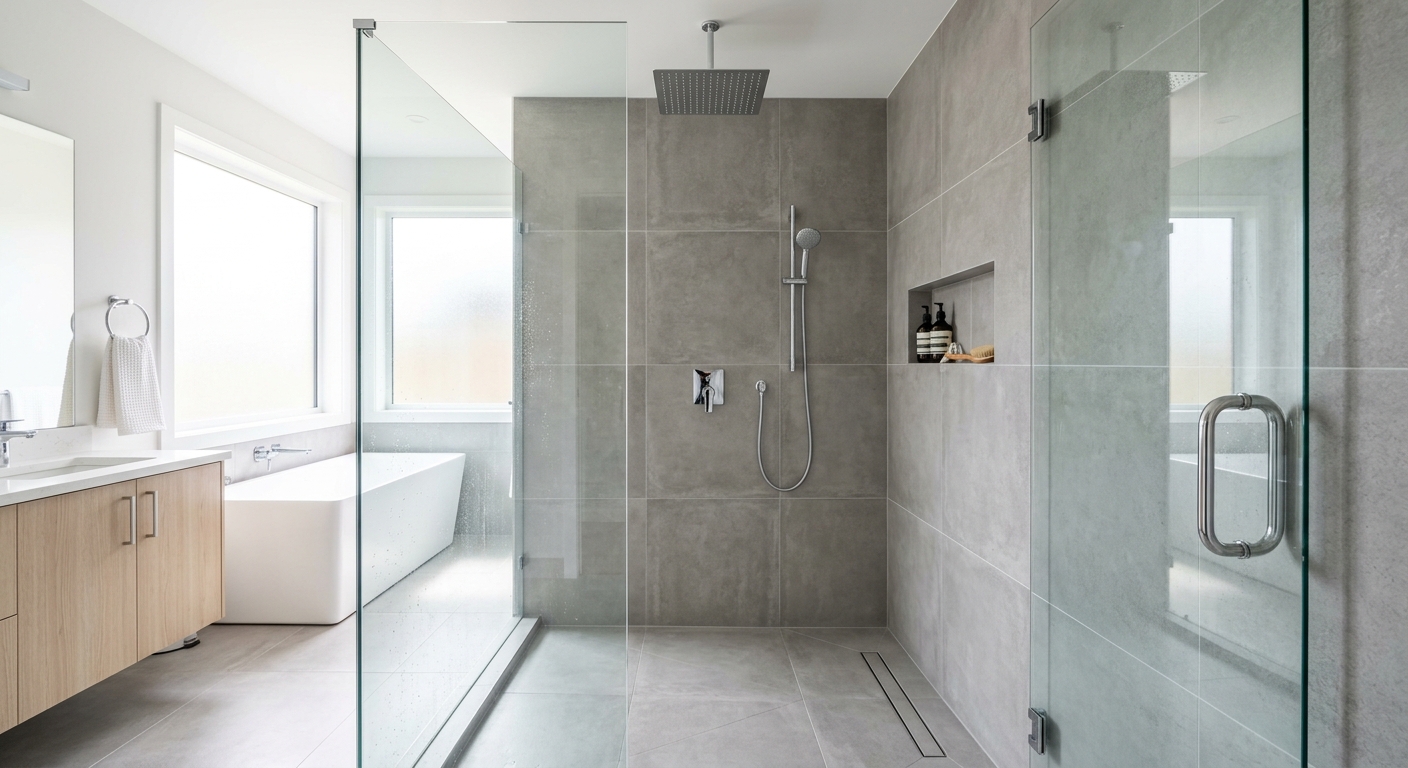
Bathroom renovation options and costs in Deep River
Deep River homeowners usually start by comparing options, because the right bathroom renovation in Deep River can range from a quick refresh to a full gut-and-rebuild. With 84.5% of homes built before 1981, many reno sites come with older drain lines, dated venting, and framing that isn’t always flat—so even “standard” projects often uncover extra scope once walls are opened (Statistics Canada, 2021 Census). That age profile matters for costs more than weather. In the Kingston–Pembroke region, renovation pricing is typically driven by labour availability, discovery work behind the walls, and how much waterproofing and floor prep is required, rather than by a single climate factor.
Ontario bathrooms also have to perform year-round in humidity swings—poor ventilation and marginal waterproofing show up as grout breakdown, odours, and subfloor movement. The good news is that Deep River contractors are used to servicing older single-detached housing (75.1% of dwellings) with thicker-than-expected build-ups, so your quote will usually reflect remedial work up front. Trade demand is especially steady around the town core and the residential pockets near the riverfront, where access is sometimes tighter and demolition/transport logistics affect scheduling.
Use the table below to ballpark budgets, then we can tighten it by matching the scope to your existing layout, finish level, and any “behind the walls” concerns.
| Renovation Scope |
What's Included |
Typical Duration |
Price Range |
| Cosmetic refresh (paint, fixtures, accessories only) |
New vanity or faucet, toilet refresh if existing plumbing is kept, paint, light upgrades, accessories (towel bars, mirror), caulking and minor trim |
3–7 days |
$3,000 – $7,500 |
| Mid-range full renovation (new tile, vanity, tub/shower, electrical) |
Demo and disposal, waterproofing system, tile floor + surround, new vanity, tub or shower base, exhaust fan (as needed), basic electrical updates (e.g., GFCI), new trim and finishes |
2–4 weeks |
$15,000 – $24,000 |
| High-end full renovation (custom tile, steam shower, heated floors) |
Enhanced waterproofing coverage, custom tile details (niches, benches), heated floors, upgraded electrical (fan + lights + heated floor circuit), higher-end fixtures, premium hardware and glass options |
4–7 weeks |
$24,000 – $32,000 |
| Shower-only installation (convert tub to walk-in shower) |
Remove tub, prep subfloor, waterproof shower envelope, install shower base (or tile system), plumbing adjustments limited to the shower area, new controls/valves, exhaust fan tie-in if required |
2–3 weeks |
$5,500 – $12,000 |
| Bathtub replacement or tub-liner install |
Swap existing tub (or liner where appropriate), seal and re-trim, basic tile/tile surround touch-ups, leak test, recaulk and finish carpentry |
5–10 days |
$1,200 – $6,000 |
| Tile-only installation (floor + surround, existing layout kept) |
Floor and wall tile only, prep and leveling as required, waterproofing (where it’s part of a tile scope), grout and seal, drain/valve trim adjustments as needed |
1–3 weeks |
$2,000 – $10,000 |
Prices are estimates only and vary by project scope, site access and material selection.
What affects the price of bathroom renovation in Deep River
Two homeowners can receive quotes that look wildly different for what sounds like the same bathroom renovation in the Kingston–Pembroke area. It’s common to see a 30–50% spread because the biggest cost drivers are labour rates and the condition of older homes, not outdoor weather. In Deep River, the housing stock is frequently built well before modern waterproofing and venting standards—when you open walls, you often find hidden issues that don’t show up during a walkthrough. Many older bathrooms have cast-iron or aging copper drain components, plus inconsistent slopes and tight bends that require careful rough-in correction. That’s why “simple” upgrades still need budget room once demolition begins.
Older-home surprises are a major factor in the cost band swing. If asbestos-containing materials are discovered (for example, in older vinyl floor tile or related coverings from pre-1985 builds), abatement becomes a separate safety scope and can add roughly $1,500–$5,000+ depending on what’s disturbed and how much area must be remediated. Ventilation shortfalls (undersized exhaust fans, ducting that doesn’t reach exterior) also tend to expand scope—duct routing and electrical tie-ins aren’t optional once you’re opening the walls.
In practical Deep River terms, a shower conversion that stays in the same footprint may land closer to the lower end of the $3,500–$12,000 shower installation band, while moving a drain/supply line quickly pushes a project toward mid-range full renovation pricing in the $15,000–$32,000 band. Examples we see often include: (1) floor flattening after tile removal adds labour and materials, (2) upgraded GFCI outlets and properly ducted exhaust are added during rough-in, and (3) custom niches increase tile labour and waterproofing detailing time.
| Price Factor |
Why It Matters |
Cost Impact |
| Layout change — moving drain or supply lines requires rough-in work |
Requires demolition, plumbing rough-in, testing, and often new framing/patching |
Often adds several thousand dollars and can push a mid-range job toward full-reno pricing |
| Tile selection — large-format porcelain vs. mosaic vs. ceramic |
Higher-end tile can be heavier, more brittle to cut, and may require extra subfloor prep for flatness |
Can shift tile-only budgets by multiple thousands within the $2,000–$10,000 range |
| Fixture tier — builder-grade vs. mid-range vs. designer brands |
Valves, trims, and vanities vary in material and install complexity (especially glass and trim) |
Mid-range upgrades often land in the upper part of the $15,000–$24,000 band for full renos |
| Subfloor condition — rot or unlevel concrete adds scope |
Tile needs a solid, flat base; repairs extend demolition and prep time |
Commonly increases labour and materials; can add cost even if the tile layout stays the same |
| Electrical — adding GFCI outlets, exhaust fan, heated floor circuit |
Electrical additions require code-compliant devices and sometimes new circuits |
Typically moves a project upward versus cosmetic refresh; heated floors add measurable cost |
| Waterproofing method — membrane type and extent |
Correct coverage (floors, walls, corners, transitions) prevents leaks and mould |
Upgrading from basic coverage to a full shower envelope is a cost increase but protects the whole system |
| Older-home surprises — asbestos tile, cast-iron drains, galvanized pipes |
Triggers remediation protocols and sometimes plumbing replacement |
Discovery can add $1,500–$5,000+ for abatement plus additional plumbing labour |
| Bathroom size — sq ft drives tile and labour time directly |
Larger surfaces mean more tile, more thinset/mortar, longer waterproofing time, more trim work |
Can be a direct driver of staying mid-range versus moving to high-end pricing |
Permits & regulations in Ontario
In Ontario, many bathroom updates are considered “cosmetic” and typically do not require a permit—swapping fixtures that stay connected to the same plumbing positions (like replacing a toilet, faucet, vanity, mirror, or repainting), and redoing finishes without changing the building’s plumbing/electrical layout. However, certain changes do require permits and inspections. If you relocate plumbing (moving a drain or supply line), add or move a venting/exhaust fan (especially if it involves new circuits), change structural wall framing, or make waterproofing changes tied to new plumbing/electrical work, you should expect permit and inspection requirements. Electrical work must meet Ontario electrical code and be completed or signed off by a licensed electrician.
For a homeowner in Deep River, here’s a practical step-by-step to verify a contractor before signing:
- Ask for their Ontario trade licence details (and confirm the exact trades listed match the work proposed).
- Request a certificate of liability insurance—make sure the expiry date is current and coverage limits are appropriate for renovation work.
- Ask for proof of coverage related to workplace safety (WSIB/WCB) for the contractor and confirm it applies to the jobsite.
- Get the plumber/electrician contacts listed on the quote, including their licence numbers where applicable.
- Request a permit plan: who pulls permits, which scopes require them, and how inspections are scheduled.
- Verify disposal and haul-away responsibilities and include them in writing.
That verification step protects you if hidden plumbing or electrical upgrades are needed once demolition starts—common in older Deep River homes built before current standards.
Choosing tile, waterproofing and fixtures for your Deep River bathroom
In Deep River, the bathroom budget is usually decided by three material choices: tile type, waterproofing system, and fixture tier. Start with tile choice. Entry-level ceramic can look great but is often best for simpler layouts because it’s less dense and can require more attention to flattening and grout lines. Porcelain is typically the stronger mid-range option—denser, more water-resistant, and more forgiving for practical wear. If you want natural stone (marble, travertine, slate), expect luxury pricing and extra labour for selection, sealing, and careful installation; it can be stunning in Ontario homes, but it’s not the fastest path to a tight budget.
Next, waterproofing method. For Ontario’s humidity and year-round use, the right system is the difference between a bathroom that stays solid for years and one that develops dampness at seams. Paint-on membranes can work in specific situations, but many showers and tub surrounds benefit from a bonded sheet membrane or a well-detailed waterproofing system with the correct overlap and corner treatment. When installed properly, a full waterproofing envelope reduces mould risk around niches, seams, and transitions—areas where older bathrooms often have hidden weaknesses.
Finally, fixture tier impacts both upfront cost and resale value. Builder-grade can be cost-effective if the rough-in is sound; mid-range brands improve finish and valve durability; designer fixtures add appearance and sometimes advanced hardware. For a concrete example: if you’re choosing between ceramic tile and porcelain tile, spending an extra $1,000–$2,500 on porcelain can be justified when you’re also investing in premium waterproofing and a correct floor prep—otherwise the added tile cost may not pay back if the base is compromised.
Match your budget to your situation: keep layout changes minimal for a mid-range renovation around the $15,000–$24,000 band, and reserve high-end features like heated floors for a renovation that’s already handling full waterproofing and electrical upgrades.
| Material / Option |
Pros |
Cons |
Price Range |
| Ceramic tile (floor + walls) |
Affordable, wide style selection, good for consistent layouts |
More variation in performance by quality tier; can chip or crack if the subfloor isn’t properly prepped |
$2,000 – $6,500 |
| Porcelain tile (floor + walls) |
Denser and typically more water-resistant, holds up well in wet zones |
May be heavier and can be costlier; requires careful flatness for large-format styles |
$4,000 – $10,000 |
| Natural stone (marble, travertine, slate) |
High-end look, unique veining and texture |
Requires sealing and more detail work; can be harder to maintain and may cost more to install |
$7,000 – $14,000 |
| Frameless glass shower enclosure |
Brightens the space, premium look, easier to clean than some alternatives |
Higher hardware cost; install is sensitive to wall alignment and waterproofing accuracy |
$3,500 – $10,000 |
| Prefab tub surround (acrylic) |
Fast install, consistent finish, typically less labour than tiled surrounds |
Less custom detailing; must be installed on a correct substrate for longevity |
$1,200 – $4,500 |
| Custom shower pan (tile or linear drain) |
Best for custom layouts; linear drains improve design and accessibility |
More involved waterproofing and slope planning; longer install time |
$2,500 – $9,500 |
How to choose a bathroom renovation contractor in Deep River
Choosing the right contractor in Deep River is mostly about verifying credentials, then making sure the quote reflects the true scope of a bathroom reno in older homes. Start with licensing and coverage: confirm the contractor’s Ontario trade licence details for the work they’ll perform, request a current certificate of liability insurance, and obtain proof of WSIB/WCB coverage where applicable. Ask for the certificate names to match the company doing the work, and keep copies for your records.
Next, get 2–3 itemised quotes, not one lump total. A good bathroom quote breaks labour and materials clearly, including demolition, disposal, subfloor prep, waterproofing scope, and what’s included for electrical and plumbing tie-ins. Read the scope carefully for exclusions—some quotes leave out permit pulling, drywall patching, or tile backer prep, then these become change orders after demolition.
Warranty matters for both workmanship and products. Ask how long the contractor’s workmanship warranty lasts and whether it covers waterproofing failures and workmanship at seams and transitions. Also note the manufacturer’s product warranty length and whether it’s transferable to you if you sell the home.
Finally, payment schedule: never pay more than 10–15% upfront. Use a staged payment plan and request a holdback until critical elements are complete (typically after waterproofing verification and after tile/grout cure timelines). Get the schedule in writing—start date and a realistic completion estimate—because bathroom renovations often require lead times on glass, tile, and fixtures.
- Licence details and trade scope match the work proposed.
- Liability insurance certificate provided before work starts.
- WSIB/WCB coverage proof provided for the contractor and relevant trades.
- 2–3 itemised quotes with labour and materials separated.
- Clear waterproofing method and coverage area stated in writing.
- Disposal/haul-away included (not “allowance” with unknown limits).
- Permit pulling responsibility stated (who files, who pays, inspection timing).
- Electrical scope includes GFCI and exhaust fan ducting details.
- Plumbing scope includes leak testing and pressure/flow checks where applicable.
- Tile specs include grout type and whether floor prep/leveling is included.
- Warranty terms: workmanship length, what’s covered, and claim process.
- Payment schedule with holdback until final walkthrough completion.
Red flags we see in Deep River include: contractors who won’t put waterproofing and disposal in the quote, vague “allowances” for tile/fixtures with no quantities, no proof of liability/WSIB coverage, rushing payment schedules to collect large deposits, and skipping a written timeline—especially when older walls suggest hidden repairs are likely.
Frequently asked questions — bathroom renovation in Deep River
Do I need waterproofing behind the tile?
In most Deep River bathroom renovations where you’re tiling a shower or tub surround, yes—waterproofing behind the tile is strongly recommended and typically part of a correct system. Ontario homes experience year-round humidity, and bathroom moisture finds its way to grout lines, corners, niches, and transitions. With older Deep River housing (many homes built before 1981), framing and prior assemblies can be uneven or not designed for today’s waterproofing standards, so relying on grout alone isn’t the right approach. A typical mid-range full renovation in the $15,000–$24,000 band usually includes a waterproofing membrane and careful corner detailing. If your renovation scope is tile-only, ask specifically which waterproofing method is included and what area is covered (walls, floors, curb, and transitions).
How do I compare bathroom renovation quotes?
Compare quotes like-for-like by focusing on scope, not totals. In Deep River and the Kingston–Pembroke region, a quote for “a new shower and tile” can vary widely because labour, waterproofing coverage, floor prep, and any plumbing/electrical corrections behind the walls differ. Ask each contractor the same set of questions: what exact waterproofing method and coverage area is included, whether disposal is included, who pulls permits (if needed), and what’s in the electrical scope (for example, exhaust fan and GFCI outlets). Confirm whether tile-only includes subfloor leveling and backer prep, since that affects both labour and material cost. If one quote is in the $15,000–$32,000 range for a full reno and the other is similar, the real difference is often remedial work and finish level, not the headline number.
Can I live at home during a bathroom renovation in Deep River?
Often yes, but it depends on how extensive the work is and whether you can secure a functional temporary bathroom. Cosmetic refreshes and tub-to-shower swaps usually allow some daily routines to continue, especially if access to the bathroom remains controlled. For a full renovation, demolition and waterproofing cure times can make the bathroom unusable for at least part of the schedule. In older Deep River homes, you may also need extra time for plumbing corrections and ventilation routing, which can stretch the timeline. If you want to live in the home, plan for dust control, protect adjacent rooms, and confirm where tools and materials will be stored. If you’re converting a tub to a walk-in shower, discuss whether you’ll have partial functionality and how you’ll handle water use during the transition. Your contractor should provide a written schedule so you can plan around the most disruptive days.
What's the best bathtub material for a Deep River home?
The “best” bathtub material is usually the one that fits your access and budget while matching the rest of your bathroom system. In renovations in Deep River, common choices include acrylic tubs and replacement shells, since they’re generally cost-effective and install efficiently. Cast iron tubs are durable but heavier and may cost more to handle during removal, especially in older homes where access can be tricky. If you’re working within the typical bathtub/fixture replacement band of $1,200–$6,000, acrylic or a tub-liner approach can be practical—provided the base is solid and correctly prepared. For older homes built before 1981, we also pay close attention to how the drain connection and surround waterproofing are sealed to prevent leaks at the joints. If you’re keeping the layout, your best choice is often the one that pairs with a correct waterproofing and sealing plan.
Is it worth renovating a bathroom before selling in Deep River?
It can be worth it, but only if the renovation improves functionality and durability—not just appearance. Deep River has a high share of owner households (79.9%), and many buyers in the area look closely at whether the renovation is “done right” (waterproofing, ventilation, and safe electrical). If your existing bathroom has dated finishes but the underlying plumbing and subfloor are sound, a targeted upgrade—like a vanity refresh, exhaust fan improvement, and tile work—may be the best value. If your bathroom is showing moisture issues, soft subfloor, or poor ventilation, fixing those problems before listing usually protects you from inspection surprises. A full renovation in the $15,000–$32,000 range can make sense when the home’s age demands it, especially since many Deep River dwellings are older (84.5% built before 1981). Talk to your contractor about what a home inspector typically flags in older bathrooms.
How do I plan a bathroom renovation on a tight budget in Deep River?
On a tight budget in Deep River, focus on the items that prevent future damage and prioritize scope control. Start by deciding whether you can keep the layout; avoiding drain/supply relocation usually reduces rough-in labour and helps you stay within predictable price bands. If your goal is to refresh, consider a cosmetic plan first: new fixtures and paint can keep costs low, while reserving major tile and waterproofing for areas that truly need it. If you need waterproofing and tile, stay realistic about the likely mid-range cost drivers: tile prep, waterproofing coverage, and electrical tie-ins. For example, a shower conversion can land anywhere from $3,500–$12,000, and tile-only work often falls in the $2,000–$10,000 range depending on floor area and finish. Ask your contractor for a phased approach (e.g., waterproofing and shower envelope first, then finishing) and require itemised quotes so you know exactly what changes cost.