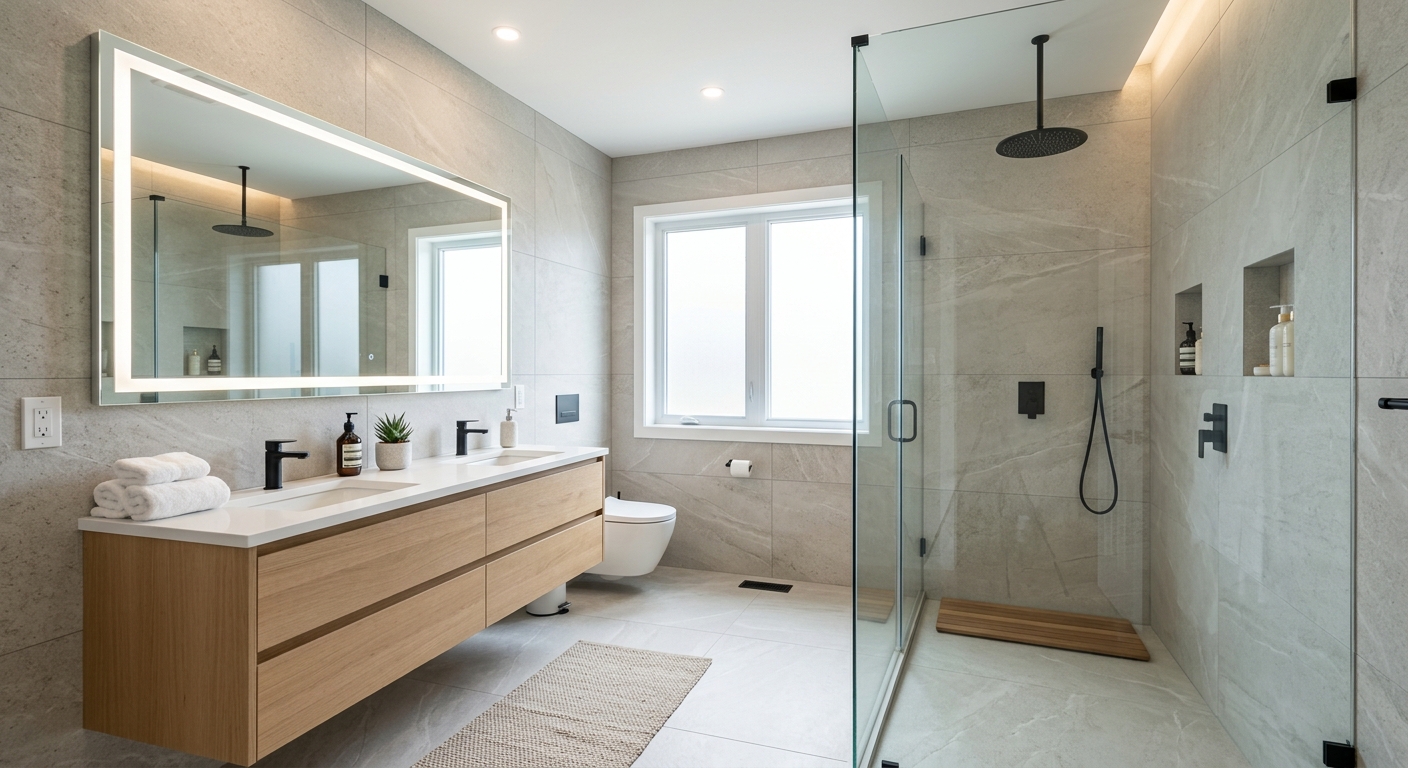
Bathroom renovation options and costs in Richmond Hill
Bathroom renovations in Richmond Hill typically start with a clear decision: do you want a light refresh or a full rebuild? The local housing mix matters. In Richmond Hill, 15.1% of homes were built before 1981, which often means older, dated plumbing layouts and flooring that may conceal issues beneath existing finishes—sometimes including asbestos-containing materials. At the same time, with 78.2% of households owning their homes (Statistics Canada, 2021 Census), many projects are planned for long-term enjoyment and resale value, so homeowners commonly upgrade more than just what’s visible.
In the Toronto economic region, bathroom pricing is driven mostly by skilled labour rates and by what’s hidden once walls are opened—not by climate swings. Summers can be humid, and winter heating cycles can stress caulking and grout, but the real cost drivers are the labour-intensive parts: tile setting, waterproofing, and any drain/vent corrections to meet current Ontario plumbing expectations. Work is in particularly high demand around older pockets like Bayview Avenue and Elgin Mills Road, where many homes date to the post-war and mid-century years and renovations often uncover supply-line, venting, or subfloor irregularities.
Below are realistic budget bands homeowners in Richmond Hill commonly use to compare options, from a cosmetic refresh to a high-end build that includes custom shower work and premium finishes. Use the table as your starting point, then confirm details in an itemised quote before you commit.
| Renovation Scope |
What's Included |
Typical Duration |
Price Range |
| Cosmetic refresh (paint, fixtures, accessories only) |
Paint, caulking renewal, replace vanity top or vanity (non-plumbing moves), swap toilet where feasible without major plumbing work, new lighting fixtures (if approved by an electrician), accessories and re-sealing |
3–7 days |
$2,000–$6,000 |
| Mid-range full renovation (new tile, vanity, tub/shower, electrical) |
Remove existing finishes, new tile floor and surround, new vanity and lighting, bathtub or standard tub/shower unit replacement, exhaust fan and GFCI upgrades, waterproofing system, basic plumbing updates to match current connections |
2–3 weeks |
$12,000–$20,000 |
| High-end full renovation (custom tile, steam shower, heated floors) |
Custom waterproofed shower, premium tile (large format where appropriate), niche and linear drain options, steam shower package, heated floor circuit, higher-tier fixtures, enhanced ventilation and electrical detailing, potential vent/drain corrections if discovered |
3–5 weeks |
$20,000–$30,000 |
| Shower-only installation (convert tub to walk-in shower) |
Remove tub, prepare plumbing for shower connection, waterproofed shower pan or custom pan, shower enclosure (standard), tile surround and niche(s), updated exhaust fan if needed |
2–3 weeks |
$8,500–$15,000 |
| Bathtub replacement or tub-liner install |
Demo and swap tub (or install liner where conditions allow), plumbing hookups, re-caulking, new wall surround materials, basic waterproofing and sealing, final trim and finishing |
5–10 days |
$1,500–$4,000 |
| Tile-only installation (floor + surround, existing layout kept) |
Tile removal (as needed), new tile floor and tub/shower surround, substrate prep, waterproofing as required, grout and sealing, reinstallation of existing fixtures where feasible |
1.5–2.5 weeks |
$6,000–$14,000 |
Prices are estimates only and vary by project scope, site access and material selection.
What affects the price of bathroom renovation in Richmond Hill
Homeowners in Richmond Hill often see quotes swing by 30–50% for the “same” bathroom, even when the finish choices sound similar. In the Toronto economic region, this happens because bathroom work is labour-intensive, and small differences in layout, plumbing complexity and waterproofing details can add significant skilled time. It’s also common to find that the labour and trade availability premium in the GTA outweighs any minor material cost differences—especially when tiling, custom showers, or complex plumbing layouts are involved.
Older housing stock is a big reason budgets expand here. In the Toronto region, it’s not unusual for older homes (including a share built before 1981 in Richmond Hill) to include cast-iron drain components, copper supply piping, or undersized venting that needs to be corrected for modern bathroom fixtures. When drain reconfiguration and vent corrections become necessary, budgets can jump by several thousand dollars because it’s not just swapping parts—it’s rough-in work, inspections, and rework if access is tight. If asbestos-containing materials are discovered in older floor tile or related materials, licensed abatement can add $1,500–$5,000+ to your budget and delay schedules.
Concrete Richmond Hill examples: (1) keeping your toilet and vanity in the same location typically keeps the project closer to a mid-range full renovation band like $12,000–$20,000; (2) moving a drain to accommodate a linear drain often pushes you toward the higher end, especially when custom pans and steam-ready upgrades are included, trending toward $20,000–$30,000; (3) selecting large-format porcelain may look sleek, but it increases labour time for flatness preparation and tile cutting accuracy. Climate plays a lesser role than scope here; the bigger issue is moisture management during humid Toronto seasons, which makes waterproofing method and workmanship non-negotiable.
| Price Factor |
Why It Matters |
Cost Impact |
| Layout change — moving drain or supply lines requires rough-in work |
Shifting fixtures means opening walls/floors, relocating rough-in plumbing, and coordinating with inspections. |
Typically +$2,000–$6,000+ |
| Tile selection — large-format porcelain vs. mosaic vs. ceramic |
Larger or harder materials demand flatter substrates, more precise cuts, and slower installation for accuracy. |
Typically +$1,000–$4,000 |
| Fixture tier — builder-grade vs. mid-range vs. designer brands |
Higher tiers cost more and may require specific installation details (valves, trims, supports). |
Typically +$500–$3,500 |
| Subfloor condition — rot or unlevel concrete adds scope |
Bathrooms are moisture zones; damaged subfloors mean additional removal, rebuild, and underlayment work. |
Typically +$1,000–$5,000 |
| Electrical — adding GFCI outlets, exhaust fan, heated floor circuit |
Upgrading electrical must comply with Ontario code and often requires new circuits and fan ducting. |
Typically +$800–$3,000 |
| Waterproofing method — membrane type and extent |
Paint-on, sheet membrane, or system approach affects longevity and mould resistance in a humid area. |
Typically +$600–$2,500 |
| Older-home surprises — asbestos tile, cast-iron drains, galvanized pipes |
Discovery can trigger abatement, pipe replacement, vent updates, and extra disposal/cleanup. |
Typically +$1,500–$8,000+ |
| Bathroom size — sq ft drives tile and labour time directly |
More area means more set time, more membrane coverage, more materials and more waste. |
Typically varies widely (often +10–40% total) |
Permits & regulations in Ontario
In Ontario, many “cosmetic” bathroom updates do not require permits, but plumbing and electrical changes often do. As a rule of thumb for Richmond Hill homeowners: swapping fixtures and surfaces usually stays in the permit-free lane, while relocating plumbing, adding new circuits, or changing the structure commonly requires permits and inspections.
Typically does NOT require a permit: painting; replacing a vanity in the same location; swapping a toilet or sink with no plumbing relocation; retiling on the same layout without moving drains or supply lines; installing accessories (grab bars, mirrors, towel bars) that do not require new electrical or plumbing rough-ins.
Typically DOES require a permit: moving a drain or supply line (including converting a tub to a shower when rough-in connections change); adding or replacing an exhaust fan when it involves new wiring or ducting updates; adding new electrical circuits or significant modifications (for example, heated floors typically require dedicated circuit work); any structural wall changes; and any plumbing rough-in changes that change how fixtures vent or connect.
Step-by-step, verify before work starts: (1) ask for your contractor’s Ontario trade licence number and check it online via the applicable Ontario licensing registry; (2) request a certificate of insurance for liability and confirm it’s current; (3) request proof of WSIB/WCB coverage (or the appropriate exemption documentation); (4) ask that all electrical work be performed by a licensed electrician with sign-off documentation; and (5) confirm who pulls the permit and whether it’s included in the quote. If a contractor can’t provide documentation promptly, that’s a red flag.
Choosing tile, waterproofing and fixtures for your Richmond Hill bathroom
In Richmond Hill, your biggest budget “levers” are tile choice, waterproofing method, and fixture tier. These decisions determine not just the price of materials, but also how many skilled hours go into prep, installation and testing—so they’re where homeowners get the best (and worst) value.
1) Tile choice (ceramic vs. porcelain vs. natural stone): ceramic tile is usually the entry point and forgiving to install, but it can be more prone to staining and chipping in high-traffic shower floors. Porcelain tends to be more durable and water-resistant, and it’s commonly used for both floors and surrounds. Natural stone (marble, travertine, slate) looks luxury-grade, but requires careful sealing and often adds complexity to layout, balancing and edge finishing.
2) Waterproofing method: Ontario bathrooms run humid, and steam or frequent showering stresses grout lines. A proper system—often a bonded sheet membrane or a Schluter-style approach—reduces mould risk compared with minimal paint-on solutions, especially in custom shower areas. Waterproofing quality matters more than brand names.
3) Fixture tier: builder-grade saves money upfront, mid-range balances performance and longevity, and designer brands can improve comfort and look—but they don’t replace good waterproofing or correct rough-in.
Where the price difference is justified: for example, if the wall tile surround upgrade adds about $2,000–$4,000 compared with a basic set, that investment is usually worth it when it pairs with a stronger waterproofing system and proper substrate prep. If you spend heavily on fixtures while skimping on waterproofing or forgetting to flatten the subfloor, you’ll pay twice in call-backs.
| Material / Option |
Pros |
Cons |
Price Range |
| Ceramic tile (floor + walls) |
Lower material cost, good for straightforward layouts, widely available colours/patterns |
May be less durable than porcelain for floors; can require careful selection for slip resistance |
$3,000–$8,000 |
| Porcelain tile (floor + walls) |
More durable and water-resistant, excellent for larger formats, cleaner look with fewer issues |
Higher material cost; requires a well-prepared and level substrate for large tiles |
$5,000–$12,000 |
| Natural stone (marble, travertine, slate) |
Premium look, unique veining/texture, strong long-term appeal when properly sealed |
Sealing/maintenance required; more complex setting and finishing |
$8,000–$18,000 |
| Frameless glass shower enclosure |
Bright, modern look; improves visual openness; durable hardware options |
Costly hardware; requires precise wall alignment and proper waterproofing at edges |
$1,500–$5,500 |
| Prefab tub surround (acrylic) |
Fast install, consistent finish, easier maintenance, good for keeping budget predictable |
Less custom look than full tile; limited design flexibility |
$700–$2,500 |
| Custom shower pan (tile or linear drain) |
Great for custom slopes and modern drainage; excellent durability when waterproofed correctly |
More labour and waterproofing materials; adds cost for niche/linear drain components |
$4,000–$12,000 |
How to choose a bathroom renovation contractor in Richmond Hill
Choosing a bathroom contractor in Richmond Hill is less about who has the prettiest photos and more about who can document the essentials: licensing, insurance and coverage, a detailed scope, and a warranty you can actually use. Start by verifying Ontario licensing and liability insurance. Ask for a certificate of insurance and confirm coverage is active for the project timeline. Next, confirm WSIB/WCB coverage (or the appropriate exemption letter) so you’re not exposed if someone is injured on site.
Then get 2–3 itemised written quotes. You want labour and materials separated—tile and waterproofing systems listed clearly, plumbing and electrical tasks spelled out, and line-items for demo, disposal, and surface prep. Avoid quotes that lump everything into one “bathroom renovation” number without showing how waterproofing and tiling are priced; in the GTA, this is where hidden scope tends to appear.
Read the scope line-by-line: what’s excluded (subfloor replacement, venting upgrades, permit fees, asbestos abatement if discovered), who pulls permits, and whether disposal is included. Confirm warranty terms: ask for workmanship warranty length and whether it’s tied to the specific installation areas (waterproofing, shower pan, tiling). Product warranties are separate from labour warranties, and some manufacturer coverage depends on correct installation.
Payment schedule matters. For most renovations, avoid paying more than 10–15% upfront, and hold back a portion until the job is complete and walkthrough items are addressed. Get the start date and an estimated completion timeline in writing, and confirm how delays are handled—particularly for custom glass, specialty tile, or shower components.
- Confirm Ontario trade licence number(s) match the work being quoted (tile/plumbing/electrical as applicable).
- Request liability insurance certificate and verify dates cover the project.
- Provide WSIB/WCB clearance or proof of coverage.
- Ask for a written scope of work that lists demo, rough-in, waterproofing, tile, trim and finish.
- Ensure waterproofing and shower-pan details are included (membrane type, extent, linear drain spec if used).
- Get permit responsibility in writing (who pulls it and whether fees are included).
- Confirm disposal is included (construction debris removal and dumpster costs if needed).
- Request a product list or selections schedule (tile, vanity, lighting, fan, fixtures) so pricing is apples-to-apples.
- Check warranty: workmanship length, what’s covered, exclusions, and whether it’s transferable to future owners.
- Use an evidence-based payment plan: small deposit, progress payments, and final holdback until punch list is complete.
- Ask how change orders are handled and how pricing is documented if hidden issues appear.
- Verify timeline includes ordering lead times for tile, glass, vanities and specialty items.
Red flags to watch in the Richmond Hill market: (1) a contractor who won’t provide proof of Ontario licensing/coverage before starting; (2) quotes that don’t itemise waterproofing and tiling labour; (3) refusing to explain permit responsibility; (4) demanding large upfront payments beyond 10–15%; and (5) vague timelines with no written start/completion estimate.
Frequently asked questions — bathroom renovation in Richmond Hill
How do I choose the right contractor for my bathroom in Richmond Hill?
Start by confirming the contractor’s Ontario trade licence information and asking for a current liability insurance certificate before you sign anything. Then verify WSIB/WCB coverage so you’re protected if injuries occur on site. In Richmond Hill, I strongly recommend you request 2–3 itemised quotes where labour and materials are separated—especially for waterproofing and tile setting, since those are the most labour-intensive steps. Read the scope for permit responsibility and disposal inclusion. As a price benchmark, reputable full renovations commonly land in the low-to-mid five figures; compare quotes against ranges like $12,000–$20,000 for mid-range builds and $20,000–$30,000 for high-end custom work. Finally, insist on a written timeline and a workmanship warranty you can reference if issues show up after installation.
What's the most common mistake homeowners make in bathroom renovations?
The most common mistake in Richmond Hill is focusing on finishes while under-budgeting—or under-specifying—waterproofing and the “prep” work. In older homes (including the portion built before 1981), once walls are opened you can discover issues like subfloor irregularities, outdated rough-ins, or materials that need additional handling, which changes the scope. If a contractor rushes waterproofing or skips substrate flattening, you may see grout failure or mould around wet areas within months to a couple of years. Another frequent mistake is comparing lump-sum quotes that don’t include permits, disposal, or electrical/mechanical upgrades; two “similar” budgets can differ by thousands once real scope is confirmed. The fix is simple: demand the waterproofing method details and an itemised scope, even if it adds time to the estimate process.
How long does tile installation take in a Richmond Hill bathroom?
Tile timelines vary based on size, tile type, and how much prep is needed. In Richmond Hill, a straightforward tile-only job (floor plus surround with the layout staying put) commonly takes about 1.5–2.5 weeks once demolition, substrate prep, waterproofing steps, and cure times are included. Porcelain large-format tile can take longer because the substrate must be flatter and cuts must be more precise for a clean look. If your project includes a custom shower pan with a linear drain, that typically extends the schedule because waterproofing and pan formation come before tile can start. For many homeowners, the bigger schedule driver isn’t the tile itself—it’s the prep and curing time. That’s why I prefer itemised quotes that show waterproofing and cure steps, not just “tile labour.”
How much does a bathroom renovation cost in Richmond Hill?
For Richmond Hill, realistic full renovation budgets typically start in the low five figures and can go up to about the Toronto region high-end when custom work is included. A mid-range full renovation (new tile, vanity, tub/shower, and electrical updates) often lands around $12,000–$20,000. High-end builds with custom shower details, heated floors, steam shower-ready upgrades, and premium finishes commonly trend toward $20,000–$30,000. Even “simpler” scopes can move up if older plumbing needs venting/drains corrected to meet modern Ontario expectations or if asbestos-containing materials are found and must be addressed. If you’re converting a tub to a walk-in shower, budgeting in the $8,500–$15,000 band is common for a full shower build with waterproofing and enclosure.
How long does a bathroom renovation take in Richmond Hill?
Typical timelines in Richmond Hill depend on whether you’re doing a cosmetic refresh, a tub/shower conversion, or a full tear-out with rough-in changes. Cosmetic refresh projects often take 3–7 days. A mid-range full renovation usually takes about 2–3 weeks, while high-end full renovations with custom shower work, upgraded electrical, and heated floor prep can run 3–5 weeks. If you’re moving plumbing or correcting vent/drain issues common in older housing stock, schedule time increases because rough-in work must be inspected. Add time for curing (thinset, membranes, grout) and for ordering specialty materials like frameless glass or custom linear drains. If asbestos abatement is triggered by discovered materials, that adds both time and coordination steps. Ask your contractor to put the start date, completion estimate, and allowance for delays in writing.
Do I need a permit for a bathroom renovation in Ontario?
In Ontario, many cosmetic updates do not require permits—for example, swapping fixtures in the same location, painting, and retiling without moving plumbing or structural changes. However, if you plan to relocate plumbing (moving drain or supply lines), add or modify an exhaust fan with new wiring, change electrical circuits, install heated floor circuits, or make any plumbing rough-in changes, a permit is typically required and inspections are part of the process. For Richmond Hill homeowners, confirm two things before work begins: who will pull the permit (and whether those fees are included), and which subcontractors will handle electrical and plumbing rough-in. Electrical work must meet Ontario code and be completed/signed off by a licensed electrician. Also verify the contractor’s Ontario licensing and liability insurance documentation so the permit pathway is handled correctly.