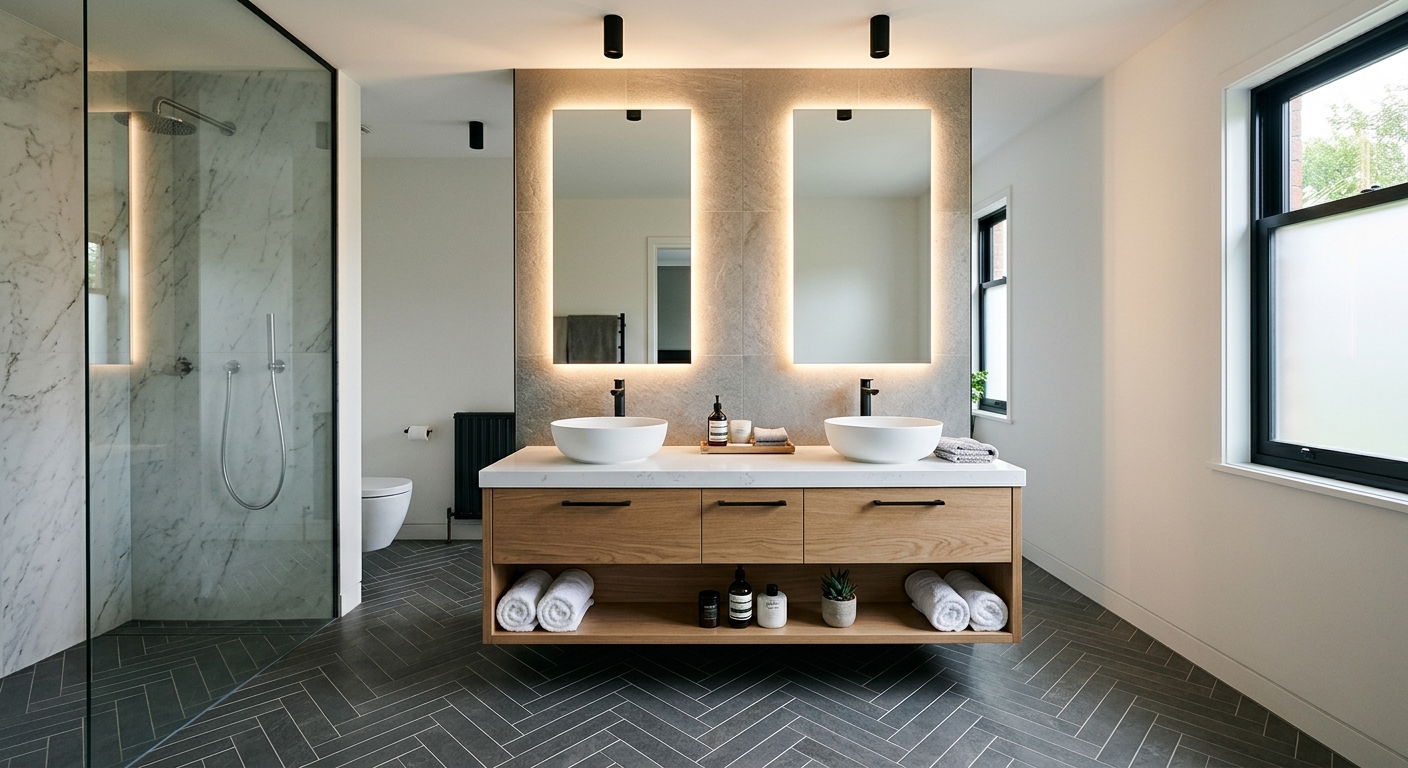
Bathroom renovation options and costs in Huntsville
In Huntsville, Ontario, bathroom renovations generally fall into a few predictable cost lanes: cosmetic refreshes, mid-range full renos, and higher-end spa-style upgrades. A big driver is that many homes around town are older—45.3% of dwellings in the broader local profile were built before 1981—so contractors often encounter dated plumbing layouts, older drain materials, and occasionally floor-level asbestos risk (especially in older flooring/layers). That matters because Muskoka–Kawarthas is a cottage-and-residential market where schedules can be tighter in peak seasons, and trades still need to price for multi-trade coordination (plumbing, electrical, tile setting, carpentry).
From a cost perspective, Huntsville pricing is less about extreme weather impacts on the building envelope and more about how labour-intensive the work becomes once discovery items appear. In older homes, we sometimes see cast-iron or copper drain sections, galvanized supply lines, or insufficient venting; each can push a “simple” update toward re-piping, re-venting, and added dedicated electrical for GFCI protection and fan/heated-floor wiring. Availability is also shaped by local demand in areas like Algonquin Heights and along the Highway 60 corridor, where steady in-town turnover and cottage adjacency keep tile and plumbing crews booked.
Use the table below to match your goal to a realistic budget band, then we’ll break down the specific factors that swing quotes up or down in this region.
| Renovation Scope |
What's Included |
Typical Duration |
Price Range |
| Cosmetic refresh (paint, fixtures, accessories only) |
New paint, fixture swap (vanity/sink or toilet), accessories, re-caulking, deep clean & reseal of existing surfaces; no moving plumbing or major tile removal |
3–6 days |
$2,000 – $7,000 |
| Mid-range full renovation (new tile, vanity, tub/shower, electrical) |
Demo & rebuild, new vanity, tub-to-shower or tub surround, updated ventilation, GFCI bathroom circuit updates, wall & floor tile (standard layout), waterproofing system, new trim/finishes |
2–3 weeks |
$12,000 – $22,000 |
| High-end full renovation (custom tile, steam shower, heated floors) |
Premium tile detailing, custom shower or steam unit, heated floor circuit, advanced waterproofing and slope systems, higher-tier fixtures, improved lighting and trim, more complex carpentry |
3–5 weeks |
$22,000 – $28,000 |
| Shower-only installation (convert tub to walk-in shower) |
Demo of tub, new shower base or pan prep, waterproofing, new tile surround, plumbing adjustments as needed, ventilation upgrade |
1.5–3 weeks |
$4,500 – $9,000 |
| Bathtub replacement or tub-liner install |
Remove and set new tub (or liner system), rework surround edges, re-caulk/seal, plumbing hookups, basic wall refinishing as required |
4–8 days |
$800 – $2,500 |
| Tile-only installation (floor + surround, existing layout kept) |
Tile removal where needed, backer prep, waterproofing up to the shower/tub zone, install floor tile and wall surround, grout/seal, reinstall trim; no relocation of plumbing |
1–2 weeks |
$1,500 – $4,500 |
Prices are estimates only and vary by project scope, site access and material selection.
What affects the price of bathroom renovation in Huntsville
In Huntsville and across the Muskoka–Kawarthas region, two homeowners can receive quotes that differ by 30–50% for what sounds like the “same” bathroom—mainly because labour rates and discovery work track the age of the housing stock, not just finishes. In practice, the quote swings come from how much coordination and labour is required to bring older systems up to current safety expectations: rough-in plumbing, venting, and bathroom-grade electrical (GFCI protection and fan/heated-floor circuiting).
Climate plays a smaller role than most people expect. We do get Ontario humidity swings, but the real cost impact is how well the waterproofing and ventilation are executed—not whether it’s “hot” or “cold.” The bigger cost driver is that older homes often hide issues: cast-iron or aged copper drain sections may require replacement when you open walls, galvanized supply lines can be brittle, and duct routing for bath fans can be inadequate. Discovery of older asbestos-containing materials (commonly in older flooring layers or legacy compounds) can add significant time and handling costs; in budgeting terms, abatement-type scope additions often land in the $1,500 – $5,000+ range depending on extent.
Here are a few Huntsville examples that change the numbers quickly: (1) keeping the existing layout typically keeps mid-range reno budgets in the $12,000 – $22,000 band; (2) moving a vanity and changing the drain line can add rough-in plumbing time and wall opening; (3) upgrading to a larger-format porcelain tile often increases subfloor prep labour to reduce lippage; and (4) adding heated floors usually moves projects toward the higher-end full renovation range. As a baseline, the market also reflects Ontario’s current multi-trade labour market—tile setting and waterproofing labour are not “optional” if you want a long-lasting bathroom.
| Price Factor |
Why It Matters |
Cost Impact |
| Layout change — moving drain or supply lines requires rough-in work |
Cutting/rebuilding walls, rerouting plumbing, and coordinating ventilation/electrical increases labour and inspection steps |
Often +$2,000 – $7,000 |
| Tile selection — large-format porcelain vs. mosaic vs. ceramic |
Larger tiles demand flatter substrates and more careful setting; mosaics can be labour-heavy |
Often +$500 – $3,500 |
| Fixture tier — builder-grade vs. mid-range vs. designer brands |
Higher tiers cost more for materials, trim, valves, and sometimes specialty install components |
Often +$300 – $4,000 |
| Subfloor condition — rot or unlevel concrete adds scope |
Repairing subfloor, adding backer/support, and correcting slopes increases prep time |
Often +$800 – $6,000 |
| Electrical — adding GFCI outlets, exhaust fan, heated floor circuit |
New circuits and proper fan ducting/wiring require licensed electrician involvement and coordination |
Often +$600 – $3,500 |
| Waterproofing method — membrane type and extent |
The “right system” for your shower walls/floor reduces failure risk and call-backs |
Often +$500 – $2,500 |
| Older-home surprises — asbestos tile, cast-iron drains, galvanized pipes |
Abatement, pipe replacements, and added disposal work raise both time and cost |
Often +$1,500 – $5,000+ |
| Bathroom size — sq ft drives tile and labour time directly |
More square footage means more materials, more setting/grouting time, and longer cure/sequence |
Often +$1,000 – $6,000 |
Permits & regulations in Ontario
In Ontario, the permit picture depends on whether your bathroom reno changes plumbing, electrical, or structure. Cosmetic updates—like swapping a vanity, replacing fixtures, painting, or retiling without moving plumbing—typically do not require a permit. Where homeowners get tripped up is when “small changes” add up: relocating a toilet, moving a drain, changing valve locations, installing a new exhaust fan with new electrical wiring, or altering walls for framing/backing generally falls into work that requires permits and inspections.
Electrical must meet Ontario code. Any new circuits, fan wiring, heated floor circuits, or modifications that affect GFCI protection should be completed by a licensed electrician and, for permit-triggering electrical, inspected/documented as required. Plumbing rough-in changes (moving drain/supply lines, adding new venting, or significant repiping) generally require a permit and inspection before you close walls.
Here’s how a Huntsville homeowner can verify contractor credentials step-by-step:
- Ask for their Ontario trade licence number and confirm it through the appropriate provincial online registry.
- Request a certificate of insurance (liability) showing current coverage; don’t rely on screenshots.
- Confirm worker coverage (WSIB/WCB) documentation for trades involved, especially for multi-trade projects.
- For insured contractors, obtain a clearance letter where applicable for their specific coverage.
- Request written confirmation of permits: who pulls them, what inspections are expected, and whether they’re included.
Choosing tile, waterproofing and fixtures for your Huntsville bathroom
Three material decisions make or break your budget in Huntsville: tile choice, waterproofing approach, and fixture tier. First, tile: ceramic is usually the entry point, but it can be more forgiving for simple layouts. Mid-range porcelain holds up better in wet zones and comes with improved water resistance and durability, though it requires careful substrate prep to avoid cracking and lippage. Natural stone (marble, travertine, slate) looks premium, but it often needs more prep, sealing considerations, and extra labour—so it’s best when you want the look and are ready for the maintenance and install precision.
Second, waterproofing: paint-on membranes can work for certain surfaces when properly detailed, but in a busy Ontario bathroom, the most reliable results come from systems designed for wet-area continuity. Bonded sheet membranes or a proven tray/wall system (including modern detail methods used with wet-area backer approaches) typically reduce failure risk when installed correctly. That’s how you prevent the persistent mould issues we see when showers are under-vented or when water bypasses the waterproof layer. Third, fixtures: builder-grade saves money upfront, but mid-range or designer valves, showerheads, and proper trim often improve long-term reliability and resale appeal.
One budget reality check: if you’re choosing between standard porcelain and high-end tile with custom trim, that price difference is usually justified when it changes the layout (like niche detailing or a full-height feature wall). If you keep the layout basic and focus on function, you may get better value by spending on waterproofing quality and a ventilation upgrade first, then using mid-range porcelain on the majority of surfaces to stay within a $12,000 – $22,000 mid-range target. For heated floors and more complex shower builds, the same approach can push you toward the $22,000 – $28,000 band.
| Material / Option |
Pros |
Cons |
Price Range |
| Ceramic tile (floor + walls) |
Lower material cost, good for straightforward installs; wide design selection |
Typically less durable than porcelain in heavy wet zones; may show wear sooner |
$1,500 – $3,000 |
| Porcelain tile (floor + walls) |
Higher durability and water resistance; excellent for modern large-format layouts |
Requires flatter substrates; premium looks usually cost more per box |
$2,500 – $4,500 |
| Natural stone (marble, travertine, slate) |
Luxury look and texture; can elevate resale appeal |
More labour and sealing/maintenance considerations; cuts/finishes can add waste |
$4,000 – $7,500 |
| Frameless glass shower enclosure |
Modern appearance, easier to keep clean; good for smaller baths visually |
Higher material cost; requires accurate framing and waterproofing details |
$1,500 – $4,500 |
| Prefab tub surround (acrylic) |
Quicker install; fewer tile-setting variables; consistent fit |
More limited design options; may not match high-end tile aesthetics |
$800 – $2,500 |
| Custom shower pan (tile or linear drain) |
Improved functionality and drainage; luxury feel; reduces pooling risk |
More complex slope prep and waterproofing detailing; longer schedule |
$4,500 – $9,000 |
How to choose a bathroom renovation contractor in Huntsville
Choosing the right contractor in Huntsville comes down to verification and paperwork discipline. Start by asking for their Ontario trade licence details for the trades involved, plus proof of liability insurance. Then confirm WSIB/WCB coverage—especially important in multi-trade builds where carpentry, plumbing, and electrical are happening in sequence. How to check: request the documents up front, ensure they are current (not expired), and match the insured company name to the contractor on your agreement.
Next, get 2–3 itemised written quotes—not just lump sums. You want line items for demolition, waterproofing system, tile labour, plumbing rough-in changes, electrical scope, ventilation/fan work, disposal, and any permit-related work. Read the scope carefully: what’s excluded (e.g., moving drywall, replacing subfloor, niche builds), whether permits are included, and whether material disposal and site cleanup are part of the price. Warranty matters: ask for the workmanship warranty length (how long they stand behind install quality), plus manufacturer/product warranty terms for tile, membranes, fixtures, and the shower system. Ask if the warranty is transferable to future homeowners.
Finally, insist on a fair payment schedule. Never pay more than about 10–15% upfront; use staged payments tied to completed milestones (demo completion, rough-in inspection pass, waterproofing ready, tile/grout complete). Get a written timeline with a start date and completion estimate.
- Verify Ontario trade licence and the specific trade categories relevant to the work.
- Confirm current liability insurance (certificate of insurance) before work begins.
- Confirm WSIB/WCB coverage for workers doing the renovation.
- Require itemised pricing (labour + materials) rather than a single lump sum.
- Check what’s included in demolition, disposal, and hauling.
- Ask who pulls permits and whether inspections are included.
- Confirm waterproofing system brand/type and who is responsible for correct detailing.
- Get details on substrate prep (subfloor leveling, backer board, slope correction).
- Ask for ventilation plan: exhaust fan size/ducting and placement.
- Confirm electrical scope includes GFCI and correct fan/heated-floor circuit details.
- Review workmanship warranty terms in writing; include warranty start date and coverage.
- Set milestone-based payments and keep a holdback until final walkthrough.
Concrete red flags we see in Huntsville include: contractors who won’t provide licence/insurance documents; quotes with no waterproofing specification; “free” changes handled verbally with no change orders; vague timelines that skip cure times for membranes/setting materials; and payment requests that exceed 10–15% upfront or avoid staged milestones.
Frequently asked questions — bathroom renovation in Huntsville
How much does a bathroom renovation cost in Huntsville?
In Huntsville, a bathroom reno price typically depends on whether you’re doing a cosmetic refresh or a full rebuild, and whether older plumbing/electrical needs upgrading. For many homeowners keeping the layout, a mid-range full renovation lands in the $12,000 – $22,000 range, while higher-end upgrades with custom shower work and heated floors often reach $22,000 – $28,000. Cosmetic-only projects are usually far lower, but older in-town homes built before 1981 (45.3% in the local profile) can uncover hidden issues like dated drain sections, insufficient fan venting, or old wiring. If asbestos-related materials are discovered in older layers, scope and scheduling can increase materially.
How long does a bathroom renovation take in Huntsville?
Typical timelines in Huntsville range from about 3–6 days for a cosmetic refresh to around 2–3 weeks for a mid-range full renovation, and 3–5 weeks for high-end work (custom shower details, steam units, and heated floors). The pace depends on demolition complexity and how quickly rough-ins pass inspection. Older homes can add days if plumbing re-piping, venting correction, or subfloor repairs are required. Tile also adds time because waterproofing systems and thinset/grout need proper cure periods. Because scheduling can tighten in Muskoka–Kawarthas during peak months, it’s smart to book your contractor and selections early so materials arrive before you’re ready to tile.
Do I need a permit for a bathroom renovation in Ontario?
In Ontario, cosmetic upgrades—swapping fixtures, repainting, and retiling without moving plumbing—often do not require a permit. Permits are typically required when you relocate plumbing (moving drain/supply lines), install or rework exhaust fans with new electrical circuits, add heated floor wiring, or change structural elements/walls in a way that affects rough-ins. Electrical work must be completed or signed off by a licensed electrician and must meet Ontario code requirements. Plumbing rough-in changes usually require a permit and inspection before walls are closed. For your Huntsville project, ask your contractor whether they’ll pull the permit, and confirm which inspections are included in the quote.
What's the best tile for a bathroom in Huntsville?
“Best” usually means balancing durability, water resistance, and realistic installation quality. In Huntsville bathrooms, porcelain is often the sweet spot: it’s tough in wet areas and performs well for both floors and shower walls when installed over a properly prepared substrate. Ceramic can work for more budget-conscious builds, but it may wear sooner. Natural stone can be beautiful, but it generally takes more careful installation and sealing/maintenance planning. If you’re aiming for a mid-range reno budget around $12,000 – $22,000, choose porcelain for the majority of surfaces and spend any extra on better waterproofing detailing and a ventilation upgrade, which helps reduce mould risk in Ontario’s humidity.
Should I do a tub-to-shower conversion?
A tub-to-shower conversion is a popular choice in Huntsville because it can improve daily usability and often simplifies cleaning. It’s especially worth considering if your tub surround is tired, if you’re planning new waterproofing anyway, or if you’re looking to reduce future maintenance. Converting typically falls around the $4,500 – $9,000 range depending on how much plumbing needs to move, what shower base/pan you choose, and whether you add a linear drain or enclosure. The trade-offs: you lose bathing options unless you add a niche or consider a smaller tub alternative. In older homes, the decision also depends on drain conditions and venting—discovery can increase scope, so plan for contingencies.
How do I prevent mold in a Huntsville bathroom?
Preventing mould in Huntsville comes down to waterproofing continuity and ventilation performance. Start with a properly detailed waterproofing system in the wet zone (shower walls/floor and transitions), correctly layered to prevent water migration behind walls. Next, ensure ventilation is sized and vented correctly—an exhaust fan that actually moves air out of the home is crucial in Ontario’s humidity cycles. Use proper caulking at changes of plane (tub/shower edges, corners, fixtures) and avoid shortcuts like cutting corners on membrane coverage. Finally, control moisture habits: run the fan during and after showers and fix leaks quickly. In older homes built before 1981, confirm the fan ducting and electrical protection are up to code during your renovation.