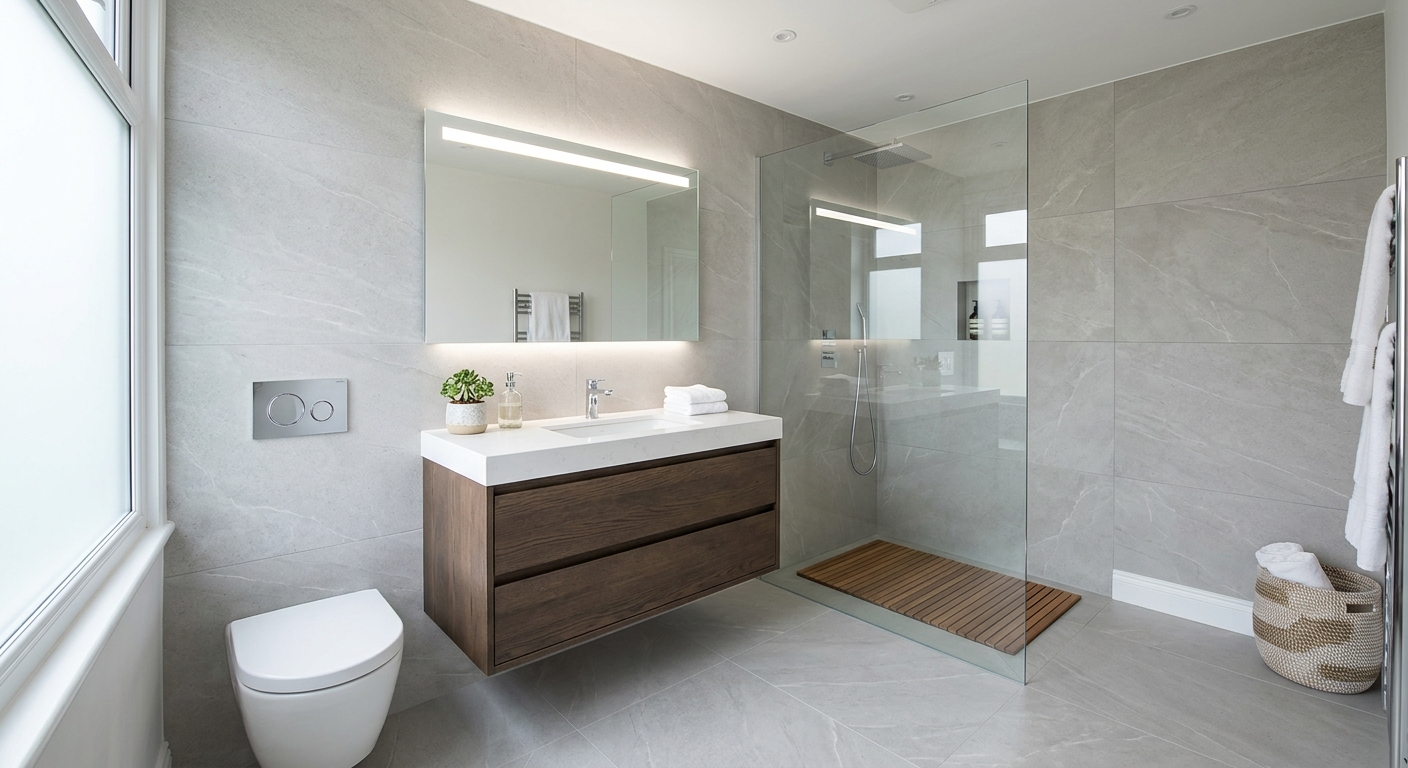
Bathroom renovation options and costs in Beechborough-Greenbrook
Bathroom renovation in Beechborough-Greenbrook usually starts with deciding how much you want to change. In a community of 6,577 residents (Statistics Canada, 2021 Census), many bathrooms are in older homes where original pipe routes, venting, and subfloor conditions haven’t been updated in decades. In the wider Toronto area, post-war and 1960s–1980s housing stock is common, which often means dated drain stacks, undersized venting, or earlier waterproofing that never truly matched today’s expectations for a tiled shower. That’s where “same bathroom” quotes can land far apart—because once walls are open, hidden conditions like cast-iron drains, galvanized supply lines, or older wiring remnants may need attention.
Toronto-area labour is also a major cost driver. Skilled trades command a premium hourly rate, and bathroom work is labour-intensive—especially for tiling, custom shower builds, and complex plumbing layouts. Even though Ontario’s climate doesn’t dramatically change bathroom pricing compared to labour and housing age, it does raise the importance of good ventilation and moisture control. If you’re in a neighbourhood where older bungalow stock is prevalent—such as the mature streets around the older commercial spines and residential pockets of Greenbrook—contractors often see high demand for walk-in showers and tile upgrades.
With that in mind, here are practical budget ranges for typical Beechborough-Greenbrook project types, and how long they usually take before you compare quotes with the same scope.
| Renovation Scope |
What's Included |
Typical Duration |
Price Range |
| Cosmetic refresh (paint, fixtures, accessories only) |
Paint, replace vanity top or vanity (no plumbing relocation), toilet/accents if existing connections allow, towel bars, caulking refresh, minor trim and lighting faceplates |
2–5 days |
$2,500–$6,000 |
| Mid-range full renovation (new tile, vanity, tub/shower, electrical) |
Remove existing finishes, tile floor and tub surround, new vanity and toilet, reglaze/replace tub or install tub kit, exhaust fan upgrade, GFCI-ready electrical, waterproofing system, disposal and subfloor patching if needed |
2–3 weeks |
$12,000–$22,000 |
| High-end full renovation (custom tile, steam shower, heated floors) |
Custom shower/tub build, premium tile setting with complex layouts, heated floors circuit, higher-end fixtures, frameless glass, enhanced waterproofing and niche systems, electrical upgrades and deeper substrate prep |
3–5 weeks |
$22,000–$30,000 |
| Shower-only installation (convert tub to walk-in shower) |
Remove tub, install walk-in shower pan and waterproofing, tile floor and walls, new valve trim, exhaust fan check/upgrade, new drain connections as required to current practice |
1.5–3 weeks |
$6,500–$14,500 |
| Bathtub replacement or tub-liner install |
Swap old tub for new unit (or install tub-liner where suitable), new trim and seals, drain/overflow connection adjustments, wall re-caulking and touch-up tile repairs |
3–8 days |
$1,200–$3,500 |
| Tile-only installation (floor + surround, existing layout kept) |
Demo and reset tile surfaces, waterproofing for wet walls, grout and sealing, minor cement board replacement, surface prep and leveling |
1.5–3 weeks |
$3,000–$10,000 |
Prices are estimates only and vary by project scope, site access and material selection.
What affects the price of bathroom renovation in Beechborough-Greenbrook
Homeowners in Beechborough-Greenbrook often get sticker shock when comparing quotes for the “same” bathroom remodel, because Toronto-region pricing can vary by 30–50% even when the visible finishes look similar. The biggest reason is not the season or “climate,” but labour rates and the realities of older housing. In the Toronto economic region, bath renovations are labour-intensive—tiling, waterproofing, and plumbing modifications aren’t quick trades, so skilled hourly rates matter more than material price alone.
Age of local housing stock also drives the scope. Older homes frequently hide cast-iron or copper drain stacks that need upgrading, plus galvanized supply lines that can complicate shut-offs and fittings. Venting can be a surprise too: bringing drain and venting to current Ontario practice may require drain reconfiguration, new vent corrections, and additional shut-offs. That’s a major contributor to budgets sitting above national averages. And if asbestos-containing materials are discovered—often in older vinyl floor tile or older compounds—abatement can add roughly $1,500–$5,000+ depending on what’s affected and how much containment is required.
Two practical examples from Beechborough-Greenbrook: (1) keeping your existing tub valve and drain in place can reduce labour because fewer rough-in changes are needed; a full mid-range reno may land near the $12,000–$22,000 band instead of climbing toward $22,000–$30,000. (2) upgrading waterproofing from basic surface prep to a proper membrane system increases material and labour, but it’s usually cheaper than mid-wall leaks later—especially with Ontario humidity cycles and occasional winter freeze-thaw stress on grout lines. Finally, bathroom size drives tile area and labour time directly, so a change from 40 sq ft to 60 sq ft is not “just more tile”—it’s more set time, more backer work, and longer cure periods.
| Price Factor |
Why It Matters |
Cost Impact |
| Layout change — moving drain or supply lines requires rough-in work |
Wall openings, re-plumbing, venting review, and patching drive both labour and permitting |
Often adds $2,000–$8,000 depending on distance and access |
| Tile selection — large-format porcelain vs. mosaic vs. ceramic |
Harder cuts, more complex patterns, and slower setting increase labour time and waste |
Typical swing $1,000–$5,000 on a full bath tile scope |
| Fixture tier — builder-grade vs. mid-range vs. designer brands |
Valve trim, toilet systems, and vanity quality affect material cost and sometimes installation complexity |
Usually $500–$4,500 difference depending on brand/finish |
| Subfloor condition — rot or unlevel concrete adds scope |
Needs substrate repair, additional board/membrane layers, and re-leveling |
Commonly $500–$3,500 if discovered after demo |
| Electrical — adding GFCI outlets, exhaust fan, heated floor circuit |
Licensed electrical work, new wiring runs, and safe placement around wet zones |
$800–$4,000 depending on circuits and finishes |
| Waterproofing method — membrane type and extent |
Proper coverage and system details reduce risk of leaks and mould |
Often $600–$2,500 incremental but protective |
| Older-home surprises — asbestos tile, cast-iron drains, galvanized pipes |
Abatement, drain stack repairs, and plumbing replacement expand timeline and cost |
Can add $1,500–$10,000+ if extensive |
| Bathroom size — sq ft drives tile and labour time directly |
More area means more demo, more prep, more setting, and longer cure times |
Roughly $1,000–$6,000 swing across typical sizes |
Permits & regulations in Ontario
In Ontario, many “refresh” projects don’t require permits, but anything that changes the plumbing, electrical, or structure usually does. For Beechborough-Greenbrook homeowners, a safe way to think about it is: cosmetic updates rarely trigger permits, while moving systems does. Swapping a vanity, replacing a toilet (if connections match and no rough-in changes are required), repainting, or retiling an existing layout typically fall into the “no permit” bucket—provided you’re not altering plumbing routes or the electrical layout.
Permits are commonly required when you relocate plumbing (moving drains or supply lines), add or modify exhaust fans with new circuits, or make structural wall changes. Electrical work must meet Ontario code and be performed by (or signed off by) a licensed electrician. Plumbing rough-in changes typically require a permit and inspection as well. Also, if you uncover regulated materials (like asbestos-containing finishes in older assemblies), abatement must be handled properly before finishes are closed up.
To verify a contractor in Beechborough-Greenbrook step-by-step, ask for three things before work starts: (1) proof of the correct Ontario trade licence (or licence number details, where applicable), (2) certificate of insurance that includes liability coverage (and vehicle coverage if relevant), and (3) proof of WSIB/WCB coverage for their workers. You can also verify licences and insurance documentation via contractor registries online (for licensing) and by reviewing the certificate of insurance directly—make sure the document is current and matches the company name on the quote. If they can provide a clearance letter for coverage when requested, that’s a strong sign they run organized, compliant jobs.
Choosing tile, waterproofing and fixtures for your Beechborough-Greenbrook bathroom
In Beechborough-Greenbrook, your budget is mostly shaped by three material decisions: tile choice, waterproofing method, and fixture tier. First, tile selection: ceramic is usually the entry-level option and can be cost-effective for smaller projects, but it’s less forgiving on variation and can require more careful layout planning. Porcelain (mid-range) is denser, often more consistent in size, and usually performs better in wet environments for both floor and wall applications. Natural stone (marble, travertine, slate) looks exceptional, but it adds labour for careful setting and selection, plus sealing and maintenance considerations—so it’s best when you’re intentionally going high-end.
Second, waterproofing: paint-on membranes are often faster for certain repairs, but for full wet-area work many homeowners are better served by a bonded sheet membrane or a modern system approach. In Ontario humidity cycles—especially when ventilation isn’t ideal—waterproofing details are what prevent mould and odours from showing up in grout lines or at the corners.
Third, fixture tier: builder-grade fixtures can reduce upfront cost, while mid-range or designer brands often justify the spend through smoother valves, better finishing, and better long-term performance. For example, moving from mid-range tile and standard wall surrounds to a custom shower build with premium porcelain, upgraded waterproofing, and heated flooring can push a project toward the upper end of the $22,000–$30,000 band, but it’s usually justified when you’re replacing a tub-to-shower configuration and want longevity.
If your goal is value, you can often aim for a mid-range full renovation around the $12,000–$22,000 band while still upgrading the “must-not-fail” items—waterproofing, slope/drain details, and ventilation—then select tile in a smart porcelain range that won’t force you into the most labour-heavy layout options.
| Material / Option |
Pros |
Cons |
Price Range |
| Ceramic tile (floor + walls) |
Lower material cost, good for straightforward layouts, wide variety of looks |
More variation can require careful matching; may be less robust than porcelain for floors depending on product |
$3,000–$6,500 |
| Porcelain tile (floor + walls) |
Durable for wet areas, consistent sizing, strong selection of modern large-format options |
Higher material cost; large-format adds cutting and layout labour |
$5,000–$9,500 |
| Natural stone (marble, travertine, slate) |
Premium look, unique veining and texture, high design value |
Sealing and maintenance; harder to set; may need extra planning for tile thickness and tolerances |
$8,000–$14,000 |
| Frameless glass shower enclosure |
Clean, modern look; improves perceived space; durable hardware options |
Requires very flat, true waterproofed surfaces; hinges/door add cost |
$2,500–$6,500 |
| Prefab tub surround (acrylic) |
Fast installation, waterproofed surfaces by design (when installed correctly), easier budgeting |
Limited design customization; can look less “boutique” than full tile |
$1,200–$3,500 |
| Custom shower pan (tile or linear drain) |
Best look for long-term use; supports slope and drainage you can detail correctly; linear drains modernize the build |
More labour; requires careful waterproofing and drain precision |
$4,000–$12,000 |
How to choose a bathroom renovation contractor in Beechborough-Greenbrook
Start by verifying Ontario compliance the way a contractor would want to be verified. Ask for their Ontario trade licence details, a certificate of liability insurance (confirm coverage is active and the company name matches the quote), and WSIB/WCB coverage for their workers. Where to check: for licensing, use the appropriate Ontario online registry tools and confirm the number/firm name; for insurance and clearance, request documents before demo day and review them for validity dates. If they can’t provide current proof immediately, treat that as a scheduling risk.
Next, get 2–3 itemised written quotes rather than one lump-sum number. An itemised quote should show labour and materials separately for demo, framing/cement board, waterproofing, tile setting, plumbing rough-in (if any), electrical, disposal, and finishing touches. Confirm whether permits are included or if they’re a separate line item. Also ask what’s excluded: for example, is asbestos abatement included only if discovered, or is it handled as an add-on? Make sure disposal (old tile, fixtures, and construction waste) is stated clearly.
Warranty matters in a wet-area job. Look for a workmanship warranty length in writing (often at least a year, but longer is better), and understand whether it covers labour for leaks or just materials. Separate product/manufacturer warranties apply to tile, membranes, and fixtures. Clarify whether warranties are transferable if you sell your home.
For payment, never pay more than 10–15% upfront, and hold back a portion until completion and punch-list items are done. Finally, insist on a written start date and a completion estimate that accounts for cure times and waterproofing schedules—so the timeline isn’t “best case.”
- Ask for proof of Ontario licensing and verify it matches the company on the contract.
- Request a current liability insurance certificate and confirm coverage limits.
- Verify WSIB/WCB coverage (or a clearance letter where requested) before demo.
- Use itemised quotes: labour vs materials, not a single number.
- Confirm waterproofing method and membrane brand/system in writing.
- State whether permits are included and who pulls them.
- Confirm disposal is included (construction waste, old fixtures, tile and drywall).
- Get details on substrate prep: subfloor leveling, cement board thickness, and patching.
- Clarify electrical scope: exhaust fan tie-in, GFCI outlets, and heated floor circuit.
- Ask about timeline impacts: cure times, glass lead times, and inspection dates.
- Verify warranty terms for workmanship and whether manufacturer warranties apply.
- Payment schedule: limit upfront payment to 10–15%, with a holdback until completion.
Red flags in Beechborough-Greenbrook bathroom projects: contractors who won’t show their insurance/coverage documents up front; quotes that hide waterproofing details behind vague language (“we’ll waterproof it”); refusing to provide an itemised scope or permit responsibility; asking for large upfront deposits beyond 10–15%; and no clear warranty in writing—especially for wet-area work where leaks would be costly.
Frequently asked questions — bathroom renovation in Beechborough-Greenbrook
Should I do a tub-to-shower conversion?
In Beechborough-Greenbrook and across Ontario, a tub-to-shower conversion is a popular choice when you want easier daily use, better accessibility, or more modern styling. It also pairs well with improved waterproofing and ventilation, which helps reduce moisture issues. Budget-wise, a shower-only installation (converting tub to a walk-in shower) typically lands around $6,500–$14,500, but the final number depends on drain access, valve location, and whether venting or plumbing upgrades are needed after demo. If your home’s plumbing layout is older, there’s a real chance the drain work expands to meet current practice. If you’re planning to sell, it can also improve perceived usability for many buyers.
How do I prevent mold in a Beechborough-Greenbrook bathroom?
Mould prevention comes down to controlling moisture and sealing the wet-area envelope. Start with a correctly sized, properly vented exhaust fan ducted to the outdoors, plus good bathroom air exchange—especially important in humid shoulder seasons. Next, choose a waterproofing system that matches the way your shower/bath gets built (membrane coverage on wet walls, correct slope to the drain, and proper detailing at corners and niches). Finally, use ventilation run-time and humidity practices after showers. In older Beechborough-Greenbrook homes, poor substrate prep or aging tile grout is a common contributor, so ensure the contractor addresses subfloor issues and uses the correct membrane method. A thorough job typically supports long-term dryness within $12,000–$22,000 mid-range full renovation budgets, rather than relying on surface caulking alone.
What adds the most resale value in a bathroom reno?
Across Ontario, the biggest resale value usually comes from functional upgrades, not just look-and-feel. Buyers respond positively to a clean, modern layout; reliable fixtures; good lighting; and a properly built shower that doesn’t feel “temporary.” In practice, the highest perceived value additions are waterproofing quality, a safe and modern exhaust setup, and sensible tile finishes. If your current bath is dated and hard to maintain, converting a tub to a walk-in shower can be a strong upgrade. You can see how this aligns with typical costs: mid-range full renovations often sit in the $12,000–$22,000 range, while more extensive custom builds with heated floors and premium systems move toward $22,000–$30,000. The ROI depends on your neighbourhood’s buyer expectations and how much you correct older plumbing/venting issues discovered once walls come off.
Can I keep my existing plumbing layout to save money?
Yes—keeping the existing plumbing layout is one of the most effective ways to control cost in Beechborough-Greenbrook, especially in older Toronto-area homes where hidden pipe routes and venting details can add scope once walls are open. When you don’t move drain or supply lines, you reduce rough-in work and patching, which typically keeps you closer to the mid-range band (often $12,000–$22,000 for a full reno with new tile and fixtures). If you only change finishes (tile, vanity, toilet, lighting) and don’t relocate plumbing, permits may be less likely, depending on the exact electrical and venting work. You’ll still need careful waterproofing and substrate prep, but avoiding layout changes is usually the most predictable money-saving strategy.
How much does a walk-in shower cost in Beechborough-Greenbrook?
A walk-in shower cost in Beechborough-Greenbrook generally depends on whether you’re keeping the existing drain/valve location, how complex the tile layout is, and whether you’re adding features like a linear drain or frameless glass. For many homeowners converting from a tub, shower installation ranges around $4,000–$12,000 for the shower work itself, and when you add full bathroom finish scope and electrical/ventilation upgrades, budgets commonly reach the $12,000–$22,000 mid-range full renovation band. If hidden plumbing issues are discovered—such as cast-iron drains or undersized venting—there can be additional cost for reconfiguration. A clear scope that specifies the waterproofing system, drain type, and glass can help you compare quotes properly.
What's the ROI on a bathroom renovation?
ROI varies by condition of the home, how dated the current bathroom is, and what buyers in the Toronto region will pay for. In practice, renovations that improve safety, water management, and day-to-day usability tend to perform best—especially when they address older plumbing/venting realities uncovered during demo. If you’re budgeting within the mid-range $12,000–$22,000 range, you’re often targeting the “buyer-ready” zone: durable tile and waterproofing, modern lighting and exhaust, and reliable fixtures. Going higher into $22,000–$30,000 can make sense when you’re adding heated floors, premium tile, and custom shower systems, but not every market segment values those features equally. The surest way to protect ROI is to spend on waterproofing quality and workmanship, then choose finish levels that fit your home and your buyer pool.