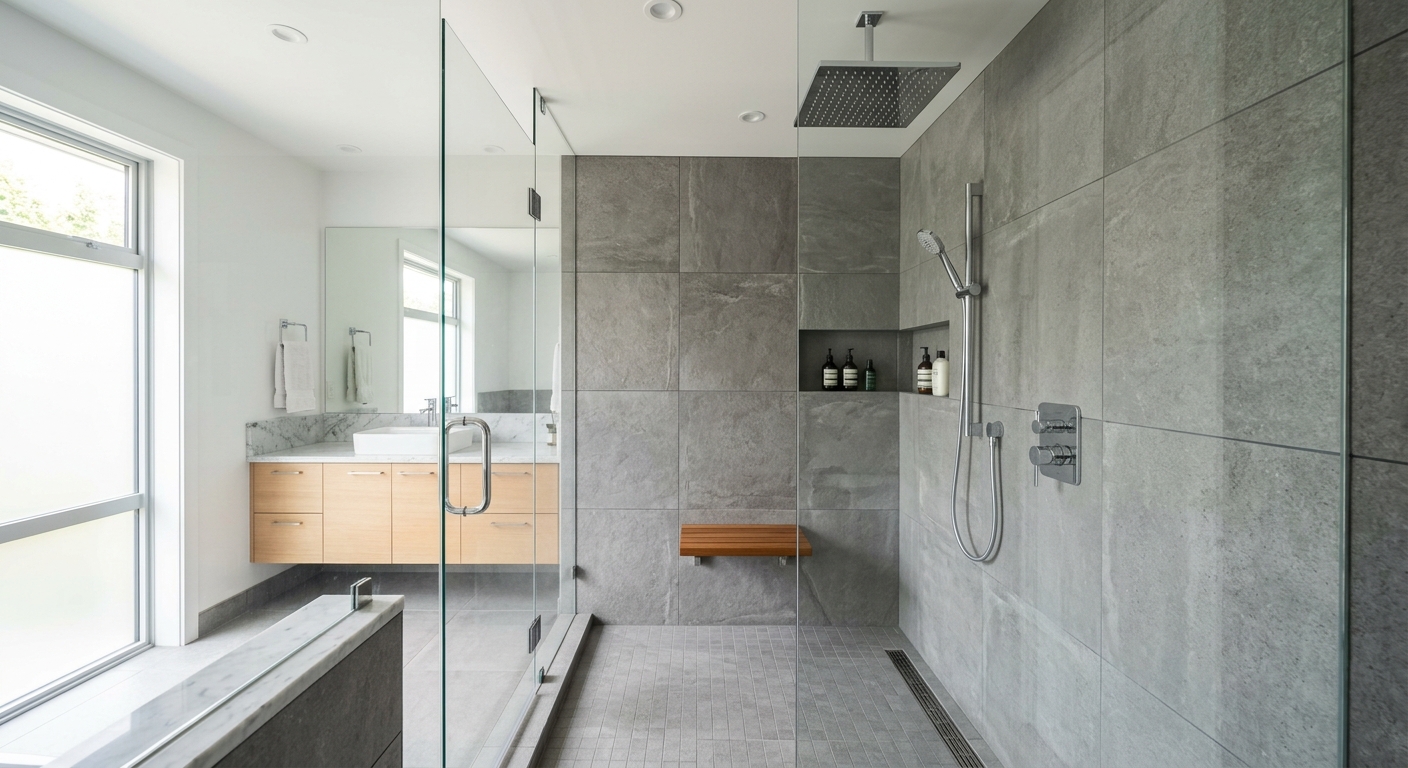
Bathroom renovation options and costs in Corso Italia-Davenport
Bathroom renovations in Corso Italia-Davenport, Ontario are shaped less by climate swings and more by what typically hides behind older walls and floors. In the Toronto economic region, the local housing base is heavily represented by mid-century builds, and many bathrooms were designed for different plumbing and ventilation expectations than today’s code. With a population of 14,133 (Statistics Canada, 2021 Census), this neighbourhood has a steady stream of homeowners renovating in occupied homes, which increases scheduling pressure but also keeps trade availability competitive. The biggest cost driver is often labour: tiling, waterproofing, and re-plumbing are detail work that can’t be rushed, especially when contractors must bring drainage, venting, and shut-offs up to current Ontario requirements.
Toronto’s market also affects pricing through demand and premium GTA rates. The same renovation can land 30–50% apart across the region because contractors price for risk: older post-war and 1960s–1980s layouts can include cast-iron or undersized drains, galvanized supply lines, and weak venting. On top of that, discovery of asbestos-containing materials—commonly in pre-1985 floor tile or mastic—can add several thousand dollars once licensed abatement is required. Even when the “design” is simple, the opening phase can expand scope quickly, and that’s why realistic budgets in Corso Italia-Davenport often sit above national averages.
To help you compare options safely, the table below shows the most common scopes, what’s included, typical duration, and price ranges for this part of Toronto—then you can discuss your exact hidden-condition risk with your contractor.
| Renovation Scope |
What's Included |
Typical Duration |
Price Range |
| Cosmetic refresh (paint, fixtures, accessories only) |
Paint, replace vanity top or vanity, swap toilet/faucet (if supply/drain points stay the same), lighting refresh, accessories, caulking and re-grouting as needed |
3–7 days |
$6,500–$12,000 |
| Mid-range full renovation (new tile, vanity, tub/shower, electrical) |
Demo and disposal, new tub/shower surround or shower walls, floor tile, vanity and mirror, exhaust fan, GFCI outlet where required, basic plumbing reconnects, waterproofing system |
2–3 weeks |
$16,000–$24,500 |
| High-end full renovation (custom tile, steam shower, heated floors) |
Custom layout refinements, premium waterproofing and tile system, heated floor wiring/mats, designer fixtures, steam shower components, upgraded electrical and ducting as needed, higher-end vanity and hardware |
3–5 weeks |
$24,000–$35,000 |
| Shower-only installation (convert tub to walk-in shower) |
Remove tub, install walk-in shower pan or waterproofed base, tile walls and niche, new glass or curtain option, reconfigure drain, add/upgrade exhaust and controls |
2–3 weeks |
$12,500–$21,500 |
| Bathtub replacement or tub-liner install |
Remove and replace tub and reconnect fixtures (or liner install), surface prep, new caulking/silicone, minor tile touch-ups, plumbing re-seat, leak testing |
5–10 days |
$3,000–$7,500 |
| Tile-only installation (floor + surround, existing layout kept) |
Tile removal and reset (where needed), floor and wall tile install, waterproofing upgrade if required, grout/seal, minimal fixture relocation only |
1–2 weeks |
$7,500–$16,500 |
Prices are estimates only and vary by project scope, site access and material selection.
What affects the price of bathroom renovation in Corso Italia-Davenport
If you’re getting multiple quotes in Corso Italia-Davenport for the “same” bathroom, it’s common to see a 30–50% spread. The reason isn’t the tile brand—it’s the labour intensity and how the contractor prices unknowns. In the Toronto economic region, skilled trades command premium hourly rates, and bathrooms are labour-heavy when you factor in accurate waterproofing, tile layout, and plumbing detailing. Climate isn’t the main driver here, but Ontario humidity means ventilation and moisture management have to be done correctly; shortcuts can show up as mould within a few seasons, which often forces costly repairs later.
Older housing stock drives scope changes more than anything else. In the Toronto region, it’s not unusual to encounter cast-iron or copper drain stacks, undersized drains, galvanized supply lines, and ventilation that doesn’t meet today’s expectations. When walls are opened, that can mean drain reconfiguration and vent corrections—commonly several thousand dollars—plus new shut-offs and tested connections. Asbestos risk can also expand the budget: discovery of asbestos-containing materials in vinyl floor tile or older drywall compounds (often pre-1985) typically triggers licensed abatement. That’s one reason a bathroom that looks like a straightforward mid-range refresh can shift into a full renovation budget (for example, moving toward the $16,000–$24,500 range) once remediation is required.
Two quick examples from Corso Italia-Davenport: (1) a tub-to-shower conversion may start as a shower installation, but if the existing drain needs slope correction and venting adjustments, the final cost can track toward the upper end; (2) if your subfloor is unlevel or shows rot, the contractor may need to rebuild framing before tiling—turning a “tile-only” plan into a more involved scope. Those are the trade-offs behind the broad bands you’ll see for shower-only work ($4,000–$12,000 nationally, but higher-end GTA realities often land in the local $12,500–$21,500 band) and full renovations ($12,000–$30,000 for this tier, with high-end finishes moving upward).
| Price Factor |
Why It Matters |
Cost Impact |
| Layout change — moving drain or supply lines requires rough-in work |
Plumbing re-routing adds labour, materials, and coordination with inspections |
Often +$3,000–$10,000 depending on distance and venting needs |
| Tile selection — large-format porcelain vs. mosaic vs. ceramic |
Larger formats need flatter substrates; mosaics create more cuts and labour time |
Typically +$1,500–$6,000 (materials + install complexity) |
| Fixture tier — builder-grade vs. mid-range vs. designer brands |
Higher tiers cost more and may require upgrades to valves, valves covers, and trim kits |
Usually +$800–$5,000 |
| Subfloor condition — rot or unlevel concrete adds scope |
Correcting structure issues is necessary before waterproofing and tile placement |
Often +$1,500–$7,500 |
| Electrical — adding GFCI outlets, exhaust fan, heated floor circuit |
Requires licensed electrical work and proper circuit planning |
Typically +$600–$4,500 |
| Waterproofing method — membrane type and extent |
More robust systems cost more but reduce mould risk and call-backs |
Usually +$1,000–$4,000 |
| Older-home surprises — asbestos tile, cast-iron drains, galvanized pipes |
Abatement and plumbing upgrades add licensed work and demolition scope |
Commonly +$1,500–$15,000+ |
| Bathroom size — sq ft drives tile and labour time directly |
More wall and floor surface increases layout time, thinset, and tile labour |
Roughly +$2,000–$8,000 across typical size differences |
Permits & regulations in Ontario
In Ontario, cosmetic updates in a bathroom—like swapping fixtures, retiling without moving plumbing, replacing a vanity, or painting—rarely need a permit. Permits usually become relevant when you change the plumbing or electrical scope. For example, relocating plumbing (moving a drain or supply line), adding or upgrading ventilation with new ducting, or making structural wall changes typically requires permits and inspections. Electrical work must meet Ontario code and be performed by a licensed electrician (or signed off through the proper channel). Any plumbing rough-in changes almost always require a permit and inspection before walls are closed.
For homeowners in Corso Italia-Davenport, the practical approach is to verify three things before signing: (1) the contractor’s trade licence status (where applicable), (2) liability insurance, and (3) WSIB/WCB coverage for the workers on site. Step-by-step: ask for their certificate of insurance and confirm the coverage limits match the job scope; request a clearance letter where applicable; and for licensing, verify using the province’s public registry tools. If they can’t provide documents quickly—or provide a “we’re covered through a partner” explanation without proof—pause. Also ask whether permit pulling is included in the quote, who schedules inspections, and who covers re-inspection costs if something fails. This is how you avoid delays and budget creep once the work is underway.
Choosing tile, waterproofing and fixtures for your Corso Italia-Davenport bathroom
Your biggest budget decisions in Corso Italia-Davenport are tile, waterproofing, and fixture tier—because each affects both material cost and labour complexity. First, tile choice: ceramic is an entry-level option and can be more forgiving, but it often costs more in waste and labour if your walls have imperfections. Porcelain is a mid-range sweet spot: it’s dense, durable for floors, and typically gives a cleaner look in GTA bathrooms. Natural stone (marble, travertine, slate) looks premium, but it’s harder to install and maintain and can raise labour and material costs significantly due to cutting and finishing requirements.
Second, waterproofing method: in Ontario’s real-world moisture conditions, the right system helps prevent mould and call-backs. Paint-on membranes can work for some applications, but a bonded sheet membrane or a proven system designed for shower assemblies is often preferred where a strong barrier is needed. Getting correct overlaps, cure times, and detailing around niches, corners, and penetrations matters as much as the brand.
Third, fixture tier: builder-grade fixtures can keep costs down, but mid-range and designer brands often deliver smoother valves, better finishes, and better long-term satisfaction—important for resale in the Toronto market. A practical example: if moving from ceramic to porcelain plus a better waterproofing system increases your tile and membrane line by about $2,000–$4,500, that’s often justified when it prevents premature grout issues and uneven adhesion after years of humidity exposure. Conversely, jumping straight to natural stone without upgrading waterproofing is rarely a smart trade-off.
Match your budget to your situation: if you’re doing a shower conversion, allocate more toward waterproofing and tile installation quality; if you’re keeping the layout and only refreshing, choose durable mid-range surfaces and focus savings on fixtures rather than shortcuts to the shower barrier.
| Material / Option |
Pros |
Cons |
Price Range |
| Ceramic tile (floor + walls) |
Entry-level cost, good variety of colours, easier to cut than many porcelains |
Lower density vs porcelain (wear varies), more attention needed on substrate flatness for larger panels |
$3,000–$7,000 |
| Porcelain tile (floor + walls) |
High durability, consistent look, better for floors and wet areas, strong long-term performance |
More expensive material cost; large-format still demands very flat surfaces |
$5,000–$10,000 |
| Natural stone (marble, travertine, slate) |
Luxury appearance, unique character, strong resale appeal |
Higher labour for templating and cutting, sealing/maintenance required, can be inconsistent |
$8,000–$18,000 |
| Frameless glass shower enclosure |
Modern, “bigger room” look, durable hardware options, easier to clean than curtains |
Requires precise framing and waterproofing details; upgrades can add cost quickly |
$2,000–$6,000 |
| Prefab tub surround (acrylic) |
Fast installation, consistent surfaces, often lower labour vs full tile |
Less custom look; seams and system compatibility matter for long-term durability |
$1,200–$3,500 |
| Custom shower pan (tile or linear drain) |
Highest customization, sleek linear drain options, premium wet-area performance when built correctly |
More labour and detailing; must be paired with the right waterproofing and slope plan |
$4,000–$12,000 |
How to choose a bathroom renovation contractor in Corso Italia-Davenport
Choosing the right contractor in Corso Italia-Davenport comes down to documentation, clarity, and workmanship discipline. Start by verifying Ontario licensing where applicable, then confirm liability insurance and WSIB/WCB coverage. How to check: request their certificate of insurance (with coverage limits listed) and ensure it’s current; ask for a WSIB/WCB clearance letter or evidence of coverage for the trades involved; and confirm the trade licence information through Ontario’s public registry tools. If they can’t provide these items quickly, it’s a red flag.
Next, get 2–3 itemised written quotes, not lump sums. The quote should break out labour and materials separately (demo, framing repairs, waterproofing, tile setting, electrical/plumbing connections, glass installation, disposal). Read the scope carefully: what is excluded (subfloor rebuild, specialty tile cuts, niche changes), does the contractor pull permits, and is disposal included? Clarify warranty terms: workmanship warranty length, product/manufacturer warranty coverage, and whether warranties are transferable if you sell the home.
Finally, protect your cash flow. Never pay more than 10–15% upfront; use a holdback tied to completion and walkthrough punch-list. Demand a start date and an estimated completion timeline in writing, including milestones like rough-in inspection, waterproof inspection (where applicable), and tile/grout completion. A well-run bathroom reno depends on sequencing, not just materials.
- Verify Ontario trade licensing (where required) before the job starts.
- Confirm liability insurance is active and adequate for the project value.
- Request WSIB/WCB clearance evidence or proof of coverage for workers.
- Get 2–3 itemised quotes with labour and material breakdowns.
- Ask whether permits are included, and who schedules inspections.
- Confirm disposal/hauling is included (not “by others”).
- Make sure waterproofing type and coverage area are specified in writing.
- Ensure tile scope includes prep requirements (flattening, backer, substrate repairs).
- Review allowance items (fixtures, glass, vanities) and what brand/model is assumed.
- Demand a workmanship warranty in writing (length and what it covers).
- Use a payment schedule with 10–15% maximum upfront and a meaningful completion holdback.
- Require an agreed timeline with start date, key milestones, and completion estimate.
Common red flags in Corso Italia-Davenport: (1) quotes that don’t mention waterproofing method or substrate prep; (2) “all-in” lump sums with no line items for plumbing/electrical/tile labour; (3) missing or outdated insurance/WSIB paperwork; (4) vague warranty language (no length, no defect coverage details); and (5) requests for large upfront payments or pressure to skip inspections and permit steps.
Frequently asked questions — bathroom renovation in Corso Italia-Davenport
What's the best tile for a bathroom in Corso Italia-Davenport?
For most Corso Italia-Davenport bathrooms, porcelain tile is the best overall balance. It’s durable for floors, holds up well to wet-area conditions, and maintains a consistent look—important in a Toronto market where bathrooms are frequently used and humidity exposure is real. If you want a warmer feel, choose a porcelain with the right slip rating rather than relying on appearance alone. Ceramic can work for wall-only areas or for tighter budgets, but floors benefit from porcelain’s density. If your shower includes a custom pan or steam components, your installer should also build a proper waterproofing system to prevent mould risk. In a realistic mid-range full renovation, flooring and surround tile often falls in the $5,000–$10,000 porcelain range, supporting the typical project band of $16,000–$24,500.
Should I do a tub-to-shower conversion?
A tub-to-shower conversion is a popular upgrade in Ontario because it improves accessibility and can modernize a dated layout without touching every room. In many Corso Italia-Davenport homes, the key question is what’s behind the tub: if the drain slope and venting are outdated, the conversion will require plumbing updates beyond just removing the tub shell. When the plumbing layout is straightforward and demolition reveals solid subflooring, it’s often a cost-effective option. Expect the scope to sit in the shower-install reality—commonly around the $12,500–$21,500 band for a walk-in shower conversion in this GTA tier. If you have young kids or prefer soaking, a tub-liner or reglaze may be better; but if maintenance and future-proofing matter, a proper walk-in shower usually pays off in daily use.
How do I prevent mold in a Corso Italia-Davenport bathroom?
Mould prevention comes from eliminating moisture traps, not just “cleaning more.” In Corso Italia-Davenport, the most effective strategy is a correctly installed waterproofing system in the shower and wet walls, with proper detailing around corners, niches, and plumbing penetrations. Pair that with a correctly sized exhaust fan vented properly (and used during and after showers). Ventilation is a big deal in Ontario bathrooms because indoor humidity can linger if airflow is weak. Also ensure grout and caulking meet expectations: joints should be grouted/caulked with the right products, and any movement must be allowed where required. When contractors use quality waterproofing and don’t rush cure times, mould risk drops significantly. If you’re starting from an older tub-to-shower or re-tile, it’s wise to budget for robust waterproofing as part of the typical $16,000–$24,500 mid-range renovation path.
What adds the most resale value in a bathroom reno?
In the Toronto market around Corso Italia-Davenport, buyers tend to pay for “risk-reducing” upgrades: a clean, modern look plus evidence the moisture system and core systems were done properly. Usually the biggest resale drivers are (1) a well-built shower with reliable waterproofing and good tile workmanship, (2) updated plumbing/electrical safety items like proper shut-offs and GFCI protection, and (3) durable finishes—porcelain tile, solid vanity components, and quality exhaust ventilation. Heated floors can be a strong add-on, especially if you’re already doing a full renovation. Because labour is the main GTA cost driver, many homeowners recover value through scope that reduces future call-backs rather than chasing the cheapest finishes. For budgeting, a reputable full renovation is often in the $12,000–$30,000 range for this tier, with higher-end upgrades pushing toward the upper portion when you add custom showers and heated floors.
Can I keep my existing plumbing layout to save money?
Yes—keeping the existing plumbing layout is one of the most reliable ways to control costs in Corso Italia-Davenport. If your drain and supply points don’t move, the contractor can focus labour on tile, waterproofing, and fixture swaps rather than full rough-in re-routing. That typically reduces demolition complexity and can avoid the permit/inspection steps that come with relocating drains or supply lines. It also lowers the chance of discovering hidden issues during major wall openings. That said, savings depend on what you discover once the walls open: older cast-iron or galvanized components may still need updating even if the fixture positions stay the same. If your plan is a “tile-only plus fixture refresh,” it can fit within the $7,500–$16,500 tile band, or you may land in the cosmetic refresh range if you’re strictly swapping accessories and surfaces.
How much does a walk-in shower cost in Corso Italia-Davenport?
In Corso Italia-Davenport, a walk-in shower typically costs more than the simple national averages because GTA pricing reflects labour intensity and older-home risk. If you’re converting from a tub, you should plan for plumbing modifications and careful waterproofing—especially if the drain slope, venting, or shut-offs need updates to meet Ontario code expectations. A realistic budget for a shower-only conversion often lands in the $12,500–$21,500 range in this tier. If you choose premium tile, a linear drain, custom glass, or heated options, you may push higher. If the shower is within a like-for-like footprint and the subfloor is solid, you can sometimes stay closer to the lower portion; if asbestos abatement or vent/drain corrections are uncovered, the job can move upward quickly. Always ask for line-item pricing on waterproofing, tile, glass, and any plumbing rough-in.