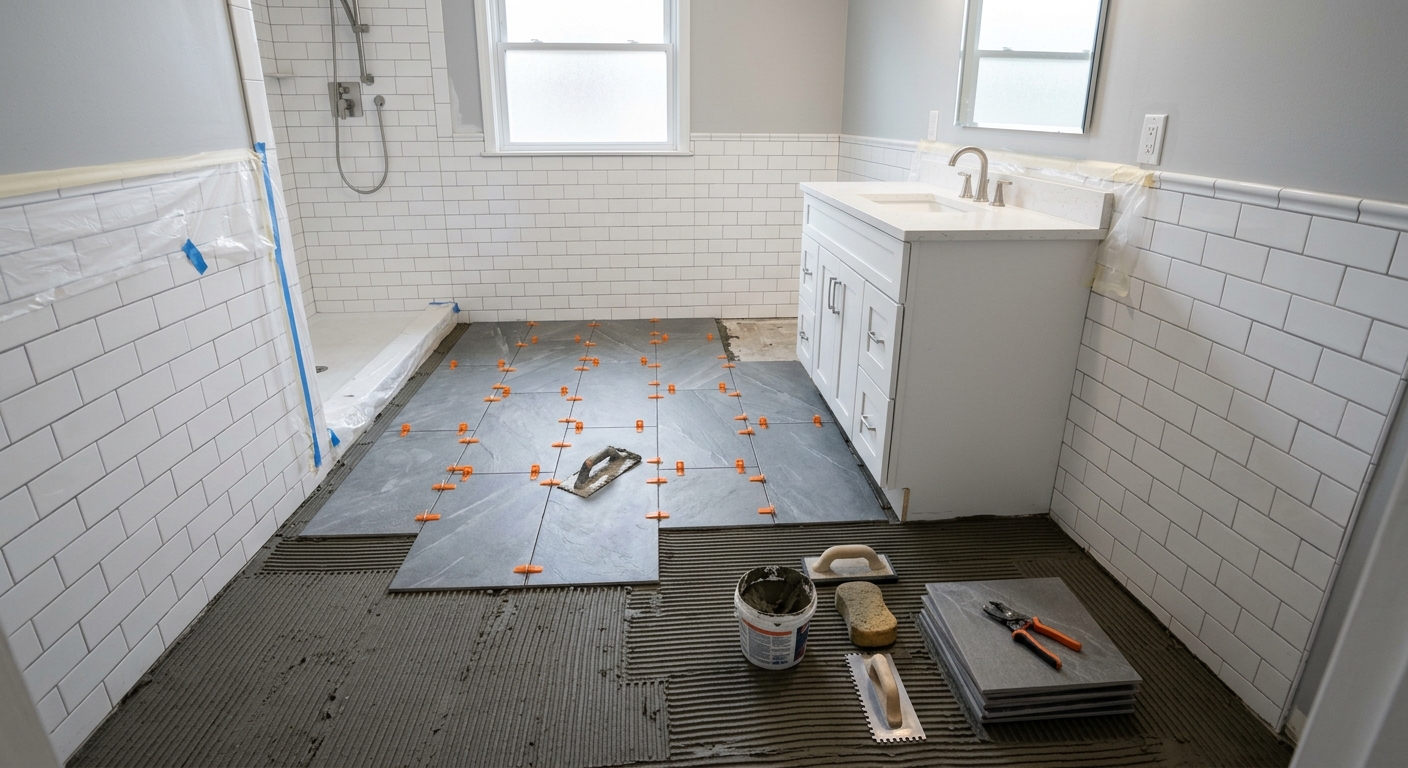
Bathroom renovation options and costs in Innisfil
Innisfil, Ontario homeowners can choose from several bathroom renovation paths, and the right one depends on how much you’re willing to open up the walls. With 34.6% of local homes built before 1981, many projects start with dated plumbing layouts—think cast-iron drain sections, older supply piping, and sometimes tile/adhesive assemblies that complicate demo. In a market around Kitchener–Waterloo–Barrie, costs are driven more by labour availability and trade rates than by climate swings; skilled work in this corridor commonly bills in the $75–$120/hour range, so the time spent on rough-ins and problem-solving often sets the budget.
That’s especially true in established pockets of Innisfil where older housing stock is common and contractors frequently see “hidden” scope after first demo. For example, in areas around Barrie’s commuter belt such as Alcona (and similarly older sections across the town), it’s not unusual to uncover limited venting, undersized electrical circuits for modern lighting/ventilation, or subfloor that’s out of level. These findings don’t always push you into a full gut, but they can move you from a cosmetic refresh toward a mid-range full renovation.
If your goal is to compare apples-to-apples, start with a scope model: below are typical renovation tiers that match what we see across the Kitchener–Waterloo–Barrie corridor, from low-end updates to mid-five-figure full bathrooms. Use the table as a baseline, then line-item your quote so “work scope” stays consistent between bidders.
| Renovation Scope |
What's Included |
Typical Duration |
Price Range |
| Cosmetic refresh (paint, fixtures, accessories only) |
Repaint, replace vanity and faucet, swap toilet and/or lighting (no moving plumbing), replace accessories, deep clean and caulk/trim touch-ups |
3–7 days |
$5,000 – $12,000 |
| Mid-range full renovation (new tile, vanity, tub/shower, electrical) |
Demo and dispose, new vanity and toilet, new tub/shower or surround, tile floor + walls, exhaust fan upgrade, basic electrical updates (typically GFCI where required), waterproofing and standard rough-in verification |
2–4 weeks |
$14,000 – $26,000 |
| High-end full renovation (custom tile, steam shower, heated floors) |
Full gut, premium tile system, custom shower (or steam-capable setup), heated floors, upgraded ventilation, added lighting/circuits, high-end fixtures/valves, enhanced waterproofing and detailing |
4–7 weeks |
$26,000 – $40,000 |
| Shower-only installation (convert tub to walk-in shower) |
Remove tub, build new walk-in shower with waterproofing, new shower valve trim, glass/curtain-ready framing, tile floor + surround, exhaust fan check/upgrade |
2–4 weeks |
$9,000 – $18,000 |
| Bathtub replacement or tub-liner install |
Remove existing tub (or liner prep), install new tub and surround materials, caulking and sealing, minor plumbing adjustments, re-install fixtures/trim |
1–3 weeks |
$5,000 – $12,000 |
| Tile-only installation (floor + surround, existing layout kept) |
Remove existing tile/surfaces, prep and level subfloor, install tile floor + shower/tub surround, waterproofing system, re-set fixtures (existing plumbing stays put) |
1–3 weeks |
$6,000 – $16,000 |
Prices are estimates only and vary by project scope, site access and material selection.
What affects the price of bathroom renovation in Innisfil
Across the Kitchener–Waterloo–Barrie corridor, it’s common to see quotes for the “same bathroom” vary by 30–50%. In practice, the spread isn’t because homeowners in one town want different bathrooms—it’s because labour rates and the age of the housing stock drive how long rough-ins, demo, and troubleshooting take. In Innisfil, where many homes are older (34.6% built before 1981), contractors often encounter supply lines that need upgrading, drains that need measurement and rework, and venting that won’t meet modern expectations. That kind of discovery happens after tile and finishes come off, so it directly changes the final scope and schedule.
A major example is asbestos risk in older floor tile or drywall compounds. If abatement is required, budgets can jump by about $1,500–$5,000+ depending on extent and containment needs. Another driver is ventilation: when a bathroom has weak exhaust or ducting that’s been altered over the years, upgrading fans and routing can add several thousand dollars to what would otherwise be a mid-range renovation. Electrical scope also matters; adding GFCI protection, new lighting, or powering heated floors changes both labour and material cost.
Two real-world “Innisfil cost movers” we see often: (1) converting a tub to a walk-in shower usually raises the budget versus keeping a tub in place, because drain location and waterproof detailing must be rebuilt; and (2) keeping layout fixed can help hold you closer to the low end of the regional full renovation bands (starting near the $14,000 range), while moving plumbing and remediating surprises can push toward the upper mid-five-figure outcomes. For context, many full bathroom projects land in the $14,000–$40,000 band when scope expands beyond cosmetic work.
| Price Factor |
Why It Matters |
Cost Impact |
| Layout change — moving drain or supply lines |
Requires plumbing rough-in, sometimes subfloor opening, patching, and re-tiling |
Often adds 15%–30% to labour-driven scopes |
| Tile selection — large-format porcelain vs. mosaic vs. ceramic |
Different cutting demands, waste rate, and levelling requirements |
Can swing material + install by $2,000–$6,000 |
| Fixture tier — builder-grade vs. mid-range vs. designer brands |
Valves, finishes, shower systems, and warranties vary by tier |
Typically adds $500–$5,000+ depending on choices |
| Subfloor condition |
Rot, water damage, and unlevel concrete increase prep and remediation |
Commonly $1,000–$4,000+ if reinforcement is needed |
| Electrical — adding GFCI outlets, exhaust fan, heated floor circuit |
Code-compliant work needs a licensed electrician and proper wiring |
Often adds $800–$3,500+ |
| Waterproofing method |
Membrane type affects labour, materials, and how thoroughly details are sealed |
Can add $500–$2,500, but reduces costly failures |
| Older-home surprises — asbestos tile, cast-iron drains, galvanized pipes |
Triggers remediation, extra disposal, and sometimes drain/supply replacement |
Often $1,500–$5,000+ (and sometimes more) when discovered |
| Bathroom size — sq ft drives tile and labour time directly |
More surface area means more setting time, grout, and waterproofing area |
Small bathrooms can be $2,000–$8,000 cheaper than larger ones |
Permits & regulations in Ontario
In Ontario, many bathroom updates can be handled as “cosmetic” work without permits—typically swapping a vanity, replacing fixtures like taps and toilets, repainting, and retiling without changing plumbing routes or structural elements. However, once you relocate plumbing (moving drain or supply lines), add or change dedicated ventilation systems, or make structural changes to walls/floors, permits and inspections are commonly required. Electrical work that involves new circuits, altered wiring, or adding/relocating outlets and lighting must be completed by a licensed electrician and will need to comply with the applicable electrical code requirements.
For a typical Innisfil job, here’s how to think about it: if you’re keeping the toilet location and shower drain where they are, and you’re not moving supply lines, you’re usually in the low-permit or no-permit territory for the plumbing side. If you’re converting a tub to a walk-in shower, moving the drain, or re-routing venting, you should assume plumbing permit requirements and inspections. Adding a modern exhaust fan usually triggers electrical involvement and may require a permit depending on the work’s extent.
Step-by-step verification for homeowners: (1) request the contractor’s Ontario trade licence details (where applicable for their trade), (2) ask for a current certificate of insurance and verify liability limits, (3) confirm they carry WSIB/WCB coverage and provide proof/clearance letter, and (4) ensure the quote states whether permits are “included” (pulled by the contractor) or “not included.”
Choosing tile, waterproofing and fixtures for your Innisfil bathroom
In Innisfil, material choices are where you can either control the budget or quietly make it balloon—because tile quantity, prep time, and waterproofing detail all tie directly to labour. Start with tile choice: ceramic is usually the entry-level option and can be more budget-friendly, but it’s less forgiving for certain modern large-format layouts. Porcelain (still available in many looks) generally offers better density and performance for floors and wet zones, often with a slightly higher material cost but smoother long-term maintenance. Natural stone (marble, travertine, slate) looks premium, yet it adds risk: it can require more careful sealing, and the installation demands tighter tolerances.
Second is waterproofing. Paint-on membranes are sometimes used for smaller, simpler areas, but bonded sheet membranes and purpose-built systems typically deliver more robust coverage when installed correctly and detailed around corners, niches, and transitions. In Ontario bathrooms—where indoor humidity is high and seasonal temperature swings can be significant—proper waterproofing and drying paths prevent moisture migration and mould potential.
Third is fixture tier. Builder-grade valves and trims may save upfront, but the difference shows in cartridge reliability, finish durability, and how well shower controls stay smooth over time. For example, upgrading from a standard shower system to a mid-range trim set can cost several hundred dollars more, but it’s often justified when you’re already doing a full gut and waterproofing—because you’ll enjoy the system for years without revisiting the wall.
If your budget targets the regional full renovation range (mid-five figures), a practical approach is: invest in porcelain and a top-tier waterproofing detail, then choose a sensible fixture tier that fits your lifestyle. Going “all luxury” on stone while skimping on waterproofing is the wrong trade-off.
| Material / Option |
Pros |
Cons |
Price Range |
| Ceramic tile (floor + walls) |
Good entry value, wide style range, straightforward installation in standard sizes |
Can be more porous than porcelain; may require careful selection for floor use and slip resistance |
$1,500 – $4,500 |
| Porcelain tile (floor + walls) |
Better water resistance, durability, many designs imitate stone/wood with strong performance |
Higher material cost; large-format pieces can increase labour time for layout and levelling |
$3,000 – $7,000 |
| Natural stone (marble, travertine, slate) |
Unique look, high-end appearance, strong resale appeal |
Needs sealing/maintenance; installation tolerances are tighter; higher labour and material variability |
$5,000 – $12,000 |
| Frameless glass shower enclosure |
Clean modern look, easier to keep surfaces visible and tidy, can make smaller bathrooms feel larger |
More expensive hardware; requires accurate waterproofing and stable wall backing |
$1,800 – $4,500 |
| Prefab tub surround (acrylic) |
Fast install, usually lower labour than fully tiled surrounds, good waterproof surface when properly fitted |
Less “custom” look; limited design options; can show seams depending on system |
$800 – $2,500 |
| Custom shower pan (tile or linear drain) |
Best functionality for curbless/modern showers, allows correct slope and drainage, premium look with linear lines |
More complex build; increases waterproofing and detailing time |
$2,500 – $8,000 |
How to choose a bathroom renovation contractor in Innisfil
Choosing the right contractor in Innisfil is mostly about protecting yourself from scope creep, schedule slippage, and hidden “extras.” Start by verifying Ontario licensing for the work they perform—then verify liability insurance and WSIB/WCB coverage. Ask for (1) a current certificate of insurance (liability coverage), (2) proof of WSIB/WCB clearance or equivalent evidence they’re properly registered to work, and (3) any trade licence details relevant to their role. Don’t accept a screenshot dated months ago—ask for the newest documents.
Get 2–3 itemised written quotes, not lump sums. Your quote should break down labour and materials separately: demolition, rough-in verification, waterproofing, tile supply and installation, fixture supply, electrical scope, disposal, and any permit handling. Pay close attention to what’s excluded: mould remediation, asbestos testing/abatement, subfloor replacement, vent duct work, and whether disposal and dump fees are included. If a contractor says “we’ll find it after demo,” you still want pricing for the base scope and a clear change-order process if surprises show up.
Warranty should be in writing: ask for workmanship warranty length, product/manufacturer warranties (and what they cover), and whether the warranty is transferable to future owners (important for resale in a town with 13,460 homeowner households). Payment schedule matters too—never pay more than 10%–15% upfront, and hold back a portion until substantial completion and punch-list items are corrected. Finally, insist on a start date and completion estimate in writing so you can plan around work and access.
- Verify Ontario trade licence details (for their trade scope) and match it to the work described.
- Request a certificate of liability insurance and confirm it’s active for your project period.
- Confirm WSIB/WCB coverage with proof or clearance letter.
- Ask for 2–3 itemised quotes with labour vs. material breakdowns.
- Ensure the waterproofing method is named (membrane type and where it applies).
- Confirm who pulls permits and whether permit fees are included.
- Check disposal/dump fees are included (not “separate” after demo).
- Request fixture lists with brands/models so allowances don’t undercut quality.
- Confirm how changes are priced (written change orders with unit pricing).
- Ask for proof of past similar bathroom renos (photos from occupied homes preferred).
- Review warranty: workmanship length and product warranty terms in writing.
- Use a payment schedule that limits upfront cost (10%–15%) and includes holdback.
Red flags to watch for: contractors who refuse itemised pricing, promises like “no permits needed” for plumbing/electrical moves, vague waterproofing details, unusually low quotes that don’t include disposal or electrical scope, and payment requests that exceed 10%–15% upfront or avoid a written timeline.
Frequently asked questions — bathroom renovation in Innisfil
How do I prevent mold in a Innisfil bathroom?
Mould prevention in Innisfil (and across Ontario) comes down to three things: moisture control, fast drying, and a properly waterproofed wet zone. Start with a correctly sized exhaust fan vented outdoors, plus good sealing around tub/shower surrounds and penetrations. If you’re retiling, insist on a modern waterproofing system with proper membrane coverage and detailed corners/changes-of-plane—this is where failed installs usually start. Also plan for ventilation timing: run the fan during showers and for 20–30 minutes after. If you have older finishes, remember that dated subfloors in pre-1981 homes can hold moisture longer; addressing subfloor condition is as important as tile choice. Budget-wise, a mid-range full renovation often starts around $14,000 – $26,000 when waterproofing and ventilation upgrades are included.
What adds the most resale value in a bathroom reno?
For resale in Innisfil and the wider Kitchener–Waterloo–Barrie region, buyers tend to value bathrooms that look current, function well, and don’t show maintenance issues. High-impact items usually include a clean, modern vanity; updated lighting and mirrors; and a shower that’s comfortable and easy to maintain (often a quality tiled surround or a well-designed walk-in). Waterproofing quality and ventilation upgrades also matter even if they’re not “seen,” because they prevent early failure and odours. In older homes (many built before 1981 locally), remediating hidden issues like poor venting or outdated wiring can protect the long-term value. If you’re comparing budgets, a cosmetic refresh might feel fast, but full upgrades in the $14,000 – $40,000 range are what typically deliver the most noticeable resale confidence—especially when the contractor includes electrical and ventilation work.
Can I keep my existing plumbing layout to save money?
Yes—keeping the existing plumbing layout is one of the easiest ways to control cost in Innisfil. If you leave the toilet location and keep the drain/supply positions where they are, you reduce the amount of rough-in plumbing and demolition needed, which typically lowers labour time and material waste. This is a practical strategy when you’re aiming for a “tile-and-fixtures refresh” rather than a major reconfiguration. You can still make substantial improvements: replace the vanity, upgrade the exhaust fan, swap fixtures, and rework the shower/tub surround with updated waterproofing. The difference is in the details—your quote should clearly state that plumbing is not being relocated. If you later decide to move a drain (common when converting tub to walk-in), expect the budget to move upward toward the mid-range full renovation tier, commonly starting near $14,000 – $26,000.
How much does a walk-in shower cost in Innisfil?
In Innisfil, the cost of a walk-in shower depends on whether you’re converting from a tub, changing tile size/layout, and adding features like a linear drain or premium glass enclosure. As a baseline for the Kitchener–Waterloo–Barrie corridor, shower-only installations that convert a tub to a walk-in are commonly in the $9,000 – $18,000 range when waterproofing, tile, and a new shower valve/trim are included. If you want heated floors, higher-end glass, or significant electrical/venting upgrades, pricing often trends toward the higher end of full renovation budgets (mid-five figures). Also factor in older-home conditions: homes built before 1981 may have cast-iron or galvanized plumbing that requires extra upgrades once walls open up. Always request an itemised allowance for glass, drain type, and waterproofing details so you can compare contractor quotes fairly.
What's the ROI on a bathroom renovation?
ROI (return on investment) depends on how your renovations compare to the neighbourhood and how well the project is executed—not just how much you spend. In a market like Innisfil, buyers typically prefer bathrooms with durable waterproofing, modern finishes, and functional ventilation, especially in homes where 34.6% of the housing stock was built before 1981. That means the “best ROI” often comes from preventing future problems: correct waterproofing, code-compliant electrical work, and upgrades that stop recurring maintenance. Cosmetic-only updates can help, but they usually don’t deliver the same buyer confidence as a full gut where drains, venting, and electrical are updated. As a budget reference, many full bathroom projects land around the $14,000 – $40,000 band; ROI is highest when your spending aligns with what buyers can see and what they’ll avoid fixing later (like moisture issues). If you want, share your current layout and target finishes and I can suggest a scope that matches typical ROI thinking.
Do I need waterproofing behind the tile?
Yes—waterproofing behind tile is strongly recommended, and in most quality installs it’s treated as mandatory for the wet zone. In an Ontario bathroom with regular showers and high humidity, waterproofing prevents moisture from migrating into walls and subfloors, which is where mould risks start. The waterproofing needs to be compatible with your tile system and installed correctly: membrane coverage to appropriate heights/areas, proper sealing at corners, niches, curb/wet-zone transitions, and around penetrations. If you’re converting a tub to a walk-in or installing a linear drain pan, waterproofing details become even more critical because slopes and drainage must be correct. If you’re considering a mid-range renovation near $14,000 – $26,000, ask the contractor to specify the waterproofing method and how it ties into the shower/tub base build. This is one of the best “pay now to avoid expensive leaks later” decisions.