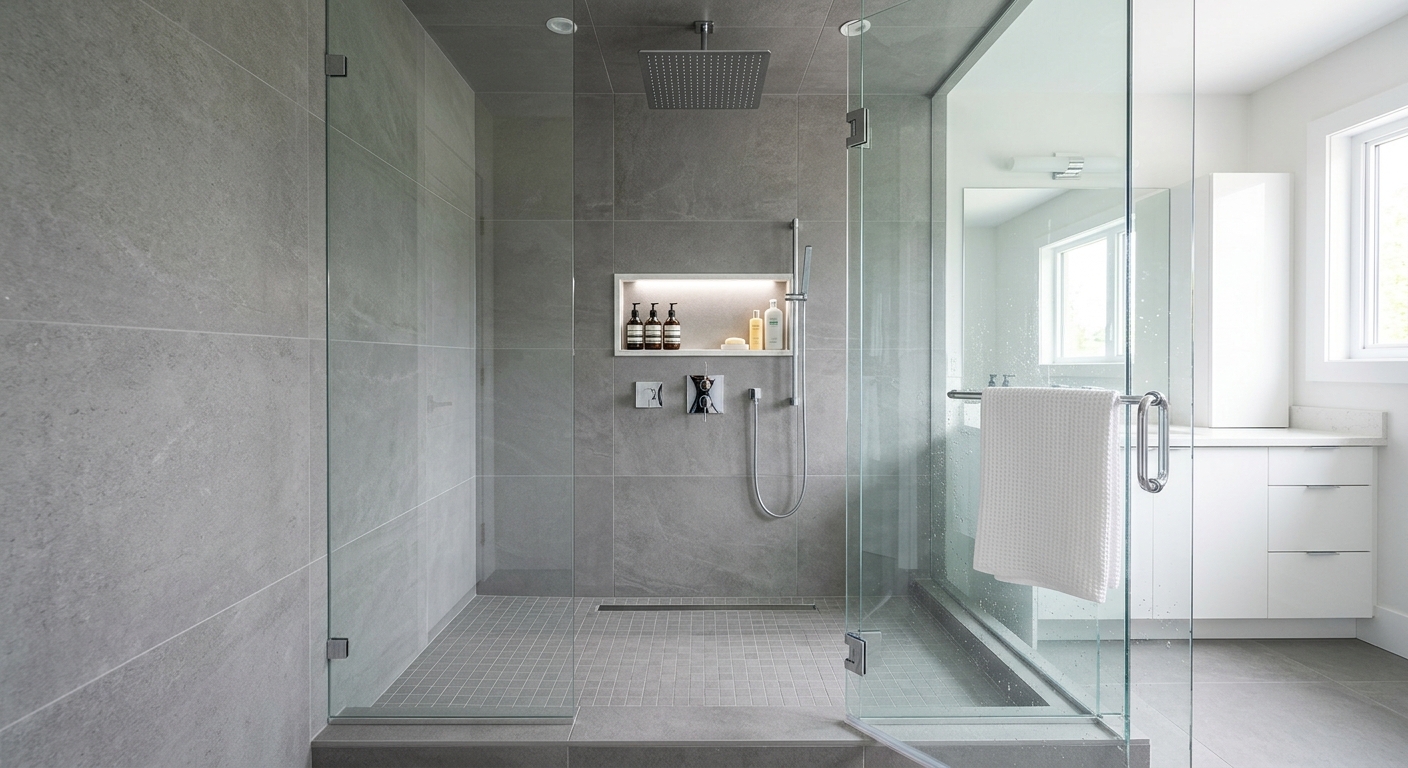
Bathroom renovation options and costs in Surrey City Centre
In Surrey City Centre, homeowners usually start by comparing renovation options side-by-side, because the right scope can mean the difference between a quick refresh and a full tear-out. About 33,520 people call the City Centre area home (Statistics Canada, 2021 Census), and that steady demand supports a busy trades market. More importantly for budgets, Surrey’s housing stock includes plenty of older buildings—many with dated plumbing layouts—so it’s not unusual to uncover cast-iron or galvanized supply lines once walls or floors come up. In mid-century homes, that can also include asbestos-containing materials in older floor tile, drywall compound, or insulation, which may require professional remediation if disturbed.
In the Lower Mainland–Southwest region, renovation costs are driven less by outdoor weather and more by labour rates and the age of local homes. Metro Vancouver’s skilled trade availability (plumbers, tilers, electricians) and higher labour demand can push quotes upward, especially when multiple trades must coordinate in a small, complex bathroom. Even “mid-range” projects often expand to include venting and plumbing upgrades once the existing system is opened up.
In Surrey City Centre—particularly around the King George Boulevard corridor and the downtown core—bathroom work tends to be in high demand because of ongoing condo and townhouse turnover and the frequency of older renos in adjacent neighbourhoods. That’s why getting a scoped, itemised quote matters: it sets expectations before demolition begins. Use the table below as a practical budget guide for the most common bathroom scopes, then tailor it to your room size, materials, and what your contractor finds behind the walls.
| Renovation Scope |
What's Included |
Typical Duration |
Price Range |
| Cosmetic refresh (paint, fixtures, accessories only) |
Paint, new vanity or toilet (no rough-in), tap/trim replacement, light re-lamp, accessories, caulking and minor hardware changes |
3–7 days |
$4,000 – $10,000 |
| Mid-range full renovation (new tile, vanity, tub/shower, electrical) |
Demo and disposal, waterproofing, floor + surround tile, new vanity and toilet, tub/shower or updated shower valve, exhaust fan upgrade, GFCI outlet, basic plumbing refresh, finishes and trim |
2–4 weeks |
$18,000 – $32,000 |
| High-end full renovation (custom tile, steam shower, heated floors) |
Premium waterproofing and waterproofing details, custom tile design, frameless or detailed glass system, steam shower components, heated floor system, upgraded lighting, higher-tier finishes, more extensive plumbing and venting coordination |
4–7 weeks |
$32,000 – $45,000 |
| Shower-only installation (convert tub to walk-in shower) |
Remove tub, re-plumb shower valve/drain where required, slope and waterproofing, shower pan and surround tile or alternative finishes, new glass, exhaust fan check/upgrade |
1–3 weeks |
$12,000 – $25,000 |
| Bathtub replacement or tub-liner install |
Remove and replace tub with plumbing tie-ins OR tub-liner system (where existing tub is suitable), new trim, caulking, leak testing, basic surround refresh as needed |
5–10 days |
$1,500 – $6,000 |
| Tile-only installation (floor + surround, existing layout kept) |
Tile removal and install, waterproofing upgrades, grout and sealing, minor subfloor leveling, reuse of existing fixtures when possible |
1–2.5 weeks |
$2,500 – $8,000 |
Prices are estimates only and vary by project scope, site access and material selection.
What affects the price of bathroom renovation in Surrey City Centre
In Surrey City Centre and the wider Lower Mainland–Southwest region, it’s common to see quotes for what looks like the same bathroom come back 30–50% apart. The biggest reason isn’t “mystery markups”—it’s that labour rates and the age of local homes shape what contractors actually have to do once the walls are opened. In British Columbia, you can also get different pricing outcomes depending on whether an estimate is based on a straightforward refresh versus an estimate that includes plumbing and venting upgrades to current expectations.
Older homes in this region often hide problems that don’t show up in photos: cast-iron or corroded drain stacks, galvanized supply lines, dated shutoffs, or insufficient ventilation. When bathrooms involve multiple trades in a small space, any delay or discovery can multiply labour and coordination time. For example, discovering asbestos-containing floor tile or drywall compound in pre-1985 materials can trigger abatement protocols that may add $1,500 – $5,000+ (sometimes more depending on access and extent). That same discovery can push a “tile-only” plan into a broader full-reno mindset, moving you toward the $18,000 – $45,000 full-bath band.
Concrete Surrey City Centre cost drivers often include: (1) converting a tub to a shower, where relocating a drain/supply rough-in increases time; (2) older subfloors that are out of level, forcing extra prep before tile; and (3) exhaust fan updates—if the current fan ducting or wiring is outdated, you’re not just buying a fan, you’re fixing a pathway.
On the higher end, adding heated floors and premium waterproofing can justify prices closer to $32,000 – $45,000. If you keep the layout and choose mid-range finishes, many homeowners land in the $18,000 – $32,000 band with fewer surprises.
| Price Factor |
Why It Matters |
Cost Impact |
| Layout change — moving drain or supply lines requires rough-in work |
New plumbing tie-ins increase labour, access requirements, and inspection complexity |
Often +$3,000 to +$10,000 |
| Tile selection — large-format porcelain vs. mosaic vs. ceramic |
Different underlayment needs, breakage rates, and installation time |
Often +$1,000 to +$6,000 |
| Fixture tier — builder-grade vs. mid-range vs. designer brands |
More expensive trims, valves, and finishing kits; sometimes better warranties |
Often +$800 to +$5,000 |
| Subfloor condition — rot or unlevel concrete adds scope |
Extra demo, framing, patching, and leveling for a stable tile base |
Often +$500 to +$4,000 |
| Electrical — adding GFCI outlets, exhaust fan, heated floor circuit |
Licensed work and potentially new wiring runs through walls/ceiling spaces |
Often +$500 to +$3,500 |
| Waterproofing method — membrane type and extent |
Better systems reduce leak risk and mould callbacks; correct detailing matters |
Often +$800 to +$4,500 |
| Older-home surprises — asbestos tile, cast-iron drains, galvanized pipes |
Remediation, replacement, and added trades coordination |
Often +$1,500 to +$15,000 |
| Bathroom size — sq ft drives tile and labour time directly |
More floor area, more wall area, more thinset, more install time |
Often +$2,000 to +$12,000 |
Permits & regulations in British Columbia
In British Columbia, cosmetic updates—like swapping a vanity, replacing fixtures, painting, and retiling without moving plumbing—usually don’t require you to pull a permit. However, Surrey City Centre bathroom projects commonly cross into “permit-needed” territory once you relocate plumbing, change electrical circuits, or alter structures.
Work that typically does require permits and inspections includes: moving or adding plumbing rough-ins (for example, relocating a shower drain or bathtub supply lines), adding or modifying dedicated bathroom exhaust fan wiring/ducting when it involves new circuits, and any structural wall changes. Electrical work must meet the provincial code and be completed by, or signed off by, a licensed electrician. If you’re installing a heated floor system, adding the correct circuit and GFCI protection also generally involves electrical permitting/inspection.
Here’s the step-by-step homeowner check you should do in Surrey City Centre before signing: (1) ask for the contractor’s British Columbia trade licence number(s) relevant to plumbing/electrical/renovation scope; (2) request a certificate of insurance showing liability coverage for your project; (3) confirm workers’ coverage using WCB/WCB clearance documentation (the contractor should provide proof upon request); and (4) verify any subcontractors (licensed electrician, licensed plumber) provide their own documentation as applicable. When in doubt, ask what is permitted in your specific scope and whether the quote includes permit pull and inspection scheduling.
Choosing tile, waterproofing and fixtures for your Surrey City Centre bathroom
In Surrey City Centre, your three biggest material decisions are tile choice, waterproofing system, and fixture tier—and the “cheapest-looking” option can cost more if it fails to perform in British Columbia’s humid indoor conditions. For tile, start with your budget ceiling: ceramic tile is usually the entry-level path, porcelain is a more consistent mid-range choice for floors and wet areas, and natural stone is the luxury route with a higher sensitivity to sealing, installation tolerances, and substrate prep. The installation complexity matters as much as the material name: larger-format pieces require flatter surfaces and more careful layout to avoid lippage.
Second is waterproofing. In BC bathrooms, the risk isn’t cold-weather freezing; it’s repeated moisture exposure and the consequences of poor detailing around corners, niches, and floor-to-wall transitions. A paint-on membrane can be fine in some limited scenarios, but a bonded sheet membrane or a well-detailed schluter-system approach typically offers more robust performance when installed correctly.
Third is fixtures. Builder-grade taps and valves may be the lowest upfront cost, but higher tiers often bring smoother cartridge performance, better finishes, and improved long-term reliability—important for resale in a neighbourhood with steady tenant and owner turnover.
A practical dollar example: a mid-range porcelain tile and a proven waterproofing system can bring you into the $18,000 – $32,000 full-reno band for many standard bathrooms. Trying to save $1,500–$2,500 by reducing waterproofing scope or choosing an overly complex natural stone layout can push you into rework territory—especially if subfloor prep and leak testing aren’t handled thoroughly.
| Material / Option |
Pros |
Cons |
Price Range |
| Ceramic tile (floor + walls) |
Lower material cost, wide style selection, good for walls |
May require more attention for floor durability; more grout maintenance |
$2,000 – $4,500 |
| Porcelain tile (floor + walls) |
Better stain resistance, more consistent for floors, strong variety of looks |
Can be heavier; requires careful subfloor flatness |
$3,000 – $6,500 |
| Natural stone (marble, travertine, slate) |
Premium appearance, unique character, high perceived value |
Sealing and maintenance required; higher breakage and installation labour |
$5,000 – $10,000 |
| Frameless glass shower enclosure |
Modern look, easier cleaning lines, can suit custom tile layouts |
Higher material and fabrication cost; requires accurate tile prep |
$2,000 – $6,500 |
| Prefab tub surround (acrylic) |
Fast installation, consistent waterproofing, easier on budgets |
Limited style customization; seams and transition details matter |
$1,200 – $3,000 |
| Custom shower pan (tile or linear drain) |
Clean lines, true luxury finish, improved long-term drainage when detailed well |
Higher labour and material coordination; must be perfectly waterproofed |
$4,000 – $12,000 |
How to choose a bathroom renovation contractor in Surrey City Centre
Choosing the right contractor in Surrey City Centre starts with verifying British Columbia credentials and coverage—because bathrooms combine plumbing, waterproofing, tile, and electrical in a confined area. Ask for the contractor’s relevant BC trade licences (for example, plumbing and/or electrical if they perform that work directly), then confirm liability insurance with a certificate of insurance for your project. For workers’ coverage, request WCB/WCB clearance documentation—this helps protect you if a trade is injured on site.
Next, get 2–3 itemised written quotes. You want a breakdown that separates labour, demolition/disposal, plumbing rough-in allowances, waterproofing system, tile installation, electrical scope, glass supply/fabrication, and fixtures. Avoid quotes that only provide a lump sum with broad “allowances” and no line items, because that makes comparisons misleading.
Read the scope carefully for exclusions: for example, is permit pull included if plumbing is moving? Is asbestos or hidden material remediation excluded or accounted for? Confirm disposal is included (dump fees, haul-away) and that leak testing and waterproofing cure times are scheduled.
Warranty matters too. Ask for the workmanship warranty length and what it covers (including waterproofing and tile setting). Also ask whether product warranties are transferable if you sell the home, since that can affect resale value in British Columbia’s competitive market.
Finally, payment schedule and timeline should be in writing. For typical bathroom work, never pay more than 10–15% upfront; keep a holdback until job completion and punch list sign-off. Get a start date and completion estimate in the contract so delays aren’t handled informally.
- Provide BC licence numbers that match the work in the quote
- Show current liability insurance (certificate of insurance)
- Provide WCB/WCB clearance documentation upon request
- Supply 2–3 itemised quotes (labour vs materials vs allowances)
- Confirm what’s included: demo, disposal, permits, patching, and leak testing
- Ask which waterproofing method is specified and for which surfaces
- Include tile layout and backer/subfloor prep details
- Verify ventilation scope (exhaust fan capacity and ducting path)
- Clarify electrical scope: GFCI outlets, lighting, and heated floor circuits
- Request warranty terms in writing (workmanship and product warranties)
- Confirm payment schedule: ≤10–15% upfront, holdback until completion
- Lock timeline: start date, inspection timing, and estimated completion
In Surrey City Centre, common red flags include: contractors who won’t provide BC licence/insurance details; quotes that skip waterproofing specifications; “cheap” pricing that ignores permit requirements when plumbing is being moved; vague language like “allowance for fixtures” without clear product tiers; and pressure to pay most of the job upfront before tile and waterproofing are complete.
Frequently asked questions — bathroom renovation in Surrey City Centre
Can I live at home during a bathroom renovation in Surrey City Centre?
Often yes, and in Surrey City Centre many homeowners plan to keep living in the home using the second bathroom if available. The key is timeline and whether your reno requires a full shutdown of plumbing in one bathroom. If you’re doing a cosmetic refresh, you can usually keep routine use with minimal disruption. For a mid-range full renovation (commonly $18,000 – $32,000), expect a period where shower/tub access is unavailable while the waterproofing cures and plumbing tie-ins are completed. If your home is older, hidden surprises like outdated drains or limited venting can extend timelines. Plan a “temporary routine” (barbecue/portable wash options) and discuss daily work hours, dust control, and how they’ll protect floors/doorways to keep living conditions manageable in British Columbia’s humid season.
What's the best bathtub material for a Surrey City Centre home?
The “best” bathtub material depends on your priorities: durability, installation method, and your existing rough-in. Replacement tubs range widely, but many homeowners choose acrylic for a smooth finish and straightforward installation, especially when the existing surround and drain location are staying put. If your budget is tight and the existing tub is structurally sound, a tub-liner approach can be cost-effective (often in the $1,500 – $6,000 band), but it’s not suitable for every tub due to adhesion surface condition and damage. For older Surrey City Centre homes with potential drain condition issues, a contractor may recommend replacing the tub rather than relying on a liner if leaks or slope problems are discovered. In any case, ask how the contractor handles leak testing and waterproofing at the tub-to-wall transition to reduce moisture problems in BC bathrooms.
Is it worth renovating a bathroom before selling in Surrey City Centre?
In many Surrey City Centre listings, a well-finished bathroom improves buyer confidence and can protect your sale timeline, but “worth it” depends on what you’re fixing. If your bathroom has visible issues—cracked tile, failing caulking, poor ventilation, or outdated fixtures—renovating often helps, especially when the scope targets durability. Cosmetic refreshes can provide a faster return, but they may not address underlying plumbing or venting problems that buyers will notice during inspections. If you’re planning a full renovation, the typical Lower Mainland–Southwest cost reality is that it’s usually budgeted within the $18,000 – $45,000 full-bath range, so you should balance upgrades with market expectations. In British Columbia, many buyers also care about waterproofing quality and fan performance due to humidity; spend where it reduces leak risk rather than where it only changes surface appearance.
How do I plan a bathroom renovation on a tight budget in Surrey City Centre?
To plan smart on a tight budget in Surrey City Centre, start by keeping the layout. Avoid moving drains or supply lines unless absolutely necessary, because that’s where labour and permit scope expands quickly. If your goal is a noticeable upgrade without major plumbing changes, consider a cosmetic refresh plus targeted improvements—new vanity, toilet, lighting, and regrouting/resealing—rather than a full tear-out. If tile is the priority, choose mid-range porcelain and keep the layout, focusing on proper subfloor prep and a reliable waterproofing method. It’s also wise to set aside contingency because older homes can reveal hidden issues like aging drain stacks or galvanized lines once opened up. As a budgeting anchor, a full shower/tub update can land in the higher bands, while smaller scopes like tile-only or bathtub replacement might fit the $2,000 – $8,000 or $1,500 – $6,000 ranges respectively. Get itemised quotes with allowances so you can see what trade-off decisions move your total the most.
What's the difference between a cosmetic and a full bathroom renovation?
A cosmetic renovation is about surfaces and fixtures without moving the plumbing or changing the bathroom’s core structure. Typically, it includes paint, accessories, and swapping fixtures like taps, shower trim, or a vanity/commode if no plumbing rough-in is required. A full renovation is a deeper scope: demo, subfloor and waterproofing work, new tile systems, and often electrical and plumbing updates to bring the bathroom up to current practice. In Surrey City Centre, the difference matters because older homes can hide issues behind walls and floors; a cosmetic project may avoid that risk, while a full reno can uncover cast-iron drains, galvanized supply lines, or asbestos-containing materials that require remediation. That’s why a cosmetic refresh can be far below the full-bath range, while mid-range and high-end full renovations often fall around $18,000 – $45,000. If you want durability and long-term leak resistance, it’s usually the full-reno waterproofing and plumbing details—not the finish alone—that deliver the real value.
How do I choose the right contractor for my bathroom in Surrey City Centre?
Start by verifying British Columbia licensing and coverage before you compare prices. Ask for the contractor’s BC trade licence number(s), a certificate of liability insurance, and WCB/WCB clearance documentation. Then request 2–3 itemised written quotes that separate labour and materials and clearly list allowances, exclusions, and permit responsibilities. A good bathroom contractor should specify the waterproofing method, confirm leak testing, outline the exhaust fan/electrical scope, and explain how they handle older-home surprises common in Surrey City Centre (like dated drains or potential asbestos-containing materials). For example, if your quote moves a drain or adds wiring, it should be reflected in permits and inspections—don’t accept “we’ll handle it” without specifics. Compare timelines and warranty terms: workmanship warranty length, product warranty coverage, and whether warranties are transferable. Finally, protect your cash flow with a schedule that keeps upfront payment to around 10–15% and holds back until completion.