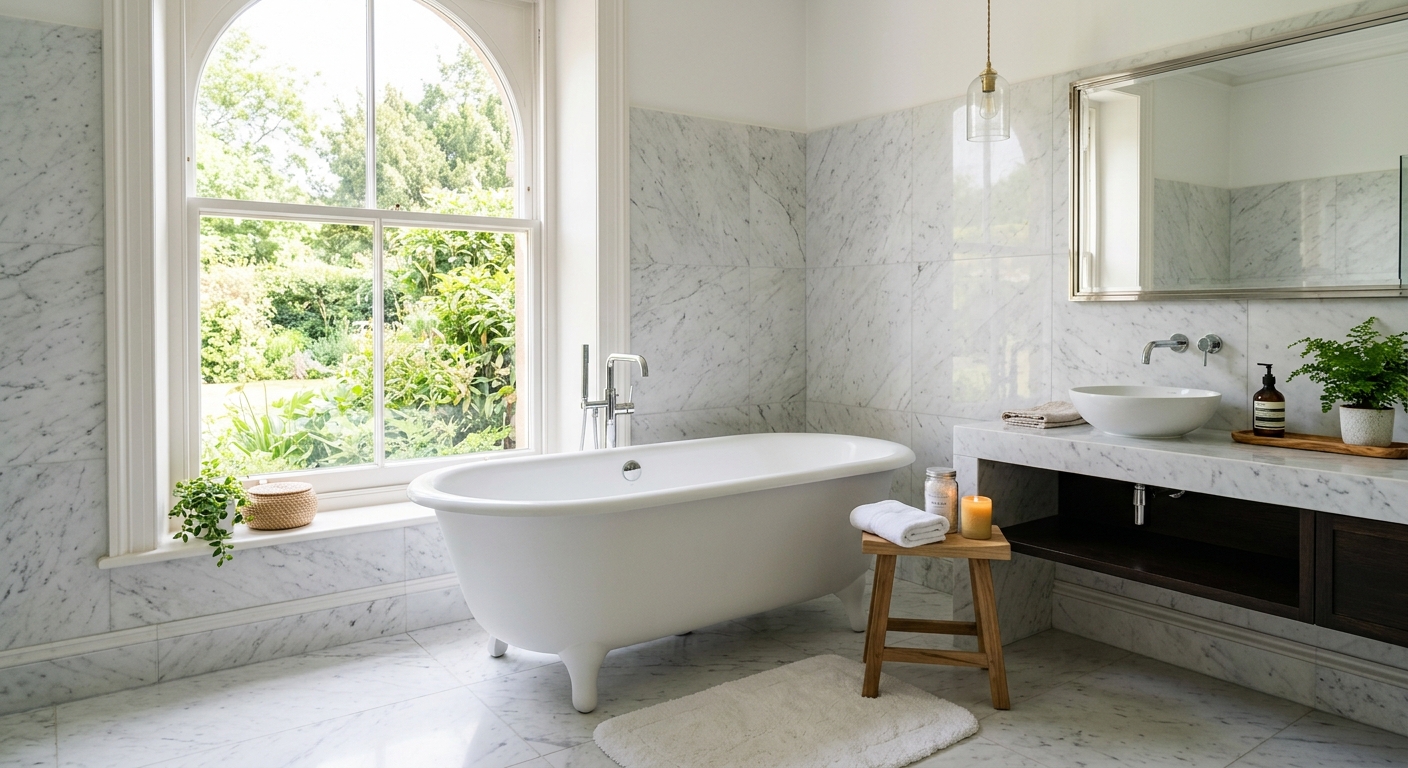
Bathroom renovation options and costs in North Delta
Bathroom renovation costs in North Delta are shaped less by weather and more by the reality of our Lower Mainland–Southwest market: high demand for skilled trades and an older housing mix. North Delta’s population was 60,769 in 2021 (Statistics Canada, 2021 Census), and many homes in the area are mid-century or older, meaning dated plumbing layouts can be uncovered once walls and floors come off. In pre-1980 builds, it’s not unusual to find galvanized or cast-iron drains, older copper supply lines, and—depending on the vintage—materials that may require careful handling if asbestos is suspected.
Because the region’s labour rates run higher than many parts of Canada, and because bathrooms are small but technically complex, even “simple” refresh work can come in above what you might see in rural BC. Metro Vancouver-area demand also affects availability: plumbers, electricians, and tilers may schedule further out, which can add time and coordination costs. At the same time, a well-scoped plan can keep budgets predictable by anticipating plumbing and venting upgrades when existing systems don’t meet current British Columbia requirements.
In North Delta, trades are especially busy around Sunbury/Delta neighbourhoods near Ladner and the older pockets of Delta proper, where homeowners frequently update mid-century bathrooms. To compare the most common renovation paths, start with the scope-and-budget table below.
| Renovation Scope |
What's Included |
Typical Duration |
Price Range |
| Cosmetic refresh (paint, fixtures, accessories only) |
New vanity/fixture replacements (no plumbing relocation), fresh paint, caulking/grout touch-ups, toilet swap, towel bars, mirror/lighting updates |
1–3 weeks |
$6,000 – $12,000 |
| Mid-range full renovation (new tile, vanity, tub/shower, electrical) |
Demo, new tub/shower surround, updated waterproofing, tile floor, vanity and mirror, exhaust fan upgrade, GFCI where needed, plumbing rough-in checks, disposal |
3–6 weeks |
$18,000 – $32,000 |
| High-end full renovation (custom tile, steam shower, heated floors) |
Custom shower/tile system or steam unit, heated floors, upgraded lighting, premium fixtures, higher-end waterproofing/membrane build, new venting strategy, detailed trim finishes |
5–9 weeks |
$32,000 – $45,000 |
| Shower-only installation (convert tub to walk-in shower) |
Remove tub, install walk-in shower base and waterproofing, new tile or acrylic surround, updated drain/venting tie-ins if required, exhaust fan checks |
2–5 weeks |
$8,000 – $25,000 |
| Bathtub replacement or tub-liner install |
Replace tub (or liner if suitable), new surround/caulking, fixture swap, reseal plumbing connections, basic floor protection and re-grout |
1–3 weeks |
$1,500 – $6,000 |
| Tile-only installation (floor + surround, existing layout kept) |
Remove existing tile only, prep/subfloor leveling as needed, tile floor and wall surround, grout/seal, waterproofing upgrades where required, clean-up and haul-away |
2–4 weeks |
$2,000 – $8,000 |
Prices are estimates only and vary by project scope, site access and material selection.
What affects the price of bathroom renovation in North Delta
It’s common to see bathroom quotes for the same basic goal differ by 30–50% across the Lower Mainland–Southwest compared with other parts of British Columbia. In our region, the biggest swing factors are labour rates and the age of the housing stock—more than day-to-day climate. When older bathrooms are opened up, they often reveal drains, vents, and supply lines that need upgrading to function reliably and to align with current BC expectations. That’s why you’ll sometimes see a renovation start as a “tile refresh” and end with plumbing and venting work once a cast-iron drain line or dated supply configuration is exposed.
Pre-1980 homes around North Delta can hide surprises such as cast-iron or galvanized drain components, older copper supply lines with corrosion at connections, and insufficient bathroom exhaust. If asbestos-containing material is discovered (for example, in older vinyl floor tile, drywall compound, or insulation), remediation can add $1,500–$5,000+ depending on extent and containment requirements. Electrical additions—like new GFCI protection and updated exhaust wiring—also add costs, even when the room is otherwise staying “as-is.”
Here are a few North Delta examples that change the final price quickly: (1) a layout change that moves a drain by even a couple feet often triggers rough-in work and longer schedules; (2) unlevel subflooring can force additional prep before tile goes down; and (3) switching from standard tile to large-format porcelain can increase labour because of setting and flatness requirements. If you’re comparing budgets, these are the reasons mid-range full renovations often land in the $18,000–$32,000 range while higher-end upgrades with steam and heated floors push toward $32,000–$45,000.
| Price Factor |
Why It Matters |
Cost Impact |
| Layout change — moving drain or supply lines requires rough-in work |
Relocation means demolition, framing adjustments, re-plumbing, possible vent tie-ins, and inspection scheduling |
Often adds $3,000–$12,000 depending on distance and access |
| Tile selection — large-format porcelain vs. mosaic vs. ceramic |
Large formats require flatter substrates and more careful installation techniques to prevent lippage |
Typically shifts tile labour/material by $800–$4,000 |
| Fixture tier — builder-grade vs. mid-range vs. designer brands |
Premium valves, trims, and toilets cost more and can require more precise installation |
Commonly adds $500–$5,000 |
| Subfloor condition — rot or unlevel concrete adds scope |
Weak framing or low spots mean additional substrate work before waterproofing and tile |
Often adds $1,000–$6,000 |
| Electrical — adding GFCI outlets, exhaust fan, heated floor circuit |
Licensed electrician time, new breakers, and code-compliant installations increase costs |
Typically adds $600–$3,500 |
| Waterproofing method — membrane type and extent |
Better systems reduce failure risk, but require correct installation and materials |
Often adds $800–$3,000 versus minimal approaches |
| Older-home surprises — asbestos tile, cast-iron drains, galvanized pipes |
Remediation/repairs expand scope and add trades, permits and containment |
Can add $1,500–$10,000+ depending on findings |
| Bathroom size — sq ft drives tile and labour time directly |
More area increases demo, prep, waterproofing coverage, and tile setting hours |
Usually changes total cost by hundreds to thousands |
Permits & regulations in British Columbia
In British Columbia, cosmetic bathroom updates typically do not require permits. That usually includes swapping fixtures like a toilet, vanity, tap trim, mirror, and retiling or repainting when you are not moving plumbing lines or altering structural walls. Where permits usually do apply is when you change the plumbing and electrical infrastructure: relocating a drain or supply line, adding or relocating a vent connection, installing a new exhaust fan with new wiring or a new circuit, and any structural changes that alter load-bearing walls or framing. Electrical work must be done to provincial code and completed or signed off by a licensed electrician.
In practice, a homeowner in North Delta can verify contractor compliance step-by-step: first, ask for the contractor’s British Columbia trade licence (as applicable to the trades they perform or subcontract) and confirm the licence name matches the business on the quote. Next, request a certificate of insurance (liability) and verify it covers your address and renovation scope. For workers and payroll compliance, confirm whether the contractor is registered for WCB/WSIB coverage as applicable in BC work arrangements—your contractor should be able to provide a clearance/registration document upon request.
Finally, before work starts, confirm whether permits are included in the quote and who pulls them. A legitimate process should clearly outline inspection points for plumbing rough-in and any electrical work tied to updated circuits.
Choosing tile, waterproofing and fixtures for your North Delta bathroom
In North Delta, three material choices usually make the biggest difference to both budget and long-term performance: tile type, waterproofing system, and fixture tier. First, tile choice: ceramic is often the entry-level option, porcelain costs more but handles moisture and wear better for floors, and natural stone (marble, travertine, slate) can be stunning yet more demanding to finish and seal. Installation complexity changes too—porcelain and stone require a stricter substrate and more careful setting to stay flat and durable.
Second is waterproofing, which is critical in British Columbia’s coastal humidity and frequent temperature swings. A quality shower system is what prevents mould, not just “good grout.” Paint-on membranes can be fine for some wall applications, but a true wet-area approach often involves a bonded sheet membrane or a modern tile-ready system designed for walls and floors. The key is correct coverage and tie-ins at corners, niches, curb/threshold areas, and around drains.
Third is fixture tier. Builder-grade fixtures usually save up front, but premium valves, showerheads, and toilets can improve water efficiency and comfort—and they often hold up better. For example, choosing mid-range porcelain tile and a full membrane system may cost more than a basic tile-only approach, but it’s often justified because the waterproofing and correct installation prevent costly tear-outs later. If you’re trying to keep within a mid-range full renovation ($18,000–$32,000), pairing upgraded waterproofing with a solid mid-tier vanity and lighting is usually a better value than overspending on luxury stone while compromising the shower system.
| Material / Option |
Pros |
Cons |
Price Range |
| Ceramic tile (floor + walls) |
Good appearance variety, typically lower material cost, easy availability |
Less durable than porcelain for high-traffic floors; can chip if substrate prep is poor |
$2,000 – $4,500 |
| Porcelain tile (floor + walls) |
Denser and more moisture-resistant for floors; better wear performance; many look-alike designs |
Higher material cost; large formats require flatter substrates and careful layout |
$4,000 – $8,000 |
| Natural stone (marble, travertine, slate) |
Premium look; unique veining and texture; high resale appeal |
Requires sealing/maintenance; substrate and installation tolerances are stricter |
$6,000 – $12,000 |
| Frameless glass shower enclosure |
Modern, bright look; often increases perceived value; better sightlines than bulky frames |
More expensive; glass installs demand precise measurements and good pan/waterproofing alignment |
$1,800 – $4,500 |
| Prefab tub surround (acrylic) |
Quicker install; seamless look; less labour than full tile surrounds in many cases |
Limited style/finish compared with tile; can show wear at edges over time if not installed properly |
$1,500 – $3,500 |
| Custom shower pan (tile or linear drain) |
High-end appearance; improved drainage options with linear drains; supports best-practice waterproofing layouts |
More labour and materials; requires accurate slope planning and drain detailing |
$4,000 – $12,000 |
How to choose a bathroom renovation contractor in North Delta
Choosing the right contractor in North Delta comes down to proof, clarity, and process—not just the lowest number. Start by verifying British Columbia licensing for the trades involved (or ensure the contractor provides licensed trades for electrical/plumbing scopes) and confirm liability insurance is current for your project. Ask for documentation for coverage and worker protection arrangements (WCB/WSIB as applicable in BC work arrangements) and review any clearance/registration letter they provide. The contractor’s name on invoices and insurance certificates should match their business registration.
Next, get 2–3 itemised written quotes that separate labour and materials, especially for tile setting, waterproofing, plumbing rough-in, electrical add-ons, and any disposal or haul-away. Avoid lump-sum estimates without exclusions. Read the scope line-by-line: confirm whether permit pulls are included, whether drywall repairs are included after plumbing inspections, and what happens if subfloor rot or outdated drains are discovered. A clear contingency approach is a sign of professionalism.
Warranty should be written and specific: workmanship warranty length, product/manufacturer warranty terms, and whether warranties remain valid if you sell the home. Payment scheduling matters too—never pay more than 10–15% upfront, and hold back a portion until the job is complete and cleaned up.
Finally, request a start date and completion estimate in writing. Bathrooms in the Lower Mainland–Southwest often depend on tiler/electrician availability, so a realistic schedule is part of the true cost.
- Confirm BC trade licence details (or subcontractor licences) before signing.
- Request and review certificate of liability insurance for your address.
- Verify WCB/WSIB coverage documentation/clearance for workers.
- Get 2–3 itemised quotes with labour vs material breakdown.
- Ensure waterproofing method and who installs it are explicitly named.
- Confirm disposal/haul-away is included in the quote.
- Ask what’s excluded (e.g., moving vents, unexpected mould remediation, subfloor replacement).
- Check whether permits and inspections are included and who pulls them.
- Require a detailed schedule: demo start, rough-in, tile installation, trim and final.
- Confirm warranty terms for workmanship and products; ask if transferable.
- Use a payment schedule: 10–15% max upfront, progress payments tied to milestones.
- Verify product brands/models match the quote (vanity, toilet, exhaust fan, valves).
Red flags I see with bathroom contractors in the North Delta market: quotes that are “too good” but omit waterproofing; not naming which trades will be doing plumbing/electrical; refusing to provide licence/insurance details in writing; schedules that don’t account for tile cure times and inspection steps; and contracts with unclear exclusions (especially around subfloor issues and disposal).
Frequently asked questions — bathroom renovation in North Delta
How much does a bathroom renovation cost in North Delta?
In North Delta, most homeowners end up choosing between a cosmetic refresh and a full renovation depending on plumbing condition and how far they want to go. A cosmetic update (fixtures, paint, accessories, light touch-ups) typically sits around $6,000 – $12,000. If you’re replacing the tub/shower and vanity, adding new tile, and upgrading key electrical elements like an exhaust fan and GFCI, a mid-range full renovation usually falls around $18,000 – $32,000. In older homes, hidden plumbing or venting upgrades can increase the scope, so your quote may move toward the upper end of the full-reno range. (Lower Mainland labour demand and older housing stock drive this more than weather.)
How long does a bathroom renovation take in North Delta?
Timelines in British Columbia’s Lower Mainland–Southwest are driven by trade availability, inspection steps, and tile/waterproofing cure times. Cosmetic refresh projects can be as quick as 1–3 weeks. A mid-range full renovation often takes about 3–6 weeks, assuming plumbing/electrical are confirmed early and materials arrive on schedule. Shower-only conversions commonly land around 2–5 weeks. High-end work with custom tile, heated floors, or steam features can take 5–9 weeks because sequencing is tighter (rough-in, membrane/waterproofing, tile, then final commissioning). To keep your schedule predictable, ask the contractor to include start date, inspection dates, and a milestone plan in writing.
Do I need a permit for a bathroom renovation in British Columbia?
Often, cosmetic changes in North Delta don’t require permits—like replacing fixtures, updating lighting, repainting, or retiling when you’re not moving plumbing lines or changing structural walls. Permits are typically required when you relocate plumbing (moving a drain or supply), add or rework electrical circuits (for example, new GFCI protection, exhaust fan wiring, or heated floor circuits), or do structural wall changes. Electrical work must meet provincial code and be done or signed off by a licensed electrician. Plumbing rough-in changes typically trigger permits and inspections. Before work starts, confirm whether your contractor will pull permits and what inspections are expected so you don’t get stuck waiting later.
What's the best tile for a bathroom in North Delta?
For most North Delta bathrooms, porcelain tile is the best balance of durability and long-term moisture resistance, especially for floors. Ceramic can work, but porcelain generally handles wear and moisture better in a humid coastal environment. If you love the look of natural stone, slate or marble can be beautiful, but you’ll want correct sealing and a proper substrate—stone installation tolerance is less forgiving. On cost, tile-only installations can start around $2,000 – $8,000, but the choice of porcelain versus ceramic can shift material and labour. Most importantly, the “best tile” depends on a correct waterproofing system and substrate prep; poor flatness or inadequate waterproofing is what leads to failure, not the tile brand alone.
Should I do a tub-to-shower conversion?
A tub-to-shower conversion is a practical choice in many Lower Mainland–Southwest homes, especially if you’re looking for easier access and more efficient day-to-day use. It can also open up ventilation and waterproofing opportunities when the original tub surround is ageing. Budget-wise, shower-only conversions commonly fall into $8,000 – $25,000, depending on drain changes, waterproofing approach, enclosure type, and whether plumbing or venting upgrades are required. In older North Delta houses, the deciding factor is often what you find behind the walls: if drains are cast-iron/galvanized or supply lines are outdated, expect additional scope. If your layout stays straightforward and the rough-in is in good shape, it’s often good value.
How do I prevent mold in a North Delta bathroom?
Mold prevention in British Columbia starts with controlling moisture through two steps: effective ventilation and a properly built wet-area waterproofing system. Make sure your bathroom fan is correctly ducted and sized, and that it runs long enough after showers. Then ensure shower walls and floors have a continuous waterproofing membrane with correct tie-ins around the drain, corners, and niches. In older homes common around North Delta, inadequate ventilation or compromised waterproofing is what turns grout lines and caulking into moisture paths. Using the right waterproofing method and grout/seal details costs more upfront, but it’s the difference between a bathroom that stays clean for years and one that needs repeat repairs. If you suspect asbestos in very old materials, stop and have it assessed before demolition.