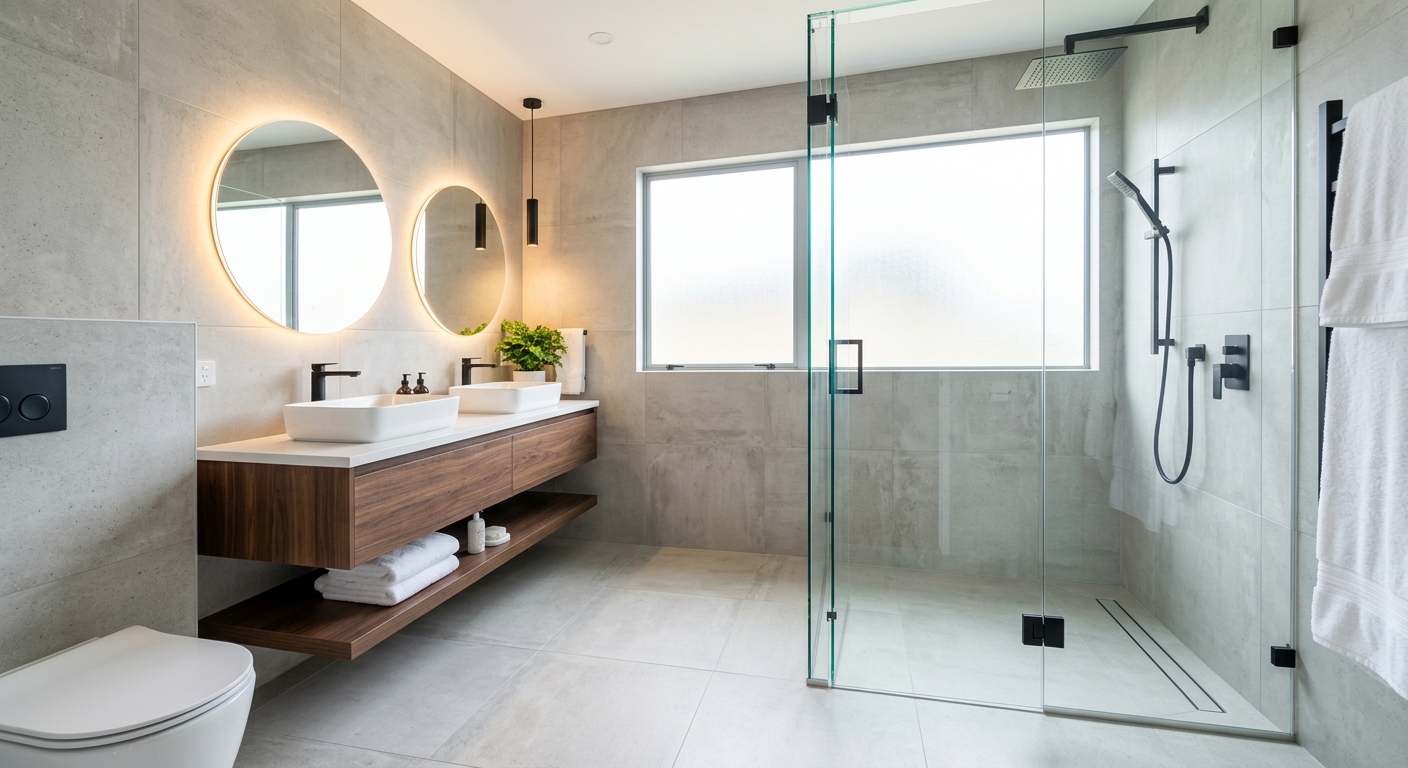
Bathroom renovation options and costs in Nanaimo
Nanaimo homeowners have a lot of bathroom renovation options, and the cost picture is fairly consistent: a full renovation typically lands somewhere in the $10,000 – $35,000 band depending on labour and what’s hidden behind the walls. With 39.1% of homes built before 1981, many local bathrooms sit on older plumbing layouts—sometimes with dated venting, older shutoffs, and drains that aren’t ideal for modern fixtures. Those conditions can mean more rough-in work once walls open, even though Vancouver Island’s maritime climate is relatively mild compared with inland regions.
On Vancouver Island and the Coast, contractor availability and labour rates matter more than the weather itself. General contractors commonly bill in the $80 – $120 per hour range, while plumbers and electricians are often in the $100 – $150 per hour band. The result: labour becomes the largest line item, and bathroom renos often expand in scope after demolition reveals galvanized supply lines, cast-iron or copper drain sections, or inadequate exhaust fan venting.
In Nanaimo, tradespeople are especially busy in North Nanaimo and the older housing pockets near downtown, where pre-1980 stock is common and renovations are frequent. If you’re comparing quotes, the quickest way to align expectations is to start with a scope tier, then confirm what’s included (demo, rough-in upgrades, waterproofing system, and electrical/exhaust work) before you choose materials.
Use the table below to compare typical scopes, inclusions, and realistic price ranges for Nanaimo projects.
| Renovation Scope |
What's Included |
Typical Duration |
Price Range |
| Cosmetic refresh (paint, fixtures, accessories only) |
Paint, replace vanity/faucet (if existing plumbing remains), swap lighting/fixtures if no wiring changes, toilet refresh/replace where allowed, new accessories, deep clean |
3–7 days |
$2,000 – $8,000 |
| Mid-range full renovation (new tile, vanity, tub/shower, electrical) |
Demo and rebuild, new shower/tub surround tile, new vanity, new taps/valves, updated exhaust fan (typical), basic electrical updates (GFCI/can light/extraction circuit as needed), waterproofing and tiling |
3–5 weeks |
$15,000 – $26,000 |
| High-end full renovation (custom tile, steam shower, heated floors) |
Custom layout improvements, premium waterproofing system, large-format tile installation, heated floor circuit, designer fixtures, frameless glass, steam/advanced shower controls, expanded electrical scope |
5–8 weeks |
$26,000 – $45,000 |
| Shower-only installation (convert tub to walk-in shower) |
Tub removal, new shower pan and waterproofing, walk-in framing and glass or curtain setup, new shower valve/trim, new exhaust fan if required |
2–4 weeks |
$8,000 – $15,000 |
| Bathtub replacement or tub-liner install |
Replace tub with similar layout, new surround prep and sealing, caulking and trim work, plumbing connection checks, optional liner where suited |
1–3 weeks |
$3,000 – $7,000 |
| Tile-only installation (floor + surround, existing layout kept) |
Floor and wall tile removal/replace, tile setting and grout, waterproofing where required for the surround, leveling and subfloor prep as needed |
1–3 weeks |
$6,000 – $18,000 |
Prices are estimates only and vary by project scope, site access and material selection.
What affects the price of bathroom renovation in Nanaimo
Two Nanaimo quotes can differ by 30–50% even when the listed finish looks similar, because the true cost drivers are mostly behind the walls. On Vancouver Island and the Coast, labour rates and the age of local housing stock drive most of the spread—not the mild maritime climate. In fact, while Nanaimo’s coastal air can feel “forgiving,” bathrooms still see constant moisture and humidity, so the waterproofing system, venting, and installation quality determine how long the reno lasts (and what repairs show up later).
Older homes are the big variable. In many pre-1981 houses (39.1% of local dwellings were built before 1981, Statistics Canada, 2021 Census), it’s common to run into cast-iron or older drain sections, galvanized supply lines, and undersized venting. Once walls and floors come out, a contractor may need to add or upgrade rough-in venting, replace corroded piping, and ensure the exhaust fan actually vents outdoors. That’s where project scope expands—often pushing a “mid-range” bathroom into full-reno territory that aligns with the $10,000 – $35,000 full renovation band.
Asbestos-related surprises can also matter. Pre-1985 homes sometimes contain asbestos-containing materials in vinyl flooring, drywall compounds, or insulation; discovery can trigger professional abatement and add roughly $1,500–$5,000+ to the budget. A second example: if your current fan is “ductless” or shared, upgrading to an exterior-vented exhaust can add labour and electrical scope. On the flip side, if your plumbing layout stays put and your subfloor is solid, you can often keep costs nearer the $2,000 – $8,000 cosmetic-refresh level or focus spend on a tile-only upgrade.
| Price Factor |
Why It Matters |
Cost Impact |
| Layout change — moving drain or supply lines |
Requires plumbing rough-in, possible joist/subfloor modifications, patching, and new waterproofing tie-ins |
Often +$3,000–$10,000+ depending on distances and repairs |
| Tile selection — large-format porcelain vs. mosaic vs. ceramic |
Harder cuts and higher waste for mosaic/large-format; heavier tiles can need extra prep |
Typically +$1,500–$6,000 across materials and labour |
| Fixture tier — builder-grade vs. mid-range vs. designer brands |
Cost of the valve/trim, vanity build quality, and shower kits; impacts installation complexity |
Often +$500–$5,000+ |
| Subfloor condition — rot or unlevel concrete adds scope |
May require subfloor replacement, leveling compounds, or additional structure for tile adhesion |
Commonly +$1,000–$7,000 depending on extent |
| Electrical — adding GFCI outlets, exhaust fan, heated floor circuit |
Licensed electrician time, new wiring runs, breaker/circuit considerations |
Often +$800–$4,500 |
| Waterproofing method — membrane type and extent |
Better membranes reduce failure risk; more coverage increases labour and material |
Often +$600–$3,500 |
| Older-home surprises — asbestos tile, cast-iron drains, galvanized pipes |
Professional abatement, pipe replacement, and redo of rough-in work |
Can add $1,500–$10,000+ |
| Bathroom size — sq ft drives tile and labour time directly |
More surface area increases setting time, waterproofing area, and materials |
Generally +$2,000–$12,000 as size grows |
Permits & regulations in British Columbia
In British Columbia, cosmetic bathroom updates—like swapping a vanity, replacing a toilet, retiling within the same footprint, or painting—often don’t require a permit. However, if you’re changing the plumbing system (moving a drain or supply line), adding new exhaust ventilation, or altering walls structurally, permitting and inspections are commonly required. Electrical changes must meet BC electrical safety requirements and must be done or signed off by a licensed electrician.
Here’s what typically does require a permit in Nanaimo projects: plumbing rough-in modifications (new drain lines, moving fixture locations, significant pipe replacement), adding or relocating bathroom ventilation tied to new wiring, and any work involving structural wall changes. Typically no permit is needed for “like-for-like” fixture swaps (for example, replacing an existing vanity with a similar unit without moving plumbing), routine accessory upgrades, and non-structural cosmetic changes—though your contractor should confirm specifics for your exact scope.
To verify a contractor in Nanaimo, follow these steps: (1) Check the contractor’s BC licence status via the appropriate online registry and confirm the trade category matches the work (plumbing/electrical/general contracting as applicable). (2) Ask for a certificate of insurance that lists their liability coverage; confirm the policy is active and covers renovation work at your address. (3) For workers’ compensation coverage, request proof of WCB/clearance (or the equivalent documentation your contractor uses in BC). (4) Get the permit responsibility spelled out in writing—who pulls permits, who pays for inspections, and how changes are handled if scope expands.
Choosing tile, waterproofing and fixtures for your Nanaimo bathroom
In Nanaimo, your three biggest budget levers are tile choice, waterproofing approach, and fixture tier. First, tile: entry-level ceramic can be cost-effective, but it’s typically softer and more forgiving to install than porcelain when dealing with cuts and leveling. Mid-range porcelain usually costs more up front, yet it’s denser, more water-resistant, and often lasts longer with less staining. Natural stone (marble, travertine, slate) looks premium but can be the most demanding—requires careful layout, proper sealers, and experienced setting to avoid uneven finishing.
Second, waterproofing: Vancouver Island bathrooms see daily moisture, and the wrong system is where mould risk starts. Paint-on membranes can work for certain details but require correct substrate prep and careful coverage. Bonded sheet membranes and engineered systems (including specialist tile underlayments and compatible assemblies) generally provide more predictable performance when installed correctly. In shower areas, using a complete system (including backer/board and compatible thinset) is usually the safest route. If you’re in older housing (common locally given the pre-1981 stock), expect extra attention on subfloor prep and transitions—those are common failure points if the waterproofing isn’t continuous.
Third, fixtures: builder-grade taps and trims are easier on the budget, while mid-range valves and designer trims add cost but can improve reliability and long-term feel. A practical example: upgrading from a basic shower kit to a mid-range valve-and-trim package and good glass hardware might add $1,000–$3,000, but it’s often a better spend than “upgrading everything except waterproofing.” If your plan is a shower-only project, the $4,000 – $15,000 range is realistic—most of the cost swing comes from glass, valve/trim tier, and waterproofing plus prep.
| Material / Option |
Pros |
Cons |
Price Range |
| Ceramic tile (floor + walls) |
Lower material cost, wide style options, generally simpler to cut and install |
More prone to chipping; may stain if grout and sealing aren’t maintained |
$2,500 – $8,000 |
| Porcelain tile (floor + walls) |
Denser and more water-resistant, better durability, often works well for modern large-format looks |
Can be harder to cut; requires accurate layout and strong substrate prep |
$4,000 – $12,000 |
| Natural stone (marble, travertine, slate) |
Unique appearance and premium feel; strong curb appeal when installed well |
Higher labour demands; needs sealing and careful maintenance to reduce staining |
$7,000 – $18,000 |
| Frameless glass shower enclosure |
Modern look, easy to wipe down, improves perceived bathroom size |
More expensive; needs precise framing/leveling and high-quality hinges/anchors |
$2,000 – $8,000 |
| Prefab tub surround (acrylic) |
Fast install, consistent fit, fewer grout joints, easier maintenance |
Less custom look; relies on correct wall prep for long-term bonding |
$600 – $2,500 |
| Custom shower pan (tile or linear drain) |
Great accessibility and a luxury finish; linear drains give a clean, modern slope pattern |
More labour and waterproofing complexity; requires precise installation |
$2,500 – $10,000 |
How to choose a bathroom renovation contractor in Nanaimo
Start by verifying credentials in British Columbia, because bathroom work combines trades and code compliance. Ask the contractor for their BC trade licence details (for the trade they actually perform), a certificate of liability insurance naming your project as covered, and proof of WCB/WCB-equivalent clearance documents for their workers. In practice, you’ll want to see the insurance paperwork and current clearance before work begins—don’t rely on verbal confirmation.
Next, get 2–3 itemised written quotes, ideally broken into labour and materials with line items for demo, rough-in (plumbing/electrical if applicable), waterproofing, tile setting, fixtures, glass, disposal, and any permit work. Avoid lump-sum quotes unless you have a very clear scope and allowances. Read exclusions carefully: are permits included or billed separately? Is disposal/hauling included? Are subfloor repairs and leveling included if the inspector finds issues? If your bathroom is in a pre-1981 home, ask specifically how they handle discovery of galvanized supply lines, cast-iron drains, or potential asbestos-containing materials.
Warranty matters too. Confirm the workmanship warranty length (commonly tied to the waterproofing and tile installation) and whether the product warranties for membranes/valves/fixtures are direct to you. Check if the warranty is transferable if you sell the home. For payment, never pay more than 10–15% upfront; use holds until key milestones are complete. Finally, require a written timeline with a start date and completion estimate, and include a plan for how delays are handled.
- Confirm BC trade licence for the scope (and that the contractor matches the work).
- Verify liability insurance is active and request a certificate of insurance.
- Request WCB/WCB clearance documentation for their workers.
- Ask for a detailed scope: demo, rough-in, waterproofing, tile, trim, disposal.
- Ensure permits responsibility is stated (who pulls them and what’s included).
- Check what’s excluded: fan upgrades, venting changes, subfloor leveling/repairs.
- Get material allowances listed (tile type, grout, membrane, valves, glass).
- Review waterproofing method and who supplies the system components.
- Ask how they handle moisture testing/verification before closing walls.
- Confirm warranty terms for both workmanship and manufacturer products.
- Use a payment schedule with milestones and limit upfront to 10–15%.
- Require start/completion dates and a written change-order process.
Concrete red flags in Nanaimo include: vague scopes with no line items, “unlimited” timelines without specific completion targets, contractors who won’t discuss waterproofing methods, quotes that don’t mention exhaust fan/venting requirements, and payment demands beyond 10–15% upfront or no holdback until tile and waterproofing are signed off.
Frequently asked questions — bathroom renovation in Nanaimo
Should I do a tub-to-shower conversion?
In Nanaimo, a tub-to-shower conversion is a smart move for many homeowners—especially if you want easier daily use or plan for ageing-in-place. It can also reduce maintenance because showers with a well-installed waterproofing system and good exhaust venting are often simpler than managing tub caulking over time. In terms of pricing, a shower-only installation (including demolition, waterproofing, and shower build-out) commonly falls in the $4,000 – $15,000 range depending on whether you’re keeping the plumbing layout. Converting usually costs more if drains or supply lines need to move, which is common in older homes built before 1981 (Statistics Canada, 2021 Census) where rough-in layouts can be dated.
How do I prevent mold in a Nanaimo bathroom?
Mould prevention is mostly about moisture control and the quality of the waterproofing. First, ensure you have an exhaust fan that actually vents outdoors—Nanaimo bathrooms can stay humid even with mild coastal weather, especially when ventilation is weak. Second, choose a proven waterproofing method for wet areas and insist on proper substrate prep and continuous membrane coverage around corners, niches, and transitions. Third, use correct grouting and allow full cure time before sealing/using the shower. In older homes, look out for hidden issues like inadequate venting or deteriorating subfloor before you close everything up. If your contractor mentions the possibility of older materials (given the age of housing stock in the region), confirm how they’ll handle it and keep the area contained during demo.
What adds the most resale value in a bathroom reno?
Bathrooms that sell well in Nanaimo tend to combine durable finishes with “future-proof” functionality. In practice, the biggest resale wins often come from high-impact upgrades like a modern shower (or a refreshed tub-to-shower conversion), reliable ventilation upgrades, and quality waterproofing plus professional tile work. A new vanity and lighting that read well in photos also helps—though it’s the wet-area performance that protects the investment. If you’re trying to stay within a realistic budget, you’ll often see value land inside the full-renovation band of $10,000 – $35,000, particularly when plumbing/electrical updates are done cleanly and the layout is sensible. Homeowners in older Nanaimo neighbourhoods frequently get better resale results when they address hidden rough-in problems early rather than “covering them up.”
Can I keep my existing plumbing layout to save money?
Yes—keeping your plumbing layout is one of the most reliable ways to manage renovation cost. When you don’t move the drain or supply lines, the contractor can limit rough-in work and reduce the amount of opening/patching needed. That’s especially important in Nanaimo’s older housing stock (39.1% built before 1981, Statistics Canada, 2021 Census), where hidden pipe condition can expand scope quickly. If your layout is workable, you can still upgrade tile, lighting, vanity, and fixtures while staying closer to the lower end of scope tiers. For example, cosmetic or fixture-focused updates can land in a $2,000 – $8,000 band, while a mid-range full renovation often sits higher when electrical, ventilation, or rough-in upgrades are required.
How much does a walk-in shower cost in Nanaimo?
A walk-in shower cost in Nanaimo commonly depends on whether you’re converting from a tub and whether you’re adding glass. For a typical shower-only installation (including demo, waterproofing, and shower build-out), many projects fall within $4,000 – $15,000. If you keep your plumbing layout and choose a simpler enclosure (or a curtain/partial glass approach), you can land toward the lower part of the range. Costs trend upward with custom tile work, linear drains, frameless glass, heated floor circuits, and any electrical or exhaust fan upgrades that require new circuit work. In pre-1980 homes, also ask for contingencies related to drain or supply line condition—this is where a seemingly “straightforward” walk-in can increase budget.
What's the ROI on a bathroom renovation?
ROI in Nanaimo isn’t just about finishes—it’s about avoiding costly repairs and improving usability. While exact ROI varies by market conditions, a well-executed bathroom reno within the $10,000 – $35,000 range tends to be more sale-friendly when the wet areas are done correctly (waterproofing + ventilation) and the layout works for everyday living. Converting an aging tub to a walk-in shower or modernizing tile and fixtures often improves buyer confidence because they can see the upgrades and, importantly, because moisture risks are reduced when the exhaust fan vents properly. The biggest ROI threats are cheap waterproofing, poor ventilation, and deferred rough-in fixes—especially in older homes where hidden piping or venting problems are common. If you plan to stay long-term, the “ROI” also shows up as lower maintenance and better comfort, not only resale.