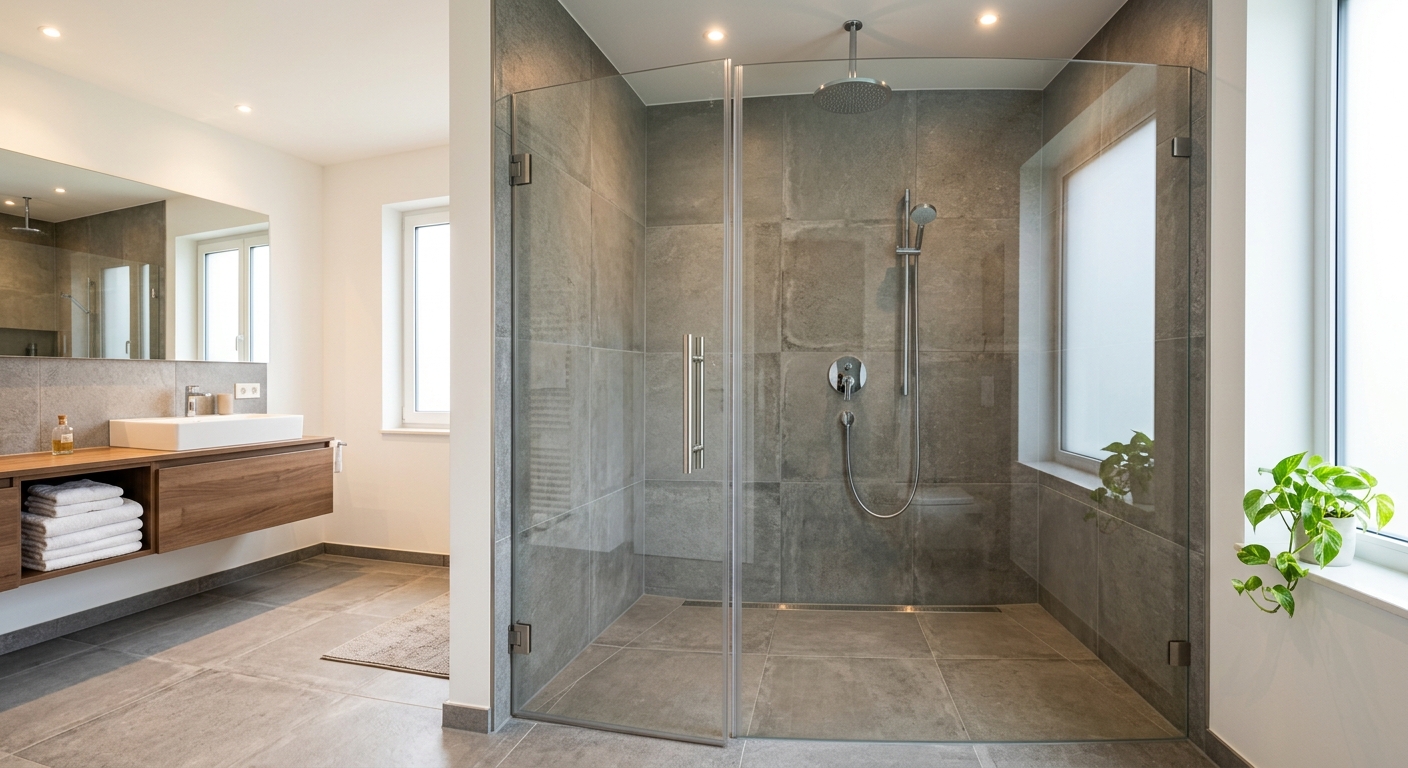
Bathroom renovation options and costs in Nelson
Bathroom renovations in Nelson can run the gamut from a quick refresh to a full gut—especially given the age of the housing stock. In Nelson (2021), 68.4% of homes were built before 1981, so it’s common to encounter dated plumbing layouts, older venting, and at times aged flooring compounds that complicate “simple” upgrades. The Kootenays don’t drive cost through extreme weather the way some regions do; instead, the budget is shaped by labour availability and mobilization across smaller centres in the broader area. When you’re sourcing trades and scheduling around tight windows, even a renovation that “should be straightforward” can become more labour-intensive once walls are opened. Projects in areas with higher turnover of older homes, like Central Nelson and the nearby Cottonwood Flats corridor, often see brisk demand for plumbers, electricians, and tilers because multiple households are renovating older bathrooms at the same time.
As a result, two homeowners can receive quotes that differ by a wide margin even when the visible finishes look similar. A cosmetic refresh typically stays near the lower end of the regional mid-market range, while a mid-range or high-end full renovation—especially when it includes electrical work and waterproofing upgrades—can climb quickly. In Nelson, once supply lines, drains, or ventilation need updating to modern BC requirements, many projects move from a “refresh” into a partial or full gut, increasing both labour hours and contingency. Use the table below as a practical starting point for comparing scopes before you ask for an itemised quote.
| Renovation Scope |
What's Included |
Typical Duration |
Price Range |
| Cosmetic refresh (paint, fixtures, accessories only) |
Paint, mirror/lighting updates, vanity top or vanity swap, tap/handle replacement, toilet seat (where allowed), towel hardware, caulking and deep clean; usually keeps existing plumbing and tile |
3–6 days |
$2,000 – $6,500 |
| Mid-range full renovation (new tile, vanity, tub/shower, electrical) |
Remove old finishes; new waterproofing system; floor and wall tile; new vanity; new tub and/or surround; updated exhaust fan and at least one electrical upgrade to meet bathroom needs; basic plumbing refresh (supply lines/valves as needed) |
2–4 weeks |
$16,000 – $26,000 |
| High-end full renovation (custom tile, steam shower, heated floors) |
Full gut; premium tile layout and custom shower/tub features; steam shower package; heated floor system; upgraded electrical (dedicated circuits where required); higher-spec waterproofing and niche/bench details |
4–7 weeks |
$27,000 – $38,000 |
| Shower-only installation (convert tub to walk-in shower) |
Demo and disposal; new shower pan and waterproofing; new tile walls; new valve trim/fixtures; proper drainage slope; exhaust fan check/update; electrical allowances for new lighting/exhaust |
2–4 weeks |
$6,000 – $16,000 |
| Bathtub replacement or tub-liner install |
Remove and replace tub (or install an appropriate liner where feasible); new sealant and trim; minor tile touch-ups; leak testing; plumbing connections and valve/trim updates as needed |
1–2 weeks |
$1,800 – $6,500 |
| Tile-only installation (floor + surround, existing layout kept) |
Demo of tile only; substrate prep; new floor and/or surround tiling with waterproofing where required; reinstallation of fixtures where they remain in place |
1–3 weeks |
$2,500 – $9,000 |
Prices are estimates only and vary by project scope, site access and material selection.
What affects the price of bathroom renovation in Nelson
In Nelson and across the Kootenays, you can see quotes swing by 30–50% for the “same bathroom” when labour logistics and hidden conditions are different. While the weather itself isn’t the main cost driver, the region’s smaller trade pool around centres like Nelson and the surrounding communities affects scheduling, mobilization, and the number of hours trades need to complete work efficiently. That’s why a bathroom refresh can still land far from the low end if plumbers and electricians need multiple visits due to discovery work.
Most importantly, local housing age drives scope. With 68.4% of homes built before 1981, there’s a higher chance of older drain stacks (often cast iron), galvanized supply lines, undersized venting, or ventilation that doesn’t meet modern bathroom expectations. When those issues are discovered after demolition, projects commonly add rough-in labour and permits/inspections, even if the homeowner intended to keep fixtures in place. As well, asbestos-containing materials are a real consideration in pre-1985 homes; if it’s found in flooring, plaster, or drywall compounds, abatement protocols can add meaningful cost—often in the range of $1,500–$5,000+ depending on extent and access. Those are the situations where a “mid-range full renovation” can move toward the higher end, closer to the $27,000–$38,000 band, especially when waterproofing and electrical updates are layered in.
Two concrete examples we see locally: (1) converting to a walk-in shower may require reworking the drain and shower slope, which is why shower-only projects can land between about $6,000 and $16,000 instead of staying near the bottom; (2) upgrading an exhaust fan isn’t just a swap—older duct paths may need modification for airflow, adding labour and material. These are typical reasons why costs can land closer to $16,000–$26,000 for a mid-range full renovation or push into higher pricing when the project becomes a gut.
| Price Factor |
Why It Matters |
Cost Impact |
| Layout change — moving drain or supply lines |
Requires demolition, rough-in plumbing work, and often additional inspection; access can be difficult in older framing |
Commonly adds a large portion of the “full renovation” gap (often several thousand dollars) |
| Tile selection — large-format porcelain vs. mosaic vs. ceramic |
Harder materials need better substrate prep; large-format increases installation precision and waste management |
Can swing tile labour and material allowances by roughly 20–40% for the same bathroom size |
| Fixture tier — builder-grade vs. mid-range vs. designer brands |
Higher-end valves, finishes, and shower components cost more and may need careful trim alignment |
Typically shifts budgets by $1,000–$6,000+ depending on brand and shower package |
| Subfloor condition — rot or unlevel concrete adds scope |
Unexpected soft subfloor or uneven base requires repairs, backer adjustments, or additional underlayment |
Often adds $800–$3,500+ and extends the schedule |
| Electrical — adding GFCI outlets, exhaust fan, heated floor circuit |
New circuits and fan duct/controls must meet provincial electrical requirements and be installed/signed by licensed work |
Frequently adds $500–$4,000+ based on complexity and wiring distance |
| Waterproofing method — membrane type and extent |
Better systems reduce call-backs and long-term moisture problems; coverage requirements may change with layout |
Can add $300–$2,000+ but often prevents bigger failures later |
| Older-home surprises — asbestos tile, cast-iron drains, galvanized pipes |
Abatement, specialized disposal, and drain upgrades increase labour, time, and permit/inspection requirements |
Often adds $1,500–$10,000+ depending on what’s found and how far it extends |
| Bathroom size — sq ft drives tile and labour time directly |
More surface area means more waterproofing, tile setting, grout lines, and drying time |
Can move the project by several thousand dollars for the same finish tier |
Permits & regulations in British Columbia
In British Columbia, many bathroom updates are considered cosmetic and typically do not require a building permit. That usually includes swapping fixtures like taps and vanities in-place, repainting, replacing a mirror/lighting, or retiling where you’re not changing the plumbing layout and no structural wall changes are involved. If you’re simply changing a tub for another tub of similar type without moving drains and supplies, that is commonly treated as a like-for-like replacement, though your contractor should confirm specifics to your exact layout and component changes.
Permits are usually required when you relocate plumbing—meaning you move a drain or supply line—or when you change the bathroom’s “functional footprint,” like converting a tub to a walk-in shower with new drainage, rough-in plumbing, and pan modifications that affect the existing plumbing system. Adding or significantly modifying exhaust fans often triggers requirements when new electrical circuits are involved, and any structural changes to walls or openings should be permitted. Electrical work must be completed and/or signed off by a licensed electrician to meet provincial code.
Step-by-step for Nelson homeowners: (1) ask for the contractor’s British Columbia trade licence number (and verify it through the applicable online registry for trades); (2) request a current certificate of insurance showing liability coverage; (3) ask how they handle workers’ compensation—ensure WSIB/WCB coverage is in place for their crew (your contractor should provide proof/clearance on request); (4) keep everything in writing, including permit responsibility (who pulls permits and who covers inspection fees if applicable).
Choosing tile, waterproofing and fixtures for your Nelson bathroom
In Nelson, the three material decisions that most affect both comfort and renovation budget are tile choice, waterproofing system, and fixture tier. First, tile: ceramic is usually the entry-level option, but it’s softer and can be more prone to chipping if the substrate isn’t perfectly prepared. Porcelain offers better durability and often handles moisture more reliably, which matters in British Columbia bathrooms where humidity and daily temperature swings are common. Natural stone (marble, travertine, slate) looks high-end, but it can require more careful sealing and offers higher material and labour complexity.
Second, waterproofing: paint-on membranes can work for certain systems, but a bonded sheet membrane or a proven modular system is often better when you want robust protection for showers and wet walls—especially with Nelson’s frequent indoor moisture cycles. A correct waterproofing build-up (including corners, seams, and transitions at the pan and curb) is what helps prevent mould and odor that can otherwise develop behind finishes. The “cheapest” membrane is rarely the lowest-cost path if a failure leads to rework.
Third, fixtures: builder-grade options can keep a project closer to the lower end of the $16,000–$26,000 mid-range band, while mid-range and designer trims are where costs rise without always improving performance. Here’s a practical way to budget: if you’re choosing between upgrading tile layout complexity and upgrading to a better shower valve/trim, it’s often more justified to spend on the valve, thermostatic control, and sealing details (performance), and keep tile upgrades to areas where you’ll feel the difference daily (like the shower surround). For example, pushing from basic to mid-range porcelain may add a few thousand dollars, but upgrading waterproofing and shower components can prevent future call-backs—often a better value than upgrading every surface to the highest aesthetic tier.
| Material / Option |
Pros |
Cons |
Price Range |
| Ceramic tile (floor + walls) |
Lower material cost, good variety of styles; straightforward install when substrate is sound |
Less dense than porcelain; may be less durable for floors; requires careful selection for slip resistance |
$2,500 – $5,500 |
| Porcelain tile (floor + walls) |
Durable, moisture-resistant, better for wet areas; wide selection of finishes including wood-look and stone-look |
More expensive tile and can increase labour with larger formats if the layout is complex |
$4,000 – $9,000 |
| Natural stone (marble, travertine, slate) |
Premium look and unique veining; strong curb appeal for buyers |
Higher material and installation time; may need sealing and more precise layout/leveling |
$7,000 – $14,000 |
| Frameless glass shower enclosure |
Modern, bright look; opens up the room visually; easy cleaning with proper squeegee routine |
Costs more than basic screens; requires correct wall anchoring and accurate plumbing alignments |
$3,000 – $6,500 |
| Prefab tub surround (acrylic) |
Fast install; fewer tile-cutting and grout lines; good water resistance when installed correctly |
Limited design variety; may not match high-end tile aesthetics; potential for seam/fit issues if framing isn’t true |
$1,800 – $3,800 |
| Custom shower pan (tile or linear drain) |
Cleaner drainage and premium shower look; can improve accessibility with right curb design |
More labour and exacting waterproofing; requires careful slope and drain alignment |
$4,500 – $12,000 |
How to choose a bathroom renovation contractor in Nelson
Choosing a contractor in Nelson comes down to proof and clarity. Start by verifying British Columbia trade licensing for the trades involved (especially electricians and plumbers), then confirm liability insurance. For coverage, ask your contractor for evidence they have workers’ compensation coverage for their employees (WSIB/WCB coverage in the Canadian system). You don’t want to discover later that coverage is missing when a subcontractor is on site.
Next, request 2–3 itemised written quotes, not one lump number. A good quote shows labour and materials separately and breaks out key line items like demolition/disposal, waterproofing, tile installation, electrical allowances, plumbing rough-in, and ventilation work. Read the scope carefully for exclusions: disposal included or not, permit pull included or not, subfloor repairs included or only “if found,” and who covers code upgrades if hidden issues appear.
Warranty matters too. Ask for workmanship warranty length and what it covers (for example, waterproofing call-backs), then check manufacturer warranties for products like tile systems, membranes, and shower components. Find out whether the warranty is transferable to you as the homeowner. For payments, a safe rule is never paying more than 10–15% upfront; hold back a meaningful amount until closeout items are complete and inspected. Finally, require a start date and a completion estimate in writing—bathrooms are often time-sensitive because trade scheduling and ordering custom tile/shower parts can affect timelines.
- Request BC trade licence details for the relevant trades before work starts.
- Ask for a current certificate of liability insurance and confirm the coverage dates.
- Verify workers’ compensation coverage (WSIB/WCB) for the crew/subcontractors.
- Get 2–3 itemised quotes with labour and materials listed separately.
- Confirm who pulls permits and whether permit/inspection fees are included.
- Check disposal and dumpster costs—make sure demo debris hauling is covered.
- Ask how they handle subfloor surprises (rot, unlevel concrete, soft spots).
- Require a written waterproofing plan (membrane type, coverage, and transitions).
- Confirm exact electrical scope: exhaust fan, GFCI, lighting, and heated floors (if included).
- Ask about schedule sequencing (plumbing rough-in, electrical, waterproofing, tile, trim).
- Review warranty details: workmanship length, product warranty terms, transferability.
- Keep payment milestones tied to progress and verify a holdback until completion.
Red flags in Nelson: (1) quotes that are “lump sum” with unclear inclusions/exclusions; (2) no proof of insurance or workers’ compensation coverage; (3) no clear waterproofing details (or “we’ll waterproof later”); (4) avoiding questions about permits/inspections when plumbing is relocated; (5) pressuring for a large upfront payment or refusing to provide a written schedule.
Frequently asked questions — bathroom renovation in Nelson
How long does a bathroom renovation take in Nelson?
In Nelson, timelines mostly depend on whether plumbing or waterproofing requires a full rebuild. A cosmetic refresh (paint, fixtures, accessories without moving plumbing) is often 3 to 6 days. A mid-range full renovation typically takes 2 to 4 weeks, because tile setting and curing schedules—and any electrical/plumbing rough-in—have to stack correctly. A shower-only conversion (tub to walk-in) often lands in the 2 to 4 week window as well. If your home is older (68.4% built before 1981 in Nelson), discovery work like supply/drain upgrades or ventilation improvements can extend the job. For a full high-end renovation with heated floors and custom detailing, plan for 4 to 7 weeks, which aligns with the $27,000–$38,000 band many homeowners target.
Do I need a permit for a bathroom renovation in British Columbia?
In British Columbia, cosmetic updates usually don’t require a permit—for example, swapping a vanity, replacing trim fixtures in place, repainting, or retiling without changing plumbing locations. Permits are typically needed when you relocate plumbing (moving drains or supply lines), convert a tub to a shower with new drainage setup, or make structural wall changes/openings. If you’re adding an exhaust fan and it involves new electrical work, the electrical portion must meet code and be done or signed off by a licensed electrician. For Nelson homeowners, the practical approach is to ask your contractor to state which tasks require permits in writing before work begins. If your contractor quotes a bathroom gut and doesn’t mention permits/inspections, that’s a scope gap you should clarify immediately.
What's the best tile for a bathroom in Nelson?
The “best” tile is the one that matches your wet-area use and your expectations for maintenance. For most Nelson bathrooms, porcelain is often the sweet spot: it’s durable and moisture-resistant, and it performs well in shower surrounds and floors when the substrate and waterproofing are done right. Ceramic can be a good budget choice, but you’ll want to be careful with slip resistance and placement. Natural stone looks premium, yet it typically costs more and demands more attention to sealing. If you’re aiming for a mid-range full renovation around $16,000–$26,000, porcelain often gives the strongest balance of performance and appearance. If you push toward higher-end finishes near $27,000–$38,000, stone features or premium custom shower pans are where that extra budget usually shows up most clearly.
Should I do a tub-to-shower conversion?
For many Nelson homeowners—especially those staying long-term—a tub-to-shower conversion is a practical upgrade because it reduces step-over risk and modernizes day-to-day use. It can also improve perceived space, and it often pairs well with better waterproofing and ventilation. The budget impact is real, though: shower-only conversions typically fall around $6,000–$16,000 depending on whether the drain needs rework, the complexity of the tile layout, and electrical allowances for new lighting/exhaust. In older homes (Nelson’s 68.4% pre-1981 stock), you may also need drain stack or supply line updates once walls open. If you love soaking tubs and your plumbing is straightforward, a tub replacement can be more cost-aligned (often $1,800–$6,500). The right choice depends on how you use the bathroom and what your hidden-condition discoveries look like.
How do I prevent mold in a Nelson bathroom?
Mold prevention in Nelson comes from controlling moisture at the source and using the right waterproofing build-up. Start with ventilation: make sure the exhaust fan is properly sized and ducted, and that it has the electrical support it needs (often tied to code-compliant circuit work). Next, waterproofing: in shower areas, a proven membrane system with correct overlap at seams and transitions is critical—water that escapes behind tile is what later feeds mould. Tile selection matters too, but workmanship matters more than marketing. Older Nelson homes (many built before 1981) can also have ventilation or substrate issues that become apparent only after demo. If your home shows signs of moisture damage or older compounds, address substrate repairs and drying before closing walls. Done properly, waterproofing + airflow is the combination that keeps bathrooms dry through British Columbia’s humid indoor conditions.
What adds the most resale value in a bathroom reno?
Resale value usually tracks “confidence” for buyers: visible improvements plus systems that reduce risk. In Nelson’s market, projects that modernize the core functions—clean waterproofing, good ventilation, reliable plumbing fixtures, and updated electrical safety—tend to outperform purely cosmetic changes. From a budget perspective, many homeowners see the best value in a mid-range full renovation (commonly $16,000–$26,000) where the work includes proper tile/waterproofing, vanity updates, and electrical upgrades like exhaust fan improvements. Buyers also respond to layout usability: a well-finished walk-in shower, a practical heated floor in the right bathrooms, and a tidy, consistent tile aesthetic. Cosmetic refreshes alone can improve enjoyment, but they rarely address the hidden conditions that old housing stock reveals. If you’re planning resale, prioritize waterproofing quality and ventilation performance before upgrading every decorative element.