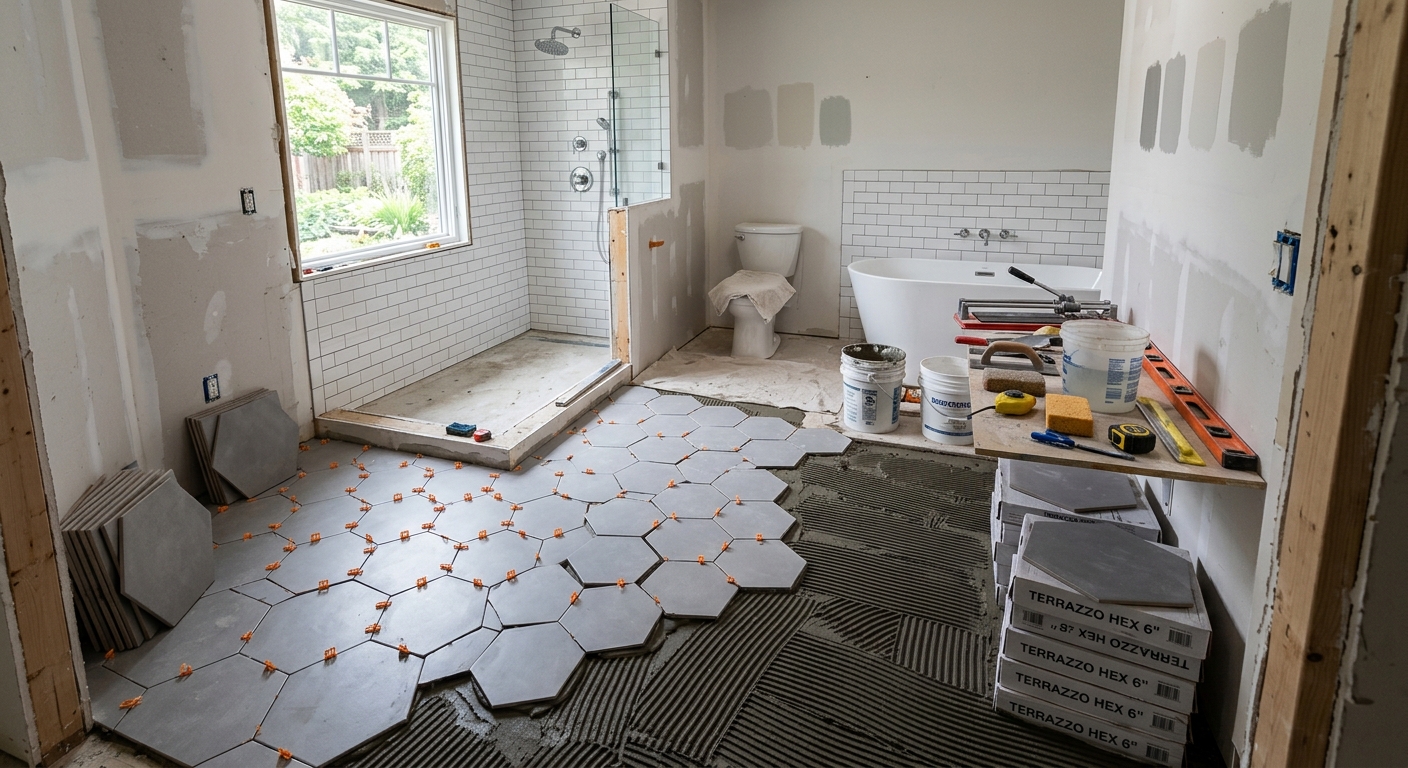
Bathroom renovation options and costs in Kamloops
In Kamloops, bathroom renovations typically start with a decision about how much to keep: your existing layout, finishes, and waterproofing. That matters because the city’s housing stock is older—about 50.8% of homes were built before 1981—so many “simple” refreshes uncover dated plumbing routes, ageing venting, and sometimes older floor assemblies that may require extra care. In the Thompson–Okanagan region, labour costs and the need to coordinate multiple trades (plumbing, electrical, tile-setting, waterproofing, and often demolition/abatement) are usually the dominant budget drivers, more than climate. While Kamloops doesn’t have coastal salt-air exposure, bathrooms still face year-round humidity swings, so waterproofing quality and exhaust performance remain critical.
Contractor demand is especially strong in Westsyde and North Kamloops, where owner-occupied homes and steady mid-market remodel activity keep crews booked. If you open walls, it’s not unusual to find cast-iron or older drain components, galvanized supply lines, or wiring that doesn’t match modern bath-load expectations. That’s why Thompson–Okanagan quotes can move from “cosmetic” to full-gut once rough-ins and venting are brought up to today’s requirements.
To help you compare options, here are realistic cost bands for common scopes in Kamloops, based on typical trade breakdowns and locally-used material tiers. Use the table to narrow your budget before you request itemised quotes.
| Renovation Scope |
What's Included |
Typical Duration |
Price Range |
| Cosmetic refresh (paint, fixtures, accessories only) |
New vanity or tap/trim swaps, mirror/lighting refresh, paint, re-caulking, toilet/vanity hardware, accessory installs; no plumbing relocation; no tile tear-out beyond minor touch-ups |
3–7 days |
$3,000–$8,000 |
| Mid-range full renovation (new tile, vanity, tub/shower, electrical) |
Demo and rebuild; new vanity and lighting; tub-to-shower or tub/shower refresh with new surround; tile floor and walls; waterproofing system; exhaust fan (or upgrade) and GFCI where needed; basic plumbing rough-in adjustments |
2–4 weeks |
$15,000–$28,000 |
| High-end full renovation (custom tile, steam shower, heated floors) |
Designer layouts; premium tilework and larger-format installation; custom shower system with niche/bench; heated floors; upgraded electrical plan and lighting layers; steam-ready plumbing/electrical coordination; enhanced ventilation/controls |
4–7 weeks |
$28,000–$45,000 |
| Shower-only installation (convert tub to walk-in shower) |
Remove existing tub; rough-in adjustments; new waterproofing and shower pan; walk-in shower enclosure options; tile walls and floor; new valve trim and accessories |
1.5–3 weeks |
$9,000–$18,000 |
| Bathtub replacement or tub-liner install |
Replace tub or install liner; re-seat surrounds where needed; new caulking and seals; minor plumbing hookup adjustments; optional access/ventilation improvements |
5–10 days |
$4,000–$11,000 |
| Tile-only installation (floor + surround, existing layout kept) |
Tile tear-out and re-set; waterproofing rebuild of tiled areas; grout/seal systems; keep existing vanity and fixtures (unless replacing for clearance); limited electrical touch-ups only if required for fan |
1–3 weeks |
$3,000–$12,000 |
Prices are estimates only and vary by project scope, site access and material selection.
What affects the price of bathroom renovation in Kamloops
In Kamloops and across the Thompson–Okanagan region, two identical-looking bathroom projects can come in 30–50% apart once you account for labour availability and the realities of older homes. In practice, labour often sits around 40–60% of a total bathroom budget here, and it can swing based on how many trades need to coordinate and how much time is lost waiting on inspections, parts, or access to rough-in areas. Because around half the region’s homes are older (with Kamloops at 50.8% built before 1981), contractors frequently encounter dated plumbing layouts, cast-iron drainage components, and ventilation that’s undersized for today’s shower use.
Older bathrooms also raise the chance of surprises. If vinyl floor tile or old drywall materials contain asbestos, abatement becomes part of the job—commonly adding $1,500–$5,000+ and extending timelines. Electrical scope can also expand when circuits are overloaded or older wiring is uncovered behind vanity walls. Even though Kamloops climate is less corrosive than the coast, the humidity in bathrooms still pushes ventilation performance and waterproofing details; better exhaust and better sealing typically cost more upfront but reduce rework.
Concrete examples from Kamloops pricing: (1) keeping the plumbing where it is can keep you in the $15,000–$28,000 mid-range band for a full reno, while moving a drain for a new shower footprint often triggers additional rough-in work and can shift you upward; (2) switching from standard ceramic to porcelain tile can raise material and install complexity, but it’s often justified in traffic areas and wet zones; (3) choosing a basic exhaust upgrade usually costs less than upgrading wiring routes and adding a properly ducted fan with the right vent termination.
| Price Factor |
Why It Matters |
Cost Impact |
| Layout change — moving drain or supply lines requires rough-in work |
New locations mean demolition, re-plumbing, venting checks, and patching multiple trades’ work |
$2,000–$8,000+ |
| Tile selection — large-format porcelain vs. mosaic vs. ceramic |
Harder materials need better prep and more labour time to cut/fit; mosaics add setting and grouting time |
$1,500–$7,000 |
| Fixture tier — builder-grade vs. mid-range vs. designer brands |
Pricing difference is obvious, but so are tolerances, included trims, and installation requirements |
$500–$4,000 |
| Subfloor condition — rot or unlevel concrete adds scope |
May require subfloor replacement, moisture repair, and additional backer/underlayment labour |
$1,000–$6,000+ |
| Electrical — adding GFCI outlets, exhaust fan, heated floor circuit |
Baths demand correct protection and code-compliant circuit planning |
$800–$4,500+ |
| Waterproofing method — membrane type and extent |
Better membranes and full coverage reduce future leaks but increase material and prep steps |
$600–$3,500 |
| Older-home surprises — asbestos tile, cast-iron drains, galvanized pipes |
Remediation and replacement/upgrade work expands scope and timeline |
$1,500–$10,000+ |
| Bathroom size — sq ft drives tile and labour time directly |
More surface area increases tile setting, waterproofing, and finishing time |
$1,000–$8,000+ |
Permits & regulations in British Columbia
In British Columbia, cosmetic updates—like swapping fixtures, replacing a vanity, refreshing paint, or retiling without changing plumbing routes—typically do not need a permit. However, permits often apply when you relocate plumbing (moving a drain or supply line), add or change bathroom ventilation that requires new wiring and circuits, or make structural changes that affect framing or wall supports. Electrical work must meet provincial code and be performed by (or signed off by) a licensed electrician. Plumbing rough-in changes generally require a permit and inspection, because the pressure test, venting/fixture requirements, and final connections need verification.
For homeowners in Kamloops, the verification process should be clear and documented. First, ask the contractor for their British Columbia trade licence number (and confirm it matches the trade they’re claiming to perform). Second, request a certificate of liability insurance showing coverage active for your project dates. Third, ask how they handle worker coverage and provide their WCB coverage details where applicable—your contractor should be able to show the appropriate coverage for their employees and subcontractors. Finally, if any work requires permits, confirm who pulls them (and that inspections are scheduled). You can also request written proof of coverage and clearance letters directly as part of your contract package before work starts.
Bottom line: keep cosmetic work “permit-light,” but expect permitting and inspection when you change drainage, ventilation, electrical circuits, or anything behind the walls.
Choosing tile, waterproofing and fixtures for your Kamloops bathroom
In Kamloops, your three biggest “budget levers” usually aren’t the labour line items—they’re tile choice, waterproofing method, and fixture tier. First, tile selection: ceramic is a common entry-level option and can work well for straightforward layouts, but installation becomes less forgiving if your subfloor is uneven. Porcelain is denser and often more appropriate for wet zones; it’s typically a mid-range choice that resists staining and handles heavy daily use better. Natural stone (like travertine or slate) can look premium, but it may need sealing schedules and careful tile layout planning to keep movement and moisture behaviour predictable.
Second, waterproofing. In British Columbia bathrooms, humidity is a fact of life, so the waterproofing system should match the assembly. Paint-on membranes can be quicker for small, simple areas, but bonded sheet membranes or a well-installed system (including correct corner treatments and overlaps) often provide more robust protection for shower floors and wet walls. A Schluter-style approach can also be excellent when installed with proper compatible components and sequencing. The goal is to prevent mould and grout breakdown by keeping water where it belongs.
Third, fixtures: builder-grade taps and shower trims lower initial cost, but mid-range or designer fixtures can improve user experience and resale value—especially when paired with good ventilation and correct valve sizing. For example, moving from a basic shower valve/trim package to a mid-range coordinated set can cost a few hundred to a couple thousand dollars, and that price difference is often justified when it reduces future leaks, improves adjustment precision, and supports higher-end shower systems.
Match your budget by pairing entry-level materials only where the assembly is simple, and spend where failure is costly: shower waterproofing, tile prep, and ventilation performance.
| Material / Option |
Pros |
Cons |
Price Range |
| Ceramic tile (floor + walls) |
Lower material cost, broad style selection, good performance with proper waterproofing |
Less dense than porcelain; can chip if poorly installed; requires careful layout for wet zones |
$3,000–$8,000 |
| Porcelain tile (floor + walls) |
Better durability and stain resistance, handles wet areas well, often available in large formats |
Can cost more per tile; large format may require more precise subfloor prep and labour |
$6,000–$12,000 |
| Natural stone (marble, travertine, slate) |
High-end look and unique veining, excellent visual impact for feature walls |
Requires sealing/maintenance; some stones need careful selection for slip resistance and moisture |
$9,000–$20,000 |
| Frameless glass shower enclosure |
Modern look, visually expands bathroom space, durable hardware when installed correctly |
Higher hardware/material cost; requires level, square walls and good waterproofing sealing details |
$2,500–$7,500 |
| Prefab tub surround (acrylic) |
Faster install, consistent factory finish, lower labour time than full tile surrounds |
Less custom look; seams and transitions require careful caulking/finishing |
$1,200–$4,000 |
| Custom shower pan (tile or linear drain) |
Can improve accessibility and drainage, premium shower feel, integrates beautifully with tile systems |
More labour and planning; linier drains need exact slope and careful detailing |
$3,500–$12,000 |
How to choose a bathroom renovation contractor in Kamloops
When you’re hiring for a bathroom reno in Kamloops (and anywhere in British Columbia), start with credentials and coverage. Ask for the contractor’s British Columbia trade licence number and verify it matches the work they’ll perform. Request a certificate of liability insurance (showing active coverage and adequate limits for your project). For worker coverage, confirm worker protection/coverage arrangements—your contractor should provide proof that employees and subcontractors are properly covered and that there’s no gap for your property. If they can’t provide documentation quickly, that’s a warning sign.
Next, get 2–3 itemised written quotes. You want labour and materials broken out separately (tile labour vs. tile supply, waterproofing materials vs. install labour, electrical/plumbing rough-in labour vs. parts). Avoid “one number” quotes unless they’re accompanied by a detailed scope checklist. Read what’s excluded: permit pulling, disposal, drywall patching, subfloor replacement, asbestos assessment/abatement, and whether supply-and-install includes fixtures or just installation. Warranty matters too—confirm workmanship warranty length and whether it’s transferable if you sell the home. Ask whether product warranties are manufacturer-based and how proof of purchase/model numbers is handled.
Finally, protect your cash flow. A common safe approach is paying no more than 10–15% upfront, then paying milestones as work completes, with a holdback until the job is finished and cleaned. Get your start date and completion estimate in writing, including how delays from inspections or material lead times will be handled.
- Provide British Columbia licence details for every trade involved (or clear subcontractor list).
- Show current liability insurance and the policy effective dates.
- Confirm worker coverage documentation for employees/subcontractors.
- Use a detailed scope document (what’s included/excluded, room-to-room).
- Get itemised quotes: labour vs materials; plumbing/electrical as separate line items.
- Ask who pulls permits and who coordinates inspections for plumbing/electrical changes.
- Clarify disposal and dump fees (construction debris removed vs. homeowner responsibility).
- Confirm demolition approach and protection for the rest of the home (floor coverings, dust control).
- Ask for waterproofing method and materials list by brand/product name.
- Require a grout/caulking and sealing plan, including wet-zone details around glass and fixtures.
- Review warranty terms in writing: workmanship, manufacturer coverage, and transferability.
- Confirm payment schedule (10–15% max upfront; holdback until completion) and change-order process.
Red flags in Kamloops include: (1) “we’ll handle everything” promises with no itemised scope or permit responsibility clarified; (2) inability to provide licence/insurance documentation before signing; (3) vague waterproofing explanations (no membrane type, no coverage plan for corners/curbs); (4) asking for large upfront payments beyond 10–15%; and (5) skipping written timelines or refusing to document exclusions/disposal in the contract.
Frequently asked questions — bathroom renovation in Kamloops
Can I keep my existing plumbing layout to save money?
Yes—keeping your plumbing layout is one of the most reliable ways to control costs in Kamloops. If you’re staying with the same drain and supply locations, you typically avoid rough-in demolition, venting review, and additional permit steps tied to relocating plumbing. That can help you target the mid-range full renovation band of $15,000–$28,000 for many bath rebuilds, especially when you’re upgrading tile, vanity, lighting and ventilation without moving the footprint. In older Kamloops homes (about 50.8% built before 1981), you may still need supply line or drain component updates, but the scope remains more predictable than a layout change. Always have a contractor verify the existing venting and pipe condition before closing walls.
How much does a walk-in shower cost in Kamloops?
A walk-in shower price in Kamloops depends on whether it’s a simple conversion (tub to shower) or a full custom rebuild. For many homeowners converting a tub to a walk-in shower, the local practical budget often falls in the shower-only installation band of $9,000–$18,000. The biggest swing factors are waterproofing complexity, tile selection, the shower pan method (including linear drains), and whether you’re adding electrical upgrades or a higher-performance exhaust strategy. In older homes, add contingency for discovered issues like cast-iron drainage components, subfloor leveling, or potential asbestos-related remediation if older materials are disturbed. A detailed itemised quote is the safest way to confirm where your cost will land.
What's the ROI on a bathroom renovation?
ROI varies by neighbourhood, finish quality, and how well the renovation matches the home’s age and buyer expectations in Kamloops. Generally, bathrooms add value when they’re functional (good ventilation, durable waterproofing, properly installed tile) and not just “pretty.” If you target a sensible mid-range full renovation scope—often within $15,000–$28,000—you’re usually balancing cost with the upgrades most buyers notice: modern lighting, better shower/tub functionality, and updated finishes. In the Thompson–Okanagan market, labour and trade availability can delay high-end projects, so timing and finish coherence matter. The most “ROI-efficient” spend tends to be waterproofing and ventilation upgrades, followed by durable tile and fixtures, rather than the most expensive decorative hardware alone.
Do I need waterproofing behind the tile?
Yes—when you’re tiling a shower or wet wall, waterproofing behind the tile is essentially required for a durable assembly in Kamloops and across British Columbia. Proper waterproofing prevents moisture intrusion into framing and subfloor, which helps reduce mould risk and grout/tile failures. The exact method depends on your shower system and walls: a bonded sheet membrane, a compatible membrane system, or a properly installed tile-ready system can be appropriate. For baths, the contractor should also plan details at corners, niches, transitions, and around glass enclosures. Because many homes in the area are built before 1981, older wall construction can be more prone to hidden moisture issues once walls open. That’s another reason waterproofing shouldn’t be skipped—even if you’re using “only tile” upgrades.
How do I compare bathroom renovation quotes?
Compare quotes by scope first, then by value. In Kamloops, quotes that look similar on paper can differ by 30–50% because one contractor includes plumbing rough-in checks, waterproofing coverage specifics, permit handling, disposal, or potential remediation while another leaves these as “allowances.” Ask for itemised line items: labour vs materials; tile labour separate from tile supply; waterproofing materials listed by type/brand; electrical work described (GFCI, exhaust fan circuit, heated floor if applicable); and plumbing rough-in described. Confirm what’s excluded: permit pull included? disposal/dump fees included? subfloor rebuild if rot is found? If one quote is based on a “cosmetic refresh” but another assumes a full tear-out, don’t compare totals—compare what’s behind the walls. A clear warranty section and a written start/completion estimate also help you judge risk.
Can I live at home during a bathroom renovation in Kamloops?
Often yes, but it depends on the schedule and how much demolition is involved. For cosmetic refreshes, most homeowners can stay in place since plumbing isn’t typically disturbed and the work stays shorter. For a full renovation—especially when walls are opened for waterproofing and plumbing/electrical upgrades—living arrangements usually require a temporary setup (like a functional main sink/bath access elsewhere in the home). In older Kamloops houses (many built before 1981), surprises can extend timelines, so plan for the possibility of more “in-between days.” To reduce disruption, request a phased plan (demo early, rough-ins coordinated, waterproofing protected quickly) and clarify dust control and how long the shower/toilet access will be offline. Your contractor should give you a written timeline so you can plan around work windows and inspection days.