Bathroom renovation options and costs in Ashcroft
Ashcroft homeowners have a few clear bathroom paths to choose from, from a quick refresh to a full gut renovation. Because 76.1% of homes in the area were built before 1981, many bathrooms start with dated layouts, older drain arrangements and plumbing materials that were never meant to accommodate today’s venting and moisture control expectations. That matters more than the local weather: Thompson–Okanagan bathroom costs are primarily driven by labour availability and the “unknowns” uncovered when walls open—rather than coastal-style salt air or extreme corrosion.
In Ashcroft, trade demand tends to concentrate around older houses in established residential blocks, especially where winters and shoulder-season freeze-thaw can expose weak ventilation and poor waterproofing. At the same time, Thompson–Okanagan labour shortages mean scheduling and coordination can influence your final price. When multiple trades are involved—plumber, electrician, tile setter, and sometimes an abatement contractor—contingencies are common, and the timeline can shift quickly once demolition starts.
If you’re trying to keep costs predictable, it helps to anchor your decisions to realistic price bands. Cosmetic updates typically sit far below full renovations, while mid-range and high-end full projects can climb toward Lower Mainland-like pricing depending on tile complexity, waterproofing scope, and electrical/venting upgrades. Use the table below to compare common scopes and durations, then choose the option that best matches your bathroom’s current condition and how much you want to change.
| Renovation Scope |
What's Included |
Typical Duration |
Price Range |
| Cosmetic refresh (paint, fixtures, accessories only) |
Paint, fan housing refresh (no ducting changes), new vanity top or vanity swap (no plumbing relocation), toilet/vanity fixtures, towel bars, mirror, caulking/trim touch-ups |
3–5 days |
$3,000–$7,500 |
| Mid-range full renovation (new tile, vanity, tub/shower, electrical) |
Remove & replace tub/shower surround and/or walls, new tile floor and surround, new vanity, toilet, plumbing rough-in adjustments as needed, new GFCI protection, upgraded exhaust fan venting, standard waterproofing membrane |
2–3 weeks |
$15,000–$28,000 |
| High-end full renovation (custom tile, steam shower, heated floors) |
Custom shower design, premium tile layout (larger format and detailed cuts), improved waterproofing system, heated floor circuit and controls, designer fixtures, possible electrical upgrades, upgraded ventilation, niche storage and custom glass |
3–5 weeks |
$28,000–$45,000 |
| Shower-only installation (convert tub to walk-in shower) |
Demolition of tub, walk-in shower base/pan or liner, tile floor and shower walls, new valve/trim, waterproofing, exhaust fan check, updated silicone/transition details |
1.5–2.5 weeks |
$10,000–$20,000 |
| Bathtub replacement or tub-liner install |
Remove existing tub (or install a certified liner where appropriate), re-set valve/trim to match, new surround where required, sealing and caulking, waterproofing at transitions, rework drywall/trim as needed |
1–2 weeks |
$6,000–$14,000 |
| Tile-only installation (floor + surround, existing layout kept) |
Tile removal and re-install, floor tile and shower surround tile (no valve relocation), substrate prep, leveling as needed, waterproofing system tied into existing details |
1.5–3 weeks |
$3,000–$12,000 |
Prices are estimates only and vary by project scope, site access and material selection.
What affects the price of bathroom renovation in Ashcroft
In the Thompson–Okanagan region—and across British Columbia generally—two “similar” bathroom quotes can differ by 30–50% even when homeowners pick comparable finishes. The biggest reason is not coastal-style climate corrosion; it’s labour rates plus the age of the housing stock and what trades uncover once demolition begins. In older Ashcroft homes (76.1% built before 1981), you can run into cast-iron or older copper drain stacks, galvanized supply lines, and ventilation that no longer performs to today’s expectations.
Those realities affect scope because rough-in work takes time and coordination. If the renovation involves bringing plumbing and venting up to current code, it can move a bathroom from a mid-range plan into a full renovation budget. Electrical upgrades are another frequent driver: overloaded circuits, outdated receptacles, or the absence of required protection can push the project upward.
Asbestos surprises are a key cost variable. Pre-1985 homes can sometimes include asbestos-containing materials in vinyl floor tile or older drywall compound. If abatement is required, budgets commonly rise by $1,500–$5,000+ and the schedule extends because of containment and clearance.
Two common Ashcroft examples: (1) keeping the existing layout can keep labour closer to a tile-only or shower-only band; (2) changing where the drain sits—or adding a new fan duct route through a tricky chase—often triggers additional framing, blocking, and patching. As a rule of thumb, mid-range full renovations can land around $15,000–$28,000, while high-end custom work and heated floors can climb toward $28,000–$45,000 when waterproofing and electrical scope expand.
| Price Factor |
Why It Matters |
Cost Impact |
| Layout change — moving drain or supply lines requires rough-in work |
Drain moves require demolition, new slope, venting coordination, and longer plumbing labour. |
Often adds $3,000–$8,000 to a bathroom scope |
| Tile selection — large-format porcelain vs. mosaic vs. ceramic |
Larger tiles increase sensitivity to substrate flatness; mosaics increase labour time for setting and grouting. |
Typically shifts $1,500–$6,000 depending on complexity |
| Fixture tier — builder-grade vs. mid-range vs. designer brands |
Higher-tier valves, trims, and toilets improve feel and performance but cost more and may require specific rough-ins. |
Often adds $500–$4,000 |
| Subfloor condition — rot or unlevel concrete adds scope |
Fixing movement/deflection and rebuilding underlayment affects waterproofing success. |
Commonly adds $1,000–$5,000 |
| Electrical — adding GFCI outlets, exhaust fan, heated floor circuit |
New circuits need load checks, cable runs, and sometimes panel capacity work. |
Often adds $800–$4,500 |
| Waterproofing method — membrane type and extent |
Better systems (sheet + details) reduce long-term risk but require more materials and careful install. |
Can add $600–$3,000 |
| Older-home surprises — asbestos tile, cast-iron drains, galvanized pipes |
Remediation and replacements add trade hours, disposal, and sometimes permit coordination. |
Often adds $1,500–$12,000+ |
| Bathroom size — sq ft drives tile and labour time directly |
More surface area equals more tile, thinset, grout, and detailing time. |
Typically shifts $1,000–$7,000 |
Permits & regulations in British Columbia
In British Columbia, many bathroom “make-it-look-new” updates are treated as cosmetic and usually don’t require permits—swapping fixtures, replacing a vanity, re-caulking, repainting, and retiling when you’re not changing the plumbing or moving structural elements. However, if you’re relocating plumbing (moving a drain location or changing where supplies enter the wall), adding or relocating an exhaust fan with new wiring or ducting, or changing any structural wall framing, that’s work that typically requires permits and inspections.
Electrical work must meet provincial code and be performed by (or signed off by) a licensed electrician—this includes adding new circuits, upgrading receptacles, and installing heated floor components. Plumbing rough-in changes also typically trigger permit requirements because inspectors need to verify pressure tests, venting/rough-in alignment, and safe connections before walls close up.
For Ashcroft homeowners, verify contractor compliance step-by-step before work starts: (1) confirm the contractor’s relevant British Columbia trade licence (or licences, where applicable) via the online public registry; (2) request a current certificate of liability insurance and ensure it matches your project address/scope; (3) ask for proof of worker coverage (commonly WCB/WorkSafe BC clearance or equivalent proof). Keep copies of these documents in your file; a credible contractor will provide them readily and won’t pressure you to start without paperwork.
Choosing tile, waterproofing and fixtures for your Ashcroft bathroom
In Ashcroft, three material decisions typically shape both your budget and your long-term performance. First is tile choice: ceramic tile is the entry-level option and is cost-effective for straightforward layouts. Porcelain tile costs more but is denser, handles moisture better, and often looks cleaner with fewer visual variations. Natural stone (marble, travertine, slate) is the luxury route—beautiful, but heavier, more expensive to fabricate, and typically demands more precise installation and sealing.
Second is waterproofing method. In Thompson–Okanagan bathrooms, the issue isn’t coastal salt air—it’s trapped moisture from imperfect ventilation and water exposure at shower walls. A paint-on membrane can work for some limited assemblies, but for showers it often isn’t as robust as a bonded sheet membrane or a comprehensive system approach (including corners, transitions, and proper flood-tested detailing). Going with the right system is what protects you from mould and substrate breakdown behind the tile.
Third is fixture tier. Builder-grade fixtures keep costs down but can struggle with feel, longevity, and part availability later. Mid-range options are usually the sweet spot for resale and daily use. Designer brands can be worth it when you’re selecting a specific valve/trim style and want a coordinated look, but they can add dollars without improving waterproofing.
Where the money is justified: if your plan is a full renovation around $15,000–$28,000, putting a bit more into waterproofing and selecting porcelain instead of basic ceramic can reduce callbacks and tile failures. Where it may not be: upgrading to natural stone when your biggest issue is outdated ventilation and tub/shower leakage usually won’t fix the root cause. Start with performance, then upgrade finishes.
| Material / Option |
Pros |
Cons |
Price Range |
| Ceramic tile (floor + walls) |
Lower material cost; straightforward installation; wide colour selection. |
Less durable than porcelain in heavy-use zones; may show wear faster depending on finish. |
$3,500–$9,000 |
| Porcelain tile (floor + walls) |
Better moisture resistance; durable; often easier to maintain with consistent appearance. |
Higher material cost; requires solid substrate prep for best results with large formats. |
$5,000–$12,000 |
| Natural stone (marble, travertine, slate) |
Unique look; premium feel; strong design impact. |
More installation labour; sealing/maintenance; variations require layout planning to avoid surprises. |
$8,000–$20,000 |
| Frameless glass shower enclosure |
Modern, brighter look; durable tempered glass; cleans with less hassle. |
Higher hardware costs; needs accurate wall alignment and waterproofing detailing at fasteners. |
$2,000–$6,000 |
| Prefab tub surround (acrylic) |
Fast install; good water management; easier to keep consistent. |
Less custom design; transitions and cut-outs can look less integrated than full tile. |
$1,500–$4,500 |
| Custom shower pan (tile or linear drain) |
Premium drainage; sleek look; can integrate slope and niches. |
More detailed waterproofing and labour; linear drains require precise install and testing. |
$4,000–$12,000 |
How to choose a bathroom renovation contractor in Ashcroft
Start by verifying British Columbia licensing and insurance. Ask for the contractor’s BC trade licence information (and licence numbers where applicable) and confirm it matches the work being proposed. Next, request a certificate of liability insurance and check that the coverage is active and appropriate for your scope. For worker coverage, ask for proof of WCB/WorkSafe BC coverage or clearance—this is especially important in older homes where demolition and potential remediation can increase risk.
Then get 2–3 itemised written quotes. You want a breakdown that separates labour and key materials (demolition, waterproofing, tile install, electrical/plumbing rough-in, disposal, and glass hardware). Avoid quotes that only list a lump sum; they make it harder to compare apples-to-apples and easier for exclusions to slip in after you’ve paid a deposit.
Read the scope carefully: confirm whether permits are included, whether disposal is included, and what’s excluded (for example, subfloor replacement, drywall patching after rough-in, or any asbestos-related contingencies if they’re uncovered). Ask about warranty terms—workmanship coverage length, what product/manufacturer warranties apply, and whether warranties transfer if you sell your home.
Finally, payment schedule matters. Never pay more than about 10–15% upfront. Hold back a portion until the job is complete and you’ve confirmed caulking, waterproofing details, and fixtures are functioning. Get a start date and completion estimate in writing so you’re not guessing around trades availability.
- Provide BC trade licence details and confirm they cover the specific bathroom work requested
- Give current certificate of liability insurance (with policy dates and coverage amounts)
- Show WCB/WorkSafe BC clearance or equivalent proof
- Use itemised quotes (labour + materials + allowance lines) instead of one lump sum
- State whether permits, inspections, and any associated fees are included
- List what’s included for demolition and disposal (and where waste goes)
- Include waterproofing scope and method (membrane type, how transitions are handled)
- Specify tile substrate prep steps (flattening/underlayment) and who pays if it’s worse than expected
- Confirm electrical scope: GFCI requirements, exhaust fan wiring, and heated floor provisions if selected
- Clarify plumbing scope: venting/rough-in adjustments if required
- Provide a written start date, milestone schedule, and an estimated completion window
- Provide workmanship warranty length and confirm product warranties apply and are not voided by installation choices
In Ashcroft, red flags include: a contractor who can’t provide proof of British Columbia licensing/insurance before starting; quotes that omit waterproofing details while still pricing “tile install”; refusing to itemise changes and allowances (especially around plumbing/venting); asking for large deposits beyond 10–15%; and giving only verbal timelines without a written schedule.
Frequently asked questions — bathroom renovation in Ashcroft
How do I plan a bathroom renovation on a tight budget in Ashcroft?
If you’re working with a tight budget in Ashcroft, plan around the goal of “keeping the structure and plumbing where they are.” Layout changes (moving drains or supplies) are where budgets often jump, because rough-in work, venting coordination, and patching add labour. For older homes (76.1% built before 1981), expect that some hidden issues can surface once walls open, so build a modest contingency rather than assuming everything will be cosmetic.
Start with a scope that matches your priorities: a cosmetic refresh is typically far less than a full gut; or choose a tile-focused plan and keep the existing tub/shower arrangement. If you want a realistic ceiling, many mid-range full reno budgets land around $15,000–$28,000, while shower-only upgrades may be more controllable if plumbing changes are minimal. Work with your contractor to lock down waterproofing method and ventilation early—those decisions prevent costly rework later.
What's the difference between a cosmetic and a full bathroom renovation?
A cosmetic bathroom renovation is mostly surface-level: paint, fixture swaps (toilet, taps, shower trim if no plumbing relocation), vanity replacements, mirror and accessories, and sometimes re-caulking or limited retiling without moving plumbing. In British Columbia, these updates often don’t require permits because you’re not changing plumbing locations or major electrical circuits.
A full bathroom renovation generally means demolition to the substrate: new tile and waterproofing, replacement of tub/shower components, possible plumbing rough-in adjustments, and electrical upgrades such as GFCI protection and exhaust fan wiring. In older Ashcroft homes, full renos also tend to uncover surprises like subfloor softness or outdated wiring. That’s why full projects commonly fall into bands like $15,000–$28,000 for mid-range, and higher if you’re adding heated floors or steam shower components.
How do I choose the right contractor for my bathroom in Ashcroft?
Choose a contractor by verifying credentials first, then by comparing itemised scopes. In British Columbia, ask for the contractor’s trade licence details and proof of liability insurance. Also request proof of WCB/WorkSafe BC coverage or clearance. Before signing, make sure the scope clearly states what each trade will do—plumbing rough-in, electrical upgrades, tile setting, and waterproofing—so there are no misunderstandings once demolition starts.
Get 2–3 written quotes that break out labour and materials separately (not just one number). Confirm whether permits are included and whether disposal is included. A reputable Ashcroft contractor should also name the waterproofing method and explain how they’ll address older-home risks—like ventilation performance and possible asbestos-containing materials in pre-1985 floor tile or older compounds—so you understand potential contingencies.
What's the most common mistake homeowners make in bathroom renovations?
The most common mistake is underestimating what happens when walls open in an older home. Many homeowners plan for finishes—tile, fixtures, and style—while assuming plumbing, venting, ventilation, and electrical will stay “as-is.” In Ashcroft, with a housing stock where 76.1% of homes were built before 1981, you’ll often find dated layouts, older pipe materials, and ventilation that no longer meets performance expectations.
Another frequent error is choosing waterproofing by cost alone. In Thompson–Okanagan bathrooms, moisture management is the long-term success factor. Skimping on waterproofing or not sealing corners, seams, and transitions properly can lead to mould or tile failure, which costs far more to fix later. If you’re budgeting, anchor your plan to a realistic band—many mid-range full renos are around $15,000–$28,000—and make sure the scope includes the waterproofing and ventilation upgrades that protect your investment.
How long does tile installation take in a Ashcroft bathroom?
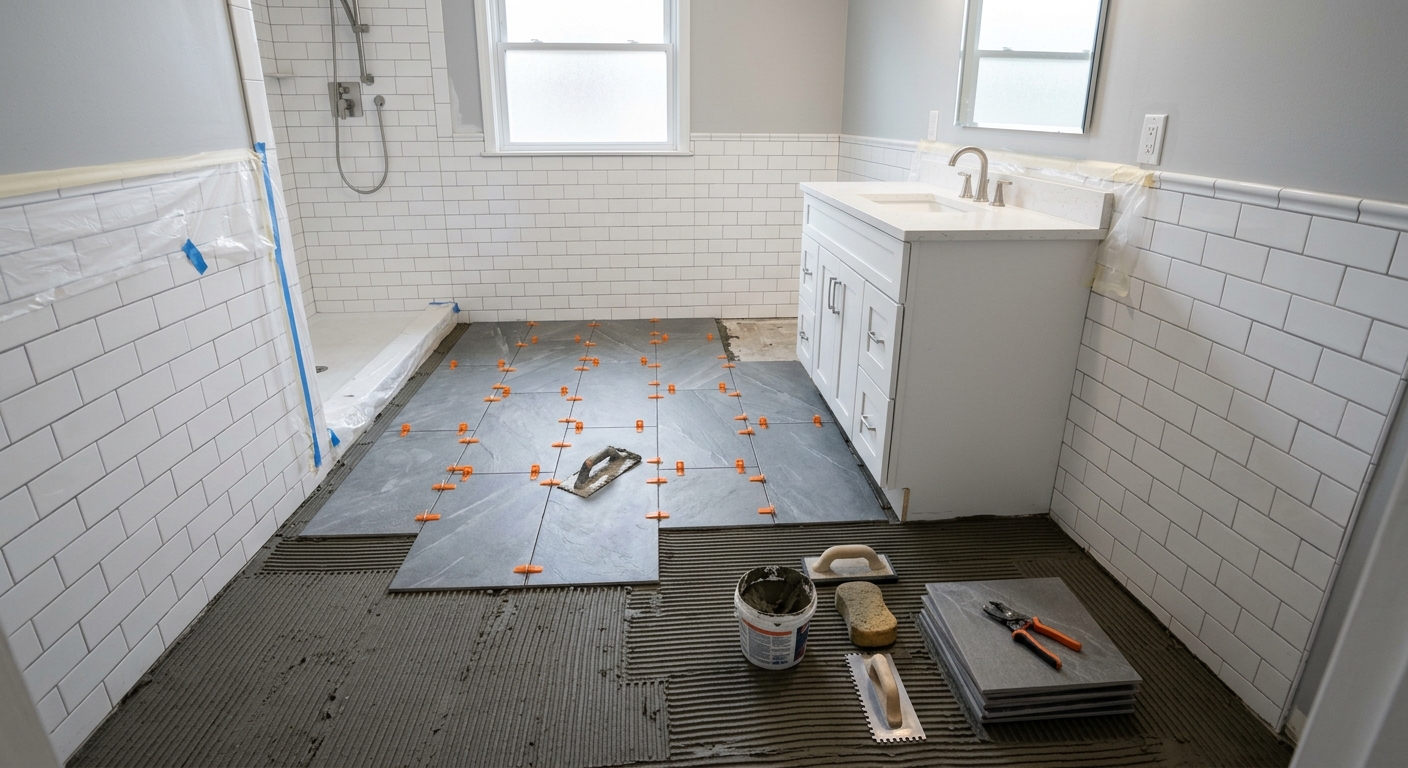
Tile installation timelines in Ashcroft depend on the bathroom size, tile type, and whether the substrate needs prep or re-levelling. For many bathrooms where the layout is kept and the floor and walls are ready, tile work commonly takes about 1–3 weeks within the overall renovation schedule. Larger-format porcelain, extensive shower surrounds, niches, and custom borders add time because layout, cuts, and grouting require more careful detailing.
Tile-only jobs often fit within that range too—assuming waterproofing and substrate preparation are straightforward. If you’re doing a tile-only installation (floor plus surround) you can typically plan around $3,000–$12,000 and 1.5–3 weeks for complete tile execution. If walls are removed for plumbing or electrical, tile install usually shifts later in the project sequence to ensure everything is inspected and dry before tiling.
How much does a bathroom renovation cost in Ashcroft?
Bathroom renovation costs in Ashcroft generally align with mid-range Thompson–Okanagan pricing, where labour and older-home conditions drive the budget more than coastal climate issues. A cosmetic refresh is usually the lowest-cost path. For more involved work, realistic planning should start with the major scopes.
For example, mid-range full renovations (new tile, vanity, tub/shower, and electrical updates) typically land around $15,000–$28,000. Shower-only conversions often fall roughly in the $6,000–$18,000 range depending on how much plumbing and waterproofing is required. If you’re doing a high-end full renovation with premium tile, heated floors, or a steam shower, budgets can climb to around $28,000–$45,000.
Because 76.1% of homes in the area were built before 1981, it’s wise to discuss contingencies with your contractor so surprises like substrate repairs, ventilation upgrades, or remediation can be handled without derailing your project.