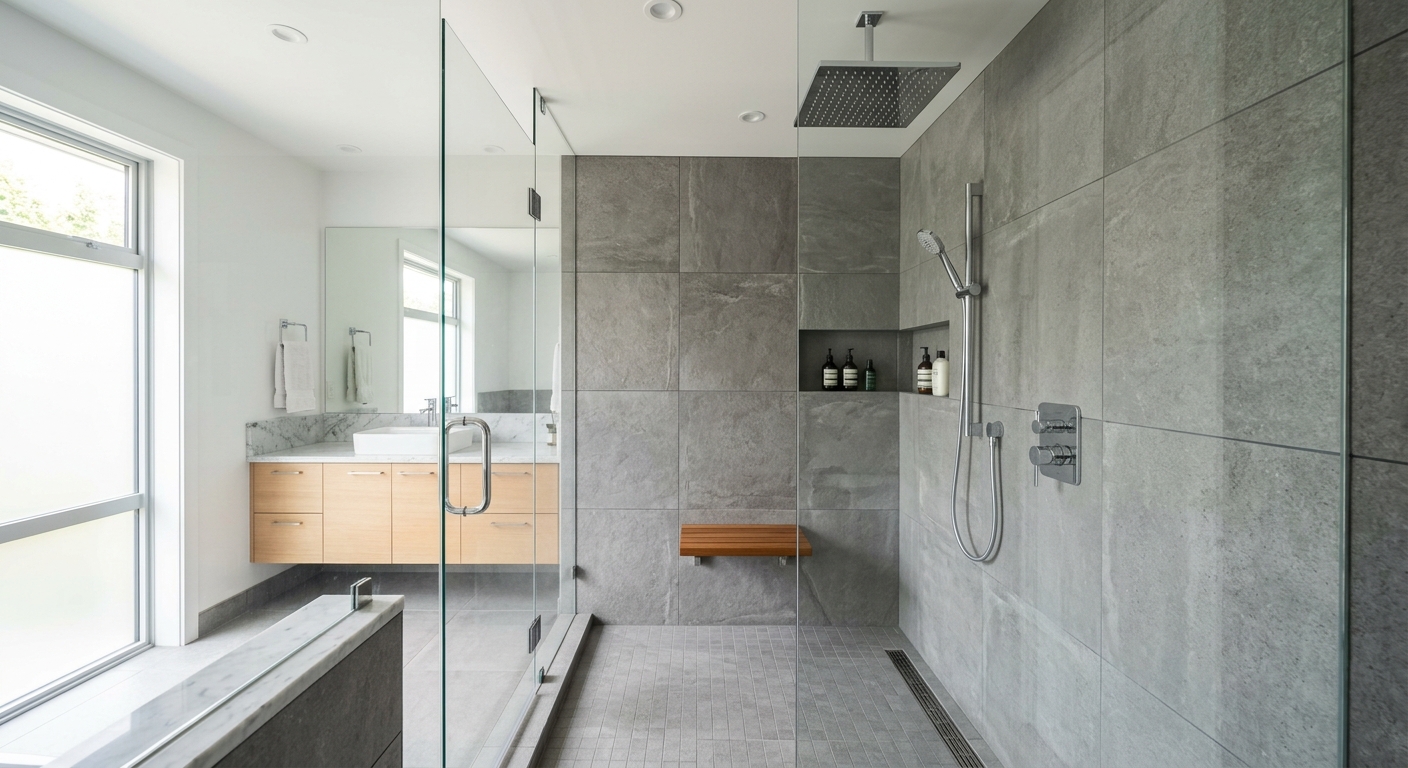
Bathroom renovation options and costs in Lacombe
Lacombe homeowners renovating a bathroom are usually balancing style goals with the realities of older housing stock. With 32.7% of homes built before 1981 in the area, it’s common to run into dated drain layouts, older shutoff locations, and flooring that may have been installed over unknown subfloor conditions. That’s why even a project that looks like a refresh on paper can expand once we open walls and floors.
In the Red Deer region, pricing is shaped more by local trade capacity and site conditions than by weather exposure. Contractors in Lacombe and nearby communities like Red Deer County are typically working with strong skilled-trade demand, so labour can price at a premium when multiple trades are needed at once (plumbing, electrical, tile and waterproofing). The practical result is that a straightforward renovation can sit around the $25,000–$50,000 range, while full remodels with plumbing/venting changes more often exceed $50,000.
Another local driver is how fast hidden issues are discovered. Pre-1980 builds in Lacombe are more likely to include cast-iron or older drain piping, and older finishes can also raise abatement or disposal scope. Disposal, inspections, and remediation add cost even when the surface materials stay modest. For budgeting, it’s safest to assume a base renovation plan plus contingency for code upgrades and surprises—especially if the bath is in older neighbourhood pockets such as downtown Lacombe.
Below are realistic options homeowners compare when gathering quotes for a Lacombe bathroom. Use these as starting points before you match scope, materials and plumbing changes.
| Renovation Scope |
What's Included |
Typical Duration |
Price Range |
| Cosmetic refresh (paint, fixtures, accessories only) |
New vanity or faucet, toilet or accessories, fresh paint, re-seal tub/shower, light hardware swap |
3–7 days |
$5,000–$12,000 |
| Mid-range full renovation (new tile, vanity, tub/shower, electrical) |
Demo + replace tub/shower or surround, new vanity and lighting, floor tile, waterproofing, updated exhaust fan and GFCI as needed |
2–3 weeks |
$25,000–$40,000 |
| High-end full renovation (custom tile, steam shower, heated floors) |
Custom shower (linear drain where applicable), premium tile layout, heated floor circuit, designer fixtures, enhanced ventilation and finishes |
4–6 weeks |
$45,000–$65,000 |
| Shower-only installation (convert tub to walk-in shower) |
Convert plumbing to shower configuration, new waterproofed shower pan, wall tile, glass enclosure, updated venting/exhaust, niche if desired |
2–4 weeks |
$18,000–$35,000 |
| Bathtub replacement or tub-liner install |
Remove and install new tub and surround, re-plumb as needed, caulking/sealing, waterproofing at seams, basic accessories |
1–2 weeks |
$6,000–$14,000 |
| Tile-only installation (floor + surround, existing layout kept) |
Remove existing finishes as required, install tile floor and wall surround, waterproofing system at wet areas, grout/seal, transitions |
1–3 weeks |
$10,000–$28,000 |
Prices are estimates only and vary by project scope, site access and material selection.
What affects the price of bathroom renovation in Lacombe
Two bathroom quotes in the Red Deer region can differ by 30–50% even when the “look” is similar. The biggest drivers are labour availability for multiple trades at once, the age and construction quality of the home, and what’s discovered after demolition. Weather plays a smaller role in day-to-day pricing than most homeowners expect; the real issue is that older assemblies can trap moisture or fail to meet current waterproofing and ventilation expectations once you start opening walls.
Lacombe’s homeowner base includes many households that own their homes (71.8% own) and a large share of older dwellings (32.7% built before 1981). That matters because older homes more often have cast-iron or older drain stacks that may need upgrades, galvanized supply lines that can affect shutoff/connection work, and ventilation setups that don’t adequately exhaust during showers. If asbestos-containing materials are discovered—such as certain vinyl floor tile or dated drywall compound—abatement protocols and disposal add meaningful cost. In practice, that’s where budgets can jump by about $1,500–$5,000+ depending on extent and removal requirements.
Here are a few concrete Lacombe examples of how costs move up or down. First, if you keep the existing tub location and don’t change the drain, you can often stay closer to tile-only pricing bands (for example, $10,000–$28,000). Second, if you convert a tub to a walk-in shower and need drain re-routing, it may push closer to the shower-install band (roughly $18,000–$35,000). Third, small electrical changes (like adding a properly placed exhaust fan and GFCI) are usually manageable, but relocating circuits for a heated-floor plan can add labour and inspection time—commonly increasing the mid-range full renovation budget (often $25,000–$40,000).
Because Red Deer-area renovations frequently include hidden condition risk, the best budgeting approach is to treat the stated price range as a “base” and set aside contingency for code and discovery items—especially in pre-1980 bathrooms.
| Price Factor |
Why It Matters |
Cost Impact |
| Layout change — moving drain or supply lines |
Requires rough-in work, potential framing modifications, and re-routing |
Often +$5,000 to +$15,000 depending on distance and access |
| Tile selection — large-format porcelain vs. mosaic vs. ceramic |
Harder products require more skilled installation and tighter planning for cuts/layout |
Often +$1,500 to +$6,000 |
| Fixture tier — builder-grade vs. mid-range vs. designer brands |
Price differences plus installation complexity (valves, trims, specialty controls) |
Often +$500 to +$4,000 |
| Subfloor condition — rot or unlevel concrete adds scope |
May require reconstruction, new backer, prep leveling and additional waterproofing detailing |
Often +$2,000 to +$10,000 |
| Electrical — adding GFCI outlets, exhaust fan, heated floor circuit |
Permits/inspection may apply; wiring and ventilation upgrades affect scheduling and cost |
Often +$1,000 to +$5,500 |
| Waterproofing method — membrane type and extent |
Better systems reduce risk of leaks; detailing around drains, niches and corners is labour-intensive |
Often +$1,200 to +$4,500 |
| Older-home surprises — asbestos tile, cast-iron drains, galvanized pipes |
Remediation/disposal, pipe replacement, and inspections expand scope |
Often +$1,500 to +$10,000+ |
| Bathroom size — sq ft drives tile and labour time directly |
More area means more tile, more setting time, more membrane and more cure times |
Typically scales the total by +$3,000 to +$12,000+ |
Permits & regulations in Alberta
In Alberta, many bathroom “cosmetic” updates are straightforward and usually do not require a permit. Swapping fixtures (faucets, toilet, vanity), repainting, replacing a like-for-like tub, and retiling within the existing layout typically fall under renovation work that doesn’t change plumbing routes or structural elements. However, permits are commonly required when you relocate plumbing, add or relocate ventilation with new electrical circuits, or change walls/structure in a way that affects framing or load paths.
In practice, the work that DO typically require a permit/inspection includes: moving a drain or supply line (rough-in plumbing changes), adding an exhaust fan that involves new wiring or circuit work, installing heated floors when it requires electrical hookup to a dedicated circuit, and any significant electrical upgrades beyond simple replacements. Any electrical work must meet applicable code and be performed by a licensed electrician (or properly signed off), and plumbing rough-in changes typically require a permit and inspection.
For a homeowner in Lacombe, verify in this order: (1) confirm the contractor’s Alberta trade licence (where applicable to their scope) and ask for their licence number; (2) request a certificate of liability insurance—make sure it’s current and matches the project address; (3) ask for WSIB/WCB clearance letters or coverage confirmation for labour on site. A good contractor will provide documents quickly and clearly. If they resist, you’re likely looking at a higher risk quote—or delays if work must be stopped for compliance.
Choosing tile, waterproofing and fixtures for your Lacombe bathroom
In Lacombe, your three biggest renovation budget levers are tile selection, waterproofing method, and fixture tier. First, tile choice drives both material cost and installation complexity. Ceramic tile is usually the entry level, and it can be a good fit for tight budgets when you keep the layout simple. Porcelain often costs more but is commonly easier to maintain and performs well in wet areas due to lower water absorption. Natural stone (marble, travertine, slate) looks premium, but it typically requires more care in finishing and can add installation time—especially with patterning and sealing.
Second is waterproofing. Alberta bathrooms experience recurring high humidity from showers, and the failure points are almost always at seams, corners, drain connections and niches. A paint-on membrane can work when applied correctly, but bonded sheet membranes and properly detailed systems (including professionally installed kits and accessories) generally reduce risk in complex shower builds. The right system is about preventing mould and moisture intrusion into framing, not just “making it look sealed.”
Third, fixture tier affects both budget and resale. Builder-grade fixtures can meet functional needs, but mid-range or designer products usually offer better valves, quieter operation, and improved longevity—important for resale in a market where many homes were built decades ago (Statistics Canada, 2021 Census).
Concrete budget example: if you have a mid-range renovation target of $25,000–$40,000, upgrading from ceramic to porcelain in the wet areas might be a smart spend that doesn’t blow up labour, especially when layout stays standard. By contrast, jumping straight to natural stone and heated floors in the same project is where budgets often move into the $45,000–$65,000 high-end band because of added materials, precision labour and electrical scope.
Match the combination to your situation: keep layout simple, invest in waterproofing, and choose a tile tier that fits the time you want the bathroom to stay “maintenance-light.”
| Material / Option |
Pros |
Cons |
Price Range |
| Ceramic tile (floor + walls) |
Good entry-level durability, wide style selection, typically easiest layout with basic tools |
Higher risk of chipping with heavier impacts; more surface maintenance depending on finish |
$5,000–$15,000 |
| Porcelain tile (floor + walls) |
Low water absorption, strong stain resistance, more consistent sizing for clean lines |
Often higher material cost; large formats need accurate subfloor prep |
$8,000–$20,000 |
| Natural stone (marble, travertine, slate) |
High-end look and uniqueness, excellent for statement niches and feature walls |
Requires sealing/maintenance; installation is labour-intensive; can be sensitive to substrate movement |
$12,000–$30,000 |
| Frameless glass shower enclosure |
Modern, brighter feel, durable glass panels and minimal visual clutter |
More expensive hardware; requires accurate framing and sealing for a clean finish |
$2,000–$7,000 |
| Prefab tub surround (acrylic) |
Fast installation, easier to keep watertight when fitted correctly, fewer tile labour hours |
Limited design flexibility; impact resistance isn’t as forgiving as tiled systems for some homeowners |
$1,500–$4,500 |
| Custom shower pan (tile or linear drain) |
Best performance when properly detailed; allows a seamless layout and modern linear-drain look |
More labour and detailing; requires precise slope and waterproofing work |
$3,500–$14,000 |
How to choose a bathroom renovation contractor in Lacombe
Choosing the right contractor in Lacombe starts with verification: licensing/qualification, insurance and jobsite coverage. Ask for confirmation of their Alberta trade licensing relevant to their work scope, then request a certificate of liability insurance showing current coverage and the correct business name. For jobsite coverage, ask for WSIB/WCB clearance letters or proof that their workers are covered. Don’t accept “we have coverage” verbally—get the document or certificate number.
Next, require 2–3 itemised written quotes that break down labour and materials separately. A proper quote lists demo, plumbing rough-in (if applicable), electrical scope, waterproofing system, tile labour, and disposal. Make sure it states what’s excluded: subfloor repairs, permit fees, asbestos testing/abatement (if discovered), and any changes if the layout must shift due to hidden piping or venting conflicts.
Warranty matters too. Confirm workmanship warranty length in writing, whether product warranties are manufacturer-backed, and whether warranties are transferable if you sell your home. A trustworthy contractor will also provide a clear schedule: a start date, estimated duration, and key milestones (demo, rough-in, waterproofing cure time, tile setting, final trim).
Payment schedule is another major control point: never pay more than 10–15% upfront for mobilization. Hold back a portion until major milestones are completed and the bathroom passes final inspection and walkthrough.
- Verify Alberta trade licence/qualification for the specific tasks they will perform.
- Request current liability insurance certificate and confirm coverage limits.
- Provide WSIB/WCB clearance letters (or equivalent coverage proof) before work starts.
- Get 2–3 itemised quotes with line-by-line labour + materials breakdown (no vague lump sums).
- Confirm permit responsibility: is it included in the price or billed separately?
- Clarify disposal: demolition debris haul-away included or an extra line item?
- Ask which waterproofing method is proposed and which products are named in the quote.
- Confirm how tile will be handled at corners, niches and transitions (and who checks substrate level).
- Request the exact fixture list model numbers if “allowances” are used.
- Review warranty: workmanship length, exclusions, and whether it transfers to the next owner.
- Agree on a payment schedule with a holdback until the final walkthrough is complete.
- Get a written timeline with cure times accounted for (especially after waterproofing and tile).
Red flags I see during bathroom renovation calls in Lacombe: a quote that doesn’t mention waterproofing details (or names only “tile and caulking”); contractors who won’t put permit responsibility in writing; unexplained allowances for major items like tile and shower glass; pushing for 30%+ upfront without milestones; and vague timelines that ignore waterproofing cure and inspection windows.
Frequently asked questions — bathroom renovation in Lacombe
How long does a bathroom renovation take in Lacombe?
In Lacombe, timelines depend mostly on whether plumbing/electrical are staying put and how complex the tile and waterproofing are. Cosmetic refreshes can be done quickly—often within a week—while mid-range full renovations commonly take about 2–3 weeks due to demo, rough-in, waterproofing, tile setting and finishing. If you’re converting a tub to a walk-in shower, add time for drain re-routing and glass enclosure fabrication, so 2–4 weeks is common. High-end builds with heated floors or custom shower elements often land around 4–6 weeks. Schedule delays usually come from material lead times or when older homes (notably those built before 1981) require extra subfloor repairs or code updates. A written start date and completion estimate will keep expectations aligned.
Do I need a permit for a bathroom renovation in Alberta?
Often, no permit is needed for purely cosmetic work in Alberta, such as replacing fixtures (vanity, toilet, faucets), repainting, and retiling where the plumbing layout stays unchanged. You typically do need permits when you change plumbing routes—like moving the drain or supply lines—or when you add ventilation/exhaust fan work that involves new electrical circuits. Heated floor installs also usually trigger electrical scope requirements and inspections. For Lacombe homeowners, the practical step is to confirm what changes trigger permits with your contractor and ensure it’s stated in the quote (permit fees included or billed separately). Regardless of permits, electrical work must be performed by a licensed electrician and meet code, and plumbing rough-in changes generally require inspection.
What's the best tile for a bathroom in Lacombe?
“Best” depends on budget and the finish you want, but for most Lacombe bathrooms, porcelain is a strong all-around choice because it performs well in wet areas and is easier to keep clean over time. Ceramic can work well for entry-level budgets and simpler layouts, but porcelain typically offers better consistency for wet-room performance. Natural stone looks luxurious, yet it usually comes with higher maintenance and more installation time, which is why it’s common in higher-end projects (often closer to the $45,000–$65,000 range when paired with upgraded shower detailing). The most important factor isn’t only the tile—it’s the waterproofing system and how the installer handles corners and transitions. In older Lacombe homes (many built pre-1981), proper substrate prep is essential so the tile system stays stable.
Should I do a tub-to-shower conversion?
A tub-to-shower conversion can be an excellent upgrade in Lacombe, especially if mobility is changing or you want easier day-to-day use. Conversions also tend to modernize the bathroom look quickly—customers often like the openness of a walk-in shower and a frameless glass enclosure. Budget-wise, conversions commonly fall in a shower-only installation band of about $18,000–$35,000, largely because moving the drain and reconfiguring waterproofing is more involved than a simple refresh. If the home is older and you discover hidden plumbing constraints, cost can rise. If you already like the tub, consider a tub replacement (often around $6,000–$14,000) as a compromise. The best decision comes from a site visit where the drain location, subfloor condition and venting are assessed.
How do I prevent mold in a Lacombe bathroom?
Mould prevention is mostly about controlling moisture at the source and eliminating weak points in the wet assembly. In Lacombe and the Red Deer region, bathrooms see repeated humidity cycles from hot showers, so ventilation is key: ensure your exhaust fan is correctly sized, ducted and used during and after showers. Next, use a proper waterproofing system and make sure it’s detailed at the shower curb or pan, corners, niches and around plumbing penetrations—caulking alone isn’t a long-term strategy in a properly built shower. Also, keep grout and seals maintained and address leaks early; older bathrooms may be more prone to hidden issues once walls are opened. If your home is pre-1985, there’s also a higher chance that older floor finishes contain materials requiring special handling; a qualified contractor will plan for discovery and remediation where needed.
What adds the most resale value in a bathroom reno?
In Lacombe, resale value is usually driven by reliability and “buyer confidence” items: a clean, modern layout; a properly waterproofed shower; updated ventilation; and fixtures that look current without being overly trendy. A mid-range full renovation often targets functionality and durability (commonly $25,000–$40,000), and those projects tend to be the sweet spot for many homeowners because they update the wet area without going fully custom. If you’re upgrading a shower, investing in a quality waterproofing method and correct tile installation is typically where value is protected—buyers can often tell when workmanship is solid. Electrical updates like GFCI outlets and a well-placed exhaust fan also help. Since many Lacombe homes were built decades ago (Statistics Canada, 2021 Census), code-aligned ventilation and moisture management can be a stronger selling point than cosmetic-only changes.