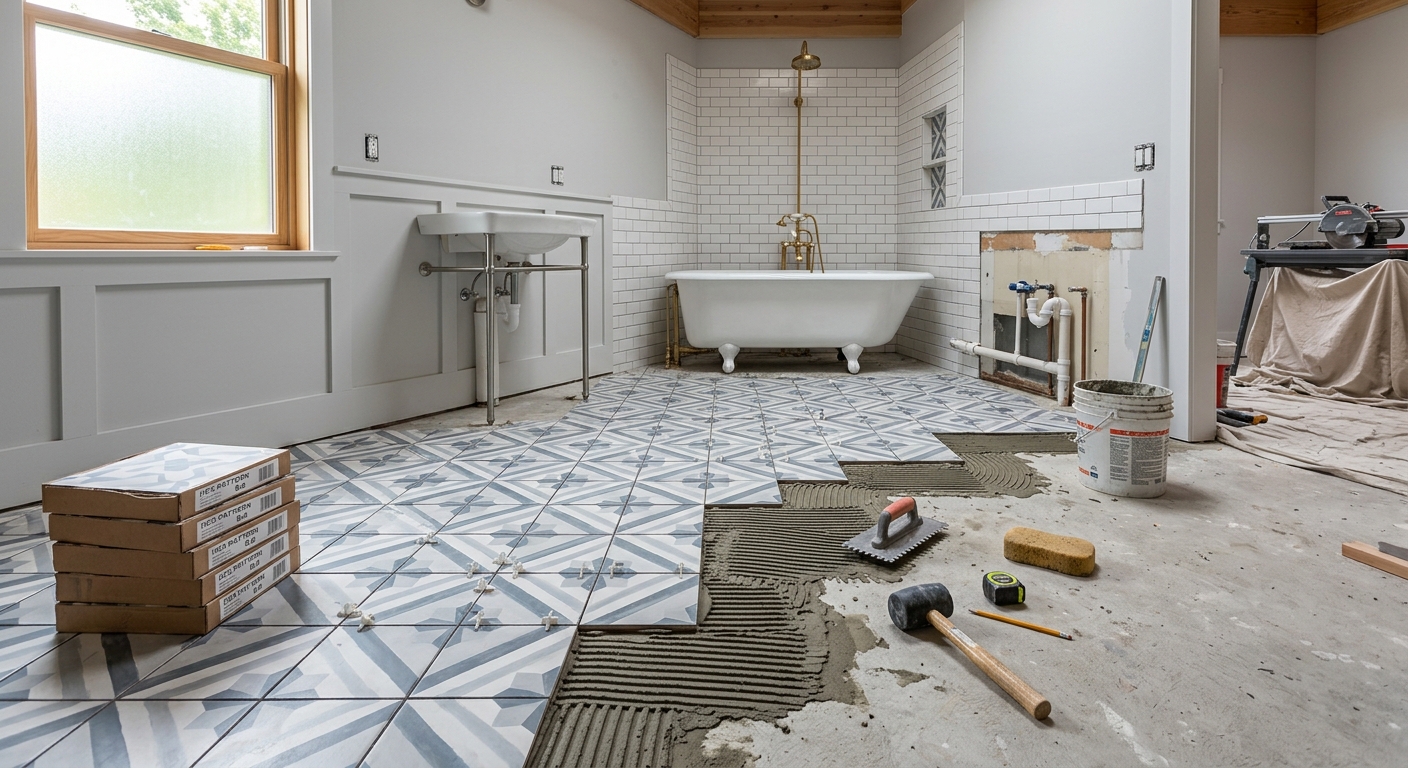
Bathroom renovation options and costs in Calgary
Calgary bathroom renovations can look straightforward on paper, but the real pricing story comes from how often we’re working in older homes. In Calgary, 35.2% of dwellings were built before 1981, which typically means dated drain layouts, older venting, and plumbing that may be cast-iron or galvanized—things you only find once the walls or floor are opened. The median household income in 2020 was about $98,000, so most homeowners are balancing upgrades with value: durable surfaces, safer electrical, and better moisture control without overbuilding.
Calgary’s climate isn’t the main cost driver the way it is for exterior work, but it still matters for bathrooms: indoor humidity spikes can be significant during winter, and that makes ventilation and waterproofing choices critical. Also, demand is steady year-round, with a concentrated market in established areas like Northwest Calgary (e.g., Varsity/Tuxedo area), where many homes are older and the trades are booked quickly during seasonal peaks. That’s why “same-sized” bathrooms can land in different price bands depending on labour availability, concealed scope, and coordination between plumbers, electricians, and tile crews.
To help you budget realistically, here are common renovation paths and what they usually include—then you can compare your expected scope against the ranges in the table below.
| Renovation Scope |
What's Included |
Typical Duration |
Price Range |
| Cosmetic refresh (paint, fixtures, accessories only) |
New vanity or faucet, toilet replacement, fan cover/upgrade (no new wiring), paint, caulking, accessory installs; layout stays the same |
3–5 business days |
$3,000–$8,000 |
| Mid-range full renovation (new tile, vanity, tub/shower, electrical) |
Demolition, waterproofing, new tile floor + surround, new vanity, tub/shower or re-set valve, updated electrical (GFCI/exhaust fan), disposal and basic carpentry repairs |
2–4 weeks |
$15,000–$22,000 |
| High-end full renovation (custom tile, steam shower, heated floors) |
Full demo, premium tile (often custom patterns), bonded waterproofing system, heated floor mat, frameless glass/steam package, higher-tier fixtures, enhanced electrical and ventilation |
4–7 weeks |
$22,000–$30,000 |
| Shower-only installation (convert tub to walk-in shower) |
Remove tub, build shower pan and waterproofing, glass enclosure, new valve/trim if needed, new niche, tile floor + walls (or surround), ventilation check |
2–4 weeks |
$8,000–$15,000 |
| Bathtub replacement or tub-liner install |
Replace tub with new unit or liner, plumbing connections, fresh caulking and trims; limited tile disturbance if layout stays put |
5–10 business days |
$500–$3,000 |
| Tile-only installation (floor + surround, existing layout kept) |
Tile removal and install for floor + shower/tub surround, patching, waterproofing upgrades as required by the system, grout/finish work |
1–3 weeks |
$3,000–$12,000 |
Prices are estimates only and vary by project scope, site access and material selection.
What affects the price of bathroom renovation in Calgary
In Calgary, two quotes for the “same” bathroom can easily swing by 30–50% because concealed conditions and trade coordination often change the scope once demolition starts. While Alberta homeowners sometimes blame climate, Calgary pricing is driven more by local labour rates and the age/condition of the housing stock—especially in the Calgary economic region, where older homes are common and many bathrooms were never designed with today’s waterproofing expectations.
For many renovations, the biggest variable is what’s hidden behind finishes. Older homes frequently have cast-iron or copper drain stacks that need upgrading, galvanized supply lines that may not pass through new shutoffs cleanly, and ventilation paths that are undersized. Those items push budgets upward even when fixtures look “mid-range.” Additionally, discovery of asbestos-containing materials—commonly in certain floor tiles or older drywall compounds—can trigger abatement protocols. When that happens, budgets often add roughly $1,500–$5,000+, depending on what’s found and how much needs removal.
Concrete examples I see often in Calgary: (1) moving a drain to improve slope for a walk-in shower can convert a straightforward $8,000–$15,000 shower-only into a higher full remodel range; (2) switching from small ceramic to large-format porcelain can raise tile labour because more prep is needed to keep planes flat; (3) adding a heated floor circuit can raise the electrical component but usually reduces total call-backs because the system is installed and tested properly with the waterproofing plan.
Bottom line: if your home is from the pre-1981 era, budget as though hidden scope is likely—and you’ll land much closer to the final numbers in the $15,000–$30,000 full-renovation bands.
| Price Factor |
Why It Matters |
Cost Impact |
| Layout change — moving drain or supply lines |
Requires plumbing rough-in, wall/floor opening, and often venting checks |
Often +$3,000 to +$10,000 |
| Tile selection — large-format porcelain vs. mosaic vs. ceramic |
Large format demands flatter substrates and more careful setting |
Often +$1,000 to +$6,000 |
| Fixture tier — builder-grade vs. mid-range vs. designer brands |
Material cost differences and sometimes rough-in compatibility |
Often +$500 to +$4,000 |
| Subfloor condition — rot or unlevel concrete adds scope |
May require subfloor replacement, patching, and waterproofing revisions |
Often +$1,000 to +$7,000 |
| Electrical — adding GFCI outlets, exhaust fan, heated floor circuit |
Licensed wiring and inspection requirements; loads affect planning |
Often +$700 to +$4,500 |
| Waterproofing method — membrane type and extent |
Better systems cost more but reduce failures and remediation |
Often +$500 to +$3,500 |
| Older-home surprises — asbestos tile, cast-iron drains, galvanized pipes |
Abatement, pipe upgrades, and demolition changes drive new labour |
Often +$1,500 to +$12,000+ |
| Bathroom size — sq ft drives tile and labour time directly |
More area = more materials, set time, waterproofing and cleanup |
Often +$2,000 to +$8,000 |
Permits & regulations in Alberta
In Alberta, cosmetic updates—like swapping a vanity, replacing fixtures, painting, or retiling without changing plumbing routes—typically do not require a permit. The line changes when you alter systems or structure: moving plumbing (relocating drains or supply lines), adding or modifying electrical circuits (for example, new wiring for an exhaust fan, heated floor, or additional GFCI-protected receptacles), and making structural wall changes generally do require permits and inspections. Any electrical work must meet Alberta code requirements and be performed or signed off by a licensed electrician.
Here’s a practical, step-by-step way Calgary homeowners can verify a contractor before work starts:
- Ask for the contractor’s Alberta trade licence information (and confirm it matches the trades they’ll perform).
- Request a current certificate of insurance for liability coverage.
- Confirm workers’ coverage (WSIB/WCB) for their crews—don’t assume subcontractors are covered.
- Look for the clearance letter or coverage verification documentation they provide upon request.
- For any permit-required scope, ask who will pull the permit and whether inspections are included in the schedule.
- Get this in writing: scope, responsibility for permits, and who covers rework if an inspection reveals non-compliance.
Taking 15 minutes to verify licensing and insurance can prevent major headaches later—especially in older Calgary homes where hidden plumbing and electrical upgrades are more common.
Choosing tile, waterproofing and fixtures for your Calgary bathroom
In Calgary, three material decisions usually determine whether your renovation ends up in a practical budget or balloons: (1) tile choice, (2) waterproofing method, and (3) fixture tier. Tile isn’t just about looks—it changes labour because it dictates how the surface must be prepped and how long installation takes.
For tile, ceramic is the entry option and works well for standard floors and walls when the substrate is stable. Porcelain is denser and more durable in wet areas; it’s a common mid-range pick when you want a long lifespan without going premium. Natural stone (marble, travertine, slate) can be beautiful, but it adds complexity—sealing, careful finishing, and extra labour for edges and transitions. Waterproofing is the next budget lever and the most important for mould prevention in Alberta’s indoor humidity cycles. A paint-on membrane may be fine for certain assemblies, but many homeowners choose a bonded sheet membrane or a modern system (often with compatible board and details) because it creates a more robust barrier and is easier to troubleshoot if leaks ever occur.
Fixture tier impacts both budget and resale. Builder-grade fixtures can keep you closer to mid-range pricing, while designer valves and specialty shower systems often push projects into higher full-reno bands.
Example: If your bathroom is targeting a mid-range full renovation around $15,000–$22,000, choosing porcelain tile and a proven waterproofing system usually fits well. However, switching to natural stone plus heated floors and steam features is what typically lifts the same bathroom toward $22,000–$30,000. The spend is justified when it’s paired with the right waterproofing and a ventilation plan—not when it’s added on top of a weak moisture barrier.
| Material / Option |
Pros |
Cons |
Price Range |
| Ceramic tile (floor + walls) |
Lower cost, wide selection, good for walls and many floor uses when properly installed |
Less durable than porcelain for some high-traffic patterns; can chip if substrate prep is poor |
$3,000–$7,000 |
| Porcelain tile (floor + walls) |
Highly water-resistant, durable finish, often easier to maintain; great for longevity in bathrooms |
Higher material and sometimes higher labour due to substrate flatness requirements |
$6,000–$12,000 |
| Natural stone (marble, travertine, slate) |
Luxury look, unique veining, premium feel and resale appeal when detailed correctly |
Requires careful sealing/maintenance; can be more labour-intensive at edges and transitions |
$10,000–$18,000 |
| Frameless glass shower enclosure |
Brightens the space, modern look, improves perceived value; sleek cleaning |
Requires precise measurements; hardware and glass choice affect cost |
$2,500–$7,000 |
| Prefab tub surround (acrylic) |
Quicker install, consistent finish, lower labour than full custom tile surrounds |
Less premium look than tile; seams and joints require good detailing |
$500–$3,500 |
| Custom shower pan (tile or linear drain) |
Allows true custom layout, modern linear drain options, seamless look with correct waterproofing |
More trades coordination; requires correct slope, waterproofing, and drain detail |
$3,000–$12,000 |
How to choose a bathroom renovation contractor in Calgary
Start by verifying Alberta licensing, insurance and workers’ coverage—then move on to how the company writes scope. In Alberta, you should confirm the contractor’s trade licence for the work they’ll perform, request a certificate of liability insurance, and verify WSIB/WCB coverage for their crew or subcontractors. Don’t rely on verbal assurances; request proof and keep it for your records. If they can’t provide clear documentation quickly, that’s a warning sign.
Next, get 2–3 itemised written quotes rather than a lump sum. A good quote separates labour and materials and clearly shows allowances for tile, fixtures, waterproofing assemblies, and plumbing/electrical work. It should also state what’s included for permits (if needed), disposal, and drywall/repairs. Read the scope line-by-line: “demo,” “prep,” and “waterproofing” are often where costs hide if exclusions aren’t defined.
Finally, check warranty and payments. Ask for the workmanship warranty length and whether manufacturer warranties for products (tile/valves/fixtures) transfer to you. For payments, never pay more than about 10–15% upfront; hold back the remainder until key inspections and completion items are done. Get a written timeline with a start date and completion estimate—bathrooms are sensitive to lead times on tile, glass, vanities, and permit scheduling.
- Confirm Alberta trade licence(s) match the work they’re proposing.
- Request liability insurance certificate (current dates, correct business name).
- Verify WSIB/WCB coverage or equivalent clearance documentation.
- Ask for 2–3 itemised quotes: labour, materials, and allowances separately.
- Check inclusions: demolition, disposal, substrate prep, and waterproofing details.
- Confirm who pulls permits and whether inspections are included.
- Verify electrical scope: GFCI, exhaust fan, and heated floor circuit (if any).
- Confirm plumbing scope: rough-in upgrades, shutoff valves, venting checks.
- Request product specs for fixtures and valves (brand/model) to avoid substitutions.
- Ask for warranty terms in writing: workmanship + how long it lasts.
- Agree on payment schedule with a low deposit and a holdback until closeout.
- Get schedule dates in writing, including lead times for tile and glass.
Red flags I commonly see with bathroom contractors in Calgary: vague “lump sum” proposals with no allowances; no proof of insurance/WSIB/WCB; waterproofing described without specifying the system or details; refusal to put the permit plan in writing; and contracts that allow large deposits without a defined milestone schedule.
Frequently asked questions — bathroom renovation in Calgary
How long does a bathroom renovation take in Calgary?
Typical bathroom timelines in Calgary range from about 1–2 weeks for a focused tile or refresh project to 2–4 weeks for a mid-range full renovation, and 4–7 weeks for high-end builds with custom tile, glass, and heated floor components. The schedule depends more on access and hidden scope than climate: older Calgary homes (many built before 1981) often require plumbing/vent checks once walls open, and that can add days. If permit work is required (for electrical changes or plumbing relocations), timelines can also stretch due to inspection scheduling. For budgeting, plan the job around steady trade availability—especially in established areas where contractors are booked during peak seasons.
Do I need a permit for a bathroom renovation in Alberta?
In Alberta, cosmetic updates like swapping fixtures, painting, and retiling without moving plumbing usually don’t require permits. Permits are commonly required when you move drains or supply lines, modify or add electrical circuits (such as new exhaust fan wiring, GFCI outlets, or heated floor circuits), or make structural wall changes. In a Calgary renovation, it’s especially important to confirm the plan before demolition: older layouts often lead to “small” plumbing moves that actually trigger rough-in work. A reputable contractor will explain whether you’re staying in a refresh lane or entering the $15,000–$30,000 full-reno scope that may include permit-required trades. Always confirm the permit responsibility in writing before work starts.
What's the best tile for a bathroom in Calgary?
The “best” tile is the one that matches your bathroom conditions and installation quality. In Calgary’s bathrooms, porcelain tile is often the sweet spot because it’s durable and water-resistant, especially for floors and full shower surrounds. Ceramic can work well for budget-friendly walls and floors when the substrate is properly prepped, but it’s less forgiving if the surface isn’t flat. Natural stone is the luxury option and can look stunning, but it needs careful sealing and premium detailing to keep it looking great. The price difference is real: moving from ceramic to porcelain commonly aligns with mid-range renovation budgets, while stone selections can push projects toward the higher end of $22,000–$30,000 when paired with more complex labour and finishing.
Should I do a tub-to-shower conversion?
A tub-to-shower conversion is a great choice for many Calgary homeowners, especially if you want easier daily use, lower maintenance, or improved accessibility in the long run. The conversion is usually priced like a shower installation, commonly landing around $8,000–$15,000, but final cost depends on whether plumbing needs relocating and how the venting and waterproofing details are handled. In older homes (including many from Calgary’s pre-1981 housing stock), the change can uncover issues with subfloor flatness or hidden drain/vent components, which can move the project toward mid-range full renovation pricing. If your goal is resale and usability, it’s often worth it—just ensure you’re pairing the conversion with a strong waterproofing system and properly pitched shower base.
How do I prevent mold in a Calgary bathroom?
Mould prevention in Calgary is mostly about controlling moisture at the source: waterproofing quality, ventilation performance, and correct installation details. Start with a proven waterproofing system (not just paint-on coverage) and make sure seams, corners, and transitions are properly detailed. A reliable exhaust fan sized for the room and ducted correctly reduces humidity spikes during winter showers—when your home is closed up and air exchange is lower. Also, avoid shortcuts like skim-coating over failed substrates. In older homes, hidden moisture can sit in floors and wall cavities, so discovery during demo matters. With correct waterproofing and ventilation, homeowners can avoid the recurring “regrout and paint” cycle that often shows up in bathrooms that were refreshed but not properly waterproofed.
What adds the most resale value in a bathroom reno?
Resale value comes from durable improvements that buyers can immediately recognize and trust: clean, modern waterproofed surfaces; updated fixtures and lighting; and evidence that the wet area was built to last. In Calgary’s market, high-impact choices typically include replacing outdated finishes with a well-executed tile system, upgrading ventilation with proper fan installation, and ensuring electrical safety (GFCI protection and code-compliant wiring). Walk-in showers with strong waterproofing can also be a selling feature, while heated floors can stand out if done professionally. If you’re trying to target a budget, many homeowners get strong value in the mid-range full-renovation band around $15,000–$22,000—especially when they avoid “cheap finishes” that fail early. Overbuilding beyond the neighbourhood’s expectations often doesn’t pay back unless the job is exceptionally finished.