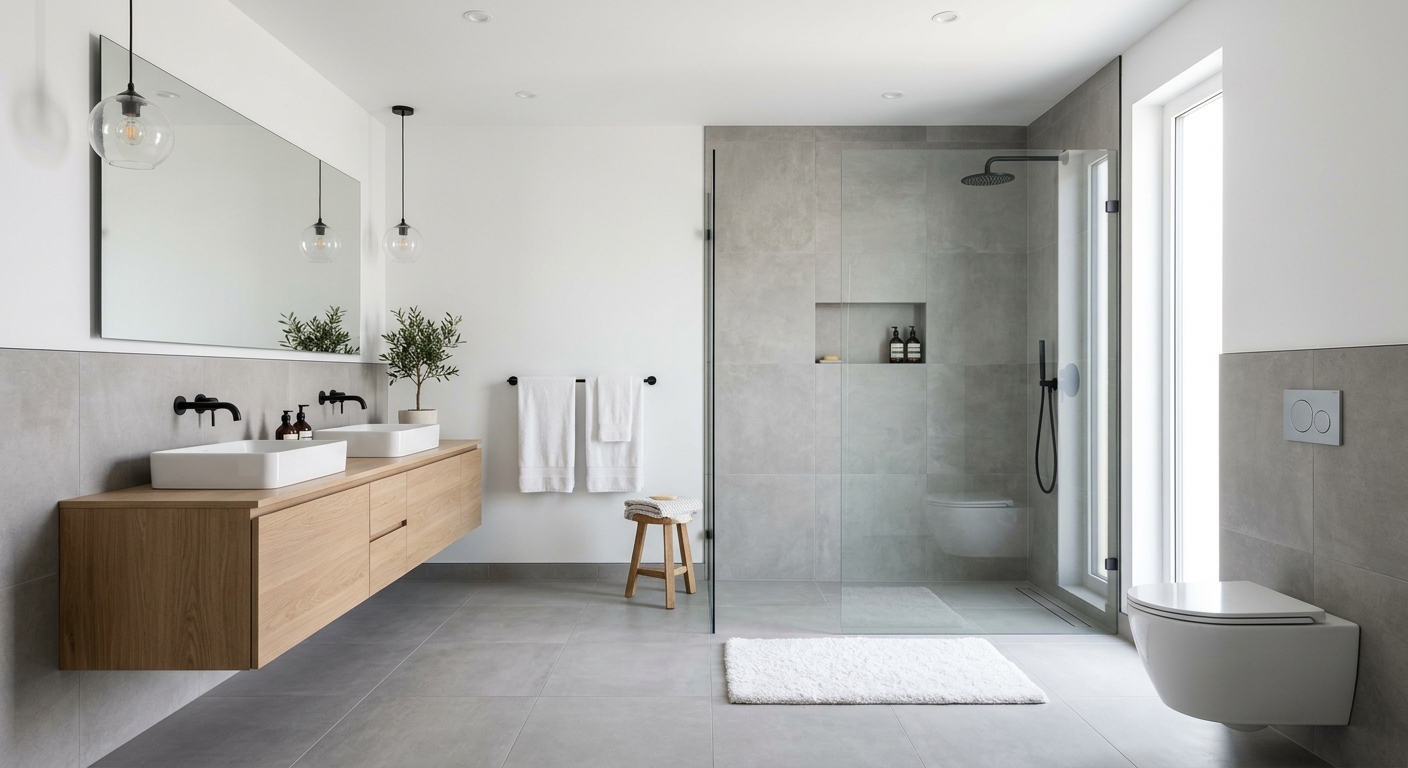
Bathroom renovation options and costs in High Prairie
High Prairie homeowners typically have three practical bathroom renovation paths: a quick refresh, a mid-range full reno, or a high-end rebuild. Because 56.2% of homes locally were built before 1981, many projects start with dated drain layouts, older supply lines, and finishes that were never designed for today’s ventilation expectations. In a community with 585 homeowner households (60.3% of households own), renovations often happen when homeowners plan long-term occupancy, which means contractors are also budgeting for “behind-the-wall” corrections, not just visible finishes.
In the Athabasca–Grande Prairie–Peace River region, costs are driven more by local labour availability and housing age than by climate swings. Alberta bathroom labour for full renovations often lands in the $5,000–$15,000 range, and trades are busy when surrounding communities are working at the same time. Older buildings also frequently require plumbing and venting upgrades—especially if you discover cast-iron drains or galvanized lines—so plumbing scope can become the biggest swing factor. That’s why contractors around High Prairie’s downtown core and nearby residential pockets (including the newer development lanes on the town’s east side) often see steady demand for bathroom work, with call-backs to correct ventilation and water-control details.
Use the ranges below as a budgeting starting point, then compare quotes based on scope and allowances before you pick finishes.
| Renovation Scope |
What's Included |
Typical Duration |
Price Range |
| Cosmetic refresh (paint, fixtures, accessories only) |
Paint, swap vanity or toilet (if supply/rough-in already matches), replace lighting, upgrade accessories, reseal tub/shower where needed |
3–7 days |
$3,000–$8,000 |
| Mid-range full renovation (new tile, vanity, tub/shower, electrical) |
Demolition, new tile floor/surround, new vanity and fixtures, bathtub and/or shower set, new exhaust fan, basic electrical upgrades (GFCI as required), waterproofing and plumbing adjustments as needed |
2–4 weeks |
$14,000–$22,500 |
| High-end full renovation (custom tile, steam shower, heated floors) |
Higher-end tile and trim, heated floor system, custom shower/steam components, upgraded waterproofing system, refined electrical (fan with proper ducting), possible layout improvements |
4–7 weeks |
$22,500–$32,000 |
| Shower-only installation (convert tub to walk-in shower) |
Demo and removal of tub, new walk-in shower pan/liner or tiled base, tile surround, glass (if chosen), new fixtures, ventilation check and electrical adjustments as required |
1.5–3 weeks |
$7,500–$15,000 |
| Bathtub replacement or tub-liner install |
Replace with new bathtub and surround updates or install a tub liner where compatible, recaulk and reseal, minor plumbing connection changes, wall touch-ups |
2–5 days |
$1,500–$9,000 |
| Tile-only installation (floor + surround, existing layout kept) |
Remove existing tile (and underlayment if required), install new floor and wall tile, waterproofing at wet areas, grout/seal, minimal fixture changes if plumbing is already correct |
1–3 weeks |
$2,000–$12,000 |
Prices are estimates only and vary by project scope, site access and material selection.
What affects the price of bathroom renovation in High Prairie
In High Prairie and the broader Athabasca–Grande Prairie–Peace River region, the same “bathroom renovation” label can produce quotes that vary by 30–50% because contractors are pricing different levels of risk and rework. Labour and availability are the first driver: when trades are in strong demand across the region, bathroom labour (especially for plumbing and electrical tie-ins) rises and schedules tighten. The second driver is housing age—since 56.2% of local homes were built before 1981, it’s common to uncover dated rough-ins and materials that must be corrected to meet today’s installation expectations.
Climate matters, but mostly indirectly. Alberta winters don’t “cause” mould by themselves; the real cost comes from moisture control details like exhaust fan performance and waterproofing continuity. In older homes, you may find cast-iron or copper drain stacks that need upgrading, galvanized supply lines with age-related restrictions, and ventilation that simply can’t keep up. Those issues inflate scope and can double typical plumbing budgets if corrections include re-routing drains or adding venting. If you encounter asbestos-containing materials (for example, some older vinyl floor tile or older drywall compound), abatement protocols can add $1,500–$5,000+ to the budget.
Two concrete High Prairie examples that commonly raise cost: (1) converting from a tub to a walk-in shower often forces drain adjustments, pushing you toward the upper end of the shower installation band ($7,500–$15,000); (2) retiling on an older, uneven subfloor can add underlayment leveling and slower installation, pushing tile-only work toward the top of $2,000–$12,000. On the other hand, keeping layout and using mid-range finishes can keep a full reno closer to the base of $14,000–$22,500.
| Price Factor |
Why It Matters |
Cost Impact |
| Layout change — moving drain or supply lines requires rough-in work |
Moves trigger demolition, rough-in plumbing, testing, and sometimes venting adjustments |
Often +$3,000 to +$10,000 |
| Tile selection — large-format porcelain vs. mosaic vs. ceramic |
Harder materials require more careful cuts, setting time, and labour for alignment |
Typically +$1,000 to +$6,000 |
| Fixture tier — builder-grade vs. mid-range vs. designer brands |
Higher tiers cost more and sometimes require more precise installation components |
Often +$800 to +$5,000 |
| Subfloor condition — rot or unlevel concrete adds scope |
Needs repair, blocking, moisture-safe underlayment, and extra labour for leveling |
Often +$1,000 to +$7,000 |
| Electrical — adding GFCI outlets, exhaust fan, heated floor circuit |
New circuits require licensed electrical work, routing, and inspections |
Often +$500 to +$4,000 |
| Waterproofing method — membrane type and extent |
Better systems cost more and take longer, but reduce future failure risk |
Typically +$600 to +$3,500 |
| Older-home surprises — asbestos tile, cast-iron drains, galvanized pipes |
Hazard discovery triggers remediation; plumbing deterioration triggers replacement |
Can add +$1,500 to +$12,000+ |
| Bathroom size — sq ft drives tile and labour time directly |
More area means more materials, more prep, and longer installation time |
Commonly varies by +$1,500 to +$8,000 |
Permits & regulations in Alberta
In Alberta, not every bathroom update requires a permit, but the work that changes plumbing or electrical systems usually does. In practical terms for High Prairie homeowners: cosmetic updates such as swapping fixtures (within existing rough-in compatibility), painting, replacing a vanity (without changing plumbing locations), and redoing finishes like tile without moving plumbing typically do not require a permit. However, if you relocate plumbing—moving the drain or supply lines—or you install/upgrade an exhaust fan that involves new electrical wiring or a new circuit, that typically requires permitting and inspection.
Electrical work must be completed or signed off by a licensed electrician to meet Alberta electrical safety requirements. For plumbing rough-in changes, permits and inspections are commonly triggered because the work affects watertightness, drainage, and (in many cases) venting. Structural wall changes (even “small” ones) can also push a project into permit territory because they may affect load paths or require inspection before closures.
How to verify before you sign: (1) ask for the contractor’s Alberta trade licence number (and confirm it online via the provincial trade registry where applicable); (2) request a certificate of liability insurance—ensure the coverage limits match the project value and that you’re listed as an additional interested party if offered; (3) confirm WSIB/WCB clearance or coverage if they use employees (or provide the appropriate confirmation if they’re structured differently). Get these documents before work starts, and keep copies with your contract.
Choosing tile, waterproofing and fixtures for your High Prairie bathroom
In High Prairie, your biggest budget levers are usually tile complexity, waterproofing system choice, and fixture tier. First: tile choice. Ceramic tile is an entry-level option and can be cost-effective, but it’s more prone to chipping on corners and can be less uniform for large-format layouts. Porcelain tile is generally denser and handles busy bathrooms better, often making it a better mid-range value. Natural stone (marble, travertine, slate) looks premium, but it can require sealing and more labour for finishing details and fitting around trims.
Second: waterproofing method. Alberta humidity and winter heating cycles can create condensation at the wrong time if the bathroom is under-ventilated. Paint-on membranes may work for certain situations, but the most reliable results usually come from a full, continuous system: bonded sheet membranes or a proven thin-set waterproofing approach with proper overlap and attention at corners, niches, and transitions. If the waterproofing layer is compromised, you can end up with grout failure and mould risk—even when the visible tile looks fine.
Third: fixture tier. Builder-grade fixtures keep the initial budget lower, but mid-range or designer brands can improve user experience (valves, pressure balance, smoother hardware) and often hold up better. If you’re considering a high-cost upgrade, a good example is stepping from ceramic to porcelain: you might spend an extra $500–$2,500 on materials, and that can be justified if it reduces replacement risk and improves appearance longevity, especially in a full reno near the mid-range band ($14,000–$22,500).
The best combination is the one that matches your ventilation reality, your layout, and the likelihood of older-home surprises behind the walls.
| Material / Option |
Pros |
Cons |
Price Range |
| Ceramic tile (floor + walls) |
Lower material cost, wide design options, good for budget renovations |
Can chip more easily; may require more careful handling and select pieces for wet areas |
$2,000–$7,000 |
| Porcelain tile (floor + walls) |
More durable, better for high-traffic floors, holds colour and finish well |
Higher material cost; larger formats may be harder to install on imperfect subfloors |
$4,500–$12,000 |
| Natural stone (marble, travertine, slate) |
Luxury look, unique character, strong curb appeal and resale attractiveness |
Often needs sealing/ongoing care; labour-intensive fitting and finishing |
$8,000–$18,000 |
| Frameless glass shower enclosure |
Modern appearance, easier to wipe clean, improves perceived space |
More expensive; requires accurate layout and solid waterproofing at anchoring points |
$2,500–$6,500 |
| Prefab tub surround (acrylic) |
Fast install, watertight when correctly set, budget-friendly alternative to full tile walls |
Less custom look; seams require proper caulking and can show wear sooner |
$1,000–$3,500 |
| Custom shower pan (tile or linear drain) |
Clean, custom look; linear drain can improve water evacuation and modern styling |
Higher labour and waterproofing demands; more detail around slope and drain placement |
$2,500–$8,500 |
How to choose a bathroom renovation contractor in High Prairie
When you’re hiring a bathroom renovator in Alberta, start with verification and then lock down scope. A legitimate contractor should be able to show an Alberta trade licence (where applicable for their work category), current liability insurance, and proof of WSIB/WCB coverage for their employees. Ask to see the certificate of insurance and clearance letter before you sign. If you’re unsure which document applies to your contractor’s structure, request written confirmation of their coverage and keep it with your contract.
Next, get 2–3 itemised written quotes. You want a breakdown that separates labour from materials (tile, waterproofing system, fixtures, glass, electrical/plumbing line items), not a single lump sum. Read the scope carefully: what is included for permits, who pulls them, and what does disposal cover? In older High Prairie homes, confirm whether the quote includes underlayment removal, subfloor repairs, and any allowances for hidden work. Warranty matters too—ask for the workmanship warranty length and whether product warranties from manufacturers are included and transferable to you.
For payment scheduling, I recommend never paying more than 10–15% upfront. Hold back a portion until the job is substantially complete and you’ve verified waterproofing coverage, caulking/grouting quality, and fixture operation. Finally, insist on a start date and a completion estimate in writing so you can plan around contractor scheduling in the Athabasca–Grande Prairie–Peace River region.
- Ask for licence and insurance documents before contract signing
- Confirm WSIB/WCB coverage (or written clearance where applicable)
- Request 2–3 itemised quotes with labour and material breakdowns
- Verify who pulls permits and whether permit fees are included
- Confirm disposal (dumping fees, hauling) is included in the scope
- Ensure waterproofing method and brand are specified in writing
- Check that tile underlayment, leveling prep, and membrane details are included
- Ask what happens if asbestos or other hazardous materials are discovered
- Review the inclusions list for exhaust fan ducting/venting and electrical work
- Confirm warranty terms: workmanship length, coverage scope, and exclusions
- Set a payment schedule with a realistic holdback until final inspection/clean-up
- Get a written timeline with milestone dates (demo, rough-in, tile, final trim)
Red flags I see too often in High Prairie: (1) quotes that don’t specify waterproofing method or don’t mention who is responsible for ventilation upgrades; (2) “cash discount” offers that avoid written scopes and warranty terms; (3) no proof of insurance/WSIB/WCB and reluctance to provide licence details; (4) payment requests over 20% upfront without a clear schedule; (5) missing allowances for older-home surprises like subfloor repairs, cast-iron/copper drainage corrections, or electrical upgrade needs.
Frequently asked questions — bathroom renovation in High Prairie
What adds the most resale value in a bathroom reno?
In High Prairie and across Alberta’s smaller markets, resale value usually comes from reliability and modernization, not just upgrades. The items that tend to move the needle most are: a clean, durable tile install with proper waterproofing; a properly vented exhaust fan (so the bathroom dries effectively in winter); and updated lighting/fixtures that look current but also function well. If you’re choosing between options, a mid-range full renovation (often around $14,000–$22,500) typically adds more perceived value than a cosmetic refresh because it addresses moisture control and aging surfaces. Also, because 56.2% of local homes are older (built before 1981), buyers often expect that plumbing and ventilation issues were reviewed rather than “patched.”
Can I keep my existing plumbing layout to save money?
Yes—keeping your plumbing layout is one of the best ways to control cost in High Prairie. When you don’t move the drain or supply locations, you usually avoid a lot of rough-in plumbing work, demolition, and the potential venting changes that can appear in older homes. That’s where quote spreads can widen across the region. If your existing tub/shower location and toilet plumbing are staying put, you can often focus spending on waterproofing, tile, and fixtures while staying closer to the lower end of bathroom reno pricing bands. For example, a tile-focused project (floor + surround, layout kept) may land in the $2,000–$12,000 range, while a mid-range full reno typically sits around $14,000–$22,500. The key is confirming the shutoffs, supply condition, and drain condition during demo.
How much does a walk-in shower cost in High Prairie?
In High Prairie, a walk-in shower cost depends on whether you’re converting from a tub, what the shower base is (liner vs. custom tiled pan), and if you’re adding glass and upgrading ventilation. As a budgeting benchmark, shower-only installation (convert tub to walk-in shower) commonly lands in the $7,500–$15,000 range for a typical Alberta bathroom. Higher end pricing usually happens when drain placement needs adjustment, the waterproofing system is more robust, and you add frameless glass or a linear drain. If you keep the plumbing location, your cost is more likely to sit toward the middle. If you discover older drain issues during demo, allowances can rise quickly, especially in pre-1981 housing stock where cast-iron or dated plumbing may need correction.
What's the ROI on a bathroom renovation?
ROI varies by buyer preferences and how complete the renovation is, but in High Prairie the strongest returns generally come from projects that reduce future maintenance risk. That means: dependable waterproofing, correct ventilation, and fixtures that don’t create nuisance repairs. Cosmetic updates help, but they often don’t command the same return as addressing the systems behind the wall—particularly in homes built before 1981 where older drainage and ventilation were common problem points. If you’re targeting value, a mid-range full renovation around $14,000–$22,500 is a practical “buy-it-now” zone for many homeowners, while high-end work closer to $22,500–$32,000 can provide better satisfaction but may not fully recoup the premium in every sale situation. Think of ROI as a mix of resale appeal and reduced repair risk, rather than a guaranteed percentage.
Do I need waterproofing behind the tile?
Yes—waterproofing behind the tile is strongly recommended and, in many cases, effectively required for a durable shower and wet-area system. In High Prairie’s Alberta conditions, the bathroom dries, but not instantly; if moisture isn’t managed correctly, grout cracks and wall assemblies can hold water longer than expected. A proper waterproofing approach is about continuity: it must connect at seams, corners, niches, and transitions so water can’t migrate into framing or under tile. Contractors should specify the waterproofing method (for example, bonded sheet membrane or a full membrane system) rather than relying on paint-on products alone for shower wet zones. Even during a “tile-only” renovation, I’d expect the waterproofing scope to match the wet area you’re redoing. If your quote is quiet on waterproofing, ask directly.
How do I compare bathroom renovation quotes?
Start by comparing quotes apples-to-apples. In High Prairie, the biggest differences usually come from labour rate assumptions, how each contractor handles older-home risks, and what’s actually included behind the walls. Ask for itemised breakdowns: labour vs materials, and line items for waterproofing, electrical work, plumbing rough-in adjustments, and disposal. Confirm whether permits are included, who pulls them, and whether the quote includes exhaust fan ducting/venting changes when needed. Check warranty terms and workmanship coverage, plus the payment schedule (avoid upfront payments beyond 10–15%). Finally, look at price relative to scope: a “full renovation” should land roughly within the full renovation bands ($14,000–$32,000 in your market) unless it’s truly cosmetic. If one quote is dramatically lower, the missing scope is usually the cost driver you’ll pay later.