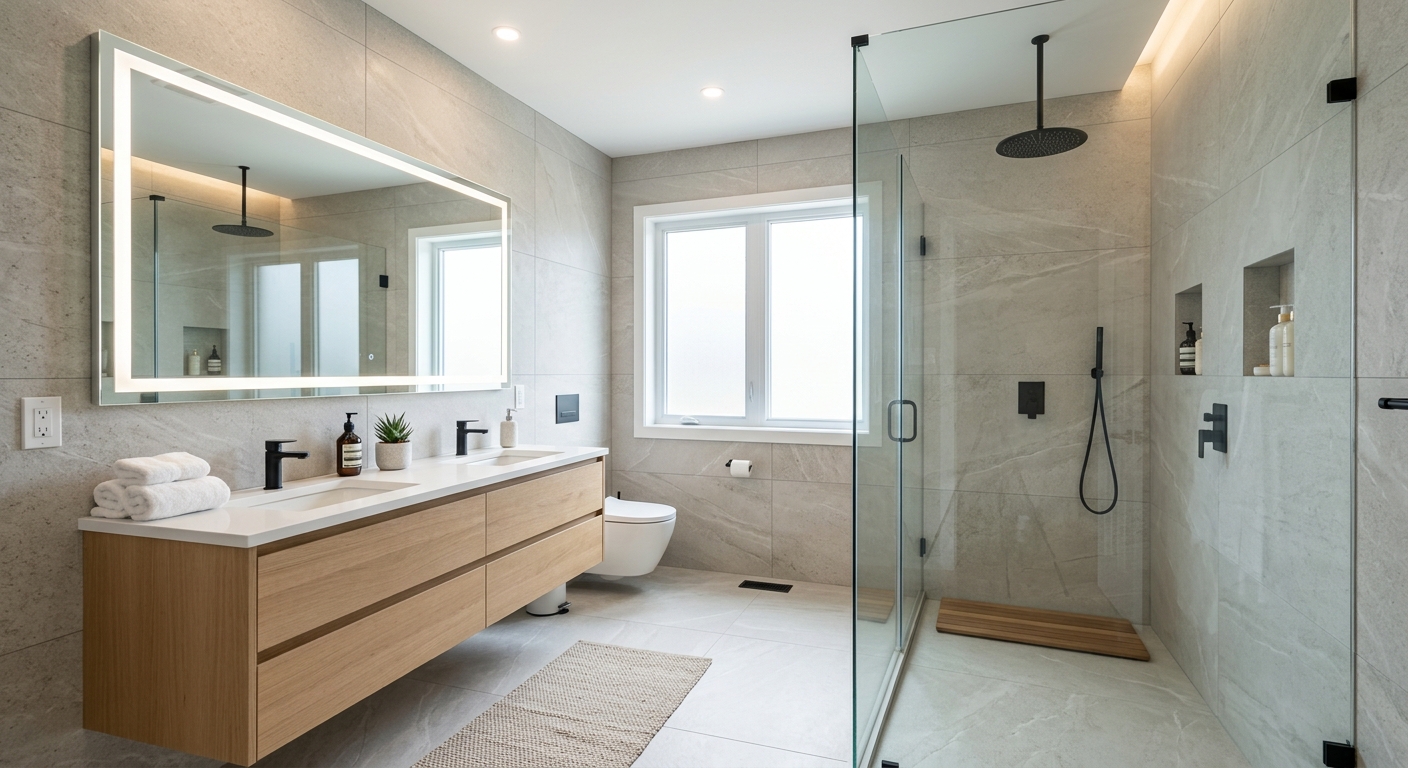
Bathroom renovation options and costs in South Riverdale
South Riverdale homeowners typically approach a bathroom reno with a clear goal—freshen the look, upgrade fixtures, or do a full rebuild—but the final price still depends on how much gets opened up once the old tile and subfloor come out. In South Riverdale (population 27,876 per the Statistics Canada, 2021 Census), many homes sit in the older end of Toronto’s housing stock, where dated drain layouts, older shut-offs, and prior repairs are common. That’s why two homes with “the same size” can land in very different budgets: once walls and floors are opened, you may find cast-iron or undersized drains, galvanized supply lines, or even asbestos-containing materials in older floor tile and some drywall compounds—especially in pre-1985 renovations. (Statistics Canada, 2021 Census)
Toronto market pricing is driven mainly by labour rates and trade availability. The GTA commands a premium for skilled tilers, plumbers, and electricians, and bathroom work is labour-intensive—particularly tiling, waterproofing details, and complex plumbing layouts. While climate doesn’t swing costs like it does in extreme freeze-thaw regions, Ontario humidity and condensation still make waterproofing and ventilation non-negotiable, which affects both material choice and workmanship. In South Riverdale, demand is especially steady around the Queen/King East corridor and the transit-heavy pockets where access is tighter and projects often need careful scheduling.
Below are realistic option ranges you can use as a starting point before you compare contractor quotes—then we’ll break down what moves those numbers up or down in the next section.
| Renovation Scope |
What's Included |
Typical Duration |
Price Range |
| Cosmetic refresh (paint, fixtures, accessories only) |
New paint, vanity swap (if no plumbing relocation), tap/fixture replacements, accessories, caulking refresh, deep clean |
3–7 days |
$2,500–$6,000 |
| Mid-range full renovation (new tile, vanity, tub/shower, electrical) |
Demo and rebuild of finishes, floor + wall tile, new vanity and mirror, tub/shower refresh or replacement, exhaust fan, GFCI upgrades, basic plumbing tie-ins, new waterproofing system |
2–3 weeks |
$12,000–$20,000 |
| High-end full renovation (custom tile, steam shower, heated floors) |
Custom shower system, premium tile layout, heated floor wiring, upgraded exhaust/venting, designer vanity, better waterproofing/membrane build-up, upgraded trim and hardware, more complex plumbing |
3–5 weeks |
$20,000–$30,000 |
| Shower-only installation (convert tub to walk-in shower) |
Remove tub, build walk-in shower with waterproofing, curb/curbless options, new glass (or curtain track), drain modifications as required, new valve trim, ventilation check |
2–4 weeks |
$15,000–$24,000 |
| Bathtub replacement or tub-liner install |
Replace tub (or install liner where suitable), new surround materials, reglaze/recache where applicable, caulking/sealing, plumbing checks for shut-offs and fittings |
1–3 weeks |
$3,000–$8,000 |
| Tile-only installation (floor + surround, existing layout kept) |
Tile removal and reinstallation, floor preparation/leveling, waterproofing to wet areas, new grout and sealers, vanity and fixture masking/reinstallation |
1–3 weeks |
$6,000–$16,000 |
Prices are estimates only and vary by project scope, site access and material selection.
What affects the price of bathroom renovation in South Riverdale
In Toronto and across Ontario, it’s normal to see quotes for what looks like the “same bathroom” vary by 30–50%. The biggest driver isn’t climate—it’s labour rates and the realities of older housing stock in the Toronto economic region. When trades are busy, hourly premiums for plumbers, electricians and tilers increase, and bathroom work is difficult to schedule because waterproofing and cure times create sequencing constraints. On top of that, many homes in this region were built with plumbing and venting details that don’t match today’s code expectations, so older drain stacks, undersized vents, or galvanized supply lines can inflate scope quickly.
In South Riverdale specifically, you’ll also run into common hidden conditions that add cost after the first day of demo. For example, discovery of asbestos-containing materials (often in older vinyl floor tile or drywall compound) triggers abatement protocols and adds budget—commonly in the $1,500–$5,000+ range depending on what’s found and how much needs removal. Another common surprise is cast-iron drains that need partial replacement and vent corrections; that can add several thousand dollars on its own.
Concrete examples: if you keep your layout and only do tile replacement, many projects cluster in the mid-band of about $12,000–$20,000 for a full mid-range reno, because you’re mostly paying for finishes and waterproofing. If you relocate a vanity, move a drain for a new walk-in shower, or add heated floors, you can push into the upper range near $20,000–$30,000. The Ontario humidity also makes correct waterproofing and ventilation non-negotiable—so choosing “cheaper” products without a proper membrane system can create long-term rework costs.
| Price Factor |
Why It Matters |
Cost Impact |
| Layout change — moving drain or supply lines requires rough-in work |
Re-routing affects plumbing, possible venting, and wall/floor removal |
$3,000–$10,000+ |
| Tile selection — large-format porcelain vs. mosaic vs. ceramic |
Higher-end tile can be heavier, more breakage risk, and needs flatter substrates |
$2,000–$8,000 |
| Fixture tier — builder-grade vs. mid-range vs. designer brands |
Valve trims, faucets, and toilets vary widely in supply and finish cost |
$500–$4,000 |
| Subfloor condition — rot or unlevel concrete adds scope |
Leveling compounds, subfloor replacement, and drying time expand labour |
$1,500–$6,000 |
| Electrical — adding GFCI outlets, exhaust fan, heated floor circuit |
New circuits require licensed work and may involve more wall opening |
$800–$4,500 |
| Waterproofing method — membrane type and extent |
Better systems cost more but reduce mould risk and failures |
$800–$3,500 |
| Older-home surprises — asbestos tile, cast-iron drains, galvanized pipes |
Abatement and replacement trigger regulated labour and extra disposal |
$1,500–$12,000+ |
| Bathroom size — sq ft drives tile and labour time directly |
More surface area means longer tile time, more materials, and more waterproofing |
$1,000–$6,000 |
Permits & regulations in Ontario
In Ontario, many bathroom updates are considered “cosmetic” and don’t typically require a permit. Swapping a vanity, replacing a toilet or sink in the same location, changing faucets/trim, repainting, and retiling without moving plumbing generally fall into the low-regulatory bucket. Even installing new accessories (mirrors, towel bars, shelving) usually stays permit-free. That said, the moment you relocate plumbing or make electrical changes, the project usually crosses into permit/inspection territory.
Work that typically does require a permit includes: moving a drain or supply line (even small shifts), adding or relocating a shut-off, converting a tub to a walk-in shower with drain modifications, installing new exhaust fans that require new wiring/circuits, and any structural wall changes that affect framing. Electrical work must meet the provincial code and be completed or signed off by a licensed electrician, and plumbing rough-in changes generally require permit and inspection before walls are closed.
For South Riverdale, a simple homeowner verification process helps you avoid delays and rework. Step 1: ask for the contractor’s Ontario trade licence number (and confirm it matches the work they’re doing). Step 2: request a current certificate of insurance (liability) and confirm the effective dates. Step 3: verify WSIB/WCB coverage where applicable—most reputable firms provide proof upfront. Step 4: ask for written clearance/coverage letters if their policies require it. If a contractor won’t provide documentation in writing, treat that as a major red flag before you sign.
Choosing tile, waterproofing and fixtures for your South Riverdale bathroom
In South Riverdale, your bathroom budget is largely shaped by three material choices: tile, waterproofing, and fixtures. First, tile choice drives both cost and complexity. Entry-level ceramic can be a good value for simpler layouts, but porcelain typically performs better in wet-floor applications and holds up to heavy use. If you go luxury with natural stone like marble or travertine, you’re paying for the material and for extra care in installation and sealing.
Second, waterproofing is what keeps mould out in Ontario’s indoor humidity. A basic paint-on coating can help with small refreshes, but for showers you generally want a proven membrane approach—either a bonded sheet membrane or a modern system built around a compatible waterproofing board/Schluter-style assemblies. The right system matters more than the brand name: proper overlaps, detailing at corners/penetrations, and correct thickness prevent water migration behind tile.
Third, fixtures come in tiers and affect resale. Builder-grade units can work, but mid-range and designer brands often deliver better valves, finishes that resist staining, and more reliable performance. For a specific budget example: upgrading from standard tile to porcelain and adding a higher-end exhaust fan can be a worthwhile spend because it protects your work. Conversely, paying a big premium for ultra-luxury stone while using a minimal waterproofing system is usually not justified.
Pick a combination that matches your goals and timeline. In Ontario’s climate conditions, ventilation and waterproofing aren’t “optional upgrades”—they’re the foundation of a bathroom that stays clean and durable.
| Material / Option |
Pros |
Cons |
Price Range |
| Ceramic tile (floor + walls) |
Affordable, wide design selection, good for straightforward installs |
More sensitive to substrate prep; may wear faster than porcelain in high-traffic areas |
$3,000–$8,000 |
| Porcelain tile (floor + walls) |
More durable, lower water absorption, cleaner long-term look |
Heavier and may be pricier; requires flatter subfloor for best results |
$6,000–$14,000 |
| Natural stone (marble, travertine, slate) |
Premium look, unique veining, great for feature walls |
Needs sealing/maintenance; can cost more to install due to handling and cutting |
$10,000–$22,000 |
| Frameless glass shower enclosure |
High-end look, easy to wipe, improves perceived bathroom size |
Costs more, requires precise measurements and solid installation |
$2,000–$6,500 |
| Prefab tub surround (acrylic) |
Fast installation, fewer tile cuts, good value for tub installs |
Less “designer” variety than tile; not ideal if you want a fully custom shower build |
$1,200–$3,500 |
| Custom shower pan (tile or linear drain) |
Modern finish, better access, cleaner lines with linear drains |
More labour and waterproofing detailing; requires skilled slope/drain alignment |
$4,000–$12,000 |
How to choose a bathroom renovation contractor in South Riverdale
Choosing the right contractor in South Riverdale is mostly about verification and clarity. Start by confirming Ontario licensing for the trades involved. Ask for proof of liability insurance (with the effective dates) and confirm they can provide documentation for WSIB/WCB coverage where applicable. A reliable contractor will hand you these documents without chasing.
Next, get 2–3 itemised written quotes. You want a breakdown that separates labour from materials and spells out inclusions (tile removal, waterproofing, disposal, electrical, plumbing tie-ins). Avoid lump-sum-only proposals; bathroom renos are full of variables, and itemisation is how you compare apples-to-apples.
Read the scope carefully for exclusions: is permit pulling included, and if not, who does it? Is disposal included, and are there any limits on demolition? Confirm what happens if hidden conditions are discovered. For warranty, ask for the workmanship warranty length (and what it covers), the manufacturer warranty for products, and whether warranties are transferable after completion.
For payment schedule, never pay more than 10–15% upfront. Hold back until the job is complete and key items are demonstrated (waterproofing areas inspected, caulking complete, fixtures tested). Also get a start date and completion estimate in writing—bathroom schedules hinge on waterproofing cure times and back-to-back trade availability in the GTA.
- Provide Ontario trade licence details for each trade they supply
- Show a current liability insurance certificate (not expired)
- Confirm WSIB/WCB coverage documentation where applicable
- Use itemised quotes (labour vs materials, not one lump number)
- Clarify what’s included in demo and disposal
- Confirm permit responsibility (included or separate) in writing
- Detail waterproofing system type and who installs it
- Specify tile installation method and whether subfloor leveling is included
- Include a plan for plumbing shut-offs and shut-off access
- Ask about lead times for tile/glass/vanity and how delays are handled
- Agree on a payment schedule with 10–15% max deposit
- Require a workmanship warranty and keep proof of manufacturer warranties
In South Riverdale, common red flags include: a quote that’s unusually low but not itemised, refusing to provide insurance/licence/coverage proof, vague statements like “we’ll figure it out after demo,” missing permit clarity, and payment terms that ask for large upfront sums (beyond 10–15%).
Frequently asked questions — bathroom renovation in South Riverdale
What's the best tile for a bathroom in South Riverdale?
For most South Riverdale bathrooms, porcelain tile is the safest balance of performance and value. It’s denser than ceramic, handles moisture well, and tends to look better over time with Ontario’s indoor humidity. If you want a spa-like look, natural stone can be beautiful, but it needs proper sealing and maintenance to avoid staining. If you’re keeping the budget controlled, ceramic can work in a refresh—but I’d still prioritize correct waterproofing and grout selection. In terms of realistic spend, tile-focused work often lands in the broad range of about $6,000–$16,000 depending on bathroom size and whether the scope includes substrate prep and waterproofing.
Should I do a tub-to-shower conversion?
A tub-to-shower conversion is often worth it in South Riverdale if your household doesn’t rely on the tub for bathing kids or soaking. Walk-in showers usually read more modern, and they’re easier to maintain once the shower is built correctly. The cost depends on whether your drain and valve can stay in the same location. If plumbing must be moved, it can add significant rough-in work. In GTA terms, shower installation and conversion projects commonly start around the $4,000–$12,000 band for shower work alone, but full conversions frequently land higher when you factor in waterproofing, glass, and any plumbing corrections. If you’re in an older home, be ready for potential drain or venting surprises.
How do I prevent mold in a South Riverdale bathroom?
Mould prevention comes down to waterproofing plus ventilation and good sealing details. In South Riverdale, you’ll want a proper shower waterproofing system (membrane choice and detailing at corners/penetrations) and a correctly installed exhaust fan that vents to the exterior where possible. Use moisture-rated materials behind wet-area tile, and pay attention to grout/caulking quality around tub edges, glass, and niche joints. Avoid “cheap fixes” like paint-on products that aren’t rated for continuous wet service in a shower. If your bathroom has had repeated condensation issues, the exhaust fan upgrade can be as important as the tile work. A correctly built reno typically costs more up front, but it’s far cheaper than redoing failed waterproofing later.
What adds the most resale value in a bathroom reno?
Resale value generally comes from visible upgrades that also improve durability. In the South Riverdale market, a well-executed full renovation tends to deliver stronger buyer appeal than cosmetic-only updates—especially when you replace worn finishes, update the vanity, and modernize the shower/tub. High-impact items include a clean, contemporary layout; quality tile; reliable fixtures; and ventilation upgrades that reduce lingering odours and moisture. Heated floors can add comfort and buyer interest, but they’re not always the biggest ROI compared with basic durability improvements. For context, many reputable contractors in the GTA quote full renovations in the low-to-mid five-figure range, commonly around $12,000–$30,000 depending on how much plumbing/electrical is corrected and how premium the finishes are.
Can I keep my existing plumbing layout to save money?
Yes—keeping the plumbing layout is one of the most reliable ways to save money in South Riverdale. When the drain and supply locations don’t move, you typically reduce rough-in labour, wall openings, and permit/inspection complexity tied to re-routing. Many homeowners choose a tile-focused renovation, a vanity swap in the same location, or a tub-to-shower conversion only if the drain can be coordinated without major relocations. If your home is older, even “keeping layout” doesn’t eliminate surprises (like old shut-offs or undersized vents), but it usually prevents the biggest cost spikes. As a rough budgeting anchor, mid-range full renovations commonly land near $12,000–$20,000 when the scope is mostly finishes and code-compliant tie-ins.
How much does a walk-in shower cost in South Riverdale?
A walk-in shower cost varies widely depending on whether you’re simply replacing a surround or converting from a tub. In Ontario’s GTA pricing, the labour intensity of waterproofing and tiling means you should budget beyond the “fixture price.” Shower installation is often quoted around $4,000–$12,000 for shower work, but walk-in conversions can land higher when you include tile build-up, drain corrections, glass enclosure, and any plumbing/electrical upgrades needed to meet current code and avoid moisture problems. If you’re in an older South Riverdale home, plan for possible additional scope related to drain/venting updates and potential hazardous material discovery during demo.