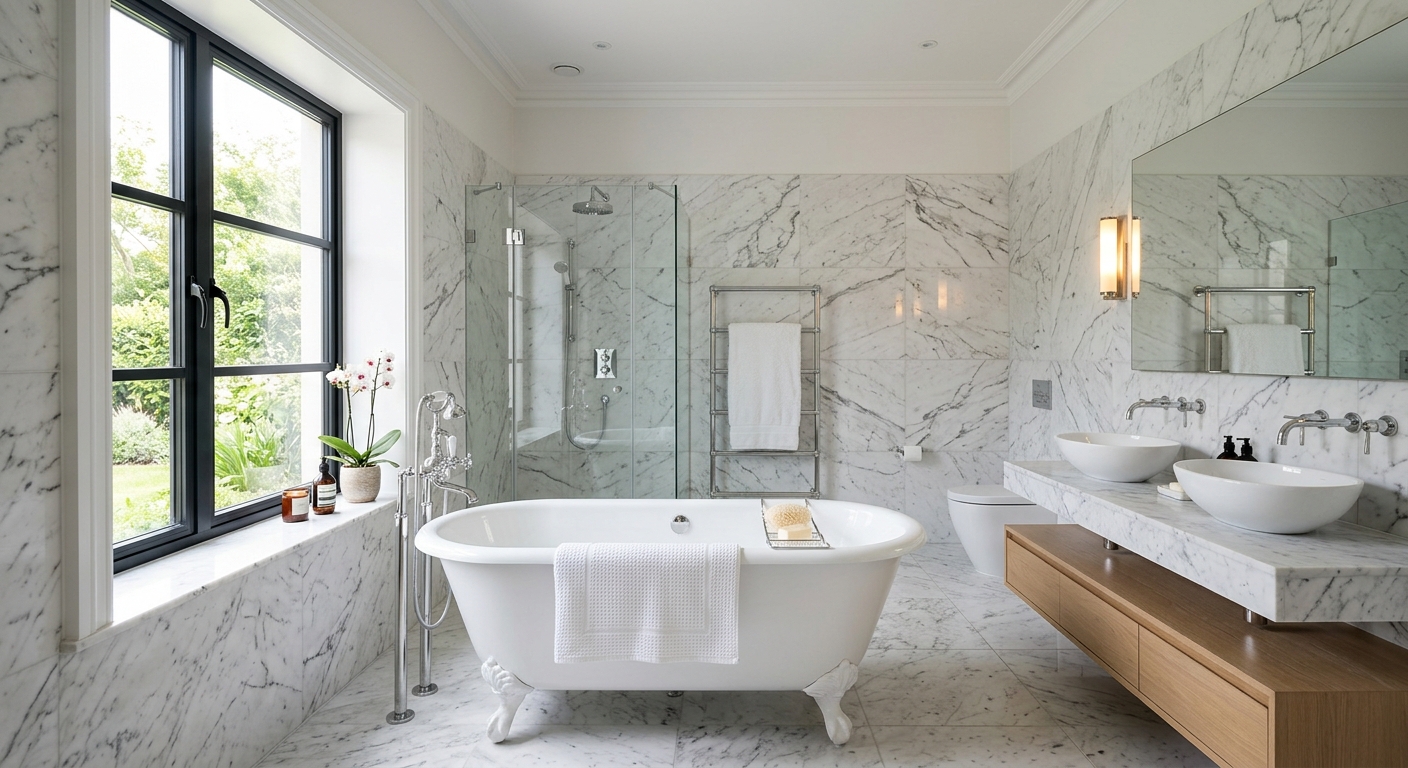
Bathroom renovation options and costs in Perth
Bathroom renovations in Perth, Ontario come in a few clear “tiers,” and your final price usually depends on how much work you do behind the walls. With 65.4% of area homes built before 1981, many bathrooms sit on older drain and supply configurations—think cast-iron or older copper runs, less robust ventilation, and finishes that don’t match modern waterproofing expectations. That’s why a “same layout” renovation can still uncover hidden scope once the tile comes up.
In the Kingston–Pembroke economic region, costs are driven less by day-to-day weather and more by jobsite reality: older housing stock, trade availability in busy seasons, and how often contractors must correct venting, subfloor flatness, or plumbing rough-in before the new waterproofing can be trusted. In Perth, these trades are especially in demand around downtown and established residential pockets where turn-of-the-century and mid-century houses are common and access can be tight.
To help you plan, here are realistic cost bands for common bathroom renovation scopes in this area, starting from cosmetic upgrades and moving up to high-end finishes and shower conversions. Use the table as your budgeting baseline, then we’ll break down what changes the price the most in the next section.
| Renovation Scope |
What's Included |
Typical Duration |
Price Range |
| Cosmetic refresh (paint, fixtures, accessories only) |
New vanity top or vanity, taps/trim, toilet seat or toilet replacement, paint, lighting refresh, accessories, minor caulking, deep clean |
3–7 days |
$4,500–$9,000 |
| Mid-range full renovation (new tile, vanity, tub/shower, electrical) |
Demo and disposal, waterproofing, ceramic or porcelain tile floor + surround, new vanity and mirror, tub replacement or refinishing as selected, new surround components, exhaust fan update, GFCI where required |
2–4 weeks |
$15,000–$26,000 |
| High-end full renovation (custom tile, steam shower, heated floors) |
Premium tile/large-format layout, advanced waterproofing, heated floor mats + controls, upgraded exhaust/ducting, designer vanity/hardware, steam shower or premium tiled shower system, upgraded lighting and trim, more complex detailing |
4–7 weeks |
$26,000–$32,000 |
| Shower-only installation (convert tub to walk-in shower) |
Remove tub, new shower receptor/pan (tile or prefab), tile walls and floor, new glass door, update plumbing rough-in as needed, waterproofing, exhaust fan check, trim and sealing |
1–3 weeks |
$6,500–$12,000 |
| Bathtub replacement or tub-liner install |
Remove and install new bathtub (or install liner where appropriate), new fixtures and trim, recaulk and re-waterproof local joints, surface prep and sealing, basic plumbing checks |
2–7 days |
$1,200–$6,000 |
| Tile-only installation (floor + surround, existing layout kept) |
Tile floor and surround only, demolition limited to tile surfaces, subfloor prep/leveling as required, waterproofing system, grout and sealant, transition trims |
1–2.5 weeks |
$2,000–$10,000 |
Prices are estimates only and vary by project scope, site access and material selection.
What affects the price of bathroom renovation in Perth
Even when homeowners in Perth ask for “the same bathroom,” two quotes can easily differ by 30–50%. In the Kingston–Pembroke region, labour rates and the age of the housing stock typically outweigh climate effects. Older homes in this region often have drain surprises—cast-iron sections, mismatched venting, or aged copper lines—that require upgrading before tile goes back on. Supply lines can also be galvanized, and ventilation can be undersized, which creates the need for additional ducting and electrical work to meet modern exhaust performance.
It’s also common for asbestos-related remediation to become part of the scope. In homes built before 1985, discovery of asbestos-containing vinyl floor tile or older drywall compounds can trigger abatement protocols, which usually adds about $1,500–$5,000+ to the budget depending on extent and containment requirements. On the finish side, tile work can jump quickly: a “mid-range” bathroom renovation often lands in the mid-teens to low-twenties, while complex waterproofing corrections and large-format tile layout can push you toward the upper end of the full-reno band (for example, moving toward $15,000–$32,000).
Concrete Perth examples I see often: (1) replacing a tub with a shower can be less than expected only when rough-ins line up cleanly; if the drain needs relocation, shower-only work can climb within the $3,500–$12,000 range. (2) A “tile-only” job can stay near the $2,000–$10,000 band when the subfloor is flat; if the slab or subfloor is uneven, floor prep time expands. (3) Adding a modern exhaust fan with proper venting can be a cost-effective safety upgrade, but it rises when new duct paths must be opened behind finished walls.
| Price Factor |
Why It Matters |
Cost Impact |
| Layout change — moving drain or supply lines requires rough-in work |
Relocating plumbing means demolition, re-routing piping, new traps/valves, and inspection readiness |
$2,000–$10,000+ |
| Tile selection — large-format porcelain vs. mosaic vs. ceramic |
Harder tile increases setting time; large formats demand flatter surfaces and more precise cuts |
$500–$6,000 |
| Fixture tier — builder-grade vs. mid-range vs. designer brands |
Premium valves, vanities, and trim carry higher material costs and sometimes require extra carpentry |
$800–$6,000 |
| Subfloor condition — rot or unlevel concrete adds scope |
Water damage and uneven surfaces can require repairs, underlayment changes, or leveling |
$500–$5,500+ |
| Electrical — adding GFCI outlets, exhaust fan, heated floor circuit |
Bathrooms require code-compliant protection; new circuits or fan capacity adds labour and materials |
$400–$3,500+ |
| Waterproofing method — membrane type and extent |
The right membrane system and proper detailing at seams, corners and transitions affects mould prevention |
$600–$4,000 |
| Older-home surprises — asbestos tile, cast-iron drains, galvanized pipes |
Discovery can halt timelines and require specialty removal or pipe upgrades |
$1,500–$8,000+ |
| Bathroom size — sq ft drives tile and labour time directly |
More square footage increases demolition, thinset, setting time, waterproofing and grout cleanup |
$500–$7,000+ |
Permits & regulations in Ontario
In Ontario, cosmetic updates usually don’t require a permit: swapping a vanity, replacing a toilet, updating the lighting (when staying within the existing wiring scope), painting, and re-caulking or re-grouting typical surfaces are often treated as finish work. However, once you change plumbing routes—moving a toilet, shifting a tub/shower drain, relocating a supply line—or you add new ventilation that requires new wiring pathways, permits and inspections are commonly required.
Electrical work must meet provincial code requirements and be performed by, or at minimum signed off by, a licensed electrician. If you’re adding items like an exhaust fan tied into a new circuit, changing receptacle locations, or installing heated floor components, that typically falls under permitting/inspection rules for electrical scope.
Plumbing rough-in changes usually require a permit and inspection. This is especially relevant in Perth because older homes may have outdated drain materials and supply line configurations, and once we open walls we often correct venting and trap/pipe sizing for long-term reliability.
Step-by-step checks a Perth homeowner can do before signing:
- Ask for the contractor’s Ontario trade licence details and verify the number through the appropriate online registry.
- Request a current certificate of insurance (liability) showing coverage effective dates.
- Confirm WSIB/WCB coverage for the renovation crew (ask for clearance documentation where applicable).
- Get written scope that clearly states whether permits are included and who pulls them.
- Ask how inspections will be scheduled and whether you’ll receive copies of permit/inspection documents.
Choosing tile, waterproofing and fixtures for your Perth bathroom
In Perth, the biggest budget swings usually come from three choices: tile, waterproofing system, and fixture tier. First, tile selection: ceramic is a more affordable entry point, porcelain costs more but typically offers better durability, and natural stone (marble, travertine, slate) can look stunning but needs careful installation planning and more intensive sealing/maintenance. Second, waterproofing method: paint-on membranes can work in limited scenarios, but for full showers and high-risk wet areas, bonded sheet membranes or proven systems (including correct corner/seam treatments) are the safer bet for preventing mould in Ontario humidity cycles. Third, fixture tier: builder-grade fixtures are easier on the budget, mid-range balances reliability and finish, while designer brands increase material cost and sometimes require additional trim/carpentry precision.
How to match these decisions to your situation: if you’re keeping the existing tub/shower layout and the subfloor is sound, upgrading tile to porcelain or using a better grout/finish can deliver a visible improvement without changing plumbing scope. If you’re converting from tub to shower, invest more in the waterproofing plan because the receptor details and transitions are where failures happen.
A practical dollar example: moving from basic ceramic to mid-range porcelain for floor + surround can be justified when you’re also paying for waterproofing and substrate prep anyway. It’s usually far less cost-effective to “save” on tile if it means cutting corners on waterproofing—because the waterproofing you choose is what protects the structure, not just how the bathroom looks.
| Material / Option |
Pros |
Cons |
Price Range |
| Ceramic tile (floor + walls) |
Lower upfront cost, wide style selection, good for non-steam areas when installed correctly |
Can be less durable than porcelain; more sensitive to chipping if subfloor movement occurs |
$2,000–$6,000 |
| Porcelain tile (floor + walls) |
Hard-wearing, better moisture resistance, supports large-format designs and cleaner lines |
Higher material cost; large-format tiles require flatter substrates and more exact cutting |
$4,000–$10,000 |
| Natural stone (marble, travertine, slate) |
High-end look, unique variation, great for feature walls and premium floors |
Requires sealing and specific grout choices; installation is slower and more sensitive to substrate |
$7,000–$16,000 |
| Frameless glass shower enclosure |
Modern appearance, easier cleaning, helps visually open the space |
More expensive than standard doors; correct wall squareness and waterproofing detailing are critical |
$1,800–$5,500 |
| Prefab tub surround (acrylic) |
Fast install, good water performance when matched to correct prep, typically the most budget-friendly |
Limited design options; may not match premium tile aesthetics and can feel less “custom” |
$1,200–$3,800 |
| Custom shower pan (tile or linear drain) |
Premium look, better water management, ideal for accessibility and zero-threshold designs |
More labour and detailed waterproofing; substrate and slope must be correct for proper drainage |
$3,500–$12,000 |
How to choose a bathroom renovation contractor in Perth
Choosing the right bathroom renovation contractor in Perth is mostly about verifying the essentials and then controlling scope. Start by confirming Ontario licensing information for the trades involved, and ask for liability insurance documentation with current dates. You should also verify WSIB/WCB coverage for the renovation crew—don’t rely on verbal assurances. A legitimate contractor in Ontario will have a clearance letter or clear proof of coverage you can request before work begins.
Next, get 2–3 itemised written quotes. “Itemised” matters: you want labour and materials broken out (demo/disposal, waterproofing labour, tile setting, electrical/plumbing allowance, glass door, fixtures) rather than a single lump sum. Carefully review what’s excluded—some quotes exclude subfloor repairs, permit fees, or disposal of all debris, which can quietly change your total cost once demolition is underway.
Warranty is another differentiator. Ask for the workmanship warranty length in writing, and clarify whether product warranties from manufacturers are included and whether they transfer to you if you sell the home. Finally, use a sensible payment schedule: never pay more than 10–15% upfront, then hold back remaining funds until the job is fully complete and cleaned. For timing, demand a start date and completion estimate in writing so you’re not negotiating delays while materials are on-site.
- Confirm Ontario trade licensing details for the relevant scopes.
- Request a current certificate of liability insurance.
- Verify WSIB/WCB coverage (ask for clearance documentation).
- Get 2–3 itemised quotes (labour vs materials, not lump sums).
- Ask if permits are included and who pulls them.
- Confirm disposal: dumpster and haul-away included or extra?
- Review exclusions for subfloor repairs, waterproofing upgrades, and venting corrections.
- Ask what waterproofing system will be used and where details will be reinforced.
- Request a sample schedule for tile lead times and glass door fabrication.
- Confirm warranty: workmanship duration and product warranty transferability.
- Use a payment plan with only 10–15% upfront and a holdback until close-out.
- Ensure site protection (floor covering, dust control) is part of the scope.
Red flags I see with bathroom renovation contractors in Perth: they won’t provide insurance/licensing proof; quotes are not itemised (so you can’t compare waterproofing or electrical scope); they refuse to list what permits/disposal include; they ask for large upfront payments beyond 10–15%; and they offer a workmanship warranty only verbally with no written terms.
Frequently asked questions — bathroom renovation in Perth
Can I live at home during a bathroom renovation in Perth?
Yes, often you can stay in your Perth home during a renovation, but it depends on whether you can keep a functional washroom route. If you’re doing a cosmetic refresh or tile-only work, many homeowners remain in the home with dust control and a protected pathway. For mid-range full renos in older houses—especially with plumbing rough-in corrections or shower conversions—you may need to pause use of the bathroom during demolition, waterproofing cure time, and fixture hook-up. In many Kingston–Pembroke area projects, scheduling can reduce downtime by sequencing: demo first, then waterproofing, then tile, then electrical/plumbing close-in. If the renovation scope is near the $15,000–$26,000 mid-range band, plan for several days to a couple of weeks of limited access.
What's the best bathtub material for a Perth home?
For most Perth homeowners, a standard acrylic bathtub replacement is often the best blend of cost, comfort, and practicality. It’s typically the lowest-cost replacement route compared to moving to a fully custom tiled wet-area floor. If you’re keeping the layout, a tub replacement tends to fit well within the $1,200–$6,000 price band depending on access and whether plumbing updates are needed. For older Perth homes built before 1981, the “best” choice is also about what’s behind the tub: if drain or supply lines are near end-of-life, upgrading during replacement can prevent recurring leaks. If you want lower maintenance and a cleaner look, consider swapping the tub for a shower conversion—but that’s a different scope and budgeting band.
Is it worth renovating a bathroom before selling in Perth?
Often, yes—if the renovation addresses visible wear and waterproofing concerns rather than just cosmetics. In a market where many homes were built before 1981 (65.4% in the local profile), buyers are particularly sensitive to signs of hidden moisture, weak ventilation, and outdated fixtures. A mid-range full renovation that improves waterproofing, ventilation, and finishes can make the home feel move-in ready. If you can stay within the $15,000–$32,000 full-renovation band, you’re usually balancing buyer confidence with risk control. That said, don’t over-upgrade on luxury tile or steam components unless your neighbourhood comps support it. A well-planned bathroom that looks current, runs properly, and has reliable waterproofing generally outperforms a purely cosmetic refresh, especially in Ontario’s wet/humid stretches.
How do I plan a bathroom renovation on a tight budget in Perth?
Start by deciding what you truly need: if your plumbing is sound and the layout works, a cosmetic refresh or tile-only approach can stretch dollars. Cosmetic refreshes (paint, fixtures, accessories) are commonly budgeted in the $4,500–$9,000 range, while tile-only floor and surround work often fits the $2,000–$10,000 band if the subfloor is flat and repairs are minimal. The biggest way to protect budget in Perth’s older homes is to prevent “scope creep”: insist your quote specifies waterproofing responsibilities, disposal, and what subfloor prep is included. If you do have to open walls, keep a contingency for older-home surprises such as venting corrections or supply/drain upgrades. Planning for a realistic scope first usually saves money versus trying to patch after demolition.
What's the difference between a cosmetic and a full bathroom renovation?
A cosmetic bathroom renovation in Perth typically swaps finishes without changing plumbing rough-ins: that’s paint, fixtures and trim, a vanity refresh, maybe re-caulking and accessories. It’s usually faster and less disruptive, and it may not involve full demolition or major waterproofing reconstruction. A full renovation is different: it typically includes demo, waterproofing, new tile floor and/or surround, updated electrical for ventilation and code requirements, and often fixture replacements. In Ontario’s older housing stock (with many homes built before 1981), “full renos” also commonly include correcting ventilation or plumbing issues discovered after walls open. Budget-wise, a full renovation is usually planned in the $15,000–$32,000 band, whereas cosmetic refreshes often sit closer to $4,500–$9,000.
How do I choose the right contractor for my bathroom in Perth?
Choose a contractor by verifying credentials first, then demanding clarity in the scope. In Ontario, make sure the contractor can demonstrate Ontario trade licensing where applicable, provide proof of liability insurance, and confirm WSIB/WCB coverage for workers. Ask for 2–3 itemised quotes so you can compare waterproofing method, tile labour, disposal, and whether permits are included. Read the scope carefully for exclusions—disposal, subfloor repairs, and permit pull responsibilities are common “gotchas.” Confirm warranties: workmanship coverage length and whether manufacturer warranties are transferable. For payment, keep upfront deposits to about 10–15% and hold back until close-out. Lastly, ensure timelines are in writing. For many Perth bathroom projects, especially in older homes, a contractor who explains how they’ll handle hidden plumbing or waterproofing details is usually the safer bet than the lowest bid.