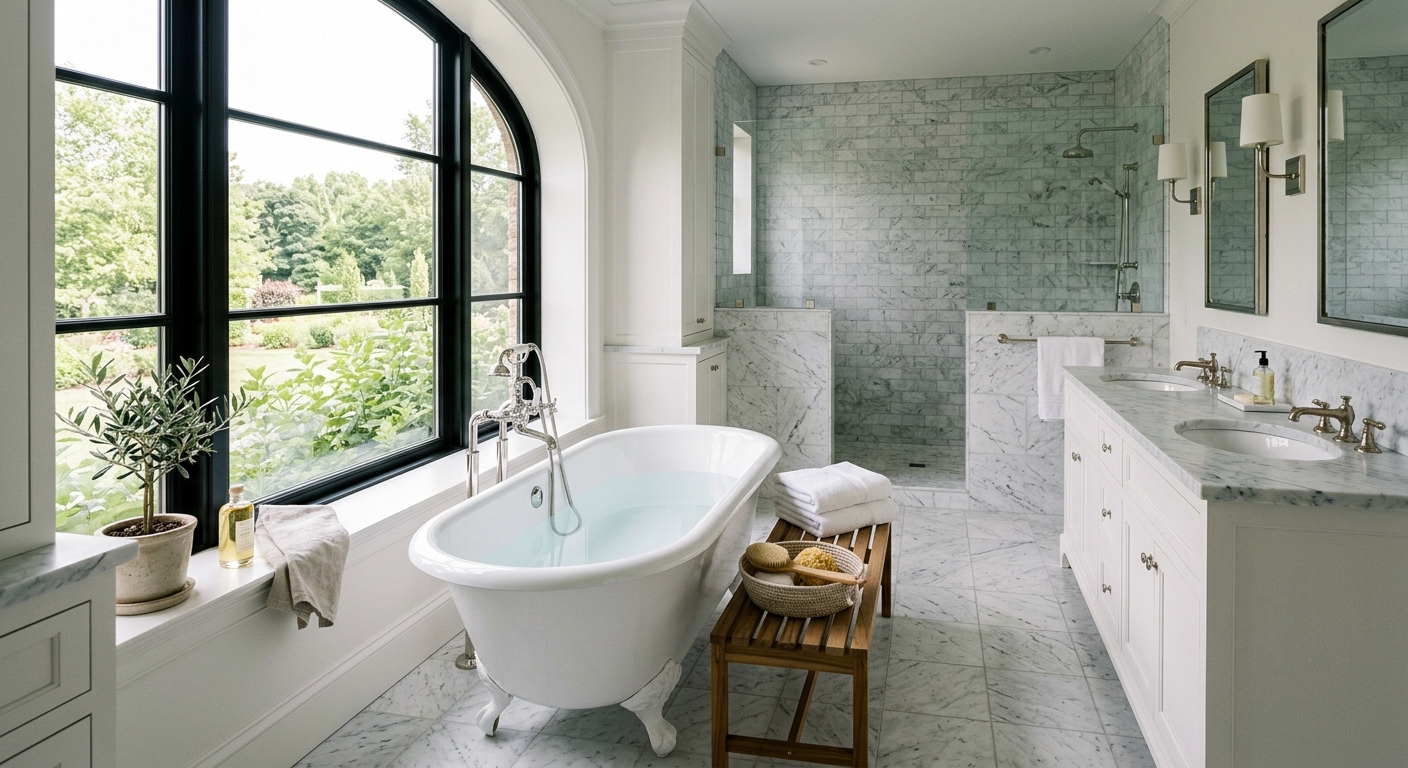
Bathroom renovation options and costs in Lincoln
In Lincoln, Ontario, bathroom renovations typically fall into a few clear project types—ranging from a quick cosmetic refresh to a full rebuild with new waterproofing, tile, and fixtures. The big pricing swing comes from how much of the “work behind the wall” gets uncovered once tile is removed. Lincoln’s housing profile matters: 41.2% of homes were built before 1981, so many bathrooms sit in older plumbing and venting setups that can require upgrades after demolition. And with 8,055 homeowner households (84.3% of households own), it’s common to renovate for long-term comfort, not just resale cosmetics.
In the Hamilton–Niagara Peninsula market, labour rates and the age of the housing stock usually drive bathroom-reno pricing more than climate does. Contractors in the Hamilton–Niagara Peninsula corridor—serving places like the St. Catharines and Niagara Falls area—often see older homes with cast-iron or dated supply lines, plus ventilation gaps that become obvious after opening walls. That’s why a “simple” update can expand into plumbing-and-finishing scope. If asbestos-containing materials are found in pre-1985 assemblies, abatement protocols add time and cost. Conversely, straightforward accessibility (wide paths, minimal stair constraints) can keep a mid-range full renovation closer to the middle of the typical range. Demand is especially steady around Beamsville and the regional commuter corridor, where many owners renovate older detached homes.
Below is a practical comparison of typical scopes and budgets, so you can map your plan to a realistic total price.
| Renovation Scope |
What's Included |
Typical Duration |
Price Range |
| Cosmetic refresh (paint, fixtures, accessories only) |
New paint, swap vanity faucet/fixture trim, toilet/vanity accessories, re-caulk, deep clean; no changes to plumbing rough-in or waterproofing systems |
2–4 days |
$4,500–$8,000 |
| Mid-range full renovation (new tile, vanity, tub/shower, electrical) |
Demolition, membrane waterproofing, floor + surround tile, new vanity and lighting, tub or shower replacement, exhaust fan upgrade, GFCI where needed; minor plumbing adjustments if accessible |
2–4 weeks |
$12,000–$25,000 |
| High-end full renovation (custom tile, steam shower, heated floors) |
High-end tile/stone layout, custom shower build or steam shower, heated floor system, upgraded ventilation, premium fixtures, designer lighting; allowances for hidden-mechanical repairs as found |
4–6 weeks |
$25,000–$45,000 |
| Shower-only installation (convert tub to walk-in shower) |
Remove tub, rough-in adjustments as required, waterproofing, tile surround and shower pan prep, glass enclosure, new shower valve trim, new drain/linear drain options as specified |
1–3 weeks |
$5,000–$12,000 |
| Bathtub replacement or tub-liner install |
Replace aging tub with new unit and trim, new sealing and caulking; or tub-liner install where appropriate; re-tile limited areas |
3–7 days |
$1,500–$6,000 |
| Tile-only installation (floor + surround, existing layout kept) |
Remove existing tile selectively, set new floor + wall tile, waterproofing as required in the tiled areas, new grout/caulk; fixtures generally remain |
1–2.5 weeks |
$3,000–$10,000 |
Prices are estimates only and vary by project scope, site access and material selection.
What affects the price of bathroom renovation in Lincoln
In Hamilton–Niagara Peninsula and across Ontario, quotes for the “same” bathroom can vary by 30–50% because the scope hidden behind existing finishes often differs. Two homeowners may both say “new tile and a new vanity,” but one bathroom’s walls will be flat and dry while the other has dated drains, weak subflooring, or ventilation that doesn’t meet modern expectations. In older Lincoln homes—where many were built before 1981—contractors frequently need to upgrade drains/vents, shutoffs, or traps once demolition reveals what’s actually there.
Here, labour and housing age tend to matter more than temperature itself. The Hamilton–Niagara Peninsula area has humid seasonal swings, and bathrooms in older houses often lack effective, ducted exhaust. Once walls open, contractors may need to correct ventilation routes, replace softened materials, or address water damage that increases labour and materials. On the electrical side, adding a properly placed exhaust fan and GFCI protections is common, and the cost is frequently bundled into a mid-range full renovation budget—often in the $12,000–$25,000 band. Meanwhile, unexpected plumbing work can add $2,000–$8,000 to a project when cast-iron drain sections, galvanized supply piping, or inadequate venting require upgrades before waterproofing and tile can be completed.
Concrete Lincoln examples: (1) converting a tub to a walk-in shower usually forces drain and valve alignment changes, pushing shower-only conversions toward the $5,000–$12,000 range even when the bathroom footprint stays the same; (2) large-format porcelain tile may reduce grout lines but needs a flatter substrate, so labour rises if the subfloor is not level; (3) discovering asbestos in older floor tile or drywall compounds can trigger abatement, which adds both time and cost on top of the $4,500–$8,000 cosmetic-refresh ceiling.
That’s why the most accurate estimate depends on confirming fixture locations, tile/waterproofing scope, and what condition the walls and subfloor are in after removal.
| Price Factor |
Why It Matters |
Cost Impact |
| Layout change — moving drain or supply lines requires rough-in work |
New routing affects plumbing labour, wall opening size, patching, and waterproofing continuity |
$1,500–$7,500+ (often the biggest swing) |
| Tile selection — large-format porcelain vs. mosaic vs. ceramic |
Harder materials require more careful substrate prep and slower installation |
$300–$3,000+ |
| Fixture tier — builder-grade vs. mid-range vs. designer brands |
Valve trims, vanities, and shower systems vary widely in material and installation complexity |
$600–$6,000+ |
| Subfloor condition — rot or unlevel concrete adds scope |
May require removal/replacement, flattening, and extra waterproofing layers |
$800–$6,500+ |
| Electrical — adding GFCI outlets, exhaust fan, heated floor circuit |
Licensed electrical work and permit/inspection requirements can increase labour and materials |
$400–$3,500+ |
| Waterproofing method — membrane type and extent |
Better systems cost more but reduce failure risk and mould exposure over time |
$600–$2,500+ |
| Older-home surprises — asbestos tile, cast-iron drains, galvanized pipes |
Discovery can require abatement, pipe replacement, and extra demo/patching time |
$1,500–$5,000+ (sometimes higher) |
| Bathroom size — sq ft drives tile and labour time directly |
More area increases materials, setting time, and waterproofing coverage |
±$2,000–$8,000 depending on size |
Permits & regulations in Ontario
In Ontario, many bathroom renovations are straightforward from a permitting standpoint, but the details matter. Cosmetic updates—swapping a vanity, replacing fixtures/trim, retiling without moving plumbing, and repainting—typically do not require a permit because they don’t change the plumbing or electrical systems beyond what’s already there. However, if you move plumbing (for example, relocating a toilet flange, shifting a drain/supply to change vanity or shower locations), that rough-in work generally requires a permit and inspection. Adding new plumbing fixtures or changing venting routes also pushes the job into “permitted scope” territory.
Electrical work must meet Ontario code requirements and be performed by (or signed off by) a licensed electrician. That includes adding or relocating outlets, installing a new exhaust fan with new wiring, and running circuits for heated floors—especially where GFCI protection or dedicated breakers are needed. If any structural wall changes occur, permits may also come into play.
For Lincoln homeowners, verify your contractor’s Ontario trade licence and coverage step by step: start by asking for their trade licence details and current insurance certificate. For liability coverage, request a certificate of insurance showing active coverage (and ask whether they list you as an additional insured if your insurer requires it). For workers’ safety coverage, request proof of WSIB/WCB account coverage (as applicable). You should also ask if any permits are pulled by the contractor as part of the quoted scope, and who will schedule inspections. Finally, confirm the contractor can provide clearance/inspection documentation after work is complete.
Choosing tile, waterproofing and fixtures for your Lincoln bathroom
In Lincoln, the smartest way to control budget without sacrificing durability is to make three key decisions in the right order: tile, waterproofing, then fixtures. First, choose your tile category. Entry-level ceramic can look great and helps keep costs nearer the lower end of tile-only or mid-range full renovation budgets. Porcelain is a step up in density and water resistance and often performs better in higher-use shower environments, but it can increase labour if your walls or subfloor need more prep. Natural stone (marble, travertine, slate) looks premium, yet it requires careful installation and sealing strategy—so labour and prep costs rise.
Second, waterproofing method is non-negotiable in Ontario’s humid bathroom conditions. A paint-on membrane can work in limited applications, but for full wet areas you’ll usually want a bonded sheet membrane or a purpose-built system that runs up the walls and ties into the shower pan correctly. In practice, the right system prevents mould and failure that show up months or years later—especially after older homes reveal uneven surfaces during demo.
Third, pick your fixture tier based on resale and daily use. Builder-grade trim saves upfront, while mid-range and designer brands often improve flow, finish consistency, and long-term serviceability. Here’s a realistic example: upgrading from ceramic to porcelain tile might add a few hundred to a couple thousand dollars in materials and setting time, but pairing that with a proven waterproofing system can justify the difference if you’re planning a conversion or full renovation—typically in the $12,000–$25,000 mid-range band rather than a cosmetic-only refresh.
Because Lincoln’s older housing stock frequently hides substrate and plumbing realities, materials should be selected with your waterproofing plan and contractor’s prep approach in mind—not just on appearance.
| Material / Option |
Pros |
Cons |
Price Range |
| Ceramic tile (floor + walls) |
Affordable, wide style variety, good for dry areas and general wall use |
Can be less forgiving in wet areas; more susceptible to chipping if substrate isn’t solid |
$3,000–$7,000 |
| Porcelain tile (floor + walls) |
Denser and typically better in wet zones; excellent durability; fewer issues with water absorption |
Requires proper substrate and careful cutting; some large-format options add labour |
$4,500–$10,000 |
| Natural stone (marble, travertine, slate) |
High-end look and uniqueness; great for feature walls or niche moments |
Needs sealing/maintenance; tighter tolerances and more labour; higher risk if planning isn’t precise |
$8,000–$18,000 |
| Frameless glass shower enclosure |
Modern appearance; easier to keep clean; improves visual space |
More expensive glass packages; installation needs level substrates and secure wall anchoring |
$1,800–$4,500 |
| Prefab tub surround (acrylic) |
Quicker install, lower labour risk, clean look with less tile cutting |
Less custom; limited design options; long-term waterproofing depends on correct install/trim |
$1,500–$3,800 |
| Custom shower pan (tile or linear drain) |
Better slope control and drainage; linear drains look premium; supports custom layouts |
More labour and waterproofing coordination; higher cost if floor framing needs repair |
$2,500–$7,500 |
How to choose a bathroom renovation contractor in Lincoln
Choosing the right contractor in Lincoln comes down to verification and documentation—not just price. Start by confirming Ontario licensing for the trades involved. Ask for proof of liability insurance and workers’ compensation coverage (WSIB/WCB as applicable). You can check licences through Ontario’s online registries where available, and for insurance you should receive a certificate of insurance with effective dates. For WSIB/WCB, request a coverage letter or proof of account in the contractor’s name (or subcontractor names, if they use subs).
Next, get 2–3 itemised written quotes. You want a breakdown that separates labour from materials, and clearly lists fixtures, tile, waterproofing products, disposal, and any subcontractor line items (electrician/plumber if used). A solid quote won’t hide scope in vague line items like “miscellaneous.” Read the exclusions: ask whether permits are included, whether drywall/tile patching is included if walls are removed, and whether demolition disposal and dump fees are covered.
Warranty matters. Confirm workmanship warranty length (and what it covers), plus manufacturer product warranties. Ask if the warranty is transferable to you as the homeowner. For payment schedule, a safe rule is to avoid paying more than 10–15% upfront; use progress payments tied to milestones. Never hand over the majority of funds before waterproofing is complete, fixtures are installed, and punch list items are done. Finally, insist on a written timeline with a start date and completion estimate.
- Verify Ontario trade licence details relevant to the work being quoted.
- Ask for liability insurance certificate (effective dates and coverage limits).
- Request WSIB/WCB proof for the contractor and named subcontractors.
- Get 2–3 itemised quotes (labour + materials, not one lump sum).
- Confirm permit pull responsibility and inspection handling in writing.
- Check whether asbestos discovery is addressed (process and cost approach).
- Confirm disposal/dump fees are included in the budget.
- Review waterproofing details: membrane type, coverage, and tie-in points.
- Ask about tile setting method and whether substrate flattening is included.
- Confirm GFCI/exhaust fan/heated floor electrical scope with an electrician.
- Clarify warranty: workmanship duration and product warranty transfer.
- Agree to a payment schedule with small deposits and milestone holds.
Common Lincoln red flags include: (1) a quote that omits waterproofing specifics; (2) refusing to provide proof of insurance or trade licence details; (3) “cash-only” or overly large upfront payments; (4) unclear exclusions like disposal, permits, or electrical tie-ins; and (5) no written timeline or no warranty statement.
Frequently asked questions — bathroom renovation in Lincoln
How long does tile installation take in a Lincoln bathroom?
Tile timelines in Lincoln depend mostly on shower complexity, wall condition, and whether your contractor needs to flatten/repair the substrate before setting. For a typical floor + tub/shower surround, plan on about 5–10 working days for tiling after demo and prep are complete. If you’re converting to a walk-in shower or using a linear drain pan, extra time goes into waterproofing cures and careful setting around drains. In older homes built before 1981, uneven subfloors or dated wall assemblies can extend prep, which is why tile-only projects can land closer to the higher end of the tile range. A realistic full renovation often follows into the $12,000–$25,000 band, with tile work being a key driver of the schedule.
How much does a bathroom renovation cost in Lincoln?
In Lincoln, Ontario, a bathroom renovation typically fits one of a few budget lanes. A cosmetic refresh (paint, fixtures, accessories only) often targets the lower end, commonly around $4,500–$8,000. A mid-range full renovation with new tile, a new vanity, and a tub/shower replacement usually lands around $12,000–$25,000, especially when waterproofing and electrical updates are included. If you’re adding heated floors, stepping into custom tile layouts, or upgrading to a steam shower, budgets commonly extend into the $25,000–$45,000 range. Costs in the Hamilton–Niagara Peninsula region can rise when older homes hide drainage, venting, or electrical issues behind walls—so the most accurate number comes after demolition confirms what’s needed.
How long does a bathroom renovation take in Lincoln?
Typical timelines for Lincoln bathrooms range from about one week for smaller updates to 4–6 weeks for full renovations. A mid-range full renovation often takes 2–4 weeks once demolition, rough-ins (plumbing/electrical), waterproofing, and tile are complete. Shower-only conversions can be around 1–3 weeks depending on whether the drain and valve need re-positioning and how much wall repair is required. Older-home conditions—common given that a large share of Lincoln homes were built before 1981—can add a week or more if there’s subfloor repair, ventilation correction, or abatement for identified asbestos-containing materials. To keep your schedule tight, choose fixtures and tile early and confirm lead times for glass enclosures and specialty waterproofing components.
Do I need a permit for a bathroom renovation in Ontario?
In Ontario, many cosmetic bathroom updates don’t require permits, especially when you’re not moving plumbing or changing the structure. Swapping a vanity, replacing trim/fixtures, repainting, and even retiling in place generally fall into “no permit” territory. Permits typically become necessary when you relocate plumbing (moving drain or supply lines), change venting, add new plumbing fixtures, or make structural changes. Electrical work can trigger permit/inspection requirements as well: adding an exhaust fan circuit, installing heated floors, or relocating outlets must meet Ontario code and be handled by a licensed electrician. For your Lincoln renovation, ask the contractor to clearly state what permits they’ll pull and provide inspection documentation after completion. Always verify their Ontario trade licence and liability insurance first.
What's the best tile for a bathroom in Lincoln?
The “best” tile in Lincoln is usually porcelain for floors and wet-area walls, because it performs well in humid conditions and resists water absorption better than many entry-level ceramics. Ceramic can still work well, especially for wall surfaces, but porcelain often gives homeowners better long-term confidence in shower environments. Natural stone is beautiful, but it’s higher maintenance and needs correct sealing and installation practices—so it’s best when you’re planning a premium scope. Tile performance also depends heavily on waterproofing and substrate prep, not only the tile label. If you’re working within a mid-range renovation budget like $12,000–$25,000, porcelain plus a proven membrane system is a common “best value” choice.
Should I do a tub-to-shower conversion?
A tub-to-shower conversion is often worth considering in Lincoln, especially for homeowners who want easier daily access and lower ongoing maintenance. It can also modernize older layouts that may have dated tub valves, awkward access, or poor ventilation behind the tub surround. Budget-wise, the conversion typically lands in the shower-installation lane, often around $5,000–$12,000 depending on waterproofing complexity, whether you choose a glass enclosure, and how much plumbing alignment needs adjustment. The key downside is that conversions can uncover older drain/copper supply issues once the tub comes out—sometimes adding cost. If you’re in an older detached home with plumbing hidden behind walls, it’s smart to plan for possible rough-in upgrades before you commit.