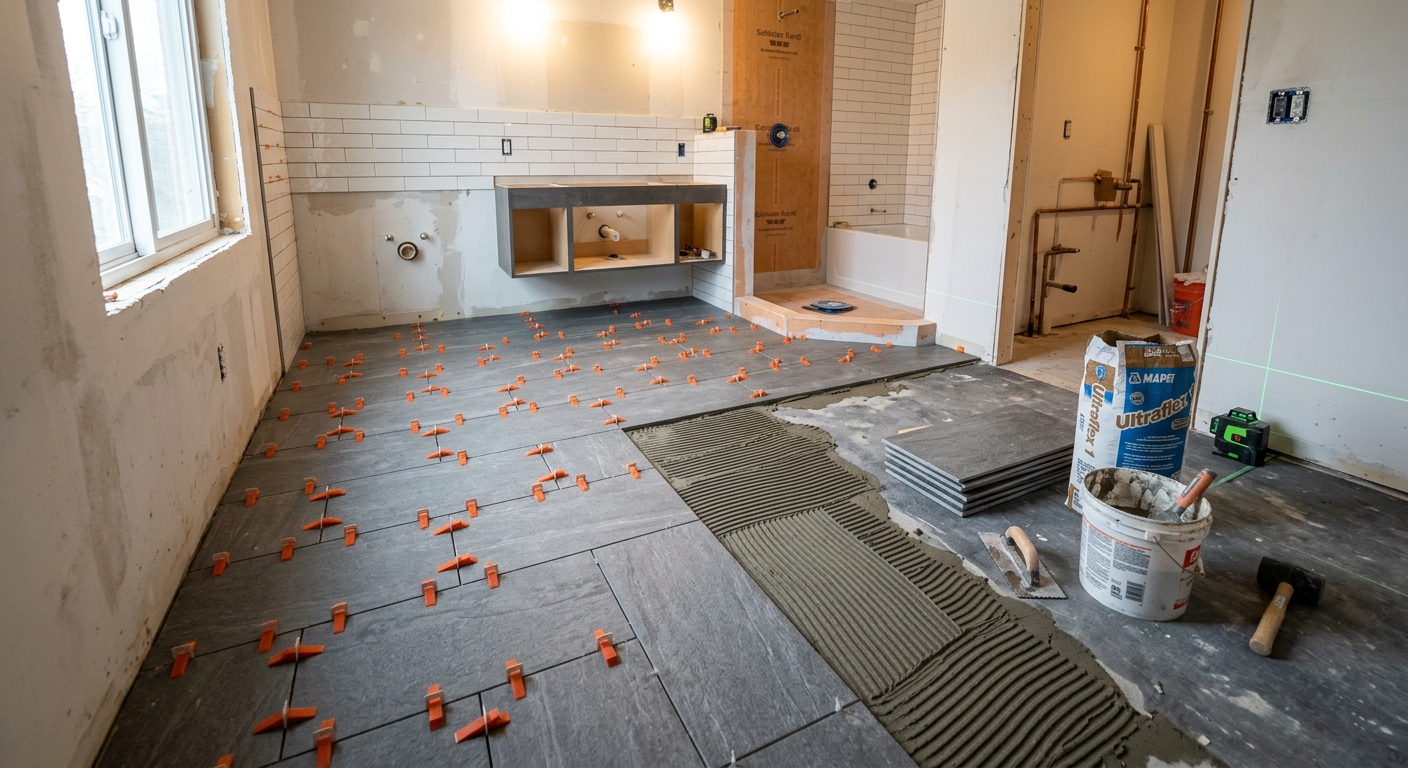
Bathroom renovation options and costs in Goderich
Bathroom renovation options in Goderich range from quick, low-disruption refreshes to full rebuilds, and the right choice mostly depends on what’s happening behind the walls. In Goderich’s older housing market, many homes were built before 1981 (Statistics Canada, 2021 Census), which often means dated rough-ins, older ventilation pathways, and more chance of surprises under tile or around the tub. With 73.7% of homes in the broader local profile built before 1981 (Statistics Canada, 2021 Census), it’s common for contractors on the Stratford–Bruce Peninsula to price for hidden-scope work once demolition starts—like subfloor repairs, plumbing venting updates, and sometimes electrical remediation if older wiring is discovered.
In our region, costs are shaped more by local labour rates and what must be opened up—not by harsh bathroom “climate demand” the way you might see in extreme environments. That said, Ontario humidity and temperature swings still make ventilation and waterproofing non-negotiable. Availability can also affect schedule: when local crews are busy around Stratford and surrounding communities, trades may stack jobs, and that can influence how long you’ll be without a working shower.
Demand is especially steady in established residential areas such as Port Albert Road and nearby waterfront neighbourhoods, where homeowners often renovate ahead of selling or after water intrusion concerns. From there, it’s easiest to compare your options by scope, duration, and budget, so you can plan for both visible finishes and the “unknowns” that determine the final number.
| Renovation Scope |
What's Included |
Typical Duration |
Price Range |
| Cosmetic refresh (paint, fixtures, accessories only) |
New paint, reseal/caulk, swap vanity top or vanity, replace toilet/sink fixtures, new towel bars, mirror, lighting, deep clean and re-grout where needed |
3–7 days |
$3,000 – $8,000 |
| Mid-range full renovation (new tile, vanity, tub/shower, electrical) |
Demo and rebuild of shower/tub area, waterproofing, new tile (floor + walls), new vanity and toilet, new exhaust fan (typical), updated lighting, basic plumbing refresh within the existing layout |
2–4 weeks |
$14,000 – $24,000 |
| High-end full renovation (custom tile, steam shower, heated floors) |
Custom shower/tub system or steam shower, higher-end tile and layout, membrane system, heated floor circuit and finishes, upgraded fixtures and accessories, more extensive electrical planning |
4–7 weeks |
$24,000 – $35,000 |
| Shower-only installation (convert tub to walk-in shower) |
Demo and remove tub, install walk-in shower base/pan or tiled shower, new valve/trim, waterproofing, new tile surround, exhaust fan refresh if needed |
2–3 weeks |
$10,000 – $18,000 |
| Bathtub replacement or tub-liner install |
Remove and replace tub (or liner where appropriate), new sealing and surround updates, re-tile limited areas, plumbing reconnection, basic caulking and waterproof detailing |
5–10 days |
$5,000 – $12,000 |
| Tile-only installation (floor + surround, existing layout kept) |
Tile floor and shower/tub surround, underlayment prep, grout/caulk detailing, waterproofing where tile meets wet areas (extent depends on condition) |
1–2 weeks |
$6,500 – $15,000 |
Prices are estimates only and vary by project scope, site access and material selection.
What affects the price of bathroom renovation in Goderich
In Goderich and the wider Stratford–Bruce Peninsula region, quotes for the same “bathroom size” can vary by 30–50% because the work is priced around what has to be corrected behind the walls and under the floor—not just the visible tile and fixtures. Even within Ontario, labour availability and the risk level of older construction drive that spread. Many local homes were built decades ago (with the profile showing 73.7% built before 1981; Statistics Canada, 2021 Census), and that age often means more discovery work: older venting routes, cast-iron drain sections, and supply piping that may need upgrading once demo begins.
It’s also why climate isn’t the main driver here. Yes, Ontario’s humidity makes waterproofing and ventilation critical, but the cost jump typically comes from the system you need to make the bathroom durable—membranes, improved exhaust performance, and proper subfloor prep. When asbestos-containing materials are discovered (commonly in older floor tile or related drywall materials), abatement protocols can add roughly $1,500–$5,000+ to the budget depending on extent and containment requirements.
Concrete examples I see in Goderich: a tub-to-shower conversion may look straightforward, but if the drain stack or valve rough-in is incompatible with modern cartridges, you’ll pay for rough-in adjustments before tile goes up. Similarly, choosing higher-grade porcelain tile increases labour because large-format panels demand flatter substrates and more precise layout planning—so even if your tile line item looks comparable, the installation time changes. If you want a contained refresh, a cosmetic approach can keep you near the lower end of typical budgets; if you’re in the mid-range full renovation territory, the price usually expands where waterproofing and electrical upgrades overlap, often moving you toward the higher “mid-teens to low-thirties” band for full remodels.
| Price Factor |
Why It Matters |
Cost Impact |
| Layout change — moving drain or supply lines requires rough-in work |
Relocating plumbing means opening walls/floors, altering venting/drain tie-ins, and reworking substrate prep |
Typically adds $3,000 – $10,000 |
| Tile selection — large-format porcelain vs. mosaic vs. ceramic |
Different tile sizes affect setting technique, coverage waste, and time for layout and cutting |
Typically adds $800 – $4,000 |
| Fixture tier — builder-grade vs. mid-range vs. designer brands |
Higher tiers often require more precise installation tolerances and sometimes different rough-in parts |
Typically adds $500 – $3,500 |
| Subfloor condition — rot or unlevel concrete adds scope |
Uneven/soft substrates require repair, blocking, or underlayment changes before waterproofing and tile |
Typically adds $1,000 – $7,000 |
| Electrical — adding GFCI outlets, exhaust fan, heated floor circuit |
New circuits and fan upgrades increase planning, wiring, and electrician time |
Typically adds $600 – $5,000 |
| Waterproofing method — membrane type and extent |
Better systems cost more but reduce risk of leaks; extent increases when framing or substrate is compromised |
Typically adds $900 – $4,500 |
| Older-home surprises — asbestos tile, cast-iron drains, galvanized pipes |
Discovery work changes the project from “finishes” to “system repair,” including possible abatement |
Typically adds $1,500 – $8,000+ |
| Bathroom size — sq ft drives tile and labour time directly |
More area means more tile setting, grouting, waterproofing, and drying time |
Typically adds $1,000 – $6,000 |
Permits & regulations in Ontario
In Ontario, permits depend on the type of work you’re doing in your bathroom—not just the end result. Cosmetic updates—like swapping a vanity, replacing trim/fixtures (faucet, shower head), repainting, or doing retiling without moving plumbing—often do not require permits. However, if you’re relocating plumbing (moving the drain or supply lines), adding or changing an exhaust fan tied to a new electrical circuit, or making structural changes to walls, you should expect permit requirements and inspections.
Electrical must comply with the Ontario electrical safety code and must be performed by a licensed electrician (or signed off by one). Plumbing rough-in changes—new drain locations, new supply routing, or major valve/pipe changes—typically require a permit and inspection before finishes are closed up.
For a Goderich homeowner, verifying a contractor is straightforward if you do it step-by-step:
- Check their Ontario trade licence information through the appropriate online registry entry (as provided/linked by the contractor).
- Request a current certificate of insurance showing liability coverage.
- Ask for WSIB/WCB coverage proof (or the applicable clearance/coverage letter).
- Confirm the electrician and plumber details are licensed for any permit-triggering work.
- Before work starts, ask who pulls the permit (and whether it’s included in the quoted scope).
This is especially important in older Goderich homes where hidden-scope repairs can expand to plumbing and ventilation corrections once demolition reveals the existing system.
Choosing tile, waterproofing and fixtures for your Goderich bathroom
In Goderich, your three biggest material decisions are tile choice, waterproofing system, and fixture tier—because each one affects both upfront cost and long-term performance in Ontario’s indoor humidity. First, tile: ceramic is an entry-level option and can be cost-effective for smaller areas, but it’s typically less demanding than porcelain in terms of water absorption and durability. Porcelain is the usual sweet spot for floors and wet walls—more consistent performance and often better for heavier traffic. Natural stone (marble, travertine, slate) looks premium and can command a higher material and labour budget because it needs careful handling, sealing where required, and more meticulous installation.
Second, waterproofing: paint-on membranes can be suitable for certain straightforward applications, but in a bathroom renovation where the goal is long-term leak prevention, bonded sheet membranes or a robust system (including appropriate compatible accessories and proper overlaps) are often the safer approach. In Ontario, the combination of showers, temperature variation, and ventilation performance makes the waterproofing layer critical to mould prevention—because a small leak inside a wall can show up as odours, staining, or subfloor problems much later.
Third, fixtures: builder-grade trims and faucets can keep you near the lower end of bathroom budgets, while mid-range and designer brands often improve reliability, finish durability, and perceived resale value. For example, if you’re deciding between two tile options that differ by about $3,000 in materials, the price difference is most justified when you’re also investing in a stronger waterproofing and well-prepped substrates—rather than spending up on tile while cutting corners on membranes.
For many Goderich homeowners, pairing mid-range porcelain with a proven waterproofing system aligns well with a mid-range full renovation budget; if you’re pushing toward a higher-end rebuild (including steam and heated floors), the materials and installation complexity should match that level of investment.
| Material / Option |
Pros |
Cons |
Price Range |
| Ceramic tile (floor + walls) |
Good entry-level value, easy to find styles, lighter weight for certain substrates |
Not as durable as porcelain in many real-world wear scenarios; more variation in performance by grade |
$1,200 – $3,500 |
| Porcelain tile (floor + walls) |
Denser and more moisture-resistant, wider range of looks, stronger performance in wet areas |
Can cost more; larger formats require flatter substrates and careful layout |
$2,000 – $6,000 |
| Natural stone (marble, travertine, slate) |
High-end appearance, unique character and texture |
Often requires sealing/maintenance; more complex installation and variation between slabs |
$4,500 – $10,000 |
| Frameless glass shower enclosure |
Modern, brighter look; easier cleaning than tub surrounds |
Needs precise installation; hardware quality and anchoring matter |
$1,800 – $5,500 |
| Prefab tub surround (acrylic) |
Fast install, consistent finish, fewer waterproofing “transitions” in some layouts |
Less custom look; may not match premium tile aesthetics; can limit design choices |
$900 – $2,800 |
| Custom shower pan (tile or linear drain) |
Best for accessibility and modern layouts; linear drains give a clean, upscale look |
More labour; requires a high-quality waterproofing and perfectly planned slope |
$2,200 – $7,000 |
How to choose a bathroom renovation contractor in Goderich
Choosing a bathroom renovation contractor in Goderich comes down to proof, not promises. Start by confirming Ontario licensing for the trades involved: the contractor should be able to provide licence details for the work they’re doing, and for any electrical/plumbing scope, verify those trades are appropriately licensed. Next, request proof of liability insurance (certificate of insurance) and coverage documentation for WSIB/WCB. Don’t accept verbal assurances—ask for documents and check the expiry dates.
Then get 2–3 itemised written quotes. You want a labour and materials breakdown, not a lump sum that hides what happens if the subfloor is soft, the drain is corroded, or the venting route doesn’t match modern requirements. Read the scope line-by-line: what’s included in disposal? Is permit pulling included or an extra cost? Are waterproofing layers and membrane type specified? Is the exhaust fan included, and is the electrical circuit allowance stated?
Warranty matters for both workmanship and products. Ask how long the workmanship warranty lasts, whether it covers water intrusion issues related to installation, and if the product/manufacturer warranty transfers to you if you sell the home. For payment schedule, keep it sensible: never pay more than 10–15% upfront, and use a holdback until key milestones and final walkthrough completion.
Finally, lock in a timeline in writing—start date, estimated completion date, and what triggers schedule changes (material lead times, discovery work, weather delays).
- Provide Ontario trade licence details before you sign.
- Show liability insurance with correct project address listed or available for review.
- Confirm WSIB/WCB coverage or clearance documentation.
- Quotes are itemised (labour vs materials; tile, membrane, fixtures listed separately).
- Scope explicitly states waterproofing method and who supplies membranes.
- Confirm permit responsibility and inspection handling in writing.
- Disposal and dump fees are included or clearly quoted.
- Timeline includes start/completion estimate and expected trade sequencing.
- Change orders are documented with pricing approach and approval process.
- Warranty length is written for both workmanship and products.
- Payment schedule keeps upfront costs at 10–15% and includes a final holdback.
- Finish selection steps (tile colour, grout, valve trim) are scheduled to prevent delays.
Red flags to watch for in Goderich: (1) a quote that doesn’t specify waterproofing materials or membrane system; (2) no mention of electrical/GFCI/exhaust planning in wet areas; (3) refusing to show proof of insurance or WSIB/WCB coverage; (4) only offering a lump-sum number with no scope detail for discovery work; and (5) demanding large upfront deposits (well above 10–15%) without milestone-based payments.
Frequently asked questions — bathroom renovation in Goderich
Do I need a permit for a bathroom renovation in Ontario?
In Ontario, many bathroom updates can be done without a permit—especially cosmetic work like painting, swapping a vanity, replacing fixtures, or retiling while keeping plumbing in the same locations. If your Goderich renovation includes relocating plumbing (moving a drain or supply line), adding/changing an exhaust fan with new wiring, or making structural wall changes, a permit and inspections are typically required. Electrical work must be completed by a licensed electrician and meet code requirements. Before signing, ask your contractor whether they will pull permits, who coordinates inspections, and whether permit costs are included in the quote. It’s also smart to confirm the contractor’s trade licensing and insurance/WSIB coverage before demolition begins.
What's the best tile for a bathroom in Goderich?
For most Goderich homeowners, porcelain is the “best overall” tile because it holds up well in wet areas and handles temperature and humidity swings better than basic ceramic. If you’re doing a floor + surround, porcelain also tends to look cleaner longer—especially with modern grout colours and good sealing practices. If you’re aiming to control the budget, ceramic can work on lower-traffic walls and smaller bathrooms, but the durability difference matters where water splash and foot traffic are constant. In pricing terms, tile-only installation often sits within a broad window depending on tile size and labour complexity—commonly you’ll see renovation plans align with ranges like $1,200 – $6,000 for tile installation, then rising once waterproofing and substrate prep are included. For longevity, pair your tile choice with a membrane system that’s properly installed.
Should I do a tub-to-shower conversion?
Yes, tub-to-shower conversions are popular in Goderich—especially for accessibility, faster daily use, and easier cleaning. If your current tub area is showing cracks, leaks, or mould-prone caulking, conversion can be a practical fix. That said, the decision should account for what’s behind the tub. In older homes (the profile indicates many homes were built before 1981; Statistics Canada, 2021 Census), you may discover older drain routing, older valves, or subfloor softness that changes the rough-in scope. Pricing depends on whether plumbing can stay in place. A contained shower installation or conversion commonly fits within $3,000 – $9,000 for a shower-type scope, but many real conversions in this region land higher once demolition, waterproofing, tile, and electrical/exhaust upgrades are added. Ask for a plan that covers waterproofing, venting, and the new shower base detail.
How do I prevent mold in a Goderich bathroom?
To prevent mould in Goderich (and across Ontario), focus on moisture control plus correct waterproofing details. Start with a properly sized exhaust fan vented to the exterior, with sealed duct connections and the right run-time. Next, use the correct waterproofing system where tile meets wet areas—especially around the shower valve, curb/edges, and the tub-to-wall transitions. In older bathrooms, grout failure and incomplete waterproofing are common “hidden” sources of moisture inside walls and subfloors. In homes built before 1985, be aware that older materials may include asbestos-containing products in some floor tile or related compounds; if encountered, abatement must be handled properly, which can affect schedule and budget. If you’re planning a full renovation, budgets in the mid-range full renovation band (often $14,000 – $24,000) typically cover the system-level fixes that reduce mould risk.
What adds the most resale value in a bathroom reno?
Resale value comes from a combination of “looks good” and “works reliably.” In Goderich’s older housing stock, buyers pay attention to waterproofing quality, ventilation, and whether the plumbing/electrical updates were done correctly. High-quality tile installation with a proper membrane system, a clean modern vanity and mirror layout, and a well-functioning exhaust fan tend to provide the strongest return. Heated floors and premium lighting are also strong differentiators for many homeowners, especially if you have a larger renovation scope. If you’re keeping your layout, you can often stretch value per dollar; if you change plumbing lines, costs rise but the result can justify itself when it improves function and accessibility. A full renovation commonly falls in the broader $14,000 – $35,000 range depending on finish level and whether hidden-scope repairs are required. The key is matching finish tier to the underlying system quality, not just upgrading visible surfaces.
Can I keep my existing plumbing layout to save money?
Often, yes—and it’s one of the most reliable ways to manage bathroom renovation costs in Goderich. Keeping the same plumbing footprint means less opening of walls and floors, fewer rough-in changes, and fewer chances of discovering corrosion or incompatible pipe/valve parts that drive up labour. This is particularly helpful in older homes where cast-iron drains, galvanized supply lines, or older venting pathways may need updates once demo begins. By contrast, moving a drain or supply line increases scope because you’re paying for rough-in work, patching, and re-wetting test/inspection steps before finishes. If you’re aiming for a budget-friendly option, discuss retaining your layout and confirm what “existing plumbing stays” means in the quote. Many mid-range renovations and shower/tub updates are priced around this approach, and you can better control the final number when the scope is anchored.