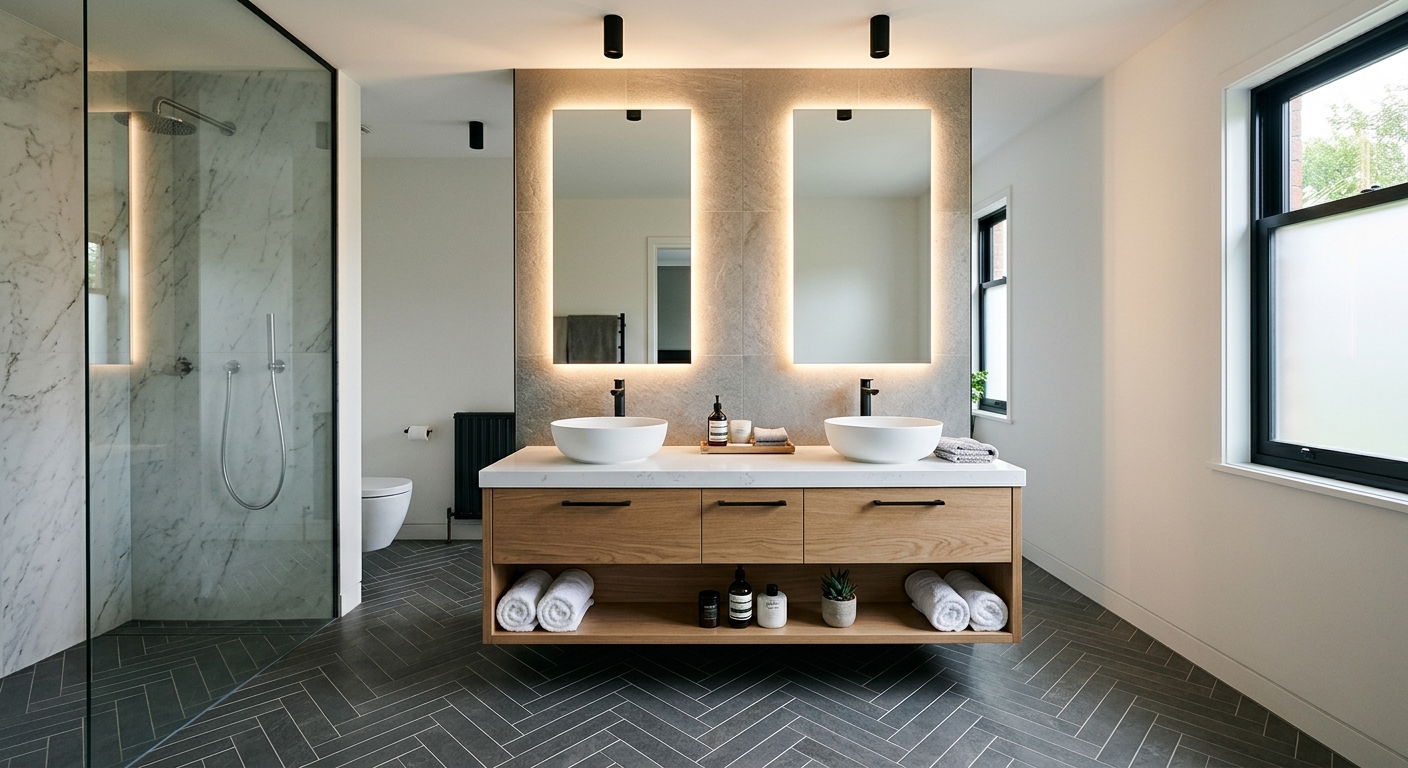
Bathroom renovation options and costs in Dorset Park
Dorset Park, Ontario is a mature, established community where many bathrooms are in older post-war homes. With a population of 25,003 (Statistics Canada, 2021 Census), the area has a steady stream of renovations that keep trades busy year-round. In the Toronto economic region, cost is driven less by climate extremes and more by housing age: older 1960s–1980s layouts often hide dated drain stacks, undersized venting, or mismatched supply lines behind walls and subfloors. That’s why a “standard” reno can quickly turn into a plumbing upgrade, especially when new tile, a wider vanity, or a walk-in shower changes flow and rough-in access.
While Ontario weather doesn’t directly change tiling chemistry the way freeze-thaw can in some regions, indoor humidity still matters. Bathrooms in the GTA typically need stronger exhaust and correct waterproofing detailing to control moisture-laden air, and that adds labour when builders open walls and improve ventilation. In Dorset Park, skilled crews are particularly in demand along the busier corridors connecting to the greater Toronto core, where contractors can schedule multiple tile and plumbing jobs back-to-back—this helps availability, but also means accurate scopes are essential to avoid costly change orders.
Below is a practical comparison of common project types and the price ranges many homeowners see in Dorset Park and across the Toronto market. Use it as a starting point, then tighten the scope during the quoting process.
| Renovation Scope |
What's Included |
Typical Duration |
Price Range |
| Cosmetic refresh (paint, fixtures, accessories only) |
Paint, new vanity/fixtures if replacements only, toilet/lighting swaps, accessories, caulking and touch-up |
3–7 days |
$3,000–$7,500 |
| Mid-range full renovation (new tile, vanity, tub/shower, electrical) |
Full demo, updated plumbing where required, wall/floor tile, new tub/shower surround, vanity, exhaust fan (electrical tied in), GFCI where needed, waterproofing and disposal |
2–4 weeks |
$12,000–$22,500 |
| High-end full renovation (custom tile, steam shower, heated floors) |
Custom shower or steam-ready build, premium tile/stone, linear drain detailing, heated flooring circuit, upgraded electrical, expanded waterproofing system, higher-end fixtures and trims |
4–7 weeks |
$22,000–$30,000 |
| Shower-only installation (convert tub to walk-in shower) |
Remove tub, prep subfloor, rough-in adjustments as needed, walk-in shower pan/tiling, glass or sliding door, exhaust/fan updates if tied to demo, disposal |
1.5–3 weeks |
$9,000–$16,000 |
| Bathtub replacement or tub-liner install |
Replace tub (or liner where feasible), new surrounds to match, new trim/valves, silicone/caulking, basic rework to make watertight |
5–12 days |
$1,200–$3,500 |
| Tile-only installation (floor + surround, existing layout kept) |
Tile floor and walls (existing tub or shower retained), underlayment prep, grout/seal, standard waterproofing for tile surfaces, caulking and finish details |
1–3 weeks |
$3,000–$10,000 |
Prices are estimates only and vary by project scope, site access and material selection.
What affects the price of bathroom renovation in Dorset Park
In Dorset Park and across the broader Toronto economic region, two homeowners can receive quotes that differ by 30–50% for the same “bathroom refresh” because the biggest drivers are labour rates and what the contractor finds after the first walls come down. GTA trades command premium hourly rates, and bathroom work is labour-intensive—tiling, custom shower builds, and any plumbing rough-in changes require time, careful sequencing, and skilled supervision. Climate plays a smaller role here than in regions with harsher outdoor temperature swings; in the GTA the bigger issue is indoor moisture management, which depends on correct ventilation, waterproofing coverage, and airtight sealing during the install.
Older housing stock is the common cost shock. In many Toronto-area homes, you can run into cast-iron or undersized drains that need upgrading, galvanized or aged supply lines that won’t tolerate new pressure/fixtures, and venting that doesn’t meet current Ontario expectations once walls are opened. If asbestos-containing materials are discovered (often in older floor tile or related finishes), abatement protocols add time and direct costs—commonly in the range of $1,500–$5,000+ depending on what’s disturbed. That’s one reason a mid-range full renovation that starts around $12,000–$22,500 can legitimately climb if plumbing, venting, or electrical upgrades become necessary.
Two practical examples from Dorset Park: (1) converting a tub to a walk-in shower usually triggers more than just “fixture swaps”—drain placement and slope can require drain reconfiguration, pushing shower-only budgets toward the $4,000–$12,000 shower installation band and beyond when rerouting is extensive; (2) choosing large-format porcelain often reduces grout lines but increases substrate prep requirements—if the subfloor is uneven, it adds levelling and labour, nudging tile-only work toward the upper end of the $3,000–$10,000 range.
| Price Factor |
Why It Matters |
Cost Impact |
| Layout change — moving drain or supply lines |
Requires rough-in work, more demo and patching, and careful slope/vent compliance |
Often adds several thousand dollars; highest cost swing |
| Tile selection — large-format porcelain vs. mosaic vs. ceramic |
Harder products demand better prep and more time for cuts around valves and niches |
Can move a project from lower to mid/high range |
| Fixture tier — builder-grade vs. mid-range vs. designer brands |
Design trims, valves, and longer lead items raise material cost and install time |
Typically shifts totals by $1,000–$5,000+ |
| Subfloor condition — rot or unlevel concrete adds scope |
Tile life depends on a stable, flat substrate; repairs and extra backer/underlayment are labour |
More demo + prep pushes cost upward quickly |
| Electrical — adding GFCI outlets, exhaust fan, heated floor circuit |
Bathrooms require proper protection and safe circuiting; heated floors add wiring and testing |
Often adds hundreds to several thousand |
| Waterproofing method — membrane type and extent |
Correct systems reduce mould risk; coverage and system compatibility affect labour |
Cost rises with premium membrane systems and full coverage |
| Older-home surprises — asbestos tile, cast-iron drains, galvanized pipes |
Discovery changes sequencing, adds licensing/abatement, and may require plumbing swaps |
Can add $1,500–$5,000+ or more depending on scope |
| Bathroom size — sq ft drives tile and labour time directly |
More surface area means more tile, more thinset/grout, and longer waterproofing and setting time |
Larger bathrooms generally scale costs 1:1 with labour complexity |
Permits & regulations in Ontario
In Ontario, many “look only” bathroom updates do not require a permit. Cosmetic work like swapping a vanity, replacing fixtures without changing plumbing positions, repainting, and retiling using the existing shower/tub footprint typically falls under homeowner/contractor finish work. If you’re only replacing like-for-like—same locations for toilet, sink, valves, and the same general plumbing routing—permits are usually not required.
Permits and inspections are more common when you change the functional systems. Typically, you’ll need a permit when you: (1) relocate plumbing (moving drain or supply lines, changing valve locations, or altering rough-in); (2) add or modify ventilation—especially when installing an exhaust fan and tying it into electrical with new circuits or upgrades; and (3) make structural changes that affect load-bearing walls or wall assemblies. Electrical work must meet Ontario electrical safety requirements and be completed or signed off by a licensed electrician.
How to verify a contractor in Dorset Park, step-by-step: first, ask for the contractor’s Ontario trade licence details and confirm it matches the scope of work (plumbing/electrical/general contracting as applicable). Second, request a current certificate of insurance for liability coverage and verify the expiry date. Third, confirm workers’ compensation coverage (WSIB/WCB) so you’re protected if a worker is injured on-site. Lastly, ask for documentation such as a clearance letter where relevant—don’t rely on verbal assurance. A reputable bathroom contractor should provide these documents quickly and willingly.
Choosing tile, waterproofing and fixtures for your Dorset Park bathroom
In Dorset Park, the biggest budget swing is usually not the vanity—it’s the combined decision of tile type, waterproofing system, and fixture tier. Start with tile choice. Ceramic is a solid entry-level option and is often best where you want a lower material cost and straightforward installation. Porcelain generally costs more but tends to handle daily bathroom wear better (and can be chosen for larger formats), which makes it a good mid-range balance if your installer is strict about substrate prep. Natural stone (marble, travertine, slate) brings luxury appearance, but it demands more careful sealing and can increase labour because of cutting and finishing.
Second, waterproofing. Ontario bathrooms run humid most of the year, and that’s exactly why waterproofing details matter. A paint-on membrane can be economical for some assemblies, but full system builds (including correct overlaps and bondings) are critical. Bonded sheet membranes or a well-documented schluter-type approach typically provide more consistent protection when installed correctly, reducing the risk of mould and hidden leaks behind tile.
Third, fixtures. Builder-grade faucets and shower valves save money up front, but mid-range and designer brands can improve both function and longevity, and they often hold up better to daily use—supporting resale value when buyers tour comparable homes in the Toronto market.
Where does it make sense to spend? For example, if you’re debating heated floors in a mid-range reno, that’s often easier to justify because it pairs with a full waterproofing/tile system. A heated floor add-on can be a meaningful uplift, but it’s rarely worth it if the project is only a quick cosmetic refresh.
| Material / Option |
Pros |
Cons |
Price Range |
| Ceramic tile (floor + walls) |
Cost-effective, wide style selection, good for many bathroom finishes |
More sensitive to lippage if installation isn’t precise; sealing/grout maintenance required |
$3,000–$7,500 |
| Porcelain tile (floor + walls) |
Durable, often better moisture resistance, supports larger formats and cleaner lines |
Higher material cost; requires excellent substrate flatness for large panels |
$6,000–$10,000 |
| Natural stone (marble, travertine, slate) |
Premium look, unique veining/texture, strong curb appeal and resale appeal |
Higher labour and sealing/maintenance; can be more temperamental with grout choices |
$8,000–$14,000 |
| Frameless glass shower enclosure |
Modern appearance, easy to keep clean, visually opens the space |
More expensive hardware, requires precise framing/leveling |
$3,500–$8,000 |
| Prefab tub surround (acrylic) |
Faster install, generally watertight when fitted correctly, budget-friendly |
Less custom look than tile; seam and finish quality depends on installer |
$1,200–$3,500 |
| Custom shower pan (tile or linear drain) |
Luxury feel, correct slope for drainage, supports high-end shower layouts |
More labour; needs careful waterproofing transitions and substrate prep |
$4,000–$12,000 |
How to choose a bathroom renovation contractor in Dorset Park
Start by verifying Ontario licensing and coverage before you sign anything. Ask for the contractor’s Ontario trade licence information for the work they’ll perform, and confirm the scope matches your bathroom plan (plumbing rough-in changes should be handled by the appropriate licensed trade, and any electrical work should be completed or signed off by a licensed electrician). Next, request a certificate of liability insurance and verify it’s current and adequate for renovation work. Also confirm workers’ compensation coverage (WSIB/WCB) and ask how it’s documented—look for the clearance letter or equivalent proof so you’re not exposed if someone gets hurt on-site.
Then get 2–3 itemised written quotes. A solid bathroom quote should break out labour and materials, include waterproofing method details, show what’s included for disposal, and list any permit pulls (or clearly state who handles them). Avoid lump-sum quotes that don’t explain scope; in older Dorset Park homes, surprises happen once walls open, so you want a transparent baseline.
Read the warranty section closely: workmanship warranty length, product/manufacturer warranty specifics, and whether coverage is transferable if you sell the home. Payment schedules matter too—never pay more than 10–15% upfront. Hold a portion until key milestones are completed and inspected (at minimum, after waterproofing is confirmed and fixtures are tested). Finally, insist on a start date and a completion estimate in writing, with contingencies for lead times on glass or specialty tile.
- Use itemised quotes (labour + materials) instead of one lump sum.
- Confirm permit responsibility in writing (who pulls it, who pays fees).
- Verify disposal/hauling is included for demo materials.
- Ask which waterproofing system and coverage method will be used.
- Confirm who supplies and installs glass enclosures and doors.
- Check whether plumbing valves and shut-offs will be replaced where needed.
- Require a written demolition and protection plan for floors and adjacent rooms.
- Ensure the exhaust fan plan includes appropriate electrical protection.
- Ask how they handle subfloor unevenness before tile goes down.
- Review the warranty: workmanship length and what it covers (leaks, delamination, grout failure).
- Set a milestone-based payment schedule (10–15% max upfront).
- Get a job schedule that names milestones, not just a start/end date.
Red flags I see in Dorset Park: quotes with vague scope (“replace as needed”), no mention of waterproofing method, no proof of WSIB/WCB or liability coverage, payment requests above 15% upfront, and crews who won’t commit to an itemised completion checklist and warranty terms.
Frequently asked questions — bathroom renovation in Dorset Park
Can I keep my existing plumbing layout to save money?
Yes—keeping your plumbing layout is often the easiest way to save, because moving drains or supply lines is where labour and rough-in work expand. In Ontario (including Dorset Park), changing the location of drains/valves typically increases permitting and inspection steps compared with “like-for-like” swaps. If your toilet, sink, and tub/shower are staying where they are, you can usually target tile, vanity, lighting and finishes within a mid-range budget (many homeowners land in the $12,000–$22,500 range for a fuller update that includes retiling and typical electrical upgrades). Just note: even with the same layout, older homes may still need venting, shut-off updates, or repairs once walls are opened—those surprises are why itemised quotes matter.
How much does a walk-in shower cost in Dorset Park?
A walk-in shower cost depends on whether you’re converting from a tub, the drain style (standard vs. linear), and your waterproofing/tile complexity. In the Toronto market, many contractors budget walk-in shower conversions in the shower-installation range of $4,000–$12,000, but conversion projects often land higher if drain reconfiguration, valve relocation, or upgraded exhaust is needed. In Dorset Park’s older housing stock, the “hidden work” is commonly venting/drain slope adjustments once the tub is removed. If you want a custom tiled shower with glass and premium tile, it frequently becomes part of a larger full reno plan rather than a standalone change.
What's the ROI on a bathroom renovation?
ROI varies by how extensive your renovation is and what the local buyer demand looks like. In the Toronto economic region, buyers tend to pay attention to waterproofing quality, ventilation upgrades, and modern fixtures more than minor styling. A cosmetic refresh can improve how your home shows, but it doesn’t always move the needle as much as a full functional update—especially in older bathrooms where plumbing and ventilation issues may be a concern. For a strong value-to-cost balance, homeowners often prioritize a mid-range full renovation with proper waterproofing and reliable finishes (commonly $12,000–$22,500). High-end upgrades can be beautiful, but if they exceed what comparable homes on your street offer, you may not recover 100% of the premium. The best approach is to align materials and layout changes with the quality level of nearby comparable listings.
Do I need waterproofing behind the tile?
For a tiled shower or tub surround, waterproofing is essential—tile alone is not a waterproof system. In Dorset Park and across Ontario, correct waterproofing protects against moisture reaching framing and subfloors, reducing the risk of mould and hidden leaks. When contractors use a complete system (including compatible membranes, correct overlaps, and proper transitions at corners and seams), the bathroom performs better long-term, particularly in Ontario’s year-round indoor humidity. In most renos that include new tile surrounds or shower builds, waterproofing is a core component and should be described in your quote. If a contractor can’t explain the method and coverage, that’s a major concern—especially in older homes where subfloor conditions may already be marginal.
How do I compare bathroom renovation quotes?
Compare quotes like a recipe, not like a single number. Ask for itemised labour and materials, and confirm exactly what’s included: demo, disposal, waterproofing method, tile installation details, exhaust fan work, and whether permits are part of the scope. Make sure they specify fixture brands/tiers (builder-grade vs. mid-range vs. designer) and include allowances where pricing depends on material selection. Watch for exclusions such as subfloor repairs, asbestos abatement if discovered, or electrical upgrades if you’re adding a heated floor circuit. Also compare timelines and payment schedules—good contractors provide a milestone-based plan and don’t request large upfront amounts. If one quote is far below others, it’s often because key work is missing; in Ontario, small omissions can create expensive corrections later.
Can I live at home during a bathroom renovation in Dorset Park?
Often yes, but it depends on your layout and the scope. If you’re doing a cosmetic refresh or tile-only work with minimal plumbing access, many homeowners can remain in the home and use the bathroom in phases (or use a temporary setup). For full renovations, especially when walls are opened for waterproofing and plumbing rough-in upgrades, it’s common that the bathroom won’t be fully usable during certain stages. Conversion projects—like tub-to-walk-in showers—also disrupt water access temporarily. In a Toronto-era home, demo and plumbing adjustments may take longer if venting or drain issues are uncovered. To plan safely in Dorset Park, ask for a written schedule and confirm when key milestones happen (rough-in complete, waterproofing cured, tile set, fixtures installed). If you need continuous bathroom use, discuss options for a temporary washroom arrangement before work starts.