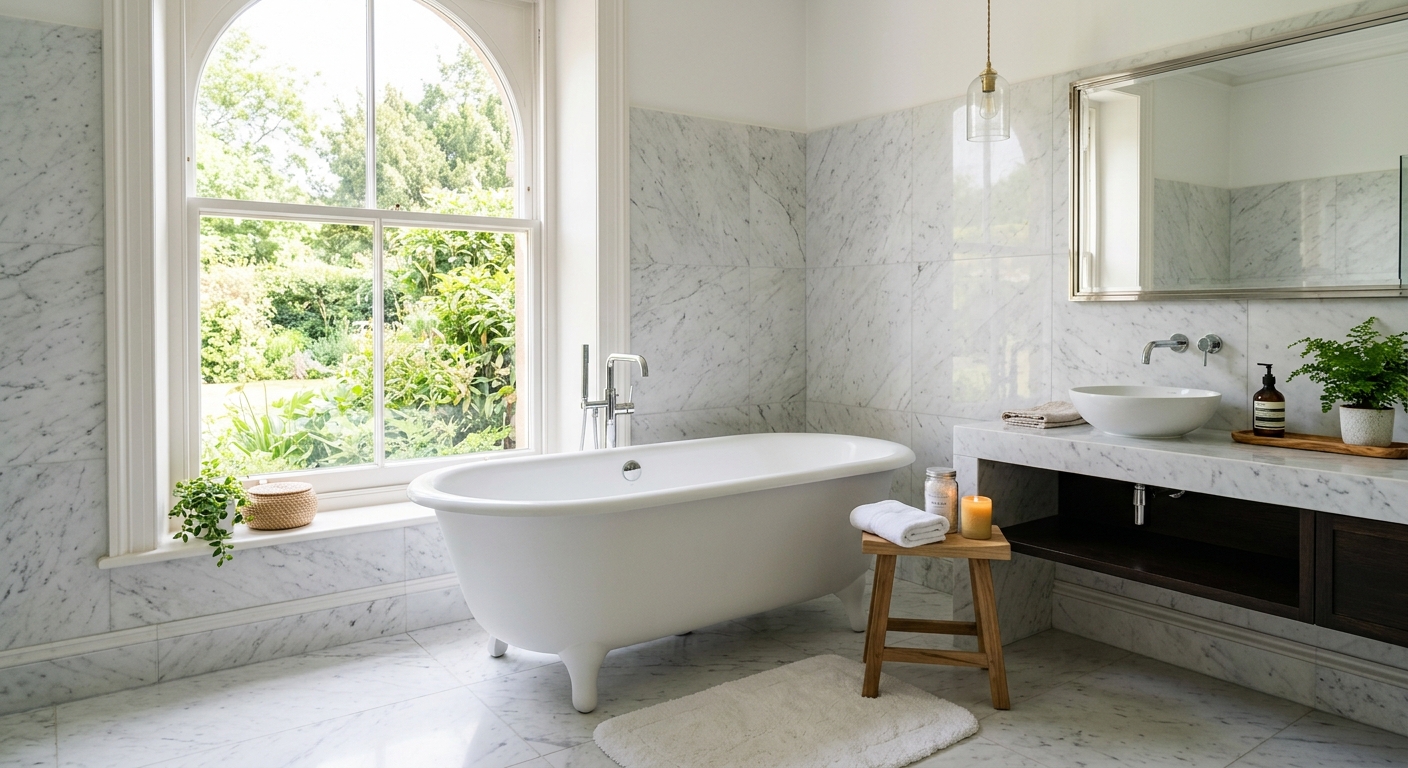
Bathroom renovation options and costs in West Vancouver
Bathroom renovations in West Vancouver tend to price higher than many parts of the province, and that’s largely because Lower Mainland–Southwest labour rates are strong and the housing stock is older. With 53.8% of homes in West Vancouver built before 1981 (Statistics Canada, 2021 Census), many projects begin with dated plumbing layouts and floors that may conceal cast-iron drains or galvanized supply lines. In some cases, contractors also run into older materials where asbestos abatement protocols apply if disturbed, which expands scope once walls and subfloors are opened.
While West Vancouver’s coastal climate brings regular humidity exposure, it’s not the main driver of cost here—labour availability and the age of the existing systems do. Metro Vancouver demand means plumbers, electricians, and tile setters can be booked out, and once a bathroom is opened, it’s common to upgrade venting, GFCI protection, and waterproofing to meet current British Columbia expectations. That’s also why a “mid-range refresh” often turns into an all-trades renovation once you discover what’s behind the tile and vanity wall.
In neighbourhoods like Chartwell, where many mid-century homes are densely built and access can be tight, you’ll often see faster turnover on straightforward scopes and more allowances for discovery work on older drains, wiring, and subfloors. The result: two homeowners with identical fixtures can still receive quotes that land in different bands—so it helps to compare options by scope and schedule before you choose a route. See the table below for realistic ranges in West Vancouver.
| Renovation Scope |
What’s Included |
Typical Duration |
Price Range |
| Cosmetic refresh (paint, fixtures, accessories only) |
Paint, new vanity or vanity top (no plumbing relocation), faucet, toilet refresh/replacement, mirror, accessories, caulking/trim, basic sealing |
5–10 business days |
$3,500 – $9,000 |
| Mid-range full renovation (new tile, vanity, tub/shower, electrical) |
Demo and haul-away, shower/tub refinishing or replacement, new vanity, tile floor and walls, waterproofing system, exhaust fan upgrade, GFCI outlet(s), new trim and finishes |
3–5 weeks |
$18,000 – $30,000 |
| High-end full renovation (custom tile, steam shower, heated floors) |
High-spec tile (custom layout), steam shower or premium valve, heated floor wiring/circuit coordination, upgraded waterproofing, designer vanity/trim, enhanced lighting and ventilation |
5–8 weeks |
$30,000 – $45,000 |
| Shower-only installation (convert tub to walk-in shower) |
Tub removal, new walk-in shower pan/underlayment, tile surround, new glass option, new valve trim (as needed), exhaust fan tie-in if upgraded |
2–4 weeks |
$8,000 – $25,000 |
| Bathtub replacement or tub-liner install |
Replace tub unit or install a tub liner, re-seal joints, update surrounding finishes, basic plumbing connections where feasible |
1–2.5 weeks |
$1,500 – $6,000 |
| Tile-only installation (floor + surround, existing layout kept) |
Tile floor and wall surround, backer prep, waterproofing where required for wet areas, grout and sealing, re-install fixtures if retained |
1.5–3 weeks |
$2,000 – $8,000 |
Prices are estimates only and vary by project scope, site access and material selection.
What affects the price of bathroom renovation in West Vancouver
In the Lower Mainland–Southwest region, the same bathroom scope can come in 30–50% apart from one quote to the next. The biggest reason isn’t the weather—it’s the combination of regional labour rates and the age of local housing stock. In West Vancouver, 53.8% of homes were built before 1981 (Statistics Canada, 2021 Census), and that matters once you open walls: old drain stacks may be cast iron, supply lines may be galvanized, and ventilation may not be adequate for today’s bathroom exhaust expectations.
Once contractors discover conditions like aging drain piping or improperly supported subfloors, the job expands from “finish work” into rough-in and remediation. That’s why your budget might move from a mid-range full renovation band (for example, around $18,000 – $30,000) toward the higher end ($30,000 – $45,000) if venting, wiring, or additional waterproofing needs are confirmed.
Asbestos can also be a cost swing factor. If asbestos-containing materials are suspected in older floor tile, drywall compound, or insulation and must be handled, abatement and disposal add meaningful time and expense—commonly adding $1,500 – $5,000+ depending on scope and testing/containment requirements. Here are a few local examples of how West Vancouver conditions change cost: (1) compact bathrooms in older houses often require more precise demolition and tile rebuilding, (2) switching to heated floors adds electrical labour and circuit coordination, and (3) upgrading to better shower waterproofing can add materials and labour but reduces future moisture risks.
Even with “tile-only” projects, prep and waterproofing requirements in wet areas drive labour time directly. The best way to keep pricing predictable is to plan for discovery—especially in pre-1980 homes—and to price contingency for plumbing and ventilation upgrades.
| Price Factor |
Why It Matters |
Cost Impact |
| Layout change — moving drain or supply lines requires rough-in work |
New rough-in means wall openings, pipe routing, patching, inspections and more labour trades |
Often the biggest jump; can move a bathroom by several thousand dollars depending on distance and access |
| Tile selection — large-format porcelain vs. mosaic vs. ceramic |
Harder cuts, more waste, and tighter tolerances increase installation time and skill |
Can add a few thousand on tile labour and materials; mosaics typically cost more to install |
| Fixture tier — builder-grade vs. mid-range vs. designer brands |
Higher-end fixtures add material cost and sometimes require specific valves, trims or supports |
Material difference alone can be several hundred to over $2,000 depending on selections |
| Subfloor condition — rot or unlevel concrete adds scope |
Subfloor repairs and re-leveling delay tile setting and may require additional prep products |
Repairs can add from hundreds to over a thousand; larger repairs can push budgets upward |
| Electrical — adding GFCI outlets, exhaust fan, heated floor circuit |
BC code requires safe outlets and proper bathroom ventilation; heated floors add wiring and controls |
Often increases cost by hundreds to several thousand depending on circuits and finishes |
| Waterproofing method — membrane type and extent |
More complete waterproofing coverage and higher-spec membranes improve moisture protection |
Can increase material and labour, but typically reduces future call-backs |
| Older-home surprises — asbestos tile, cast-iron drains, galvanized pipes |
Discovery triggers remediation, extra demo, disposal and sometimes full drain upgrades |
Commonly adds at least $1,500–$5,000+ if abatement or significant plumbing work is required |
| Bathroom size — sq ft drives tile and labour time directly |
Tile floor area, wall area, and setting time scale with size; also affects drying times and project length |
Small bathrooms may stay near the lower bands; larger spaces drift toward mid/high ranges |
Permits & regulations in British Columbia
In British Columbia, cosmetic updates generally do not require permits. For a West Vancouver homeowner, that usually means swapping fixtures like a faucet, vanity top, mirror, toilet, or replacing like-for-like trim and retiling without changing plumbing locations. Typical “no-permit” scopes include paint, new accessories, and re-installing fixtures using the existing rough-in points.
Permits are more likely required when you change the plumbing or electrical scope. If you relocate plumbing—moving a drain or supply line—or if you alter the wet-area layout (for example, converting a tub to a walk-in shower with valve repositioning), you should expect a permit and inspections for the plumbing rough-in. Similarly, adding an exhaust fan where there wasn’t one, upgrading to a fan with new wiring, or adding heated floor circuits generally triggers electrical permits and requires work to be done by (or signed off by) a licensed electrician.
Here’s a practical step-by-step for West Vancouver: (1) Ask the contractor for their British Columbia trade licence number and confirm it using the provincial online registry, (2) request a current certificate of insurance showing liability coverage and the scope they’re performing, (3) confirm worker coverage—WCB/clearance documentation where applicable—for any workers under their control, and (4) keep the permit/inspection plan in writing before work starts. If anything is unclear, request an itemized line item for permits and inspections (or confirm “permit included” in the quote).
Choosing tile, waterproofing and fixtures for your West Vancouver bathroom
In West Vancouver, the three material choices that most strongly shape your bathroom renovation budget are tile type, waterproofing system, and fixture tier. Your best combo depends on how you want the bathroom to perform in a coastal, humidity-heavy environment and how much risk you’re willing to carry on long-term water management.
First, tile: ceramic is usually the entry-level choice and is typically easier to source and install, but it often means more frequent grout maintenance and may not offer the same dimensional stability. Porcelain is more durable and usually costs more upfront, but it’s better for high-traffic floors and can support cleaner, flatter installs. For luxury looks, natural stone (marble, travertine, slate) can be stunning, yet it often requires extra substrate prep, sealing, and higher labour because of cutting tolerances and finishing needs.
Second, waterproofing: paint-on membranes can work for some situations, but in wet areas many homeowners prefer a bonded sheet membrane or a complete system approach (including compatible thinset, corners, and drain details). The right waterproofing coverage and method helps prevent moisture migration and reduces mould risk common in bathrooms that run humid air through winter and shoulder seasons.
Third, fixtures: builder-grade saves money, but mid-range valves, shower systems, and vanities often improve long-term reliability and resale appeal. If you’re deciding between options, a practical example is choosing a porcelain wall tile and a robust waterproofing approach over “cheap” tile-and-grout. That trade-up can be worth it because it protects the system behind the finish, rather than only improving the look.
Pair these decisions to your scope. For a full renovation approaching mid-range pricing, prioritizing waterproofing and tile quality is usually the smartest way to stay on budget while avoiding expensive rework later. If you’re near the high end, custom shower features and premium finishes tend to justify the additional spend.
| Material / Option |
Pros |
Cons |
Price Range |
| Ceramic tile (floor + walls) |
Good entry price, wide style selection, straightforward install for standard formats |
May be less dense than porcelain; can require more careful subfloor prep for longevity |
$2,000 – $4,500 |
| Porcelain tile (floor + walls) |
Higher durability for floors, better for moisture exposure, more consistent tile sizes |
Can cost more per tile and may increase installation time if large-format |
$3,500 – $8,000 |
| Natural stone (marble, travertine, slate) |
Premium look and unique veining, great for feature walls and spa-style bathrooms |
More expensive and requires sealing; additional labour for cutting, finishing and maintenance |
$6,000 – $14,000 |
| Frameless glass shower enclosure |
Brightens the room, modern look, easier cleaning with the right silicone detailing |
Hardware and custom sizing drive cost; installation tolerances matter |
$2,500 – $6,500 |
| Prefab tub surround (acrylic) |
Fast install, lower labour, typically good for keeping moisture sealed when installed correctly |
Less design flexibility than tile; can look more “builder spec” in high-end remodels |
$1,500 – $4,000 |
| Custom shower pan (tile or linear drain) |
Best long-term look and integration; linear drains improve accessibility and modern styling |
More complex waterproofing and slope/height planning; drying and inspection can extend timelines |
$6,000 – $18,000 |
How to choose a bathroom renovation contractor in West Vancouver
When you’re hiring a bathroom renovation contractor in West Vancouver, start by verifying British Columbia licensing, insurance, and worker coverage before you compare pricing. First, ask for their BC trade licence(s) relevant to your scope (for example, plumbing and electrical trades), then confirm the licence details through the provincial online registry. Next, request a certificate of insurance and ensure it’s current and covers the type of work being performed. For worker coverage, ask for the appropriate WCB/WCB clearance documentation—especially if the contractor is using their own employees or subcontracting crew under their direction.
Then compare quotes that are itemized, not lump sums. Get 2–3 written quotes with a labour + materials breakdown so you can see what you’re paying for: demo and disposal, waterproofing system, tile backer/prep, rough-in allowances, and any permit costs. Read the scope carefully and confirm what’s excluded—common exclusions include niche builds, subfloor repairs, additional plumbing valves, waste haul-away, and glass enclosure hardware. Also ask whether permits and inspections are included and who handles scheduling.
For warranty, insist on workmanship coverage (often documented with a written warranty period) and confirm whether product warranties transfer if you sell your home. Payment should be structured so you never pay more than 10–15% upfront; hold back a portion until key milestones are complete, such as waterproofing validation, tile finishing, and final trim. Finally, ask for a start date and completion estimate in writing, including key dependencies like inspections and glass fabrication lead times.
- Verify BC trade licences for each trade involved (plumbing/electrical as applicable) before signing.
- Request a current certificate of insurance and confirm coverage is active for the renovation term.
- Confirm WCB/clearance documentation for workers used on your site.
- Require itemized labour and materials quotes (no single “all-in” line without detail).
- Confirm permit responsibilities: who pulls permits, who schedules inspections, and what’s included.
- Make disposal/haul-away explicit (how much, where it goes, and whether it includes demolition waste).
- Require a waterproofing method statement (membrane type, coverage areas, and how corners/drains are detailed).
- Ask how they handle older-home surprises (cast-iron drains, galvanized supply, subfloor repairs).
- Confirm tile installation prep standards (backer board vs. other substrates, flatness requirements).
- Set a written timeline with inspection milestones and realistic drying/curing windows.
- Define warranty terms: workmanship length, what’s covered, and how to file a claim.
- Use a payment schedule with a holdback until final sign-off (avoid large upfront payments).
In West Vancouver, specific red flags include: (1) “handyman-only” claims when the scope requires plumbing or electrical permits, (2) refusal to provide licence/insurance documentation in writing, (3) quotes that don’t mention waterproofing system details, (4) missing allowances for older-home plumbing or subfloor repair, and (5) payment requests that exceed 10–15% upfront with no milestone-based holdback.
Frequently asked questions — bathroom renovation in West Vancouver
How long does tile installation take in a West Vancouver bathroom?
Tile installation time in West Vancouver depends mostly on the bathroom size, tile format (large-format porcelain vs. mosaics), and how flat the substrate is after demolition. In many typical renovations, tile work takes about 1.5–3 weeks of active labour, not counting the time needed for waterproofing cure periods and any subfloor corrections. If you’re doing a full bath at mid-range scope (often near $18,000 – $30,000), expect added prep and drying time because waterproofing is installed before tile. In older homes (more common here given the pre-1981 housing stock), extra time is common for patching and levelling—especially around tub decks and shower niches.
How much does a bathroom renovation cost in West Vancouver?
For West Vancouver, most full bathroom renovations realistically land in a broad band because older systems get uncovered during demo. Many mid-range full renovations typically fall around $18,000 – $30,000, while higher-end projects with premium tile layouts, heated floors, and upgraded shower systems often move toward $30,000 – $45,000. The biggest cost drivers are usually labour rates in the Lower Mainland–Southwest and what’s behind the walls: cast-iron or galvanized piping, venting upgrades, and electrical needs like GFCI outlets and exhaust fans. Cosmetic-only refreshes are typically much lower because they avoid rough-in changes.
How long does a bathroom renovation take in West Vancouver?
Typical timelines in West Vancouver range from about 1.5 weeks for a smaller tile-only job to 3–8 weeks for a full renovation, depending on scope and scheduling. A bathroom conversion like converting a tub to a walk-in shower often runs about 2–4 weeks because you’re building a new shower pan and managing waterproofing and cure time. Full renovations frequently take about 3–5 weeks for mid-range scopes and 5–8 weeks for higher-end work, especially when custom tile, heated flooring, or steam shower components are involved. In older homes, schedule can expand if plumbing rough-in upgrades or electrical corrections are required after discovery during demolition.
Do I need a permit for a bathroom renovation in British Columbia?
In British Columbia, many cosmetic updates don’t require a permit—so swapping fixtures, replacing a vanity, painting, and retiling without relocating plumbing are typically treated as finishing work. However, you should expect permits when the renovation changes plumbing rough-in (moving drain or supply lines) or when electrical work is added or upgraded, such as new exhaust fan wiring, adding GFCI outlets, or installing heated floor circuits. In West Vancouver, it’s especially important to confirm the scope up front because older bathrooms often lack modern ventilation and protection. The safest approach is to ask your contractor to list which tasks require permits and to confirm whether permit pulls and inspections are included in the quote.
What's the best tile for a bathroom in West Vancouver?
“Best” depends on your performance goals and your finish style. For most homeowners in West Vancouver, porcelain tile is a top choice for floors and wet areas because it’s durable and handles moisture well, particularly when installed over a properly prepared substrate with a waterproofing system. Ceramic can be great for walls and sometimes floors when the bathroom is properly sealed, but porcelain often offers a better long-term balance in real-world moisture conditions. Natural stone looks luxurious but may require sealing and extra upkeep. Regardless of tile type, the waterproofing method and installation details (wet-area coverage, corners, and drain interfaces) are what ultimately protect your bathroom from moisture and mould risk. Many tile-only installations fall into a band around $2,000 – $8,000, with full scopes rising based on tile area and substrate prep.
Should I do a tub-to-shower conversion?
A tub-to-shower conversion is often a smart move for West Vancouver homeowners, especially if you’re looking for easier daily access, lower long-term maintenance, or better use of space. Converting the tub to a walk-in shower typically costs more than a simple fixture swap because you’re rebuilding a waterproof shower system and managing plumbing/valve details. Realistic budget ranges for shower installations commonly sit around $8,000 – $25,000, with higher-end outcomes when linear drains, premium glass, or custom tile pans are selected. It’s also a good idea to plan for older-home plumbing surprises—if the existing drain stack or supply lines need upgrades, the conversion is a natural point to modernize them for safety and compliance.