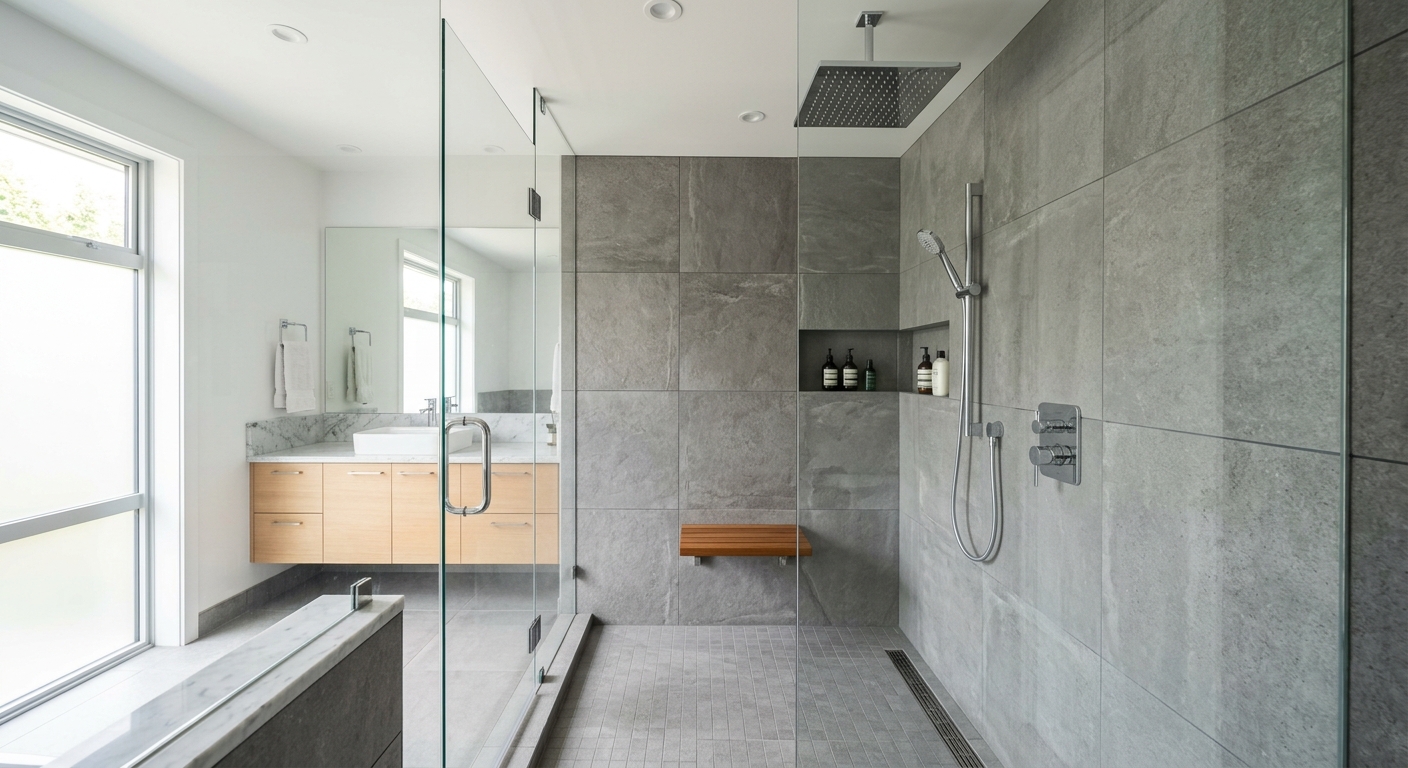
Bathroom renovation options and costs in Salmon Arm
Salmon Arm homeowners have a few clear paths for a bathroom renovation, and the right choice usually comes down to how much plumbing, tile, and electrical work you want to touch. With 19,432 residents and roughly 6,300 homeowner households (Statistics Canada, 2021 Census), most projects here start with a practical goal: refresh what shows daily wear, and upgrade what causes leaks, odours, and ventilation issues. It also matters that 38.6% of homes were built before 1981 (Statistics Canada, 2021 Census). In older homes, the underlying plumbing layout and drain/vent routing can be dated, and you may encounter cast-iron drain sections or older wiring methods once walls are opened.
In the Thompson–Okanagan region, bathroom renovation costs are driven more by labour availability and the age of the housing stock than by coastal-style corrosion risk. Labour shortages and strong demand can push schedule and price, and once the opening phase begins, discoveries in concealed spaces can change a cosmetic job into a full-gut scope. Around Salmon Arm, trade demand is especially noticeable in established areas with larger older housing pockets, such as the Salmon Arm West area near downtown (good access but lots of renovations crowd the same contractors’ calendars).
Below is a realistic comparison of common bathroom options and what they typically include, so you can align your expectations before you request itemised quotes.
| Renovation Scope |
What's Included |
Typical Duration |
Price Range |
| Cosmetic refresh (paint, fixtures, accessories only) |
New vanity or faucet, toilet reseat/replace (if included in scope), lighting accessories, mirror, paint, caulking and trim; no wall opening |
3–7 days |
$3,000 – $8,000 |
| Mid-range full renovation (new tile, vanity, tub/shower, electrical) |
Demo and disposal, new vanity and toilet, tub/shower surround or wall tile, floor tile, exhaust fan and GFCI updates (as needed), waterproofing, basic plumbing/electrical upgrades, trim and finishes |
2–4 weeks |
$15,000 – $28,000 |
| High-end full renovation (custom tile, steam shower, heated floors) |
Full gut, custom shower/tile work, heated floor circuit, premium fixtures, upgraded waterproofing, expanded lighting/ventilation, niche/special details, refined trim and finishing |
3–6 weeks |
$28,000 – $45,000 |
| Shower-only installation (convert tub to walk-in shower) |
Convert layout, replace tub with walk-in shower, new shower valve/trim, tile floor and walls, waterproofing system, exhaust fan check/update, curb or linear-drain option (varies by design) |
2–3.5 weeks |
$12,000 – $24,000 |
| Bathtub replacement or tub-liner install |
Remove and replace tub and surround (or install tub liner where appropriate), recaulk and seal, plumbing connection adjustments, basic finish work |
1–2.5 weeks |
$6,000 – $13,000 |
| Tile-only installation (floor + surround, existing layout kept) |
Tile demo (targeted), waterproofing and tile installation for floor and selected wall areas, grout/seal, patch/finish; vanity and fixtures may be protected and reused depending on condition |
1.5–3 weeks |
$6,000 – $14,000 |
Prices are estimates only and vary by project scope, site access and material selection.
What affects the price of bathroom renovation in Salmon Arm
Even when you choose the same-looking “bathroom refresh” from different contractors across Thompson–Okanagan and British Columbia, bids can swing by about 30–50%. The main reason is that labour costs and the age of the housing stock drive more of the total budget than people expect. In Salmon Arm, many homes were built before 1981, and older assemblies often hide issues that aren’t visible until walls are open. Cast-iron or older copper drain stacks may need replacement or re-routing, and supply lines may be galvanized or undersized. On top of that, ventilation in older bathrooms is frequently inadequate, so contractors plan for new ducting and fan upgrades rather than only swapping a grille.
It’s also common to discover materials requiring extra handling. For example, if asbestos-containing materials are present in vinyl floor tile or older drywall compound (more common in pre-1985 construction), remediation adds time, documentation, and cost—often $1,500–$5,000+ depending on scope. Another big driver is electrical: overloaded or outdated circuits can mean you’re not just adding a GFCI—you may need a breaker/circuit plan.
Concrete Salmon Arm examples: (1) replacing a tub with a walk-in shower can increase scope because it changes rough-in and slope work, pushing you toward the mid-range full-reno pricing bands; (2) upgrading waterproofing and installing large-format porcelain can raise material and labour time, but it’s usually worth it when you’re already doing a full tile package. For reference, a practical mid-range full renovation often lands around $15,000 – $28,000, while bigger high-end projects that include heated floors or custom shower systems commonly approach $28,000 – $45,000.
| Price Factor |
Why It Matters |
Cost Impact |
| Layout change — moving drain or supply lines requires rough-in work |
Changes plumbing access, slope, and venting; may require framing adjustments |
Can add $3,000 – $10,000 depending on how far lines are moved |
| Tile selection — large-format porcelain vs. mosaic vs. ceramic |
Large-format increases precision and substrate prep; mosaics increase labour and joints |
Typically shifts tile-only/finish scope by $2,000 – $7,000 |
| Fixture tier — builder-grade vs. mid-range vs. designer brands |
Pricing differences show up in trim, valves, hardware, and longevity of finishes |
Often a $800 – $5,000 swing for comparable layouts |
| Subfloor condition — rot or unlevel concrete adds scope |
Requires shimming, sistering, membrane changes, or partial rebuild |
Commonly adds $1,000 – $6,000+ |
| Electrical — adding GFCI outlets, exhaust fan, heated floor circuit |
May require new circuits, proper fan ducting, and code-compliant connections |
Can add $1,500 – $6,000 |
| Waterproofing method — membrane type and extent |
Better systems add material and labour but reduce leak risk long-term |
Typically adds $600 – $3,500 versus minimal approaches |
| Older-home surprises — asbestos tile, cast-iron drains, galvanized pipes |
Can trigger removal/abatement protocols and more extensive plumbing replacement |
Often $1,500 – $10,000+ and schedule impact |
| Bathroom size — sq ft drives tile and labour time directly |
More area increases tile quantities, thinset/grout, and install hours |
Small baths may stay near $15,000 – $22,000; larger spaces move toward $22,000 – $35,000 |
Permits & regulations in British Columbia
In British Columbia, many bathroom updates are considered cosmetic and typically do not require a permit—for example, swapping fixtures like faucets, showerheads, toilets (when existing plumbing connections are reused), replacing a vanity in the same position, or retiling without relocating plumbing and without changing the structure. However, permits usually come into play when you change the systems. Specifically, relocating plumbing (moving a drain or supply line, changing valve locations, or adding new plumbing points) typically requires a permit and inspection. If you’re adding or changing electrical components—like installing new exhaust fans with new circuits, adding heated floor circuits, or altering wiring—this must be done to provincial electrical code requirements by a licensed electrician.
Here’s a homeowner-friendly step-by-step way to verify a contractor’s BC compliance in Salmon Arm:
- Ask for their BC trade licence details (and confirm the trade category matches the work—carpentry, plumbing coordination, electrical subcontracting where relevant).
- Request a certificate of liability insurance showing active coverage for your project type and dates.
- Confirm coverage for workers under WCB/WCB-equivalent protections (in practice, ask whether they carry WCB clearance and request proof/clearance letter).
- Get the permit responsibility spelled out in writing: who pulls it, what it covers, and when it’s scheduled.
- Before work starts, verify the electrician (for any electrical changes) is licensed and provides inspection sign-off documentation when applicable.
Bottom line: cosmetic-only jobs often don’t need permits, but plumbing relocation, structural wall changes, and electrical circuit work are the usual “permit triggers” in BC.
Choosing tile, waterproofing and fixtures for your Salmon Arm bathroom
In Salmon Arm, your bathroom budget is usually decided by three material decisions: tile choice, waterproofing system, and fixture tier. First, tile: entry-level ceramic can be a good value for lower-cost renos, but it often requires more careful substrate preparation because it’s less forgiving if the floor is uneven. Porcelain is typically more durable and offers broader design flexibility with thicker, more stable finishes—especially helpful for shower walls and floors. Natural stone (marble, travertine, slate) looks premium, but it can be more sensitive to sealing, staining and maintenance, and it can cost more to install due to handling and cutting complexity.
Second, waterproofing: in British Columbia’s interior climate, moisture still accumulates in bathrooms, and the key risk is not salt air—it’s trapped humidity and slow drying if waterproofing is imperfect. A paint-on membrane may work for some situations, but for shower assemblies, bonded sheet membranes or well-detailed schluter-style systems usually provide more robust protection when installed correctly around niches, corners and transitions.
Third, fixture tier: builder-grade fixtures can save initial dollars, but you may see trade-offs in valve smoothness, finish longevity, and the cost to replace parts later. In resale terms, a clean layout with dependable finishes is what buyers notice first.
For a practical example: upgrading from basic ceramic to mid-range porcelain for a typical shower surround and floor can add roughly $2,000–$6,000 to the project, but it’s often justified when you’re already doing a full waterproofing/tile package. In a small cosmetic-only plan, that premium may not pay back because the main value is in layout and leak-proof performance—areas you only gain when you budget for waterproofing and correct detailing.
| Material / Option |
Pros |
Cons |
Price Range |
| Ceramic tile (floor + walls) |
Good value, wide style selection, fine for many baths when installed over a properly prepped substrate |
Not as hard as porcelain; can be more sensitive to uneven surfaces; may require careful selection for slip resistance |
$3,000 – $8,000 |
| Porcelain tile (floor + walls) |
More durable, lower water absorption, strong design options; holds up well in high-use shower areas |
Often costs more per sq ft; larger formats demand tighter prep and skilled layout to avoid lippage |
$6,000 – $14,000 |
| Natural stone (marble, travertine, slate) |
Luxury look, distinctive colour and texture, strong “wow” factor for buyers |
Requires sealing/maintenance; more complex cutting and sealing details; can be pricier and more labour-intensive |
$10,000 – $22,000 |
| Frameless glass shower enclosure |
Modern appearance, easier cleaning, great visual upgrade |
Hardware and glass thickness impact cost; needs precise leveling and waterproofing details at the edges |
$2,000 – $6,500 |
| Prefab tub surround (acrylic) |
Quicker install, fewer tile cuts, consistent finish, good for keeping costs controlled |
Limited design customization; can look less high-end than full tile; transitions must be sealed carefully |
$1,200 – $4,000 |
| Custom shower pan (tile or linear drain) |
Cleaner slope/drain design, premium feel, better long-term performance when properly built and waterproofed |
More labour and coordination; linear drains require precision and careful layout planning |
$4,000 – $12,000 |
How to choose a bathroom renovation contractor in Salmon Arm
Choosing the right contractor in Salmon Arm is mainly about verification and clarity. Start by confirming British Columbia licensing for the trades involved (and that the contractor is coordinating the right specialists). Ask for a certificate of liability insurance—ensure the policy is current, and that the coverage amount fits the size of your bathroom project. For worker protection, request proof of WCB coverage or a clearance letter showing they’re in good standing. If they can’t provide documents promptly, that’s a warning sign.
Next, get 2–3 itemised written quotes. You want labour and materials broken out—not one lump sum—so you can compare tile labour hours, waterproofing approach, disposal, electrical/plumbing allowances, and any permit pull fees. Read the scope carefully: what’s excluded (subfloor repair, membrane upgrades, asbestos testing/abatement, product backorders)? Is permit pulling included? Is demolition and disposal included in the price or billed separately?
Warranty matters in bathrooms because water problems are expensive later. Ask for the workmanship warranty length and whether it’s tied to your project documentation. Also confirm the manufacturer warranty on fixtures/tile assemblies and whether it transfers if you sell the home. For payment terms, never pay more than about 10–15% upfront; hold back a portion until the job is complete and punch-list items are addressed. Finally, require a start date and an estimated completion window in writing so you can plan around contractor schedules and material lead times.
- Verify BC trade licence(s) and match them to the work described.
- Confirm liability insurance certificate is current and project-specific.
- Request WCB clearance/proof for worker protection.
- Get 2–3 itemised quotes (labour vs materials, line by line).
- Ask who pulls the permit(s) and whether inspections are included.
- Ensure disposal/dump fees are included or clearly excluded.
- Confirm waterproofing method (membrane type, coverage areas, overlap details).
- Ask how they handle older-home surprises (subfloor repair, possible asbestos) and how change orders work.
- Get a written timeline and a realistic material lead-time plan.
- Review warranty terms: workmanship length and product warranty documentation.
- Payment schedule should start low (10–15% max upfront) and include holdback.
- Require a final walk-through/punch list process and documentation of approvals.
In Salmon Arm, common red flags include: vague scopes that only say “tile and waterproofing” without method; quotes that don’t mention electrical/GFCI or exhaust fan ventilation when required; contractors who ask for large deposits early; “cash discount” pressure that reduces documentation and warranty; and no clear plan for older-home contingencies like subfloor repairs or potential hazardous materials handling.
Frequently asked questions — bathroom renovation in Salmon Arm
How long does a bathroom renovation take in Salmon Arm?
Most bathroom renovations in Salmon Arm take roughly 2–4 weeks for a mid-range full renovation, depending on how much demolition is needed and whether plumbing/electrical updates are required. A cosmetic-only refresh can be completed in about 3–7 days because it avoids opening walls and reducing the number of trades involved. Timeline can extend when older homes are involved—especially in pre-1981 housing stock common in the area—because hidden issues like subfloor damage, older drain/vent routing, or ventilation deficits need troubleshooting. If you’re doing a shower-only conversion (tub to walk-in), plan closer to 2–3.5 weeks due to rough-in changes and retiling. High-end upgrades (like heated floors or more complex custom shower builds) can run 3–6 weeks, mostly from coordination and material lead times.
Do I need a permit for a bathroom renovation in British Columbia?
In British Columbia, many cosmetic updates typically do not require permits—such as replacing a vanity in the same location, swapping fixtures, or retiling without moving plumbing or changing structural walls. Permits are generally required when you relocate plumbing (moving drains/supply lines), make structural wall changes, or add new circuits/expand electrical work for items like exhaust fans or heated floors. Electrical work must be completed by a licensed electrician, and plumbing rough-in changes usually trigger permit/inspection steps. For Salmon Arm homeowners, the best practice is to ask your contractor to list what permits will be pulled and who is responsible. Before signing, verify they’ll provide documentation (and that the electrician/plumber aligns with the permit scope) so you’re not stuck with uncovered work after the fact.
What's the best tile for a bathroom in Salmon Arm?
“Best” depends on your budget and how your bathroom is used, but for most Salmon Arm homes, porcelain is a strong choice because it’s durable and less water-absorbent than basic ceramic. Ceramic can be a good fit when you want to stay closer to a value renovation and the substrate is prepared properly. If you’re doing a shower floor and surround, choose slip-resistant porcelain for safety and longevity. If you want a luxury look, natural stone (like slate or travertine) can be beautiful, but it needs maintenance planning and good sealing habits. Price-wise, many homeowners land in the mid-range tile package region—often aligning with projects around $15,000 – $28,000 for full renovations—while stone and extensive custom work can push toward the higher bands near $28,000 – $45,000. Your contractor can help you balance aesthetics, slip rating, and the waterproofing system.
Should I do a tub-to-shower conversion?
A tub-to-shower conversion is often worth considering in Salmon Arm if you use the bathroom daily, want easier access, or plan to age in place. Converting usually improves day-to-day convenience and can reduce cleaning time compared with bathtub surfaces. The trade-off is that it’s more than a swap: you’re typically changing rough-in and building a proper shower pan and slope, so waterproofing becomes the heart of the project. In older homes, hidden plumbing layouts can add cost if drains/venting must be adjusted. For many homeowners, the realistic budget for this kind of work falls into the shower installation range of about $6,000 – $18,000, but full bathroom involvement (electrical upgrades, major tile changes) can move it into the broader renovation bands. If your tub is functional and your goal is cost control, a tub replacement with a strong surround system may be a better first step.
How do I prevent mold in a Salmon Arm bathroom?
Mould prevention in Salmon Arm comes down to waterproofing correctness, ventilation performance, and drying time. Start with a properly installed waterproofing system: membrane type, correct overlaps at corners, and sealed transitions around valves and niches. A “pretty” tile surface doesn’t matter if the waterproofing has gaps. Next, confirm your exhaust fan is sized and ducted correctly—older bathrooms often have weak airflow, which leaves humidity trapped after showers. Use ducting that vents outside, and ensure the fan has the right capacity for the room. Also fix leaks promptly (even small weeps around fixtures can create recurring dampness). During renovation, require proper curing times for thinset and membranes before tiling. Finally, choose grout and seal practices appropriate to the tile type. With good waterproofing and ventilation, you reduce mould risk significantly even in a Thompson–Okanagan interior climate.
What adds the most resale value in a bathroom reno?
Resale value tends to be driven by reliability and “buyer-ready” presentation. In Salmon Arm and the wider Thompson–Okanagan region, buyers often pay attention to whether the bathroom feels modern, is well-lit, and—most importantly—looks and performs like it was built to last. That typically means: high-quality waterproofing and correctly detailed shower assemblies, durable tile (often porcelain), updated ventilation (exhaust fan that removes moisture), and safe electrical upgrades such as GFCI where needed. Layout improvements can help too, especially if you’re converting to a more accessible shower. Fixtures matter, but the biggest payback usually comes from avoiding future problems: proper subfloor repair, correct drainage slope, and plumbing that doesn’t leak. Budget-wise, many homeowners see the strongest balance in mid-range full renovations around $15,000 – $28,000. High-end finishes can impress, but they may not deliver the same return if the core systems (venting, waterproofing, electrical safety) aren’t addressed first.