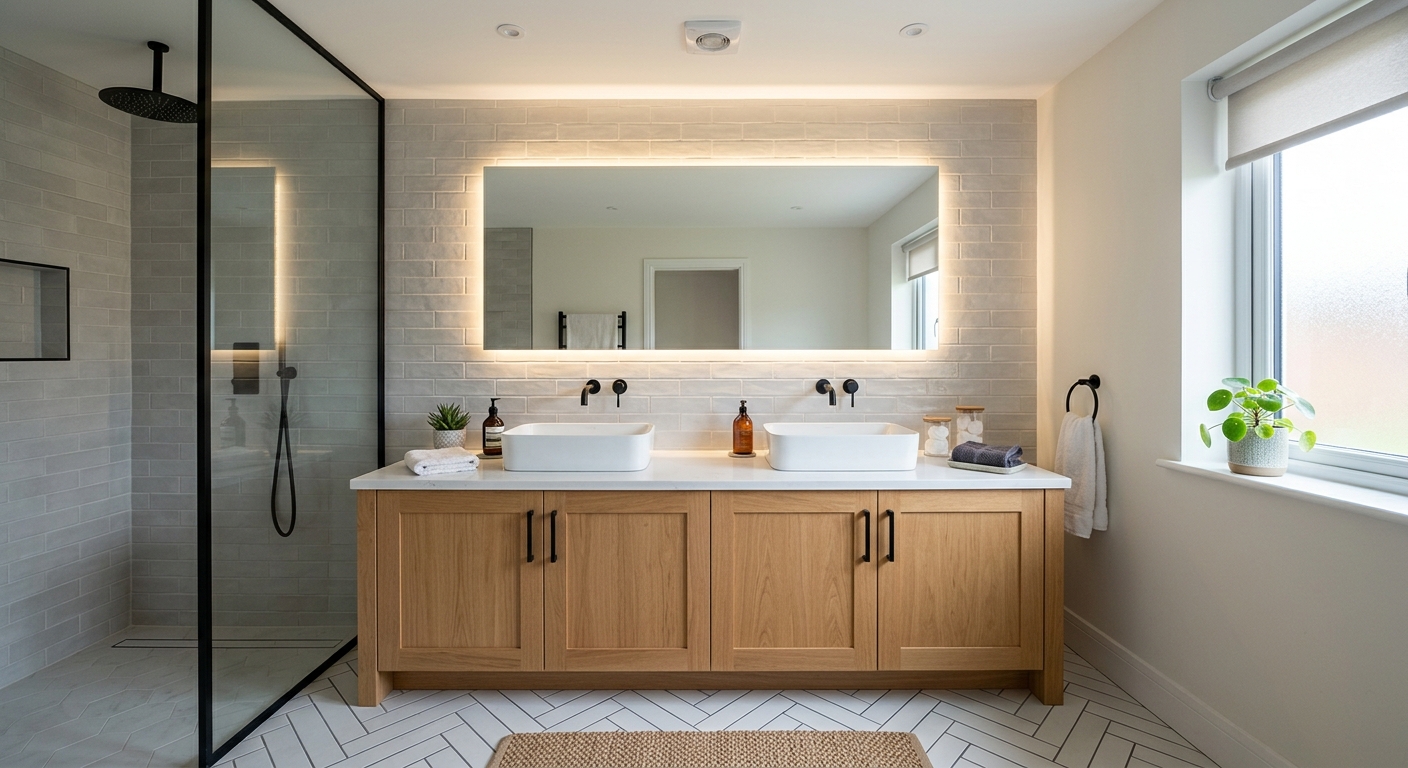
Bathroom renovation options and costs in Peachland
Peachland homeowners have several bathroom renovation paths, and the right choice usually comes down to how much of the plumbing, electrical, and waterproofing you’re willing to change. With 33.1% of homes built before 1981 (Statistics Canada, 2021 Census), many local projects start with older layouts—often meaning dated drain routing, original exhaust ventilation, and the occasional need to address cast-iron drains or older wiring once walls are opened. Homeowner households are also a majority in Peachland—81.8% of households own (Statistics Canada, 2021 Census)—so you’ll commonly see renovations that aim to improve daily comfort and long-term durability rather than quick resale-only refreshes.
In the Thompson–Okanagan region, labour rates and housing age are the primary cost drivers, more than climate. Coastal salt air isn’t as big a factor here, so contractors typically price around labour availability and “unknowns” found during demo: venting that no longer meets today’s requirements, overloaded circuits, and occasional asbestos-containing materials in older floor tile or drywall compounds. Once trade coordination begins, you’ll also see scheduling impacts—plumbing, electrical, tile setting, and waterproofing don’t stack neatly, which affects timelines and job overhead.
In Peachland, demand is especially strong for waterproofing and tiling services in areas with older stock and active seasonal use, such as around Okanagan Lake and the more established residential pockets near downtown. The result: homeowners benefit from budgeting conservatively and comparing options line-by-line, starting with the scope comparison below.
| Renovation Scope |
What's Included |
Typical Duration |
Price Range |
| Cosmetic refresh (paint, fixtures, accessories only) |
New vanity top or vanity (no plumbing move), toilet/flush valve replacement, faucets, lighting refresh, paint, re-sealed caulking, accessories |
2–5 days |
$5,000 – $9,500 |
| Mid-range full renovation (new tile, vanity, tub/shower, electrical) |
Demo and rebuild, floor + wall tile, new vanity, tub or shower surround, exhaust fan upgrade, updated GFCI protection where needed, proper waterproofing |
2–4 weeks |
$15,000 – $26,500 |
| High-end full renovation (custom tile, steam shower, heated floors) |
Custom tile detailing, premium shower system/controls, steam or upgraded shower components, heated floors, enhanced lighting, more extensive electrical and ventilation |
4–7 weeks |
$26,500 – $35,000 |
| Shower-only installation (convert tub to walk-in shower) |
Remove tub, install walk-in shower base/pan, tile surround, plumbing rough-in adjustments, new valve trim, waterproofing and waterproof test, exhaust fan check |
2–4 weeks |
$10,000 – $18,000 |
| Bathtub replacement or tub-liner install |
New tub (or liner system), surface refinishing prep, new tub surround finishes, caulking/sealant, basic plumbing connection |
3–10 days |
$4,000 – $11,000 |
| Tile-only installation (floor + surround, existing layout kept) |
Tile removal and setting, shower wall re-tile (no valve relocation), grout/sealant, surface prep, waterproofing upgrade where accessible |
7–14 days |
$3,000 – $12,000 |
Prices are estimates only and vary by project scope, site access and material selection.
What affects the price of bathroom renovation in Peachland
In Peachland and across the Thompson–Okanagan, two quotes for what looks like the same bathroom can easily land 30–50% apart. The main reasons aren’t aesthetics—they’re labour availability, the complexity of getting plumbing and electrical to current expectations, and the condition of what’s hidden behind drywall. Even within British Columbia, renovation demand and trades capacity can change from area to area, and older housing stock tends to amplify the “scope risk” once demo starts.
Here, regional labour rates and the age of homes typically matter more than climate. Because many properties include older plumbing and ventilation set-ups, contractors often need to bring rough-in work closer to modern standards: updating supply lines (for example, old galvanized runs), correcting venting for moisture control, and replacing or upgrading drain components that don’t drain as expected. Older homes in the region also have a higher chance of encountering cast-iron drain sections or asbestos-containing materials in older floor tile or joint compounds. When asbestos abatement is required, budgets can increase by about $1,500 – $5,000+ and extend timelines due to containment and additional scheduling.
Two concrete Peachland examples I see frequently: (1) converting a tub to a walk-in often costs more than homeowners expect because the drain location and waterproofing details change—so the job behaves more like a full shower rebuild than a “simple swap.” (2) If your bathroom has unlevel subflooring or soft backing boards, tile and waterproofing prep takes longer, pushing you toward the higher end of tile-only ranges (up to $12,000) or even a full mid-range renovation (up to $26,500) when wall and floor prep becomes more involved.
| Price Factor |
Why It Matters |
Cost Impact |
| Layout change — moving drain or supply lines requires rough-in work |
Shifting plumbing increases demo, framing, rough-in time, and inspection coordination |
Often +$3,000 to +$8,000 |
| Tile selection — large-format porcelain vs. mosaic vs. ceramic |
Larger tiles demand flatter surfaces and more precise cuts; mosaics add labour for detailing |
Often +$1,500 to +$6,000 |
| Fixture tier — builder-grade vs. mid-range vs. designer brands |
Higher-end valves, shower systems, and lighting cost more and sometimes require specific trim parts |
Often +$500 to +$4,000 |
| Subfloor condition — rot or unlevel concrete adds scope |
Repairs, leveling, and waterproofing-compatible backer systems take time and materials |
Often +$1,000 to +$7,000 |
| Electrical — adding GFCI outlets, exhaust fan, heated floor circuit |
New circuits increase labour and may require panel/circuit coordination |
Often +$800 to +$5,000 |
| Waterproofing method — membrane type and extent |
Better systems cost more but reduce failure risk; full coverage takes longer |
Often +$600 to +$3,500 |
| Older-home surprises — asbestos tile, cast-iron drains, galvanized pipes |
Abatement, pipe replacement, and additional demo/coordination expand scope and timeline |
Often +$1,500 to +$10,000+ |
| Bathroom size — sq ft drives tile and labour time directly |
More floor/wall area means more setting time, more materials, and longer drying/testing windows |
Often scales +$2,000 to +$12,000 |
Permits & regulations in British Columbia
In British Columbia, many bathroom updates are treated as cosmetic and typically do not require permits—for example, swapping fixtures in place (faucets, toilet replacement with no rough-in changes), repainting, replacing a vanity without moving drain/supply, and retiling where plumbing locations stay the same. However, once you relocate plumbing (moving the drain location or supply lines), add or significantly change ventilation, or alter structural components, the work often becomes permit-required.
Work that DOES commonly require a permit/inspection includes: changing shower valves or moving plumbing rough-in, installing new or re-routing electrical circuits (such as adding a new GFCI outlet, wiring an exhaust fan with new wiring, or powering heated floors), and any structural wall changes that affect framing. Electrical work must meet provincial electrical safety requirements and be carried out and/or signed off by a licensed electrician.
For a Peachland homeowner, the practical verification steps are straightforward. First, ask the contractor for their British Columbia trade licence details (as applicable to their trade) and confirm it’s active through the appropriate online registry/search. Second, request a certificate of insurance showing liability coverage—verify the address/name matches the job location. Third, ask how they handle worker protection coverage: in B.C., confirm their coverage documentation and whether they provide proof of worker’s compensation coverage for their workers (and that subcontractors are covered as well). Keep copies with your contract, quote, and change-order form, so you’re covered if something is discovered during demo.
Choosing tile, waterproofing and fixtures for your Peachland bathroom
Your tile, waterproofing system, and fixture tier determine both how your bathroom looks and how long it lasts—especially important in B.C. where bathroom moisture management is a constant. In Peachland’s Thompson–Okanagan market, I see many renos start with tile upgrades, then shift into full “wet area” compliance once the contractor confirms what the substrate can handle.
1) Tile choice: ceramic tile is the entry-level option and can work well on simpler layouts, but it’s less forgiving on textured detailing and can be more prone to visible lippage if the floor isn’t perfectly prepared. Porcelain tile is the mid-range sweet spot: it’s denser, often better for floors and showers, and available in larger formats that look more modern—though larger porcelain increases demand for flatness. Natural stone (marble, travertine, slate) looks premium but can add complexity because of sealing, calibration, and higher material variation.
2) Waterproofing method: in a shower, the “right” system is about reducing failure risk, not just appearance. Paint-on membranes can be fine for limited applications, but for most full wet areas, a bonded sheet membrane or a modern mortar-and-membrane system is what I typically recommend to prevent recurring moisture issues and mould growth. In practice, proper waterproofing reduces callbacks—especially where homeowners run fans less consistently.
3) Fixture tier: builder-grade fixtures usually keep budget tight but can feel less robust; mid-range upgrades often balance cost and longevity; designer brands cost more upfront but can improve perceived value and resale confidence.
A clear dollar example: choosing higher-end porcelain and more detailed tile work can push a tile-only project toward the upper end of the $3,000 – $12,000 range, but pairing that with a more complete waterproofing approach can protect the spend. If you instead cut waterproofing corners, you risk redoing the whole wet wall—turning a mid-range plan into a full renovation budget like $15,000 – $26,500 rather than staying closer to tile-only.
| Material / Option |
Pros |
Cons |
Price Range |
| Ceramic tile (floor + walls) |
Entry-level cost, wide style variety, easier to source and match to finishes |
Less suitable than porcelain for some wet-area performance expectations; can show imperfections if substrate isn’t flat |
$3,000 – $7,500 |
| Porcelain tile (floor + walls) |
Durable for floors and wet areas, great look in larger formats, often lower maintenance |
Requires careful prep for large formats; material selection can raise costs quickly |
$6,500 – $12,000 |
| Natural stone (marble, travertine, slate) |
Luxury appearance, unique veining, strong curb appeal and resale appeal |
Sealing and maintenance; higher labour due to calibration and layout; can be more sensitive to staining |
$10,000 – $20,000+ |
| Frameless glass shower enclosure |
Bright, modern look; helps the bathroom feel larger; durable hardware options |
More expensive than framed options; requires precise framing and waterproofing edges |
$2,000 – $6,500 |
| Prefab tub surround (acrylic) |
Fast installation, fewer tile-setting hours, easier cleaning |
Less design flexibility than tile; seams and edges need correct finishing and sealant upkeep |
$1,000 – $4,000 |
| Custom shower pan (tile or linear drain) |
Modern layout potential; linear drain improves aesthetics; properly built pans reduce leak risk |
More labour and waterproofing complexity; requires precise slope work and correct drain components |
$4,000 – $12,000 |
How to choose a bathroom renovation contractor in Peachland
Choosing the right contractor in Peachland starts with verifying credentials and making sure the quote matches the scope you actually need. First, confirm British Columbia trade licensing where applicable, and request their certificate of liability insurance. Then ask for evidence they have proper worker coverage (and that subcontractors are covered too). Don’t accept “we’re covered” without documents—ask to see the insurance certificate, and ensure the coverage is active for the project timeline and includes renovation work, not just general business use.
Next, insist on 2–3 itemised written quotes—labour and materials separated—so you can compare what’s included (not just the total). Pay close attention to whether the quote includes: permit pulling (if required), protection of floors/fixtures during demo, disposal/dump fees, and whether they include waterproofing materials and testing. A good scope reads clearly: start and finish dates, tile/waterproofing method, electrical and plumbing responsibilities, and how changes are priced.
Warranty matters too. Ask for the workmanship warranty length and whether product/manufacturer warranties apply through the installer. If something is wrong later, you want to know who covers what—and whether the warranty transfers to future owners if you sell. For payment, a safe rule of thumb is to keep upfront payment to around 10–15% and use a holdback until the job is complete and punch list items are addressed. Finally, get the start date and completion estimate in writing with realistic milestones (demo, rough-in, waterproofing, tile setting, final trim).
- Check they can provide BC trade licence details and an active liability insurance certificate.
- Request proof worker coverage and confirm subcontractors are covered.
- Get itemised quotes (labour + materials), not lump sums only.
- Verify whether permits are included or excluded, and who pulls them.
- Confirm disposal/dump fees are included in writing.
- Ask for the waterproofing method and exact system components.
- Confirm whether tile prep includes subfloor flattening and backer repairs.
- Ask who supplies and installs fixtures, and what happens if parts are backordered.
- Request a detailed schedule: demo, rough-in, waterproofing test, tile, trim.
- Require warranty terms for workmanship and how manufacturer warranties are handled.
- Use staged payments: keep upfront at 10–15% and retain a holdback until completion.
- Get a written change-order process for scope surprises (plumbing/electrical findings).
Red flags I see in Peachland: vague scopes that say “allowances” with no numbers, refusal to provide insurance/licence documents, quotes that don’t specify waterproofing testing or membrane type, payment requests beyond 15% upfront without a signed schedule, and “cheap tile” pricing that omits substrate preparation—then tile fails or grout cracks and the cost comes back as a change order.
Frequently asked questions — bathroom renovation in Peachland
What's the best bathtub material for a Peachland home?
For most Peachland homeowners, the best choice is usually a solid, high-quality acrylic tub (or acrylic insert/tub-liner where appropriate) because it’s light enough for easier handling and holds heat better than metal. It also tends to be more forgiving during installation if your subfloor isn’t perfectly flat—which can be more common in homes built before 1981 (Statistics Canada, 2021 Census). If you’re doing a full renovation, you can pair acrylic with a tiled surround and modern waterproofing for a clean, durable finish. In pricing terms, bathtub replacement often lands in the $4,000 – $11,000 band depending on whether you keep the footprint or modify plumbing. If your goal is maximum longevity and heavy use, discuss reinforced acrylic or a premium cast-iron/solid-surface option, but be ready for higher material and labour costs.
Is it worth renovating a bathroom before selling in Peachland?
Often, yes—if you renovate the aspects buyers notice first and that reduce inspection “dealbreakers.” In Peachland’s housing market, bathrooms influence perceived value because many homes are owner-occupied and buyers expect modern ventilation, safe electrical (including GFCI protection), and waterproofed shower/tub surrounds. A cosmetic refresh (paint, fixtures, accessories) can improve appearance quickly, but it won’t fix hidden issues like weak ventilation, aging drain connections, or deteriorated waterproofing. If your bathroom is dated and you’re seeing moisture odours, soft subfloor areas, or recurring caulking failures, a mid-range full renovation is typically the more worthwhile investment. Realistically, that mid-range full renovation is commonly budgeted around $15,000 – $26,500 in the Thompson–Okanagan tier. Cosmetic-only updates can make sense if the plumbing is sound and the layout is staying put, but I’d still address ventilation and any electrical safety concerns before listing.
How do I plan a bathroom renovation on a tight budget in Peachland?
Start by targeting the highest-impact changes that don’t require major plumbing relocation. In many Peachland homes (especially older stock—33.1% built before 1981, Statistics Canada, 2021 Census), the budget is protected when you keep the existing drain and valve locations. Choose a scope like a cosmetic refresh plus selective upgrades: new vanity/faucet, improved lighting, and replacing the exhaust fan if it’s weak or noisy. If you want tile, consider a tile-only plan that keeps the layout, aiming for the $3,000 – $12,000 tile band depending on tile size and prep needs. Where budgets blow up is usually after demo reveals surprises—like aged supply lines, venting issues, or asbestos-containing materials in older floor tile/drywall compounds—so it’s smart to set a contingency. Ask for an itemised quote and include a clear waterproofing approach so you don’t pay twice. If you must cut costs, prioritize waterproofing quality and substrate prep over fancy fixtures.
What's the difference between a cosmetic and a full bathroom renovation?
A cosmetic renovation is usually surface-level: paint, caulking, fixture swaps (faucets/toilet/lighting), and sometimes re-surfacing or retiling where plumbing stays in the same place. Cosmetic work often doesn’t involve significant demo beyond the immediate areas and typically avoids rough-in changes. A full bathroom renovation goes deeper: it includes demolition, replacing or upgrading tile systems and waterproofing, installing new plumbing/electrical components where needed, and often changing ventilation and lighting circuits. Because in the Thompson–Okanagan region labour and older-housing unknowns are the big cost drivers, full renovations more frequently require coordination and can uncover hidden scope items—especially in homes built before 1981 (Statistics Canada, 2021 Census). A cosmetic refresh generally sits around $5,000 – $9,500, while a mid-range full renovation commonly falls in $15,000 – $26,500 once tile, electrical updates, and shower/tub waterproofing are included.
How do I choose the right contractor for my bathroom in Peachland?
Choose a contractor by verifying credentials, then comparing itemised quotes. In British Columbia, ask for confirmation of the appropriate trade licence details and a current certificate of liability insurance. Request evidence of proper worker coverage, and confirm subcontractors are covered too. Next, make sure the quote is not just a number: it should break out labour vs. materials and spell out what’s included (permits if needed, disposal, waterproofing method, and whether tile prep includes leveling and backer repairs). Also ask about warranties—workmanship warranty length and how manufacturer warranties are handled. Payment should be staged; a safe approach is to keep upfront payment around 10–15% and use a holdback until the punch list is complete. In Peachland, one of the biggest “quality” signals is how they handle unknowns after demo: a reputable contractor will address surprises with a change-order process rather than vague “allowances” that cause scope creep.
What's the most common mistake homeowners make in bathroom renovations?
The most common mistake I see in Peachland is under-budgeting and under-specifying waterproofing and substrate preparation—then assuming the visible tile finish guarantees long-term performance. In practice, if the subfloor isn’t level, if the membrane system isn’t appropriate for the wet area, or if the installation skips waterproofing details near drains/valves, you can end up with mouldy grout lines, soft spots, and costly rework. Another frequent issue is choosing a “simple” scope that keeps the layout, without planning for older-home realities—especially in homes built before 1981 (Statistics Canada, 2021 Census), where aged drain/venting arrangements and older wiring can be discovered once walls open. Budget-wise, that’s why we see projects shift toward full renovation bands (for example, $15,000 – $35,000 depending on scope) even when homeowners start with cosmetic intentions. The fix is to request an itemised quote and confirm waterproofing method and testing upfront.