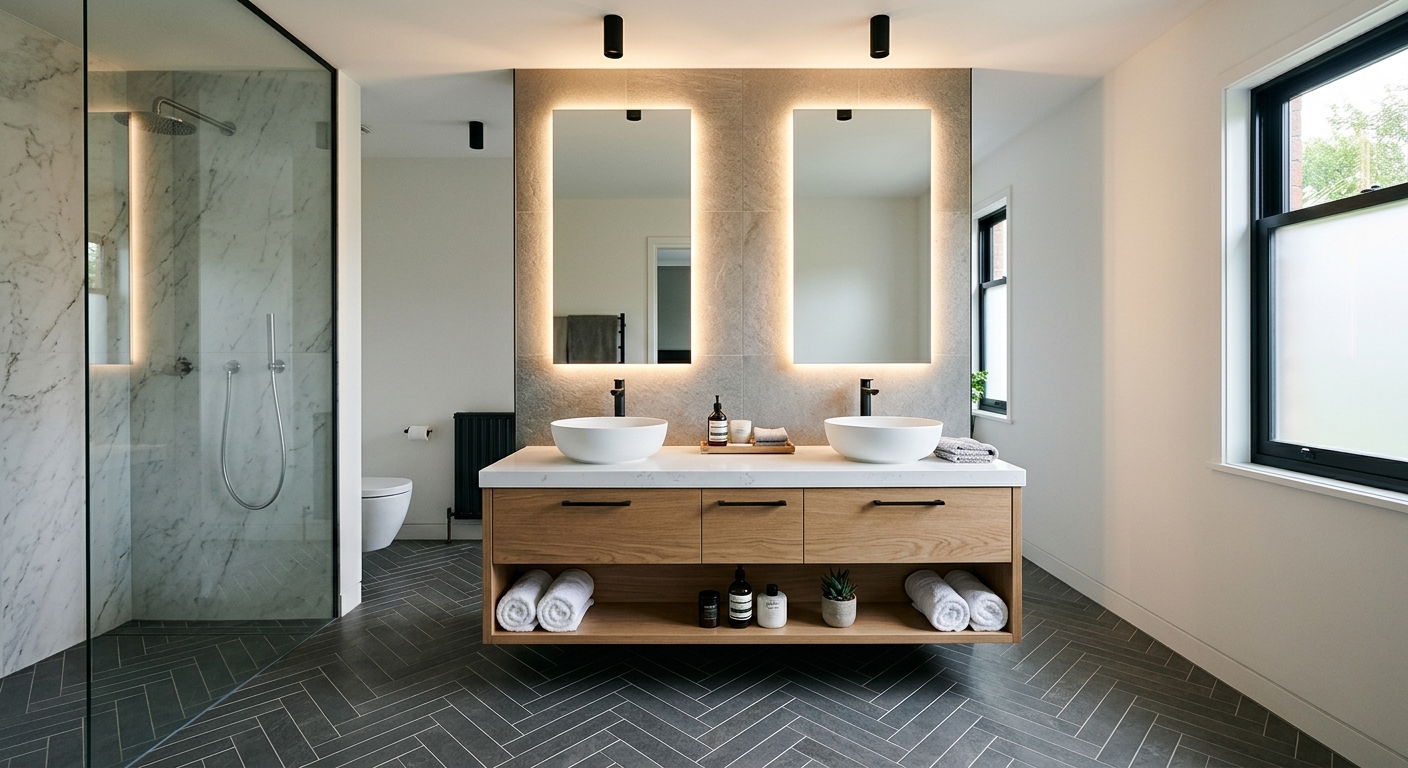
Bathroom renovation options and costs in Kimberley
Bathroom renovations in Kimberley typically start with a choice of how much you want to change—because the more you open walls and floors, the more hidden-condition risk you take on. With 69.1% of local homes built before 1981 (Statistics Canada, 2021 Census), many bathrooms sit in older plumbing layouts that may include ageing drain stacks and supply piping, plus the possibility of dated materials that complicate demo. In Kootenay communities, costs aren’t mainly driven by a harsh climate shock; instead they track labour availability around Cranbrook, Nelson, Castlegar, and Kimberley, along with mobilization and scheduling. That means two homeowners with similar scopes can see meaningful quote swings simply due to contractor scheduling windows and how much “discovery” happens once the room is opened.
In areas such as Downtown Kimberley and the older residential pockets near Victoria Avenue, trades are often booked out for full renovations because there’s a steady mix of main-floor and basement bathroom updates in older houses. If you’re planning a mid-range full renovation, budgets commonly land in the region of the Kootenay mid-market band (often aligned to the $16,000–$38,000 full-bath range). If you’re aiming for heated floors and more complex custom waterproofing, you’ll want to plan toward the upper end—and build in contingency for what’s behind walls in pre-1981 builds.
Use the table below to compare common scopes, then match your priorities to the scope that best fits your bathroom and risk tolerance.
| Renovation Scope |
What's Included |
Typical Duration |
Price Range |
| Cosmetic refresh (paint, fixtures, accessories only) |
Paint, mirror/lighting swap (like-for-like), vanity refresh (no rough-in changes), toilet replacement only (if layout stays), accessories, caulking and re-grout where surfaces remain sound |
3–7 days |
$3,500 – $7,500 |
| Mid-range full renovation (new tile, vanity, tub/shower, electrical) |
Demo and disposal, waterproofing system, tile floor + tub/shower surround, new vanity and mirror, new tub or tub/shower combo, exhaust fan (new or upgraded), GFCI outlet(s), basic electrical upgrades as required, standard trim and hardware |
2–3 weeks |
$16,000 – $26,000 |
| High-end full renovation (custom tile, steam shower, heated floors) |
Full gut, premium tile (larger format or custom patterns), heated floor mat + circuit work, custom shower (tile or linear drain), steam/advanced features where applicable, higher-spec fixtures, upgraded lighting, enhanced waterproofing build-up |
3–6 weeks |
$26,000 – $38,000 |
| Shower-only installation (convert tub to walk-in shower) |
Remove tub, convert to walk-in shower, new waterproofing and tile or stone finishes, new shower valve/trim (as required), curb/threshold as per design, exhaust fan and reworked caulking at changes, disposal |
10–18 days |
$10,000 – $18,000 |
| Bathtub replacement or tub-liner install |
Remove and replace existing tub (or install a liner where appropriate), new sealing and transitions, re-tiling of the most impacted areas, reglaze/finish prep where used, basic plumbing hook-ups |
5–12 days |
$1,800 – $6,500 |
| Tile-only installation (floor + surround, existing layout kept) |
Surface prep, tile install for floor and/or tub surround, grouting and sealing, waterproofing as needed for wet areas, minor patching (no major plumbing relocation) |
5–14 days |
$2,500 – $9,000 |
Prices are estimates only and vary by project scope, site access and material selection.
What affects the price of bathroom renovation in Kimberley
If you request quotes for the same bathroom in Kimberley and compare results across contractors and tradespeople, it’s not unusual to see pricing come in 30–50% apart—especially when some companies include more of the “unknowns” you only find once walls are opened. In the Kootenays, labour rates and the smaller local labour pool around Kimberley and neighbouring communities drive cost differences more than weather alone. British Columbia’s bathroom market has similar interior build expectations statewide, but project scheduling, mobilization, and how quickly plumbing/electrical trades can get in often swing totals.
Age of housing stock is the real budget multiplier here. In the Kootenay region, older homes frequently hide cast-iron or older drain configurations that may be slow to remove or require upgrading to meet current BC expectations. Supply lines may be galvanized or ageing copper, and ventilation can be undersized, so the contractor’s scope can expand from “tile and fixtures” into venting plus plumbing rough-in. For pre-1985 materials, asbestos discovery is another major driver: if asbestos is identified in vinyl floor tile or older drywall compound, abatement protocols can add about $1,500–$5,000+ (depending on extent and remediation requirements). That’s also why a “refresh” can quietly become a partial gut in the mid-market bands—often clustering around the $16,000–$26,000 range when electrical and waterproofing must be upgraded, and stretching higher if you’re building in heated floors or custom shower work.
Two concrete Kimberley examples that often change a quote: (1) if your bathroom fan vents to an attic space or terminates incorrectly, new ducting and a properly sized fan raise scope; (2) if your subfloor is uneven, the tile budget shifts upward because you need prep and underlayment to keep lippage and cracking under control. On the flip side, if the layout stays where it is and plumbing is serviceable, a tile-only project can stay closer to the $2,500–$9,000 band.
| Price Factor |
Why It Matters |
Cost Impact |
| Layout change — moving drain or supply lines requires rough-in work |
Relocating plumbing means opening walls, moving vents, and redoing rough-in plus inspection |
Often +$3,000 – $8,000 |
| Tile selection — large-format porcelain vs. mosaic vs. ceramic |
Harder materials require more precision setting, higher waste rate, and more time |
Often +$1,000 – $5,000 |
| Fixture tier — builder-grade vs. mid-range vs. designer brands |
Higher-end valves, trims, and vanities cost more and may require more customization |
Often +$500 – $4,000 |
| Subfloor condition — rot or unlevel concrete adds scope |
Repairing framing or self-levelling increases labour and may require extra waterproof detailing |
Often +$1,000 – $6,000 |
| Electrical — adding GFCI outlets, exhaust fan, heated floor circuit |
New circuits add time, parts, and coordination with scheduling |
Often +$700 – $3,500 |
| Waterproofing method — membrane type and extent |
More comprehensive systems (and correct overlaps at corners/curbs) prevent failures |
Often +$800 – $3,000 |
| Older-home surprises — asbestos tile, cast-iron drains, galvanized pipes |
Abatement, special disposal, and plumbing upgrades increase labour and inspection steps |
Often +$1,500 – $10,000+ |
| Bathroom size — sq ft drives tile and labour time directly |
More surface area means more waterproofing, thinset, labour hours, and trim work |
Often +$2,000 – $12,000 |
Permits & regulations in British Columbia
In British Columbia, many bathroom updates are treated as cosmetic work. Typically, swapping fixtures like a vanity, toilet (without moving plumbing), faucets, mirrors, and retiling with the existing layout (no moving drains/supplies) usually does not require a permit. However, the moment you relocate plumbing—such as moving the drain position for a walk-in shower, changing the rough-in for a new tub, or repositioning supply lines—permits and inspections are commonly required because rough-in work must be verified.
Ventilation upgrades also matter. If you add an exhaust fan or change fan type/ducting and that work includes new wiring or new circuit work, it triggers electrical compliance requirements and must be completed by (or signed off by) a licensed electrician. Structural wall changes, moving framing for accessibility, or work that alters load-bearing elements will generally require permits as well.
For a homeowner in Kimberley, verify before work starts:
- Confirm the contractor’s British Columbia trade licence (where applicable to their scope) and ensure the licence matches the work they’re proposing.
- Ask for a certificate of liability insurance that covers renovation work for your address.
- Request confirmation of WCB/WSIB coverage (work coverage) for their employees/subtrades as applicable.
- Get a written scope stating who pulls permits; if permits are required, the contractor should include the permit step and inspection coordination (or clearly price it separately).
- Before scheduling, ask for proof documents (licence number, coverage certificate, and any relevant clearance letter) and keep copies with your quote.
Step one is always paperwork confirmation; step two is making sure the scope aligns with what your contractor can legally perform and submit for inspection.
Choosing tile, waterproofing and fixtures for your Kimberley bathroom
In Kimberley, the biggest budget shifts often come from three material decisions: tile choice, waterproofing approach, and fixture tier. First, tile: entry-level ceramic can be cost-effective, but it may have lower strength characteristics and can complicate longevity if the installation isn’t perfectly prepared. Mid-range porcelain is usually the sweet spot in bathrooms because it’s denser, often less porous, and tends to handle thermal swings better. Natural stone (marble, travertine, slate) looks premium, but it demands careful sealing, more exact flatness, and higher labour time—so the installation complexity is typically the real cost driver.
Second, waterproofing: in British Columbia, bathrooms see recurring humidity and cold-to-warm moisture cycling, especially where ventilation is marginal. A paint-on membrane can work in specific limited scenarios, but most homeowners get better long-term outcomes with a bonded sheet membrane or a properly detailed system installed with correct overlaps at seams, corners, niches, and the tub/shower transitions. The goal is a system—not a single product—so details around the shower valve and curb matter as much as the membrane itself.
Third, fixtures: builder-grade can save money up front, but mid-range valves, shower trims, and vanities often last longer and look better for resale. If your bathroom is in an older home (and 69.1% of Kimberley dwellings are pre-1981), choosing a straightforward fixture layout can help avoid expensive rough-in changes. For example, upgrading from a standard tub-to-shower valve to a mid-range valve may cost an incremental $500–$1,500, but it’s often justified because it improves operation and reduces the chance of future leaks compared with lower-end trims. Pair that with a correctly installed waterproofing membrane and your renovation costs—whether near the $16,000–$26,000 mid-range band or higher—tend to protect the parts that actually fail.
| Material / Option |
Pros |
Cons |
Price Range |
| Ceramic tile (floor + walls) |
Affordable, wide colour selection, good for wall applications, easier to match with trim |
More porous than porcelain, may require more attention to sealing/maintenance; not ideal for heavier abuse without proper prep |
$2,500 – $5,500 |
| Porcelain tile (floor + walls) |
Durable, lower water absorption, holds up well to frequent cleaning; good choice for floors and wet-area walls |
Higher material cost and sometimes more intensive installation for large formats |
$4,500 – $9,000 |
| Natural stone (marble, travertine, slate) |
Premium look and unique veining/texture; excellent for feature walls or high-end finishes |
Requires sealing and careful maintenance; can be more expensive and harder to install perfectly |
$7,500 – $16,000 |
| Frameless glass shower enclosure |
Modern appearance, helps brighten the bathroom, easy to clean |
Costs more than basic enclosures; requires precise measurement and solid waterproofing and anchoring |
$3,000 – $7,000 |
| Prefab tub surround (acrylic) |
Fast install, consistent finish, lower labour than tile in many setups |
Limited design flexibility; seams and transitions need quality sealing and proper fit |
$800 – $2,500 |
| Custom shower pan (tile or linear drain) |
Cleaner lines and better accessibility; linear drains reduce puddling; looks high-end when detailed well |
More labour and waterproofing detail; if substrate isn’t perfect, issues can develop |
$2,500 – $9,000 |
How to choose a bathroom renovation contractor in Kimberley
Choosing the right contractor in Kimberley starts with verifying credibility and coverage. First, confirm your contractor holds the relevant British Columbia trade licence for their scope. Next, request a certificate of liability insurance that names your property or at least confirms coverage for renovation work. Finally, ask how they handle WCB/WSIB coverage for their workers (or provide proof for coverage where applicable). A contractor who can’t produce documentation or delays providing certificates is a red flag.
Then get 2–3 itemised written quotes rather than one lump sum. The quote should break down labour and materials—demo/disposal, framing or subfloor prep, waterproofing materials, tile supply, electrical scope, plumbing changes, and any permit coordination. Read exclusions carefully: ask if drywall patching, backer board, permits, inspections, and disposal are included. In older pre-1981 homes, waste hauling and subfloor repairs are common, so your quote should acknowledge that possibility with clear contingencies.
Warranty matters. Ask for the workmanship warranty length (how long they stand behind installation), plus product/manufacturer warranties for tile, membrane, shower systems, and fixtures—and whether warranties are transferable if you sell your home. Payment schedule should be controlled: never pay more than about 10–15% upfront. Hold back a portion until key milestones are complete (waterproofing inspection where applicable, glass install, trim completion). Also get a start date and a completion estimate in writing to avoid schedule drift.
- Ask for BC licence details and match the licence scope to the job tasks.
- Request liability insurance certificate before signing anything.
- Confirm WCB/WSIB coverage for workers and subtrades.
- Get itemised pricing (labour vs materials) for every line item.
- Verify whether permits are included or separately priced.
- Confirm who disposes of demo materials and what’s included in hauling.
- Require a waterproofing specification (membrane type and coverage areas).
- Ask about ventilation upgrades (fan size/ducting) and who provides duct work.
- Check whether electrical scope includes GFCI protection and exhaust fan circuit work.
- Clarify what happens if asbestos or hidden plumbing issues are found.
- Ensure fixtures and tile finishes are listed by brand/model/size.
- Get a written timeline with milestone dates (demo complete, rough-in, waterproofing, tile, trim).
Red flags I look for in Kimberley: (1) quotes that are “too good to be true” with no allowance for permit/inspection or disposal; (2) vague waterproofing language like “we’ll seal it” without specifying the system; (3) refusal to provide insurance or licence details; (4) no written schedule or overly optimistic completion dates for full renovations; and (5) payment terms that demand large upfront deposits (well beyond 10–15%).
Frequently asked questions — bathroom renovation in Kimberley
What's the best tile for a bathroom in Kimberley?
For most Kimberley homeowners, porcelain tile is the best balance of durability and long-term appearance, especially in pre-1981 homes where moisture control depends heavily on correct waterproofing. Porcelain is denser and typically less prone to water absorption than ceramic, which helps with everyday cleaning and the humidity cycle common to British Columbia bathrooms. If you’re doing floors and walls and want a safer “set it and forget it” choice, porcelain generally performs well and supports better grout lines on larger formats. If you’re keeping costs tighter, ceramic can work too—just ensure the substrate is level and the installer uses the right waterproofing build-up. Budget-wise, tile work commonly lands around $2,500–$9,000 depending on coverage area and the finish you choose.
Should I do a tub-to-shower conversion?
A tub-to-shower conversion is a smart move if you use the bathroom daily and want faster, safer access—particularly if the household is aging or mobility needs are changing. In Kimberley’s housing stock, conversions often also simplify maintenance because you reduce the number of leak-prone tub-to-wall joints. That said, the conversion cost depends on plumbing accessibility: if the drain and rough-in can stay close to the existing lines, the project can be efficient; if it requires moving supplies or changing the subfloor framing, it expands. Most walk-in conversions in the Kootenays commonly land around $10,000–$18,000. If you’re considering this route, plan for waterproofing upgrades and confirm the exhaust fan strategy, because ventilation is key to preventing lingering moisture in a British Columbia bathroom.
How do I prevent mold in a Kimberley bathroom?
Mold prevention is about moisture management and correct waterproofing, not just “good cleaning.” In Kimberley, bathrooms can stay humid because older homes sometimes have undersized ventilation or older vent routing. Start by upgrading the exhaust fan capacity and ensuring ducting is correct and terminates properly; then use a proven waterproofing system in wet areas (shower walls and floors, plus detailed transitions at valves and corners). The installation details matter: membranes must overlap properly and corners/penetrations must be sealed correctly. Choose grout and sealers appropriate for the tile type (porcelain usually tolerates moisture well when installed correctly). Finally, control airflow: run the fan during and after showers, and keep doors cracked when practical. If you keep these steps tight, you reduce the risk of moisture accumulating behind tile in older pre-1981 builds.
What adds the most resale value in a bathroom reno?
In Kimberley, the resale value boost usually comes from improvements that are visible and durable: a modern, clean layout; fresh tile and finishes; and reliable plumbing and waterproofing. A mid-range full renovation that replaces worn surfaces and upgrades key wet-area systems is often the best value-per-dollar, commonly aligning with the $16,000–$26,000 band depending on scope. Adding functionality—like better lighting, a proper exhaust fan, and a fan that actually removes steam—also matters to buyers in British Columbia because moisture control is a known pain point. Heated floors can be a strong premium feature, but they should be paired with correct waterproofing and proper electrical planning. If your budget is limited, prioritise waterproofing and ventilation first; cosmetic changes without fixing moisture pathways don’t typically perform well over time.
Can I keep my existing plumbing layout to save money?
Yes—keeping the plumbing layout is one of the most reliable ways to save money in Kimberley, because layout changes can require rough-in work and additional inspection steps. If your vanity location, toilet location, and tub/shower drain/supply positions can remain where they are, you avoid opening more walls than necessary and reduce the chance of discovering hidden issues in older runs. That’s especially helpful in homes built before 1981, where supply lines and drains may be aged or undersized. If everything is serviceable, you can sometimes keep the project closer to a “tile and fixtures” scope, such as tile-only work around $2,500–$9,000, or a mid-range renovation around $16,000–$26,000 if you’re updating electrical and waterproofing. Always confirm condition during demo, because “same layout” still doesn’t guarantee the hidden pipes are problem-free.
How much does a walk-in shower cost in Kimberley?
In Kimberley and the surrounding Kootenays, walk-in shower projects typically price based on waterproofing complexity, tile finish, and whether plumbing needs relocation. If converting from an existing tub is straightforward and the rough-in can remain close to its current location, you’ll often see costs around $10,000–$18,000. If you choose higher-end features like a linear drain, more complex custom pan details, frameless glass enclosures, heated floors, or if the project uncovers older plumbing or subfloor issues, the price can climb toward the upper full-reno bands. Remember that in British Columbia, code-compliant ventilation and correct waterproofing detailing are essential for long-term performance—especially in older homes. A good contractor will itemise labour and materials so you can see what’s driving the range and decide where to spend and where to simplify.