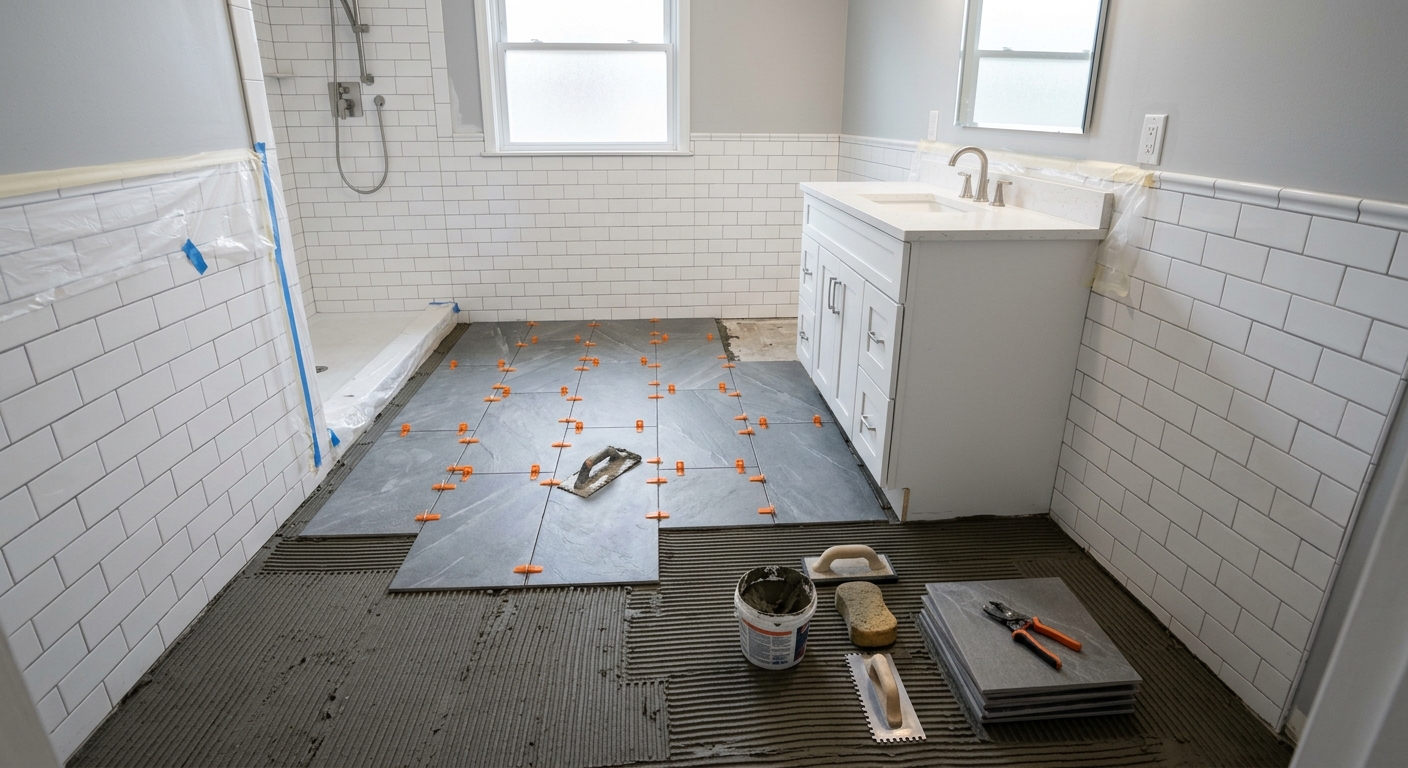
Bathroom renovation options and costs in Highlands
Bathroom renovations in Highlands, British Columbia, tend to fall into a few predictable bundles, and the prices usually track how much you change—not just how nice it looks. In Highlands’ housing stock, one in four homes was built before 1981 (25.0%), which often means older drain layouts, dated venting, and wiring that may need updating once walls and floors open up. That “behind-the-wall” scope is why a project in Highlands can land far above a simple refresh, even though the mild maritime climate on Vancouver Island is generally easier on materials than harsher inland conditions.
On Vancouver Island and the Coast, the main cost drivers are labour availability and the age of the homes, not temperature extremes. General contractors commonly bill in the 80–120 per hour band, while plumbers and electricians often come in around 100–150 per hour. With many trades working around Victoria, Langford, and Saanich schedules, Highlands jobs can require careful sequencing—especially for permit work, rough-in plumbing/electrical, and inspection windows.
You’ll also see strong demand in older pockets such as the closer-to-core Highland areas where renovations frequently involve converting dated tub layouts or retiling wet zones that have lost waterproofing performance over time. From there, the decision becomes straightforward: cosmetic work, a mid-range full renovation, or a higher-end build that includes upgraded waterproofing and luxury finishes. Use the ranges below as a realistic starting point for planning your quote comparison.
| Renovation Scope |
What's Included |
Typical Duration |
Price Range |
| Cosmetic refresh (paint, fixtures, accessories only) |
New paint, tap/fixture swaps, vanity or mirror replacement (no plumbing relocation), toilet or accessories, re-caulk, basic hardware |
2–5 days |
$3,000–$7,500 |
| Mid-range full renovation (new tile, vanity, tub/shower, electrical) |
Demo and rebuild of shower/tub surround and floors, new vanity and toilet, updated exhaust fan, GFCI upgrades where needed, waterproofing system, new lighting trim and finishes |
2–4 weeks |
$12,000–$22,000 |
| High-end full renovation (custom tile, steam shower, heated floors) |
Custom shower or steam-ready layout, upgraded waterproofing and detailing, heated floor circuit and mat, frameless glass, premium fixtures and large-format tile, enhanced ventilation and lighting design |
4–7 weeks |
$22,000–$35,000 |
| Shower-only installation (convert tub to walk-in shower) |
Remove tub, rough-in adjustments, waterproofed shower pan and walls, new frameless or semi-frameless glass, new niche/valves, re-tile floor as needed |
2–4 weeks |
$8,500–$18,000 |
| Bathtub replacement or tub-liner install |
New tub and surround (or liner system), plumbing tie-ins, re-sealing, limited tile touch-up or partial retiling, exhaust check |
5–10 days |
$1,500–$7,000 |
| Tile-only installation (floor + surround, existing layout kept) |
Tile removal and reset, new floor tile and shower wall tile (keeping fixture positions), waterproofing where required by the substrate, grout/seal |
1–3 weeks |
$4,000–$12,500 |
Prices are estimates only and vary by project scope, site access and material selection.
What affects the price of bathroom renovation in Highlands
Homeowners in Highlands often notice that two quotes for what sounds like the “same” bathroom can differ by 30–50%. The difference is usually in labour scope (how much has to be opened up), the amount of rough-in work required, and what each contractor includes in the schedule and cleanup—not just finish choices. On Vancouver Island and the Coast, labour rates and the age of local housing stock drive costs more than the climate itself. Many Highlands homes were built before modern plumbing and ventilation practices, and that matters when you’re redoing wet-wall tile systems.
Older Vancouver Island bathrooms can hide cast-iron or undersized drain stacks, galvanized supply lines, and exhaust venting that doesn’t meet today’s performance expectations. When walls are opened, it’s common to plan additional rough-in work for drainage, valve placement, and ventilation routing. If asbestos is discovered in older floor tile, drywall compounds, or insulation (more likely in pre-1980 builds), abatement can add $1,500–$5,000+ to the budget and delay installation until clearance is complete.
Concrete examples in Highlands: converting a tub to a walk-in shower often increases cost because the drain location and slope must be corrected, not just “moved.” Switching from a paint-on membrane to a thicker, more robust bonded system can raise materials, but it reduces long-term call-backs in humid bathroom use. On the lower end, keeping the same layout and doing $10,000–$35,000-band full renovations with limited electrical typically holds costs; on the higher end, adding heated floors and upgraded waterproofing often pushes you toward the upper third of the full-renovation range.
Finally, bathroom size is the multiplier. More square footage means more tile, more backer/prep, longer install time, and more waterproofing detailing around niches, edges, and curbs.
| Price Factor |
Why It Matters |
Cost Impact |
| Layout change — moving drain or supply lines |
Requires additional rough-in, subfloor adjustments, and potentially ceiling/joist access |
$2,000–$8,000 |
| Tile selection — large-format porcelain vs. mosaic vs. ceramic |
Harder substrates need more prep; larger tiles increase risk of costly rework if the floor isn’t flat |
$1,500–$6,000 |
| Fixture tier — builder-grade vs. mid-range vs. designer brands |
Higher tiers increase fixture and trim costs and sometimes require different rough-in compatibility |
$500–$4,500 |
| Subfloor condition — rot or unlevel concrete adds scope |
May require reconstruction, leveling, additional waterproof substrate work |
$1,000–$7,500 |
| Electrical — adding GFCI outlets, exhaust fan, heated floor circuit |
Licensed work plus code-compliant wiring, fan ducts, and sometimes panel capacity checks |
$1,000–$6,500 |
| Waterproofing method — membrane type and extent |
Better systems cost more but reduce failure risk behind tile and at corners/seams |
$800–$5,000 |
| Older-home surprises — asbestos tile, cast-iron drains, galvanized pipes |
Abatement, new drain sections, repipe sections, and inspection coordination |
$1,500–$10,000+ |
| Bathroom size — sq ft drives tile and labour time directly |
More tile surface area increases prep, waterproofing, setting time, and thinset/grout quantities |
$1,000–$9,000 |
Permits & regulations in British Columbia
In British Columbia, cosmetic updates in a Highlands bathroom usually don’t trigger permits. Typical “no permit” work includes swapping fixtures in the same locations (like a vanity, toilet, or shower trim), painting, replacing accessories, and straightforward retiling when you’re not moving plumbing, not changing structural walls, and not altering electrical circuits. That said, once you start relocating plumbing or electrical components, the requirements change quickly.
Work that typically does require a permit includes moving or changing the location of drains and supply lines (plumbing rough-in), adding a new exhaust fan with new wiring/circuit work, changing the electrical rough-in, and making structural wall changes that affect framing. If you’re changing the layout for a walk-in shower conversion—new drain slope, valve location, or venting routing—plan for permits and inspections. Electrical work must meet BC electrical code and be completed and/or signed off by a licensed electrician.
To verify a contractor in Highlands, homeowners can follow a simple step-by-step: (1) request the company’s BC trade licence information and confirm it matches the scope (plumbing/electrical/contracting where applicable); (2) ask for a certificate of insurance (liability) showing active coverage; (3) confirm workers’ compensation coverage (WCB) paperwork; (4) keep a copy of the contractor’s written scope and any permit/inspection responsibility; and (5) for larger projects, ask whether asbestos screening/abatement is handled by qualified professionals if older materials are encountered.
Where possible, check the contractor’s licensing details through provincial online registries and verify insurance by requesting current certificates before work begins.
Choosing tile, waterproofing and fixtures for your Highlands bathroom
In Highlands, three material decisions usually decide whether your bathroom reno lands at the lower end or the upper end of the Vancouver Island pricing bands: tile choice, waterproofing method, and fixture tier. First, tile. Entry-level ceramic is often the most budget-friendly, but it can be more forgiving on walls than on floors where subfloor flatness matters. Porcelain typically offers better durability for wet areas and handles daily foot traffic well, though it still requires precise installation. Natural stone (marble, travertine, slate) looks premium and can elevate resale appeal, but it often needs more careful selection, sealing, and sometimes more labour attention due to variation.
Second, waterproofing. BC bathrooms face frequent humidity from showers and baths, so the goal is preventing moisture pathways behind tile. A proper system might be a paint-on membrane for simpler wall applications, a bonded sheet membrane for robust coverage, or a modern coordinated system approach (like a Schluter-style method) that manages corners, seams, and transitions. The “right” method isn’t just about price—it’s about the substrate, shower configuration, and how the system is detailed around curb edges and penetrations.
Third, fixtures. Builder-grade fixtures keep the budget closer to the $10,000–$35,000 full-renovation range, while mid-range and designer brands can raise fixture line items but reduce maintenance headaches (better valves, finishes, and compatibility). For example, choosing a higher-end shower valve trim and glass enclosure may add a few hundred to a couple thousand, but it can be justified because it improves daily use and lowers the chance you’ll replace trim soon.
| Material / Option |
Pros |
Cons |
Price Range |
| Ceramic tile (floor + walls) |
Great for walls and budget-friendly areas; wide style selection |
May be less durable for floors than porcelain; depends strongly on correct substrate prep |
$2,500–$7,000 |
| Porcelain tile (floor + walls) |
Higher durability for wet areas; better resistance to wear and moisture |
More demanding installation if floors aren’t flat; larger formats increase labour sensitivity |
$4,000–$10,000 |
| Natural stone (marble, travertine, slate) |
Luxury look and unique variation; strong visual impact for resale |
Requires sealing/maintenance; more careful installation and potential material selection cost |
$6,000–$16,000 |
| Frameless glass shower enclosure |
Modern, bright look; easier cleaning lines |
Higher hardware cost; must be engineered for the shower type and seal quality |
$1,800–$5,500 |
| Prefab tub surround (acrylic) |
Fast install; smooth surface; often lower labour than tile |
Limited style flexibility; not as “custom” as tile; seams still need careful caulking |
$900–$3,500 |
| Custom shower pan (tile or linear drain) |
Better water management and design flexibility; improved accessibility options |
More detailed waterproofing and layout work; higher labour and membrane detailing time |
$3,500–$9,500 |
How to choose a bathroom renovation contractor in Highlands
Choosing the right bathroom contractor in Highlands starts with proof, not promises. First, verify British Columbia licensing: ask for the trade licence details that match the scope (plumbing/electrical/contracting roles) and confirm they’re active for the work being proposed. Next, request liability insurance documentation (certificate of insurance) and review the effective dates and coverage limits. Also confirm workers’ compensation coverage (WCB) for anyone working on your site—this protects you if an incident occurs. A reputable contractor should provide these documents before you sign or pay deposits.
Then get 2–3 itemised written quotes. Look for a labour-and-materials breakdown rather than a single lump sum: demo and disposal, rough-in allowances, waterproofing system type, tile supply and install quantities, glass enclosure scope, electrical items (fan and GFCI), and any permit coordination. If something is excluded (like structural framing adjustments, subfloor leveling, or asbestos screening/abatement), it should be stated clearly.
Warranty matters too. Ask for the workmanship warranty length and whether it’s tied to the installer/company. Confirm product warranties for fixtures and membranes, and whether warranties are transferable if you sell the home. Payment schedules should be conservative—never pay more than about 10–15% upfront, and hold a portion until the job is complete and cleaned up properly. Finally, demand a start date and completion estimate in writing so you can plan for bathroom use.
- Provide BC trade licence details that match the work scope (plumbing/electrical/contracting responsibilities).
- Show current liability insurance (certificate of insurance) and WCB coverage documentation.
- Use itemised quotes: labour, materials, allowances, and line-by-line exclusions.
- Confirm whether permits are included and who pulls them (and when inspections will occur).
- Clarify disposal: old tile, demo debris, and whether recycling/hauling is included.
- Ask which waterproofing system is used (membrane type and how it’s detailed at corners/seams).
- Check whether they include subfloor assessment and leveling allowance if the floor is unlevel.
- Verify electrical scope: exhaust fan, GFCI outlets, and heated floors (if chosen) are listed.
- Confirm glass shower enclosure scope: frame/semi-frameless/frameless, seals, and adjustment for the pan.
- Ask for references for Highlands/Vancouver Island bathroom work (photos of similar scopes help).
- Get a written workmanship warranty term and what voids it (e.g., improper caulking maintenance).
- Keep payment staged: small deposit, progress payments, and a holdback until final walkthrough.
Red flags to watch for in Highlands: (1) quotes that are not itemised and don’t specify waterproofing method; (2) “no permit needed” claims when you’re moving plumbing or adding electrical; (3) lowball pricing that omits disposal, fan work, or substrate prep; (4) no written warranty details beyond a vague statement; and (5) high deposits (more than 15%) or refusal to provide insurance/licence documentation.
Frequently asked questions — bathroom renovation in Highlands
What's the ROI on a bathroom renovation?
In British Columbia (including Highlands), the ROI on a bathroom reno is usually strongest when you improve function and reliability, not just finishes. Conversions like upgrading a tub to a walk-in shower, replacing failing waterproofing, and modernizing ventilation can reduce maintenance headaches and help the bathroom feel current for buyers. That said, the ROI depends on whether you’re in a “make-safe” scenario versus a full luxury overbuild. In Highlands’ older housing context (25.0% of homes built before 1981), addressing hidden plumbing/venting issues can matter more than chasing the highest-end tile. Many homeowners also choose to align scope with realistic Vancouver Island budgets—often within the $10,000–$35,000 full-renovation band—to avoid spending beyond what local buyers will pay for.
Do I need waterproofing behind the tile?
Yes—behind tile in a shower or tub surround, waterproofing is strongly recommended and usually expected by good installation practices in Highlands. Bathrooms here experience frequent moisture from showers, and British Columbia humidity makes pinhole leaks and failed seams a long-term risk. If you’re replacing an old surround or floor, you should ask what waterproofing system the contractor will install, and whether it’s a paint-on membrane, bonded sheet membrane, or a coordinated system designed for corners and transitions. The key is detailing: overlaps, corner treatment, and sealing around penetrations. If the quote doesn’t name the waterproofing method and the coverage area, treat it as incomplete. This is one area where cutting corners can become far more expensive later.
How do I compare bathroom renovation quotes?
Start by comparing apples-to-apples. Ask each contractor for an itemised quote with allowances and exclusions listed: demo and disposal, subfloor preparation/leveling, waterproofing system type, tile quantities and layout, fixture models or tiers, glass enclosure scope, and electrical items (exhaust fan, GFCI outlets, heated floor circuit if applicable). Quotes can differ by 30–50% across Vancouver Island because one contractor includes rough-in changes and inspections, while another lists only “finish work.” In Highlands, also verify how they handle older-home surprises: cast-iron or galvanized plumbing, inadequate venting, and the possibility of asbestos in pre-1980 materials. Use the price bands as reference points—for example, a mid-range full renovation often lands around $12,000–$22,000—then confirm what’s actually included in that number.
Can I live at home during a bathroom renovation in Highlands?
Often, yes—but it depends on the scope and schedule. A cosmetic refresh is typically only a few days, so you can usually manage with the rest of the home. For a full renovation, many Highlands homeowners can live in the house if there’s a functioning secondary bathroom or if demolition is phased. The practical challenge is access: during rough-in and tile preparation, dust and water control are major considerations. A tub-to-shower conversion or complete shower rebuild commonly affects the only bathroom in the home for 2–4 weeks, so plan for alternate facilities during the waterproofing and tile install periods. Ask your contractor for a sequence plan (demo, rough-in, inspections, waterproofing, tile, glass, final trim) and whether they can set up a temporary dust barrier and protect the rest of your home.
What's the best bathtub material for a Highlands home?
The “best” bathtub material depends on whether you’re replacing an existing tub or choosing a liner versus a full replacement. In Highlands (and across Vancouver Island and the Coast), common choices include acrylic tubs for many reno installs because they’re lightweight, install relatively cleanly, and can be easier to match to existing plumbing rough-in. If you’re maintaining a tub and doing a tub surround refresh, an acrylic tub surround system is often a cost-effective option compared with fully tiling every surface. For a full replacement, acrylic and fiberglass-reinforced options are typically more budget-friendly than heavy cast-iron, and they avoid the added structural considerations that come with heavier fixtures. If your goal is long-term durability and low maintenance, acrylic with proper sealing and updated waterproofing around the perimeter is a strong fit. Your contractor can recommend based on your subfloor condition and drain/tile layout.
Is it worth renovating a bathroom before selling in Highlands?
Usually, it’s worth it when your bathroom has visible failure signs or functional limitations: ongoing grout cracks, persistent moisture smell, weak ventilation, outdated fixtures that buyers notice immediately, or a layout that’s hard to use. In Highlands, many homes are owner-occupied and a meaningful share of housing stock is older (25.0% built before 1981), so buyers may be sensitive to outdated plumbing, venting, and waterproofing performance. Renovations that address safety and water management often outperform purely cosmetic upgrades. If you’re planning to sell soon, consider focusing on a mid-range full renovation rather than “chasing luxury,” because a practical bathroom remodel typically lands within the realistic $10,000–$35,000 full-renovation band for Vancouver Island. Avoid high-end custom additions unless comparable upgrades have sold well in your immediate area and you’re keeping finishes cohesive.