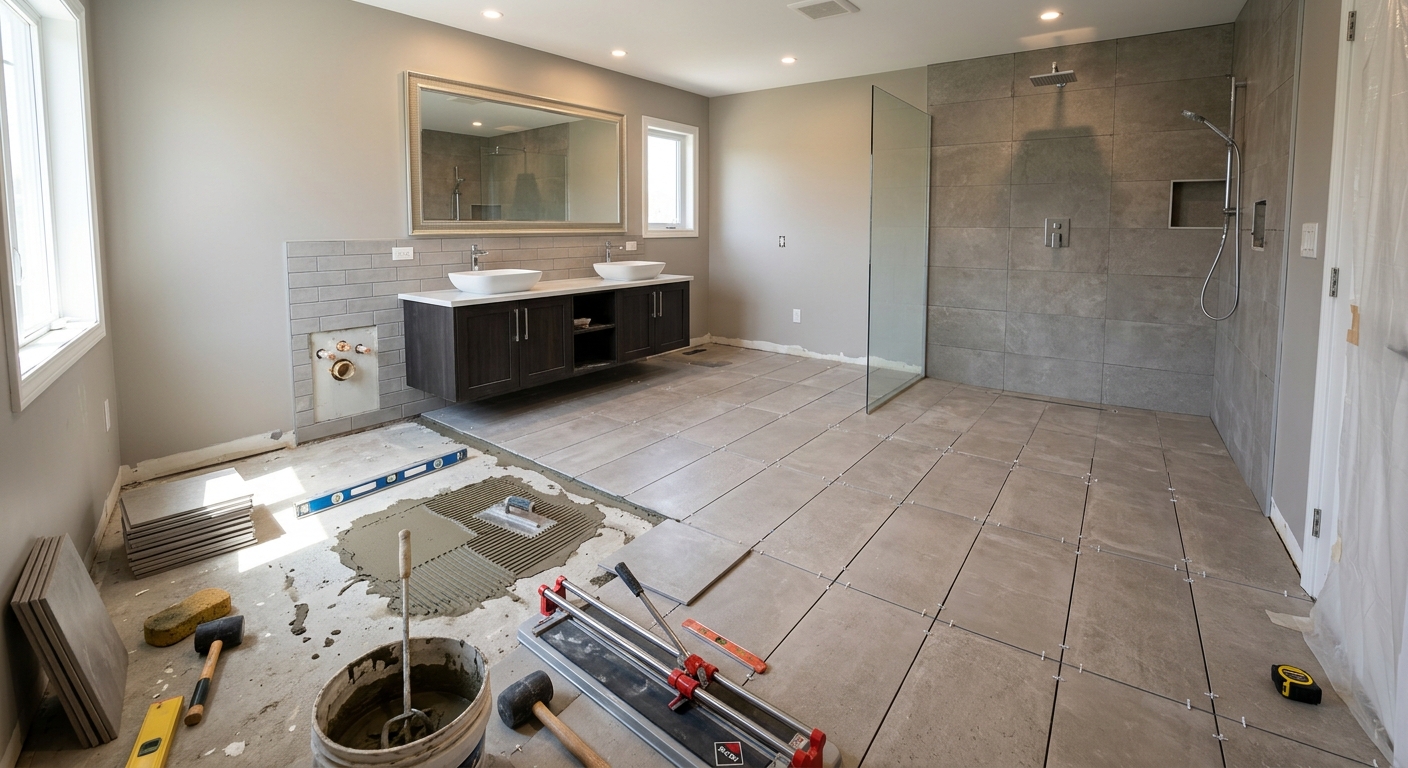
Bathroom renovation options and costs in Whitecourt
Bathroom renovations in Whitecourt usually start with one question: what do you want to keep, and what do you want to change? With a homeowner housing base where 32.6% of homes were built before 1981 (Statistics Canada, 2021 Census), many jobs begin as “refresh only” and quickly expand once walls open—revealing dated drain/vent layouts, older shutoffs, or wiring that doesn’t match today’s bathroom requirements. That’s why the Edmonton economic region’s costs tend to be driven more by labour and upgrade scope than by outdoor weather.
In Whitecourt, you’ll also see demand spike in areas like downtown and the South Beaver Road corridor, where trades availability can tighten around peak renovation months. Edmonton-region competition helps keep skilled-trade labour strong, so labour can represent a third or more of a full bathroom’s total cost. Meanwhile, the mix of older construction (including possible galvanized supply lines and cast-iron/copper drain components) often means contractors build in contingency for rework, not just new finishes. In practical terms, even a “mid-range” reno can climb if exhaust ventilation, rough-in plumbing, or the waterproofing system needs to be corrected to meet current good practice.
The most reliable way to budget is to compare your renovation to a real scope level—cosmetic refresh versus a mid-range or high-end full renovation—then map your tile and fixture choices on top. Use the table below as a starting point for Whitecourt homeowners planning their next step.
| Renovation Scope |
What's Included |
Typical Duration |
Price Range |
| Cosmetic refresh (paint, fixtures, accessories only) |
New paint/caulking, replace vanity top or vanity, swap lighting, replace toilet or faucet, reattach trim, accessories (no plumbing relocations) |
3–7 days |
$3,000–$8,000 |
| Mid-range full renovation (new tile, vanity, tub/shower, electrical) |
Demo + disposal, new moisture-rated drywall where needed, tub/shower surround or tile shower, new vanity, toilet, exhaust fan upgrade, GFCI where required, standard waterproofing, updated lighting |
2–4 weeks |
$15,000–$28,000 |
| High-end full renovation (custom tile, steam shower, heated floors) |
Premium tile work, custom shower layout, heated floor wiring and controls, steam shower package (if chosen), upgraded venting strategy, designer fixtures, elevated waterproofing build-up |
3–6 weeks |
$28,000–$45,000 |
| Shower-only installation (convert tub to walk-in shower) |
Demo tub, new shower pan and waterproofing, new tile surround, new valve/trim, new frameless or semi-frameless door option, exhaust fan check/upgrade as needed |
2–3 weeks |
$10,000–$20,000 |
| Bathtub replacement or tub-liner install |
Replace tub and trim, reset surround surfaces, new caulking/seals, rework transitions, or install tub liner where applicable |
5–12 days |
$5,000–$12,000 |
| Tile-only installation (floor + surround, existing layout kept) |
Remove existing tile, prepare substrate, install tile floor and walls, waterproofing system (as required for wet areas), grout sealing if specified |
1–3 weeks |
$5,000–$16,000 |
Prices are estimates only and vary by project scope, site access and material selection.
What affects the price of bathroom renovation in Whitecourt
Even when two homeowners request the “same” bathroom renovation, quotes across the Edmonton economic region can vary by 30–50%. The difference usually isn’t the tile brand—it’s the labour price and the hidden scope uncovered in older homes. In Whitecourt, the 32.6% pre-1981 housing share (Statistics Canada, 2021 Census) matters because older assemblies often hide cast-iron drain stacks, copper or galvanized supply piping, and bathroom ventilation that was never designed for today’s moisture loads. When a contractor discovers that the exhaust fan ducting is inadequate or the vent route is blocked, the job gets longer and the budget rises. Likewise, discovery of asbestos-containing materials (often in older floor tile or related finishes) can trigger abatement protocols, adding roughly $1,500–$5,000+ depending on what’s found and how much area must be contained and remediated.
Here are a few concrete examples we see in Whitecourt: (1) moving a drain location or replacing a corroded shutoff can turn a quick change into a rough-in day plus inspection time; (2) keeping the same layout but upgrading to a modern waterproofing membrane can add cost, yet it reduces long-term call-backs for cracked grout and failed substrates; and (3) if your bathroom has an undersized or non-functional vent path, adding ducting and a properly sized exhaust fan can shift a “mid-range full renovation” at about $15,000–$28,000 toward the top end once electrical and drywall patching are included. For larger, feature-heavy builds—like heated floors or premium custom tile—budgets commonly align with the full-reno band of $12,000–$35,000 and can exceed it when steam systems and extensive structural prep are involved.
| Price Factor |
Why It Matters |
Cost Impact |
| Layout change — moving drain or supply lines |
Requires rough-in plumbing work, new drain connections, possible subfloor/joist adjustments |
Often adds $3,000–$8,000 in labour and materials |
| Tile selection — large-format porcelain vs. mosaic vs. ceramic |
Size affects setting complexity, substrate tolerances, and cutting labour |
May shift $1,000–$6,000 depending on material and waste |
| Fixture tier — builder-grade vs. mid-range vs. designer brands |
Higher tiers increase material price and sometimes require different rough-in parts |
Typically $800–$5,000+ |
| Subfloor condition — rot or unlevel concrete adds scope |
Damaged substrates need repair or replacement before waterproofing and tile |
Commonly $1,500–$7,000 for repairs |
| Electrical — adding GFCI outlets, exhaust fan, heated floor circuit |
Bathroom-specific code requirements mean licensed electrical time |
Often $600–$4,000+ depending on what’s added |
| Waterproofing method — membrane type and extent |
Correct system build-up protects against moisture migration and tile failure |
Typically $500–$3,000 for materials/extra steps |
| Older-home surprises — asbestos tile, cast-iron drains, galvanized pipes |
Can trigger abatement, new drain stack sections, or supply line replacements |
Often $1,500–$10,000+ depending on findings |
| Bathroom size — sq ft drives tile and labour time directly |
Larger rooms increase tile coverage, waterproofing area, and install time |
May add or reduce $1,000–$8,000 overall |
Permits & regulations in Alberta
In Alberta, the permit requirements for bathroom work depend mostly on whether you’re changing plumbing, ventilation, electrical circuits, or the structure. Cosmetic updates—like swapping a vanity, replacing fixtures (faucets, toilet), repainting, and retiling on the same footprint without altering plumbing or electrical—often don’t require a permit. Where homeowners run into issues is when plumbing is relocated. In practical terms, moving a drain or supply line, adding or relocating a bathroom exhaust fan that involves new wiring/circuit work, and any structural wall changes are the types of work that typically require a permit and inspections.
Electrical also needs to be handled properly. Any work in bathrooms that involves outlets, new circuits, or modifications—like adding GFCI protection, wiring an exhaust fan, or powering heated floors—must meet electrical code and be done or signed off by a licensed electrician. Plumbing rough-in changes likewise typically require permits and inspection before walls are closed.
To verify a Whitecourt contractor’s credentials step-by-step: first, ask for their Alberta trade licence details (and confirm it through the province’s online licensing registry if applicable for their trade). Next, request a certificate of liability insurance—make sure it’s current and covers renovation work in Alberta. Finally, confirm WCB/WSIB coverage for the contractor and their workers (look for the clearance/coverage documentation they provide; it should match your project dates). If they can’t provide documentation quickly, treat that as a red flag.
Choosing tile, waterproofing and fixtures for your Whitecourt bathroom
In Whitecourt, your budget is mostly shaped by three decisions: tile, waterproofing, and fixtures. First, tile choice: ceramic is a common entry-level option, while porcelain generally handles moisture exposure better and is less prone to chipping in high-use areas. Natural stone (marble, travertine, slate) looks premium, but it often needs more careful installation and sealing, and it can add labour due to layout precision. Second, waterproofing: in a northern Alberta bathroom, moisture management is critical because bathrooms cycle between wet use and colder drying conditions. A quality waterproofing system—properly applied and tied into corners and transitions—helps prevent mould and substrate breakdown. Options usually include a paint-on membrane, a bonded sheet membrane, or a system-based method (such as a dedicated schluter-style approach) with compatible boards and details.
Third, fixture tier: builder-grade fixtures cost less upfront, while mid-range and designer lines often offer better valves, finishes that resist corrosion, and improved longevity. That can affect resale appeal too—especially in an area where many homes are owner-occupied and buyers look for bathrooms that feel modern and maintenance-light.
To match your situation: if your reno is in the $15,000–$28,000 mid-range band, it’s usually smart to spend where it matters—excellent waterproofing and good labour—then use mid-range fixtures and a durable porcelain tile. If you want custom features, like heated floors or a high-end shower build, those upgrades can move you toward the top of the full-reno expectations and justify the added material costs with a better daily experience.
| Material / Option |
Pros |
Cons |
Price Range |
| Ceramic tile (floor + walls) |
Lower material cost, wide styles, good for many bathroom walls and floors when installed correctly |
May be less impact-tolerant than porcelain; higher breakage risk with large cuts |
$2,000–$7,000 |
| Porcelain tile (floor + walls) |
Denser and more moisture-tolerant, strong stain resistance, great for busy families and wet zones |
Can cost more per square foot; requires flatter substrates for best results |
$3,500–$10,500 |
| Natural stone (marble, travertine, slate) |
High-end look, unique patterning, premium feel |
More variables (variation, sealing, stain resistance); higher labour for careful layout |
$6,000–$18,000 |
| Frameless glass shower enclosure |
Modern look, opens the space, easy to keep clean when paired with a good seal |
More expensive hardware; requires precise installation and solid tile substrate |
$3,500–$9,500 |
| Prefab tub surround (acrylic) |
Faster install, consistent finish, lower labour vs. full tile build |
Limited design flexibility; seams and transitions need careful detailing |
$1,200–$4,500 |
| Custom shower pan (tile or linear drain) |
Elegant, accessible design; linear drains improve water evacuation and visual lines |
More detailed waterproofing and setting time; higher materials and labour |
$4,000–$15,000 |
How to choose a bathroom renovation contractor in Whitecourt
Choosing the right contractor is less about flashy photos and more about proof: licensing, insurance, and a clear scope you can measure. In Alberta, verify the contractor’s trade credentials and ask for their liability insurance certificate before work begins. Also confirm WCB/WSIB coverage—request the documentation they provide to show their workplace coverage is in place. If they can’t share it, pause and ask why.
Next, get 2–3 itemised written quotes. You want line items that separate labour from materials (tile, backer board, membrane, fixtures, glass, disposal), and it should note whether waterproofing is included as a specific method. Read the scope carefully for exclusions: is drywall replacement included after demolition? Is permit pulling included (if required), and who is responsible for inspections? Is disposal and haul-away priced, or will you be billed separately?
Warranty matters in bathrooms. Ask for the workmanship warranty length, whether product warranties apply to installed items (valves, fans, membrane components), and if warranties are transferable if you sell your home. Finally, payment schedules should be reasonable: in my experience, you shouldn’t pay more than 10–15% upfront. Use a holdback until the job is complete and you’ve verified key milestones like waterproofing inspection readiness, grout curing, and final caulking.
For timeline, require a start date and completion estimate in writing, with a note on what delays could happen (fixture lead times, subcontractor availability, or older-home discoveries like plumbing upgrades).
- Provide Alberta trade licence details and confirm the correct trade scope for the work.
- Show current liability insurance (and ensure it lists renovation work coverage).
- Confirm WCB/WSIB coverage with a clearance document (not just “we’re covered”).
- Use itemised quotes with separate labour and material pricing (no single lump-sum only).
- State exactly which waterproofing method is used and what areas are covered (walls, floors, corners, transitions).
- Clarify whether permits are included and who pulls them if needed.
- Confirm disposal/haul-away is included in the quote.
- Detail the fixture allowances (what’s included and what upgrades cost).
- List electrical scope—especially GFCI and exhaust fan wiring—and who provides electrical.
- Ask who supplies the glass enclosure and whether measurements are included.
- Provide warranty terms in writing for workmanship and major components.
- Require milestone-based payments with a holdback until final punch and caulking.
In Whitecourt, red flags I often see include: quotes that don’t specify waterproofing products/methods, contractors who won’t itemise labour vs materials, “too-good” pricing that ignores older-home realities (venting, rough-in updates), vague timelines without dates, and requests for large upfront payments before demolition and planning are complete.
Frequently asked questions — bathroom renovation in Whitecourt
How much does a bathroom renovation cost in Whitecourt?
A typical full bathroom renovation in Whitecourt (in the broader Edmonton economic region pricing environment) commonly starts around $12,000–$35,000, depending on whether you’re doing a cosmetic-only update versus moving plumbing/electrical and replacing tile and waterproofing. If you keep your layout and go mid-range—new tile, vanity, and a tub/shower refresh—you’ll often be in the $15,000–$28,000 area. The big cost drivers are labour and upgrade scope, especially because a meaningful share of local homes are older (Statistics Canada, 2021 Census) and may have dated venting or piping behind walls. If asbestos-containing materials are found during demo in older finishes, that can add time and abatement cost. Always budget contingency and insist on an itemised scope.
How long does a bathroom renovation take in Whitecourt?
Timelines in Whitecourt are usually driven by demolition-to-waterproofing scheduling and the availability of subs (tile setters, plumbers, and licensed electricians). A cosmetic refresh can take about 3–7 days if nothing is moved. A mid-range full renovation often lands around 2–4 weeks, while high-end builds with custom tile details, glass, and heated floors can take 3–6 weeks. Shower-only conversions commonly take about 2–3 weeks. Older-home discoveries—like needing additional venting ducting or upgrading electrical for GFCI and exhaust—can extend schedules. Weather is less of the driver than labour sequencing in this region, but material lead times (glass enclosures and premium fixtures) can affect completion. For your plan, ask the contractor for dates, not just “a few weeks,” and include allowances for lead times.
Do I need a permit for a bathroom renovation in Alberta?
In Alberta, you typically don’t need a permit for cosmetic work—like repainting, swapping fixtures in place, or retiling without moving plumbing or altering structure. You usually do need permits when you change plumbing (for example, relocating a drain or supply lines), add or relocate ventilation that involves new circuit work (like a new exhaust fan), or make structural wall changes. Electrical modifications in bathrooms—such as adding GFCI protection, wiring a new exhaust fan, or installing a heated floor circuit—must be handled to code and typically involve a licensed electrician with appropriate sign-off. Plumbing rough-in changes also generally require permits and inspections. For verification, ask your contractor what permits are expected, whether they pull them, and request proof of licencing and insurance before starting.
What's the best tile for a bathroom in Whitecourt?
For most Whitecourt homeowners, porcelain is the safest “best overall” choice: it’s durable, moisture-tolerant, and holds up well in high-use bathrooms—especially when paired with a proper waterproofing system. Ceramic can work too, but porcelain often performs better where you’ll have frequent wetting and higher impacts. Natural stone (marble, travertine, slate) can look stunning, but it usually requires more careful installation and ongoing sealing depending on the stone. The best choice also depends on your lifestyle and your subfloor condition: large-format tiles need a flatter substrate, so budget for correct prep if your bathroom is older. If your budget is aiming for the mid-range tier (around $15,000–$28,000), prioritise waterproofing and substrate prep first, then choose a porcelain tile style that fits your desired look.
Should I do a tub-to-shower conversion?
In Whitecourt homes—especially older ones—tub-to-shower conversions can be a great way to modernise the bathroom and reduce cleaning and maintenance. Converting to a walk-in shower often runs about $10,000–$20,000 depending on how much plumbing changes and the shower system you choose (custom pan, linear drain, and glass enclosure). It’s particularly worthwhile if your tub has worn seals, cracked caulking, or surround failure, or if a family member prefers easier access. The decision should also consider layout constraints and ventilation: proper waterproofing and a strong exhaust strategy matter as much as the shower size. If you’re planning to move valves/drains, expect extra scope for rough-in and inspections. If you want a quieter decision, start by reviewing whether your current plumbing layout can stay largely unchanged.
How do I prevent mold in a Whitecourt bathroom?
Mould prevention comes down to controlling moisture and keeping the assembly dry after use. In Alberta bathrooms, that means choosing the right waterproofing system and ensuring the bathroom has effective exhaust ventilation. Start with waterproofing that fully covers the shower/tub wet area, including corners and transitions, using a method suitable for tile. Next, confirm your exhaust fan ducting is properly sized and routed so it actually removes humidity; many older homes have ventilation that’s inadequate for today’s bathroom use. Use correct grout and caulking details at changes of plane. Also, plan for good airflow after showers—run the fan long enough and keep doors cracked when possible. If your reno is in an older home (Statistics Canada, 2021 Census notes a substantial pre-1981 share locally), inspect hidden cavities and address any past moisture issues during demo, not after mould appears.