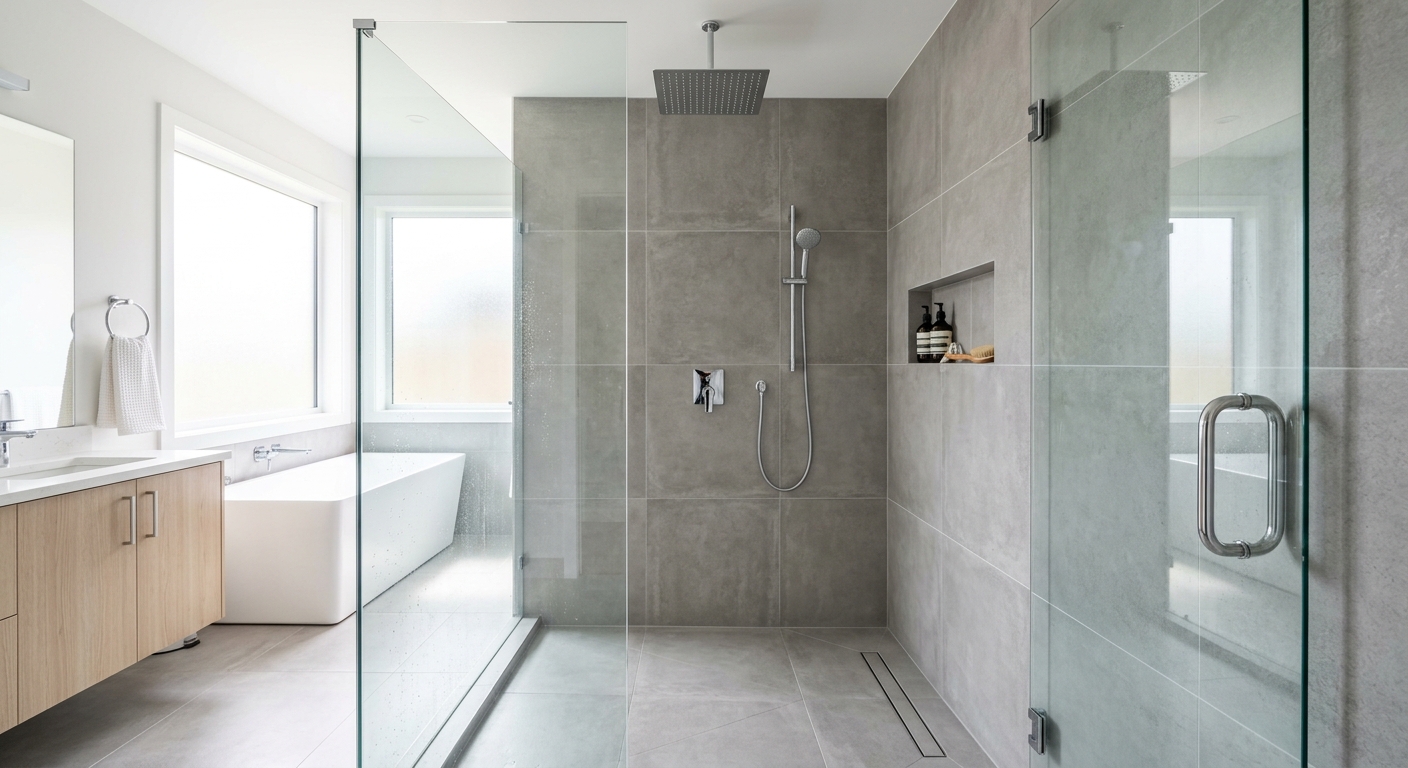
Bathroom renovation options and costs in Two Hills
Bathroom renovations in Two Hills typically fall into a few clear tiers, and the right choice depends on how much you want to change beyond the visible surfaces. With 77.5% of homes in the area built before 1981 (Statistics Canada, 2021 Census), it’s common to run into dated drain routes, older shut-off valves, and occasionally asbestos-containing materials hiding under existing flooring or drywall compounds—so even a “simple refresh” can turn into a bigger scope. In Two Hills, many homeowners have single-detached homes (88.8% of dwellings), which usually means straightforward access for demolition and plumbing rough-in, but the underlying systems can still be aging.
In the Camrose–Drumheller economic region, bathroom pricing is shaped more by labour rates and the age of the housing stock than by climate. Alberta’s winter freeze–thaw cycles don’t usually drive bathroom costs directly, but they do increase the importance of correctly sealed waterproofing and properly ventilated exhaust fan installations—especially where bathrooms sit near exterior walls. Contractor availability is best when you’re flexible on start dates, and trades often prioritize jobs near the Edmonton–Calgary mid-market corridor; that can affect scheduling in Two Hills during peak seasons.
One place where bathroom trade demand tends to show up quickly is around the community’s older core where many pre-1980 homes are concentrated. That’s also where you’ll most often see tub-to-shower conversions and full retiling projects that include electrical and venting updates. Use the table below to align your goals with realistic ranges, then talk to a contractor about what might be uncovered once the walls and floors open up.
| Renovation Scope |
What's Included |
Typical Duration |
Price Range |
| Cosmetic refresh (paint, fixtures, accessories only) |
Paint, towel bars, mirrors, faucet/handle swaps, new vanity top or vanity only if existing plumbing stays put, seal touch-ups |
2–5 days (plus material lead time) |
$3,000 – $8,000 |
| Mid-range full renovation (new tile, vanity, tub/shower, electrical) |
Tile floor and tub/shower surround, new vanity and toilet, reglaze/replace tub or keep tub if appropriate, exhaust fan upgrade, GFCI outlet(s), basic plumbing refresh |
2–4 weeks |
$14,000 – $25,000 |
| High-end full renovation (custom tile, steam shower, heated floors) |
Custom tiled shower, premium fixtures, heated floor (circuit + waterproofing coordination), upgraded ventilation, niche(s), improved waterproofing system, designer finishes |
4–7 weeks |
$26,000 – $45,000 |
| Shower-only installation (convert tub to walk-in shower) |
Demo tub, plumbing modifications (typical rough-in), waterproofing + shower pan system, new walk-in shower enclosure, new drain/valves, venting check |
2–5 weeks |
$5,000 – $15,000 |
| Bathtub replacement or tub-liner install |
Remove and set new tub (or install liner), new caulking/seals, matching trim, basic plumbing reconnection, leak testing |
1–2 weeks |
$1,500 – $8,000 |
| Tile-only installation (floor + surround, existing layout kept) |
Tile floor and wall surround, underlayment prep, waterproofing where required for wet areas, grout/seal, transitions and trim |
1–3 weeks |
$3,000 – $12,000 |
Prices are estimates only and vary by project scope, site access and material selection.
What affects the price of bathroom renovation in Two Hills
Even when two homeowners in Two Hills want the “same” bathroom, quotes can differ by 30–50% across the Camrose–Drumheller economic region and wider Alberta. The biggest drivers aren’t usually climate—they’re labour rates and hidden-condition risk. In older homes (77.5% built before 1981, Statistics Canada, 2021 Census), plumbing and subfloor conditions often raise scope: cast-iron or older drain stacks may need replacement, galvanized supply lines can require upgrades, and ventilation may be undersized for today’s moisture loads. Those issues push labour hours into plumbing, electrical, and sometimes demolition, which is why a project can move from the typical mid-range band of roughly $14,000 – $25,000 into higher full-reno territory.
Asbestos can also be the cost swing factor. If vinyl floor tile or drywall compound tested positive during demolition, abatement adds both time and money—commonly in the $1,500–$5,000+ range depending on extent and containment. While Alberta winters don’t directly “raise labour rates,” they do make proper waterproofing and exhaust performance non-negotiable, which increases the value of doing the membrane and fan work correctly instead of patching.
Two Hills examples that commonly change pricing: (1) a “tile-only” plan that reveals an uneven subfloor can require additional prep and underlayment, moving the job toward the $3,000 – $12,000 tile band upper end; (2) if you keep the same layout but upgrade to heated floors, you’ll add electrical coordination and a more involved waterproofing sequence, nudging the overall project toward mid- to high-end full renovations (often $14,000 – $30,000 depending on finishes).
| Price Factor |
Why It Matters |
Cost Impact |
| Layout change — moving drain or supply lines requires rough-in work |
New rough-in means demolition, plumbing labour, and re-waterproofing coordination |
Often adds several thousand dollars; can shift the project from refresh to full-reno pricing |
| Tile selection — large-format porcelain vs. mosaic vs. ceramic |
Harder tiles need better substrate prep and more precise setting to avoid lippage |
Can move tile budgets from the lower to upper portion of the tile-only range |
| Fixture tier — builder-grade vs. mid-range vs. designer brands |
Higher tiers cost more and sometimes require different rough-in tolerances |
Typically increases fixture line items and can raise the overall renovation band |
| Subfloor condition — rot or unlevel concrete adds scope |
Repairs plus extra underlayment increase labour and materials |
Frequent “hidden cost” in pre-1981 homes |
| Electrical — adding GFCI outlets, exhaust fan, heated floor circuit |
Licensed electrical and safe wiring routes are required for wet areas and heated products |
Can add meaningful cost even when the layout stays the same |
| Waterproofing method — membrane type and extent |
Correct coverage prevents moisture damage and mould risk |
Better systems cost more, but reduce failure risk and long-term repairs |
| Older-home surprises — asbestos tile, cast-iron drains, galvanized pipes |
Testing, abatement, pipe replacement, and disposal add time and specialist labour |
Can add $1,500–$5,000+ for abatement in affected cases, plus plumbing upgrades |
| Bathroom size — sq ft drives tile and labour time directly |
More surface area increases cutting, setting time, and membrane coverage |
Small bath vs. medium bath can be a major difference in total cost |
Permits & regulations in Alberta
In Alberta, cosmetic updates in your Two Hills bathroom—like swapping fixtures, replacing a vanity, painting, or retiling without changing plumbing—often do not require a permit. However, permits typically come into play when you change the “systems,” not just the finishes. If you relocate plumbing (moving a drain or supply lines), add or relocate an exhaust fan that requires new wiring/circuit work, or alter structural walls, expect permit and inspection requirements for those trades’ portions.
Electrical work must meet Alberta code and be completed by, or signed off by, a licensed electrician. If you’re adding a new exhaust fan, upgrading bathroom receptacles to GFCI, or installing a heated floor circuit, those are the types of electrical scopes that shouldn’t be handled as “DIY-friendly” tasks. Similarly, plumbing rough-in changes usually require a permit and inspection, because the work is behind the walls and the consequences of an error are severe (leaks, mould growth, and damage to subfloor materials).
To verify your contractor’s Alberta licence and coverage, ask for three documents before work starts: (1) proof of the relevant trade licence (ask what licence category applies to the electrician/plumber portion), (2) a current certificate of insurance showing liability coverage, and (3) proof of WSIB/WCB coverage for the trades doing the work. Where to look: check the contractor’s own online profiles/registry references, confirm insurance dates on their COI, and request clearance letters or account confirmations as applicable. A reputable bathroom renovator will provide these without pressuring you.
Choosing tile, waterproofing and fixtures for your Two Hills bathroom
In Two Hills, your bathroom budget is usually “decided” by three material choices: tile type, waterproofing system, and fixture tier. First, tile selection. Ceramic tile is a good entry option for floors and tub surrounds, but it can be more prone to chipping if the substrate isn’t perfectly prepared. Porcelain tile is denser, often better for floors (less water absorption), and can cost more—but you may save time if it’s easier to keep consistent with your layout and trim details. Natural stone (marble, travertine, slate) looks premium, but it adds cost through higher material price and more specialized finishing, sealing and installation attention to match the stone’s characteristics.
Second, waterproofing method. In Alberta’s real-life bathroom conditions—warm showers followed by cold drying cycles—mould risk comes from moisture management. A paint-on membrane can work in limited applications, but it’s most often paired with careful priming and correct coverage. Many high-performing installs use a bonded sheet membrane or a system approach (often involving engineered components) so water is directed safely to the drain. The goal is consistent waterproofing across the entire wet zone and correct transitions around niches, seams, and the shower pan.
Third, fixtures. Builder-grade fixtures keep costs down but may reduce comfort and lifespan in active households. Mid-range and designer brands often justify their price through better valve cartridges, smoother finishes, and resale-friendly quality.
A practical example: moving from entry ceramic to porcelain with a coordinated waterproofing system can add a few thousand dollars to the tile portion, but it’s often worth it if you’re already approaching the mid-range full renovation band (roughly $14,000 – $25,000). Conversely, if you’re only doing tile-only within your $3,000 – $12,000 budget, staying with ceramic can be justified if the waterproofing is done properly and your layout is straightforward.
| Material / Option |
Pros |
Cons |
Price Range |
| Ceramic tile (floor + walls) |
Affordable, wide variety of colours and sizes, good for straightforward layouts |
More variation in performance by product; can show wear faster in high-traffic floors |
$3,000 – $8,000 |
| Porcelain tile (floor + walls) |
Durable for floors, lower water absorption, often easier to maintain and more consistent |
Higher material cost; demands solid substrate and careful installation to avoid lippage |
$6,000 – $12,000 |
| Natural stone (marble, travertine, slate) |
Unique look, luxury feel, excellent for statement showers and feature walls |
Requires sealing/maintenance; installation can be slower and more technical |
$10,000 – $20,000 |
| Frameless glass shower enclosure |
Modern appearance, easy to clean, can make smaller bathrooms feel larger |
Costlier hardware; requires precise tile alignment and sturdy framing |
$2,500 – $6,500 |
| Prefab tub surround (acrylic) |
Faster install, consistent finish, generally less labour than tile surrounds |
Fewer style options; may not match premium tile aesthetics |
$1,500 – $4,500 |
| Custom shower pan (tile or linear drain) |
Best-in-class waterproofing potential; linear drains give a sleek look |
More labour and careful slope work; needs correct membrane and drain integration |
$5,000 – $15,000 |
How to choose a bathroom renovation contractor in Two Hills
Choosing a contractor in Two Hills comes down to verifying credentials, tightening the scope, and protecting yourself on schedule and workmanship. Start by confirming Alberta licensing for the trade you’re hiring (especially electrical and plumbing portions). Then verify liability insurance—ask for a certificate of insurance with coverage limits appropriate to renovations. Finally, confirm WSIB/WCB coverage for any workers involved. How to check each: request the documents directly, look for active policy dates, and ensure names and addresses match the company doing the work.
Next, get 2–3 itemised written quotes. You want a breakdown that separates labour and materials (tile setting, waterproofing, plumbing rough-in, electrical work, disposal). Avoid quotes that only provide a single lump sum with no explanation of what’s included. Read the exclusions: ask whether the permit is included, who pulls it, and whether demolition and disposal are covered. Make sure waterproofing steps and shower pan details are specifically listed, not just “waterproofing.”
Warranty matters too. Ask for the workmanship warranty length (often tied to a waterproofing system and install process) and whether it’s backed by the installer. Also ask about manufacturer warranties for fixtures, heated floors and membranes—and whether the warranty is transferable if you sell the home. For payment schedule, never pay more than 10–15% upfront; hold back funds until key milestones are complete (especially waterproofing inspection readiness and final close-in). Get your start date and estimated completion date in writing, and clarify how delays are handled (materials lead times, inspections, and any required tests).
- Request written proof of Alberta trade licensing for plumbing and electrical scopes.
- Confirm liability insurance and that it covers renovation work (not just general business).
- Verify WSIB/WCB coverage for workers assigned to your project.
- Get 2–3 itemised quotes (labour + materials, not only a total).
- Ask who pulls permits and whether permit fees are included.
- Confirm disposal and dumpster/rubbish hauling is included or priced separately.
- Ensure waterproofing method is named (membrane type and where it’s applied).
- Ask how the contractor handles asbestos or other hazardous discoveries (testing/abatement plan).
- Verify shower pan details: slope, drain compatibility, and leak-test step.
- Clarify electrical scope: GFCI locations, exhaust fan ducting, and heated floor circuit (if applicable).
- Confirm warranty terms in writing: workmanship duration and exclusions.
- Agree to a payment schedule with a holdback until final inspection and close-out.
In Two Hills, a few red flags to watch for are: (1) no written scope for waterproofing (they only say “waterproof”), (2) refusal or delay in sharing insurance/licence/WSIB/WCB documentation, (3) a quote that doesn’t mention permits while relocating plumbing or adding electrical circuits, (4) demanding large upfront deposits beyond 10–15%, and (5) vague timelines like “about a week or two” with no completion estimate. Choose contractors who can explain the process, not just the price.
Frequently asked questions — bathroom renovation in Two Hills
How long does tile installation take in a Two Hills bathroom?
In Two Hills, tile installation time mainly depends on tile type, bathroom size, and substrate prep in older homes. For a typical floor + wall surround tile-only scope, expect about 1 to 3 weeks when you include prep, layout, cutting, thinset/thin-dry time, grout, and sealing where needed. If the home is pre-1981 (77.5% built before 1981, Statistics Canada, 2021 Census), contractors often need extra time for leveling or repairs before tile goes down. Shower work also takes longer because waterproofing and cure time must be respected—especially if you’re using a membrane system or a custom shower pan.
How much does a bathroom renovation cost in Two Hills?
For Two Hills homeowners, full bathroom renovations usually land in the mid-range of roughly $14,000 – $30,000, depending on finish level and whether the layout stays the same. If you’re doing a cosmetic refresh only (fixtures, paint, accessories), budgets can be lower, while a high-end full renovation with custom tile, heated floors, and premium fixtures often moves upward into the $26,000 – $45,000 range. In the Camrose–Drumheller region, quotes can swing significantly when older systems are uncovered—especially when older plumbing, ventilation, or asbestos testing/abatement is required.
How long does a bathroom renovation take in Two Hills?
A renovation timeline in Two Hills commonly falls between 2 and 7 weeks. Cosmetic refresh projects can be just a few days once materials are on site, but full renovations with tile, waterproofing, plumbing refresh, and electrical updates typically run 2 to 4 weeks. If you’re converting a tub to a walk-in shower, you’re usually in the 2 to 5 week range because plumbing rough-in and waterproofing coordination take time. High-end builds with heated floors, custom shower details, and additional ventilation work often stretch to 4 to 7 weeks, especially when inspections and cure times are factored in.
Do I need a permit for a bathroom renovation in Alberta?
In Alberta, cosmetic changes—like swapping fixtures, replacing a vanity, painting, or retiling without moving plumbing—often don’t require a permit. Permits are typically needed when you relocate plumbing (moving drain/supply lines), add ventilation with new electrical circuits, or change structural elements. Electrical work must be handled by a licensed electrician or signed off accordingly, and plumbing rough-in changes usually require inspection. For Two Hills homeowners, the simplest way to confirm is to ask your contractor to specify what permits are required in the written scope, then verify the permit pull steps and inspection schedule before work begins.
What's the best tile for a bathroom in Two Hills?
The “best” tile depends on where it’s used and how premium you want the finish to feel. For floors in a bathroom, many Two Hills homeowners choose porcelain because it’s durable and less absorbent, and it holds up well to daily wet/dry cycles. Ceramic is a good entry option if your budget is tighter, but it’s important to ensure proper substrate prep and correct waterproofing. For walls and tub/shower surrounds, porcelain or ceramic both work well when the installer focuses on waterproofing and grout/joint strategy. Natural stone looks luxurious, but it requires extra sealing and careful installation, which adds cost and time.
Should I do a tub-to-shower conversion?
A tub-to-shower conversion is often a smart move in Two Hills if you want easier daily use, lower maintenance, and a more modern layout. The trade-off is that conversion usually involves plumbing changes, which can push the project toward the shower and full-reno pricing tiers. Depending on the scope, shower-only conversions are commonly in the $5,000 – $15,000 range, while a broader full renovation can move higher if you’re also retiling everything and upgrading electrical/ventilation. It’s especially worth doing in older homes where the existing tub surround may be dated or where you want to improve waterproofing and exhaust performance for better moisture control.