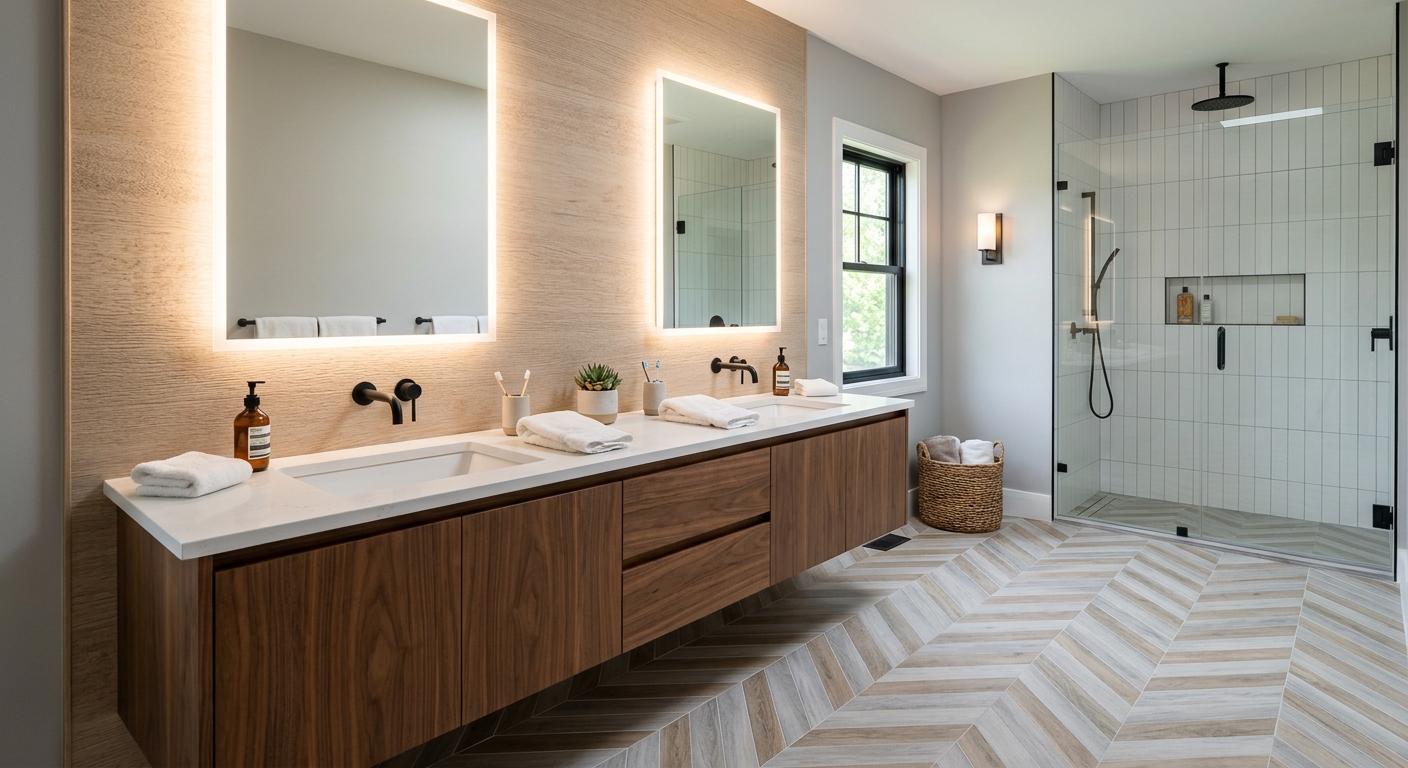
Bathroom renovation options and costs in Strathmore
Strathmore homeowners usually start their bathroom planning with a simple question—“What will it cost?”—and then quickly realize there are several ways to renovate, from a cosmetic refresh to a full gut-and-rebuild. In Strathmore, about 17.5% of homes were built before 1981 (Statistics Canada, 2021 Census), which often means older plumbing layouts, dated venting, and a higher chance of hidden issues once the walls and floors come off. Also, with 77.2% of households owning their homes, many renovations are long-term improvements rather than quick resale updates (Statistics Canada, 2021 Census).
In the Lethbridge–Medicine Hat economic region, bathroom costs are shaped more by local labour rates and what contractors discover in older post-war/mid-century housing than by day-to-day weather swings. Southern Alberta crews are busy, and the “real” price difference between quotes often comes from plumbing and electrical rework—especially when cast-iron or galvanized runs are involved, or when venting and GFCI requirements need upgrades. Trade availability around neighbourhoods with more turnover also matters; in Strathmore, bathroom work tends to be especially in demand in the older, more established residential pockets near downtown.
Below are realistic renovation options you can use to compare bids. Once you know your scope, you can align materials, waterproofing, and electrical changes to a budget that won’t get derailed mid-project.
| Renovation Scope |
What's Included |
Typical Duration |
Price Range |
| Cosmetic refresh (paint, fixtures, accessories only) |
Clean, patch and paint; replace vanity top or vanity (if keeping existing plumbing locations); swap toilet or sink faucet; install new accessories (towel bar, robe hook); recaulk and touch-up tile/grout; basic exhaust fan check (no new circuit) |
2–5 days |
$3,000 – $6,000 |
| Mid-range full renovation (new tile, vanity, tub/shower, electrical) |
Remove existing finishes; install new shower/tub surround tile or wall panel system; new vanity and toilet; improve ventilation (new or upgraded fan/duct); basic electrical updates (GFCI outlet, switch adjustments as needed); waterproofing upgrade; disposal and general site protection |
10–18 days |
$12,000 – $18,500 |
| High-end full renovation (custom tile, steam shower, heated floors) |
Full gut renovation; custom tile work with premium layout; enhanced waterproofing and detailed waterproofing transitions; steam-ready shower system; heated floor mat/circuit; designer fixtures and custom glass; expanded electrical (fan, multiple GFCI circuits, lighting upgrades) |
18–28 days |
$20,000 – $25,000 |
| Shower-only installation (convert tub to walk-in shower) |
Demo tub and surround; rough-in adjustments to drain/supply to accommodate shower slope; new waterproofing system; install tile shower pan or ready-to-tile tray; new glass door; replace vanity if desired; ventilation improvements if required |
8–15 days |
$8,000 – $14,500 |
| Bathtub replacement or tub-liner install |
Option A: remove old tub and install new alcove tub with proper sealing and tiling at edges; re-establish caulking and water lines; Option B: tub-liner system prep and install (where applicable); confirm plumbing connections and re-seal |
3–8 days |
$1,500 – $6,000 |
| Tile-only installation (floor + surround, existing layout kept) |
Remove tile only; prep substrate; install waterproofing where needed (often increases safety even if layout stays); new floor tile and shower/tub surround tile; new grout/seals; keep vanity and plumbing in place |
7–14 days |
$2,000 – $8,000 |
Prices are estimates only and vary by project scope, site access and material selection.
What affects the price of bathroom renovation in Strathmore
You can get two quotes for the “same” bathroom in Strathmore and still see a 30–50% swing, because the scope can quietly change once the contractor opens the walls. Across the Lethbridge–Medicine Hat region, labour rates and the realities of an older housing base tend to matter more than typical weather. Strathmore has a meaningful older stock—17.5% of homes built before 1981 (Statistics Canada, 2021 Census)—and that increases the odds of discovering things like cast-iron drain sections, galvanized supply lines, or insulation/venting that doesn’t meet modern bathroom moisture management expectations. Those findings drive the time and the number of trades involved.
For example, if a “mid-range full renovation” quote at around $12,000 – $18,500 includes new waterproofing but assumes the drain is already in the right spot, the price can jump when the plumber has to re-route the rough-in. Similarly, a tile-only plan in the $2,000 – $8,000 band can cost more when the subfloor is out of level or rotten at fastener points, requiring additional board, cementitious backer, or replacement framing.
Asbestos surprises are another budget driver in older homes. If asbestos-containing materials are discovered in vinyl floor tile or older drywall compound, abatement protocols can add roughly $1,500–$5,000+ depending on area and remediation complexity. In practical terms, I often see cost rise when the exhaust vent path is difficult to extend safely, or when electrical requires new circuits for GFCI protection and fan/heated-floor loads. Costs can be lower when layout stays put, the subfloor is solid, and ventilation is already ducted appropriately.
| Price Factor |
Why It Matters |
Cost Impact |
| Layout change — moving drain or supply lines |
Requires plumbing rough-in work, potential wall opening, and rework of venting/pipe runs |
Often adds $2,000 – $6,000 |
| Tile selection — large-format porcelain vs. mosaic vs. ceramic |
Material cost and labour time for cuts, pattern alignment, and substrate prep |
Typically shifts $500 – $4,000 depending on coverage and complexity |
| Fixture tier — builder-grade vs. mid-range vs. designer brands |
Higher-end fixtures cost more and sometimes require different installation details |
Can swing $800 – $3,500 |
| Subfloor condition — rot or unlevel concrete adds scope |
May require replacement boards, self-levelling prep, or additional waterproofing measures |
Commonly adds $700 – $2,500+ |
| Electrical — adding GFCI outlets, exhaust fan, heated floor circuit |
Licensed electrical work and code-compliant circuit planning increase labour and materials |
Often adds $600 – $3,500 |
| Waterproofing method — membrane type and extent |
Better systems cost more but reduce failure risk at wet-wall transitions and floor edges |
Usually adds $300 – $1,800 |
| Older-home surprises — asbestos tile, cast-iron drains, galvanized pipes |
Discovery triggers remediation, extra demo, and potential replacement of failed components |
Can add $1,500 – $5,000+ |
| Bathroom size — sq ft drives tile and labour time directly |
More area increases labour for prep, setting, grouting, and drying schedules |
Often changes spend by $1,500 – $5,500 |
Permits & regulations in Alberta
In Alberta, many bathroom updates can be done without permits when they’re truly “cosmetic.” Swapping a vanity top, replacing a toilet, updating faucets, repainting, and retiling in the same locations typically doesn’t require a permit because the plumbing and electrical systems aren’t being relocated. However, permits are usually required when you’re changing the hidden systems behind the walls.
In practical terms for Strathmore homeowners, a permit is commonly needed for relocating plumbing (moving a drain or supply line), adding new exhaust ventilation that requires new ducting and a new electrical circuit, and any electrical work that extends circuits or adds loads beyond simple like-for-like replacement. If you’re changing structural walls or modifying framing, you should expect permit requirements as well. Electrical must meet Alberta code and be performed by (or signed off by) a licensed electrician—especially for GFCI protection, fan circuits, lighting, and heated-floor systems.
To verify a contractor step by step: (1) ask for their Alberta trade licence and confirm it matches the trade performing the work; (2) request a Certificate of Insurance and review it for liability coverage amounts and active policy dates; (3) confirm workers’ compensation coverage (WSIB/WCB) paperwork for the crews who will be on-site; (4) if a permit is needed, ask who pulls it and confirm the inspections are scheduled. If they can’t provide documents quickly, that’s a sign to slow down and ask more questions.
Choosing tile, waterproofing and fixtures for your Strathmore bathroom
In Strathmore, your tile, waterproofing, and fixture tier are the three material decisions that most affect both cost and long-term performance. First is tile choice. Ceramic tile is a good entry-level option for floor and walls, but it can be more demanding to protect at wet-wall edges over time. Porcelain tile is typically denser and more water-resistant, and it usually installs cleanly for bath floors and shower surrounds when the substrate is properly prepared. Natural stone (marble, travertine, slate) can look amazing, but it often needs more careful sealing and selection—especially if you want the stone’s finish to stay consistent in a wet environment.
Second is waterproofing. Paint-on membranes are usually fine for light-duty scenarios when the system is applied correctly, but in busy Southern Alberta bathrooms—where steam, quicker drying, and temperature swings can stress joints—bonded sheet membranes or a schluter-style system can provide a more robust failure-resistant build-up. The right choice is what prevents moisture migration that leads to mould and grout breakdown.
Third is fixture tier. Builder-grade fixtures can keep you closer to a base full-reno budget, while mid-range and designer brands often cost more upfront but may reduce service calls (valve quality, better seals, smoother shower performance). For a concrete example: if you’re targeting a mid-range full renovation around $12,000 – $18,500, choosing porcelain over natural stone might free up dollars for upgraded bonded waterproofing and better shower glass—choices that protect the work. Spending that same money on premium stone without improving waterproofing is rarely the smartest resale-focused move.
| Material / Option |
Pros |
Cons |
Price Range |
| Ceramic tile (floor + walls) |
Entry-level cost; wide style selection; good for straightforward layouts |
May be less durable than porcelain for floors; higher chance of chipping if substrate prep is poor |
$2,000 – $6,000 |
| Porcelain tile (floor + walls) |
More resistant to water staining; durable for high-use shower floors; clean modern looks |
Can be pricier; large-format tiles require careful layout and substrate flatness |
$3,000 – $8,000 |
| Natural stone (marble, travertine, slate) |
High-end look; unique veining and character |
Needs sealing/maintenance; can be more expensive and sensitive to installation tolerances |
$6,000 – $14,000 |
| Frameless glass shower enclosure |
Bright, modern appearance; easier wipe-down than framed doors; helps kitchens/bright styling with good sightlines |
Costs more; requires precise installation on a level base |
$2,000 – $6,500 |
| Prefab tub surround (acrylic) |
Fast install; fewer tile cuts; good water management when seams are installed correctly |
Less custom than tile; limited design options; can look less “premium” |
$1,000 – $3,500 |
| Custom shower pan (tile or linear drain) |
Custom slope to drain; excellent for accessibility and modern layouts; can improve perceived luxury |
More labour and detailing; requires precise waterproofing and drain alignment |
$4,000 – $10,000 |
How to choose a bathroom renovation contractor in Strathmore
Choosing the right contractor in Strathmore is less about the lowest number and more about verification, scope clarity, and proof of capability. Start with licensing and coverage: in Alberta, confirm the contractor’s trade licence for the work they’ll do, ask for a Certificate of Liability Insurance (with policy dates and coverage limits), and verify workers’ compensation coverage (WSIB/WCB) so you’re not left responsible if a worker is injured on-site. Request these before you invest time in measurements and selections.
Next, get 2–3 itemised written quotes. Look for a breakdown that separates labour and materials rather than a single lump sum. Make sure waterproofing method, disposal, and electrical scope are spelled out. Confirm whether the quote includes permit pulling (when required), inspections, and removal of debris. For warranties, ask for two layers: the workmanship warranty length (and what triggers it), plus manufacturer warranties for products. Also ask whether the warranty is transferable if you sell your home—this matters in communities where owner-occupants often renovate for long-term value.
Finally, use a sensible payment schedule: never pay more than 10–15% upfront. Hold back a portion until key milestones are complete (tile waterproofing sign-off, glass install, and final caulking/grout cure). Get a start date and completion estimate in writing so schedule changes are documented.
- Provide Alberta trade licence number(s) that match the tasks in the quote
- Show a valid Certificate of Liability Insurance before work starts
- Confirm WSIB/WCB coverage for all crews (not just the business owner)
- Quote is itemised: labour vs. tile, fixtures, glass, waterproofing, and electrical
- Scope clearly states what’s excluded (demo, drywall replacement, ceiling work)
- Permit pulling and inspection responsibility is explicit
- Disposal and dumpster charges are included or clearly itemised
- Waterproofing system brand/type is listed (membrane details, overlaps, transitions)
- Electrical scope includes GFCI, exhaust fan upgrades, and heated-floor circuits only if specified
- Plumbing scope notes whether drain/supply rough-ins are included or “allowance only”
- Workmanship warranty is in writing and specifies duration and process
- Payment schedule stays within 10–15% upfront and includes a practical holdback
Red flags I see in Strathmore include: quotes that don’t list waterproofing specifics, contractors who won’t show insurance/WSIB/WCB documents, a lump-sum price with no clear exclusions, promise-based timelines with no written completion estimate, and “all permits by us” language without stating who is responsible and what is being permitted.
Frequently asked questions — bathroom renovation in Strathmore
What's the difference between a cosmetic and a full bathroom renovation?
A cosmetic renovation focuses on finishes that don’t change plumbing or electrical systems. In Strathmore, that usually means painting, replacing accessories, swapping fixtures like faucets and toilets (without moving supply/drain locations), and often updating visible surfaces like caulking and grout. A full bathroom renovation is broader: it typically includes demolition to the studs, new waterproofing, replacing tile floors/surrounds, updating ventilation, and electrical upgrades like GFCI outlets or new fan wiring. Cost-wise, a cosmetic refresh often sits near the lower end of bathroom budgets, while full renovations align with broader price bands such as $12,000 – $25,000, depending on scope and finishes.
How do I choose the right contractor for my bathroom in Strathmore?
In Alberta, start by verifying the contractor’s Alberta trade licence for the work they’ll actually perform, then review their Certificate of Liability Insurance and confirm workers’ compensation coverage (WSIB/WCB). Ask for 2–3 itemised quotes that break out labour and materials—tile setting, waterproofing system, electrical work, glass, and plumbing rough-in. Read the scope: look for who pulls permits when plumbing or venting is relocated, whether disposal is included, and what’s excluded (for example, drywall replacement, subfloor prep, or cast-iron drain replacement if discovered). A contractor who can’t explain the plan clearly usually isn’t ready for the older-housing realities found in Strathmore’s pre-1981 homes (Statistics Canada, 2021 Census).
What's the most common mistake homeowners make in bathroom renovations?
The most common mistake is treating the reno like a simple refresh and not budgeting for what’s behind the walls. In Southern Alberta, many Strathmore homes have plumbing layouts and ventilation setups that don’t match modern shower build-ups, and older assemblies can hide issues once demolition starts. That can mean the drain needs re-routing, subfloor prep is required for a level tile plane, or electrical needs code-compliant upgrades like GFCI protection. Another frequent error is choosing tile and fixtures first while delaying decisions on waterproofing—this can turn into rework if the waterproofing system and transitions aren’t designed together. A sensible approach is to plan for contingency (often 10–20%) in older bathrooms to avoid surprises.
How long does tile installation take in a Strathmore bathroom?
Tile timelines depend on area, substrate readiness, and the waterproofing method—not just the tile itself. For many Strathmore bathrooms, floor and surround tile installation commonly takes about 7–14 days total, but prep and curing can extend that window. If the subfloor is unlevel or damaged, it adds time for leveling/board replacement before setting begins. Waterproofing systems also have cure/return-to-service schedules, especially around transitions at the shower floor, niche corners, and edges. If you’re comparing quotes, ask how the contractor schedules demo, waterproofing, tile set, grouting, sealing (if stone), and final caulk. A smooth plan is what helps keep your project closer to $2,000 – $8,000 tile-only style timelines rather than turning into extended delays.
How much does a bathroom renovation cost in Strathmore?
Bathroom renovation costs in Strathmore typically track your scope and the amount of plumbing/electrical rework required. For reference, full bathroom renovations are commonly in the $12,000 – $25,000 band, with mid-range full projects clustering around the lower portion when the layout largely stays workable. Shower-only conversions (like tub-to-walk-in) often fall around the $4,000 – $10,000 band depending on rough-in changes and glass. Tile-only installs often land around $2,000 – $8,000 when the subfloor and waterproofing prep are straightforward. Tub replacement or tub-liner installs can be closer to $1,500 – $6,000. In older homes, hidden issues can move the final number upward even when the visible scope looks similar.
How long does a bathroom renovation take in Strathmore?
Typical timelines depend on how much is being changed and how quickly trades can schedule. Cosmetic refreshes are often completed in about 2–5 days. Mid-range full renovations are commonly around 10–18 days, while high-end full renovations with custom tile layouts, steam-ready shower elements, and heated floors can run about 18–28 days. Shower-only conversions frequently take 8–15 days. The calendar isn’t just demo and install: it includes rough-in inspections where permits apply, waterproofing membrane cure times, tile setting and grout curing, and final adjustments for glass and fixtures. In Strathmore’s older housing stock (17.5% built before 1981), add time when plumbing upgrades or unexpected subfloor repairs are needed (Statistics Canada, 2021 Census).