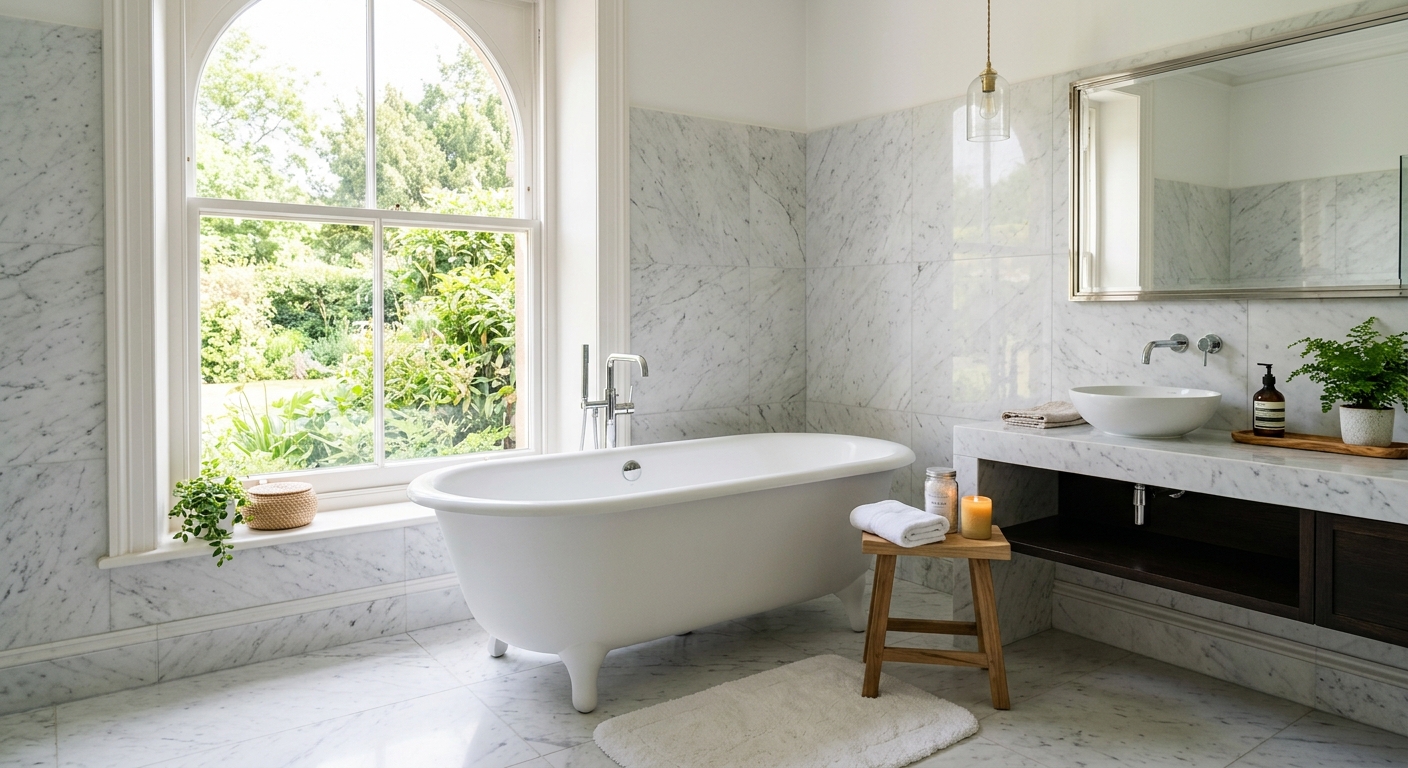
Bathroom renovation options and costs in Rocky Mountain House
Bathroom renovation in Rocky Mountain House is all about balancing scope, trade time and the reality of older homes. With 44.5% of local homes built before 1981 (Statistics Canada, 2021 Census), it’s common to encounter dated layouts—think cast-iron or older drain connections, galvanized supply lines, and ventilation that never quite kept up. In the Banff–Jasper–Rocky Mountain House region, you’ll feel the cost impact more from labour availability and hidden-condition risk than from winter temperatures. Alberta’s demand for qualified tile setters, plumbers and electricians can tighten schedules during busy periods, and bathroom work often pauses other trades (rough-in, inspections, then finish trades), which stretches timelines even when materials are on hand.
In neighbourhoods around downtown and the Westwood area, bathrooms are frequently retrofits within existing footprints—so projects tend to focus on tile updates, fixture swaps and ventilation improvements, with gut renovations reserved for homes that need plumbing/venting upgrades. The result is that two homeowners can ask for “the same” bathroom, yet one job stays in the cosmetic refresh band while another becomes a full renovation once old drains, insufficient venting or non-compliant electrical is uncovered.
Below are realistic option ranges you can use to compare contractor quotes in Rocky Mountain House, then we’ll dig into what drives the numbers (and what to watch for behind the walls) in the next section.
| Renovation Scope |
What's Included |
Typical Duration |
Price Range |
| Cosmetic refresh (paint, fixtures, accessories only) |
New vanity or faucet (no plumbing relocation), toilet if desired, lighting refresh, paint, caulking, towel bar/holders; no tile replacement unless it’s minor touch-up |
2–5 days |
$3,000–$8,000 |
| Mid-range full renovation (new tile, vanity, tub/shower, electrical) |
Remove existing finishes, new waterproofing and tile (floor + walls), new vanity and top, replace tub or convert within footprint, exhaust fan upgrade, new or updated receptacles (as required) |
2–4 weeks |
$14,000–$22,000 |
| High-end full renovation (custom tile, steam shower, heated floors) |
Higher-end tile systems, custom shower/steam elements, heated floor (new circuit), upgraded lighting and fan, premium fixtures/valves, more extensive framing/transition details |
4–7 weeks |
$22,000–$28,000 |
| Shower-only installation (convert tub to walk-in shower) |
Demo, new shower pan system, waterproofing, tile surround, new controls/valve, drain connection changes within a typical footprint, exhaust fan check/upgrade if needed |
1–3 weeks |
$7,000–$14,000 |
| Bathtub replacement or tub-liner install |
Remove and replace tub (or liner system), new trim/caulk details, basic plumbing connection refresh, leak testing |
3–7 days |
$1,200–$4,500 |
| Tile-only installation (floor + surround, existing layout kept) |
Tile removal and rebuild, waterproofing, floor tile and shower wall tile, grout/seal, reinstall existing vanity and fixtures where plumbing isn’t relocated |
1–3 weeks |
$6,000–$12,000 |
Prices are estimates only and vary by project scope, site access and material selection.
What affects the price of bathroom renovation in Rocky Mountain House
If you’re comparing quotes in Rocky Mountain House, it’s normal to see the same bathroom end up 30–50% apart—especially when one contractor assumes a “clean” crawl/underfloor situation and another correctly budgets hidden-condition work. In the Banff–Jasper–Rocky Mountain House region, labour rates and the age of local housing stock drive costs more than climate alone. Many homes were built before modern plumbing, venting and electrical standards became common, so contractors spend more time on rough-in corrections and code upgrades than on weatherproofing for cold snaps.
Here are typical cost drivers you’ll see: older homes can hide cast-iron or copper drain stacks that need upgrading, galvanized supply lines that don’t meet today’s expectations, and insufficient ventilation that forces fan upgrades. When asbestos is discovered in older flooring or joint compound (often in homes built pre-1985), abatement protocols can add $1,500–$5,000+ depending on material quantity and containment requirements. A small “tile-only” request can also become a bigger project if the subfloor is unlevel or shows water damage.
Concrete local examples: (1) if you want a walk-in shower but the drain location doesn’t align with the joists, you may pay to modify framing and adjust waterproofing transitions; that can move a shower installation toward the upper part of the $7,000–$14,000 band. (2) If you keep the existing footprint and only replace finishes, many projects stay closer to the lower end of the $14,000–$28,000 full-renovation range. With 44.5% of homes built before 1981 (Statistics Canada, 2021 Census), budgeting contingency for behind-the-wall surprises is usually the difference between a smooth job and a change-order-heavy one.
| Price Factor |
Why It Matters |
Cost Impact |
| Layout change — moving drain or supply lines requires rough-in work |
Relocating plumbing means opening walls/floors, adding new runs and testing for leaks; it also triggers inspections more often |
Often adds $2,000–$7,000 |
| Tile selection — large-format porcelain vs. mosaic vs. ceramic |
Harder-to-cut formats increase labour time; mosaic and natural stone add more setting and finishing work |
Typically $1,500–$6,000 difference across a full bath |
| Fixture tier — builder-grade vs. mid-range vs. designer brands |
Higher tiers cost more for valves, vanities, and trim kits; they may also require specialty installation parts |
Roughly $500–$4,000 swing |
| Subfloor condition — rot or unlevel concrete adds scope |
Repairs, new backer/subfloor prep and re-leveling directly increase demo and installation time |
Often $1,000–$5,000+ |
| Electrical — adding GFCI outlets, exhaust fan, heated floor circuit |
Bathroom receptacles and fan circuits must meet code; heated floors are a separate electrical scope |
$800–$4,500 depending on complexity |
| Waterproofing method — membrane type and extent |
Higher-performance membranes and correct overlap at corners and transitions reduce risk of mould and leaks |
Usually $600–$2,500 more than basic approaches |
| Older-home surprises — asbestos tile, cast-iron drains, galvanized pipes |
Discovery can change trade sequence, require remediation and force plumbing upgrades |
Commonly $1,500–$10,000+ in worst-case scenarios |
| Bathroom size — sq ft drives tile and labour time directly |
More surface area increases material, layout time, cutting and waterproofing labour |
Typically $2,000–$8,000 range shift |
Permits & regulations in Alberta
In Alberta, not every bathroom update needs a permit, but changes behind the walls often do. In most cases, cosmetic work—like swapping a vanity top, replacing fixtures in the same locations, repainting, replacing accessories, or retiling without moving plumbing—typically does not trigger permit requirements. However, in Rocky Mountain House, the moment you relocate plumbing (moving a drain or supply line), you’re usually into permit-and-inspection territory because rough-in work must be verified for safety and proper connections.
Electrical requirements are similar: if you’re adding or changing electrical work (for example, a new GFCI receptacle for a vanity, wiring an exhaust fan, or installing a heated-floor circuit), it must be performed by a licensed electrician and meet provincial electrical code. Structural or wall changes can also require permits, particularly if you’re moving framing or altering load paths.
How to verify a contractor in Rocky Mountain House, step-by-step: (1) Ask for their Alberta trade licence details and check it through the appropriate online registry for licensing status. (2) Request a current certificate of insurance showing general liability; if they have subcontractors, confirm they’re insured too. (3) Ask about WSIB/WCB coverage and request proof of coverage/clearance if applicable. (4) Confirm the scope includes required permits (or that you, as the homeowner, will pull them) and that inspections are scheduled before insulation/finishes close the wall.
Choosing tile, waterproofing and fixtures for your Rocky Mountain House bathroom
In Rocky Mountain House, your tile, waterproofing and fixtures choices usually decide whether you land in the $14,000–$22,000 mid-range renovation band or push toward the higher end of the full-renovation range. Start with tile: ceramic is the entry option for many homeowners because it’s cost-effective and straightforward, especially where you’re keeping the existing layout and simpler patterns. Porcelain costs more, but it’s typically denser and more consistent for wet-area floors and walls. Natural stone (marble, travertine, slate) looks premium and can boost resale appeal, but it’s also more demanding: more careful selection for variation, more sealing/maintenance, and slower installation.
Second, waterproofing. Bathrooms see Alberta’s indoor humidity cycle—steam from showers, then cool-down—so the right waterproofing system matters for mould prevention and long-term tile performance. A paint-on membrane can work for some scopes, but bonded sheet membranes (and systems built around a consistent profile like a schluter-style approach) often provide more robust protection when installed correctly at corners and transitions.
Third, fixture tier. Builder-grade units can look fine but may not last as well with frequent use. Mid-range fixtures often strike the best balance, while designer brands raise both purchase price and—sometimes—trim and valve compatibility complexity.
Dollar example: upgrading to porcelain and a more complete waterproofing approach can add roughly $1,500–$4,000 to a typical full renovation, which is justified when you’re already doing a gut-style demo. By contrast, spending heavily on natural stone without upgrading waterproofing coverage is rarely the best long-term decision.
| Material / Option |
Pros |
Cons |
Price Range |
| Ceramic tile (floor + walls) |
Lower material cost; wide style selection; good for many typical footprints |
Not always ideal for higher-traffic wet floors; can chip if the substrate isn’t properly prepared |
$2,500–$7,500 |
| Porcelain tile (floor + walls) |
More durable and moisture-resistant; better for wet zones; consistent colour and finish |
Higher tile cost; some large-format panels require extra skill to set perfectly |
$4,000–$10,500 |
| Natural stone (marble, travertine, slate) |
Premium look; excellent texture/character; can elevate resale |
Sealing and maintenance; more installation time; higher breakage/selection waste |
$7,000–$18,000 |
| Frameless glass shower enclosure |
Modern appearance; easy to wipe; can make small bathrooms feel larger |
Higher cost; requires solid wall alignment; needs precise installation to avoid leaks/fit issues |
$1,500–$6,000 |
| Prefab tub surround (acrylic) |
Faster install; fewer tile labour hours; good water resistance when installed correctly |
Less custom look than tile; may not match premium finish goals; transitions still need careful sealing |
$1,200–$3,500 |
| Custom shower pan (tile or linear drain) |
Best custom fit; linear drains help with slope and sleek styling; strong long-term performance when waterproofed |
More labour and waterproofing details; drain placement affects rough-in planning |
$3,500–$14,000 |
How to choose a bathroom renovation contractor in Rocky Mountain House
Choosing the right contractor in Rocky Mountain House comes down to proof, clarity and control of risk—especially because 44.5% of homes were built before 1981 (Statistics Canada, 2021 Census) and hidden-condition surprises are more common. First, verify Alberta licensing and coverage: ask for the trade licence details for each trade involved (general contractor, plumber, electrician, and any tile setting/waterproofing specialist). Confirm general liability insurance with a certificate of insurance and ensure subcontractors carry their own coverage. For workers’ compensation, request proof of WSIB/WCB coverage/clearance documentation; if a contractor can’t show it, treat that as a major risk.
Next, get 2–3 itemised written quotes—not one lump sum. You want a line-by-line breakdown for labour and materials, including waterproofing materials, tile and grout, fixtures, electrical components, demolition, disposal, and drywall/tile backer/surface prep. Read the scope for what’s excluded (especially “subfloor repairs,” “permit fees,” “fixture allowance,” and “changes due to hidden conditions”). Make sure permit pull responsibility is stated clearly and that disposal (dump fees/hauling) is included if they’re doing demo.
Warranty matters: request the workmanship warranty length and whether the product/manufacturer warranties are separate. Ask if warranties are transferable if you sell the home. For payments, keep deposits reasonable—never more than 10–15% upfront—and use holdback (for example, retain a portion until punch list items are complete). Get a start date and a completion estimate in writing, plus what happens if lead times change for tile or specialty fixtures.
- Confirm Alberta trade licences for the trades who will do plumbing, electrical and any structural work.
- Request proof of general liability insurance (and that subcontractors are insured).
- Ask for WSIB/WCB proof or clearance documentation before work starts.
- Demand itemised labour/materials (not a single total for “bathroom renovation”).
- Check that waterproofing method and coverage are specified (membrane type, overlap details, and niche/bench treatments).
- Verify fixture allowances vs. exact brands/models in the quote.
- Confirm disposal/hauling is included for demo and old finishes.
- Make sure permit fees and inspection scheduling responsibilities are written clearly.
- Look for a contingency approach to older-home surprises (asbestos, subfloor repairs, venting issues).
- Ask for a detailed timeline with milestone dates (demo, rough-in, tile/set, trim, commissioning).
- Confirm how change orders are handled and when you’ll be asked to approve pricing.
- Review warranty terms in writing—workmanship duration and what’s covered/excluded.
Concrete red flags to watch for in Rocky Mountain House: quotes that don’t specify waterproofing materials/methods, “we’ll figure it out later” language about permits and rough-in inspections, unusually low pricing that omits subfloor repair or disposal, no written warranty for workmanship, and payment schedules that require large upfront deposits (beyond 10–15%).
Frequently asked questions — bathroom renovation in Rocky Mountain House
How much does a walk-in shower cost in Rocky Mountain House?
A walk-in shower in Rocky Mountain House commonly lands in the mid to upper mid-range because it often involves plumbing rough-in changes, waterproofing, and tile work, not just swapping fixtures. For many homeowners, the typical shower installation range is about $3,500–$14,000, with costs swinging based on whether you convert an existing tub within the same footprint or you need to relocate a drain/supply line. If you’re converting a tub to a tiled walk-in and upgrading the exhaust ventilation or electrical fan circuit, plan for more time and inspection coordination. Given that many homes were built before 1981 (Statistics Canada, 2021 Census), hidden-condition checks (subfloor levelness, older drains, possible dated wiring) are a key part of avoiding surprises.
What's the ROI on a bathroom renovation?
Bathroom ROI depends on the market and the quality of the finished scope. In smaller Alberta communities like Rocky Mountain House, a well-executed bathroom can improve buyer confidence—especially when the work addresses practical issues like ventilation performance, safe electrical connections, and modern waterproofing behind tile. That said, ROI is rarely “dollar-for-dollar” on upgrades like heated floors or luxury steam components, unless they align with buyer expectations in your price bracket. A safe strategy is to prioritize durable, code-friendly improvements first (waterproofing, ventilation, leak-proof valves, and proper tile substrate prep), then choose finishes that match your home’s level. Budget-wise, a mid-range full renovation typically falls around $14,000–$22,000, and it’s the kind of project where strong workmanship and transparency on scope often support resale value more than premium aesthetics alone.
Do I need waterproofing behind the tile?
Yes—reliable waterproofing behind the tile is strongly recommended for a bathroom renovation in Rocky Mountain House. Tile by itself isn’t a waterproof system; grout and grout joints are not meant to prevent water migration into the framing/substrate. In Alberta’s day-to-day humidity cycle, that risk is amplified: showers add moisture, and then indoor temperatures drop as the home cools, which can stress assemblies. The right waterproofing method—proper membrane type, correct overlap at seams, and correct detailing at corners and niches—is what prevents long-term mould and costly repairs. Even if your contractor says “tile is waterproof,” ask what membrane system they’re using and how it will be applied around the tub/shower transitions, drain areas, and any penetrations.
How do I compare bathroom renovation quotes?
To compare quotes in Rocky Mountain House, treat “apples-to-apples” as mandatory. Ask for itemised breakdowns for labour and materials: tile and grout type, waterproofing system, backer/subfloor prep, demolition and disposal, ventilation fan work, and what electrical changes are included. Confirm whether permit pull and inspections are included or excluded, and whether the contractor carries the responsibility. Look for explicit allowances for fixtures (vanity, toilet, valves, shower glass) rather than vague “similar” items. Also compare contingency language for older homes—since many local houses were built before 1981 (Statistics Canada, 2021 Census), the risk of hidden drains, subfloor repairs, or possible asbestos discovery is real. If one quote is lower but omits waterproofing scope or electrical upgrades, it will usually resurface later as change orders.
Can I live at home during a bathroom renovation in Rocky Mountain House?
Often you can live at home, but it depends on the renovation sequence and whether you’re doing a shower-only upgrade or a full gut project. For cosmetic refreshes, it’s usually easiest to stay put. For a mid-range full renovation, you may need to avoid using the bathroom during tile set and waterproofing cure periods—commonly the most disruptive windows in the schedule. If plumbing is being relocated or the shower/tub is being removed, a temporary setup may be possible (using another bathroom in the home or setting up a temporary wash area), but you should plan for inconvenience for a couple of weeks. The more technical the scope (electrical fan circuits, heated floors, venting upgrades), the more likely it is that you’ll need alternative bathing arrangements until fixtures are reinstalled and tested.
What's the best bathtub material for a Rocky Mountain House home?
The “best” bathtub material is the one that fits your installation details, budget and maintenance preferences. For many Alberta homeowners, acrylic tubs or tub-liner systems are popular because they’re relatively lighter, install quickly, and can reduce demo time compared with heavy replacements. If you’re staying within a typical bathtub replacement range of $1,200–$4,500, acrylic solutions can be a cost-effective path—especially in older homes where you want minimal disruption. For a more premium feel, enameled steel is durable but can be noisier and may require careful support to avoid flex. The key is not only the tub shell material, but also ensuring correct waterproofing at seams, proper drain connection, and sound substrate prep—particularly in homes built before 1981 (Statistics Canada, 2021 Census).