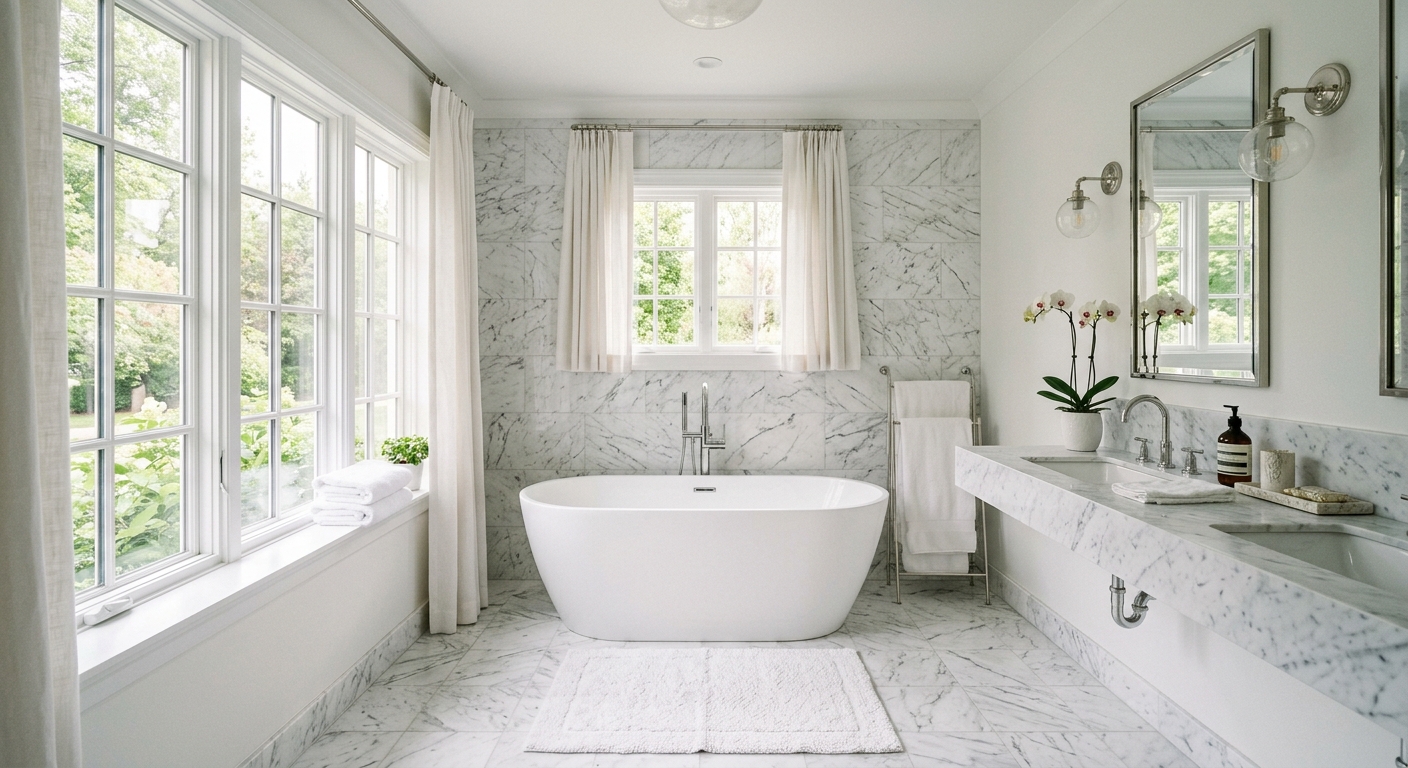
Bathroom renovation options and costs in Highland Park
Bathroom renovations in Highland Park tend to fall into three main lanes: cosmetic updates, mid-range full remodels, and higher-end upgrades with premium surfaces and building details. Highland Park’s small local population (4,105 residents, Statistics Canada, 2021 Census) also means many homeowners draw from Calgary’s contractor pool, so scheduling can reflect overall Calgary demand rather than just local traffic. Just as important, a large share of homes in the Calgary area are older, and that’s where budgets often expand—dated plumbing layouts, older venting runs, and sometimes hidden cast-iron drain sections or asbestos-containing materials in older floor tile/drywall compounds. In the Calgary economic region, costs are driven more by labour rates and how much concealed work gets uncovered than by climate alone.
Even though Alberta winters don’t directly raise bathroom tile labour, temperature swings and indoor humidity make waterproofing execution non-negotiable. The market also stays busy: older homes throughout Calgary and nearby communities can need rough-in upgrades, subfloor repairs, and trade coordination, turning a “simple refresh” into a full remodel once walls open up. Contractors serving Highland Park are especially in demand in the Highland Park / NE Calgary area for follow-up calls after inspection and discovery work—partly because many renos start with discovery, not with demolition.
To help you budget realistically, here are common scopes and price ranges for the Highland Park market—then you can compare how quickly your project moves from “refresh” to “full remodel” once plumbing, venting, and waterproofing are properly planned.
| Renovation Scope |
What's Included |
Typical Duration |
Price Range |
| Cosmetic refresh (paint, fixtures, accessories only) |
Paint, caulking & silicone renewal, replace vanity top or vanity, swap faucet/toilet (like-for-like), accessories (towel bar, mirrors), existing lighting retained |
3–7 days |
$5,000–$8,000 |
| Mid-range full renovation (new tile, vanity, tub/shower, electrical) |
New vanity and mirror/light, new shower/tub surround tile, re-waterproofing, exhaust fan upgrade (typical), toilet and faucet replacement, flooring replacement where needed, basic plumbing refresh and vent check |
2–4 weeks |
$15,000–$22,500 |
| High-end full renovation (custom tile, steam shower, heated floors) |
Custom-format tile, premium fixtures, heated floor electric circuit, frameless or upgraded enclosure, enhanced waterproofing, upgraded lighting/venting, potential subfloor repairs |
4–7 weeks |
$22,500–$30,000 |
| Shower-only installation (convert tub to walk-in shower) |
Remove tub, set new shower pan and waterproofing, tile walls/floor, new linear drain or standard drain (as specified), new enclosure, plumbing rework for drain relocation |
2–4 weeks |
$12,000–$18,000 |
| Bathtub replacement or tub-liner install |
Replace tub (or install liner where suitable), new waterproofing at seams, reconnect plumbing, refinish/replace surround areas as needed |
5–10 days |
$3,000–$8,000 |
| Tile-only installation (floor + surround, existing layout kept) |
Demo to substrate, tile floor + shower/tub surround only, waterproofing system for tiled wet areas, grout/finish, disposal |
1–3 weeks |
$7,000–$14,000 |
Prices are estimates only and vary by project scope, site access and material selection.
What affects the price of bathroom renovation in Highland Park
In Highland Park (and across the Calgary economic region), you can see the same bathroom job quoted 30–50% apart because contractors price the hidden scope differently. Labour rates and trade availability play a big role, but the real budget swing comes from what’s inside the walls: older drain stacks, outdated venting, supply line condition, and subfloor flatness. Climate matters mainly through moisture behaviour—Alberta’s winter heating and indoor humidity can stress grout and waterproofing if it’s not done correctly, so we don’t “value engineer” membranes and sealing in tiled wet areas.
Older housing in the Calgary region often hides cast-iron or copper drain sections that require upgrading, plus galvanized supply lines and ventilation systems that don’t move moisture efficiently. Those issues don’t always show up at a walkthrough, so once demolition happens, scope can expand. Also, discovery of asbestos-containing materials (commonly in older vinyl floor tile and related compounds in pre-1985 homes) triggers abatement protocols and documentation, typically adding $1,500–$5,000+ to the budget depending on what’s found and how much must be removed and replaced.
Here are a few local examples we see often in Highland Park: (1) moving the shower drain to create a better slope can add labour and rough-in time—sometimes nudging a shower conversion from a mid-range outcome toward the higher band; (2) switching from ceramic to large-format porcelain can reduce grout lines but increases substrate preparation requirements; (3) an exhaust fan upgrade with a new duct run may cost more than homeowners expect, but it’s often cheaper than replacing failed finishes later. That’s why Calgary bathroom refresh quotes sometimes begin near $15,000–$22,500 for mid-range full work, while more complex, heated-floor or custom-tile projects commonly push into the $22,500–$30,000 zone.
| Price Factor |
Why It Matters |
Cost Impact |
| Layout change — moving drain or supply lines requires rough-in work |
Drain relocation changes waterproofing transitions and may require wall/ceiling access and re-venting coordination |
$2,000–$7,500 |
| Tile selection — large-format porcelain vs. mosaic vs. ceramic |
Harder tiles demand flatter substrates, more careful setting, and sometimes more cuts and labour hours |
$1,500–$6,000 |
| Fixture tier — builder-grade vs. mid-range vs. designer brands |
Valve/trim quality, warranty levels, and finish longevity affect both material cost and installation time |
$500–$4,000 |
| Subfloor condition — rot or unlevel concrete adds scope |
Repairs, shimming/leveling, or replacement increases demo time and added underlayment and waterproof preparation |
$1,000–$5,500 |
| Electrical — adding GFCI outlets, exhaust fan, heated floor circuit |
Electrical upgrades must be planned with a licensed electrician and may require drywall access |
$800–$4,500 |
| Waterproofing method — membrane type and extent |
Wet-area waterproofing is layered work; the correct system reduces call-backs from moisture intrusion |
$600–$3,000 |
| Older-home surprises — asbestos tile, cast-iron drains, galvanized pipes |
Abatement and plumbing upgrades add documentation, inspection steps, and replacement materials |
$1,500–$5,000+ |
| Bathroom size — sq ft drives tile and labour time directly |
More surface area means longer setting, grouting, waterproofing coverage, and longer cleanup |
$1,000–$6,500 |
Permits & regulations in Alberta
In Alberta, the rule of thumb is that cosmetic bathroom updates typically don’t require a permit, while work that changes plumbing, ventilation, electrical circuits, or structural elements usually does. Swapping fixtures like a toilet, vanity, faucet, or replacing a tub surround with the same footprint is generally considered maintenance/cosmetic—provided you’re not moving drain or supply lines and you’re not altering the structure. Repainting walls, replacing accessories, and renewing caulking also typically fall into the “no permit” category in day-to-day contractor work.
Permits become much more likely when you relocate plumbing (moving a drain or changing where water lines connect), add or modify plumbing rough-in, or change venting paths for the exhaust fan. If you’re adding a new exhaust fan, adding a new circuit, or modifying existing electrical circuits for lighting/heated floors, that work must be done or signed off by a licensed electrician and generally requires inspection. If you open walls and discover concealed issues, it can trigger additional inspection steps—so planning for that early reduces surprises.
For Highland Park homeowners, a simple verification process helps you avoid uninsured “schedule risk.” Step 1: confirm the contractor’s Alberta trade licence details (ask for the licence number and verify it through the appropriate public-facing registry tool). Step 2: request a certificate of liability insurance and check the policy is active for the project period, with adequate coverage limits. Step 3: confirm Workers’ Compensation coverage (WCB/WSIB). Ask for a clearance letter or proof of account clearance. Step 4: make sure permits (if required) are pulled by the contractor and clearly listed in the written scope.
Choosing tile, waterproofing and fixtures for your Highland Park bathroom
Your biggest budget levers in Highland Park are tile choice, waterproofing method, and fixture tier. Together, they determine not just cost but whether the bathroom holds up through Alberta’s cold-season indoor humidity and temperature swings.
1) Tile choice: Ceramic tile is an entry-level option and is generally easier to work with, but it can be more variable in durability depending on grade. Porcelain is denser and often better for floors and wet areas with heavier traffic. Natural stone (marble, travertine, slate) can be stunning, but it often needs more labor for selection/installation and may require sealing schedules—so the “materials savings” you might expect can disappear in prep time.
2) Waterproofing method: Paint-on membranes can be fine for certain assemblies, but for tiled wet areas we often steer homeowners to bonded sheet membranes or proven systems (including those built around established tile-underlayment approaches) to create a continuous waterproof layer. In Alberta, the real enemy is moisture movement behind tile—good waterproofing and correct flashing details prevent mould growth and grout failure.
3) Fixture tier: Builder-grade fixtures reduce upfront cost, while mid-range and designer brands can improve long-term reliability and finish consistency. For resale in the Calgary market, buyers tend to notice a cohesive look, good lighting, and a bathroom that feels “new,” not just freshly painted.
A practical dollar example: upgrading from a standard ceramic floor to mid-range porcelain plus a more robust waterproofing system can add roughly $1,500–$3,500 depending on coverage and substrate prep, but it can be justified when you’re already opening walls for venting or subfloor corrections—because the waterproofing decision isn’t something you want to redo later.
| Material / Option |
Pros |
Cons |
Price Range |
| Ceramic tile (floor + walls) |
Lower material cost, good colour variety, generally straightforward installation |
Can be less durable than porcelain on floors, more prone to chipping if subfloor isn’t solid |
$3,000–$7,000 |
| Porcelain tile (floor + walls) |
Better moisture and wear performance, ideal for Alberta wet-area durability, cleaner modern looks |
Heavier/denser tile can increase labour time if substrate needs prep |
$5,000–$10,500 |
| Natural stone (marble, travertine, slate) |
High-end visual appeal, premium look for vanities and feature walls |
More complex installation and sealing/maintenance, requires careful product selection |
$8,000–$16,000 |
| Frameless glass shower enclosure |
Modern, spacious feel; easier to clean; higher perceived value |
Costs more; needs precise measurements and solid wall anchoring |
$2,000–$6,500 |
| Prefab tub surround (acrylic) |
Fast install, consistent finish, good for tight timelines |
Less custom look than tile; seams and transitions require careful sealing |
$800–$3,000 |
| Custom shower pan (tile or linear drain) |
Best drainage and slope control, premium feel; supports custom layout |
More skilled labour; requires correct waterproofing details |
$4,000–$12,000 |
How to choose a bathroom renovation contractor in Highland Park
When you’re hiring in Highland Park, the fastest way to protect your renovation budget is to verify licensing, insurance, and labour planning before you sign. In Alberta, confirm the contractor’s relevant trade licence (ask for the licence number and ensure it matches the work you’re buying), and request liability insurance with active dates covering your project. For workers on site, make sure they have Workers’ Compensation coverage (WCB/WSIB) and ask for proof such as a clearance letter. These steps matter because bathroom renos often open walls and run through multiple trades—plumbing, electrical, and tile/waterproofing—so you want coverage that actually matches the risk.
Get 2–3 itemised quotes that break labour and materials separately rather than only quoting a lump sum. Ask whether permits are included, whether disposal and dump fees are included, and which items are excluded (for example: subfloor repairs, venting corrections, or electrical add-ons). Review the scope for hidden-scope assumptions—older homes frequently require drain/vent upgrades, and your quote should explain how surprises are handled. Warranty matters too: ask for workmanship warranty length and whether product warranties are tied to the installer or transferable to you at resale. For payment, don’t move past more than about 10–15% upfront; hold back a portion until key milestones are complete and finishes are installed.
Finally, demand a timeline in writing with a start date and a realistic completion estimate. In a busy Calgary market, reliable contractors still set clear sequencing (demo, rough-in, waterproofing cure time, tile set, fixture install) so you’re not stuck waiting on trades.
- Verify the contractor’s Alberta trade licence for the exact work scope
- Request and review certificate of liability insurance and coverage dates
- Confirm WCB/WSIB coverage with a clearance letter or proof of account
- Get 2–3 itemised quotes (labour + materials) and compare apples-to-apples scopes
- Confirm whether permits, inspections, and permit fees are included
- Ask what’s included for demo and disposal/dump fees
- Ensure waterproofing materials and method are specified (not just “we waterproof”)
- Clarify fixture allowance amounts and what happens if you exceed them
- Ask who supplies/installs the exhaust fan and whether duct routing is included
- Check the electrical plan: GFCI requirements and heated floor circuit details
- Review warranty: workmanship duration and product warranty transferability
- Set payment milestones with a holdback until punch-list items are finished
Red flags I commonly see with unreliable bathroom contractors in the Highland Park area include: refusing to provide itemised quotes, vague scope language like “as required” without budget allowances, no proof of insurance/WCB/WSIB, asking for large upfront payments (beyond 10–15%), and missing timelines or a warranty statement in writing.
Frequently asked questions — bathroom renovation in Highland Park
How long does a bathroom renovation take in Highland Park?
In Highland Park, a cosmetic refresh can be done in about 3–7 days, while a mid-range full renovation typically takes 2–4 weeks once demo, rough-in, waterproofing, and tile work are sequenced. If you’re converting a tub to a walk-in shower or changing drain locations, expect closer to 2–4 weeks because the rough-in and waterproofing details need time to cure properly. In older Calgary-area homes, hidden-scope issues (subfloor repairs, venting corrections, or older drainage materials) can stretch timelines by several days, even when the visible work looks “simple.” The key is having a written schedule and contingency plan—otherwise tile crews and electricians may be waiting on plumbing access or inspection sign-offs. Budget-wise, mid-range work commonly starts in the $15,000–$22,500 band, and the longer timeline often tracks with that increased hidden scope.
Do I need a permit for a bathroom renovation in Alberta?
Often, cosmetic work in Alberta does not need a permit: swapping a vanity, faucet, toilet (like-for-like), repainting, and replacing accessories are typically handled as maintenance. However, permits are usually required when you relocate plumbing (moving a drain or supply lines), make changes that affect plumbing rough-in, or add/modify electrical circuits—such as installing a new exhaust fan with new wiring or adding a heated floor circuit. In practice around Highland Park, homeowners get tripped up when they open walls and discover the need for venting changes or older wiring updates. Electrical work must meet Alberta code and be performed or signed off by a licensed electrician. Ask your contractor to list which items require permits in the written quote and confirm who pulls the permit. This clarity helps you avoid inspection delays and reduces the risk of uncovered, non-compliant work.
What's the best tile for a bathroom in Highland Park?
The “best” tile depends on where it goes and what your bathroom actually needs. For most Highland Park bathrooms, porcelain tile is the safest balance: it performs well in wet areas and tends to hold up better under Alberta indoor moisture conditions. Ceramic can work for walls and entry-level budgets, but for floors and shower environments, porcelain is usually the more durable choice. If you want a luxury look, natural stone can be beautiful, but it adds installation complexity and may require sealing and careful maintenance. Also consider the tile format: larger-format porcelain looks modern and reduces grout lines, but it demands a very flat substrate—so subfloor prep can affect labour. If you’re comparing budgets, tile-only installs often land in the $7,000–$14,000 range, and upgrading the tile choice typically moves you within that band more than people expect because waterproofing and prep are the big drivers.
Should I do a tub-to-shower conversion?
A tub-to-shower conversion can be a smart move in Alberta because it’s often easier to maintain and can modernize the layout quickly. In Highland Park, it’s especially common when homeowners want better accessibility or a more “walk-in” feel. Cost-wise, a shower-only installation (including tub removal and shower waterproofing) often falls around $12,000–$18,000. The main reason to think carefully is that conversions frequently require drain relocation or upgraded venting—so the real outcome depends on what’s behind the walls. If your current tub plumbing can be reused without moving lines, costs stay closer to the lower end. If the drain must be moved, or subfloor repairs are needed, the job naturally moves upward. A good contractor will assess your existing rough-in early and explain how it affects both budget and waterproofing details.
How do I prevent mold in a Highland Park bathroom?
Mould prevention in Highland Park starts with controlling moisture pathways, not just cleaning. First, make sure your exhaust fan moves enough air and vents properly—bathrooms without strong ventilation often develop mould around caulk lines, ceilings, and grout. Second, insist on a continuous waterproofing system in the tiled wet area: correct membrane type, full coverage, proper seam detailing, and correct transitions at corners and niches. Third, avoid shortcuts around backer boards/substrate and ensure the surface is flat and stable before tile goes down; movement and poor adhesion lead to cracked grout and water intrusion. In older Calgary-area homes, hidden plumbing leaks behind finishes can also masquerade as “mould issues,” so leak detection during demo is important. If you plan a full remodel, the best investment is waterproofing done right the first time—especially when you’re already in the $15,000–$22,500 mid-range territory.
What adds the most resale value in a bathroom reno?
In Highland Park and the broader Calgary market, buyers usually pay attention to the bathroom’s overall “finish package,” not just one feature. High-impact value add-ons include a clean, modern tile and waterproofed wet area, a well-designed vanity and lighting scheme, and a shower layout that feels current (often a walk-in shower or an updated tub surround done neatly). Premium heated floors and a high-quality frameless enclosure can increase perceived value, but the foundation is usually waterproofing quality and durable materials that won’t fail in a few winters. Also, upgrading ventilation (exhaust fan performance and ducting) reduces future maintenance, which matters to homebuyers. If you’re working within the typical pricing bands, a mid-range renovation around $15,000–$22,500 can deliver noticeable value when it’s cohesive; pushing into $22,500–$30,000 often makes sense when heated floors, custom tile, or a steam shower are part of a unified design.