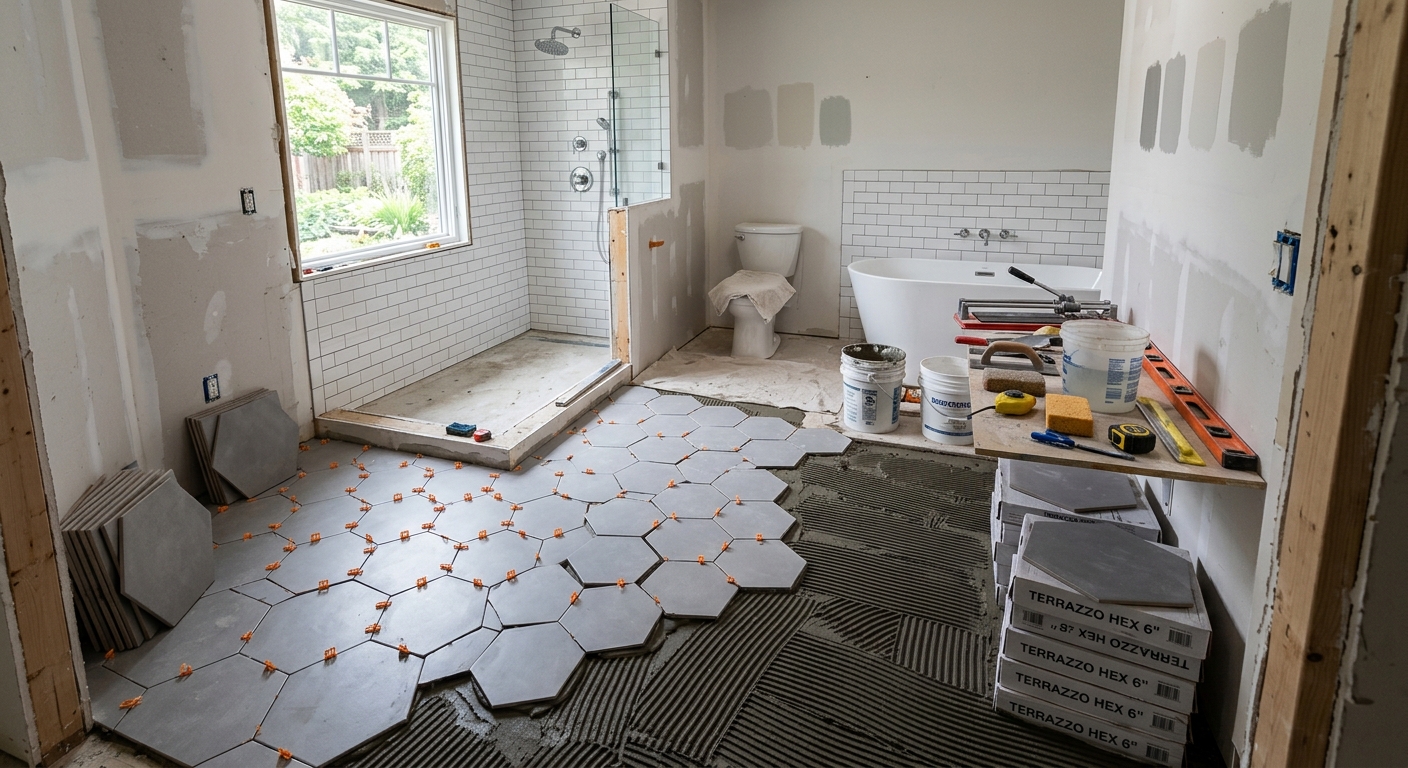
Bathroom renovation options and costs in Drayton Valley
Bathroom renovations in Drayton Valley typically start with a clear choice: do you want a quick refresh, or are you ready for a full rebuild that brings plumbing and electrical up to current expectations. With 45.6% of local homes built before 1981, many projects begin with simple goals and then expand after walls open—older drain piping layouts, legacy venting, and dated wiring can surface. In addition, the local mix of single-detached homes (63.0% of dwellings) often means straightforward access, but it also means many renovations touch exterior venting routes and longer plumbing runs.
In the Edmonton economic region, pricing is shaped less by temperature swings and more by labour availability and the extra time needed to deal with older systems. Oil-and-gas activity keeps skilled trades wages strong, so labour and installation frequently account for roughly a third or more of total bathroom cost. It’s also common to encounter galvanized supply lines or undersized venting during demolition, which pushes budgets into realistic full-reno territory—especially when waterproofing, electrical safety, and exhaust performance have to be corrected to modern standards. Contractors are also in high demand around established residential pockets such as the newer growth areas near the town’s north end, where schedules can tighten.
Below is a practical comparison to help you align scope with budget before you request quotes.
| Renovation Scope |
What's Included |
Typical Duration |
Price Range |
| Cosmetic refresh (paint, fixtures, accessories only) |
Surface-level updates: vanity swap, new lighting (no wiring relocation), toilet replacement, caulking, hardware, accessories, and paint; tile not removed beyond touch-ups |
3–7 days |
$3,000–$8,000 |
| Mid-range full renovation (new tile, vanity, tub/shower, electrical) |
Demo + rebuild: new floor and surround tile, vanity and mirror, tub or tub/shower assembly, updated exhaust fan and GFCI outlets, moisture-rated materials, basic waterproofing, and finishing |
2–3 weeks |
$12,500–$22,000 |
| High-end full renovation (custom tile, steam shower, heated floors) |
Premium rebuild: custom tile detailing, heated floor electrical circuit, higher-end fixtures and shower system (including steam-ready plumbing runs), upgraded waterproofing system, and detailed finishing trims |
3–5 weeks |
$25,000–$35,000 |
| Shower-only installation (convert tub to walk-in shower) |
Convert layout to walk-in: demo tub, new shower base/pan, tile to ceiling-height or full-height, glass option, new valves as needed, waterproofing, and ventilation improvements |
1.5–3 weeks |
$10,000–$18,000 |
| Bathtub replacement or tub-liner install |
Swap tub (or install liner where suitable), new shower rod/trim, sealing, plumbing hookups, re-tile limited areas around tub, and checks for drain compatibility |
5–10 days |
$3,500–$12,000 |
| Tile-only installation (floor + surround, existing layout kept) |
Remove existing finishes as needed, install tile floor and tub/shower surround, waterproofing membrane, grout/seal, and new trim at edges; plumbing moves not included |
1–2 weeks |
$3,500–$9,000 |
Prices are estimates only and vary by project scope, site access and material selection.
What affects the price of bathroom renovation in Drayton Valley
Even when two homeowners in the Edmonton economic region ask for the “same” bathroom, quotes can diverge by 30–50% because the hidden work isn’t the same. In our area, labour rates are a major driver—oil-and-gas competition helps keep skilled trades wages higher than many parts of Canada. On top of that, the age of housing stock matters more than climate. In the Drayton Valley area, a large share of homes pre-dates modern moisture-control methods and rough-in conventions, so opening walls can reveal cast-iron or undersized drain stacks, outdated venting, and galvanized or aging supply lines.
Ventilation is another common scope escalator. If an exhaust fan is missing, poorly ducted, or not wired to meet current safety expectations, contractors may need to add ducting and a new circuit—particularly when walls require bracing, drywall replacement, and re-waterproofing. If asbestos-containing materials are discovered (more likely in older floor tile or old drywall compounds), abatement protocols can add $1,500–$5,000+ to the project depending on extent and remediation requirements.
Cost can also move up or down based on what you choose. For example, a straightforward mid-range full reno typically lands around $12,500–$22,000, but once you add heated flooring and premium shower systems, budgets often trend toward the high-end band of $25,000–$35,000. Concrete Drayton Valley examples include whether your supply lines run through older chases, how accessible the plumbing stack is, and whether your bathroom fan can vent effectively to the exterior without expensive routing changes.
| Price Factor |
Why It Matters |
Cost Impact |
| Layout change — moving drain or supply lines requires rough-in work |
Moving plumbing means cutting joists/walls, redoing rough-ins, and patching to be waterproof |
Often adds $3,000–$8,000 |
| Tile selection — large-format porcelain vs. mosaic vs. ceramic |
Harder tile increases setting time and may require extra planning for substrate flatness |
Typically $1,000–$4,000 difference |
| Fixture tier — builder-grade vs. mid-range vs. designer brands |
Higher tiers cost more and may require different trim/valve compatibility |
Can vary $500–$3,500+ |
| Subfloor condition — rot or unlevel concrete adds scope |
Tile needs a stable, flat base; repairs add carpentry and materials |
Often $800–$2,500 |
| Electrical — adding GFCI outlets, exhaust fan, heated floor circuit |
New circuits mean inspection-ready wiring, boxes, and safe connections |
$600–$3,000 (higher for heated floors) |
| Waterproofing method — membrane type and extent |
Correct system reduces failure risk; better systems can increase labour and material |
Usually $500–$2,000 |
| Older-home surprises — asbestos tile, cast-iron drains, galvanized pipes |
Unexpected remediation or pipe upgrades drive labour, disposal, and contingency |
Can add $1,500–$7,000+ |
| Bathroom size — sq ft drives tile and labour time directly |
More surface area increases time for demo, waterproofing, setting, and finishing |
Often shifts total by $1,500–$6,000 |
Permits & regulations in Alberta
In Alberta, “cosmetic only” bathroom work usually doesn’t require a permit. Swapping fixtures like toilets, vanities, showerheads, or retiling without moving plumbing typically stays in the non-permit range. However, once you change how the systems are built—especially where water, drains, vents, and wiring are involved—permits and inspections often become part of the process.
Typically, these kinds of work DO require permits/inspections: relocating plumbing rough-ins (moving a drain or supply lines), adding or relocating exhaust ventilation with a new duct run, structural changes to walls or floors, and electrical work that adds circuits or changes the wiring pathway (for example, new GFCI outlets, a new exhaust fan circuit, or heated floor electrical). Electrical must be completed by a licensed electrician and either inspected or signed off according to local requirements and the electrician’s process.
Here’s a practical step-by-step for a homeowner in Drayton Valley: first, ask your contractor for their Alberta trade licence number and confirm it through the appropriate Alberta online registry. Next, request a certificate of insurance (liability) that matches the scope and effective dates. For workers, ask for WSIB/WCB clearance documentation as applicable. Finally, make sure the contract confirms who pulls permits (if required) and what the inspection responsibility is. If a contractor can’t provide these documents up front, it’s a strong signal to pause.
Choosing tile, waterproofing and fixtures for your Drayton Valley bathroom
Your budget in Drayton Valley is mainly shaped by three material decisions: tile choice, waterproofing system, and fixture tier. First, tile: entry-level ceramic can be a cost-effective starting point, but it’s less forgiving on flatness and often needs more careful installation to avoid lippage on larger areas. Porcelain (still cost-controlled, but denser and more consistent) usually costs more in materials yet saves labour because it’s more stable and reliable for floors and wall systems when installed correctly. Natural stone (marble, travertine, slate) brings luxury and pattern variety, but it usually needs more detailing, sealing, and substrate prep—so labour and premium material both rise.
Second, waterproofing method matters more than most people expect for long-term mould resistance. In Alberta bathrooms, the challenge isn’t outdoor weather—it’s indoor moisture. A paint-on membrane can work for specific systems and scopes, but for most tub/shower conversions and full surrounds, bonded sheet membrane or a proven system (including pre-sloped shower approach details and compatible thinset) is often the better insurance against leaks.
Third, fixture tier impacts both budget and resale. Builder-grade fixtures are fine for function, but higher-end valves, proper trim, and quality finishes tend to look better and last longer. For example, adding a higher-grade shower valve and glass enclosure can push a project upward, yet it’s often justified if you’re already investing around $12,500–$22,000 for a mid-range full renovation—because the visible surfaces are where buyers “feel” value. Jumping into heated floors and premium steam-ready components is what typically moves you toward $25,000–$35,000, so match those upgrades to how long you plan to stay in the home.
| Material / Option |
Pros |
Cons |
Price Range |
| Ceramic tile (floor + walls) |
Lower material cost, many style options, good for walls when installed correctly |
More variation in performance vs porcelain; can show wear sooner on floors if traffic is high |
$2,000–$5,500 |
| Porcelain tile (floor + walls) |
More durable for floors, consistent sizing, works well with modern large-format layouts |
Higher material cost; requires careful substrate flatness for big-format panels |
$3,500–$8,000 |
| Natural stone (marble, travertine, slate) |
Luxury appearance, unique veining and texture, strong resale appeal when well executed |
More prep and sealing; harder to maintain; higher risk of staining if not sealed |
$6,000–$14,000 |
| Frameless glass shower enclosure |
Modern look, easier visual light flow, increases perceived value |
Higher hardware cost; requires precise measurements and proper wall support |
$1,800–$4,500 |
| Prefab tub surround (acrylic) |
Fast installation, lower labour demand, good for budget-friendly updates |
Fewer design choices; not as customizable as tile for detailed finishes |
$1,200–$3,500 |
| Custom shower pan (tile or linear drain) |
Clean modern lines, better drainage design with proper slope, premium look |
More waterproofing and detailing labour; requires skilled crew to avoid failures |
$3,000–$9,000 |
How to choose a bathroom renovation contractor in Drayton Valley
Start by verifying licensing, insurance, and worker coverage. In Alberta, electrical must be handled by a licensed electrician, and plumbing/heating scopes should be performed by qualified trades as required by the project. Ask for the contractor’s Alberta trade licence number (or business registration details where applicable), and confirm it using the Alberta online registry. For liability, request a current certificate of insurance and confirm coverage limits align with renovation work. Then ask for WSIB/WCB clearance documentation for their workers—this is non-negotiable if you want protection as the homeowner.
Next, insist on 2–3 itemised written quotes. “Lump sum” numbers are harder to compare because you can’t see how labour, demolition, waterproofing, tile setting, electrical allowances, and disposal are handled. Make sure the quote clearly states whether permits are included, what happens if asbestos (or other hazardous materials) is discovered, and what is included for waste haul-off and protective protection (floor coverings, dust control, and bathroom access). Warranty should be in writing: workmanship warranty length, what products have manufacturer coverage, and whether warranties transfer to a new owner if you sell.
Payment schedule matters. Keep upfront deposits modest—generally no more than 10–15%—and use holdback until key completion milestones are achieved. Finally, get a start date and a completion estimate in writing, including what conditions could extend the timeline (tile lead times, permit lead time, or inspection delays).
- Provide Alberta trade licence details and confirm on the appropriate online registry.
- Show current liability insurance certificate before work begins.
- Provide WSIB/WCB clearance documentation where applicable.
- Use itemised quotes: labour, materials, tile/membrane, plumbing and electrical allowances, disposal, and permits.
- Clarify inclusions/exclusions for demo and bathroom protection (dust control, floor protection).
- Ask who pulls permits, who schedules inspections, and whether inspections are included in price.
- Confirm waterproofing scope: membrane type, coverage area, and how corners/penetrations are handled.
- Verify electrical additions: GFCI outlets, exhaust fan wiring, and whether a fan upgrade is included.
- Request a named person/crew and a project schedule with start and finish targets.
- Review warranty terms: workmanship length and product/manufacturer coverage.
- Agree on a payment schedule with 10–15% maximum upfront and holdback at completion milestones.
- Make sure quote includes allowances for common surprises in older Drayton Valley homes (venting, supply line condition).
Red flags we see in Drayton Valley: contractors who won’t provide licence/insurance documents, quotes that omit waterproofing details, “cash-fast” schedules with no start dates in writing, unclear disposal/permit responsibility, and warranty language that’s vague or only covers materials (not workmanship).
Frequently asked questions — bathroom renovation in Drayton Valley
Do I need a permit for a bathroom renovation in Alberta?
In Alberta, cosmetic-only work—like swapping fixtures, painting, or replacing a vanity without changing plumbing or electrical routes—typically doesn’t require a permit. But permits and inspections are commonly required when you relocate plumbing (moving drain or supply lines), add/relocate an exhaust fan with new ducting or wiring, or make electrical changes such as new circuits (including GFCI outlets, exhaust fan wiring, or heated floor circuits). Electrical must be completed or signed off by a licensed electrician. Because Drayton Valley homes are often older (many built before 1981), hidden issues can trigger scope changes—so ask your contractor to clearly state what permits are included in your quote and who pulls them.
What's the best tile for a bathroom in Drayton Valley?
The “best” tile is the one that matches your floor use, maintenance expectations, and the installation quality. For most homeowners in Drayton Valley, porcelain is a strong balance: it’s durable for floors and reliable across wet areas. If you want a lower budget, ceramic can work, especially for walls and where you’re not doing high-traffic flooring. Natural stone is beautiful and can look premium on a mid-to-high renovation, but it needs sealing and careful installation. Whatever you choose, the real performance difference comes from substrate prep and waterproofing. In a typical mid-range full reno around $12,500–$22,000, porcelain often delivers the best mix of look, longevity, and installation success.
Should I do a tub-to-shower conversion?
For many Drayton Valley households, a tub-to-shower conversion is worth it because it improves daily usability and reduces the “step over” barrier. It also aligns well with modern layouts that favour a walk-in shower with a glass enclosure. That said, cost depends on whether you keep the plumbing layout or change the drain and supply positions. If you only remove the tub and build a shower where the plumbing already sits, your cost can land closer to shower-only installation pricing. If the rough-in needs moving, budgets typically rise accordingly. A practical planning range is $10,000–$18,000 for a shower-only conversion. If you’re aiming for a full refresh, you may prefer a mid-range full renovation instead of a partial conversion.
How do I prevent mold in a Drayton Valley bathroom?
Mould prevention is mainly about stopping moisture from staying where it shouldn’t. In Drayton Valley (and across Alberta), the key is a properly ventilated bathroom plus a waterproofing system that’s built for showers and tub surrounds. Use a moisture-rated ventilation fan that vents to the exterior and ensure it’s wired correctly, ideally with appropriate controls. Then focus on waterproofing: correct membrane type, sealing around penetrations, and a proper shower slope/pan solution. Grout and caulk alone are not waterproofing—if the membrane isn’t done right, moisture can migrate behind tile. Keeping up with regular cleaning and running the fan during and after showers helps, but a good build is what prevents the slow leak that leads to mould.
What adds the most resale value in a bathroom reno?
Buyers in Drayton Valley and the wider Edmonton economic region tend to respond to “function-first” upgrades that look current and feel dry and safe. The biggest value drivers are usually a well-executed shower/tub waterproofing system, modern fixtures, and updated electrical safety items like properly installed GFCI outlets and an effective exhaust fan. Tile quality and layout also matter—porcelain tile with clean lines and durable finishes often outperforms cheaper looks over time. If you’re upgrading within a realistic full-reno plan (often $12,000–$35,000 for full bathrooms in this tier), focus your budget on the visible wet-area surfaces first. Heated floors and premium enclosures can add “wow,” but the foundation—venting, waterproofing, and correct installation—is what protects resale value.
Can I keep my existing plumbing layout to save money?
Yes—keeping the existing plumbing layout is one of the most reliable ways to control cost in a Drayton Valley renovation. When you avoid moving drain and supply lines, you reduce rough-in labour, wall opening, and the chance of encountering hidden complications (like outdated venting or deteriorating pipe sections). In older homes—especially those built before 1981—keeping the layout can also reduce the likelihood of opening into areas where you might find galvanized piping that needs replacement or other legacy conditions. If you want a different vanity location but keep the same water lines, that’s often manageable. Your contractor should confirm feasibility by inspecting what’s behind the walls, then reflect that in an itemised quote.